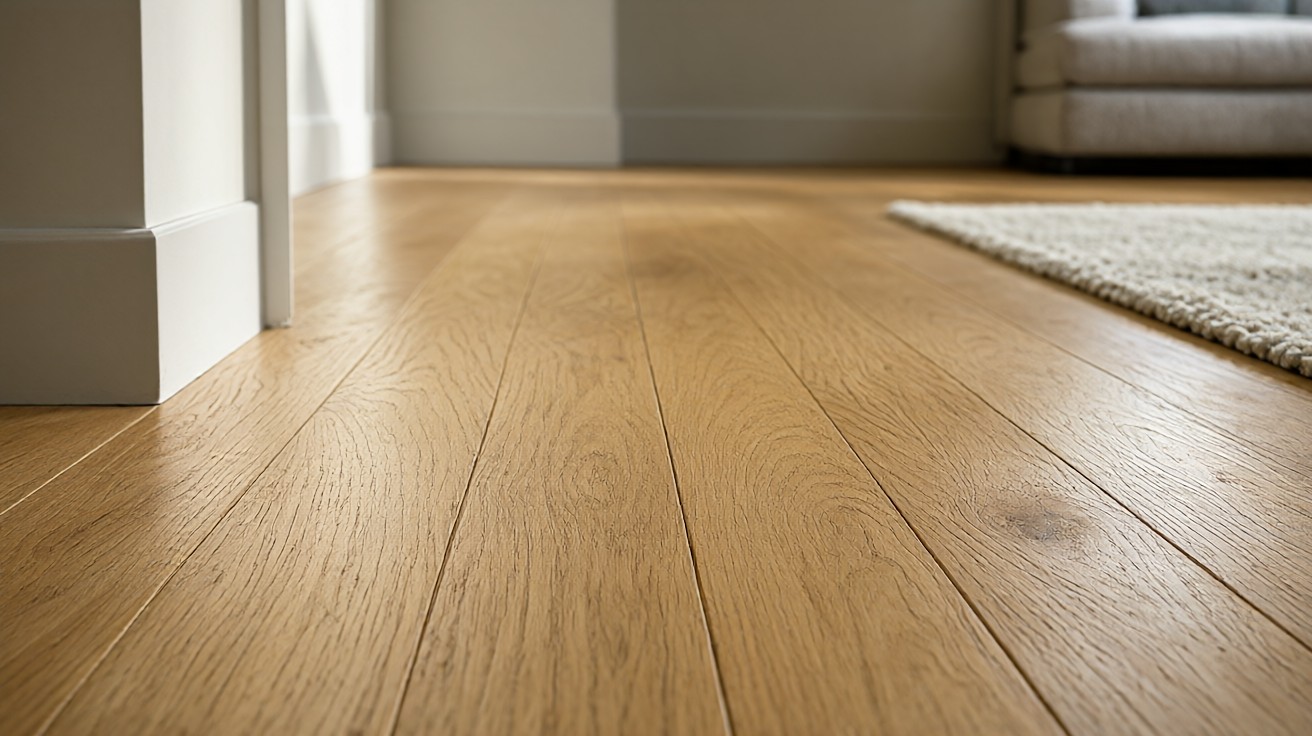

Flooring cost is not a single number. It is material plus labor, subfloor prep, removal, and trim, and the hidden line items are where budgets go wrong.
What “Flooring Cost” Actually Includes
Flooring cost is not a single number. It is the sum of four separate budgets: material, labor, preparation, and removal of the old floor.
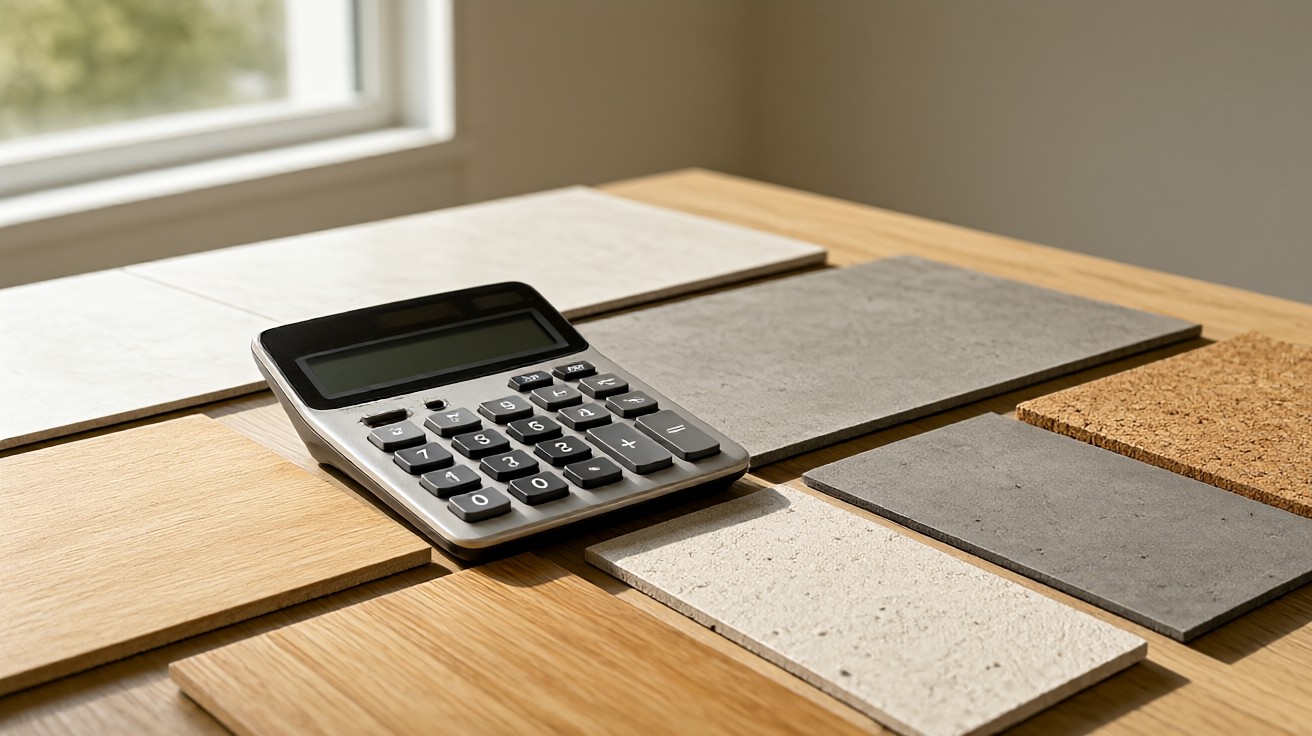
Quotes that advertise a low price usually include only the first one. A homeowner who compares quotes on the material line alone routinely underestimates the total by 30 to 60 percent. The useful question is not “what does the floor cost” but “what does this floor cost in this room, installed, with the old floor gone.”
Material Cost vs Installed Cost
Material cost is what you pay per square foot for the product itself. Installed cost adds labor, adhesive or fasteners, underlayment, trim, and waste. The ratio between the two varies sharply by material.
Hardwood and tile carry high labor relative to material. The material is a fraction of the installed price, and the installer’s skill dominates the result. Laminate, vinyl plank, and carpet carry lower labor relative to material. The product price is closer to the installed price, which makes the headline number more honest but also leaves less room to save by shopping for labor.
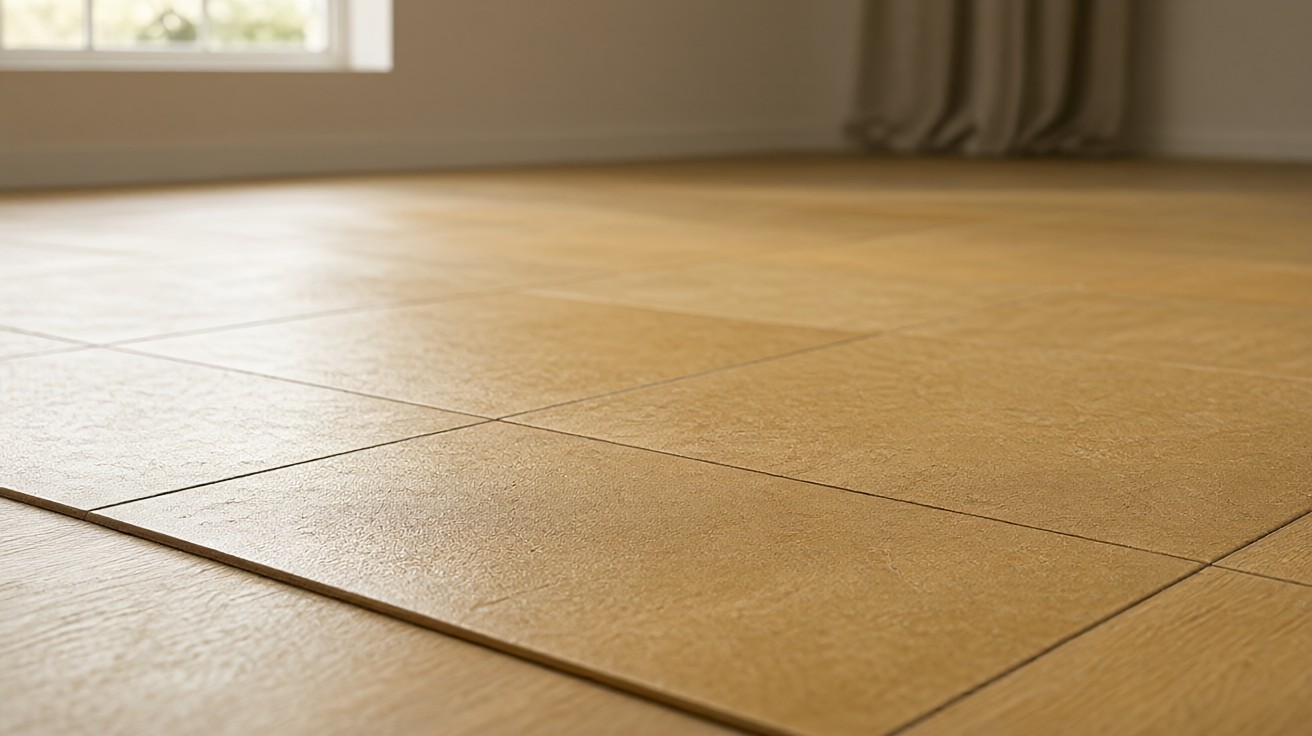
Waste is the line item most often omitted from quotes. A 10 percent waste factor is standard for straight-lay floors. Diagonal, herringbone, or mixed-width patterns run 15 to 20 percent. Tile with a complex layout runs higher. A quote that does not state the waste factor is not comparable to one that does.
The Hidden Line Items That Move the Total
Four costs appear after the quote is signed, and all four are predictable if you ask for them in advance.
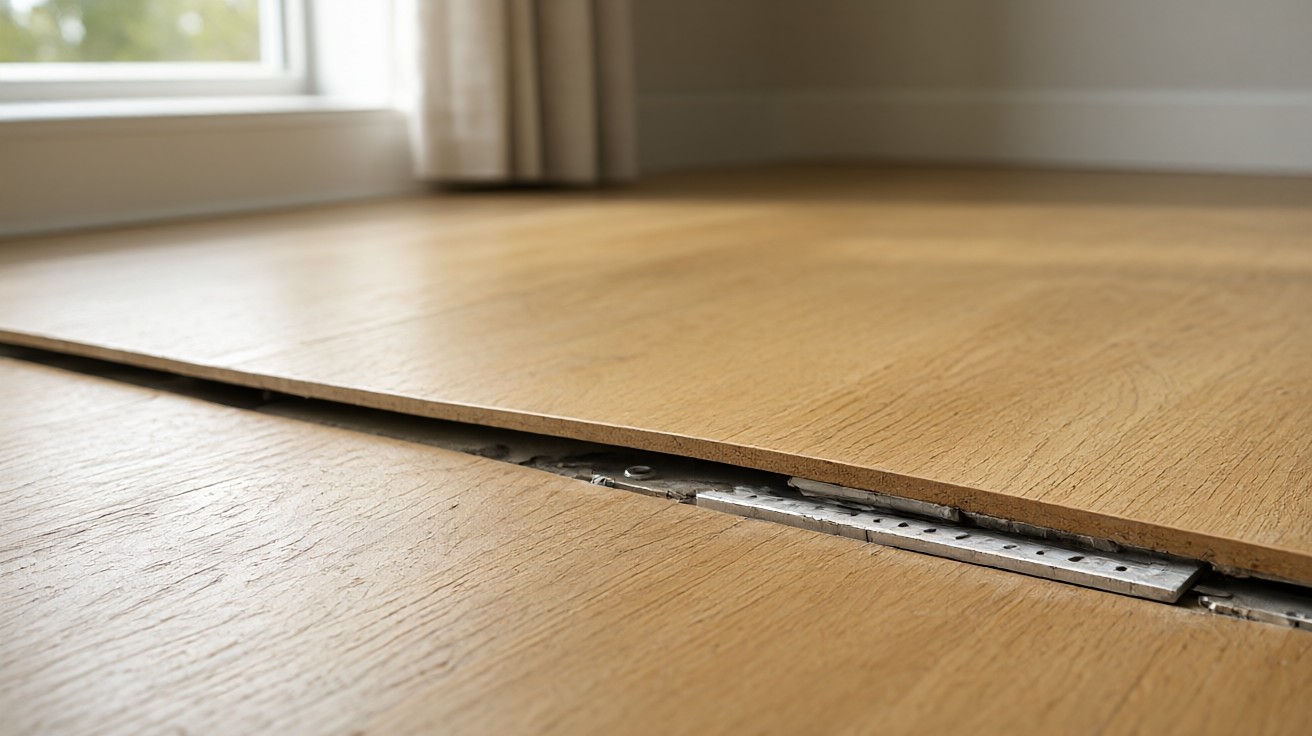
Subfloor preparation. Leveling compound, patching, and moisture mitigation are billed by the square foot or by the bag. A slab that is out of level by more than 3/16 inch over 10 feet needs work before any floating floor goes down. This is the most common surprise on concrete slabs.
Removal and disposal. Pulling old carpet, pad, and tack strips is cheap. Pulling glued-down vinyl or tile is slow and billed by the hour. Disposal fees vary by municipality and by whether the old material is considered hazardous, which matters for old vinyl and some adhesives.
Trim and transitions. Baseboards, shoe molding, quarter-round, and transition strips at doorways are often excluded from the flooring quote and billed separately. In a room with many doorways and closets, this can add 10 to 15 percent to the total.
Furniture and access. Moving furniture, clearing a room, and protecting adjacent surfaces are sometimes included and sometimes not. A two-story installation with stairs costs more than a single-level slab, and the difference is real, not a markup.
For a detailed breakdown of material versus installed price, see flooring cost per square foot: material vs installed price.
For a comparison of repair versus replacement economics, see repair vs replace flooring cost.
How to Get a Number You Can Trust
A trustworthy quote has five elements: a written scope, a stated waste factor, a stated subfloor condition and prep allowance, a stated removal and disposal cost, and a payment schedule tied to milestones rather than to a date. If any of these is missing, the number is a starting point, not a contract.
Get three quotes, and make them comparable by giving all three installers the same room dimensions, the same material specification, and the same scope. A quote that comes in 40 percent below the other two is not a bargain. It is missing a line item that will appear later.
Ask each installer to state the subfloor moisture reading and the levelness check in writing. An installer who will not commit to these numbers in advance is one who will bill for them later.
When to Spend More and When to Spend Less
Spend more where failure is expensive to fix: moisture mitigation, subfloor prep, and the installer’s labor on tile and hardwood. These are the lines that determine whether the floor lasts 10 years or 25. Saving on them is a false economy.
Spend less where the product is commodity: underlayment brand, transition strip profile, and trim style. These are visible but replaceable, and the price spread between adequate and premium is small relative to the total.
For underlayment cost specifics, see flooring underlayment cost. For removal and disposal costs, see flooring removal and disposal cost.
The most common mistake is spending on a premium material over an inadequate subfloor. A mid-grade floor over a well-prepared subfloor outperforms a premium floor over a damp or uneven one. The subfloor is the foundation of the cost calculation, not the surface.
For material-specific cost ranges, see hardwood flooring cost, laminate flooring cost, LVP flooring cost, and tile flooring installation cost.
Last updated: 2026-11-20.