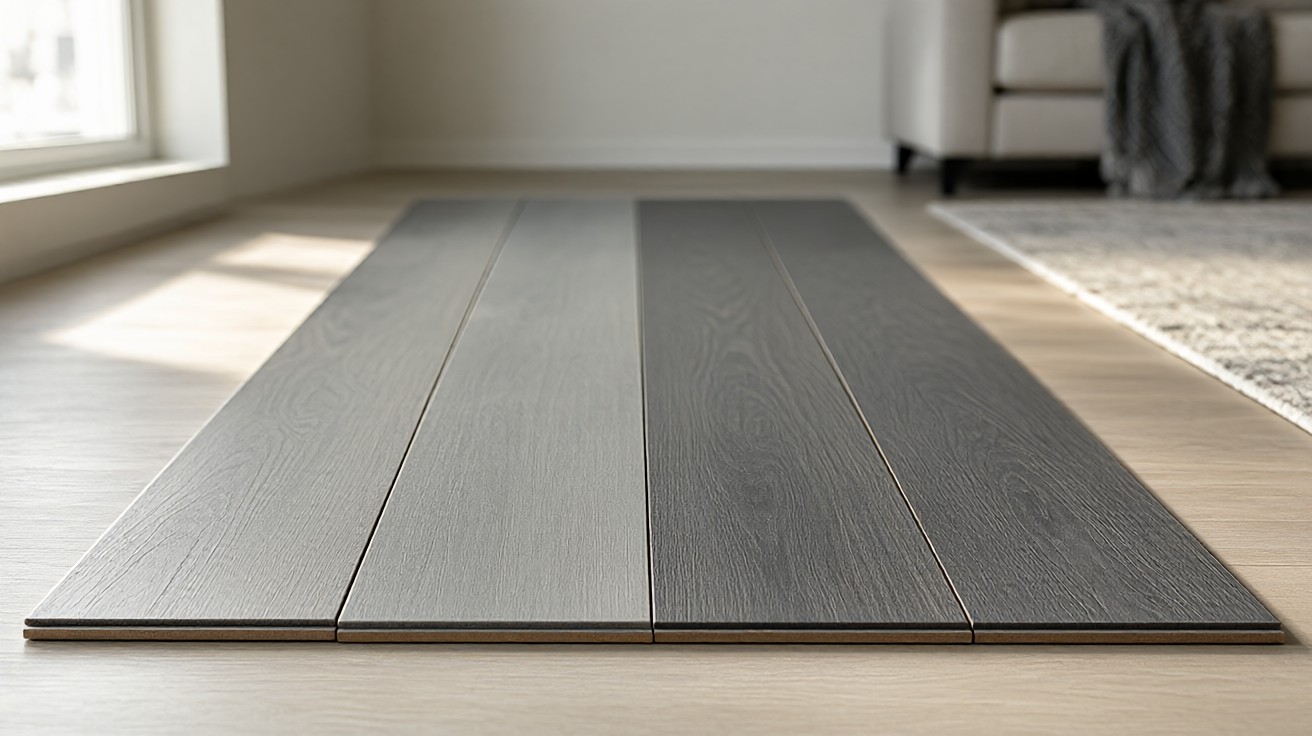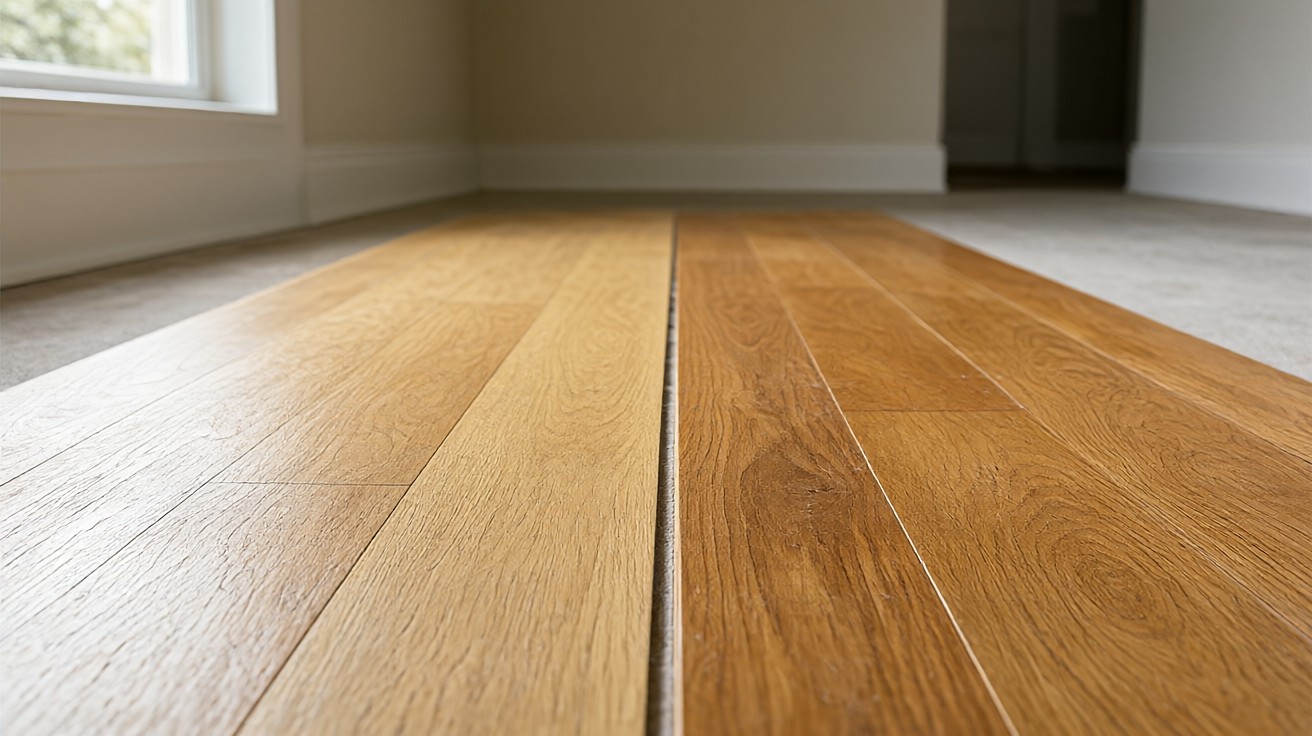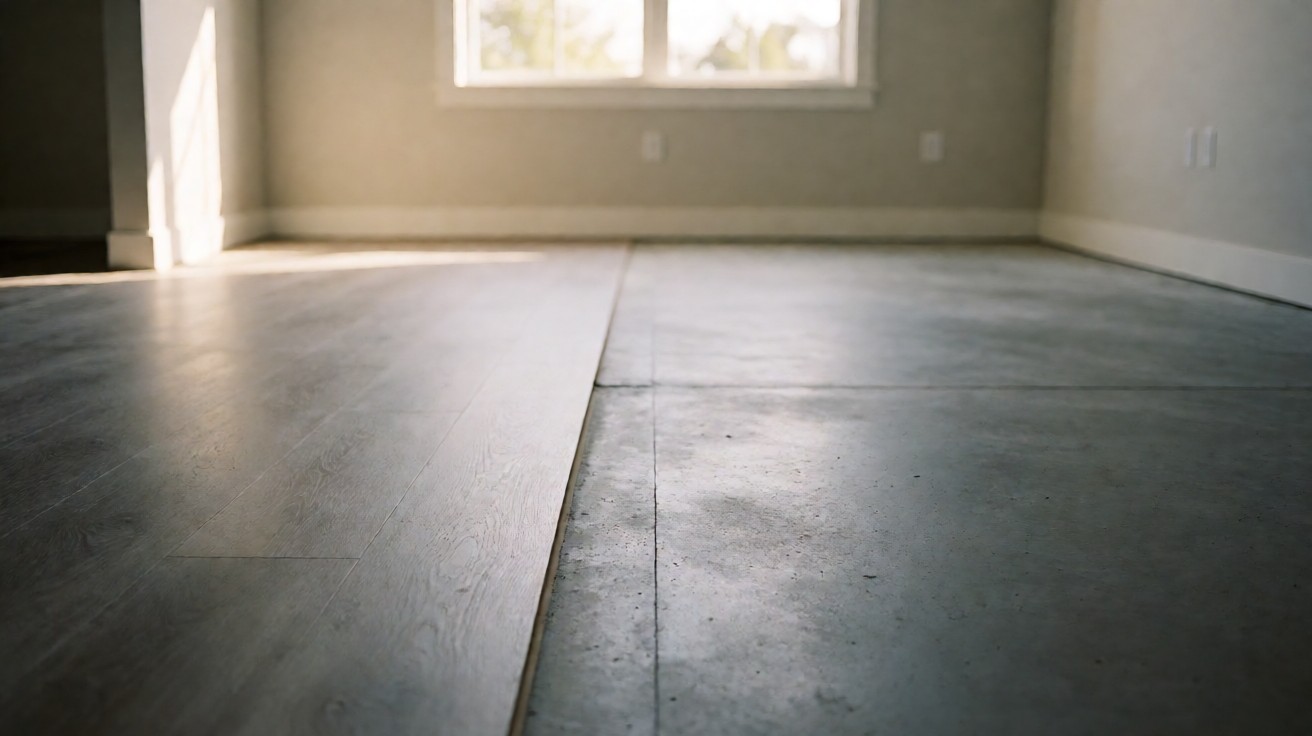

A 350 square foot living room runs $2,800 to $7,350 installed, and the spread comes from tear-out, leveling, and trim, not from the plank price itself.
The answer is the installed number, not the plank price. Materials run $2 to $8 per square foot for LVP, carpet, and tile. Labor adds $2 to $5. Waste adds 7 to 10 percent. Those three numbers are the floor of every quote; everything else is scope.
What Living Room Flooring Costs Per Square Foot Installed
The honest number is installed price, because that is what you pay. Material-only prices are a trap: a $3 plank becomes a $6 floor once labor, pad, and waste land on it.
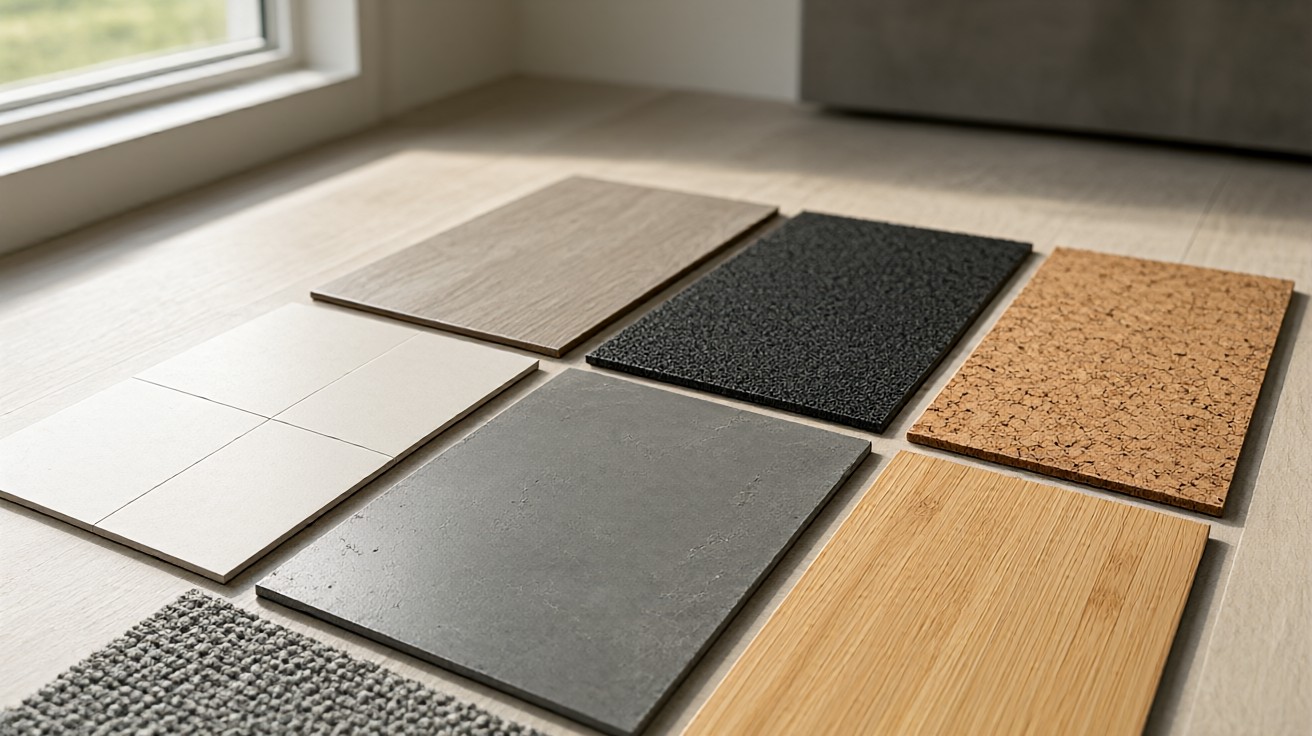
Across the five materials most common in living rooms, installed cost lands in these bands.
| Material | Installed cost, $ per sq ft | Lifespan, years | Refinishable |
|---|---|---|---|
| Carpet, mid grade | $3.00 – $6.00 | 8 – 12 | No |
| Luxury vinyl plank (SPC/WPC) | $4.50 – $8.00 | 15 – 25 | No |
| Engineered hardwood | $7.00 – $13.00 | 25 – 40 | 1 – 3 times |
| Laminate, AC4/AC5 | $3.50 – $6.50 | 15 – 25 | No |
| Porcelain tile | $8.00 – $16.00 | 40+ | No |
Those ranges assume a flat, dry subfloor and a rectangular room. Every deviation from that assumption adds money, and living rooms have more deviations than bedrooms.
If you are still choosing a material, the living room flooring selection guide ranks the same five materials by durability, comfort, and resale value before cost enters the picture.
If the room sits over a slab, the best flooring over concrete slabs guide covers moisture limits and underlayment before you commit to a material.
The Three Numbers Behind Every Quote
Every quote you receive is built from the same three inputs, and reading them separately is how you catch a padded bid.
Material is the plank or tile itself, quoted per square foot. Labor is the installer’s time, quoted per square foot or per day. Waste is the extra material ordered to cover cuts, defects, and pattern matching, quoted as a percentage of the order.
Waste runs 7 percent for a square room with a straight lay, 10 percent for a rectangular room with a hallway, and 12 to 15 percent for herringbone, chevron, or a diagonal plank. Ordering 7 percent on a herringbone job leaves you short and forces a second order at a higher price.
Labor in most US markets runs $2.00 to $5.00 per square foot for floating LVP or laminate, $4.00 to $8.00 for glue-down or nail-down hardwood, and $6.00 to $12.00 for tile, because tile needs mortar, grout, and a level base.
Ask any contractor to split material, labor, and waste on the line-item quote. A single lump-sum number hides the one component that is actually negotiable.
Material-By-Material Cost Drivers
The per-square-foot ranges above hide real differences, and those differences are where the negotiation lives.
LVP price is set by wear layer. A 6 mil layer lands near $2.00 to $3.00 per square foot material only. A 20 mil layer lands near $3.50 to $5.50. A 30 mil layer lands near $5.50 to $8.00. Everything below the wear layer is structure you do not see, and thickness past 6 mm buys rigidity you can also get by leveling the floor.
Engineered hardwood price is set by veneer thickness and species. A 2 mm veneer on an oak core runs $4.00 to $6.00 material only and can be refinished once. A 4 mm veneer runs $6.00 to $9.00 and can be refinished two to three times. White oak and hickory sit above red oak; walnut sits above both.
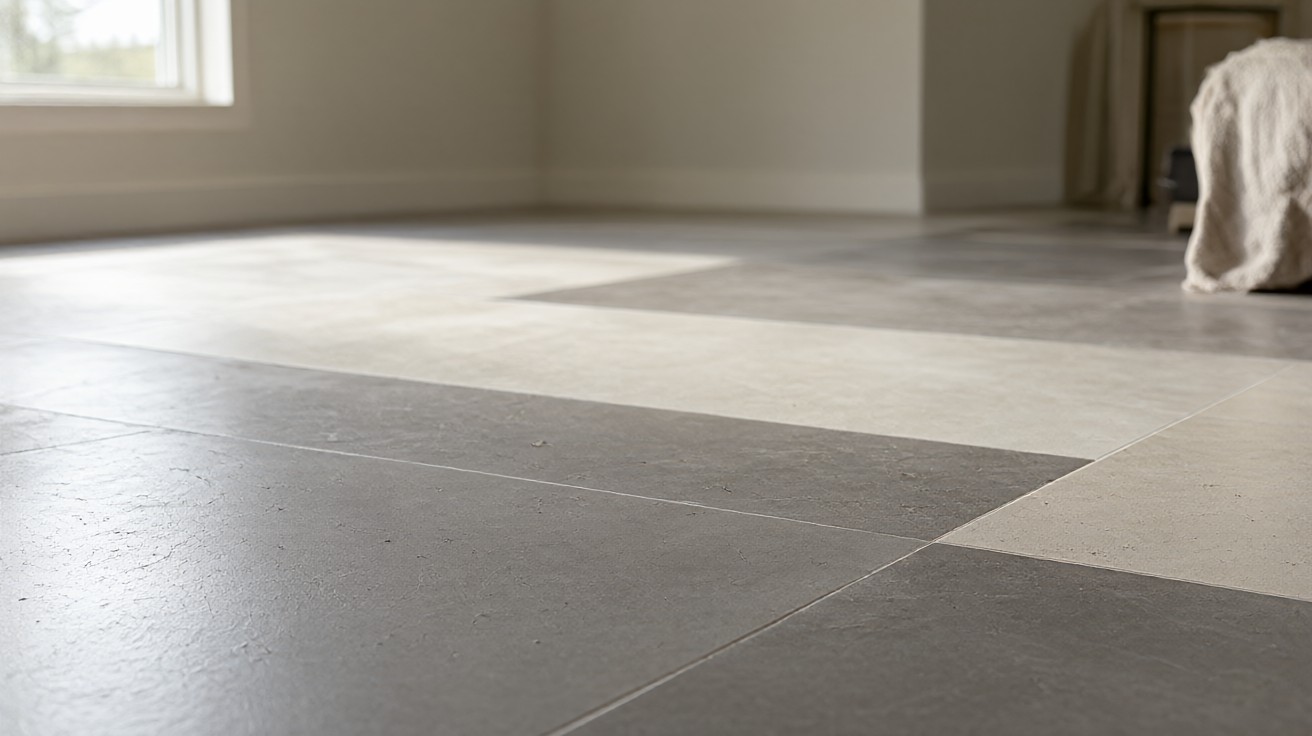
Porcelain tile price is set by format and finish. A 12 by 24 inch matte tile runs $2.00 to $4.00 material only. A 24 by 48 inch polished tile runs $5.00 to $9.00, and large format needs a flatter subfloor and more labor per square foot, which is why the installed range doubles.
Carpet price is set by face weight and fiber. A 35 ounce solution-dyed nylon runs $2.00 to $3.50 material only. A 50 ounce triexta runs $3.50 to $5.50. Pad adds $0.50 to $1.50, and pad is not optional: a thin pad shortens carpet life by years.
Laminate price is set by AC rating and core density. AC3 is residential light; AC4 is residential heavy; AC5 is commercial. AC4 with an 8 mm HDF core runs $2.00 to $3.50 material only and is the right tier for a living room.
If you are weighing the two most common wood-look options, the luxury vinyl plank vs. engineered hardwood comparison walks through refinishability, moisture, and resale side by side.
Living-Room Line Items That Move the Number
The living room is not a bedroom with a bigger area. It carries line items a bedroom never has, and they are the reason two quotes for the same room differ by 40 percent.
Old flooring removal runs $0.50 to $1.50 per square foot, and carpet with pad and tack strip runs at the high end because tack strip has to be pulled and the concrete or wood swept clean. Tile removal runs $2.00 to $4.00 because thinset has to come off the subfloor.
Subfloor leveling runs $3.00 to $6.00 per square foot where self-leveling compound is needed, and $1.50 to $3.00 where a skim coat suffices. A living room with a fireplace hearth often has a 3/8 inch lip between the hearth and the field, and that lip has to be feathered out over two feet.
Fireplace hearth undercutting runs $75 to $200 per hearth, because the new floor has to slide under the stone or brick for a clean edge. Some installers charge it as a separate line; others bury it in labor. Ask which.
Baseboard and shoe molding run $1.50 to $3.50 per linear foot if you remove and reinstall, and $3.00 to $6.00 if you replace. A 350 square foot living room with a 12 by 16 foot footprint has roughly 56 linear feet of perimeter, so trim is $85 to $340 either way.
Heavy furniture moving runs $50 to $150 if the installer handles it, and $0 if you do it yourself the day before. Moving a sectional, a piano, or a china cabinet is the single easiest cost to cut.
Waste is the line nobody quotes honestly. A 350 square foot room at 10 percent waste needs 385 square feet of material, and the quote should show that math.
Worked Scenario: 250, 350, and 500 Square Feet
For example, three real footprints cover most living rooms. A 250 square foot room is a small formal living room. A 350 square foot room is the US median. A 500 square foot room is an open living and dining space.
| Scope item | 250 sq ft | 350 sq ft | 500 sq ft |
|---|---|---|---|
| Material (LVP, 20 mil), 10% waste | $1,045 | $1,463 | $2,090 |
| Labor, floating install | $750 | $1,050 | $1,500 |
| Carpet and pad removal | $250 | $350 | $500 |
| Leveling, skim coat | $375 | $525 | $750 |
| Hearth undercutting | $125 | $125 | $125 |
| Trim, remove and reinstall | $120 | $170 | $240 |
| Total installed | $2,665 | $3,683 | $5,205 |
Those numbers use mid-market LVP at $4.00 per square foot material and $3.00 per square foot labor. Swap in engineered hardwood at $9.00 material and $5.00 labor and the same three rooms land at $4,165, $5,833, and $8,305. Swap in porcelain tile and add $2.00 per square foot for mortar and grout, and they land at $4,915, $6,883, and $9,805.
The scenario is the budgeting tool, not the bid. A real quote for your room will differ by region, by subfloor condition, and by how much furniture the installer has to move.
Carpet Tear-Out, Hearth Cuts, and Trim in Detail
Three line items deserve their own attention because each is quoted inconsistently.
Carpet tear-out includes pulling the carpet, the pad, and the tack strip, then sweeping and vacuuming. A contractor who quotes $0.50 per square foot is usually skipping the tack strip pull or charging it later. Ask for tack strip removal in writing.
Hearth undercutting is the cut that lets the new floor slide under the fireplace stone so the edge disappears. A clean undercut takes 30 to 45 minutes with an oscillating tool and a diamond blade. A sloppy undercut leaves a visible gap that gets caulked and looks cheap for the life of the floor.
Trim is the decision with the biggest visual payoff. Removing and reinstalling existing baseboard preserves the profile and saves $1.50 to $2.50 per linear foot, but the baseboard has to come off without splitting, and the nail holes have to be filled and touched up. Replacing with new pre-primed MDF costs more and looks new, which is sometimes the point.
Shoe molding instead of baseboard removal is the compromise: leave the baseboard, add a 3/4 inch shoe to cover the expansion gap, and paint it to match. It costs $1.50 to $2.50 per linear foot and looks intentional if the profile is chosen well.
DIY Versus Professional Labor
Floating LVP and laminate are the two materials a competent homeowner can install in a weekend, and the labor savings are real: $750 to $1,500 on a 350 square foot room.
DIY fails on three things. Subfloor flatness: the floor has to be flat to 3/16 inch over 10 feet, and a self-leveling pour is not a beginner job. Transitions: a doorway transition strip cut wrong telegraphs into the room. And warranty: most manufacturers void the warranty if the installer is not certified, which matters on a $4,000 floor.
Hardwood and tile are not DIY projects for a first-timer. Nail-down hardwood needs a pneumatic nailer, a clean subfloor, and acclimation time. Tile needs a wet saw, mortar mixing, and grout timing. The cost of a mistake on either exceeds the labor savings.
If you are weighing the trade, the DIY vs. professional flooring installation guide lays out the tool list, the time, and the warranty implications by material.
How to Read and Compare Quotes
A quote you can compare has five lines: material, labor, removal, prep, and trim. Anything less is a guess dressed as a number.
Material should show square footage, waste percentage, and unit price. Labor should show rate and room size. Removal should separate carpet from tile. Prep should itemize leveling compound and fasteners. Trim should show linear feet and whether it is removal or replacement.
Ask three questions of every bidder. What is your waste percentage and why. What is your flatness tolerance and how do you verify it. What happens if the subfloor is worse than expected, and who pays for the extra.
The answer to the third question is in the contract, not the quote. A good contract has a not-to-exceed clause for prep and a change-order process for anything beyond it. A bad contract has a single lump sum and a phone call when the floor is half up.
Get three bids. The spread between the lowest and highest is usually 30 to 50 percent, and the middle bid is where the honest work lives.
Standards That Govern the Work
Three standards show up on a serious quote, and their presence is a filter for whether the contractor knows the work.
ASTM F2170 is the in-situ relative humidity test for concrete slabs. It requires drilling holes to 40 percent of slab depth and inserting probes, then waiting 24 hours for a reading. A slab reading above 75 percent relative humidity needs a moisture mitigation system before any wood or vinyl goes down, and that system adds $1.50 to $3.00 per square foot.
ASTM F1869 is the calcium chloride test for moisture vapor emission rate. It is older and less precise than F2170, but still common. A result above 3 pounds per 1,000 square feet per 24 hours triggers the same mitigation.
ANSI A108.02 is the American National Standard for tile installation. It defines substrate flatness, mortar coverage, and grout joint width. A tile installer who cannot name the flatness tolerance, 1/8 inch in 10 feet for large format, is not following the standard.
NWFA Installation Guidelines govern hardwood, including acclimation time, moisture content limits, and fastener spacing. They are the reference a manufacturer points to when a warranty claim is filed.
Ask which standards the installer follows and write the answers into the contract. A contractor who names them without prompting is worth the extra $0.50 per square foot.
When the Cheapest Quote Costs the Most
The low bid is low for a reason, and the reason is usually one of four things.
No removal line: the bid assumes the old floor is gone and clean, and when it is not, the price jumps mid-job. No waste line: the bid orders exactly the square footage, and a broken box or a bad cut stops the job.
No prep line: the bid assumes a flat subfloor, and a dip shows up as a hollow spot under the new plank within six months. No warranty: the bid is cash, no paperwork, and no recourse when the floor fails.
The real cost of a failed floor is not the replacement material. It is the tear-out of the new floor, the repair of whatever caused the failure, and the reinstallation, which is 1.5 to 2 times the original job because the old material is now glued or nailed down.
Pay for the middle bid. Verify the standards. Get the waste math in writing. That is the whole job.
For the room-by-room detail behind this, read Best Living Room Flooring for Small and Dark Rooms, and Living Room Flooring Buying Checklist.
Last updated: 2026-11-20.