
Quick Answer: In a living room, hardwood earns its place on resale, feel, and refinishing; LVP earns it on pets, spills, and slabs. Price rarely decides.
The living room is the one room where this comparison actually matters. It is the room buyers walk through first, the room the furniture sits on, and the room you look at every evening.
The general hardwood versus LVP comparison covers the material question in the abstract. This page keeps the focus on what changes once the floor is a living room floor, with a sofa, a dog, and a resale appraisal on top of it.
If you are still choosing among all the families, start with the best flooring for living rooms pillar, which ranks hardwood, vinyl, laminate, tile, and carpet against each other. This page assumes you have already narrowed it to the two that look the most alike and are sold in the same aisle.
What the Living Room Actually Does to a Floor
A living room is not a hallway and it is not a bedroom, and treating it like either one is how people buy the wrong floor. It carries the heaviest stationary loads in the house, the sofa, the bookcase, the piano, the media console, and it carries them in the same spots for years.
It also takes the most visible daily traffic, from the front door to the kitchen and back, and it is the floor that gets photographed for a listing.
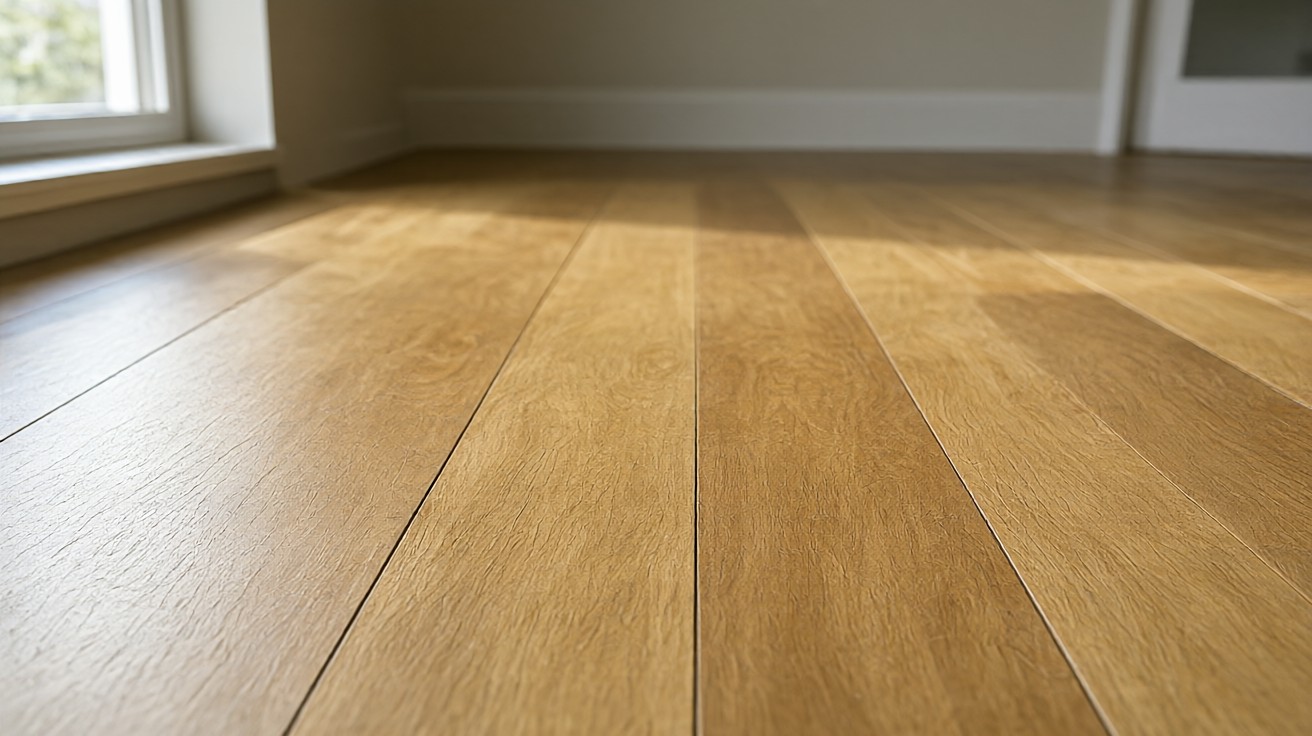
That means three things matter more here than in any other room. First, how the floor looks under a wide, low raking light, because a living room has windows and lamps and the grain is visible. Second, how it responds to point loads, because furniture legs sit in one place for a decade.
Third, how it reads to a buyer, because the living room is the first floor a buyer sees and the one they remember. Neither hardwood nor LVP is perfect at all three, and the living room is where the gap between them shows up.
Hardwood in a Living Room: Feel, Look, and the Refinishing Question
Hardwood is the material that living rooms were built around, and the reason is simple: it is the one floor that improves with age if it is maintained, because a sanding removes a thin layer and exposes fresh wood.
Solid hardwood can be sanded six to eight times over the life of a house, which is roughly one sanding every twenty to thirty years for a family that lives normally. That means a hardwood living room floor bought at thirty-five can still be the same floor at seventy-five, just renewed.
The feel is the other half of the case. Hardwood is warm underfoot in a way that vinyl is not, it has a slight give that a rigid plank does not, and it carries sound differently. A hardwood living room with a rug and a pad sounds like a living room.
The same room in LVP sounds slightly harder and slightly more hollow, even with good underlayment, because the plank itself is a polymer over a rigid core and it does not absorb impact the way wood does.
The look is where hardwood wins outright in a living room. Long planks, real grain, color variation that reads as material rather than print, and a finish that can be matte, satin, or gloss to match the room.
LVP has closed the gap enormously, and a good rigid core plank at a few feet is genuinely hard to distinguish from oak, but a living room is viewed from across the room and from standing height, and the repeat pattern in a printed plank shows up at that distance.
If the living room is the room you care about most, hardwood looks like the money was spent there.
LVP in a Living Room: Durability, Pets, and the Underfoot Reality
LVP is the material that makes the living room easy to live in, and that is not a small thing.
It does not scratch from dog claws the way a site-finished oak does, it does not stain from a spilled glass of red wine the way an unsealed plank can, and it does not care about the humidity swing between January and August.
For a household with pets, children, or a ground-floor living room over a slab, LVP is the floor that lets you stop worrying about the floor.
The underfoot reality is the honest caveat. LVP is cooler in winter and harder in every season. A good rigid core plank with an attached pad is close to hardwood in comfort, but it is not the same, and you feel the difference standing barefoot for an hour.
It also sounds different: footsteps are sharper, and a dropped object rings rather than thuds. Area rugs and a quality underlayment close most of that gap, but they do not close it entirely, and in a living room where people sit on the floor, the difference is felt.
The other caveat is age. LVP does not refinish. When the wear layer is worn, the floor is replaced, and the wear layer on a residential plank is typically 12 to 20 mil. That is enough for fifteen to twenty years in a living room, which is a respectable life, but it is a fixed life.
Hardwood at the same age is mid-life. If you are planning to stay in the house for thirty years, that difference compounds.
Furniture: Legs, Casters, and the Dent Problem
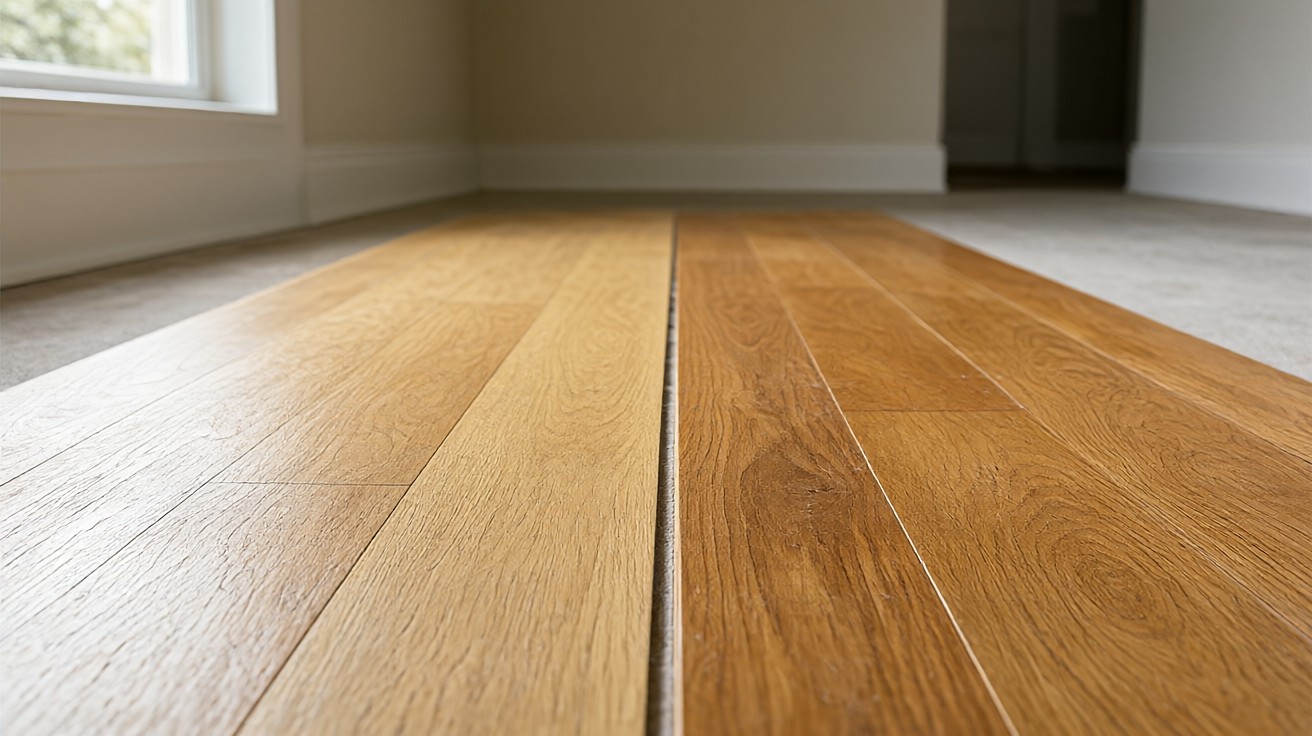
Furniture is the living room test that neither material loves, and it is the one most people do not think about until the sofa has been in the same place for five years. A hardwood floor dents under a heavy leg that sits in one spot, especially softwoods and lower-grade oaks, and the dent is permanent unless you refinish.
A LVP floor does not dent in the same way, but it can compress and telegraph the subfloor, and a heavy piece dragged across it will scratch the wear layer in a way that cannot be repaired.
The practical answer is the same for both materials: felt pads under every leg, a rug under the seating group, and lift rather than drag when moving anything. With those habits, both floors survive furniture. Without them, hardwood shows the damage first and LVP hides it longer but suffers it just the same.
The difference is that hardwood damage can be sanded out and LVP damage cannot, which is the same trade-off running through the whole comparison.
If the living room has an office chair on casters, that is a separate question. Hardwood under a caster chair needs a chair mat or the finish wears through in months. LVP handles casters better, but a cheap wear layer will still polish and scratch. Either way, a mat is cheaper than a repair.
Pets and the Scratch Test
Pets are the reason most living rooms end up in LVP, and the reason is honest. A dog’s claws scratch a site-finished hardwood floor, especially a soft finish or a light wood, and the scratches accumulate in the traffic path between the door and the sofa until the floor looks tired.
A cat’s claws do less damage but can still mark a soft finish. LVP does not scratch from pet claws in the same way, because the wear layer is a clear polymer film over a printed design, and a claw slides rather than cuts.
The caveat is that LVP is not immune. A large dog’s claws can still mark a thin wear layer, and the marks cannot be repaired, only lived with until replacement. The fix is a thicker wear layer, 20 mil rather than 12, and a textured surface that hides marks rather than a smooth one that shows them.
Hardwood’s fix is a harder species, white oak or hickory rather than pine or soft maple, and a matte finish that hides scratches better than a gloss one.
If the household has a dog over fifty pounds, LVP is usually the right living room floor. If the household has no pets and no children, hardwood is usually the right one. The middle, small pets and older children, is where the decision is genuinely close and comes down to how much maintenance the owner will actually do.
Resale and How Buyers Read the Two
Resale is where hardwood still has a clear edge in a living room, and it is worth being honest about it. A hardwood living room floor is read by buyers as a permanent, high-value feature, and it shows up in the listing photos as a material rather than a product.
LVP is read as a good, practical floor, which is not the same thing, and in a market where comparable homes have hardwood, an LVP living room can be a small drag on perceived value.
The gap narrows in two situations. First, when the LVP is genuinely good, wide plank, low gloss, and installed well, buyers often cannot tell from photos and only notice on a second visit. Second, when the hardwood is in poor condition, because a scratched, cupped, or poorly finished hardwood floor reads worse than a clean LVP floor.
Condition beats material in most appraisals, and a well-maintained LVP living room outperforms a neglected hardwood one.
If resale is the priority and the budget allows, hardwood in the living room and LVP everywhere else is the combination most builders and designers land on. It puts the expensive, permanent material where buyers look first and the practical material where water and traffic are highest.
Feel Underfoot and Sound
Feel underfoot is the difference people notice last and complain about first. Hardwood is warmer, slightly softer, and quieter. LVP is cooler, harder, and louder. The gap is real in a living room because people stand and sit in it for long stretches, and because the living room is usually the largest open space in the house, so sound carries.
Underlayment closes part of the gap. A good acoustic underlayment under LVP brings impact sound down to near-hardwood levels, and an attached pad on a rigid core plank does most of the work. But the plank itself is still a polymer, and the surface still feels different under a bare foot.
If the household walks barefoot in the living room, hardwood is the more comfortable floor. If the household wears shoes or slippers, the difference shrinks to nearly nothing.
Sound is the other half. Hardwood with a rug and pad is quiet. LVP without a rug is not, and in a living room with hard walls and high ceilings the difference is audible. Plan for a rug either way; the question is how much rug you need to make the room sound right.
Refinishing: Hardwood’s One Real Advantage
Refinishing is the single capability that separates the two materials, and it is the reason hardwood earns its place in a living room specifically. A living room floor takes twenty years of life, and by year twenty a hardwood floor can be sanded and look new again, while an LVP floor is at the end of its life and being replaced.
That is not a small difference in a room you intend to keep.
The refinishing advantage is conditional. It only applies to solid hardwood, or to an engineered hardwood with a thick enough wear layer to take a sanding. A thin veneer engineered floor has the same fixed life as LVP.
And refinishing is not free; it costs roughly what a mid-grade LVP installation costs, and it puts the room out of service for several days. But it is the option that LVP does not have, and in a living room that is meant to last, the option matters.
If you are buying hardwood for the living room, buy a floor that can actually be refinished. That means solid hardwood or an engineered plank with at least a 3 millimeter wear layer, and a finish that is not a factory aluminum oxide so thick that a sander struggles with it. Ask the question before buying, because the answer is not always yes.
Specs, Standards, and a Real Scenario
Specs are where the two materials stop being abstract. A solid hardwood plank runs about 3/4 inch (19 mm) thick with a Janka hardness around 1290 lbf for red oak and 1360 lbf for white oak.
A rigid-core LVP plank runs 5 to 8 mm thick with a 12 to 20 mil wear layer and a 25-year residential warranty on the better grades. Those numbers, not the showroom, are what decide the floor.
Imagine a 200 sq ft living room over a concrete slab in a house with a 70 lb dog and a child under five. The slab runs 65°F in January and 75°F in August, the subfloor is 1/8 inch out of flat in places, and the family wears shoes indoors.
That room is an LVP room: the slab rules out solid hardwood, the dog rules out a soft finish, and the temperature swing rules out a floating engineered plank unless it is rated for it.
Standards bodies put numbers on those calls. ASTM F1700 covers resilient flooring, NWFA guidelines govern hardwood installation and moisture, ANSI A108 governs tile and setting materials, and FloorScore and GreenGuard certify indoor air quality and VOC emissions. If a product carries FloorScore or GreenGuard, its VOC output has been tested rather than asserted.
Sound and air are the two specs buyers ask about last and notice first. An underlayment with an IIC rating of 50 or better and an STC rating in the same range takes LVP from a drum to a floor, and a low-VOC adhesive keeps the room breathable for the first month. Neither is visible in the showroom, and both are in the spec sheet.
| Spec | Hardwood | LVP |
|---|---|---|
| Thickness | 3/4 in (19 mm) | 5-8 mm |
| Wear layer / finish | Refinishable, 3 mm+ veneer | 12-20 mil polymer film |
| Hardness | 1290-1360 lbf Janka | N/A (polymer) |
| Warranty | Lifetime structural | 25 years residential |
| Cost installed | $8 to $14 per sq ft | $4 to $9 per sq ft |
| Slab compatible | Engineered only | Yes |
| Scenario | Better choice | Why |
|---|---|---|
| Pets over 50 lb, slab subfloor | LVP | Scratch resistance and moisture tolerance |
| No pets, wood subfloor, long stay | Hardwood | Refinishing and resale |
| Rental or resale in 5 years | LVP | Lower upfront cost |
| Living room opens to kitchen | LVP | One continuous floor through wet and dry zones |
Cost Over Twenty-Five Years
Cost is where the comparison is usually misread, because people compare installed price at checkout and stop. Hardwood costs more to install, roughly two to three times what LVP costs per square foot installed, and that gap is real on day one. But over twenty-five years the gap narrows, because hardwood is renewed rather than replaced.
A reasonable twenty-five-year number for a living room of two hundred square feet looks like this. LVP: installed once, replaced once, two installations, no refinishing, roughly double the material cost over the life of the floor. Hardwood: installed once, refinished once, no replacement, one installation plus one refinish.
The totals end up closer than the sticker price suggests, and the hardwood version leaves you with a floor that is still in the house.
The honest caveat is that this math assumes you stay. If you sell in five years, you do not get the refinishing value, and LVP’s lower upfront cost wins. If you stay for thirty, hardwood’s renewal wins. Match the material to the time horizon, not to the showroom price tag.
When LVP Is the Better Living Room Floor
LVP is the better living room floor when the household is hard on floors, when the living room sits over a concrete slab, when pets are large, or when the budget has to cover the whole house and the living room cannot be a special case.
It is also the better floor when the living room opens onto a kitchen or a mudroom, because a single continuous floor through wet and dry zones is worth more than the material difference.
If the living room is over a slab, the subfloor question dominates the material question, and the best flooring over concrete slabs page covers which materials actually work there. Hardwood over a slab is possible but it is engineered, floated, and moisture-managed, and it is not the same floor as hardwood over a wood subfloor.
LVP is also the right call when the living room is a rental, a second home, or a house you plan to sell within a few years. The lower upfront cost and the easy replacement are features in those cases, not compromises.
When Hardwood Still Earns Its Place
Hardwood still earns its place when the living room is the room you want to be proud of, when the household is gentle on floors, when resale matters, and when you intend to stay long enough to refinish. It is the material that buyers remember, the material that feels best underfoot, and the material that can be renewed rather than replaced.
It is also the right call when the living room is the one room in the house that gets the budget. A common and sound strategy is hardwood in the living room and dining room, LVP or tile in the kitchen and baths, and carpet or LVP in the bedrooms.
That puts the permanent, beautiful material where it is seen and the practical material where it is needed, and it is the layout most designers recommend for a reason.
Neither material is wrong for a living room. The wrong choice is the one made without thinking about who lives there, what the floor sits over, and how long you plan to stay. Decide those three things first, and the material follows.
These two guides go deeper on the same trade-off: Living Room Flooring Cost, Best Living Room Flooring Over Concrete Slabs, and Laminate vs LVP in a Living Room.
We break the same trade-off down in LVT vs LVP: The Format Difference That Changes How a Room Feels.
Last updated: November 2026