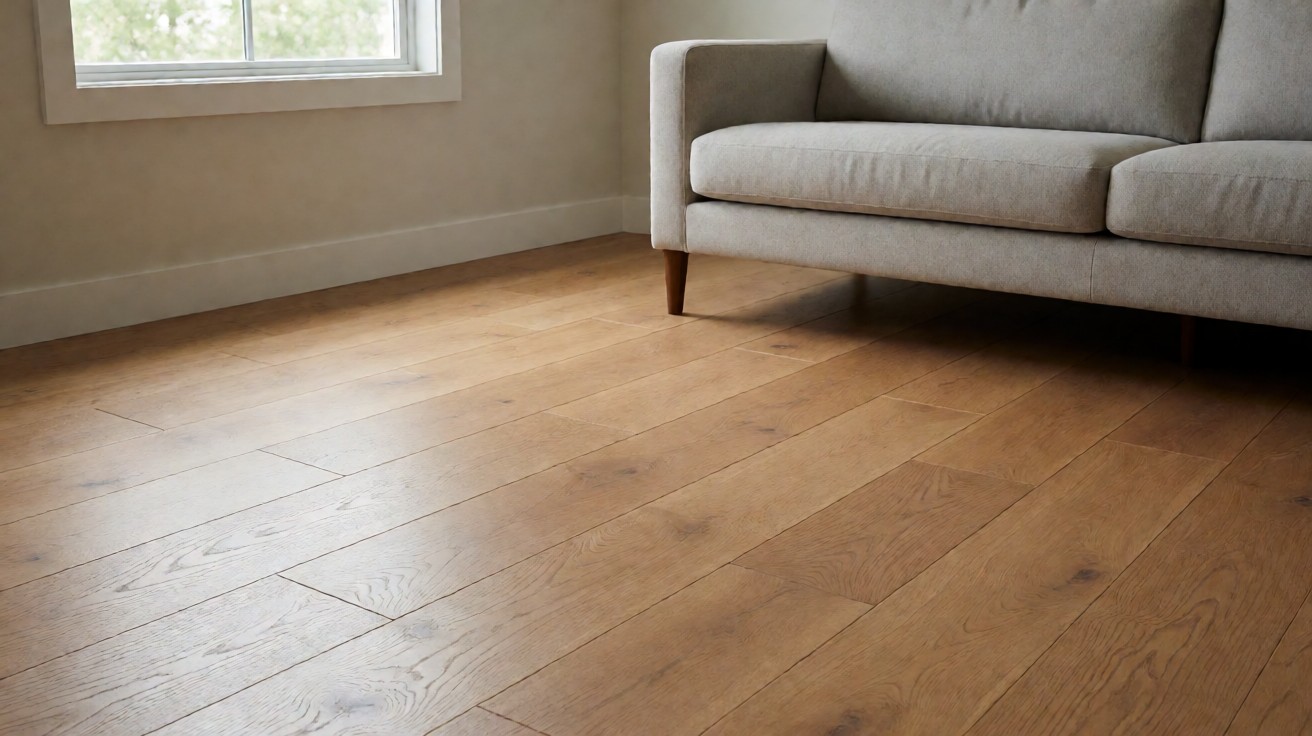

The best living room floor is the one that survives your actual household, not the one that photographs best, and the split is pets, traffic, and heat.
That makes the living room one of the hardest rooms to choose for, because it does several jobs at once. It holds the sofa and the rug, it takes the traffic between the door and the television, it carries a bookcase, and it is the floor you look at longer than any other room. A material that is best at every one of those jobs does not exist, so the decision is really about which of the jobs you will not make up for later.
This page ranks the five families that are genuinely good in a living room, then points you to the material guide for whichever one fits, so the pick lands on your room rather than on a showroom.
Why One Material Does Not Win Every Living Room
A living room pulls in opposite directions. It wants the durability of a hallway, the comfort of a bedroom, and the look of a dining room, and the material that nails all three has not been made yet, so the entire decision is about which of the three you will accept a gap in.
The mistake most people make is choosing one material and asking it to do every job at once. Hardwood wants the scratch marks. Vinyl wants the water. Carpet wants the quiet and the warmth. Tile wants the heat and the spill. If you write down which of those things your floor actually has to absorb on a normal Tuesday, the right family becomes much easier to see, and the wrong ones drop out on their own.
The Five Real Options and What Each One Does
There are five materials that are seriously good at the living room, and they divide by what they can take and what they feel like to walk on.
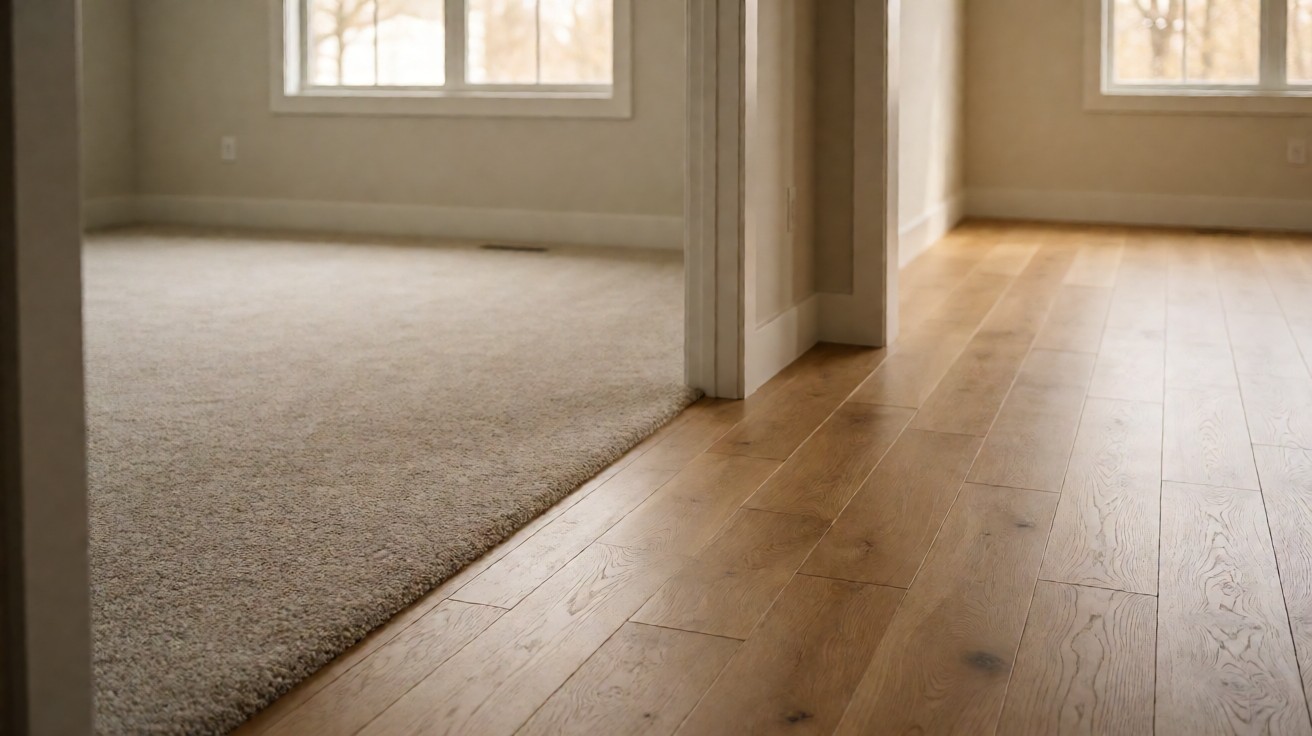
Hardwood and engineered wood give the best look and the most resale value, but they take dents and are the least forgiving of water. Rigid core and luxury vinyl plank take almost anything, are the easiest to keep clean, and install over almost any subfloor you already have. Laminate gives the same wood look at a lower price but handles moisture worse than any of the wood looks. Carpet is the warmest and the quietest and the only one that is kind to a long day on your feet. Tile is the hardest, takes standing water, and is the one that can carry radiant heat without a fight.
Read Your Household Before You Read Prices
Before you open a price list, write down three things about the room. Who or what is on the floor: a child, a dog, a heavy bookcase, a rolling planter. What the floor has to survive: a dropped toy, a glass that catches the baseboard, a pan of water from the kitchen, or just the legs of a sofa. And what the room does that no other room does: the television wall, the place where someone sits barefoot, the door that brings in the load of dishes.
Those three lines do more to narrow the choice than any material table can. A living room that is mostly barefoot time and a cat points somewhere completely different from one that is under a large rug and is the main through-route of the house. Name the jobs first, and the list of candidate families almost sorts itself out.
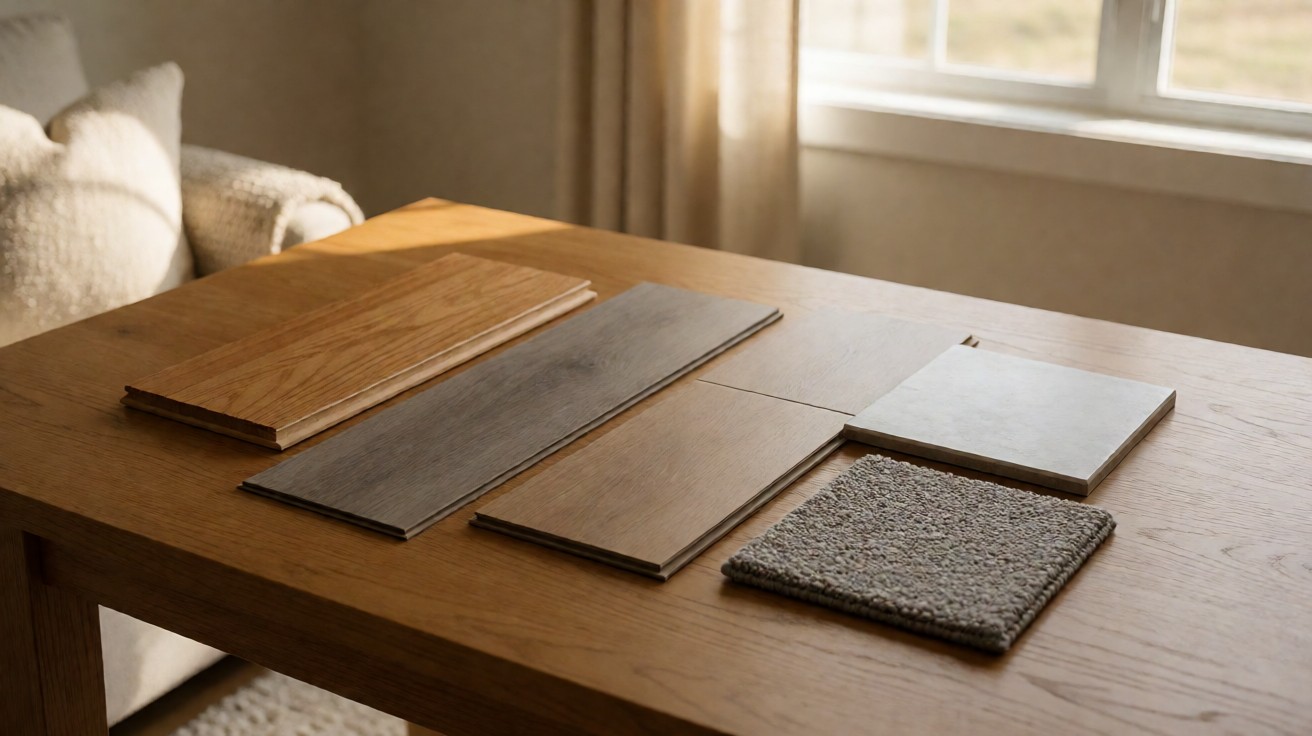
Match the Material to the Room’s Actual Job
This is the decision table, and it maps the jobs a living room actually has to the family that survives them best. Read your household against it and you should be left with two or three candidates rather than all five.
Notice that several jobs have more than one right answer. A family with young children can be hard-won on rigid core, on laminate, or on tile, and the final pick is usually comfort and noise rather than raw toughness. A quiet room that sits under a big rug is the one place carpet earns its keep against every other family on the list.
| The living room’s actual job | Shortlist | Why it survives there |
|---|---|---|
| Room is the main through-route | Rigid core or porcelain tile | Takes constant traffic and dropped objects |
| Kids and pets on the floor | Rigid core, tile, or laminate | Water and claw marks are the real test |
| Sofa on legs, lots of barefoot time | Engineered or solid wood | Warmth and resale value outweigh the mark risk |
| Mostly under a large area rug | Any of the five | The rug carries most of the load |
| Radiant heat planned under the floor | Porcelain, rigid core, or laminate | Wood and carpet are limited over heat |
| You want the quietest floor | Carpet, or tile on a felt pad | Fibre or a pad cuts the impact noise |
Pets, Children, and What Marks a Floor
This is where the toughness question gets answered honestly, because the living floor takes three loads a hallway does not: the paws of a dog, a toy dropped from the coffee table, and the glass that catches on a baseboard at the edge of the rug.
Rigid core and tile do not dent and do not absorb, so they take that day well. Laminate’s enemy is the moisture that comes in with wet paws and a spill, because the core swells and the edge curls. Wood shows a dent from a dropped toy and keeps it for years, and it is the one you can sand. Carpet hides the mark but holds the smell, and a pet’s accidents land here first of all, which is why the pick for a house with a young dog is usually a bare rigid core or a tile.
Hardwood, and When It Is Worth It
Hardwood is the family that gives the most value at resale and the best look, and it is the right one when the room stays dry, sits mostly under a rug, and will be sanded at least once over the years you have it.
Engineered hardwood is the version that can go over radiant heat and holds up better in a room that gets a little more moisture than you would like. Solid wood is the version that sands for decades. If the answer to any of those is no, the living room is the wrong place to spend that money on wood, and the guide to the two constructions and when each one earns its price is in the hardwood flooring guide.
Rigid Core and Vinyl, the Middle Ground
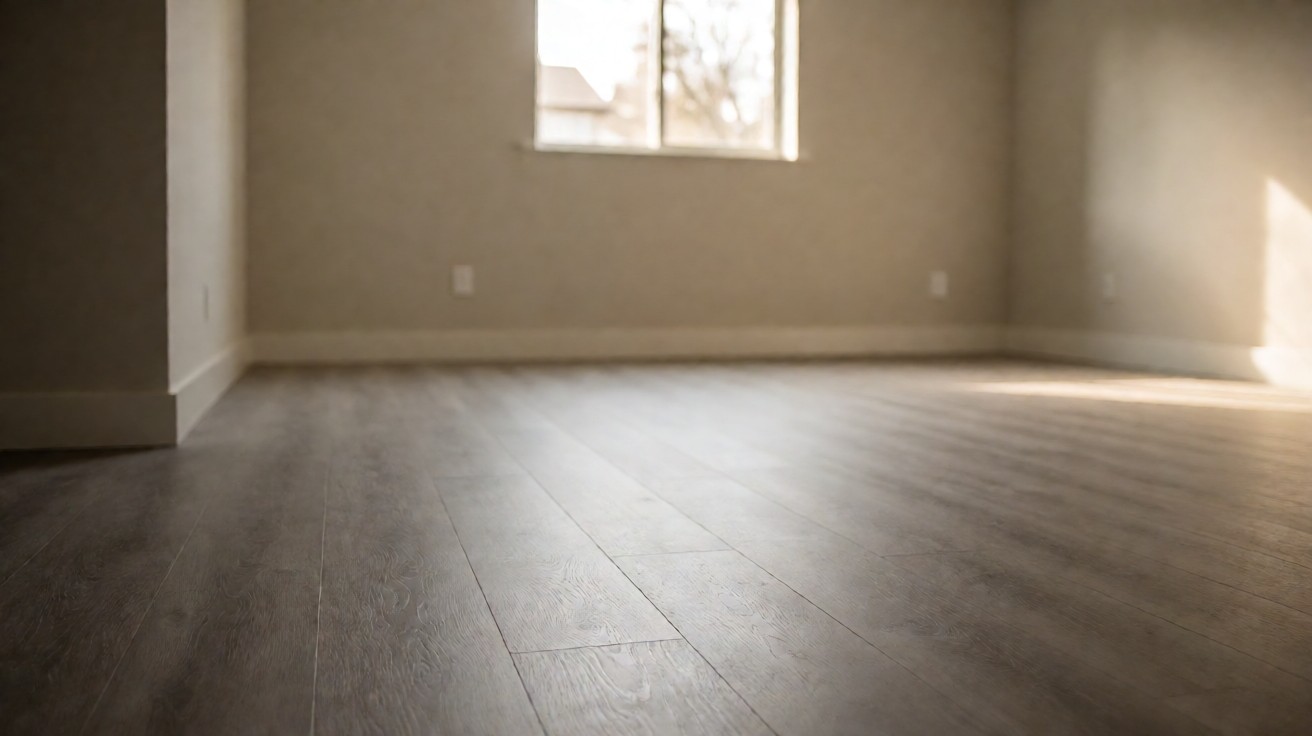
Rigid core is where most living rooms end up, because it takes everything a living room throws at it, costs less than hardwood, and installs over almost any subfloor you already have.
The version you want is SPC, the stone core, because it is the most dimensionally stable and the one that goes over radiant heat and a little moisture. WPC, the wood core, is softer underfoot but swells faster when it gets wet. That difference decides most of the pick, and the rigid core vinyl page walks through the two cores and the build that actually matters.
Laminate, Carpet, and Tile in Their Correct Places
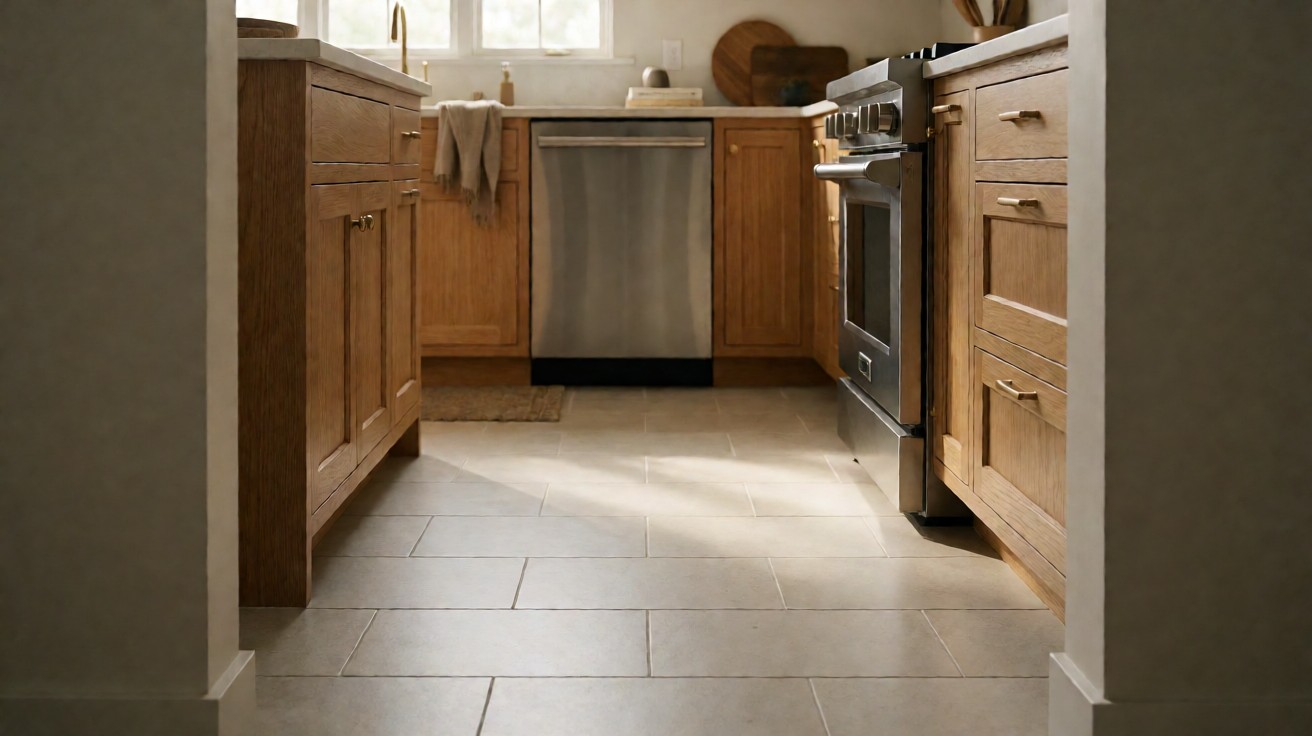
Laminate is the value pick when the room stays dry and the look has to be wood, and it is the weakest on moisture of the wood-look families, so a living room that spills is where it quietly fails. Carpet is the warmest and the quietest and the only one that is kind to a long day on your feet, and it is the right one in a room with a big rug and a radiator. Tile is the hardest, takes standing water, and can carry radiant heat, and it is the pick when the room is on the cold side or the floor simply has to take the most.
All three are covered in their own guides, and the flooring types compared page puts them in one table so you can read them against each other before you commit.
Underlayment, Acoustics, and the Room Below
The pad under a floating floor does more work than its price suggests. It takes the impact noise, the sound of a foot landing that carries down to the room below, and it gives the floor its give, and a good one on a bad floor reads as much better than a bad one on a good floor.
A felt or rubber pad is the one for a room that sits over a bedroom. A thin foam pad is the one for a room over concrete that just needs moisture protection. The pad is not optional on a floating floor, and the wrong one is exactly why a wood floor squeaks and a vinyl floor sounds hollow in an empty room.
Cost, and What It Actually Buys You
The families line up predictably, and the gaps are real. Rigid core and laminate are the two that stay under the others, tile sits in the middle, carpet depends on the fibre, and hardwood is the one you pay the most for and the one that shows it best when you sell.
The number that matters is not the floor by itself. It is the floor, plus the pad, plus the labour if it is not a DIY, plus the refinishing or the replacement on the time scale you can actually afford. A cheap floor that must come out in ten years and a mid-priced one that lasts thirty end up close on the money you will have spent.
| Family | Where it sits on cost | What that money buys you |
|---|---|---|
| Rigid core, SPC | Lower of the five | Toes everything, lays over almost any floor, comes out easily |
| Laminate | Lower of the five | A wood look for less, but the core swells on standing water |
| Porcelain tile | Middle of the five | Takes water and heat, and costs more to fix a mistake |
| Carpet | Variable | Costs less when the fibre is basic, more when it is wool |
| Engineered or solid wood | Higher of the five | The value and the value at resale, at a real cost |
Installation and How Reversible the Choice Is
The install method is where a surprising amount of the money hides. A click lock over a clean floor is a weekend with a mallet. A glue down is a job with a smell and a cure. A tile is a job that needs the mortar to dry and the joints to be cut right and the pad to be the right one.
If the room will be a different family, or you will rent it out, the reversible pick is a floating rigid core or a well laid carpet, because both come out without a fight. A set tile or a glued wood is the pick for a room that is not coming back up, and that is the honest way to think about it.
How to Choose, and Where to Look Next
Pick the two or three families that survive your household, then read the material guide for each one and the one comparison that answers your real split. The flooring types compared page is the map, and the hardwood flooring guide, the rigid core vinyl page, and the laminate flooring guide are the three that back the top picks for a living room.
The decision is not the material that is most beautiful. It is the one that survives your actual household for the years you will have it, at a price you will not regret, and that is the whole living room, picked once.