
The best bathroom floor is the one that stops losing the fight against standing water, and the family that does it cleanest is a large format porcelain tile.
A bathroom is the one room in the house where the floor is, on a normal day, standing water. The shower runs, the basin drips, a wet towel lands, and the floor has to take all of it for the years you have it, without swelling, without lifting, and without a slip. Everything else in the pick follows from that one fact.
This page walks through the families that survive that, the two that do not, and the installation details that decide whether a good material still fails, and it points you to the guides for the two picks.
Water Is the Whole Problem
Every other question in a bathroom, comfort, looks, cost, is secondary to the one question that breaks floors: what happens when water sits on the surface for a while, not just for a second. A material that only resists a splash and not a standing pool will fail in exactly that gap.
The two materials that lose on this single question are the wood families and standard carpet. They absorb, they swell, and they are the two you avoid, and the rest of this page is about which of the families that do not absorb is the right one for your room and your floor below.
The Materials That Actually Belong in a Bathroom
Four families belong in a bathroom, and they line up by how much water they actually take. Porcelain and ceramic tile take the most and are the default answer. Rigid core vinyl is the one that comes second, because the core is not wood and it does not swell the way it will on a living room. Natural stone and large format porcelain are the picks for a bigger budget and a floor that will be wet a lot.
The family to be careful with is ordinary luxury vinyl plank, the click lock, because it can lose at the joint where the water finds the seam, and the answer is to use the glue down version where the room will really get wet. The table sets the four families against the bathroom’s real demands.
| The bathroom’s real demand | The family that answers it | Why it survives there |
|---|---|---|
| Default, takes the most water | Porcelain or ceramic tile | Sealed, the joint is the only path, lasts the longest |
| Under the tile budget | Rigid core, glue down | The stone core does not swell, the edge is sealed |
| A bigger budget, a lot of wet | Large format porcelain or stone | Few joints, reads well when wet |
| Keep out of the wettest room | Solid or engineered wood | Swells on standing water, the seal lifts |
Porcelain and Ceramic, Explained
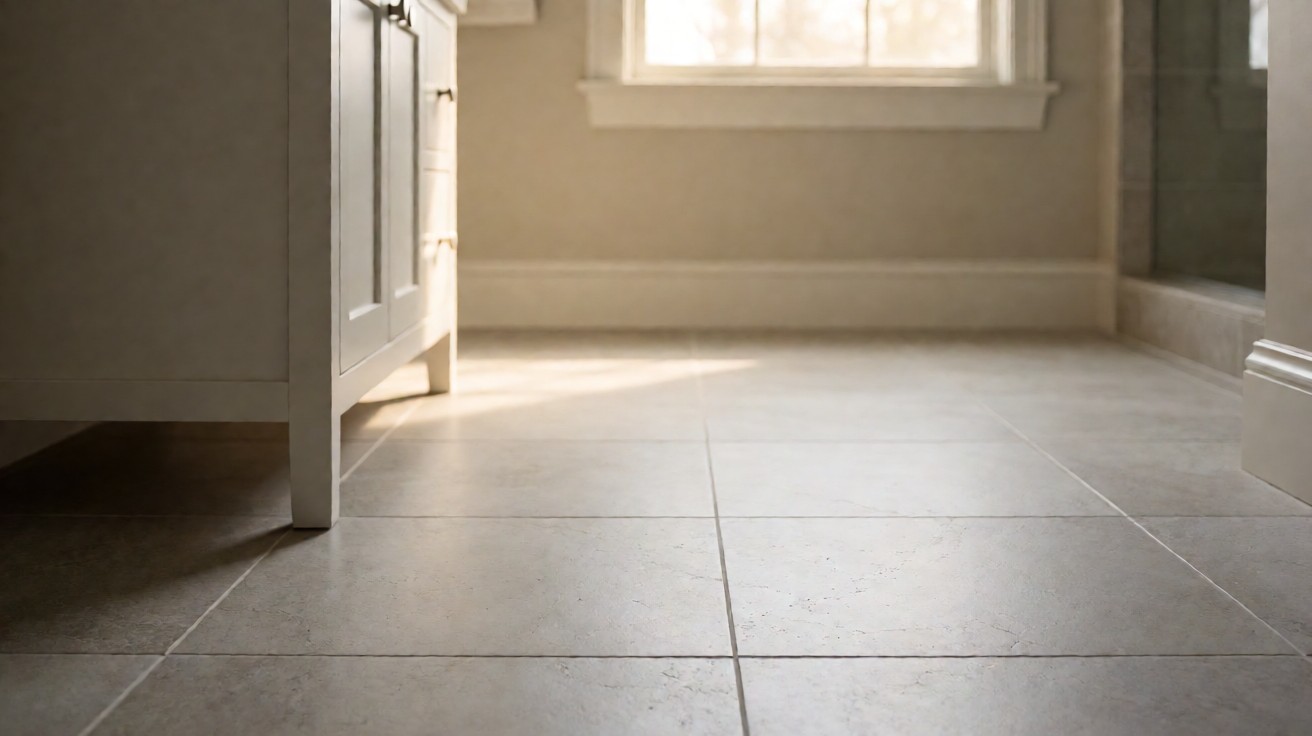
Porcelain is the denser, harder version of the tile, and it is the one you want where the floor will take a lot of standing water, because it absorbs less and the joint stays sealed for longer. Ceramic is the softer, cheaper version, and it is the right one where the bathroom is drier and the budget is tighter.
The size of the tile matters as much as the material. A large format tile has fewer joints, and fewer joints are the places water finds a way through, so a big porcelain tile is the pick for a floor that gets wet a lot, and the porcelain tile page walks through the size, the finish, and what the grade means.
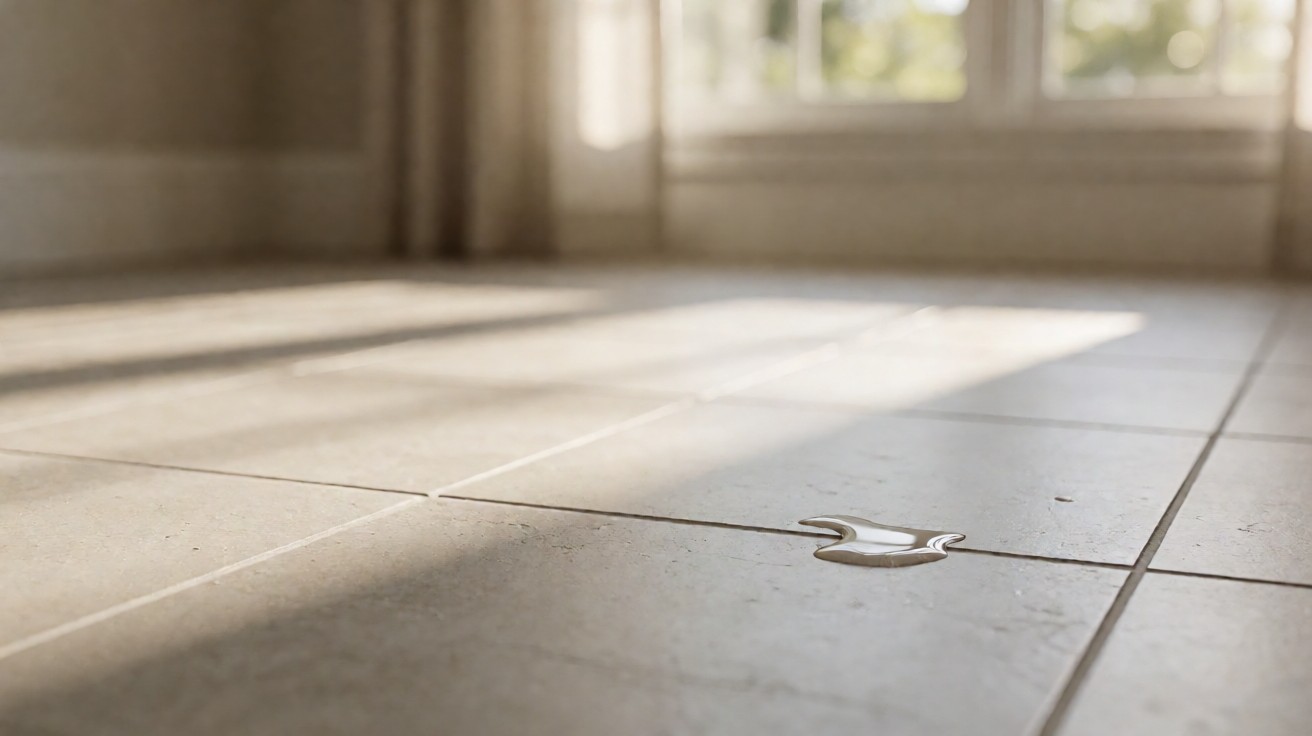
The Moisture Map: Where Water Comes From
The water in a bathroom is not uniform, and the map of it decides where you need the most protection. The shower is the source. The basin and the towel line are the next. The rest of the floor is the area that has to stay dry long enough for a clean, and the closer you get to the shower, the more the floor has to be able to take a standing pool.
This is why a bathroom is often done with a tile that reads well wet and a finish that does not go slick when it is. The room’s real layout, and where the door opens and where the mat goes, matters more than the material on its own, and the tile flooring guide covers how the two finish families read in a wet room.
Vinyl in a Bathroom, and What Rigid Core Actually Means
Rigid core is the vinyl family that can go in a bathroom, and the word rigid is the whole point: the core is stone or a stone mix, not wood, and it does not take up water the way the soft core does. It is the pick when the budget is under tile and the room is not a high traffic shower floor.
The version that works in the wettest part of the room is the glue down, because it seals the edge and the seam and the water cannot get under the joint. The click lock is the version you keep to the drier half. The rigid core vinyl page is where the two cores and the two install methods are walked through.
Wood, and Why It Is Usually the Wrong Room
Wood is the family that looks right in a bathroom and fails in one, and it is the pick to skip in the wettest room. Solid wood swells and the seal lifts. Engineered wood holds up better, and it is the version people lay in a bathroom that stays dry, but it is still a wood floor in a room that is standing water on a normal day.
If the look is wood, the honest answer is a tile or a rigid core with a wood look, and the hardwood flooring guide is where the two wood constructions and when each one is worth it are covered, and it is the right place to read before you spend the money on wood in a wet room.
Glue Down, Loose Lay, and the Adhesive Question
The install method in a bathroom is where a good material still fails, and the question is whether the floor is glued or loose. A loose lay is the one you cannot use where the water will find the edge, because the seam is the path. A glue down seals the edge and the seam and the floor stays put when the water tries to lift it.
The adhesive has to be the one rated for the wet area, and the floor has to be clean and dry before it goes down, and the two steps together are why a glued tile holds and a loose plank does not, and the tile flooring guide page covers the adhesive and the prep that the wet area actually needs.
Slip Resistance and What DCOF Means
A bathroom floor that is easy to clean and easy to slip on is a floor that has failed the job, and the number that decides it is the dynamic coefficient of friction, or DCOF, which is the measure of how much grip the floor has when it is wet, not when it is dry.
A matte or a honed finish reads as safer than a polished one in a wet room, and the joint line on a tile is the place where the slip starts, so a tight joint and a non slip finish are the two things that keep a wet bathroom from being a fall, and the tile flooring guide is where the two finishes and the number are covered.
Heating the Floor, and Why It Changes the Answer
A bathroom that is warm underfoot is a bathroom that is used more and dried faster, and the heating is the one upgrade that changes which material you can use, because a floor over heat has to move with the temperature and not crack with it.
Tile over radiant heat is the classic pick, because the material is dense and it takes the temperature change without lifting. Rigid core and some lamines can go over a radiant floor within a temperature limit, and wood and carpet have their own caps, and the flooring types compared page is where the heat limits for each family are laid out in one table.
Sealing, Grout, and the Maintenance Real Cost
The maintenance on a bathroom floor is not the cleaning, it is the joint, and the grout and the seal are the things you are actually maintaining for the years you have the room.
A well sealed large format porcelain is the one that asks for the least, because there are few joints and the surface is not porous. A small ceramic is the one that asks for the most, because the grout lines are the places the water and the mildew find. The pick that lasts the least trouble is the big tile, sealed, with a tight joint, and that is the honest maintenance cost of the room.
Cost, and What a Bathroom Floor Should Cost
The cost lines up the way the families do. Porcelain and ceramic are the middle. Rigid core is the one that stays under them. Natural stone and a large format are the ones you pay for. And the labour, the adhesive, and the prep are where the real cost hides, and they are not small in a room this small.
The number that matters is not the tile by the foot, it is the tile, plus the adhesive, plus the labour, plus the joint, on the time scale of the years you will have the room, and a cheap floor that must come out in a decade and a mid priced one that lasts thirty end up close on the money you will have spent.
How to Choose, and Where to Look Next
Pick the family that takes your water, then read the two guides for the pick. The tile flooring guide and the porcelain tile page are the two that back the default answer, and the rigid core vinyl page is the one for the room under budget, and the flooring types compared page is where you read the families against each other before you commit.
Before you buy, check three things that the showroom will not always tell you. The water absorption of the tile, which has to be low for a floor that stands wet. The slip number of the finish, which has to clear the room’s real use. And the joint plan, because the number of joints and the size of the tile are the two things that decide how much the floor will leak over the years you have it.
| What to check before you buy | The mark it has to meet | Why it decides the pick |
|---|---|---|
| The tile’s water absorption | Low enough to stay dry | The number that separates a bathroom tile from a dry room tile |
| The finish’s slip number | Clears the room’s real use | The DCOF that keeps a wet floor from being a fall |
| The joint plan | Fewer, larger joints | Fewer places for the water to find a way through |
The decision is not the material that is prettiest. It is the one that stops losing the fight against water for the years you have the room, at a price you will not regret, and that is the whole bathroom floor, picked once.