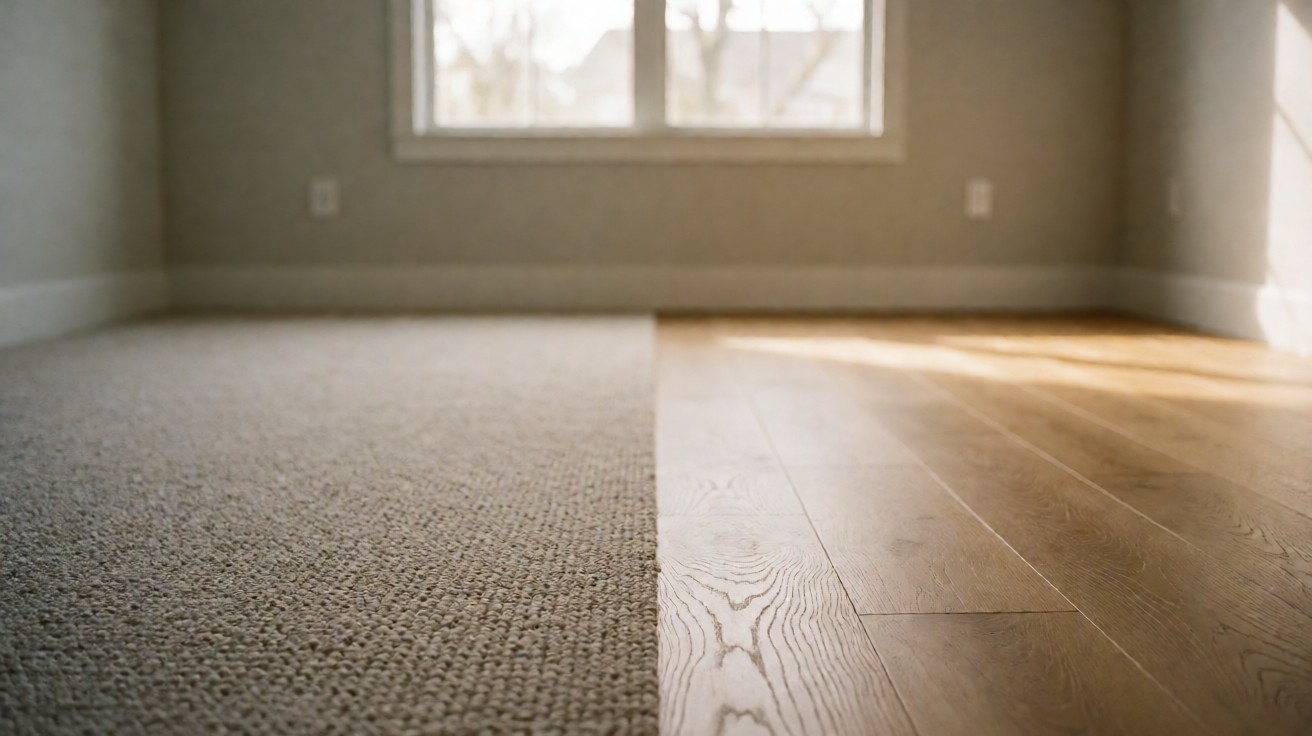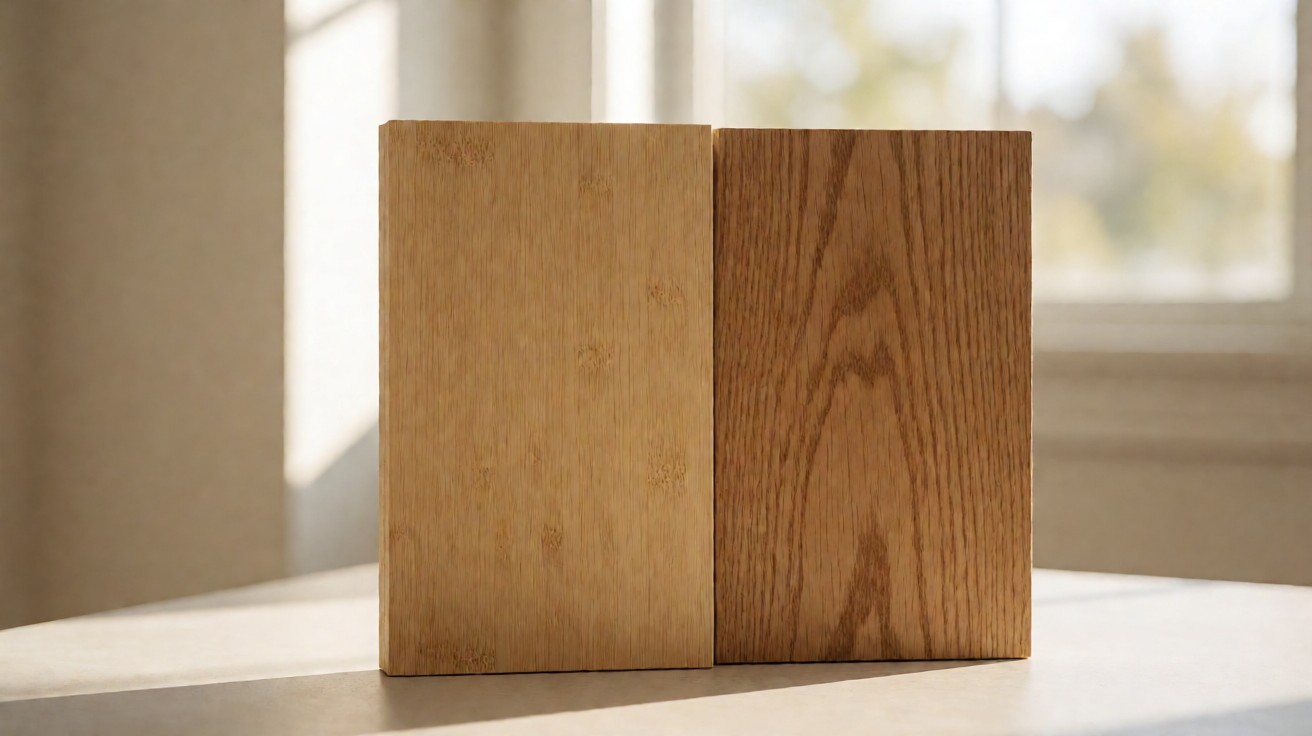

Bamboo is not a species of wood and it is not an imitation of one, and it sits somewhere between hardwood and laminate in ways that surprise most buyers. Bamboo is a grass. Its board is made from strands of the culm, dried, treated with borax or a comparable insect deterrent, and pressed together with adhesive under heat and pressure. It is dimensionally more stable than most hardwood, lighter and softer than oak, and harder to refinish than either. The bamboo page covers the material, and the cork versus hardwood comparison covers another soft-versus-hard decision.
What Bamboo Is Actually Made Of
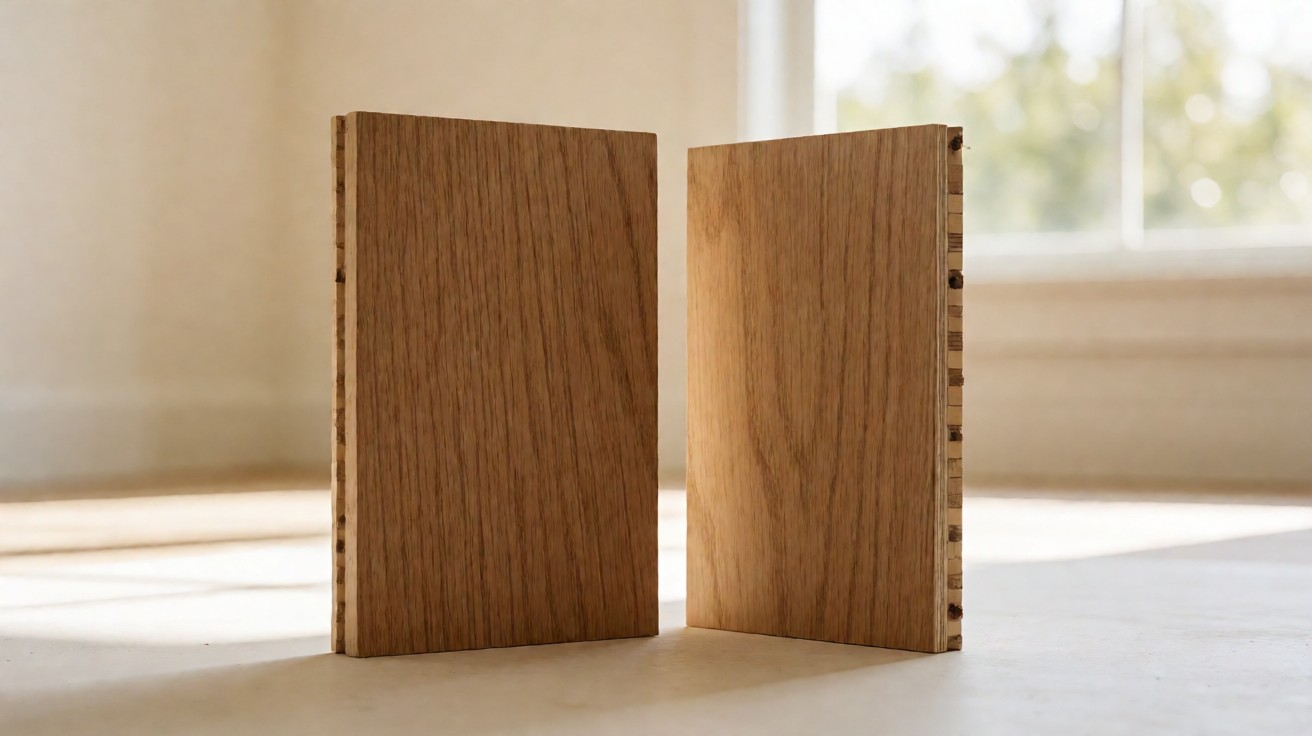
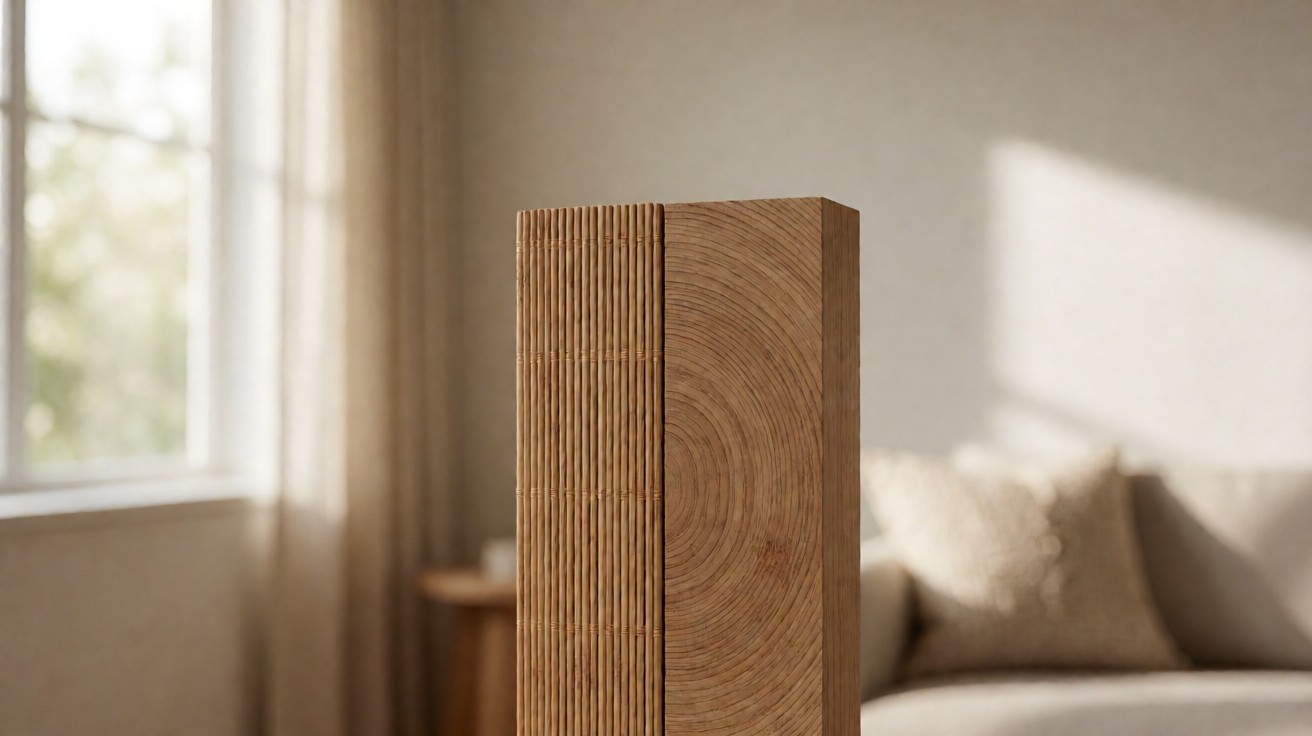
Two constructions account for almost all bamboo flooring, and they differ more from each other than either differs from hardwood. Solid strand bamboo is made from long vertical strands of the culm woven together and compressed, so the board is strong in every direction and the edge shows the strand structure running through the full thickness. Engineered or woven bamboo has a thin bamboo veneer or a printed layer over an HDF or plywood core, and it behaves more like engineered hardwood than like solid material.
The distinction decides almost everything else in this comparison. A solid strand board has real bamboo through its thickness and it is dimensionally stable. An engineered board has a bamboo surface over something that is not bamboo, and it inherits that core’s movement characteristics.
Stability and How Bamboo Moves
Bamboo’s real advantage over hardwood is dimensional stability, and it is a meaningful one. Solid strand bamboo is compressed in both directions during manufacture, which reduces the seasonal width movement that causes a solid hardwood floor to gap or cup. It is a frequently recommended product over a slab and in wide rooms for the same reason engineered hardwood is.
The limit is that this applies to solid strand construction. An engineered bamboo floor with an HDF core is only as stable as that core, and an HDF-core product is essentially a hardwood-look floor rather than a bamboo product in any sense that matters physically. Read the construction before crediting the material with the properties of a different one.
Hardness and How Bamboo Compares
On the Janka scale used to measure resistance to indentation, bamboo generally lands below oak and above maple, with the numbers depending on the species of culm and on whether the board is strand or engineered. It is softer than most hardwood and harder than most laminate, which places it between the two for the property that decides which rooms it suits.
Being softer is not only a disadvantage. It means bamboo dents less under a concentrated load than oak does, because the material gives slightly rather than crushing. A floor that takes a permanent crater under a stiletto is harder to live with than one that marks and recovers, and the hardwood grades page covers the same trade from the timber side.
Water, Humidity, and Where Each Belongs
Neither is a wet room product. Bamboo has a reputation for water resistance that is partly deserved and partly marketing: the strand construction and the factory finish absorb very little, and a spill that is caught immediately causes no damage. A bamboo floor that has genuinely got wet will swell and will not recover, exactly as engineered hardwood will not.
The practical difference is that bamboo tolerates a wider humidity range. In a coastal climate, a basement, or a room with seasonal swings, bamboo is the more forgiving of the two, provided it is solid strand and not an engineered board. In a dry heated interior where the subfloor is stable, hardwood is the more resilient choice over a decades-long hold because it can be resanded.
| Situation | Better Choice | Reason |
|---|---|---|
| Wide room or long plank runs | Bamboo | Low seasonal movement in solid strand |
| Coastal or high humidity area | Bamboo | Tolerates humidity swings better |
| Concrete slab, climate controlled | Bamboo | Stable under the assembly |
| Formal room, house held 30 years | Hardwood | Resandable, and reads as premium |
| Hallway with heavy traffic | Hardwood | Harder surface wears more evenly |
| Room with pets and claws | Hardwood | Both mark; oak shows it less |
| Budget-conscious new build | Bamboo | Comparable look, lower cost |
| Dining room or entryway | Hardwood | Resists permanent crushing |
Durability and the Refinishing Question
This is where bamboo is honestly weaker than hardwood. Strand bamboo can generally be refinished once, and only if the board is thick enough for a light rescreen and recoat. Deep sanding is not recommended because it reaches the adhesive lines and leaves a visible ridge. A hardwood floor can be sanded repeatedly, and the difference over a long hold is large.
Surface durability is a different question and bamboo does well on it. A quality bamboo floor with a factory aluminium oxide finish outlasts a mid-priced hardwood floor with a wax or oil finish in a busy room, and many bamboo products now carry 25 to 35 year residential wear warranties. The warranty is earned by the finish rather than by the core, which is why the finish specification matters more than the species.
Appearance and What You Are Really Choosing
Bamboo grain is distinctive and it is not wood grain. The vertical strand structure and the occasional node line are recognisable, and in the pale caramel colours most bamboo is sold it reads as its own material rather than as a copy of oak. Whether that is a virtue depends entirely on the room and on whether the rest of the house already reads as traditional.
There is a genuine carbonised range that simulates a darker stained oak, and it is the version most often bought by someone who wants the look of hardwood without the maintenance. The colour is achieved through a heat treatment rather than a stain, and it tends to be more uniform than a stained hardwood floor because the nodes and strand lines do not take the treatment evenly.
Acoustics and Underfoot Feel
Bamboo is harder and denser than cork and less resonant than a hollow-sounding laminate, and it sits in the middle of the three for underfoot comfort. Over a good underlayment it is quiet enough for a main floor, and it transmits more footfall noise upward than cork or carpet would.
The floor below notices the difference less than the room above does. Under the ASTM E492 impact sound class framework, a strand bamboo floor over a resilient underlayment performs acceptably and improves noticeably over the same floor with no underlay. As with every floating floor, the underlayment does most of the acoustic work rather than the board.
| Dimension | Bamboo | Hardwood |
|---|---|---|
| Botanical origin | Grass | Tree |
| Construction | Strands compressed, or veneer over a core | Solid board or veneer over cross ply |
| Janka hardness | Below oak, above maple | Varies by species, oak mid-range |
| Seasonal movement | Low in solid strand | Higher, and causes gapping |
| Humidity tolerance | Better | Poorer in dry interiors |
| Refinishing | One light rescreen at most | Repeated full resands |
| Surface durability | High with an oxide finish | Varies with the finish chosen |
| Typical service life | 20 to 30 years | Life of the building with resands |
| Material cost per sq ft | $4 to $12 | $5 to $20 |
Installation and What It Commits You To
Bamboo planks install as a floating click-lock system in almost every instance, and that makes them the easier of the two to install over an existing floor. A strand board is stiffer and heavier than a hardwood plank of the same size, and the cut edge is the same story: a fine-tooth blade or a table saw works better than a handsaw on a strand board, because the compressed structure cuts cleanly rather than chipping.
Hardwood in nail-down form cannot be laid over an existing floor. If the subfloor is going to be opened up regardless of what is installed, that gap narrows considerably and the install difficulty is less of a deciding factor. Over a slab, a click-lock bamboo plank is the straightforward option and hardwood is a more specialised one.
What Nobody Tells You: The Adhesive Issue
Most bamboo flooring is manufactured with a factory-applied adhesive that bonds the strands together, and it is that adhesive rather than the culm that sets the service life in a busy room. A board that has been well treated at the factory performs to its specification for the duration of the warranty, and a board that has been stored in a damp basement for a year will not.
The question to ask before buying is what adhesive system the manufacturer uses and whether it is rated for your climate. A generic answer of “resin bonded” tells you nothing. The material and performance comparison covers the same question from the flooring family side.
What Resale Buyers Think
Hardwood is read as premium and bamboo is read as a hardwood lookalike. In a listing conversation that costs bamboo real money in a sale inside ten years, and it is the same perception described in the solid versus engineered hardwood comparison.
It weakens in the way these things always do. A bamboo floor that has held up well for twelve years in a lived-in house reads as a floor that performed, and buyers increasingly judge the visible condition of the floor in the rooms they care about. It does not reach hardwood’s position, but the gap narrows with time.
Cost and the Real Price Difference
Bamboo material commonly runs $4 to $12 per square foot installed, against $5 to $20 for solid hardwood and $5 to $14 for engineered. It is the cheaper option, by a margin, but the gap narrows considerably with an engineered hardwood of the same thickness, because both have a comparable labour cost.
Over a long hold the two reverse. A strand bamboo floor in a busy family room is a twenty-five-year floor, and a hardwood floor in the same room is a lifetime floor that has been refinished twice. The break-even calculation depends on traffic, household, and hold, and it is worth doing before treating the upfront saving as the whole picture.
How to Choose Between Them
Choose bamboo when the room is wide, the climate is humid or seasonal, the budget matters, the house will be sold inside fifteen years, or you want a wide plank and a stable floor without paying hardwood prices. Choose hardwood when the room is formal, the house will be held for decades, a refinish is part of the plan, or the floor needs to be the most recognisable thing about the house.
The common mistake is choosing bamboo for a formal room in a house that will be held thirty years, and it is the same mistake as choosing laminate in that room. Both work, both look good, and neither has a second life. The other is choosing hardwood in a wide room over a slab in a coastal climate, where the same cost buys a floor that does not gap.