
In most hardware stores, the roll of patterned sheet flooring on the shelf is called linoleum. In most of those cases, it is not linoleum at all.
It is vinyl, a synthetic plastic, and the label is shorthand that has stuck for a generation. Linoleum and vinyl are not two names for the same floor, and picking the right one starts with knowing that they are almost opposite materials.
Linoleum is a natural product made from linseed oil, wood flour, cork dust, natural pigments, and mineral talc. Vinyl is a synthetic product made from polyvinyl chloride (PVC), a plastic, with a printed photographic film on the surface and a polyurethane wear layer on top.
One is renewable and self-healing; the other is water-proof and extremely durable. Getting the names straight changes everything about what a floor will do for you.
This guide compares the two materials across water, wear, feel, price, and what a room will actually need from a floor. If you have not yet decided between carpet, hardwood, and these two, the material comparison sets everything side by side. If you are weighing vinyl against the other synthetic options, the laminate guide and the vinyl flooring guide cover that part.
Linoleum vs. Vinyl: The Short Answer
If you want a natural, renewable, antimicrobial floor that is gentle underfoot and you are comfortable with a smaller colour range and a floor that can scratch and yellow in strong sun, choose linoleum.
If you want a floor that shrugs off water, resists abrasion, costs less, and is available in a huge range of looks that mimic wood and stone, choose vinyl. For most busy households and most wet rooms, vinyl is the practical default, and it is almost certainly the “linoleum” you were about to buy.
The honest dividing line is whether natural material matters to you. If it does and you will keep the floor clean and avoid a sun-blasted spot, linoleum is genuinely good. If you just want a forgiving, low-maintenance floor, vinyl is the better fit.
Linoleum and Vinyl Are Not the Same Thing
This is the whole point of the comparison, and it is worth stating plainly. Because the name “linoleum” is used so loosely, a lot of floorers believe they bought one when they bought the other.
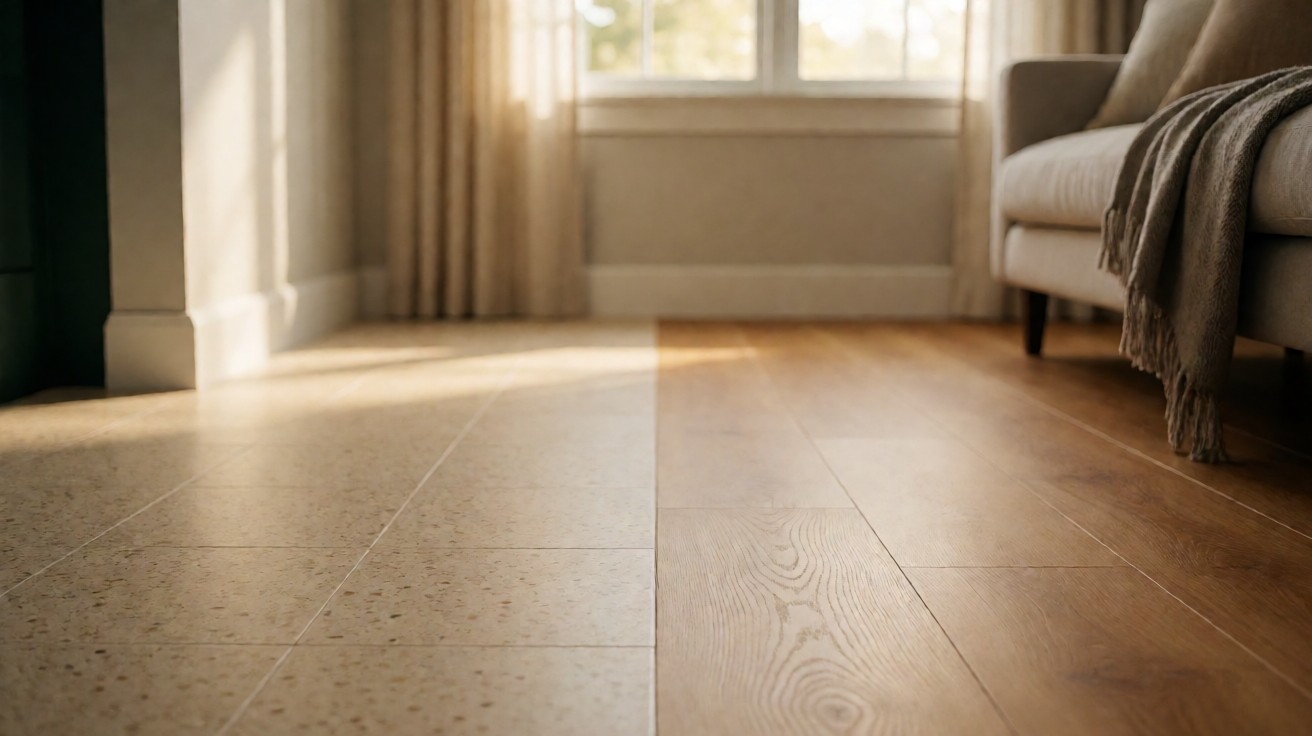
The way to tell them apart in a store: genuine linoleum is a uniform, dense, slightly granular material with a fine mineral speckle running through it, and it comes mostly in sheet form or as a plank over a sheet core.
Vinyl will have a clear photographic top layer, often a very sharp image, and it is usually sold as individual planks or tiles with a distinct printed face and a wear layer over a plastic core.
Ask your supplier to confirm what is in the product, not just what it is called on the sign. A floor that is labelled linoleum but behaves like plastic is vinyl in all but name.
What Linoleum Actually Is
Linoleum is one of the oldest engineered materials in flooring, and it is made from ingredients you would recognise from the kitchen. The binder is linseed oil, the ground is wood flour, the filler is a mixture of cork dust and mineral talc, and the colour comes from natural pigments. That mix is pressed and cured, and it produces a dense, warm, slightly flexible sheet.
Those natural ingredients are the reason linoleum behaves the way it does. Because the material is the same family as the surface it is made from, linoleum is naturally antimicrobial, meaning bacteria have a harder time surviving on it than on a bare plastic sheet.
It is also one of the more renewable floor options, because every ingredient comes from a plant or a mineral rather than a petroleum product.
The trade-off is that linoleum is not as forgiving as vinyl. It can scratch under heavy furniture, and the natural pigments shift toward yellow under strong sun, so a linoleum floor in a bright south-facing room can look uneven after a few years. It also does not float the way a plastic plank does, so the installation has to be clean.
What Vinyl Actually Is
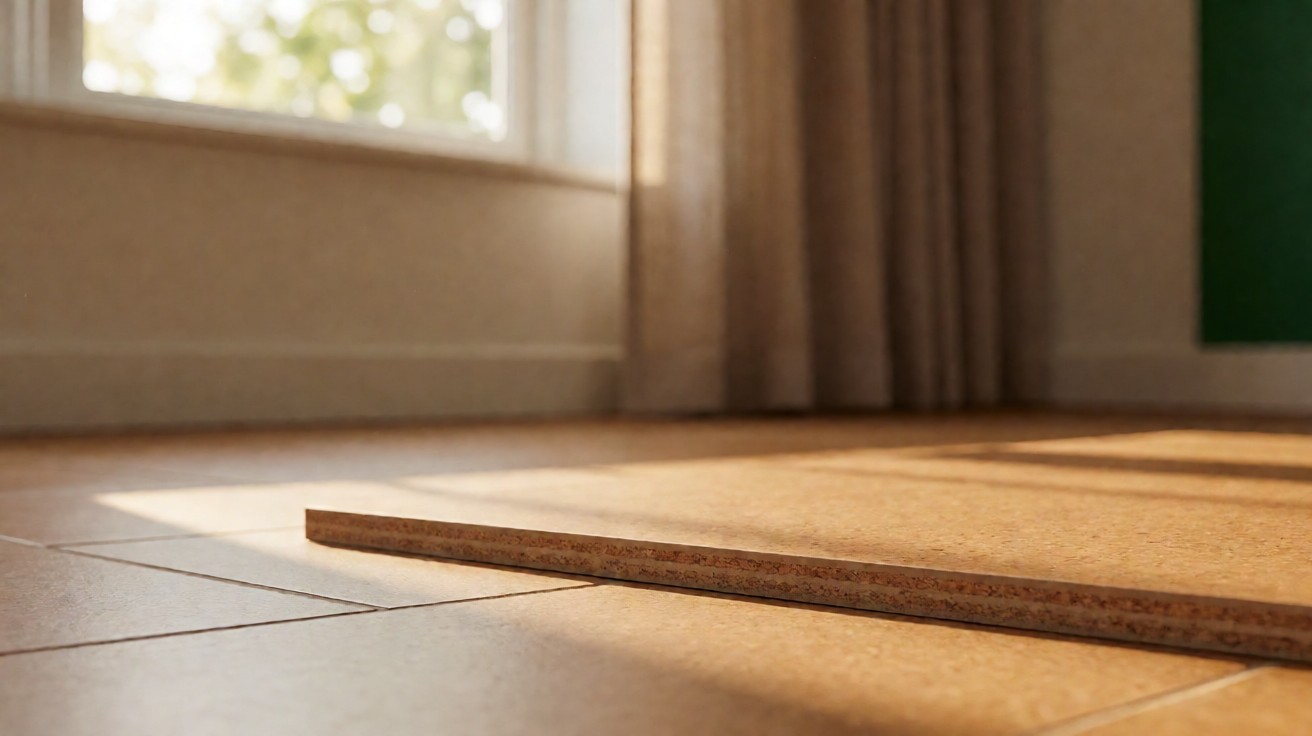
Vinyl flooring is a plastic. The core is a compound of polyvinyl chloride, sometimes layered over a cork or composite backing, and the top is a printed photographic film that can imitate wood, stone, concrete, or abstract patterns. A polyurethane wear layer sits over the print, and the thicker that wear layer is, the better the floor resists scratches and abrasion.
Because vinyl is synthetic, it does not care about water in the way natural materials do. A quality vinyl plank or tile will sit in a wet room for years without swelling. That is why it is the default choice for a basement, a kitchen, a bathroom, and any place where moisture is a real risk.
The flip side is that the surface is a printed image, not a material. No amount of wear layer can make vinyl actually behave like the wood it photographs, because under the print it is plastic. Scratch a vinyl floor and you will see the plastic underneath, not a wood grain.
Water Resistance
On this single factor the two materials are nearly opposite. Linoleum contains natural ingredients that will absorb water and a wet spot left long enough will stain or warp it, so linoleum is not the choice for a wet room.
Vinyl, by contrast, will not soak up water. A properly installed sheet or lock system will tolerate a basement that is damp and a kitchen that occasionally floods. If moisture is the thing you most need the floor to handle, vinyl wins without a close contest.
In dry, comfortable rooms the difference barely matters, and then the decision falls to feel, price, and how long you expect the floor to look new.
Durability and How Each Wears
Vinyl is the more abrasion-resistant material, and that shows over time. A well-made vinyl floor with a thick wear layer will take years of foot traffic and still look essentially the same. It scratches, of course, but under a scratch it is still the same plastic.
Linoleum wears differently. Because it is a softer, natural material, it shows the path of heavy traffic and the drag of furniture earlier than vinyl does, and it does not have a sacrificial wear layer to protect the face. It can also yellow in strong sun in ways vinyl does not, because the pigments are natural rather than a stable printed film.
If a floor will be genuinely hard used, in a busy household or a wet room, vinyl will generally outlast it. If the floor will be treated gently and kept out of strong sun, linoleum ages well.
Feel Underfoot and in a Room
Linoleum is noticeably softer and warmer than vinyl, because it is a dense natural material rather than a hard plastic. Under a bare foot in winter, the difference is real. A vinyl floor will always feel cold and hard by comparison, which is one reason people put a good underlay or a rug on it.
That softness also means linoleum is more comfortable to stand on for a long period, in a kitchen or a craft room, and it is a little quieter underfoot, which matters in a busy home. A vinyl floor will do the same job, but you have to layer it with an underlay to get the comfort.
Cost, Availability and How They Compare
Vinyl is the cheaper material and the far more available one. Most of the floor in a big home-centre is vinyl, and the range of printed looks is enormous, because any image can be printed on the surface.
Linoleum is the costlier option and the less available one. It is sold in a narrower range of colours, usually in sheet, and often has to be ordered rather than picked off the shelf.
If a room needs a natural material and you are willing to buy one, linoleum is genuinely better than its price. If the room needs something that mimics a wooden plank for a low cost, vinyl is the obvious choice.
At the same time, linoleum does not refinish like a hard wood. It cannot be sanded and re-lacquered to refresh the surface, so when a linoleum floor wears out it is replaced. That is one more cost to remember when you are working out how long the floor will actually last.
What You Actually Get in Each Material
The factor table above compares the two on paper. This one turns the material choice into a room-level assignment, because a floor that is right for a bedroom is often wrong for a basement, and vice versa. The decision usually makes itself once you name the room.
| Room | Material | Why it fits the room |
|---|---|---|
| Basement (damp) | Vinyl | Will not swell in moisture; linoleum would warp |
| Kitchen (spills) | Vinyl | Shrugs off standing water; wipes clean |
| Bathroom or laundry | Vinyl | The only sensible choice of the two |
| Bedroom | Linoleum | Softer and warmer; dry, gentle traffic |
| Craft or studio room | Linoleum | Comfortable to stand on for hours; gentle use |
| Sun-blasted south room | Vinyl | Natural linoleum pigments yellow; vinyl does not |
| Busy household | Vinyl | Withstands real foot traffic; hides wear longer |
| Natural-material priority | Linoleum | The only renewable, antimicrobial option of the two |
The Comparison at a Glance
| Factor | Linoleum | Vinyl |
|---|---|---|
| Composition | Natural: linseed, wood flour, cork, mineral | Synthetic: PVC core, printed film, wear layer |
| Water resistance | Absorbs, stains and warps in sustained moisture | Waterproof, tolerates wet rooms |
| Abrasion resistance | Moderate; soft and shows traffic | High; sacrificial wear layer protects it |
| Feel | Soft and warm underfoot | Hard and cool; underlay needed for comfort |
| Scratches | Visible; no sacrificial layer | Visible under the wear layer |
| Sun yellowing | Yes, natural pigments shift | Minimal, printed film is stable |
| Finish | Cannot be sanded and re-lacquered | Cannot be refinished either |
| Antimicrobial | Naturally | No, standard finish is not |
| Renewable | Yes, plant and mineral base | No, petroleum-based |
| Availability | Sheet mostly, narrower range | Plank and tile, enormous range |
| Typical price | Higher | Lower |
| Best in | Bedroom, craft room, quiet dry rooms | Kitchen, basement, wet room, high traffic |
How to Choose for Your Project
The material you need is usually already decided by the room, and that should be the first question. If the floor will be in a damp or very wet place, linoleum is out and vinyl is the only sensible answer of the two.
If the room is dry and the floor will be treated gently, think about what a natural material is worth to you. If it matters, linoleum is genuinely better than its price. If it does not, vinyl is cheaper, easier to source, and the floor most households will be laying without knowing they are choosing it.
If you are still weighing the two against the other options, the vinyl flooring guide covers construction and availability, and the material comparison sets every option side by side. If you are already committed to vinyl and wondering which type, the glue-down vs click-lock comparison settles the installation question.
Is linoleum really natural and antibacterial?
Genuine linoleum is both. The material is made from plant and mineral ingredients, and the natural mix has the same family as the material itself, which means bacteria have a harder time surviving on it than on a bare plastic.
If you are specifically shopping for a material that is both renewable and naturally antimicrobial, that is the reason to pick it. It is one of the few flooring options that is genuinely natural in both ingredients and behaviour.
Can I install linoleum over the floor in a wet basement?
You should not. Linoleum absorbs water, and a damp or flooded basement is exactly where it will swell and stain. A vinyl plank or tile is the correct answer there. If the basement is dry and well sealed, linoleum can be installed over it, but it is not the material you would pick for that room.
Where This Fits in the Rest of the Choice
Linoleum and vinyl are both sheet, tile, or plank floors, and this page settles the material question between the two. It does not cover the environmental side, which is a distinct decision. A dedicated comparison of the two materials on their environmental impact covers the renewable, recycled and off-gassing angles that this page does not.
From here, the next decision is which type of vinyl you will install, if that is what you are choosing, and which construction suits a room and a subfloor. The vinyl flooring guide owns that part, and the room-specific pages will tell you which material suits the space you are actually putting it in.