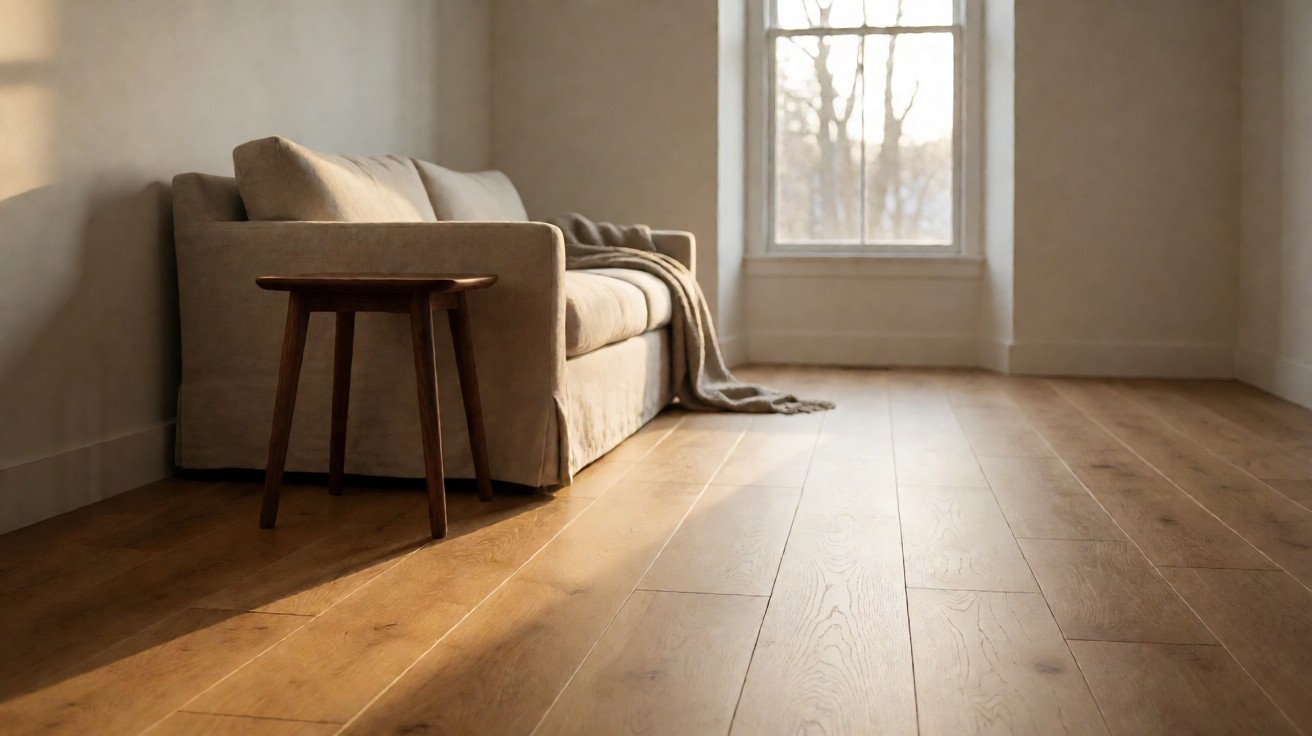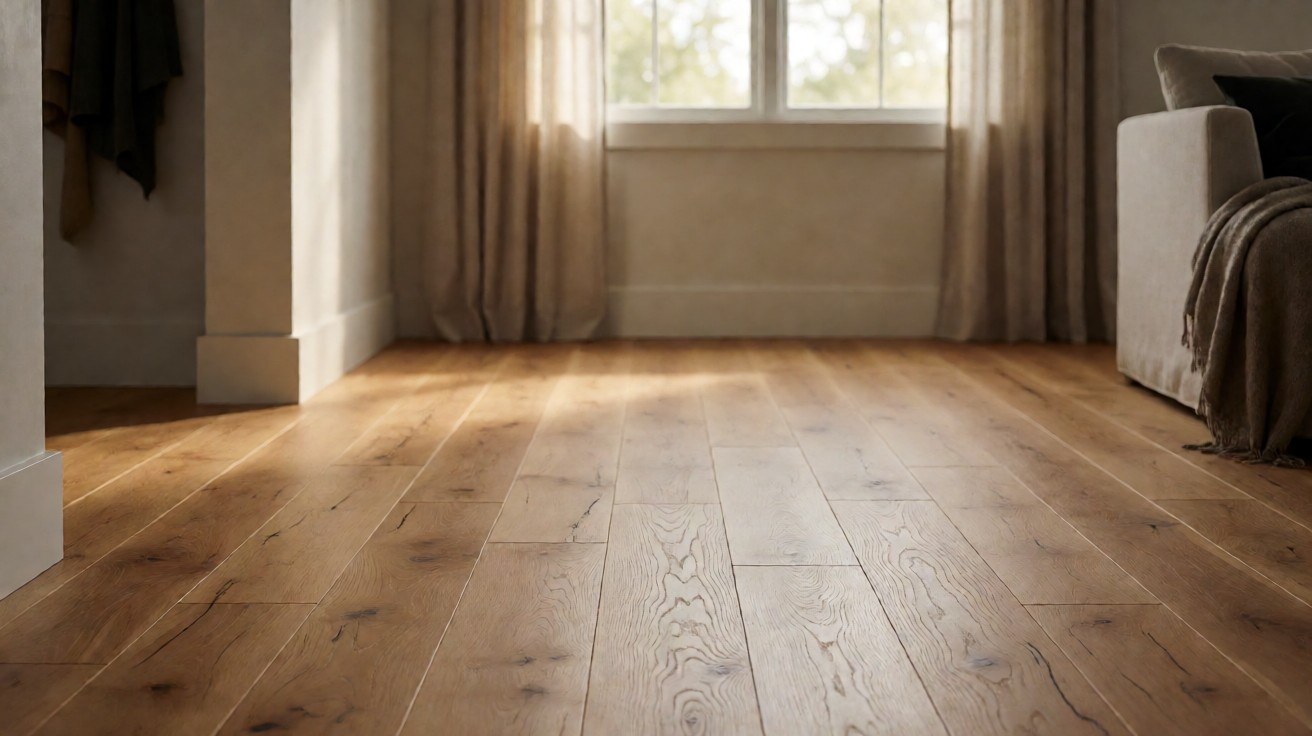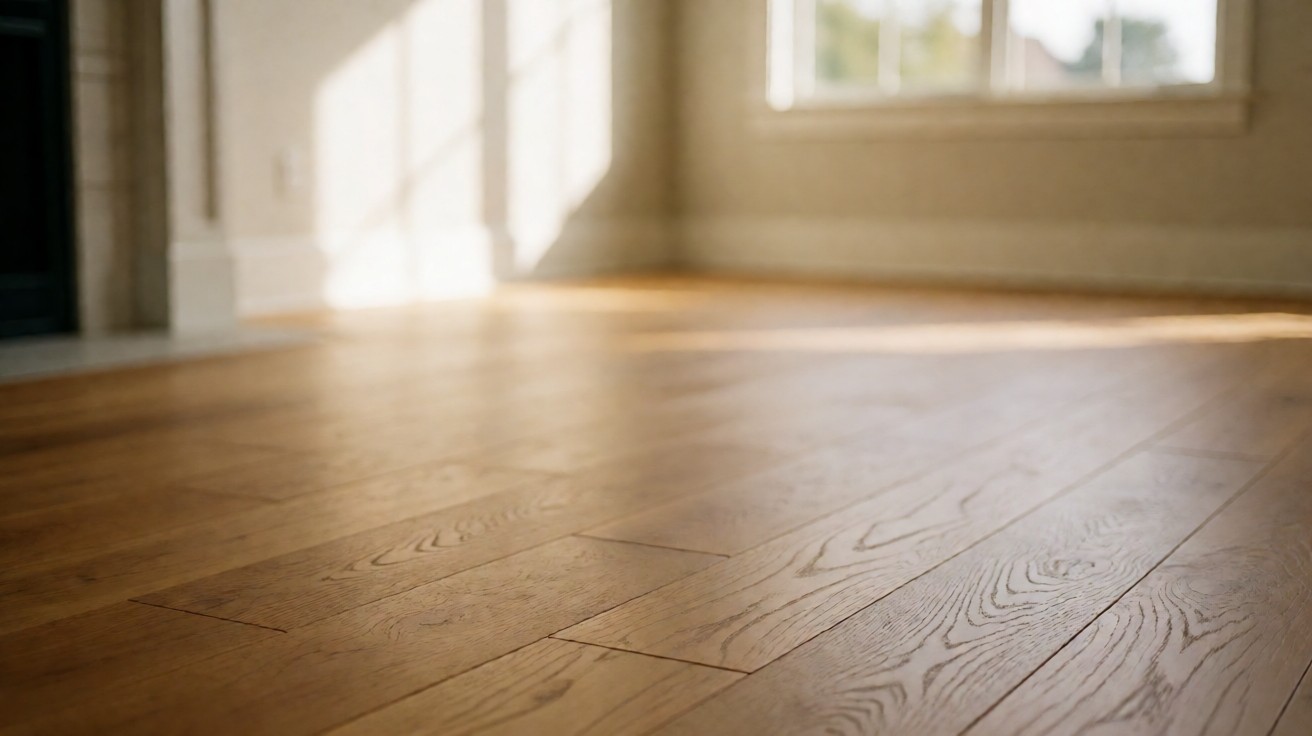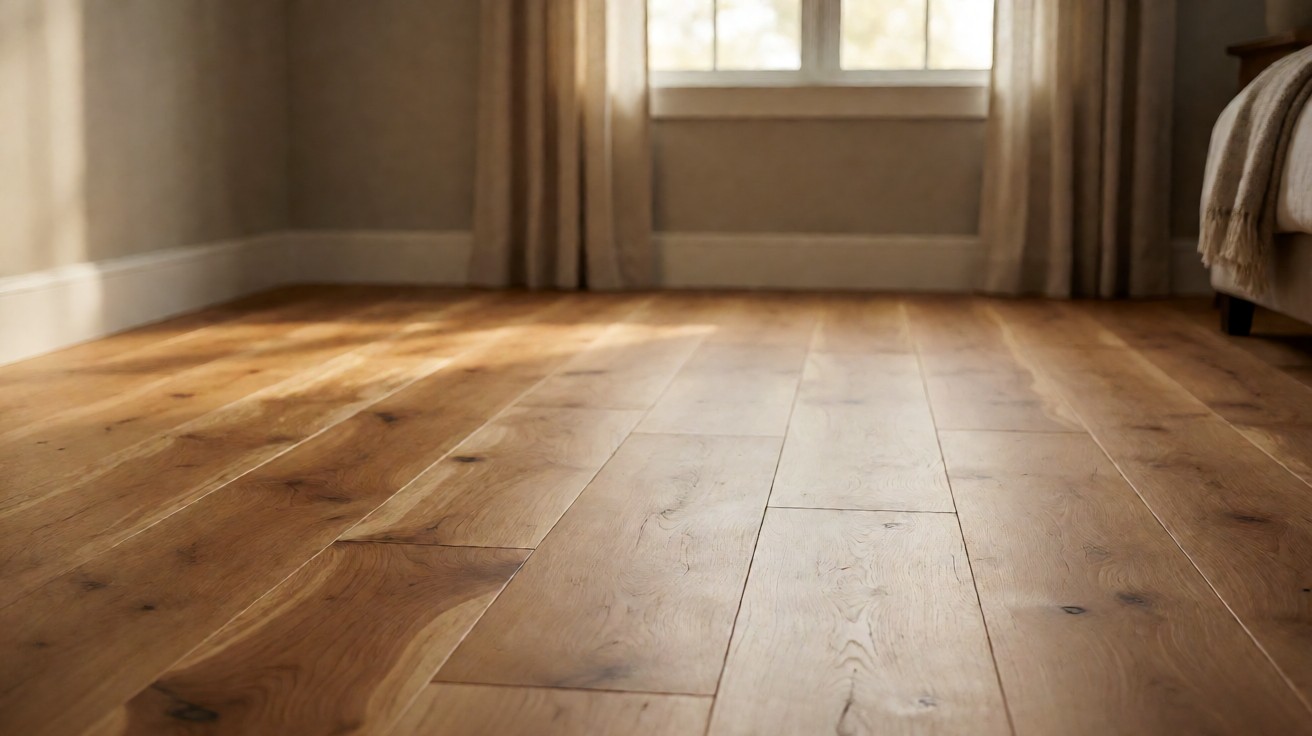

Every hardwood floor is a real wood floor, and the species you choose decides how the floor looks the day it is installed and how it ages over the next ten or thirty years. Color, grain pattern, hardness, moisture response, refinishing depth, and price all live in the species, before you ever pick a construction type or a finish.
The same species behaves predictably across manufacturers because the Janka rating, average density, and shrinkage values are properties of the wood itself, not of the brand label. That makes species comparison one of the few flooring decisions that does not change with the latest product catalog.
This guide lines up the species that show up in residential showrooms, then translates those numbers into a room-by-room recommendation. If you have not yet decided between solid and engineered construction, the hardwood flooring guide covers that question in a dedicated page.
Why Species Choice Matters For Hardwood Floors
What Affects Hardwood Floor Performance
Five properties separate one hardwood species from another: Janka hardness, average dried weight, tangential shrinkage, dimensional stability, and grain figure. The Janka hardness rating tells you how much force it takes to press a 0.444 inch steel ball halfway into a board, which is the industry stand-in for dent and scratch resistance. Average dried weight, measured in pounds per cubic foot, drives both perceived quality and shipping cost. Tangential shrinkage tells you how much a board moves across its width as humidity changes, and dimensional stability is the practical sum of that movement over real indoor conditions.
Grain figure is what you see: open grain versus closed grain, ring porous versus diffuse porous, and whether the earlywood and latewood bands read as visible streaks or fade into a uniform surface. Oak, ash, and hickory are ring porous with pronounced grain. Maple, birch, and beech are diffuse porous with a closed, even texture. That single split drives most first-impression color and texture choices.
Hardwood Species At A Glance
How The Common Domestic Species Compare
Eight species cover nearly every residential sale in North America: red oak, white oak, hard maple, hickory, pecan, American black walnut, black cherry, white ash, American beech, and yellow birch. Hickory and pecan sit so close in hardness and appearance that the National Wood Flooring Association groups them on the same line of the Janka table, and most retailers sell them interchangeably.
Soft maple, which is mostly red maple and silver maple, also shows up in builder-grade flooring but at a lower Janka rating than hard maple. It is a different product in the same family rather than a softer cut of the same tree.
What Species Names Actually Identify
The botanical name matters more than the marketing name. Red oak is Quercus rubra, white oak is Quercus alba, and the rest of the live oaks share the white oak group of closed pores and tyloses. Live sawn or rift and quartered white oak has the same Janka rating as plain sawn white oak, because hardness is a wood property, not a milling choice.
Walnut, hickory, and pecan are all in the Juglandaceae family and share a working profile, even though walnut is significantly softer than hickory on the Janka scale. The family tree is useful background, but the Janka number is the working answer for what you actually get on the floor.
White Oak And Red Oak: The Default
Where Red Oak And White Oak Differ
Red oak averages 1,290 lbf on the Janka scale, and white oak averages 1,360 lbf according to the NWFA hardness table. White oak is about five percent harder than red oak, has smaller and fewer open pores, and contains tyloses that block water movement. That last point is why white oak is the species used for wine barrels, ship timbers, and outdoor joinery, and also why it is the species most often recommended for kitchens and other rooms where standing water is a concern.
Red oak has a slightly pinkish cast and more open grain. It stains evenly because the open grain absorbs pigment uniformly, and it is the species used to set the industry reference value for hardness. When a manufacturer labels a floor “oak” without a qualifier, it usually means red oak in residential sales.
Why Oak Dominates Residential Sales
Oak is the most widely available North American hardwood, which keeps price competitive and lead times short. Both species accept stain and finish uniformly, both sand cleanly, and both take a standard three-quarter inch solid profile or a long-wear engineered format. Most manufacturers carry oak in every grade and color, which makes it the path of least resistance when a builder, designer, or homeowner needs a predictable material at a known price.
The other reason oak dominates is that both species refinish well. White oak and red oak respond to buff and recoat as well as to full resanding, which gives a homeowner a long service life before the floor has to be replaced.
Hard Maple And Soft Maple
Hard Maple Versus Soft Maple
Hard maple, mostly Acer saccharum, averages 1,450 lbf on the Janka scale, which is about twelve percent harder than red oak and seven percent harder than white oak according to the NWFA Homeowner’s Handbook. Most residential maple floors are sugar maple from the northern United States and Canada. Soft maple is overwhelmingly red maple (Acer rubrum) at 950 lbf, with silver maple at 700 lbf as the other common member of the species group.
A floor labeled “maple” without a qualifier is almost always hard maple. Soft maple shows up in builder-grade products, cabinetry, and some utility flooring, but it is not a typical premium hardwood floor species and it dents noticeably more than hard maple under daily use.
Why Maple Shows Wear Differently
Maple is diffuse porous and closes its grain so tightly that stain absorbs unevenly across the latewood and earlywood bands. That is why most maple floors are sold either natural with a clear finish or in a narrow range of light to medium tones that hide the absorption variation. Dark stains on maple are known to telegraph lap marks, and most manufacturers steer customers away from espresso or jacobian colors on maple.
Maple is also the species most likely to show fine scratches as light flecks when light hits the floor at a low angle. The closed grain does not have the earlywood valleys that scatter light on oak, so dust, pet nail impressions, and minor scuffs read more visibly than on a textured oak board.
Hickory And Pecan
Hickory And Pecan As A Single Category
The NWFA hardness table lists hickory and pecan together at 1,820 lbf, which is roughly forty-one percent harder than red oak. The category includes true hickories from the Carya genus and pecan, Carya illinoinensis. True hickory averages slightly higher density at fifty pounds per cubic foot, while pecan sits around forty-six pounds per cubic foot, but both wear and finish the same way in a real home.
Both species move more across the grain than oak or maple. Tangential shrinkage runs near 8.9 percent for pecan and as high as 12.6 percent for true hickory when measured from green to oven dry, which is the source of the wider expansion gaps installers leave on hickory floors compared with oak.
Why Hickory Reads As Rustic
Hickory and pecan have the widest color variation of the common domestic species, with creamy sapwood and reddish brown heartwood that read as different boards on the same floor. That contrast, combined with frequent knots, mineral streaks, and bird pecks, is the entire reason the rustic and character grades exist. A high grade “select” hickory will still show more color variation than a rustic-grade oak.
If a customer wants a uniform look, hickory is the wrong species. If a customer wants the wood floor to read as a material with character and history, hickory is the right answer, and the wider color range is treated as a feature rather than a defect.
American Black Walnut
Walnut Color And Aging
American black walnut, Juglans nigra, is the only common dark species in the domestic hardwood lineup. Fresh milled heartwood is a deep chocolate brown that lightens to a warm honey brown within a few years of UV exposure, then stabilizes at a slightly grayer mid brown over decades. The sapwood, which is pale cream, is usually sorted out in higher grades and used as a separate grade or painted for a contrast stripe.
Color change on walnut is the most dramatic of the common species. A new walnut floor and a five-year-old walnut floor in the same room can read as different products, which is a feature for a customer who likes the aging but a problem for a customer who picked the floor for a specific shade.
Walnut Hardness And Use Limits
Walnut averages 1,010 lbf on the Janka scale, twenty-two percent softer than red oak according to the USDA Wood Handbook. That puts it in the working range of any normal room, but it dents visibly under high heels, dropped cast iron, and active pet claws. Walnut is rarely the right species for an entryway, a mudroom, a kitchen with heavy traffic, or a playroom.
Walnut also machines and sands beautifully. It is the species of choice for high-end custom flooring, furniture, and architectural millwork, and it accepts oil and hardwax finishes more uniformly than most ring porous species.
Cherry, Ash, Beech, And Yellow Birch
Black Cherry As A Softwood Stand-In
Black cherry, Prunus serotina, averages 950 lbf on the Janka scale, which is twenty-six percent softer than red oak. Despite its relatively low Janka rating, cherry is a premium hardwood species because of its tight, even grain, its warm pinkish brown color, and the patina it develops as the heartwood darkens with age. Cherry is most often chosen for living rooms, dining rooms, dens, and primary bedrooms where traffic is moderate.
Cherry is the species that contradicts the rule that harder is better. Customers pick it because it looks refined and ages gracefully, not because it resists dents. In active households with dogs or heavy shoes, cherry wears on the surface faster than oak.
Ash, Beech, And Yellow Birch As Secondary Picks
White ash at 1,320 lbf, American beech at 1,300 lbf, and yellow birch at 1,260 lbf all sit within five percent of red oak on the Janka scale, which makes them direct substitutes in rooms where oak is the default answer. White ash has prominent open grain similar to oak and takes the same stain families. American beech is closed grained and pinkish, with a working profile closer to maple than oak.
Yellow birch (Betula alleghaniensis) has the warm honey color and fine closed grain that show up in mid-century interiors, and it sands smooth because the latewood and earlywood bands are nearly the same density. All three are available through most major manufacturers, though in narrower color and width ranges than oak or maple. For a fuller comparison of these species against oak and maple, see the broader flooring types compared breakdown.
Janka Hardness Compared
What Is The Hardest Common Hardwood Species?
Hickory and pecan, grouped at 1,820 lbf on the NWFA hardness table, are the hardest common North American hardwood species you can install in a residential floor. Brazilian walnut (Ipe) and several exotic species push past 3,000 lbf, but those sit in a different supply chain and price tier than the eight species in this guide.
Among the typical domestic species, the rank order from hardest to softest is hickory and pecan at 1,820 lbf, hard maple at 1,450 lbf, white oak at 1,360 lbf, white ash at 1,320 lbf, American beech at 1,300 lbf, red oak at 1,290 lbf, yellow birch at 1,260 lbf, American black walnut at 1,010 lbf, and black cherry at 950 lbf.
Reading The Janka Number Against Real Floors
Janka ratings come from clear, defect-free samples tested under ASTM D143, which is a controlled laboratory number rather than a guarantee of dent resistance in a finished floor. Real boards include knots, mineral, and machining variation, and the factory finish changes how the surface reacts to scratches. Use the Janka value to rank species against each other, then look at the actual sample boards in the room where the floor will be installed before committing.
A ten percent difference on the Janka scale is meaningful for a high-traffic comparison between hickory and oak, while a two percent difference between white ash at 1,320 lbf and beech at 1,300 lbf is within the noise of normal board variation.
| Species | Janka hardness (lbf) | Compared to red oak (1,290 lbf) |
|---|---|---|
| Hickory, pecan | 1,820 | About 41 percent harder |
| Hard maple | 1,450 | About 12 percent harder |
| White oak | 1,360 | About 5 percent harder |
| White ash | 1,320 | About 2 percent harder |
| American beech | 1,300 | About the same |
| Red oak (reference) | 1,290 | Benchmark |
| Yellow birch | 1,260 | About 2 percent softer |
| American black walnut | 1,010 | About 22 percent softer |
| Black cherry | 950 | About 26 percent softer |
All Janka values listed above come from the NWFA Homeowner’s Handbook to Real Wood Floors and the USDA Forest Products Laboratory Wood Handbook chapter 4. The handbook averages many samples per species, so the number is a working reference rather than the rating of any individual board.
Color, Aging, And Grain Figure
Which Hardwood Species Looks Lightest?
Hard maple sapwood is the lightest common hardwood floor material, with a near-white to creamy off-white tone that reads brighter than any other species under most interior lighting. Yellow birch is the next lightest, followed by white oak, which carries a warm tan rather than the pinkish cast of red oak. Hickory and pecan mix pale sapwood and warm brown heartwood, so the floor looks light from a distance and varied up close.
Walnut is the darkest species in the standard residential lineup, reading as chocolate brown on a new floor and shifting to a warmer mid brown over five to ten years.
Color Change And Patina Over Time
All hardwood species change color under UV light, just in different directions and at different speeds. Cherry darkens significantly. Walnut lightens and grays slightly. Oak ambers. Maple shifts to a slightly warmer cream. Hickory mostly holds its color, with some mild ambering of the sapwood. If a customer wants an exact color five years out, no species can promise that, and room rugs that move around reveal the UV pattern underneath.
Oak and maple are the species most often chosen for customers who want a stable long-term color. Walnut and cherry are the species chosen by customers who want the aging itself to be part of the design.
Stability, Moisture Response, And Subfloor Suitability
Which Species Are Most Dimensionally Stable?
Cherry, hard maple, and yellow birch are the most dimensionally stable common species, with tangential dimensional change coefficients close to or below 0.00300. White oak, red oak, and American beech sit in the moderate category at 0.00300 to 0.00369. Hickory and pecan move the most, with true hickory at 0.00411 and pecan at 0.00315 in the NWFA species reference.
Higher dimensional change coefficients mean wider expansion gaps, narrower recommended board widths, and more attention to seasonal humidity inside the home. A 5 inch hickory plank behaves differently from a 3 inch oak strip in the same room.
Species And Subfloor Suitability
For below-grade slabs and basements, engineered construction matters more than species, and most manufacturers approve only specific species for that service. White oak, hard maple, and hickory are the species most often approved in engineered formats for below-grade installation. Solid walnut and solid cherry below grade is rarely recommended by any manufacturer, because the moisture variation is too much for those species to absorb without cupping.
For above-grade plywood subfloors, any of the eight common species is appropriate in either solid or engineered form, provided the relative humidity at the time of install is within the manufacturer’s range.
Which Species Are Best For Radiant Heat?
American black walnut, hard maple, and yellow birch are the most cited species for radiant heat subfloor compatibility, with hickory and pecan as acceptable engineered options in manufacturer documentation. Red oak and white oak work but are mid-range, because oak moves more than walnut or maple on a percentage basis across the seasonal humidity cycles that radiant heat accelerates.
Quartersawn or rift cut white oak is the most stable wood cut pattern for radiant heat, regardless of species, because the cut restrains tangential expansion.
Cost And Availability Of Each Species
What Actually Moves The Price
Species price tier follows lumber availability and demand. Oak is the cheapest common species because the trees are abundant, the grading is straightforward, and the manufacturing volumes are high. Hickory and maple sit in the next tier up because the demand is strong and the supply is narrower. Walnut, cherry, and ash carry the largest price gap to oak, both because the lumber is more expensive and because the higher grades yield less usable footage per log.
Width, grade, color, and finish run separately from species. A 2 1/4 inch select red oak floor and a 7 inch character grade hickory floor can price in the opposite order from the species alone.
Supply And Lead Time By Species
Oak, maple, and hickory are stocked by every national manufacturer in a full range of widths, grades, and colors, with typical lead times of two to four weeks. Walnut is stocked in narrower ranges, often in one to three widths per manufacturer, with longer lead times for wide plank or character grade material. Cherry and ash are stocked as catalog items but with smaller color selections, and special orders for rift and quartered or wide plank cherry can run eight to twelve weeks.
If a project has a hard completion date, oak and maple are the lowest risk species to specify from a supply standpoint.
| Species | Janka (lbf) | Natural color | Grain | Refinishing depth | Relative price tier | Best fit rooms |
|---|---|---|---|---|---|---|
| White oak | 1,360 | Tan to warm brown | Open, ring porous | High (solid 3/4 inch) | Lowest of the eight | Living rooms, kitchens, entryways |
| Red oak | 1,290 | Pinkish tan | Open, ring porous | High (solid 3/4 inch) | Lowest of the eight | Bedrooms, hallways, whole house |
| Hard maple | 1,450 | Cream to light tan | Closed, fine | High but slow to sand | Low to moderate | Dens, gyms, bright modern interiors |
| Hickory and pecan | 1,820 | Cream sap, brown heart | Open, varied | High but with tear-out risk | Moderate | Rustic kitchens, cabins, family rooms |
| American black walnut | 1,010 | Chocolate brown | Closed, even | High (soft, sands easily) | Highest of the eight | Offices, libraries, primary bedrooms |
| Black cherry | 950 | Pinkish brown, darkens | Closed, smooth | High (soft, sands easily) | High | Dining rooms, formal living rooms |
| White ash | 1,320 | Pale tan | Open, ring porous | High | Moderate | Living rooms, recreation rooms |
| American beech | 1,300 | Pinkish cream | Closed, fine | High (slow sanding) | Moderate | Bedrooms, hallways, studies |
| Yellow birch | 1,260 | Honey to light tan | Closed, fine | High | Moderate | Bedrooms, mid-century interiors, studies |
Price tier is the relative spread within residential prefinished and unfinished solid hardwood in this guide and does not include engineered construction, exotic species, or custom reclaimed material.
Choosing A Hardwood Species For Your Home
Match The Species To The Room
The decision works in the opposite order from how most shoppers start. Start with the room conditions: humidity range, expected foot traffic, presence of pets, subfloor type, and whether the room is above grade. A moisture-variable room, a high-traffic room, and a comfort room each point at a small group of species, and only one or two names from this guide will survive that filter.
For most houses, white oak solves most problems because it carries a mid-range Janka rating, takes stain cleanly, accepts most subfloor types, and works in engineered as well as solid form. The other species are chosen over oak for color, grain character, or aging, not because oak fails at the basic job.
Which Hardwood Species Are Pet-Friendly?
Hickory and pecan at 1,820 lbf are the most pet-friendly common species in this guide, followed by hard maple and white oak in the next tier. The reason is not just hardness. A harder species resists visible denting from pet claws, and a less-figured species like maple or oak hides the fine scratches that any claw activity will leave. Walnut and cherry are the least pet-friendly because the Janka rating is lower and the surface shows scratches and oils more readily.
Texture matters as much as species. A wire brushed or hand scraped hickory hides claw marks better than a smooth maple, and matte finishes de-emphasize the scratches that any species will pick up under pet traffic.
Sample Boards And Lighting Before You Commit
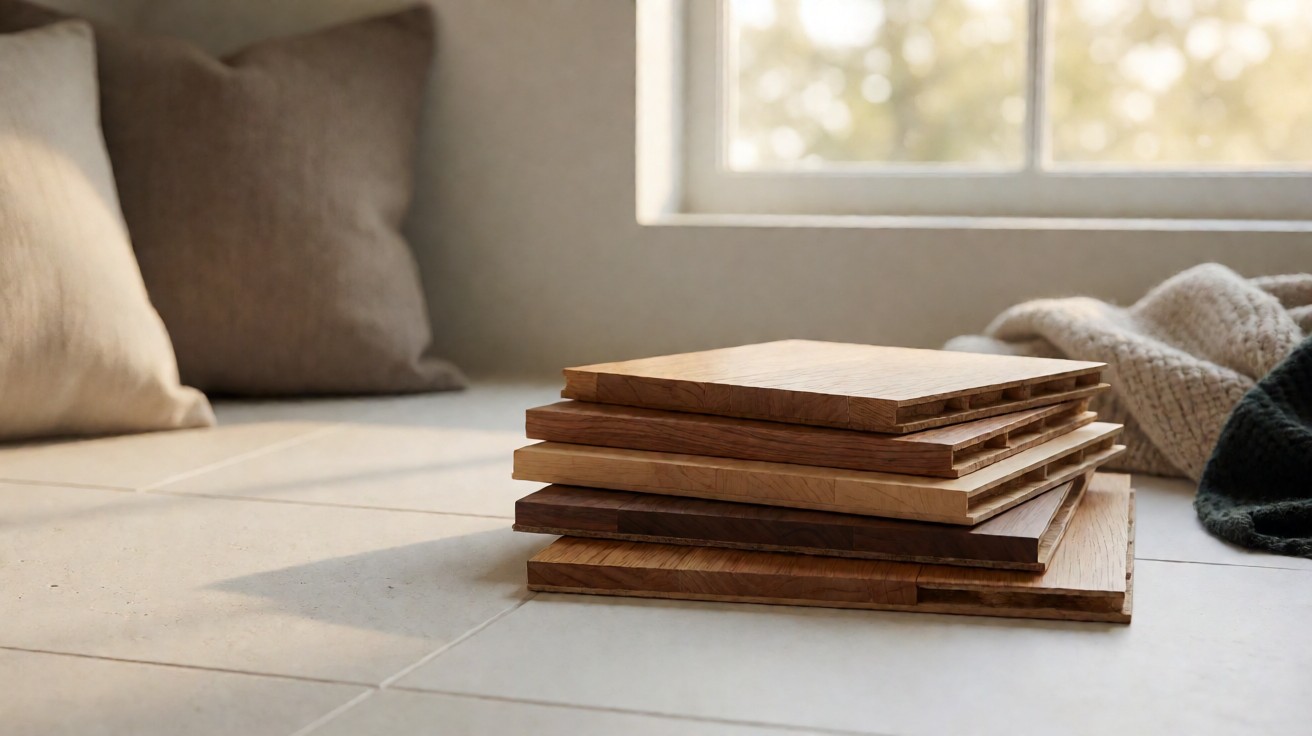
Every species looks different in the lighting of the actual room than under showroom fluorescents. Take a 12 inch sample board home, lay it in the room at the time of day the space will be used most, and look at it the next morning. This is the single step that prevents a “love the sample, hate the floor” moment.
Order full cartons if the project is large enough, because every species has a color run between batches and the floor needs enough cartons together to blend that run across the room.
For an overview of how hardwood floors fit alongside vinyl, laminate, tile, and carpet in a whole-house plan, the types of flooring page walks through the families side by side.