
Vinyl flooring offers the look of hardwood, stone, or tile with a range of installation options, maintenance needs, and price points. Whether you are updating a kitchen, finishing a basement, or replacing worn floors throughout your home, the right choice depends on more than color or price.
Construction, wear-layer thickness, moisture exposure, subfloor condition, and installation method all affect how your floor performs.
Explore the main types of vinyl flooring, compare the specifications that matter, and find an option that suits your room, household, and budget.
Shop Vinyl Flooring By Type
The three main formats are vinyl plank, vinyl tile, and sheet vinyl. Each has different design possibilities, installation requirements, and practical advantages.
Vinyl Plank Flooring
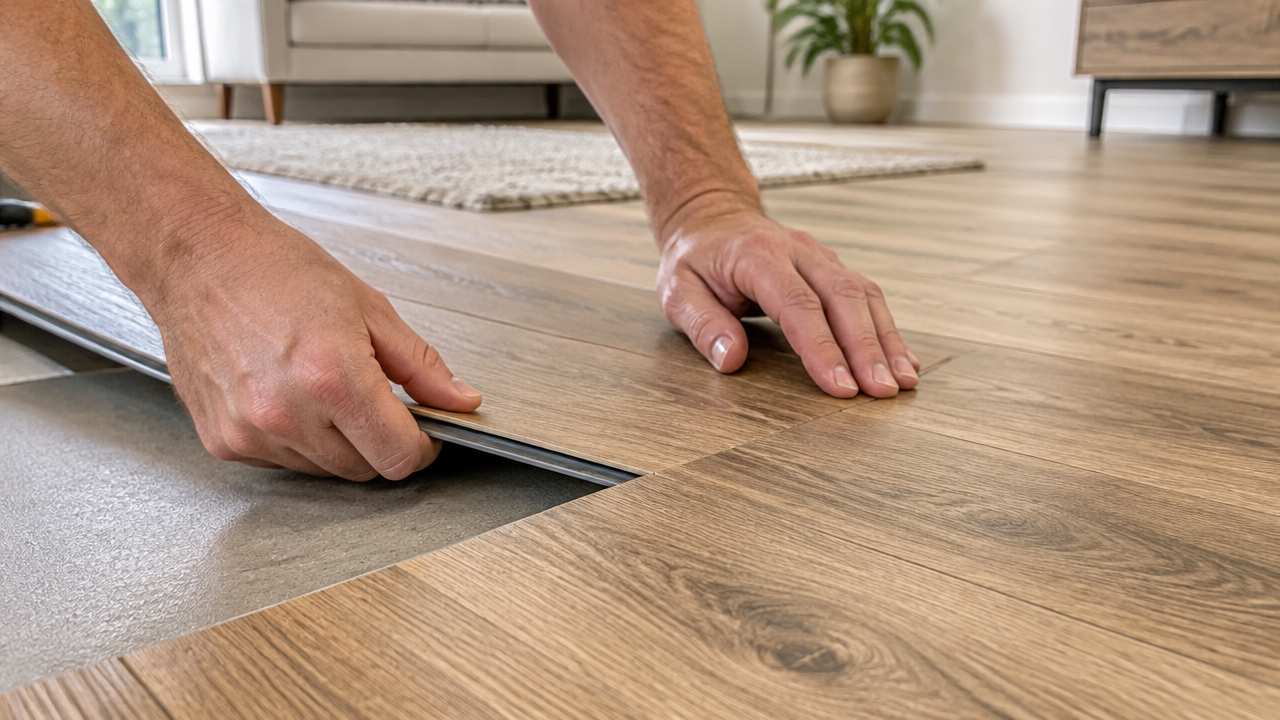
Vinyl plank flooring recreates the appearance of hardwood in individual plank-shaped pieces. Many products feature printed wood-grain patterns and textured surfaces, with options ranging from pale oak to darker, rustic finishes.
Luxury vinyl plank (LVP) is a popular choice for living rooms, bedrooms, hallways, and open-plan spaces. Depending on the product, planks may use a flexible construction or a rigid core and may install with a click-lock system or adhesive.
Consider Vinyl Plank If You Want:
- A wood-look floor without installing natural hardwood.
- Individual planks that can make replacement of a damaged section more practical.
- A choice of colors, plank widths, surface textures, and installation systems.
- A floor that fits your room’s traffic, maintenance, and moisture requirements.
Luxury Vinyl Tile (LVT)
Luxury vinyl tile recreates the appearance of materials such as natural stone, ceramic tile, and concrete. Individual tiles make it possible to create a more traditional tile appearance or a contemporary stone-inspired design without using the actual material.
LVT is available in different constructions and installation systems, including glue-down and click-lock products. Some designs are better suited to detailed layouts, while others prioritize a straightforward installation.
Consider LVT If You Want:
- A stone, concrete, or ceramic-inspired appearance.
- More design flexibility than a single continuous sheet.
- A resilient alternative to natural stone or ceramic tile.
- A product whose construction and installation requirements suit your space.
Sheet Vinyl Flooring
Sheet vinyl comes in large, continuous rolls that are cut to fit the room. Because it has fewer seams than a floor made from individual planks or tiles, it can be a practical option for kitchens, laundry rooms, and other spaces where surface moisture is a consideration.
The product’s backing, seam treatment, adhesive requirements, and installation quality still matter. A continuous sheet does not automatically make every installation waterproof.
Consider Sheet Vinyl If You Want:
- A generally budget-friendly flooring option.
- Fewer seams across the finished floor.
- A choice of wood, stone, tile, and other decorative patterns.
- A floor that can be installed using the method specified for the selected product.
Peel-And-Stick Vinyl Flooring
Peel-and-stick vinyl tiles and planks have a self-adhesive backing that bonds directly to a properly prepared surface. They can offer a relatively simple installation for small projects, depending on the product and room conditions.
However, adhesive performance depends heavily on surface preparation, temperature, moisture, and subfloor condition. Uneven surfaces, dirt, or incompatible existing finishes can cause edges to lift or pieces to shift.
Choose peel-and-stick flooring only when its installation instructions match your project. A simple installation method does not necessarily mean the product is as durable as a higher-specification floating or glue-down floor.
Vinyl Flooring Types At A Glance
| Flooring Type | Main Advantage | Main Limitation | Best Fit |
|---|---|---|---|
| Vinyl Plank (LVP) | Wood-look designs and individual pieces | Joint performance and core construction vary | Living areas, bedrooms, and many kitchens |
| Luxury Vinyl Tile (LVT) | Stone- and tile-inspired designs | Performance depends on the product and installation | Contemporary interiors and tile-look spaces |
| Sheet Vinyl | Fewer seams and often lower material cost | Precise cutting and seam work can be challenging | Budget-conscious projects and larger continuous areas |
| Peel-And-Stick Vinyl | Simple installation approach | Sensitive to subfloor preparation and adhesive conditions | Suitable small projects and approved surfaces |
The best format depends on your priorities. For example, sheet vinyl may suit a budget-focused renovation, while rigid-core LVP may appeal to someone who wants a wood-look floor with a floating installation system. Neither choice eliminates the need to check product specifications and site conditions.
What To Look For When Buying Vinyl Flooring
Two products can look almost identical while differing in wear protection, core construction, installation requirements, and warranty coverage. Compare the technical specifications before choosing based on appearance alone.
Wear-Layer Thickness
The wear layer is the clear protective layer above the printed decorative design. It helps resist everyday abrasion and surface wear.
Manufacturers commonly express wear-layer thickness in mils, where one mil equals 0.001 inch. A 12-mil wear layer, for example, is 0.012 inch thick. Mils are not the same as millimeters.
A thicker wear layer can be useful in areas with more foot traffic, but thickness alone does not guarantee scratch resistance or overall quality. Surface coatings, product construction, footwear, furniture, cleaning practices, and the type of damage all affect performance.
When comparing products, look for:
- The stated wear-layer thickness.
- The manufacturer’s description of the surface finish.
- Suitability for residential or commercial use, as applicable.
- Specific warranty coverage for wear and other surface damage.
Total Flooring Thickness
Total thickness describes the entire plank or tile, not just its protective surface.
A thicker product may have a different core, backing, or attached underlayment, which can influence rigidity, comfort, sound, and installation requirements. However, a thicker plank is not automatically more durable or suitable for every subfloor.
Check the complete construction and the manufacturer’s installation specifications. Also confirm how the product’s height will meet adjacent flooring, doorways, cabinets, and transition strips.
Core Construction: SPC And WPC
Some luxury vinyl products use a rigid core.
- SPC (Stone Plastic Composite): Typically uses a rigid core containing mineral filler and polymer. Its stiffness can help the floor resist some forms of indentation, although actual performance depends on the complete product and installation.
- WPC (Wood Plastic Composite): Typically uses a foamed composite core. Some products feel more cushioned underfoot, but that does not make every WPC floor more comfortable or more durable than SPC.
Neither label tells you everything about a floor’s performance. Compare the wear layer, total thickness, locking system, approved underlayment, indentation guidance, warranty, and subfloor requirements.
Installation Method
Vinyl flooring is available in several installation systems:
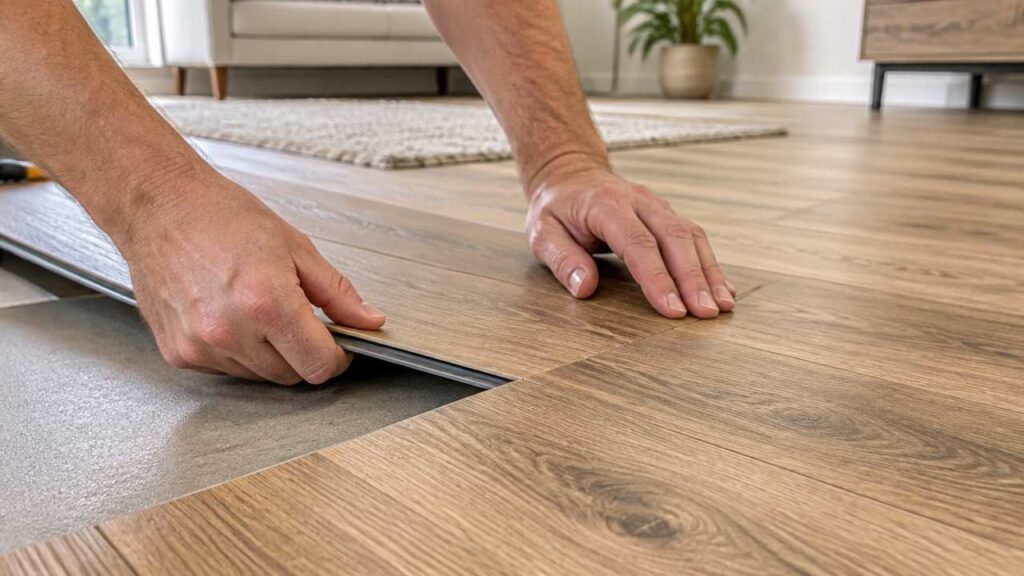
- Click-Lock Or Floating: Planks or tiles connect to one another and sit over the approved substrate without being fully bonded across the floor.
- Glue-Down: The product is bonded to the subfloor using the specified adhesive. This system can suit some high-traffic applications and installations where a more fixed surface is preferred.
- Loose-Lay: Products are designed to remain in position with their construction, weight, friction, and any specified adhesive. The installation requirements vary.
- Self-Adhesive: The product’s adhesive backing bonds directly to a compatible prepared surface.
Installation method affects labor, preparation, repair options, and the conditions in which a product can be used. Do not choose an installation system based only on which one appears easiest to install.
Attached Underlayment
Some vinyl planks include an attached underlayment; others require a separate compatible layer or no additional underlayment at all.
An extra layer may be prohibited under certain rigid-core products because it can affect the locking system, movement, or warranty coverage. Underlayment also does not automatically correct an uneven subfloor or solve moisture problems.
Follow the manufacturer’s instructions for underlayment, moisture barriers, and approved substrates.
Is Vinyl Flooring Waterproof?
Many vinyl flooring products have waterproof surfaces or cores, but that does not mean every vinyl floor installation is waterproof under all conditions.
The distinction matters because water can still reach the subfloor through joints, edges, perimeter gaps, seams, or poorly detailed transitions. Water trapped beneath flooring can also create problems even when the vinyl itself does not absorb it.
Before buying, check whether the manufacturer describes the product as waterproof or water-resistant, what that claim covers, and which installation conditions apply. Confirm the requirements for perimeter gaps, bathroom fixtures, transitions, and any necessary sealants.
Is Vinyl Flooring Suitable For Bathrooms And Kitchens?
Vinyl can be suitable for many kitchens and bathrooms when the product is approved for the application and installed according to its instructions.
In kitchens, consider spills, dropped utensils, frequent cleaning, furniture loads, and traffic. In bathrooms, pay particular attention to water exposure around showers, tubs, toilets, and plumbing penetrations. The floor’s water-related claims do not replace proper waterproofing of the surrounding building assembly.
Can You Install Vinyl Flooring In A Basement?
Vinyl may be an option for a basement, but the moisture conditions beneath the floor are critical. Concrete can transmit moisture, and groundwater or drainage problems can create hydrostatic pressure.
Before installation, check the slab’s condition and moisture requirements, including any testing specified by the manufacturer. A waterproof vinyl surface cannot fix a damp slab, active water intrusion, or an unsuitable subfloor.
How Durable Is Vinyl Flooring?
Vinyl flooring can handle everyday household activity, but its service life depends on product quality, installation, traffic, maintenance, and exposure to damage. No single thickness measurement guarantees how long a floor will last.
Consider the conditions the floor will face:
- Pets And Children: Look for appropriate wear protection, easy-clean surfaces, and product guidance on scratches, stains, and accidents. No vinyl floor is completely scratch-proof.
- Heavy Furniture: Check indentation guidance, furniture protection recommendations, and restrictions on rolling loads.
- Direct Sunlight: Strong sunlight and temperature changes can affect some products. Verify UV, heat, and expansion guidance, especially near large windows.
- High-Traffic Areas: Compare wear-layer specifications, intended-use ratings, finish characteristics, and warranty conditions.
- Dropped Objects: Vinyl may be more forgiving than ceramic tile in some situations, but sharp or heavy impacts can still damage the surface or core.
Use furniture pads where recommended, keep abrasive dirt off the floor, and clean spills promptly. Follow the product’s cleaning instructions rather than assuming every vinyl surface tolerates the same chemicals or equipment.
Pros And Cons Of Vinyl Flooring
Vinyl flooring offers a practical balance of appearance, maintenance, and cost for many projects. Its limitations are important, too.
Advantages
- Wide Design Selection: Planks, tiles, and sheets are available in wood-look, stone-look, concrete-inspired, and other designs.
- Straightforward Routine Care: Most products need regular sweeping or vacuuming with an approved setting and damp cleaning with a compatible product.
- Moisture-Tolerant Options: Many products are suitable for rooms where occasional spills are likely, provided the installation and room conditions are appropriate.
- Multiple Price Points: Basic sheet vinyl and higher-specification luxury vinyl offer different ways to manage a flooring budget.
- Flexible Installation Choices: Depending on the product, buyers can choose floating, glue-down, loose-lay, or self-adhesive systems.
Limitations
- Surface Damage Is Possible: Scratches, dents, gouges, and scuffs can occur, and some damage cannot be repaired invisibly.
- Subfloor Preparation Still Matters: Unevenness, debris, and moisture can compromise the finished floor or installation.
- Sunlight And Heat Can Be A Concern: Some products may fade, discolor, expand, or otherwise change under unsuitable conditions.
- Repair Can Be Complicated: Replacing a plank or tile may require access to the correct product and careful removal. A damaged sheet floor can be more difficult to patch inconspicuously.
- Material And Environmental Trade-Offs: Vinyl is a synthetic flooring material. Buyers concerned about emissions, material composition, or end-of-life disposal should review product disclosures and relevant certifications.
Vinyl Flooring Vs. Laminate, Hardwood, And Tile
The right comparison depends on how you use the room and what you value most.
| Flooring Material | Main Strength | Main Trade-Off | Consider It When |
|---|---|---|---|
| Vinyl | Wide design range and moisture-tolerant options | Can be scratched or dented; synthetic material | You want practical maintenance and a choice of installation systems |
| Laminate | Detailed wood-look designs and varied surface textures | Water tolerance varies, and moisture can damage some products | You want a wood-inspired appearance and can meet the product’s moisture requirements |
| Hardwood | Natural wood character and the potential for refinishing | Costs and maintenance vary; moisture and scratches can be concerns | You value genuine wood and long-term refinishing options |
| Ceramic Or Porcelain Tile | Hard, wear-resistant surface with strong moisture performance when properly installed | Hard underfoot and typically more involved to install | You prioritize a tile surface and can accommodate the installation work |
| Carpet | Soft surface and warmth underfoot | Can retain dirt and stains and requires different cleaning | Comfort and a softer surface matter most, particularly in bedrooms |
Vinyl is often a strong candidate when you want a practical, easy-care floor with a specific design. Hardwood may be a better fit if natural wood and refinishing matter most. Tile may suit areas where a hard, durable surface is the priority. Laminate deserves consideration when its design and product-specific moisture performance meet your needs.
Compare the actual products and installation costs rather than assuming every material in a category performs the same way.
How Much Does Vinyl Flooring Cost?
Vinyl flooring prices vary with format, construction, wear-layer specifications, brand, finish, and retailer. Installation costs depend on room size, labor rates, subfloor preparation, and the complexity of the project.
As a broad US-market reference, Angi’s 2026 published estimates put basic sheet vinyl materials at roughly $1 to $2 per square foot and LVP or LVT materials across a much wider range of approximately $1.50 to $12 per square foot. Its reported installed costs range from about $2 to $22 per square foot across different products and projects.
These are broad published estimates, not current quotes for a specific product or location.
What Affects The Total Project Cost?
Your complete flooring budget may include:
- Flooring Materials: Calculate the required square footage and allow for cuts, pattern matching, and waste. The appropriate allowance depends on the room layout and product.
- Labor: Installation rates vary with the method, room shape, stairs, seams, and local contractor pricing.
- Subfloor Preparation: Cleaning, leveling, repairs, and moisture mitigation may be necessary before the new floor can be installed.
- Old Flooring Removal: Removal and disposal can add cost. Older flooring may require special assessment before any disturbance.
- Finishing Materials: Underlayment where approved, adhesive, transition strips, baseboards, and trim may be separate expenses.
- Other Project Costs: Delivery, furniture moving, taxes, and work around doors or built-in fixtures may affect the final quote.
For a realistic comparison, ask for an itemized estimate that separates materials, labor, preparation, removal, and finishing. A cheaper product can become the more expensive option if it requires additional preparation or specialized installation.
How To Choose The Right Vinyl Flooring
Before placing an order, work through this checklist.
1. Match The Product To The Room
Identify the room, expected foot traffic, likelihood of spills, direct sunlight, and any unusual temperature or moisture conditions. Confirm that the selected product is approved for those conditions.
2. Compare Construction And Specifications
Review the wear layer, total thickness, core construction, surface finish, intended use, and any available performance documentation. Do not use a single specification as a substitute for the complete product data sheet.
3. Confirm Installation Requirements
Check the approved subfloor, moisture limits, flatness requirements, adhesive or locking system, underlayment compatibility, and any temperature or acclimation instructions.
If you are considering installation over an existing floor, verify that the existing surface is an approved substrate and that height, stability, and moisture conditions are acceptable.
4. Read The Warranty
Check the actual warranty for wear, manufacturing defects, water-related exclusions, installation requirements, and maintenance conditions. A long residential warranty does not necessarily cover every type of damage or guarantee a particular service life.
5. Review Indoor-Air-Quality Information
If emissions are a concern, look for relevant documentation and recognized product certifications. FloorScore, for example, evaluates and certifies eligible hard-surface flooring products and related materials for VOC emissions requirements.
A specific emissions certification is useful evidence about the scope it covers, but it is not proof that a product is free of every chemical of concern or that all environmental impacts have been assessed.
6. Order Samples Before Committing
View samples in the actual room, under daytime and evening lighting. Compare the color, texture, plank or tile dimensions, and finish against cabinets, wall colors, furniture, and nearby flooring.
Printed images and small samples cannot show every variation across a full floor, so check the manufacturer’s product images and available design information as well.
7. Calculate The Full Quantity And Budget
Measure the room, account for the manufacturer’s layout and waste guidance, and confirm how much flooring is included in each carton or roll. Include transitions, trim, adhesive, approved underlayment, preparation, labor, and removal where applicable.
Before ordering, confirm the return policy, availability of matching material for future repairs, and whether the retailer’s quantity calculation accounts for your room layout.
Before Installing Vinyl Over An Existing Floor
Installing new vinyl over an existing surface can reduce removal work in some circumstances, but it is not suitable for every floor.
The existing surface must meet the new product’s requirements for flatness, stability, cleanliness, and moisture. Loose, damaged, soft, or uneven flooring may need professional assessment. The added height can also affect doors, appliances, transitions, and adjacent rooms.
Important Safety Note: Some older vinyl tiles, sheet flooring, and flooring adhesives may contain asbestos. You cannot reliably rule out asbestos by appearance alone. If older material may contain asbestos, do not sand, scrape, cut, drill, or remove it yourself. Leave it undisturbed and seek advice from a qualified asbestos professional before renovation. The US Environmental Protection Agency explains how to protect your family from asbestos exposure.
Find Vinyl Flooring That Fits Your Project
Start with the format that best matches your room and priorities. Compare vinyl plank for a wood-look design, luxury vinyl tile for a stone-inspired appearance, or sheet vinyl for a continuous surface with fewer seams.
Then narrow your choices by wear-layer thickness, construction, installation method, moisture requirements, warranty, and total project cost. Checking these details before buying makes it easier to choose a floor that fits your home and the conditions it will face.