
Hardwood grade names, the sawing method stamped on a box, and the natural color spread between boards are three distinct things. Grade tells you how clean the board looks. The saw cut tells you how the log was sliced. Color variation is what the tree itself put into the wood before anyone got involved. Read all three together and you know what a floor will actually look like after it is installed, not what a single sample in the showroom promised.
This guide works through the three in turn: how NOFMA and the NWFA define grades, how a board is converted from log to plank in plain-sawn, quarter-sawn, and rift-sawn cuts, and where the natural color variation between boards comes from and how much of it is normal in a single box.
Plenty of manufacturers publish their own grading names. The Bruce, Shaw, and Somerset published grade charts all describe the same sorting logic in slightly different words, and the NWFA grading charts are the rule book they refer back to.
Why Hardwood Grading, Grain, And Color Matter
Two white oak floors in the same color can look completely different, and the difference almost never comes from the species name. It comes from the grade selected at the warehouse, the way the log was sawn at the mill, and the natural color variation the tree had built up while it was still standing.
What Each Variable Controls
Grade is about appearance sorting. A Clear grade run has minimal knots and uniform color. A Character grade run is allowed sound knots, mineral streaks, and stronger color swings between boards. The two cost about the same to make and install, but a 200 square foot Clear run and a 200 square foot Character run of the same species look like two different floors.
Sawing method is about structural geometry. Plain-sawn, quarter-sawn, and rift-sawn boards are cut from the same log in three different orientations. The cut changes the board width movement with seasonal humidity, the way the grain shows through the finish, and the price. It is the variable that determines dimensional stability.
Natural color variation is what the wood itself contributes. Sapwood and heartwood sit at different points on the color scale. Mineral streaks, pin knots, and grain figure pull individual boards toward slightly different shades. Even a single Select run of white oak has measureable variation between boards, and that is normal in real wood.
Hardwood Grades At A Glance
NWFA grading charts divide solid and engineered hardwood flooring into named appearance tiers. Manufacturers may use their own names, but the cuts they describe line up with the published rules. The four most widely stocked tiers are Clear, Select, Number 1 Common, and Number 2 Common, with Character, Cabin, and Tavern grouped at the most rustic end.
| Grade | Knots And Sound Defects | Color Variation Allowed | Typical Look |
|---|---|---|---|
| Clear | None or near-none | Minimal, mostly uniform heartwood | Premium run, narrow color spread |
| Select | Small pin knots, occasional burl | Slight variation, mostly heartwood with hints of sapwood | Clean, mostly uniform appearance |
| Number 1 Common | Sound knots up to roughly the size of a pencil eraser, occasional mineral streak | Moderate variation, mix of heartwood and sapwood visible | Balance of clean and character |
| Number 2 Common | Larger sound knots, more frequent mineral streaks, occasional repaired defect | Strong variation, full heartwood-to-sapwood range | Open, varied character across the floor |
The table above is the published NWFA layout. Each manufacturer keeps the same sorting intent and rebrands the labels.
NOFMA / NWFA Grading Explained
The National Oak Flooring Manufacturers Association wrote the original grading rule book for solid oak flooring in the United States. NOFMA merged into the NWFA in 2017, and the rules live on under NWFA publication rather than NOFMA. Both acronyms still appear on manufacturer documentation because old specifications still cite NOFMA.
How The Rules Define A Passable Board
The NWFA rules read less like marketing and more like a quality control checklist. A board passes a grade when its worst feature stays within the published tolerances for that tier, and fails when any single feature exceeds them. The rules cover knots (sound vs unsound), mineral streaks, grain pattern, milling tolerances, and color uniformity.
On a 2 1/4 inch red oak strip, for example, the published tolerance for a sound knot in a Select run is small. The same tolerance in a Number 1 Common run is wider. The width of the tolerance explains why the same floor with the same species, same finish, and same installer can land on either side of a price quote depending on the grade selected.
Do All Hardwood Manufacturers Use The Same Grade Rules?
No. Bruce, Shaw, and Somerset publish their own grade charts that follow the same logic as NWFA but use different names. Bruce offers Prime, Natural, Rustic, and Character tiers that map closely to NWFA Clear through Number 1 Common. Shaw and Somerset use similar naming on their published specification pages.
When a manufacturer states that a product meets NWFA grading rules, that is a verifiable claim. When it does not, the published tier describes the sorting only on that product line, and the buyer has to read the fine print. The NWFA list of certified graded products is published on the trade association site.
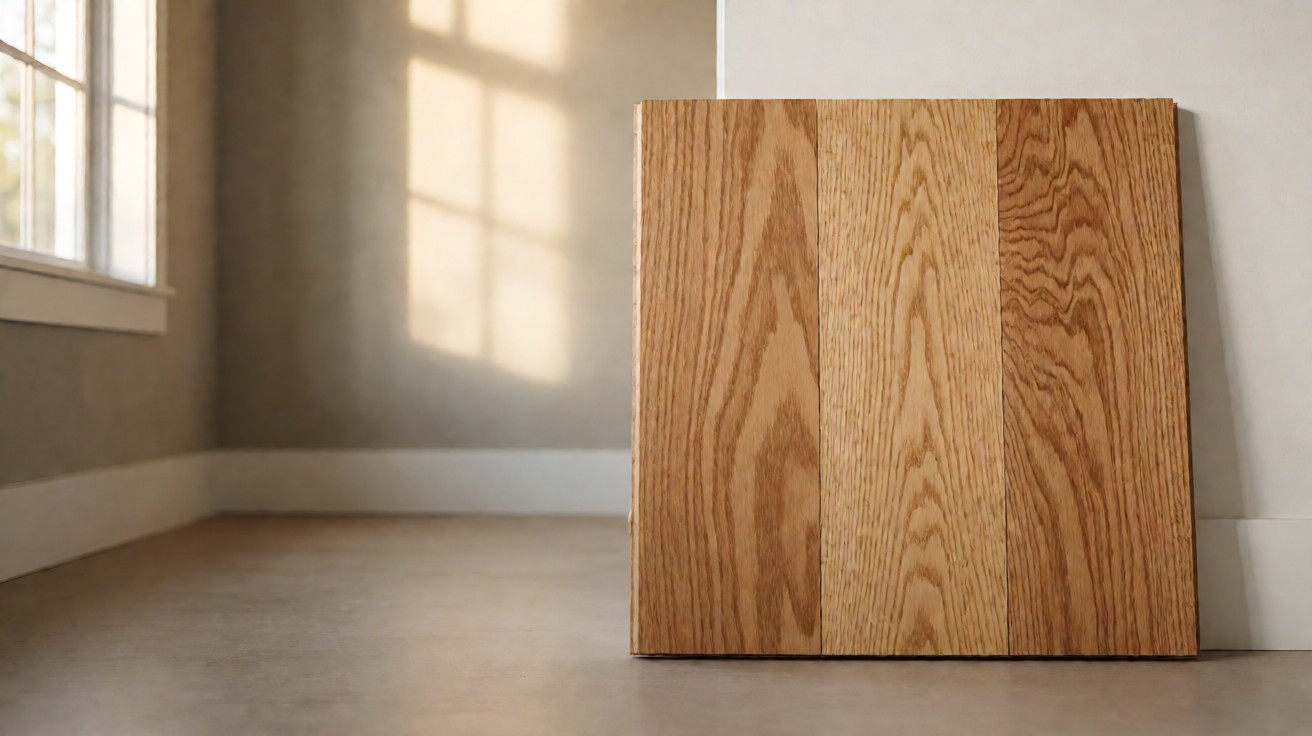
Clear And Select Grades
Clear is the cleanest run in the published NWFA charts. Select is one step down with small pin knots and minimal color variation tolerated. Both are premium-graded runs commonly used where the look calls for a quiet, even appearance: formal dining rooms, libraries, and light commercial interiors where uniformity matters more than character.
What Clear And Select Are Allowed To Show
Clear run boards pass with no knots and only minor color differences between boards. Select run boards can carry a small pin knot or two and a minor mineral streak, but nothing stronger. Both grades pull mostly heartwood, which keeps the color tightly grouped. Sapwood appears in only small amounts.
Because the rules are tight on both, Clear and Select run more expensive than Common grades. The cost difference comes from how much of the production run passes the strictest tolerance at the grader line. A run of oak that yields 20 percent Clear and Select sells at a higher price per square foot than the remaining 80 percent.
What Is The Difference Between Select And Common Grade?
Select grade restricts defects to the smallest size and limits how much color variation shows up. Common grade widens the defect allowance and accepts a stronger spread between heartwood and sapwood boards. Number 1 Common still aims for a usable floor without putting a sound knot in the wrong place. Number 2 Common leans harder into the variation and is closer to what is now marketed as Character or Tavern grade.
The functional difference is appearance, not durability. Both Select and Common run the same Janka hardness, the same finish options, and the same expected service life when installed correctly. The difference is whether a buyer pays a premium for a tight, clean look or accepts a more varied run as part of the aesthetic.
Number 1 Common And Number 2 Common
Common grades are the workhorse tiers of an oak production run. They carry the volume of a manufacturer line and the bulk of residential installations. The grading rules allow more defects and wider color variation. The trade is a lower price per square foot for accepting a more varied board.
How A Common Run Is Sorted
Number 1 Common boards allow sound knots up to roughly the size of a pencil eraser, with a small allowance for mineral streaks and grain figure. Sapwood and heartwood show up side by side, which adds the color variation the Select run excluded. The floor installs the same way as any other grade, with the same fastening schedules and acclimation rules.
Number 2 Common widens the knot size further and adds the kind of variation that some buyers want on purpose. Boards in a Number 2 Common run can carry repaired defects, longer mineral streaks, and a noticeable spread between boards that ranges from pale sapwood to dark heartwood. This is the tier that, sold under a Character or Tavern label, becomes the basis for the rustic look that has grown in popularity.
Will A Common Grade Floor Look Rougher?
Only on appearance, not underfoot. Boards of any grade are planed and jointed to the same tolerances. A knot on the face of a Number 1 Common board is sound, which means it is solid in the wood and will not leave a hole after years of foot traffic. The same finish coats a Common board that coats a Clear board.
The visible difference is openness. A Number 2 Common run of red oak can show three or four boards per row in distinctly different shades, with knots showing through where they would have been trimmed out of a Select run. That is by design. The buyer of a Common grade is buying the run for the same reason the buyer of a Character run is buying it: open variation is part of the spec.
Character, Cabin, And Tavern Grades
Character, Cabin, and Tavern are the most varied appearance tiers. The names vary by manufacturer, and a Somerset Character grade is a different label from a Bruce Character grade on the same species. The shared intent is the same: accept the strongest natural variation from the production run as a feature, not a defect.
What Sets Character And Cabin Apart
Character grade is the manufacturer name most commonly used in place of Number 1 Common with a slight shift toward more visible knots and a stronger color spread. Cabin and Tavern grade push the variation further, with larger knots, mineral streaks that run several inches along the face, and a wider mix of sapwood. Tavern grade in particular is the tier where sound knots approaching a dime in size, frequent streaks, and an open grain pattern are normal.
These grades are the right call when the design intent is the rustic, hand-finished floor that pulls color from many boards at once. They are the wrong call when the design intent is a tight, modern look with narrow variation.
Why Pricing Still Favors Lower Grades
A run that allows more variation pulls more boards from the production line. A Character grade yard-wide run of red oak costs less per square foot than a Clear run of the same species because fewer boards from the same log have to be set aside as premium. NWFA grading rules drive the sorting at the warehouse, not the brand label on the box.
How Hardwood Is Sawn: Plain-Sawn, Quarter-Sawn, Rift-Sawn
How a log is sliced decides the geometry of every board coming out of it. A log cut plain-sawn, quarter-sawn, or rift-sawn produces boards with visibly different grain and very different stability under seasonal humidity.
The Three Cuts Defined
Plain-sawn is the most common cut in North American hardwood flooring. The log is squared and sawn straight through, board by board, without rotating it for each cut. The result is the familiar cathedral or flame pattern at the face of the board, with a tight vertical grain at the edges.
Quarter-sawn cuts the log into quarters first, then saws each quarter so the growth rings hit the face of the board at a steep angle, between 60 and 90 degrees. The result is a series of nearly straight parallel lines along the face, sometimes with the ray flecks that show up in white oak and a few other species.
Rift-sawn is the most labor-intensive cut. Boards are sawn so the growth rings hit the face at 30 to 60 degrees, almost perpendicular to the surface, which produces a tight, straight grain pattern with fewer ray flecks than quarter-sawn. Rift-sawn boards tend to cost more because the cut is less efficient and yields fewer usable boards per log.
What Is Rift And Quartered Hardwood?
The trade term rift and quartered describes a flooring run sorted into both rift-sawn and quarter-sawn boards, sold as one combined line. Producers mix the two cuts because they pull from the same log at different angles, and the buyer gets the stability of both cuts in one delivered floor. The plain-sawn material that would have come off the same log is sold separately as the more economical line.
Rift and quartered is the specification called out when the project name lists the species plus the cut: rift and quartered white oak is a different product from plain-sawn white oak, sold at a higher price per square foot, and used in cabinetry and flooring where dimensional stability and a tight straight grain pattern both matter.
Stability Comparison By Cut
The cut makes a real difference in how boards react to seasonal humidity. The USDA Forest Products Laboratory Wood Handbook reports that plain-sawn boards respond the most across their width with moisture change, quarter-sawn boards respond about half as much, and rift-sawn boards respond the least of the three.
Which Sawing Method Is Most Stable?
Rift-sawn is the most dimensionally stable cut. Quarter-sawn is the next most stable. Plain-sawn moves the most across the width of a board as seasonal humidity rises and falls. The reason is the orientation of the growth rings. Boards where the rings run mostly vertical to the face shrink and swell the most. Boards where the rings run mostly parallel to the face move less.
For a project over a slab or in a basement where humidity swings are wider than the rest of the house, rift and quartered flooring costs more per square foot up front and saves money over the service life by holding its joints tighter and resisting cupping at the edges of boards. Plain-sawn is the right choice when budget matters more than dimensional behavior, which is most rooms in most homes.
| Cut | Grain Pattern At The Face | Approximate Width Movement With Humidity | Cost |
|---|---|---|---|
| Plain-sawn | Cathedral or flame figure, with vertical grain at the edges | Highest, the reference value in dimensional change tables | Lowest, the default cut for most production runs |
| Quarter-sawn | Straight parallel lines with ray flecks on white oak and a few other species | About half the plain-sawn movement | Higher than plain-sawn, lower than rift-sawn |
| Rift-sawn | Tight straight grain, fewer flecks than quarter-sawn | Lowest of the three cuts | Highest per square foot |
The movement figures in the table above are proportional, not measured values. The Wood Handbook is the underlying reference for any quantitative figure on dimensional change in hardwood.
Natural Color Variation Between Boards
Natural color variation is the part of an installed floor that comes from the tree, not the grader. Sapwood, heartwood, mineral streaks, and grain figure combine to make boards in the same run look distinctly different. The amount of variation is governed by species more than by grade, even though Common grades tolerate more of it visually.
Where The Variation Comes From
Sapwood and heartwood are the first source. Sapwood forms on the outside of the log and carries a lighter tone. Heartwood forms on the inside and carries a darker tone. In white oak the spread between the two can run several shades. In walnut the spread is wider. In maple the spread is narrower, which is why a Select run of hard maple still looks tighter than a Select run of oak.
Mineral streaks and grain figure pull boards off the average tone a second time. Mineral streaks are narrow dark lines where the tree pulled up minerals through the grain during growth. Some species carry them more than others, and they are different from defect streaks from nails, hardware, or staining. Grain figure is the pattern the cut exposes: the cathedral pattern of plain-sawn oak has wide tonal variation built into it because two orientations of grain show in one board.
How Much Color Variation Is Normal In One Box Of Hardwood?
A wider tonal spread than the showroom sample is normal. Industry guidance and the published manufacturer specification sheets describe visible variation in a single run as expected, especially in mid and lower grades. The variation reads as character on a Character grade floor and reads as inconsistency on a Select grade floor. The board of wood did not change between the two cases. The grade selected at purchase did.
Sample boards at a retailer pull from finished inventory and represent what the floor can look like. The full delivered floor pulls from a wider production batch. Order extra material and lay out boards from several boxes in the room before fastening, so the strongest and lightest boards are spread across the field rather than clustered.
How Lighting And Finish Change The Color
A wood floor reads as one color at noon and another color at 8 p.m. with the lamps on. Lighting and finish do not change the wood itself; they change what the eye reports. White oak installed in a south-facing room will look paler than the same product in a north-facing room, and the applied finish shifts both the tone and the reflected light.
Daylight Versus Warm Artificial Light
Daylight is the most honest color reference. The sun at midday carries a roughly 5000 Kelvin color temperature, which sits close to white. As the afternoon moves toward evening, the daylight shifts toward warmer tones, and an oak floor follows that shift. Warm artificial lighting between 2700 and 3000 Kelvin, common in residential fixtures, pushes the floor toward amber. Cool LED fixtures near 4000 Kelvin hold the floor at a more neutral tone.
The implication is real for matching: oak installed under a north-facing window will not match oak of the same grade installed in the basement rec room even with the same finish and the same batch from the manufacturer. Design the room around the lighting it will actually receive.
How The Finish Coat Reads The Color
Oil-based polyurethane yellows over time and pulls more amber into the floor, which hides some natural color variation. Water-based polyurethane stays closer to its original cast and shows more of the natural wood color, which exposes more of the natural variation. A penetrating oil finish sits in the wood rather than on it, leaves a low-sheen appearance, and reads the natural color closely.
A matte or satin sheen is the right call where tight color uniformity is the goal. A high gloss sheen magnifies every shift in tone, which can work for or against a Character grade floor depending on the design intent.
Matching Grade And Cut To Your Room
Grade and cut come together at the floor, not on the spec sheet. Pick the grade for the look, pick the cut for the stability, and confirm the lighting before finalizing the selection.
When To Pick Select And Plain-Sawn
Select and plain-sawn is the right call for above-grade rooms in stable humidity, where cost per square foot matters and a tight look is preferred. The combination is the most widely stocked tier at every flooring retailer, and the price is the floor entry point in most species lines.
This combination is also the easiest to match field to field over time, because future production runs tend to follow the same sorting rules with the same supply.
When To Pick Character And Rift And Quartered
Character and rift and quartered is the right call for floors that benefit from a rustic look and from reduced seasonal movement. It is also the right call when the project calls for a visible grain pattern that holds a tighter joint over decades of service. The combination is common in cabinetry, in libraries, and in homes where the floor is meant to age as a feature rather than as a backdrop.
The cost is higher per square foot than Select and plain-sawn. The benefit is a floor that holds its joints through wider humidity swings and shows a steadier grain pattern across seasons. Specifying hardwood means working through that trade on the front end, before the material is delivered.
Find Hardwood That Fits Your Project
Before order, lock down the grade, the cut, the color variation tolerance, and the lighting the room will receive. Bring the questions back to the supplier with species and board thickness already chosen, and ask for a sample of multiple boards laid out together rather than a single sample chip.
Questions To Ask A Hardwood Supplier
The questions that produce a usable answer are the ones a supplier can verify. Ask which published grade tier governs the lot. Ask whether the boards are plain-sawn, quarter-sawn, rift-sawn, or rift and quartered. Ask what color variation is normal in the species and whether the run carries the tighter or wider tolerance. Ask what finish options the manufacturer ships the product with, or whether it ships unfinished for a site finish.
For project planning, see our flooring types compared for how hardwood reads against other flooring categories, our types of flooring overview for where hardwood sits among the broader options, and the hardwood flooring guide for the construction and installation specifics once grade and cut are settled. Reviewed together, the three references describe what a hardwood floor looks like and how it is built and installed.
The grade labels say what the run looks like at the warehouse. The cut labels say how the boards will hold their joints through the years. The lighting in the room says what color the floor will read once it is in service. Each is a separate variable on the order, and treating them as such is how the floor matches the design intent.