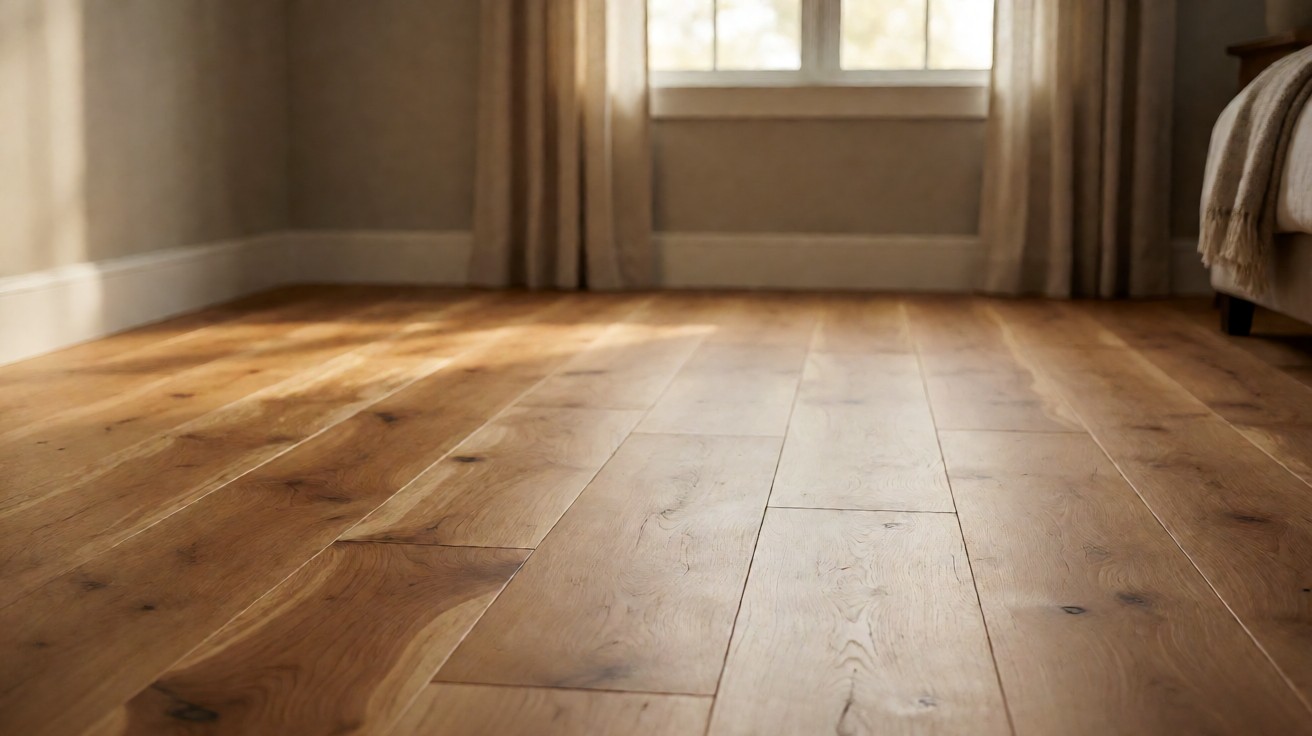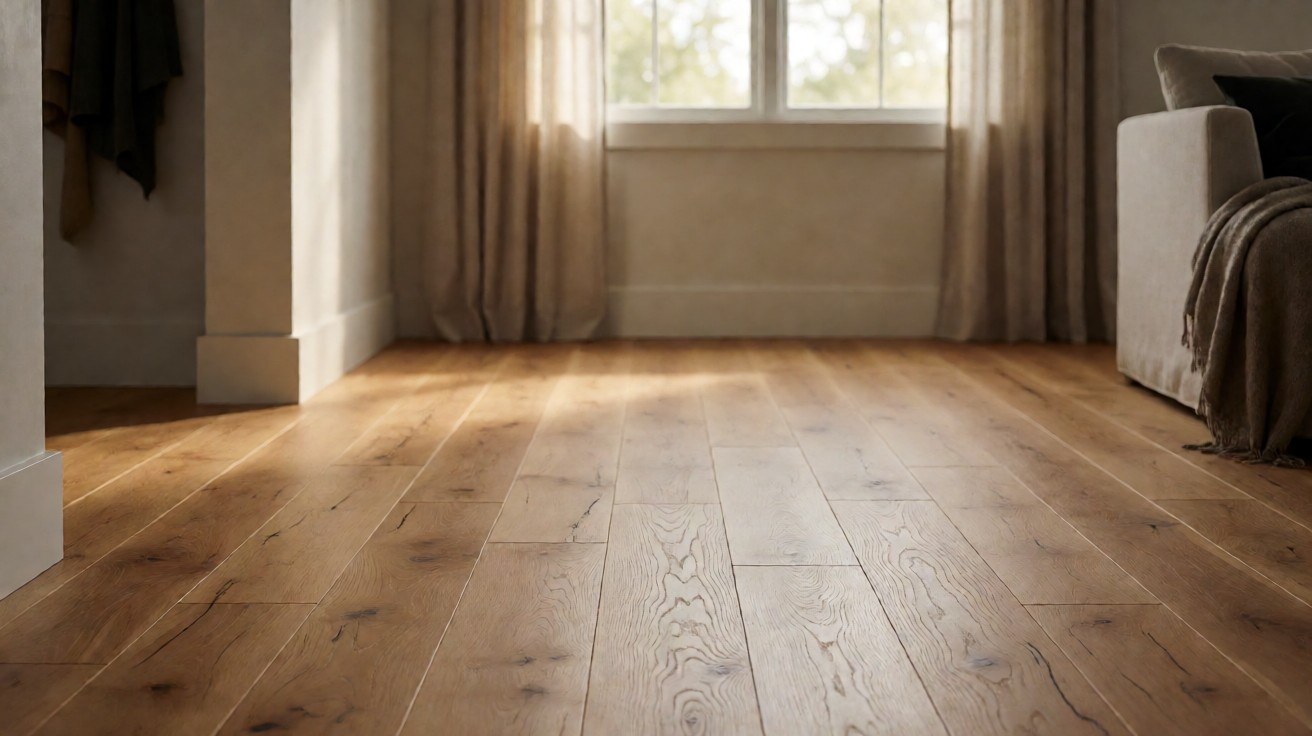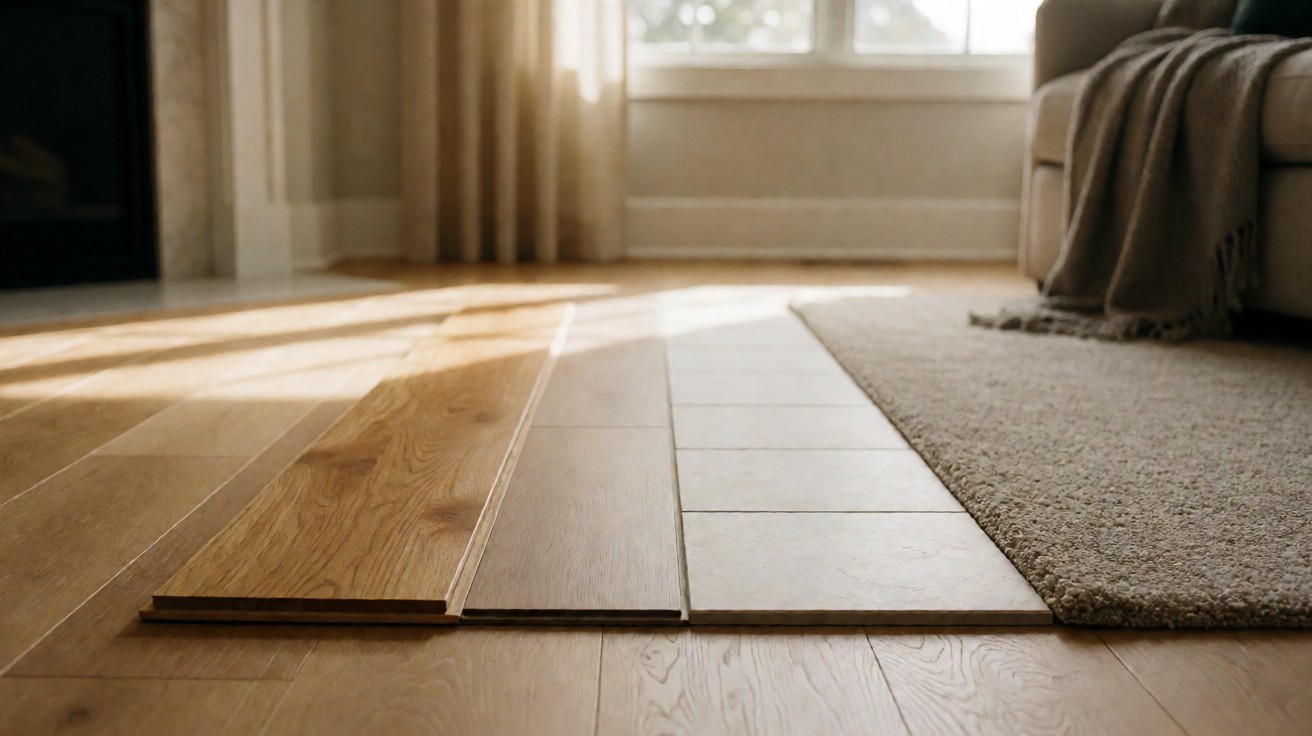

Most homes carry one or two flooring materials, and most of those choices come from a small set of families rather than a list of hundreds of products. Wood, vinyl, laminate, tile, carpet, natural stone, cork, and bamboo make up nearly every residential floor in North America, and each family wins under different conditions.
The confusion usually comes from marketing names. Luxury vinyl plank, SPC, and WPC are all vinyl products. A floating tile, a click laminate, and a prefinished hardwood board are all ways of describing how a product is built and installed.
This guide groups flooring into the families that actually matter, explains the properties a homeowner should weigh first, and gives you a decision path to follow before you compare specific products.
Each section links to the dedicated guide for that family, and two comparison tables let you weigh the families against each other. Read the whole guide once, then use it as a reference while you plan a room or a whole house.
The Eight Flooring Families Homeowners Choose From
Flooring families are groups of products that share the same core material and behave the same way over time.
Brands and product lines change names constantly, but the underlying physics do not. A hardwood board moves with humidity whether it is sold by one manufacturer or another. A ceramic tile stays dimensionally stable in a bathroom whether it is matte or polished.
Knowing which family you are looking at tells you more than any product label can.
There are eight families that cover almost every residential project: solid and engineered wood, vinyl, laminate, tile and natural stone, carpet, and the specialty materials cork, bamboo, and polished concrete. Within each family the main differences are construction, finish, and install method, not material behavior.
Wood Flooring: Solid, Engineered, and Reclaimed
Wood is the longest-running residential floor.
Solid hardwood is milled from a single piece of lumber, typically three quarters of an inch thick, and can be sanded and refinished many times over a life of several decades. That refinishing depth is what separates it from every other family.
Solid wood also expands and contracts with seasonal humidity, which drives most of the installation rules that apply to it.
Engineered hardwood is built in layers, a real wood face bonded to a stable core. It moves less with humidity, which makes it the wood option of choice in many below-grade and moisture-variable spaces where the manufacturer approves the use. A wide face can be refinished one or more times before the wear layer is exhausted. For the full engineering and performance picture, see our engineered hardwood construction guide.
Reclaimed and antique wood brings irregular profiles and character, at a price that usually reflects the material more than the labor. For the full construction and species picture, the dedicated hardwood guide covers species, grades, and finish options in depth, with dedicated guides for oak, maple, hickory, walnut, and other residential species and grades, grain patterns, and natural color variation.
Is engineered hardwood as good as solid?
For most homes the answer is yes, within limits. Engineered floors use a real wood face and perform like hardwood in every normal room, with better dimensional stability. The practical difference shows up in refinishing depth and in where the floor can be installed. If you plan on two or more refinishes over thirty years, solid is the stronger choice.
Vinyl Flooring: LVP, LVT, Sheet, and Rigid Core
Vinyl is a polymer floor, and it is the fastest-moving family in the market. Luxury vinyl plank and tile mimic the look of wood and stone, come in click, glue-down, and loose-lay formats, and range from a few dollars per square foot at the entry level to premium products that are nearly indistinguishable from their natural counterparts.
Rigid-core vinyl, sold as SPC or WPC, pairs a polymer layer with a dense core that resists denting and keeps the floor flat over uneven transitions. Sheet vinyl is the continuous format used in kitchens and commercial spaces. The whole family is the most water-tolerant flooring a homeowner can install, which is why it is the default answer for kitchens, bathrooms, and basements.
The vinyl flooring guide covers wear layers, core types, and install methods in detail, including what to check on a sample before you buy.
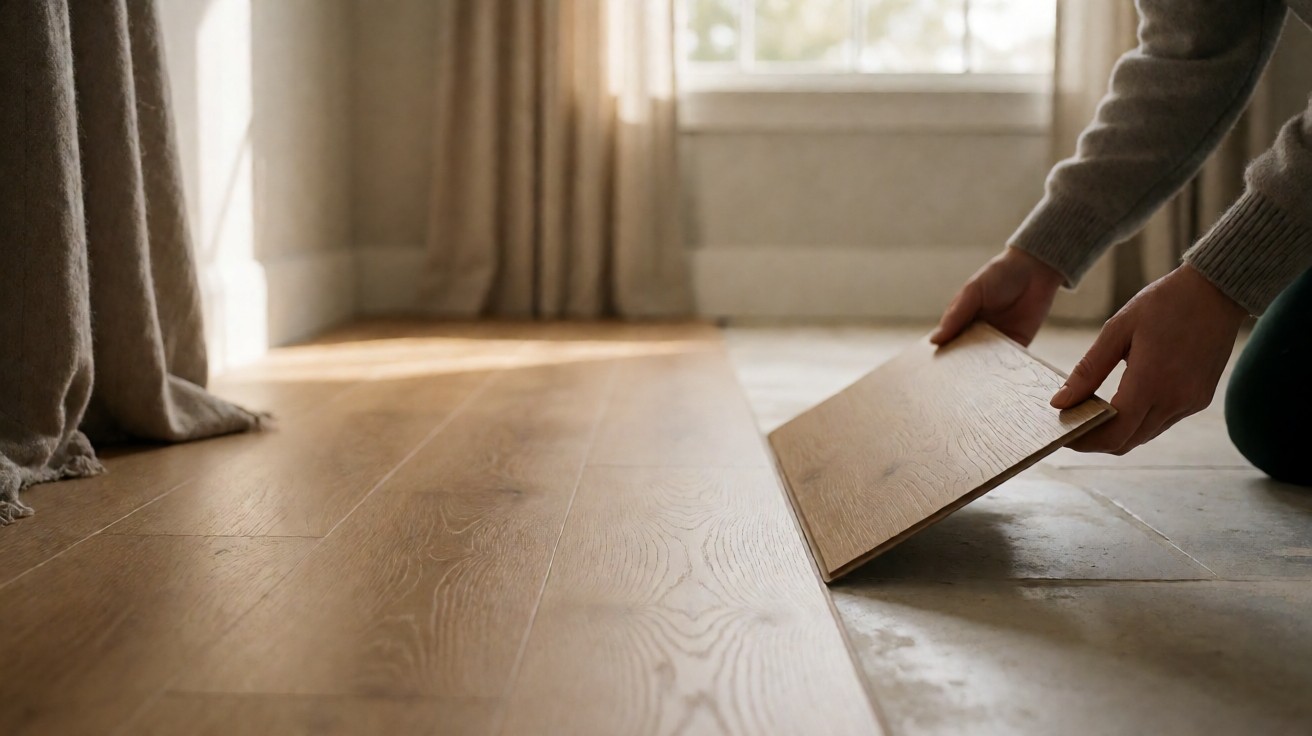
Laminate Flooring: Wear Layer, HDF Core, and AC Rating
Laminate is a high-density fiberboard core bonded to a decorative image layer and a clear wear layer. Modern click formats are easy to install over an existing floor in most cases, and the AC rating tells you how much abrasion the surface is built to take. Laminate has moved well past its 1990s image; the best products hold up in high-traffic rooms for years.
The one question every laminate buyer should answer before anything else is water tolerance. Water-resistant laminate slows moisture uptake at the plank edges; waterproof laminate seals the joints so standing water is not a concern on the surface.
The two are not the same thing, and the laminate flooring guide explains the difference and how to read the AC and water claims on a product sheet.
Tile and Natural Stone: Where Durability Matters
Ceramic and porcelain tile are fired clay, and they are the hardest mainstream floor option short of stone. Porcelain is denser and less porous, which is why it is the standard for wet and high-traffic rooms.
Natural stone such as marble, granite, slate, travertine, and limestone brings character and thermal mass, with maintenance that varies a lot by stone: marble etches, slate is naturally slip-resistant, and most natural stone wants a sealer.
Tile floors are hard, cold, and heavy on impact, so the underfoot experience is part of the decision, not just the looks. Grout lines need attention in every tile and stone floor, and that maintenance rhythm is what people are usually surprised by. The tile flooring guide covers formats, finishes, and the installation details that make or break a tile floor.
Carpet and Soft Flooring: Comfort and Acoustics
Carpet is the only mainstream floor that wins on comfort and quiet. It is the softest underfoot, the best at absorbing impact sound, and the most forgiving surface to stand on for long periods.
The trade-offs are moisture, allergens, and a much shorter service life in kitchens and baths. Fiber choice matters: nylon is the workhorse for traffic, polyester is the budget and moisture option, and wool is the premium natural fiber.
Padding is a second material with its own lifespan and comfort rating, and a good pad does more for how a carpet feels than the carpet itself. The carpet flooring guide covers fibers, pile styles, and how to match carpet to rooms and households.
Natural and Specialty Materials: Cork, Bamboo, and Polished Concrete
Cork is a natural, renewable floor that is comfortable, quiet, and warm underfoot. It dents more easily than wood or tile, which keeps it in bedrooms, offices, and low-traffic rooms.
Bamboo is a hard grass that can rival many hardwoods in scratch resistance, and it is one of the more renewable options when the certifications are real.
Polished concrete is a slab you finish rather than a floor you install. It is extremely durable and low-maintenance, but cold and hard, and it is best where a slab already exists and can be leveled.
All three are genuine options, not marketing categories. Each has real limits you should check against your rooms before committing.
Water Resistance and Durability Across the Families
Water tolerance is the property that decides where a floor can live. The table below is a family-level view. It is not a specification for any product, because every product line has its own moisture limits, but it captures how the families behave in general.
| Family | Water tolerance | Durability | Underfoot comfort | Typical lifespan |
|---|---|---|---|---|
| Solid hardwood | Poor, moves with humidity | High, refinishable | Firm | 50 to 100+ years |
| Engineered hardwood | Moderate, varies by product | High | Firm | 25 to 75 years |
| Vinyl, LVP, rigid core | Excellent, waterproof options | High to very high | Soft to firm by core | 10 to 30+ years |
| Laminate | Water-resistant to waterproof by design | High | Firm, cold | 10 to 25 years |
| Ceramic and porcelain tile | Excellent | Very high | Hard, cold | 50+ years |
| Natural stone | Good, usually wants sealer | Very high | Hard, cold | 50+ years |
| Carpet | Poor, absorbs moisture | Moderate | Soft, warm, quiet | 5 to 15 years |
| Cork, bamboo, polished concrete | Varies, concrete is excellent | Moderate to very high | Varies widely | Varies |
Two clarifications keep this table honest. Waterproof, on a floor, means the surface and joints do not let standing water through. It does not mean the floor survives a flooded room, because water can still wick up through subfloor and expansion gaps.
Lifespan ranges assume the floor is installed to the manufacturer’s instructions and kept reasonably clean. Installation errors, not material quality, are what kill most floors early.
Which Flooring Is Best for My Home?
There is no best material, only the right fit for your rooms, your household, and your budget.
The decision runs in one order: start with the conditions in the room, then the people using it, then the money. A bathroom, laundry room, and basement are moisture rooms, and they narrow the list fast. A busy family room with dogs and kids is a wear room. A home office or primary bedroom is a comfort room.
Once you know what each room actually demands, the family table above shortlists two or three options, and the cost column does the rest.
Which flooring lasts the longest?
Solid hardwood and tile. Both routinely outlast their installation labor, and both can be refinished or re-grouted rather than replaced. If lifespan per dollar is the whole question, those two are the answers.
Can I install this myself?
Yes, for click vinyl, click laminate, and carpet tiles, all of which are genuine DIY formats. Glue-down, nail-down, and mortar-set tile are where the cost of a mistake gets high, and where a professional usually saves more than they charge.
Matching Floors to Rooms
The table below is a starting map, not a rule. It is what you should use to assign a family to a room before you start comparing products.
| Room | Top picks | Why |
|---|---|---|
| Kitchen | Vinyl, porcelain tile, bamboo | Spills, traffic, and easy cleanup |
| Bathroom | Porcelain or ceramic tile, vinyl | Wet surfaces and mold resistance |
| Laundry | Porcelain, sheet vinyl | Constant moisture and utility use |
| Basement | Rigid-core vinyl, engineered wood where approved | Below-grade moisture and slab access |
| Primary bedroom | Carpet, cork, engineered wood | Comfort, warmth, and quiet |
| Family room | Carpet, vinyl, laminate, engineered wood | Wear, kids, and pets |
| Home office | Hardwood, bamboo, cork, carpet | Stability and acoustics |
When a room sits at the edge of two answers, the head-to-head comparison guide walks through exactly that decision, and the kitchen-specific breakdown shows how the moisture and traffic rules play out in the hardest room in the house.
What Flooring Cost Are You Actually Comparing?
Every flooring cost has three layers: the material, the installation labor, and the hidden work.
The hidden work is removal of the old floor, subfloor repair and leveling, transitions and trim, and any moisture remediation. Two quotes for the same material can differ by half or more once that third layer is counted.
Prices move with region and product line, so treat any dollar figure you see as a local quote, not a fact, and always get the installed price rather than the shelf price. The cost guide in this cluster breaks the layers down so you can read a quote without being surprised.
Where to Go Next From This Guide
You now have the families, the properties, and the room map.
The next step is to pick the one or two families each of your rooms allows, then compare products within those families. Each family guide in this cluster goes deeper than this overview: construction, grades, ratings, and install methods.
When you are ready to put a number on it, the cost and buying guides in this cluster carry you from material choice to a signed quote. Keep this page open as the map, and let the family pages be the detail.