
Broadloom carpet and modular carpet tile are the two ways carpet reaches your floor, and they look and behave differently enough that the choice matters. Broadloom is a continuous sheet cut to your room.
Carpet tile arrives as individual squares you lay one at a time. That single structural difference changes installation, seams, cost, and what you can do years later when part of the floor is damaged.
The honest framing is that this is a decision about future damage, not just about looks. Broadloom is the seamless, slightly more premium option, but one damaged area in a wall-to-wall carpet means replacing the whole floor. Carpet tile is cheaper and easier to work with, but its many seams catch light and its pattern direction has to be managed. Neither is universally better.
This guide compares the two formats. It assumes you have chosen carpet as your material and, ideally, a fiber and a pile style, because those are independent decisions that apply to either format. The carpet guide covers choosing carpet in the first place.
Carpet Tiles vs. Broadloom: The Short Answer
Choose broadloom carpet if the floor will be protected, the room is a normal living space, and you want a seamless, uniform look with the fewest seams. It is the traditional residential choice and generally looks more premium.
Choose carpet tile if damage is likely, the floor may need rearranging, the space is commercial or high traffic, or you are installing it yourself. Tiles are cheaper per square foot, install faster, and can be replaced or rotated one at a time.
The real dividing line is how you expect to treat the floor in five years. A protected room you will not rearrange favours broadloom. A room with pets, kids, a rental turnover, or a plan to move the layout favours tile.
What Broadloom Carpet Actually Is
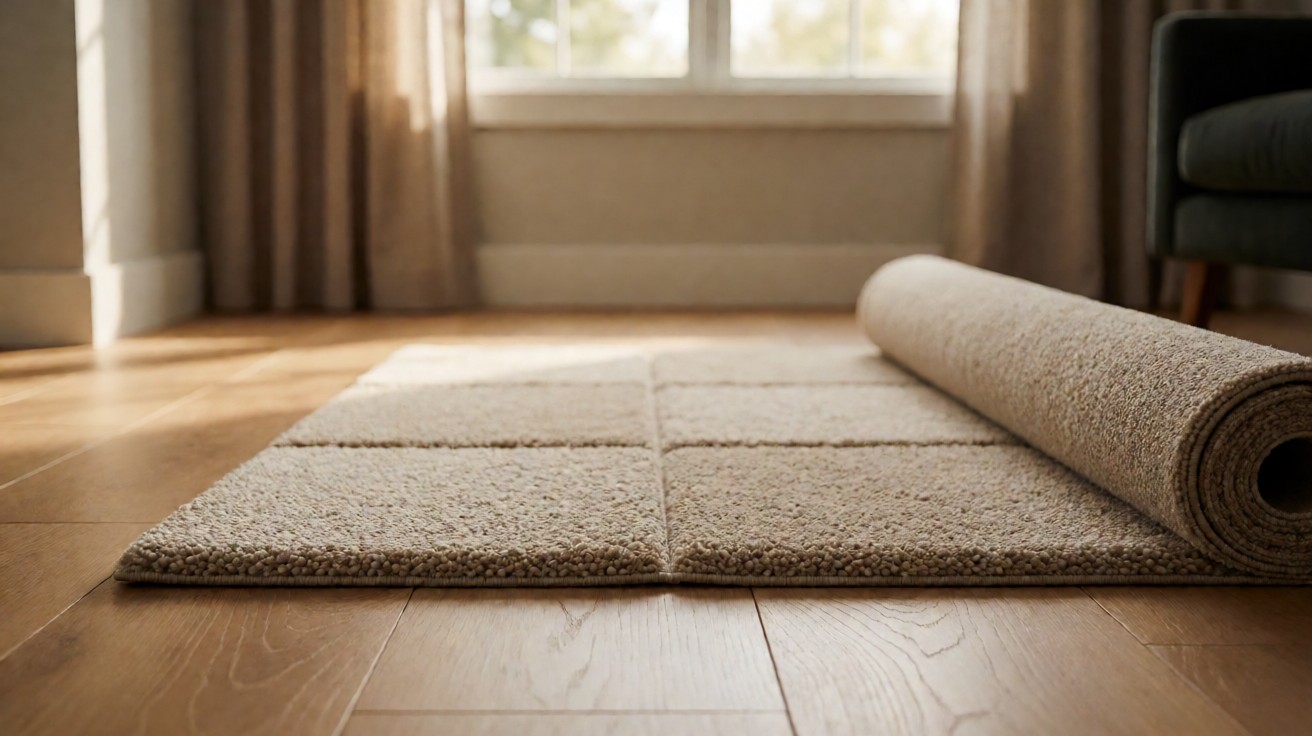
Broadloom, sometimes called wall-to-wall carpet, is a continuous roll of carpet woven on a very wide loom. It is manufactured in standard widths, commonly 12 feet or 13 feet 6 inches, and sold by the linear foot or the square yard.
Because it is one continuous sheet, broadloom has no repeating tile pattern and only the seam lines your installer creates. It gives you a continuous field of colour and texture across the whole room, which is why it looks more uniform and slightly more expensive than tile.
The trade-off is that broadloom must be cut to your room. Whatever shape your room is, the installer cuts around it and the leftover is waste, which is also how you get a fitted, permanent-looking floor with no lifted corners or exposed edges.
What Modular Carpet Tile Actually Is
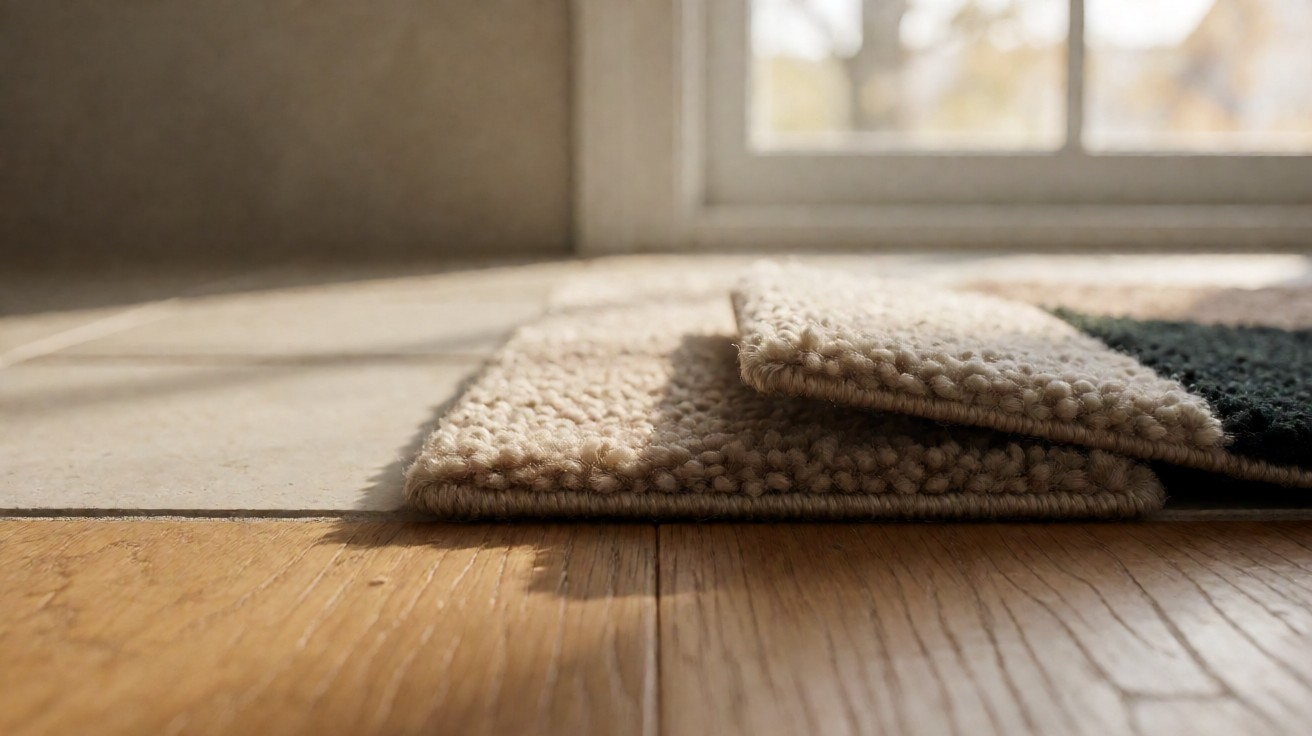
Carpet tile, also called modular carpet, comes as individual squares, most commonly 19.7 inches or 24 inches square. Each tile is a self-contained piece with pile and a backing, and it is laid one tile at a time onto the floor, usually with a peel-and-stick adhesive layer or a separate installation adhesive.
Because each tile is small and self-contained, you do not have to cut a roll to fit, and any damaged tile can be lifted and swapped. Tile is the standard format in commercial spaces precisely because of this: a worn or stained tile in an office is replaced in minutes, one square, without touching the rest of the floor.
Tile does introduce a pattern question. Pile direction in every tile runs the same way, so when tiles are laid with all the pile facing the same direction you see the grid clearly as a checkerboard of light and dark.
Installers counteract this by quarter-turning some tiles a quarter turn so the pile faces different directions, which blends the grid but makes the pattern look different across the floor.
Installation: The Biggest Practical Difference
If you are comparing the two on a real project, installation is usually the deciding factor, not the tile itself.
Broadloom is a skilled, on-site job. The roll is heavy, it has to be stretched and tensioned with a power stretcher so it lies flat and tight, the edges are tacked, and the seams are seamed. It typically requires an installer, and it cannot realistically be a first-time DIY project.
Carpet tile is far simpler. A clean, dry, level floor and most people can lay tile themselves, because each tile just goes down and presses on. There is no stretching, no power stretcher, and no seam to match. That simplicity is why tile is the default for DIY and for fast commercial turnovers.
The trade-off is that tile installed over a poor subfloor will show every imperfection, and a low-quality tile can look like a patchwork rather than a carpet. Broadloom stretched tight over a good floor hides a lot more, which is part of why it is the more premium finished result.
Seams and Pattern Direction
Seams are the most visible difference between the two formats. Broadloom has the fewest seams possible, ideally one, running where the roll had to be joined. A well-stretched, well-seamed broadloom floor is nearly seamless to the eye.
Carpet tile has a seam between every tile. Laid with all pile in one direction, that grid of seams reads as a visible checkerboard because the light catches each tile’s pile from its own angle. This is the single most common reason people decide against tile in a living room: it can read as a grid of squares rather than a carpet.
Quarter-turning tiles hides the grid but introduces a different issue, which is that the pattern looks subtly inconsistent across the floor, a broad plaid or mottled effect that does not align into one clean design. Either way, tile gives you more pattern control than broadloom, but also more pattern risk.
Replacing a Damaged Area
This is where the two formats differ most sharply, and it is the reason many people choose tile.
In a broadloom room, a burn, a bleach spot, or a badly stained area cannot be patched invisibly. Because the carpet is one continuous field, replacing just the damaged patch leaves a visible rectangle of new carpet in an old floor. The realistic option is to replace the entire room floor, which is expensive and disruptive.
In a tiled room, a damaged tile is lifted and a new one laid in its place. The result blends in because the surrounding tiles are undisturbed, and if the whole floor is starting to look tired you can rotate the entire field or replace a percentage of tiles over time rather than all at once.
If your floor will take real damage, whether from pets, a spill you cannot remove, a dropped tool, or a heavy-use room, tile is meaningfully more forgiving over its life.
Waste, Cost and How the Price Compares
Broadloom is sold by area and you pay for the waste. Because the roll is cut to your room, a complicated room shape produces more offcut. That waste is a real cost even though the material is cheaper per square yard, and it is why a small, oddly shaped room can be inefficient in broadloom.
Carpet tile is sold per tile and per box, so you buy what you use with minimal waste, and unopened tiles can often be returned or kept for future repair. That makes tile cheaper to install, cheaper per square foot for a fiddly room, and better value over the life of the floor.
Installation labour runs the other way and is where broadloom costs more. A stretched, seamed broadloom install is more skilled and more expensive than laying tile.
So the total-cost comparison depends on the room: for a simple square room with no future damage, broadloom is often the more expensive install but the more premium finish; for a complicated room or one that will be abused, tile is usually cheaper overall once you factor in repairability.
The comparison below sets the two formats side by side across the factors that actually decide it.
| Factor | Broadloom carpet | Carpet tile |
|---|---|---|
| Format | One continuous roll, cut to room | Individual squares, laid one by one |
| Seams | One, at most; nearly invisible | Between every tile; grid visible unless rotated |
| Look | Seamless, uniform, more premium | Patterned grid; can look like a patchwork |
| Install difficulty | High; needs a stretcher and an installer | Low; most people can DIY |
| Install cost | Higher (labour and tools) | Lower (no stretching or seaming) |
| Material waste | Yes, cut offcut from the roll | Minimal; buy only what you use |
| Replace a damaged area | Replace the whole room floor | Replace one tile, blends in |
| Best in | Protected, permanent living rooms | High traffic, rentals, DIY, commercial, messy rooms |
Format by Room Type
The factor table above compares the two formats in general. In practice the decision is often already made for you by the room, because rooms differ so much in traffic, risk, and shape. This table turns that into a direct assignment.
| Room or situation | Format | Reason |
|---|---|---|
| Formal living room | Broadloom | Seamless, uniform look; low damage risk |
| Master bedroom | Broadloom | Quiet room where appearance leads |
| Basement | Tile | Higher chance of moisture and wear |
| Home office | Tile | Chairs wear a track; one tile can rotate |
| Rental or rental turnover | Tile | Fast install and single-tile replacement |
| Room with pets | Tile | Damage is likely; swap one square |
| Office or commercial | Tile | Industry standard for exactly this reason |
| L-shaped or alcove room | Tile | Minimal waste; layout flexibility |
| Simple rectangle, protected | Broadloom | Best seamless finish, least pattern risk |
| DIY install, first-timer | Tile | No stretcher or seaming required |
How to Choose a Format for Your Rooms
Ask two questions. First, how likely is this floor to be damaged in its lifetime? A calm, protected living room points to broadloom. A family room with a dog, a rental, or a basement points to tile.
Second, is the room a simple shape or a complicated one? A straightforward rectangle is the easiest case for broadloom and looks best seamless. An L-shaped room, a room with an alcove, or a room you are adding to later points to tile, where layout flexibility and minimal waste matter more than a seamless field.
Whichever you pick, both formats still need a good subfloor and good padding, and the same pile and fiber decisions apply on top. If you have not settled fiber yet, the carpet fiber comparison covers abrasion and stain resistance first.
Are carpet tiles cheaper than broadloom carpet?
Per square foot, carpet tile is usually cheaper, and it wastes far less because you buy only the tiles you need. However, broadloom has a higher material price but the finished result is more premium and seamless.
If you include installation, tile also usually wins on total cost because it can be installed without stretching. So for most people, tile is cheaper overall, while broadloom is chosen for its seamless look rather than its price.
Do carpet tiles look as good as broadloom?
Not by default, and the difference is the grid. Laid with all pile running the same direction, tile shows every seam as a checkerboard because light catches each tile differently.
Good installers quarter-turn tiles to hide that grid, which blends the pattern but can make the overall design look less deliberate. Broadloom will always look more uniform and seamless, which is why it is the default in formal living rooms.
How This Fits With the Rest of the Carpet Choice
Format is the last of the big carpet decisions. You have chosen the material, and usually the fiber and the pile style, and now you are choosing whether that carpet arrives as a roll or as tiles.
The complete carpet flooring guide covers carpet construction, padding, how to read a specification sheet, and how to match carpet to a room.
To settle the two decisions that come before format, read the carpet fiber comparison for abrasion and stain resistance and the pile style comparison for look and wear. If carpet is still one of several options on the table, the material comparison sets carpet against the hard floors.