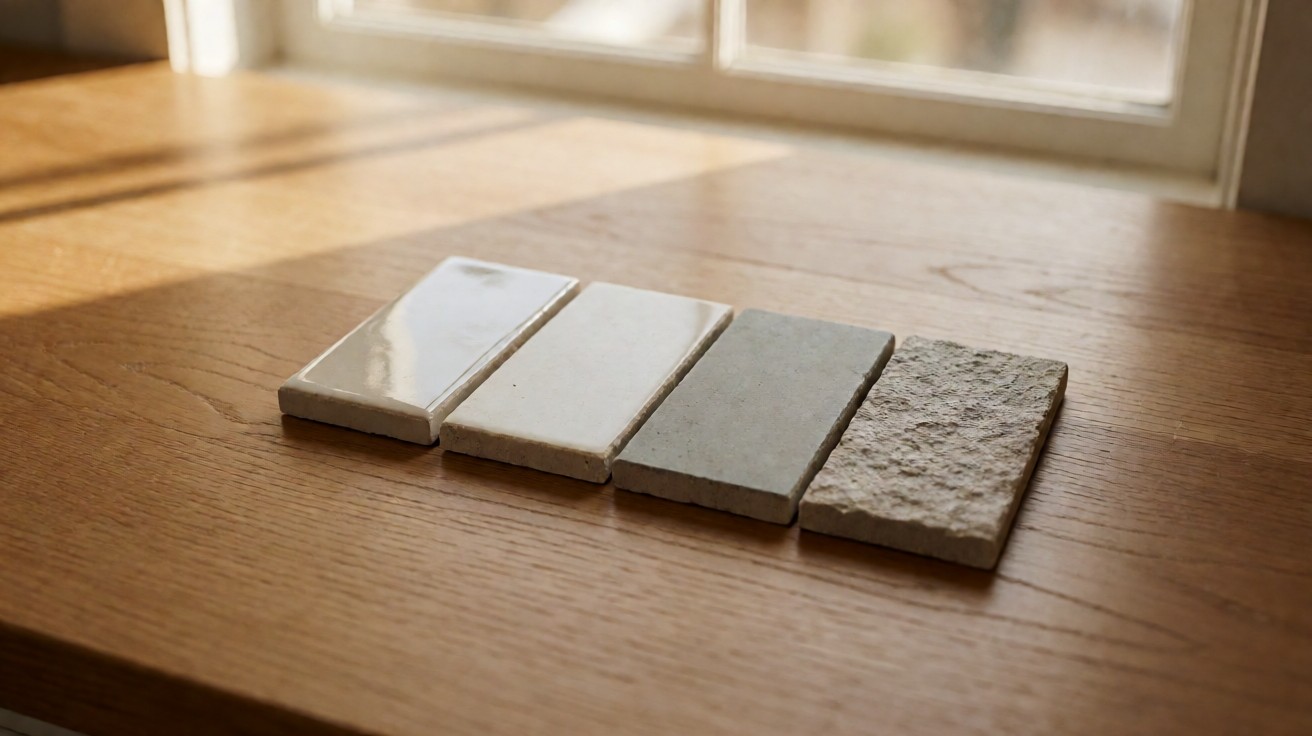

Polish, hone, matte, and textured are four words for how the surface of a tile or stone floor catches light, and they are really points on one dial. Gloss at one end reflects light back sharply. Texture at the other end scatters it and, ideally, grips your foot. Everything interesting about this decision sits in what that dial does to safety and to staining.
That trade-off is the part most glossaries skip. A more polished surface looks deeper and richer, but it is also smoother, which is better for looks and worse for grip when wet. A matte or textured surface hides dirt and catches no glare, but it is more porous and can stain and etch more readily.
This guide covers the surface finish itself. It assumes you have chosen your material; if you have not, the tile guide and the material comparison linked below come first. If you are still working out whether your tile has a glaze on it at all, that is a separate and prior question.
Polished vs. Honed vs. Matte vs. Textured: The Short Answer
Choose polished for depth, drama, and a formal or low-traffic room where you want the stone to read as dramatic and you will keep it sealed. It is the least forgiving surface in daily life.
Choose honed for the most useful middle ground. It has a soft sheen rather than a mirror, shows fewer footprints than polished, and reads as expensive without demanding showroom-level care.
Choose matte for a contemporary, lived-in look that hides dust and scuffs and grips well when wet. It is the modern default and the easiest to live with day to day. Choose textured only when you genuinely want the rugged, crafted character, because it is the hardest to clean.
What Each Finish Does to Light
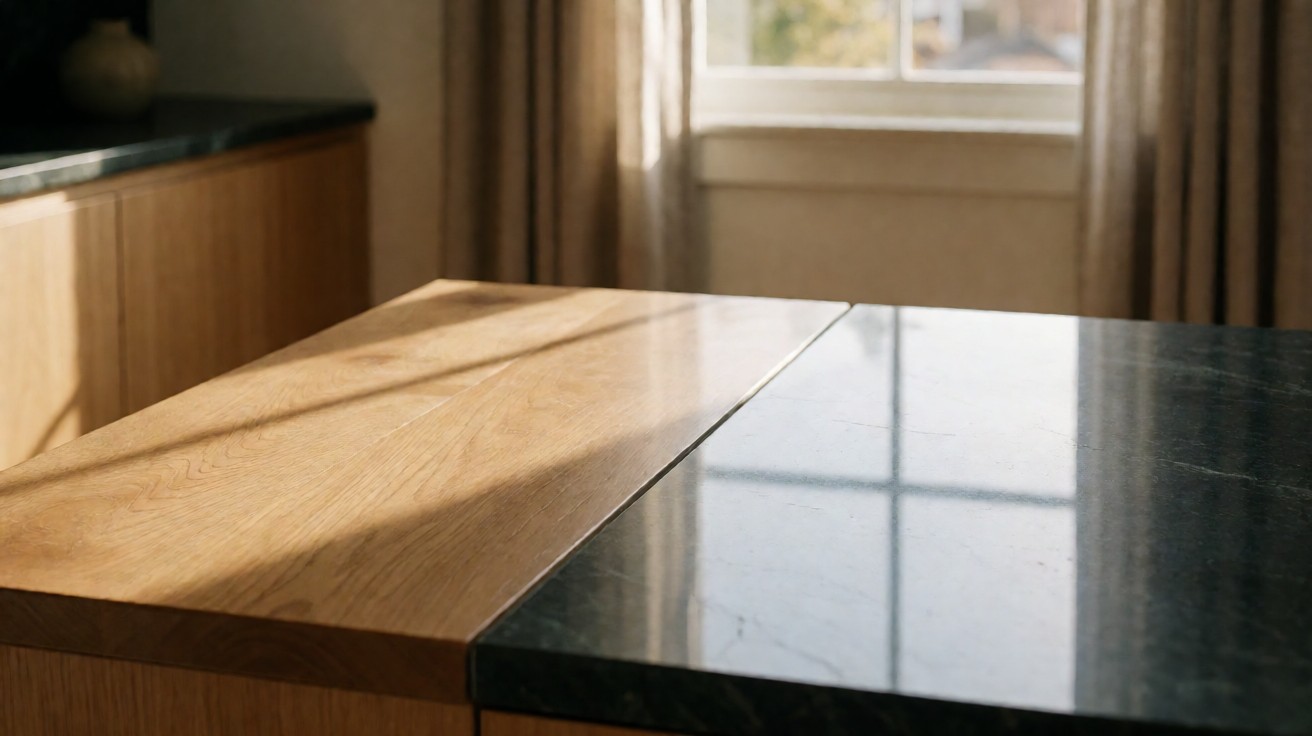
The difference between the finishes is largely optical. A polished surface is smoothed until light bounces off it in parallel, producing a mirror-like reflection. You see the room in the floor.
Honed is smoothed but not to a mirror, so light still bounces in parallel but the reflection is soft and the stone reads matte-satin. Matte is microscopically rough, so light scatters in many directions and there is no reflection at all.
Textured goes further than matte. The surface has real, often irregular relief cut or blasted into it, so it scatters light and catches shadows. The relief is what makes a textured floor read as hand-worked stone even from across a room.
This is why polished stone looks deeper and more expensive, and why it also shows everything. A mirror reflects your lights, your windows, and every smudge on the surface. A matte floor reflects nothing, which is why it hides dust and looks calm even under hard lighting.
Polished: Depth and the Staining Trade-Off
Polishing grinds the surface smooth and then buffs it to a high gloss. The result is a floor with genuine depth, because the light penetrates slightly and reflects back, and with a clarity that makes veined marble and patterned stone look spectacular.
The cost is surface behaviour. Polish opens the pores of natural stone slightly, which is why a polished stone floor, especially marble, limestone, and travertine, usually needs a penetrating sealer to resist staining. Even sealed, a polished floor shows water spots, footprints, and dust more readily than a matte one, because there is nowhere for dirt to hide.
Polish also has a serious safety drawback: it is the most slippery of the four, especially when wet. In a bathroom, a shower floor, or an entryway that gets wet, a high polish is a genuine slip hazard. This is the trade at the heart of the whole decision.
Honed: The Middle Path and Its Subtlety
Honed means the surface is smoothed to an even matte-satin, with no high gloss and no mirror. It reflects light softly enough that it does not act as a mirror, but smoothly enough that the stone keeps a quiet richness that pure matte lacks.
Because honed is rougher than polished, it grips better, hides more dirt, and is easier to maintain, while still looking refined. It is the finish most designers reach for when they want a natural stone floor that is comfortable to live on.
The subtlety is that honed can read a little flat in a room with strong directional light, because it does not catch the light the way polished does.
If you are choosing between honed and polished for a formal, light-filled entryway and appearance matters most, polished wins on drama. If you are choosing for a kitchen you will actually cook in, honed wins on everything that matters daily.
Matte: The Modern Default
A matte finish has a very fine, even micro-texture with essentially no sheen. It is the look most contemporary porcelain and ceramic tiles now default to, and it has become the most popular choice for good reasons rather than fashion alone.
Matte hides dust, scuffs, and footprints better than any other finish, because there is no sheen for marks to catch the light against. It grips well when wet. It does not need aggressive polishing to look good. It also does not glare under lighting, which makes a large matte floor easier to look at and a small matte room feel less busy.
The honest drawback is that a matte surface is slightly more porous than polished, so natural stone still wants sealing, and a heavily textured matte can collect dirt in the micro-relief. A smooth matte, which is what most modern tile actually is, is far less of a problem than a rough matte.
Textured: Grip and Character, and Where It Belongs
Textured finish means real, tactile relief, produced by bush hammering, chiselling, or blasting the surface so the stone looks and feels hand-worked. It is the most visually distinctive of the four and it hides pattern-matching errors better than anything else, because the relief breaks up the eye.
Textured stone is the most slip-resistant of the four and the most forgiving of busy households, because scuffs and wear blend into the irregular surface rather than standing out on a flat field. It suits a rustic, farmhouse, or craftsman interior perfectly, and it is the traditional look of hand-worked stone.
The cost is cleaning. The grooves in a textured surface trap dirt and grout residue and are hard to clean without a brush, and a wet-mopped textured floor can look grubby if water sits in the relief. If the room is not a rustic space and you do not want to maintain a textured floor, this is not the finish for you.
The second table is the safety-ledger view, because finish is not only a look. It is the trade the previous table implies, written plainly as grip against stain resistance.
| Finish | Grip when wet | Stain / etch resistance | Maintenance burden |
|---|---|---|---|
| Polished | Lowest, real slip risk | Needs a sealer, shows spots | Spot-wipe often |
| Honed | Medium | Sealer needed on stone | Routine |
| Matte (smooth) | Good | Sealer on stone, low on porcelain | Low |
| Textured | Highest | Grit holds dirt in relief | Brush the relief |
How Finish Affects Slip Resistance and Safety
This is the dimension to think about first if anyone in the household has balance issues. As gloss decreases across the four finishes, grip increases, because the surface is physically rougher. A polished floor is the slippiest. A textured floor is the least slippery.
Do not rely on appearance to judge this, because photographs are shot under flattering light on a dry surface. Slip resistance is a measured property, typically a DCOF rating, and it is worth checking for any wet room. The tile guide explains how that rating is measured and what number to look for.
The safe rule is that glossy finishes belong in dry, low-traffic, formal rooms, and matte or textured finishes belong wherever water or a hurry might put a foot down.
How Finish Changes the Cleaning Routine
Polish demands the most care. You need a neutral cleaner, no abrasive, and a habit of wiping water spots, because a glossy surface shows them. Honed is easier, needing essentially the same routine as a good matte floor. Matte hides the evidence of cleaning less obviously, so you can be a little less precious about it.
Textured needs the most physical effort, not the most chemical. A stiff brush or a grout brush and a bit of patience gets dirt out of the relief that a mop would only spread around. None of these finishes should be cleaned with an acid-based cleaner, because acid dulls and etches most natural stone regardless of sheen.
The practical summary is below.
| Factor | Polished | Honed | Matte | Textured |
|---|---|---|---|---|
| Reflection | Mirror-like | Soft satin | None, scattered | None, shadowed relief |
| Colour depth | Deepest, richest | Even, soft | Flat, muted | Broken up by relief |
| Hides dirt | Least | Good | Best of the smooth | Best overall |
| Slip resistance when wet | Lowest | Medium | Good | Highest |
| Shows footprints | Most | Some | Fewest | Fewest |
| Porosity | Lowest once sealed | Moderate | Slightly higher | Highest in the grooves |
| Cleaning effort | Highest, spot-prone | Moderate | Low | Highest, needs a brush |
| Best in | Formal, dry, low traffic | Refined and lived-in | Kitchen, bath, contemporary | Rustic, farmhouse, outdoor-adjacent |
Matching Finish to Stone Type
The finish has to suit the stone, because different stones react to it differently. Marble is the critical case: acid etches it, and a matte or honed marble etches faster and shows etching more visibly than a polished, sealed one. In a kitchen where acid from wine, tomato, or vinegar is likely, marble wants polish or a strong sealer.
Travertine is naturally pitted and takes a honed or filled finish beautifully, and its voids accept polish to a depth polished marble cannot reach. Slate is naturally cleft and often sold already textured, so it leans textured or honed rather than mirror-polished, though polished slate is striking and durable.
Porcelain and ceramic can be made to look like any finish, but the honest version is that a matte porcelain has no real pores, so it is easier to live with than matte natural stone at a similar appearance. That is often the practical reason to choose porcelain for a kitchen that looks like marble.
How to Compare Finishes Under Showroom Lighting
Never judge a finish under showroom downlights, because every one of them flatters polish and punishes matte. Ask to see the tile or a large sample near a window, or take a photograph of it in your own light, and compare the four finishes side by side in the same illumination.
Tilt the sample toward the light. A polished surface throws a sharp reflection of whatever is above it; a honed surface gives a soft blur; a matte surface shows nothing. That single test tells you more than the sample name does.
And for natural stone, put a drop of water on each finish before you commit. It beads differently on a sealed polished surface than on an unsealed matte one, and that is the same porosity difference that decides how the floor handles a spill five years from now.
Is polished tile harder to clean than matte?
It is more demanding, yes, but not dramatically for porcelain. A polished porcelain tile is nearly as easy to clean as matte because it is a fired, non-porous surface with a glassy glaze on top.
It is natural stone that changes the picture, where polish opens the pores enough that a sealer matters and water spots and dust show more. The real difference on porcelain is appearance, not cleaning.
Does a honed floor need sealing?
Natural stone honed floors almost always do, because honing leaves the stone more porous than polishing does. A honed marble, travertine, or limestone floor should be sealed on a schedule to keep spills from staining it.
Glazed porcelain or ceramic in a honed or matte finish does not need sealing, because the glaze already seals the body. Sealing needs follow the product, not the finish word alone.
How This Connects to the Rest of the Tile Choice
Finish is the last layer of the tile decision, sitting on top of the body, the wear rating, and the format. It is worth choosing deliberately, because unlike colour it is very hard to change once the floor is down.
The complete tile flooring guide covers how tile is made, the PEI wear rating, water absorption, and slip resistance. If you are still working out whether a tile has a glaze layer at all, the glazed versus unglazed tile comparison settles that prior question. And for the wider context, the head-to-head material comparison sets the families against each other on warmth, comfort, and maintenance.