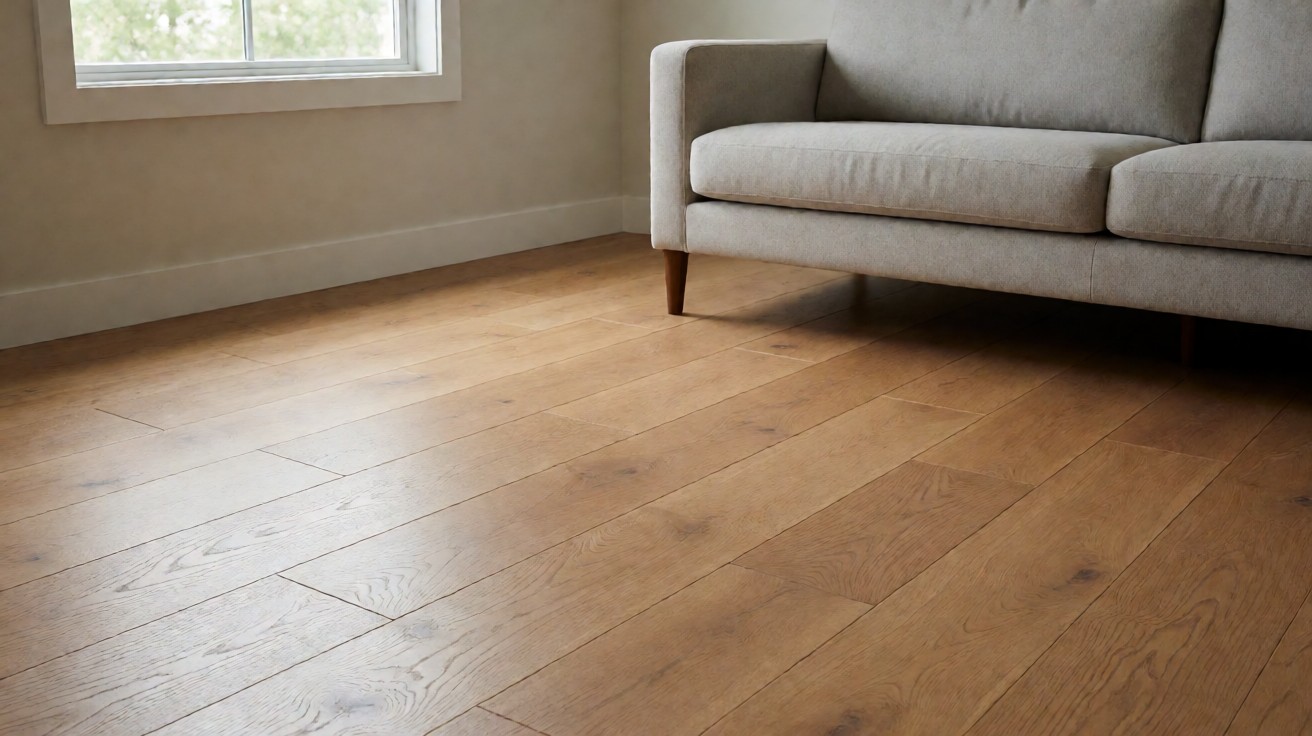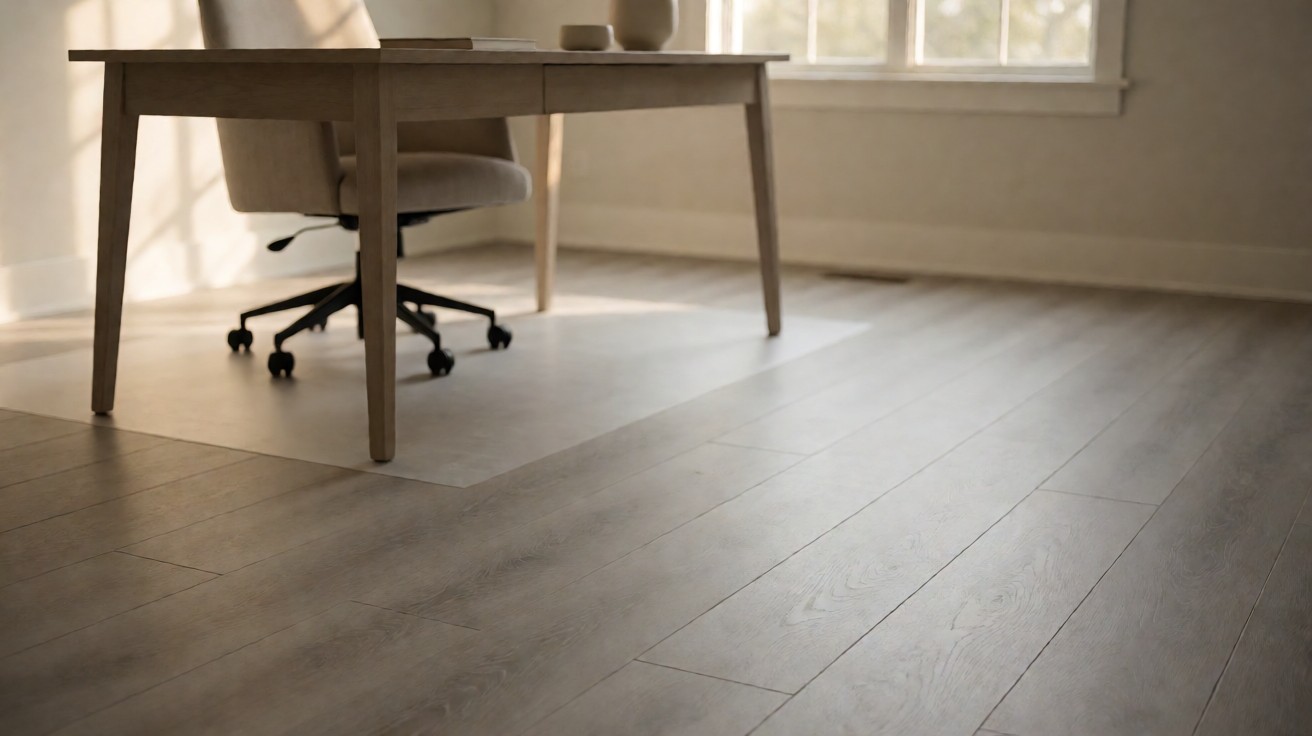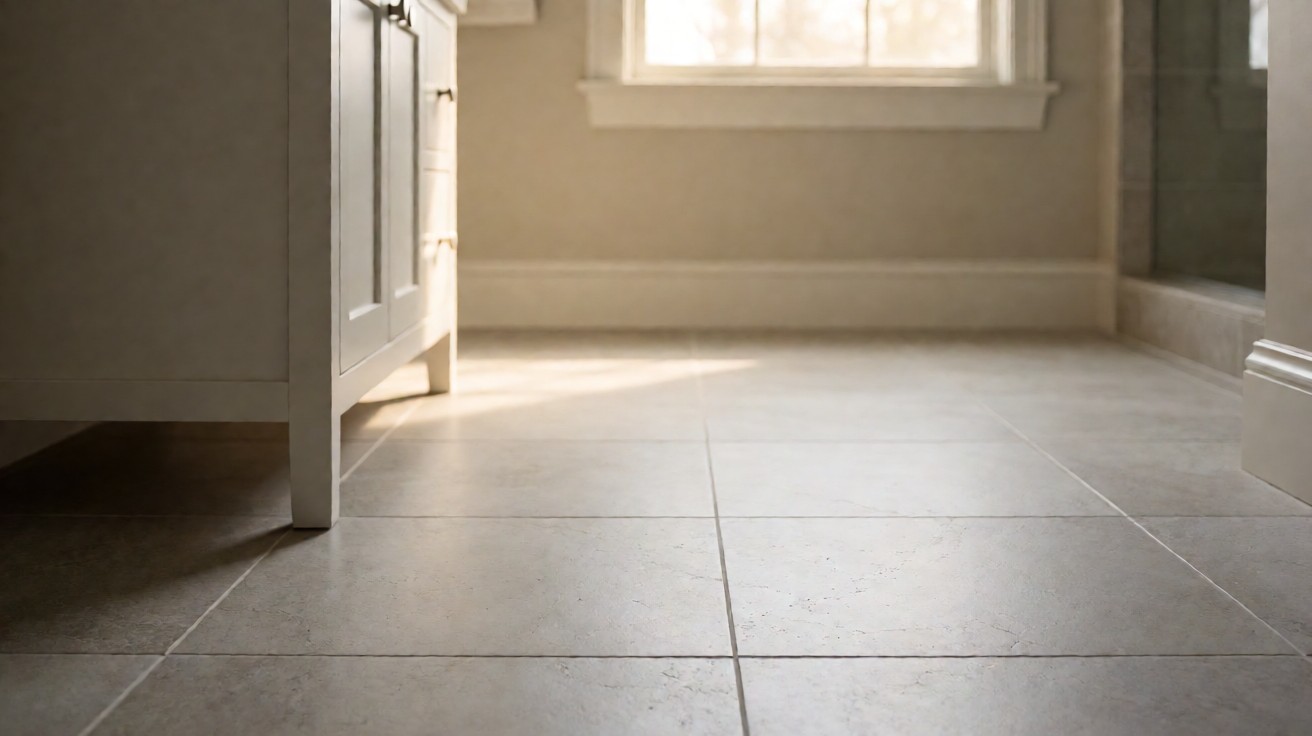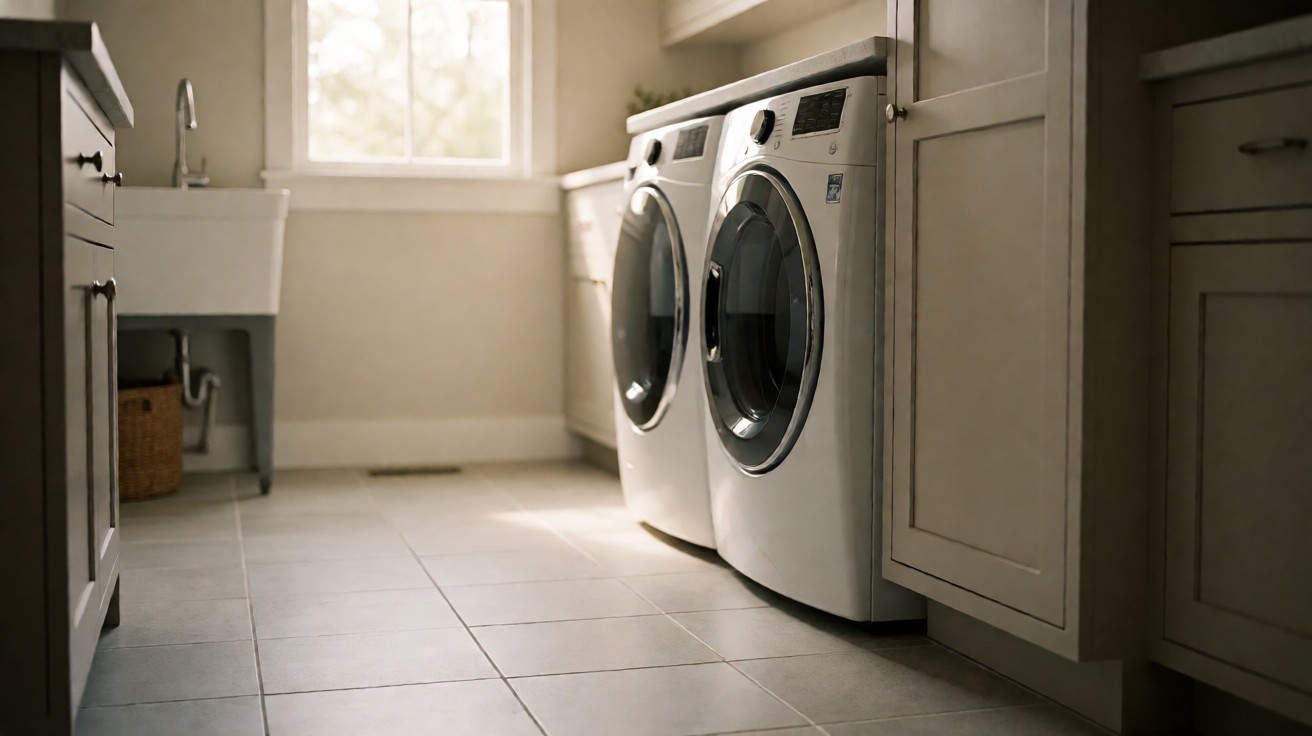

The best laundry room floor has to take detergent, water from a blocked hose, and years of wet and dry cycling without ever lifting an edge of the tile.
A Laundry Room Is a Wet Room With a Machine in It
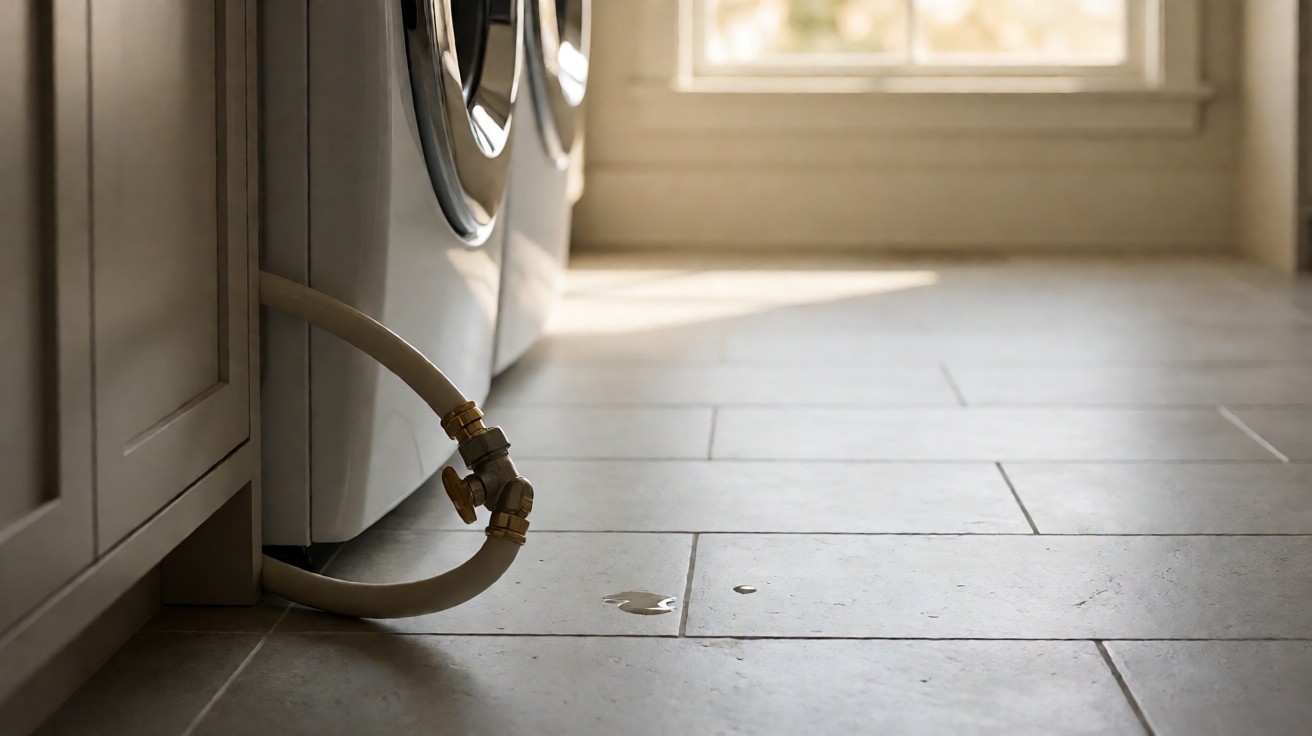
A laundry room is one of the wettest rooms in a house and it is the only one where the source of the water is a hose rather than a person. Every load puts detergent, fabric softener, and a splash through a drum onto the floor, and the machine is a fixed object that will stay there for years.
That makes it a wet room with a different risk profile from a bathroom. A bathroom is wet in a controlled way and dries out between uses; a laundry room is wet repeatedly and often stays damp because the machine blocks airflow against one wall. Any floor here is living in a room that is wet more often than not.
The Three Things That Actually Ruin a Laundry Floor
Three things destroy laundry room floors in order, A fourth sits underneath all three and it is the room itself: a washer and a dryer parked against the same wall every day for fifteen years, holding a constant load and blocking the airflow that would otherwise dry the edge of the room. and they are worth naming because each one points at a different material decision.
First is the standing water from a blocked or cracked supply hose, which is the catastrophic one and the one every laundry room carries as a risk. Second is the detergent, which is not neutral: it is alkaline and it will strip a finish and dull a seal over years of regular use. Third is the repeated wet and dry cycling, which works at an edge or a seam long before it works on the middle of a floor.
The Five Families and How They Take Detergent and Water
Five families get used in laundry rooms and they separate very cleanly on whether they take standing water and whether they survive detergent.
Tile is the correct answer and has always been, because a glazed surface does not absorb, does not swell, and comes back from a mop with nothing left to lift. Rigid core is the modern alternative and it takes the water, provided it is a glue down rather than a click lock. Vinyl in the loose lay form is the one to be careful with. Wood fails on both counts, and carpet is only for a room that is genuinely dry.
| The laundry room’s real risk | The family that answers it | Why it survives there |
|---|---|---|
| A machine that might flood someday | Porcelain tile | Does not absorb, and a sealed grout can be dried |
| A slab under the room, no demolition wanted | Rigid core, glue down | Bonded to the slab, no seam for water to find |
| A genuinely dry, upstairs room | Carpet | Quiet, and only safe where water cannot reach it |
| Sheet vinyl, sealed all round | Sheet vinyl | Lifts for drying, and only if the perimeter was sealed |
| A wooden floor here | Neither solid nor engineered | Swells on the water and dulls under the detergent |
Tile and the Answer That Has Not Changed
Tile is the right floor for this room and the reason has not changed in fifty years The one addition to that old advice is the size of the tile, which matters more here than anywhere else in the house. Fewer joints is not a style preference in a laundry room; it is the difference between a floor you can flood and mop and a floor that holds water in twelve lines between the tiles.: a laundry room floods occasionally, and a flooded room needs a floor that can be soaked and dried without any consequence.
Porcelain is the version to choose over ceramic, because it absorbs less and it is the one that survives a flood without the grout going soft. The grout still has to be sealed, and that is the real maintenance item in this room rather than the tile itself. The porcelain tile page covers the two tile families and where porcelain earns the extra cost, and the tile flooring guide covers the sizes and the joint.
Porcelain, Ceramic, and the Joint That Matters
The joint is what decides whether a laundry room floor works, because the tile surface never absorbs and the line between the tiles does. Sealed grout is the difference between a room that can be flooded and mopped and a room where the water sits in the line and goes soft.
A large format tile has fewer joints and fewer places for that to happen, and in a laundry room where flooding is a real risk that is worth more than it is in a dry room. A small ceramic tile has many more joints, which is fine in a dry room and is a liability in one that floods. Seal the grout, and then reseal it on the schedule the manufacturer gives you.
Rigid Core, and the Glue Down Question
Rigid core is the correct modern answer in this room and the detail that decides it is the install method, not the material. A click lock plank has a seam, and in a room where standing water is a possible event, that seam is where the water gets under and stays.
A glue down rigid core has no seam for the water to find, because the planks are bonded to the subfloor and the edge is sealed by the adhesive and the seam tape. It is the version to use here, and it is the version the rigid core vinyl page covers. The glue down costs more in labour and it is the difference between a floor that handles a flooded room and one that does not.
Wood, and Why It Is the Wrong Room
Wood fails in this room on two independent counts and it is worth being clear about both, because people choose it here regularly and usually only think about one.
The water swells it: a flood or a persistent damp pushes into the core, the edge lifts, and solid wood does not come back. The detergent strips it: an alkaline detergent over years dulls a factory finish and opens the surface to the water that is always present in this room. Engineered wood tolerates the first a little better and the second not at all, which is why it is still the wrong answer in a laundry room.
Vinyl, and the Form That Matters
Sheet vinyl and loose lay vinyl are the forms most people think of for a laundry room, and both have the same weakness: a seam at the edges of the sheet, and a perimeter where the sheet meets the wall.
If that perimeter is not properly sealed, which it very often is not because it is hidden by a skirt or a cabinet, water gets under the sheet and has nowhere to dry. It is a soft floor in a room that is not dry, and the fix is the installation rather than the material. Sheet vinyl is also the only floor here that can be lifted, which is a genuine advantage if the room floods and the subfloor has to be dried.
Carpet and the Dry Laundry Only
Carpet is the correct answer in exactly one situation: a laundry room that is genuinely dry, which usually means an upstairs or interior room with no plumbing directly above a wet room and a machine that does not leak.
Even then it is the family that holds detergent into the pad, and detergent residue is what produces the smell that eventually makes a carpeted laundry room unpleasant. If the room is dry and quiet matters, carpet is fine. If there is any chance of water, it is the wrong pick, and the carpet flooring guide covers the fibre and the pad that decide the lifespan.
Preparation Is the Whole Job
Most of what makes a laundry room floor last happens before the floor goes down, The other thing is the leak pan under the machine, which is the cheapest insurance in the room and which more people skip than should, because it is invisible the moment the machine is pushed back against the wall. and the list is short. The subfloor has to be flat and sound. The perimeter has to be sealed wherever a sheet material meets a wall, or wherever a click lock stops.
A floor drain, if there is one, has to be unobstructed and has to be the low point. And the appliance has to sit on the finished floor on the right kind of feet, not on the floor itself, because a washing machine is the heaviest object most people ever put on a laundry room floor and its feet are the load.
Cost, and What Gets Spent Where
The material costs in this room are narrow. That is the useful part of the cost comparison here: unlike a kitchen or a bathroom, there is no fixture or cabinet cost to confuse the picture, so the floor really is most of the budget in this room. Tile is a modest material cost and the labour is the bigger number, because every cut around a machine and a cabinet is a custom cut and a slow one.
Rigid core is a higher material cost and a lower labour cost, because it is a floating floor that goes over almost anything, which in a laundry room with a slab means no demolition at all. The comparison across all of these is on the flooring types compared page, and the practical answer is that tile wins on longevity and rigid core wins on how fast the room comes back online.
| Family | Where it sits on cost | What that money buys you here |
|---|---|---|
| Rigid core, glue down | Higher material, lower labour | Goes over a slab in a day and comes back fast |
| Porcelain tile | Lower material, higher labour | The most durable and the slowest to install |
| Sheet vinyl | Middle of the five | Lifts when it floods, if the perimeter was sealed |
| Carpet | Variable | Cheap and quiet, and wrong the moment water arrives |
How to Choose, and Where to Look Next
Pick the family that takes standing water and detergent together, and if you are choosing vinyl, pick the glue down form. Then read the material guide for it before anything goes down.
The porcelain tile page and the rigid core vinyl page are the two that back the top picks for this room, and the tile flooring guide covers the tile sizes and the joint work, which is the part that decides whether the floor survives a flood. It is the least glamorous room in the house and the one where the floor has the least room to forgive a bad installation.