
The best home office floor is the one that survives a rolling chair and a long day of calls, and what most people miss is the mat under the desk, not the floor.
The room that most often gets this wrong is the spare room with a desk pushed into it, because the floor was chosen for the bedroom the room used to be and never reconsidered once it became somewhere someone works for eight hours a day.
This page ranks the five families by what they do for a chair, a call, and a spill, and points you to the material guide for the one that fits.
A Home Office Is a Workroom, Not a Study Corner
A home office is a workroom with the acoustics of a stairwell, and the floor takes three loads that no other room puts on it. A chair on castors rolls across the same patch of floor every day for years. A boot heel rolls when you stand up, and it rolls with a point of pressure the floor was not designed for.
The third load is the one that ruins floors quietly. A mug of coffee gets set down while you are on a call, and if it goes over, it sits there because you cannot move for the next forty minutes. This is the only room in most houses where a stain sits unattended as a matter of routine, and it changes which materials belong.
The Chair Is the Single Most Important Object in the Room
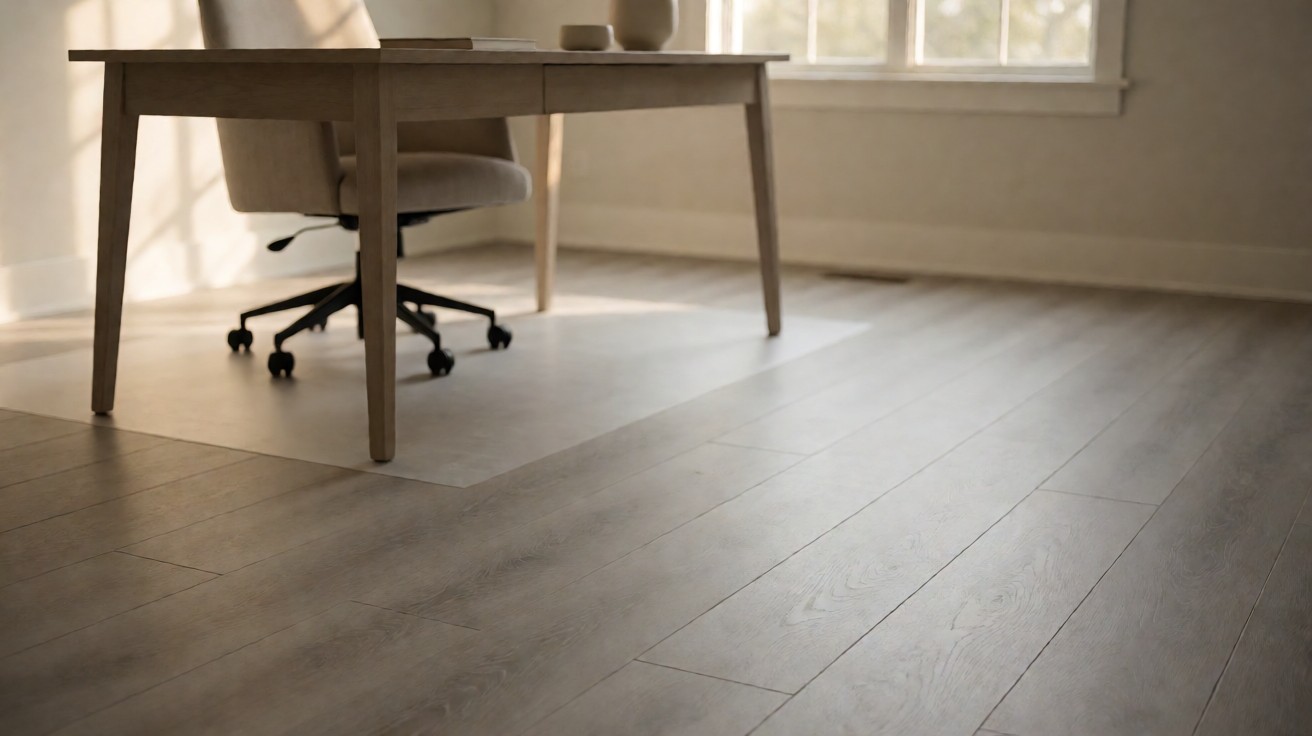
Almost every home office flooring decision should start with the chair, because the chair decides what the floor has to take, and the mat under it decides how much of that the floor sees at all.
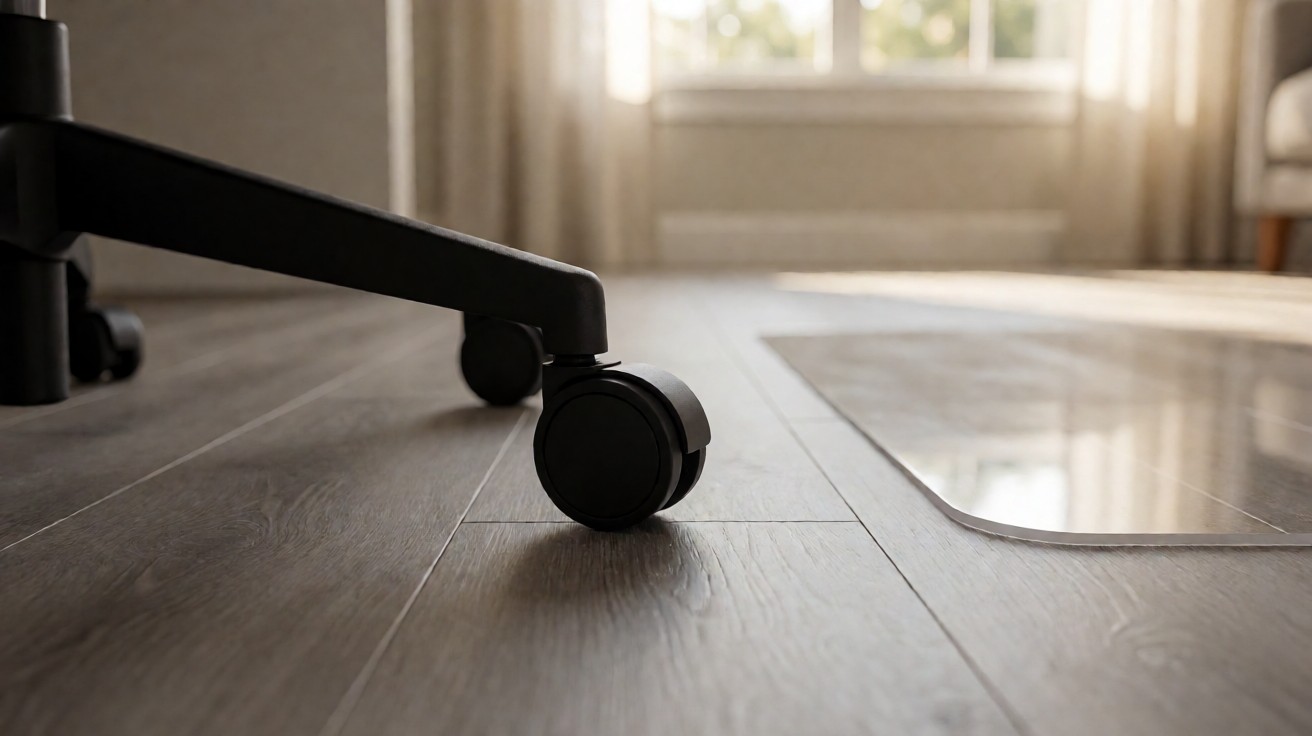
A hard castor on a hard floor is the worst combination and it is the one most people already own. The mat has to be the hard kind, and that is the detail people get wrong. A soft rug with a pile is worse than no mat at all, because a hard castor catches on the edge and stops dead, which puts the whole load on the front wheels and grinds them across the finish every time the chair moves. A hard polypropylene or PVC mat lets the castor roll, spreads the load, and keeps the grit that comes off the castors from being ground into the floor. It puts a concentrated point load into the finish on every roll and every pivot, and it is the single most common cause of the grey scuff marks that appear in a path across an office floor within a year. The mat is not optional in this room.
| The office’s actual condition | The answer | Why it survives there |
|---|---|---|
| A hard castor chair, used daily | A hard protective mat | Takes the point load the floor would otherwise mark |
| Calls all day, room above someone | Carpet, or cork | Absorbs the reflection that makes a call echo |
| A chair path across the room daily | Rigid core | Takes the rolling load without a scuff path |
| An office over a garage or a slab | Tile | Hardest of the five, careless about what is dropped |
| Budget, spare room, dry climate | Laminate | A wood look for less, weakest where there is damp |
The Five Families and What Each One Does for an Office
Five families work in a home office and they divide by acoustics, by how they take a rolling load, and by how they behave when you are on a call all day.
Hardwood and engineered wood give the best look and the best value and they take a chair path scuff that you cannot sand out without sanding the whole floor. Rigid core takes a rolling chair without complaint and is the pick for a room that is used daily. Laminate is the value version of the wood look. Carpet is the quietest of all and the one that wears out in a chair path. Tile is the pick when the room is over a garage or a slab and needs to be tough.
Acoustics, and the Call You Can Hear Twice
The floor in a home office is part of the acoustic problem, because hard surfaces reflect sound upward and a room with too many of them rings. On a video call that shows as echo on your end, and a hard room also makes it hard to concentrate in.
A carpet, a cork floor, or a well padded resilient floor all absorb the reflection that a bare tile or a bare laminate throws back. This is a real reason to choose a softer material here that does not apply in a hallway, where hardness is the whole point.
Rigid Core and the Practical Office Answer
Rigid core is the pick for a home office that is used every day, because it takes a rolling chair, a point load, and a spill without any of them marking it, and because it is a floating floor that goes over almost any subfloor including an old carpet pad or a concrete slab.
The one detail that matters more in this room than in a living room is the chair mat, because the mat is what takes the castor load and lets the floor underneath stay clean for a decade instead of one. The rigid core vinyl page covers the two cores and the build that decide whether it holds up to a chair.
Hardwood and the Scuff Path
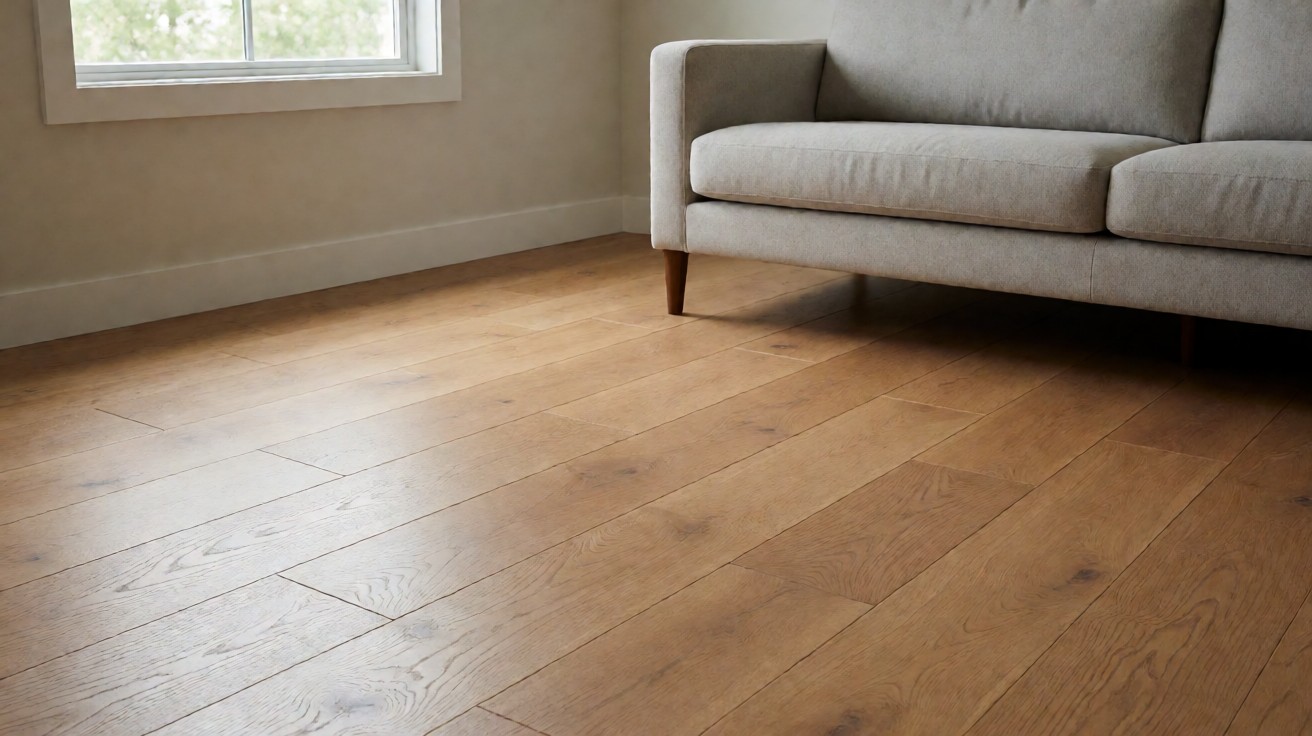
Hardwood is the family that looks right in an office and it is the right one when the chair has soft wheels or sits on a mat and the room is not the room you sit in for ten hours a day.
The failure mode is a grey scuff path that follows the chair from the desk to the door, and it comes from the chair rolling on the finish rather than from a scratch, which is why it happens on wood, laminate, and tile alike. Engineered hardwood holds up better than solid under a rolling load, and the hardwood flooring guide is where the two constructions are compared.
Carpet and the Quietest Room in the House
Carpet is the quietest material and it is the pick for an office in a house where the calls really matter and the room is above someone. It absorbs the footstep noise that a hard floor sends down, and it takes the sting out of a rolling chair.
It also wears out in a path, and it is the material most likely to need replacing in an office before it does anywhere else, because the same path takes the same wear every day. If you choose it, choose a dense fibre and a good pad, and the carpet flooring guide is where the fibre and the pad are covered.
Tile, Laminate, and the Over-Garage Office
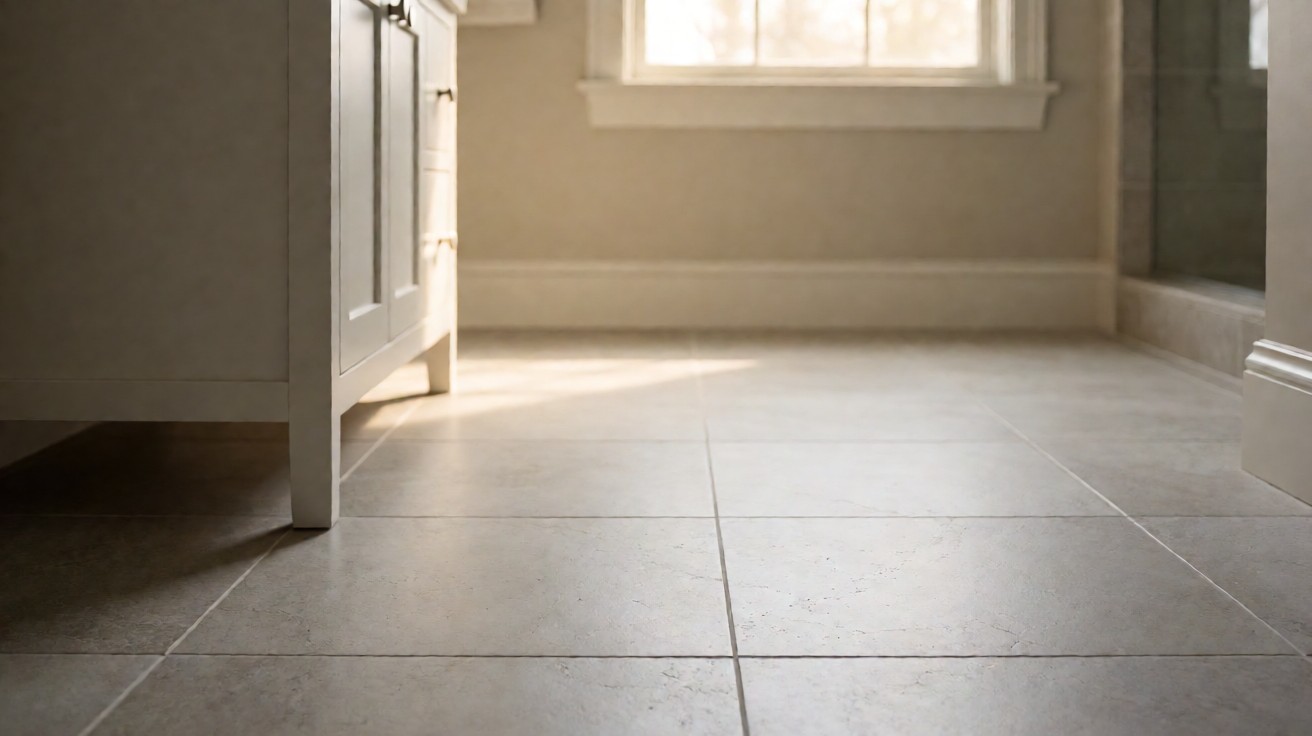
Tile is the pick for an office over a garage, over a slab, or anywhere the floor has to be tough rather than comfortable, because it is the hardest of the five and it does not care what is dropped on it.
Laminate is the pick for a spare room being used as an office on a budget, and it is the family to avoid if the room is below grade or gets a damp patch in it, because the core swells. The laminate flooring guide covers the wear layer and the core, which is what decides whether a budget office floor lasts.
What You Should Check Before You Buy
Three checks decide this room and none of them happen in a showroom. Most home offices are somewhere between eight square metres and fifteen, which is small enough that the material choice gets decided on two things only: how it looks on a camera, and how much noise it sends to the room below. If the office is at the top of the house with nobody under it, the acoustics argument mostly disappears and the pick becomes about the look and the chair damage. Roll the chair you will actually use across the sample, because the store chairs and your chairs are not the same. Ask whether the sample can take a hot mug, because that is the spill that happens here. And ask what the floor does to sound, because the room you will work in is the room you will hear on a call.
Then read the material guide for the two that survive, and use the flooring types compared page to put the families in one table before you spend anything. The pick that works in an office is rarely the pick that works in the living room, and this is the room that proves it.
Cost, Where It Sits, and What the Mat Adds
The families sit in the same order as everywhere else, and the office is a small room, so the material difference is often less than the labour difference. A floating rigid core in a small room is an afternoon. A tile floor is a day and a half with the adhesive and the cuts.
The mat is the cheapest line in the whole decision and the one with the largest effect on how the floor looks in year five, and it is worth buying a good hard one rather than a soft rug that the castors catch on the edge of.
| Family | Where it sits on cost | What that money buys you here |
|---|---|---|
| Rigid core, SPC | Lower of the five | Takes the chair, goes over any subfloor, lifts out later |
| Laminate | Lower of the five | A wood look for less, weak if the room ever gets damp |
| Tile | Middle of the five | Hardest, but a day and a half of install and a cold room |
| Carpet | Middle of the five | The quietest, and the first to wear out in a chair path |
| Engineered or solid wood | Higher of the five | The look and the value, with a scuff path you cannot sand |
Installation and Living in the Room
There is a real advantage to a floating floor in an office that almost does not exist anywhere else in the house, because it can often be laid around the desk and the chair if you do not want to move them and cannot spare an evening.
Tile and a glue down both need the room empty and the furniture out, which in a home office is the room where you work, so the cost of the install is partly the cost of working somewhere else for a weekend.
How to Choose, and Where to Look Next
Pick the family that matches your chair and your call schedule, then read the material guide for it. The flooring types compared page is the map, and the rigid core vinyl page, the hardwood flooring guide, and the carpet flooring guide are the three that back the top picks for a home office.
The decision is not the material that looks best in a photograph of an office. It is the one that still looks right after a rolling chair has crossed it five thousand times, and the mat is the part of that answer which costs less than the floor and does more.