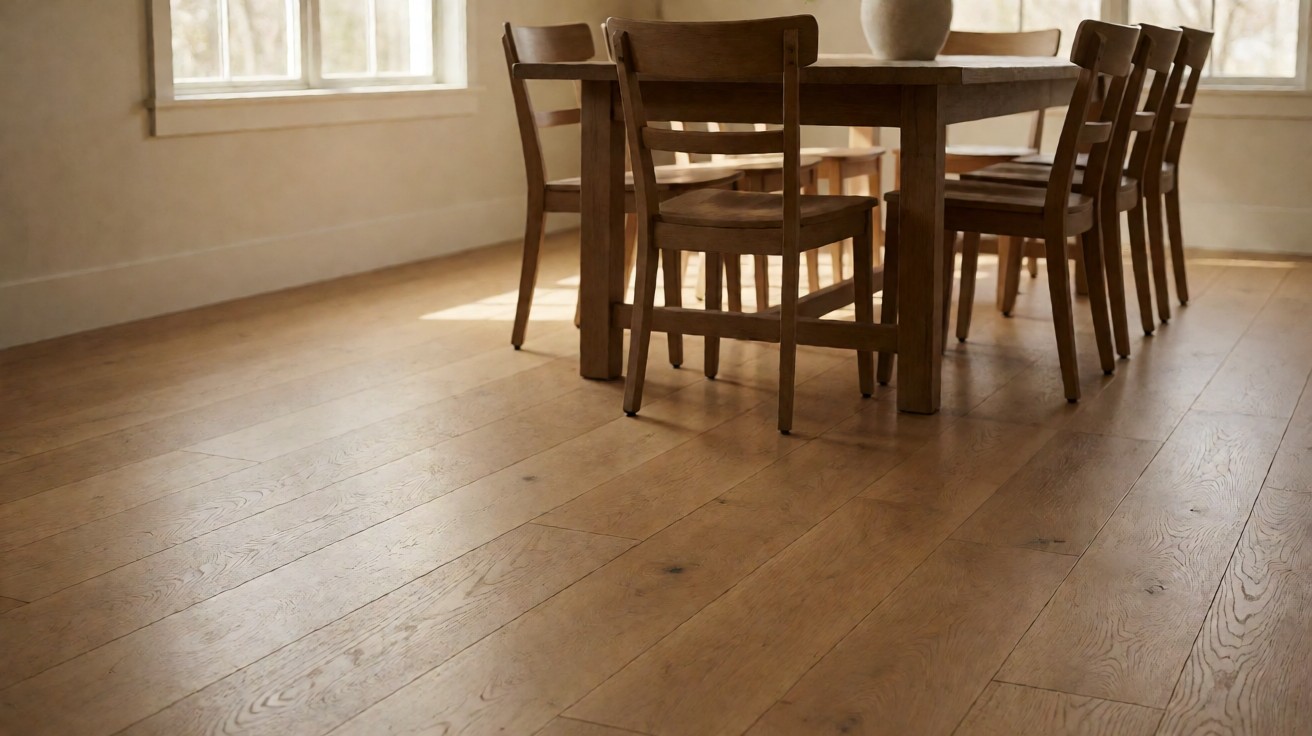

The best dining room floor is the one that survives chairs dragged in and out every night, and the detail that decides it is what sits under the table leg.
Most people choose a dining room floor for how it looks during a dinner party, and that is the wrong order. A dining room is where furniture moves, where a hot pan gets set down for a second, where a chair scrapes back from the table twenty times a meal, and where the floor has to take all of it for the years you have the room.
This page ranks the five families that survive that use, then points you to the material guide for whichever one fits your table, your chairs, and your actual habits.
Why a Dining Room Is Not a Living Room With a Table
A dining room is usually picked last in a house and then lived in the most, and those two facts explain most of the flooring mistakes made in it. It gets chosen quickly because it is the room that is easiest to leave empty, and then it becomes the room where the whole house eats, assembles, does homework, and sometimes works.
That use puts three specific loads on the floor that a living room does not. The table legs and chair legs carry a static load and get dragged across the surface every time someone stands up. Spills land concentrated in one spot instead of spread over a room. And the room is often the one people cross carrying something, which loads the edge of the floor rather than the middle.
Three Things That Decide a Dining Room Floor
Three things decide this floor and they are furniture questions before they are material questions. The first is what sits under the table legs, because a point load under a heavy table is the one thing that can permanently mark almost any floor. The second is what sits under the chair legs, because they travel across the floor every meal and they carry grit from the kitchen with them.
The third is the spill profile: whether this is a room where a glass of wine lands on a Tuesday as often as it does not. A room with regular red wine on it and a room where it happens twice a year are different problems, and the table below sets the answers against the family that solves each one.
| The dining room’s actual use | The family that answers it | Why it survives there |
|---|---|---|
| A heavy table on a hard floor | Felt pads on every leg | Spreads the point load that marks wood |
| Chairs moved at every meal | Felt pads, and a floor that forgives | Stops the drag line at the table edge |
| Wine and food spills | Sealed tile, or a coated wood | The stain decides this, not the dent |
| A busy family eating here daily | Rigid core | Takes the spill and the dropped plate |
| The room seen from the next room | Engineered wood | The look matters most where the room is on show |
The Five Families and How They Hold Up Here
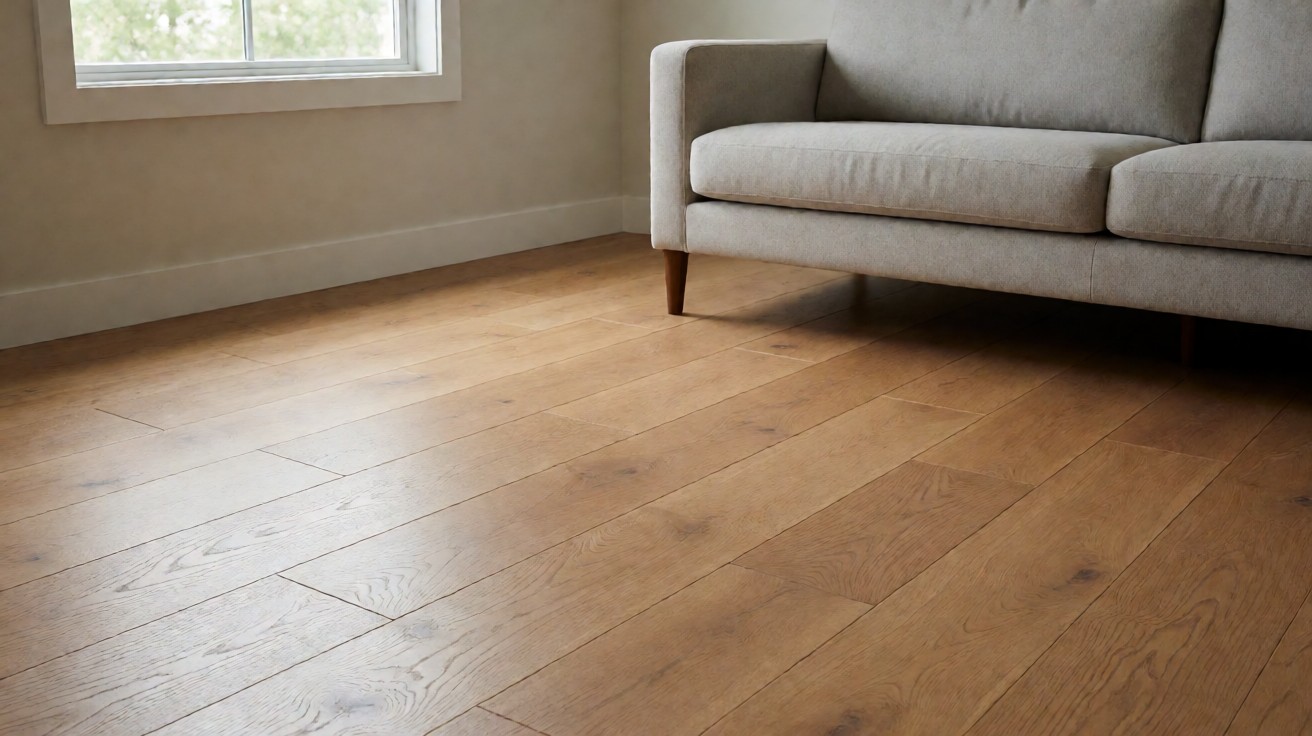
Five families work in a dining room and they separate by what they do with a point load and a spill. Hardwood and engineered wood look the best in this room, because a dining room is the one you see from the doorway of the living room, and they take a dent at the table leg that only shows up close.
Rigid core is the family that forgives the most, and it is the pick when the table is heavy, the chairs are cheap, or children eat at it. Tile takes the most and looks cold under a dining table. Laminate is the value pick when the look has to be wood and budget decides. Carpet is the wrong answer in almost every dining room, and the reason is the chair.
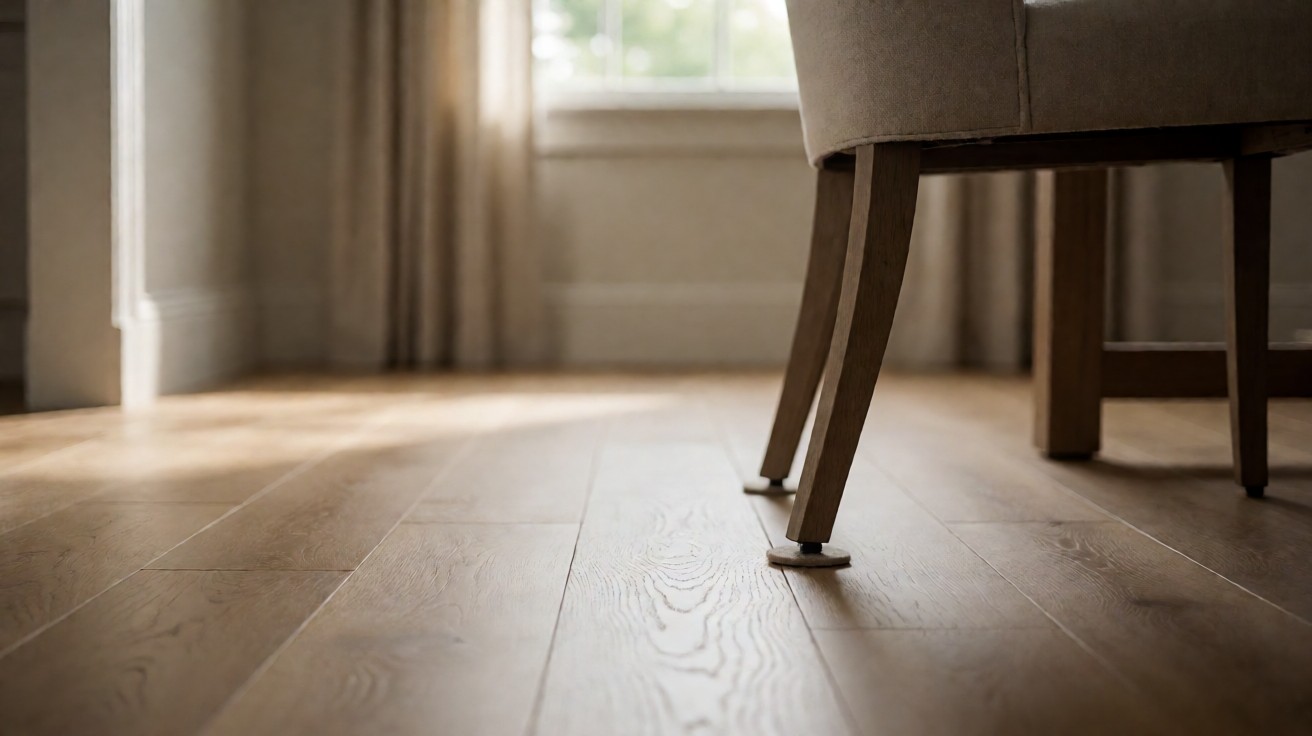
Felt Pads and the Cheapest Upgrade in the Room
The felt pad under a chair leg costs almost nothing and it decides whether the floor has a drag line at all, which makes it the highest return thing in this room. A set costs a few dollars and takes about ten minutes to put under the chairs and the table legs.
The pad has to be felt or a soft glide, and a hard plastic glide is worse than nothing because it concentrates the same load in the same spot with no give. Felt compresses and spreads that load across a slightly wider area, and that difference is the difference between a mark that wears out and a dent that does not. Wood can be sanded out of this, but a dent in the middle of a room is a dent you may not want to sand a whole floor for.
Why Carpet Is Almost Always the Wrong Answer Here
Carpet is the answer most people regret in a dining room, and the reason is not stain so much as the chair. A caster chair on carpet tears the pile where it pivots, and it does it in the same small circle every meal, and that circle goes bald within a year or two.
It also traps grit coming off the kitchen and grinds it into the pile, and it holds a spill smell in a way a hard surface does not. If you want warmth underfoot here, the answer is a hard floor with a rug under the table, which puts the warmth where you actually feel it and keeps the floor in a surface that can be cleaned properly.
Hardwood and the Dent You Are Choosing to Accept
Hardwood is the family that looks right in this room, and it is the right one when the table legs are padded, the chairs are not on hard castors, and you are willing to sand the floor at least once over the years you have it.
Engineered hardwood is the version to choose over solid in a dining room specifically because the layered core absorbs a point load with less permanent damage, and a table leg is exactly that failure mode. The trade is that it sands fewer times, and the solid versus engineered hardwood comparison covers what each construction gives up when you pick it.
Rigid Core and the Case for the Practical Answer
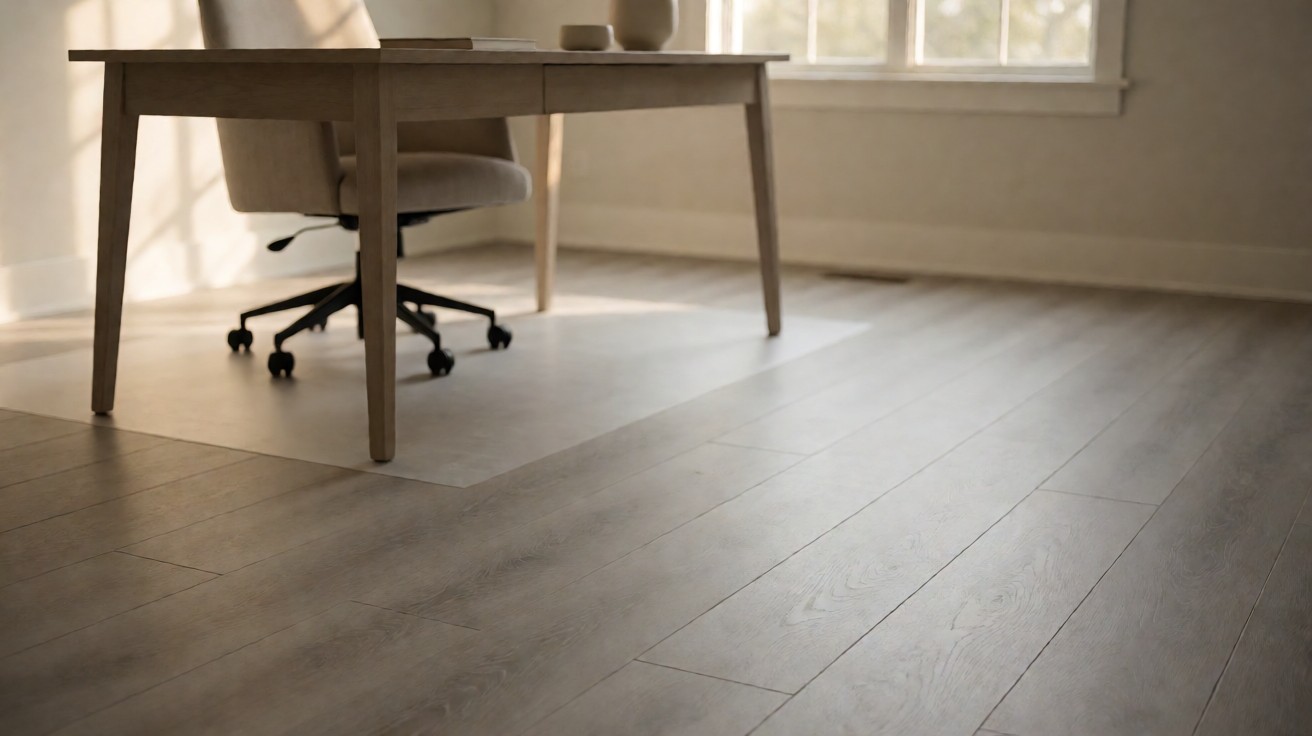
Rigid core is the pick when the dining room is the room the family actually uses, with a heavy table, cheap chairs, and children eating at it, because it is the family that takes a point load, a spill, and a dropped plate without any of them marking it.
It installs as a floating floor over almost anything, so it goes over an existing subfloor without the demolition a tile or a glue down would need, and it comes out cleanly if the room changes its mind about being a dining room. The rigid core vinyl page is where the two cores and the build that matter are walked through.
Tile and Laminate in Their Correct Places
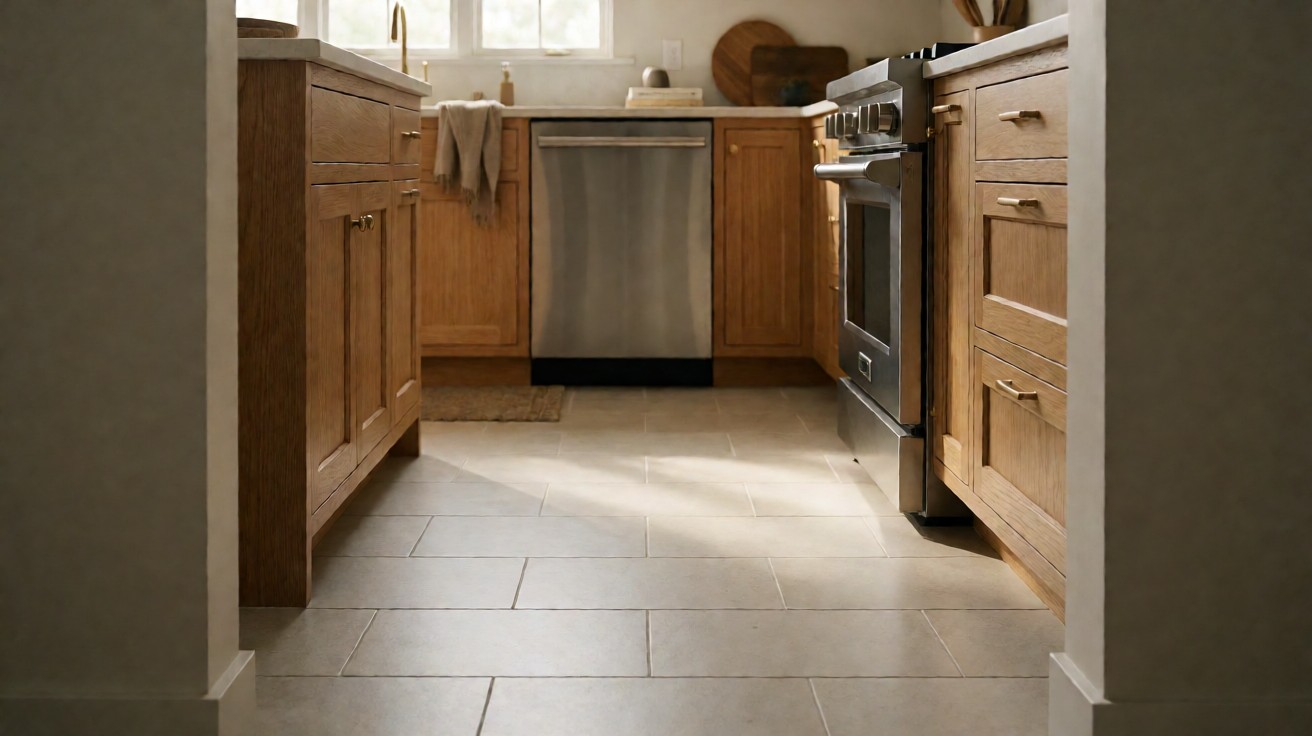
Tile is the pick when the dining room opens directly to the kitchen, when the look is modern and hard, or when the same floor has to run through a wet room next door so there is one material rather than a joint in the middle of the house. It is the easiest to clean and the hardest to scratch, and a dropped cast iron pan will chip it.
Laminate is the pick when budget decides and the look has to be wood, and it is the family to avoid when the room has regular wine or when the table sits in a patch of sun. The laminate flooring guide covers the wear layer and the core, which is what decides whether it survives a dining room at all.
Light, Spills, and the Finish That Matters
The finish is the third material question after the family and the furniture, and it matters more in this room than in most because a dining room gets wiped with a damp cloth after every meal. A matte or a satin finish shows less of the wipe marks and less of the fingerprints, and a polished finish shows every one of them.
It is also the finish that decides how a stain behaves. A surface with a real coating, whether that is a factory finish on wood or a glaze on tile, lets a wipe lift the spill before it soaks. An unfinished or open pore surface takes it in and the stain becomes the floor’s problem rather than tonight’s.
Cost and the Part That Is Not the Floor
The families line up the way they do everywhere else, and the real gap between them in this room is smaller than in a living room, because the floor is a small part of a dining room’s budget. The table, the chairs, and the light usually cost more than the floor you stand on.
The number that matters is the floor plus the install plus the pads. Tile costs more in labour than in material here, because the cuts around a table-shaped room are all custom. A rigid core costs less in both, because it is a floating floor over whatever is already there, and that gap is usually wider than the gap between the floor materials themselves.
| Family | Where it sits on cost | What that money buys you here |
|---|---|---|
| Engineered or solid wood | Highest of the five | The look in the room you see most, and the value at resale |
| Porcelain or ceramic tile | Middle of the five | Easiest clean, hardest surface, chips on a cast iron drop |
| Rigid core, SPC | Lower of the five | Takes a point load, a spill, and a dropped plate unmarked |
| Laminate | Lower of the five | A wood look for less, weakest where there is water or sun |
| Carpet | Varies, and usually a regret | Warm underfoot, but the caster and the grit go bald |
Installation and Getting the Room Out of the Way
There is one install question that matters more in a dining room than anywhere else, and it is whether the floor can go down around the existing table or whether the table has to leave first. A floating rigid core can often be laid around a table you do not want to move, which saves the one thing a dining room does not have much of: the ability to be out of commission.
Tile and a glue down both require the room to be empty, which is a weekend of the room being unusable and a table somewhere else in the house. Carpet is the easiest install of all and the one most people pick without weighing the chair problem, which is the trade they regret.
How to Choose, and Where to Look Next
Pick the family that matches your table legs and your spill habits, then read the material guide for it. The flooring types compared page is the map that puts all of them in one table, and the hardwood flooring guide, the rigid core page, and the laminate guide are the three that back the top picks for a dining room.
The decision is not the material that photographs best during a dinner party. It is the one that still looks right after three years of chairs being dragged across it, and padding the legs is the part of that answer which costs nothing and does the most.