
The best hallway floor is the one that takes the grit off every shoe before it reaches the rest of the floor, and the material decides it, not the mat.
That is also why the hallway is where a bad floor choice announces itself first. The entry is the first thing a visitor sees, it takes the most traffic per square foot of any room, and it is where the grit and the water from outside the house stop being somebody else’s problem and become yours.
This page ranks the five families by what they do with grit and moisture in the same surface, and points you to the material guide for the one that fits.
A Hallway Is a Dirt Trap With Good Lighting
A hallway is the shortest room in the house and the hardest to choose for, because it takes every bit of grit, moisture, and traffic that comes in the front door and carries all of it into the rest of the house. It is a dirt trap by function, and the floor has to handle that job while still looking like part of the house.
That job is different from every other room in two ways. It gets a wet shoe and grit at the same time, repeatedly, and it is the room where people are carrying something, so the load lands on the edge of the floor rather than the middle. A material that is perfectly fine in a living room can fail here in a season.
What Comes In Off a Shoe, Precisely
A shoe carries three things into a hallway and all three attack a floor differently. A hallway also sees more of what comes in off a sole than most people expect, because the shoe spends its whole life on the outside world before it crosses the threshold. Wet, sandy, salty, or muddy are all common, and all four behave differently on a floor. Salt and sand are the abrasive pair. Water is the swelling pair. Mud is both at once, and it is the reason a hallway mat that does not stay down lets grit track three rooms into the house. Grit is the abrasive one, because it is the thing that scratches a finish and dulls a polish. Moisture is the swelling one, because it gets into a seam and a scratch and a nail hole. And whatever was on the sole is the staining one, which is why the mark at the front door is often a dark scuff rather than a dirt stain.
The floor in a hallway has to handle all three at once, in a small area, many times a day. That is why the pick here is less about the material being tough and more about it being easy to clean, because a surface you can wipe in ten seconds stops the problem far more often than one you cannot.
The Five Families in a Hallway
Five families work in a hallway and they divide almost entirely by how they handle grit and moisture, and that is a different ranking from the living room.
Tile is the traditional answer and it is still the best one for grit, because a hard glazed surface does not scratch and a damp mop lifts everything off it. Rigid core is the modern answer and it is the pick where the hallway runs into a kitchen or a laundry, because it takes the water. Hardwood looks best and wears worst here. Carpet is the one to be careful with, and laminate is the one to avoid.
| The hallway’s actual condition | The family that answers it | Why it survives there |
|---|---|---|
| Grit and moisture together, near a door | Tile or rigid core | Hard surface, wipes clean, does not swell |
| Hallway running into a kitchen or laundry | Rigid core | Takes tracked moisture without lifting the seam |
| The hall you see from the next room | Engineered wood | The look matters most where it is on show |
| Quiet and comfort outrank grit | Carpet with a dense fibre | Holds grit, goes bald along the path first |
| A dry hallway in a dry house | Laminate | A wood look for less, fine without damp |
Tile and the Traditional Answer
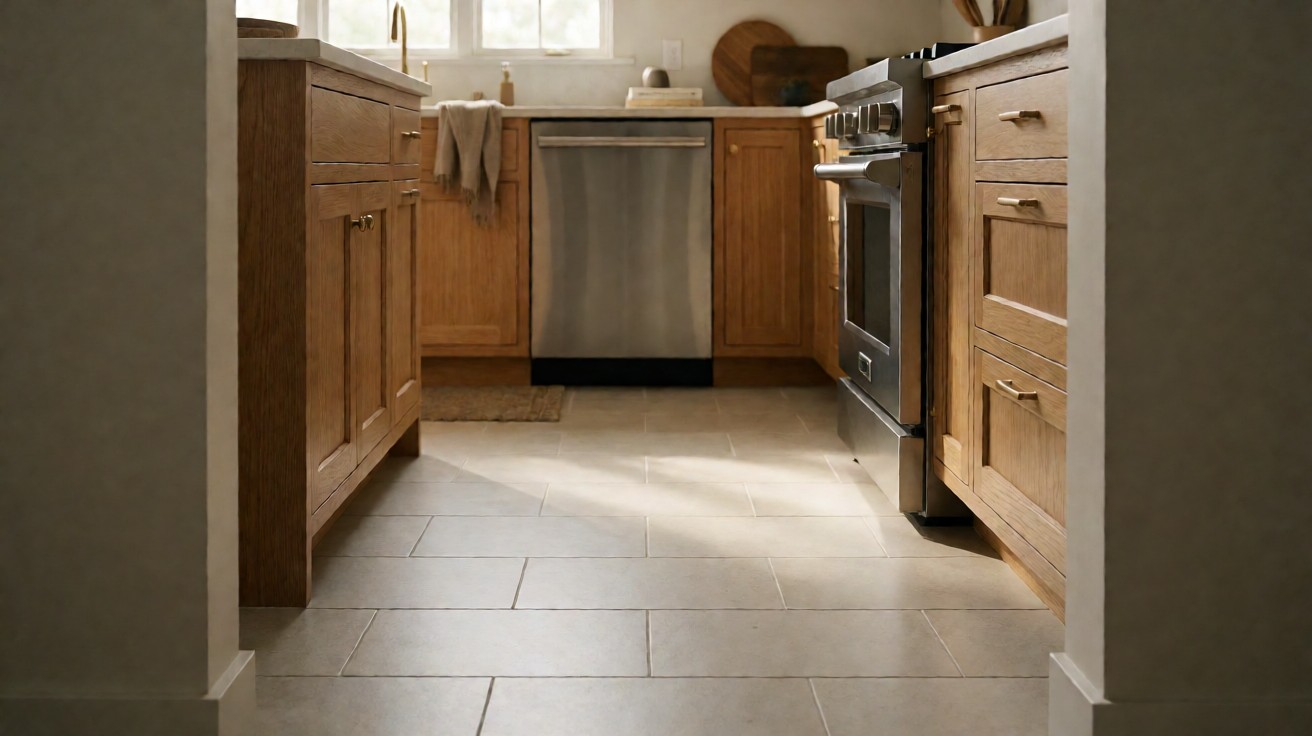
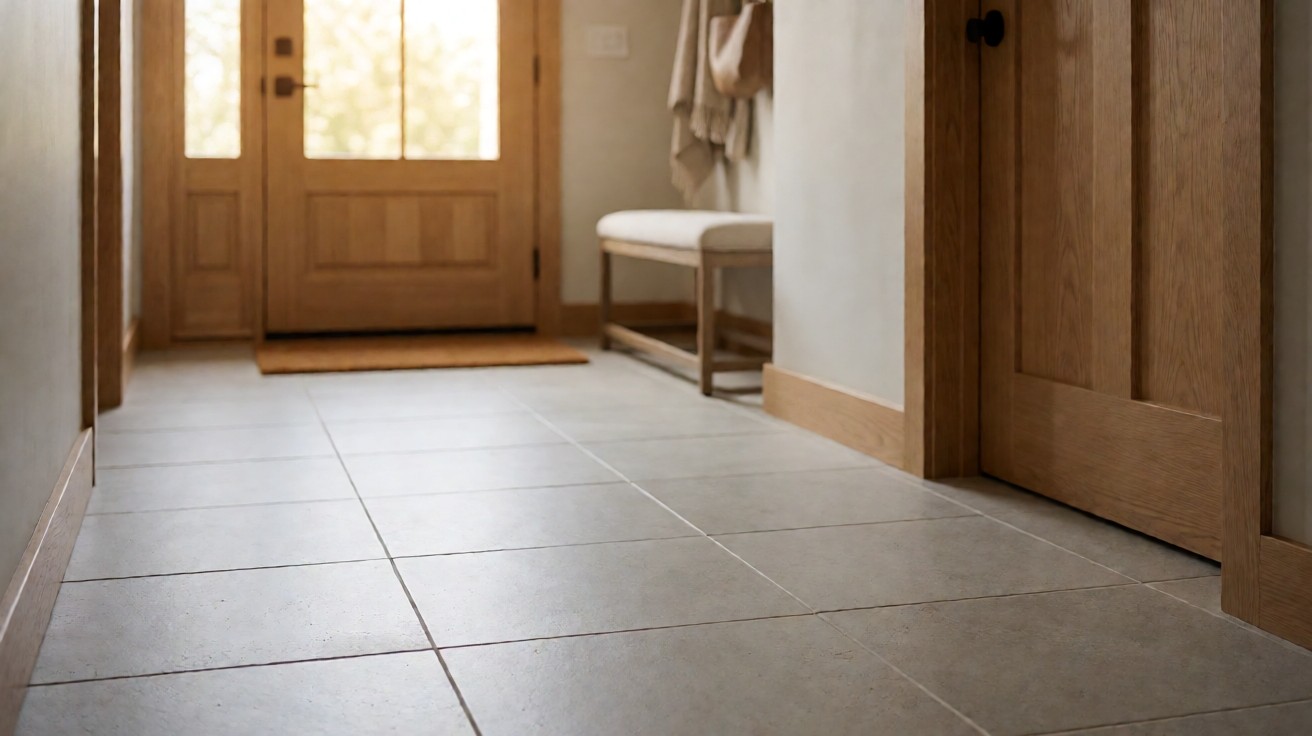
Tile is the pick for a hallway and it has been the answer in this room for longer than any other, because a glazed ceramic surface takes grit without being scratched and comes back from a mop without having absorbed anything first.
Large format porcelain is the version to prefer if the hallway is wide, because the fewer joints means fewer places for grit to sit and fewer edges to chip. The size, the grade, and what the finish does when it is wet are covered in the tile flooring guide, and the porcelain page is where the denser version is compared against the cheaper one.
Rigid Core Where the Hallway Meets a Wet Room
Rigid core is the pick when the hallway runs next to a kitchen, a laundry, or a mudroom, because it is the family that takes the moisture that gets tracked out of those rooms without swelling at the seam or lifting at the edge.
It is also the family that forgives a slightly uneven floor, which matters in a hallway because that is often where an old house has a dip in the slab. It lays as a floating floor over almost anything and it comes out cleanly, and the rigid core vinyl page is where the two cores and the build that matter are walked through.
Hardwood, and Why a Hallway Is the Hardest Room for It
Hardwood is the family that looks best in a hallway, and it is the one that shows the hallway’s life most honestly. A grit path down the middle of a wood floor dulls the finish within a couple of years, and that dull path is permanent unless the whole floor is sanded.
The failure is not catastrophic the way a swollen floor is, but it is the one you see every day from the doorway of the room next door. The version that holds up better in a hallway is engineered, because the layered core resists the edge load that a bag or a case drops on it, and the hardwood flooring guide covers the two constructions.
Carpet and the Mat That Does Not Save It
Carpet is the comfortable pick and it is the one people expect in a hallway, and it does have two real advantages: it is quiet underfoot and it is the only material that holds grit rather than letting it travel across the rest of the house.
The problem is that a carpet hallway wears along the path first, and it holds water at the edge of a mat where the mat meets the pile and the floor underneath never dries. The fix most people try is a runner, which helps, but a runner does not change the fact that the pile under it is the part taking the grit. If carpet is the pick, a dense fibre and a firm pad is the answer, and the carpet flooring guide covers both.
Laminate, and the One Family to Avoid Here
Laminate is the family to be careful with in a hallway, and the reason is narrow and specific: it is the wood look with a fibre core and a click joint, and a click joint in a damp hallway is exactly where the water gets in and the edge lifts.
It is not a bad floor. It is the right floor in a dry hallway in a dry house, and it is the wrong one in a hallway that runs from a front door in a wet climate or past a laundry. If the hallway is dry, it is a good value pick, and the laminate flooring guide covers the wear layer and the core that decide how long it lasts.
The Mat, the Runner, and the Seams
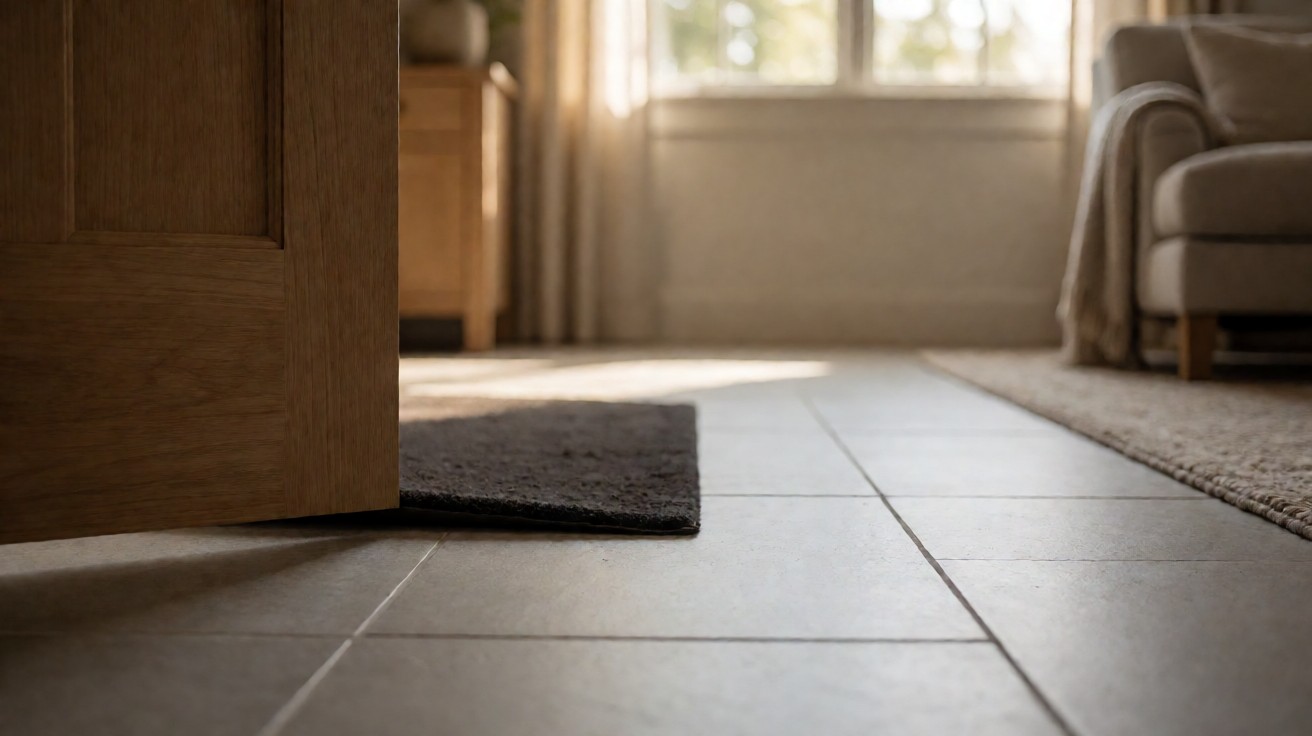
The single highest return thing in a hallway is a good dirt trap mat at the door If you are deciding between two materials that would both work, the deciding question is usually how the hallway connects to the rest of the house. A hallway that runs straight from the front door into a living room wants the same material as the living room, so there is no threshold for the grit to catch on and no joint for water to find., and the reason is that it catches the grit before the grit reaches the finish. A mat with a rubber or stiff backing that does not slide is the one that works, and a mat the shoes push around is worse than none.
The second detail is the seam. In a long hallway a floating floor has to be broken, and where the break lands matters because that is where the edge takes the load from something dropped. Breaking a hallway floor at a doorway or a change of direction is the habit that keeps an edge from chipping later.
| The hallway detail | The fix | Why it matters there |
|---|---|---|
| Catch the grit before the finish | A firm-backed dirt trap mat | Stops it dulling the floor the moment it walks in |
| Land the floor break at a threshold | A doorway or change of direction | Keeps an edge from chipping where the load lands |
| Keep the joint out of the wet | Tile or rigid core | The joint is where water crosses and grit gets caught |
Sunlight, and the Finish You Will See Every Day
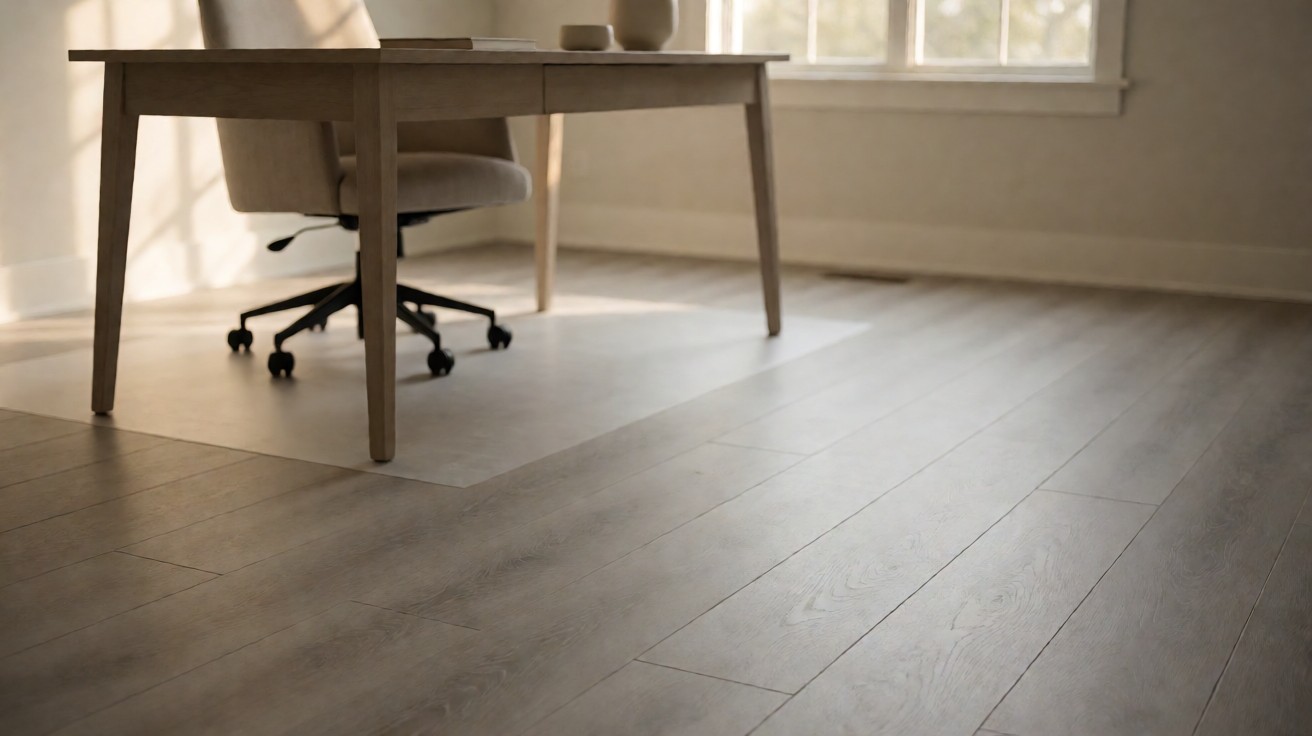
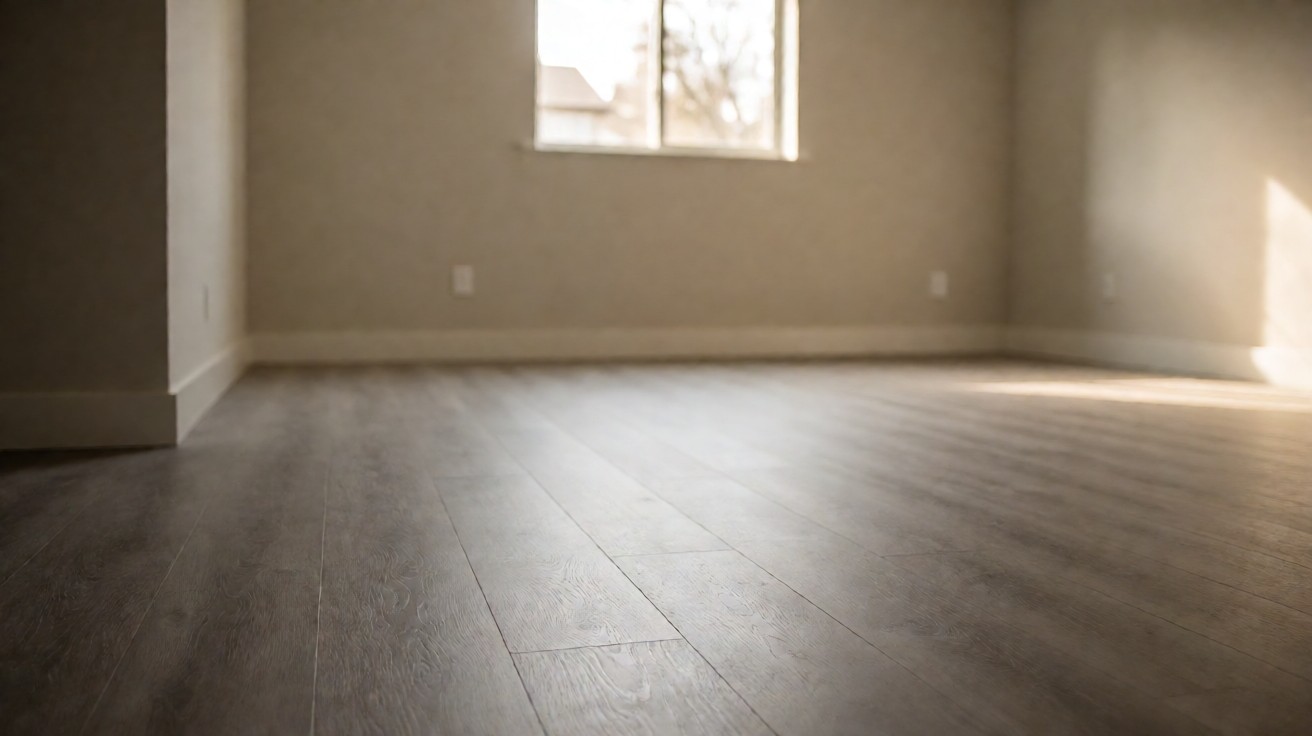
A hallway is often the best-lit room in a house, because it usually has no furniture and a door with glass in it, and that light is what makes the finish the most visible surface decision in the room. A matte or a satin finish disperses the light and hides the grit that a polished finish makes shine.
It is also where a gloss finish shows its age fastest, because the reflection shows every dull patch, and a traffic path down a glossy hallway floor is the first thing a visitor notices without being able to say why. The finish families and what they do wet are covered in the tile flooring guide, and the porcelain page goes into the denser version of the same question.
Cost, Install, and the One-Surface Idea
The families sit in the order they sit everywhere, and the labour matters more here than in a big room, because a hallway is awkward to work in and every cut is at a wall or a corner.
The one idea that pays for itself in this room is running the hallway floor in the same material as the room it opens into. It removes a joint at a threshold, which is the place the water crosses and the place the grit gets caught, and it makes the house read as one floor rather than a series of rooms.
How to Choose, and Where to Look Next
Pick the family that handles grit and moisture in the same surface, then read the material guide for it. The flooring types compared page is the map that puts all of them in one table, and the tile flooring guide, the rigid core vinyl page, and the hardwood flooring guide are the three that back the top picks for a hallway.
The decision is not the material that looks nicest at the front door on the day you move in. It is the one that still looks like that in five years, and the answer to that is grit, moisture, and one good mat at the door.