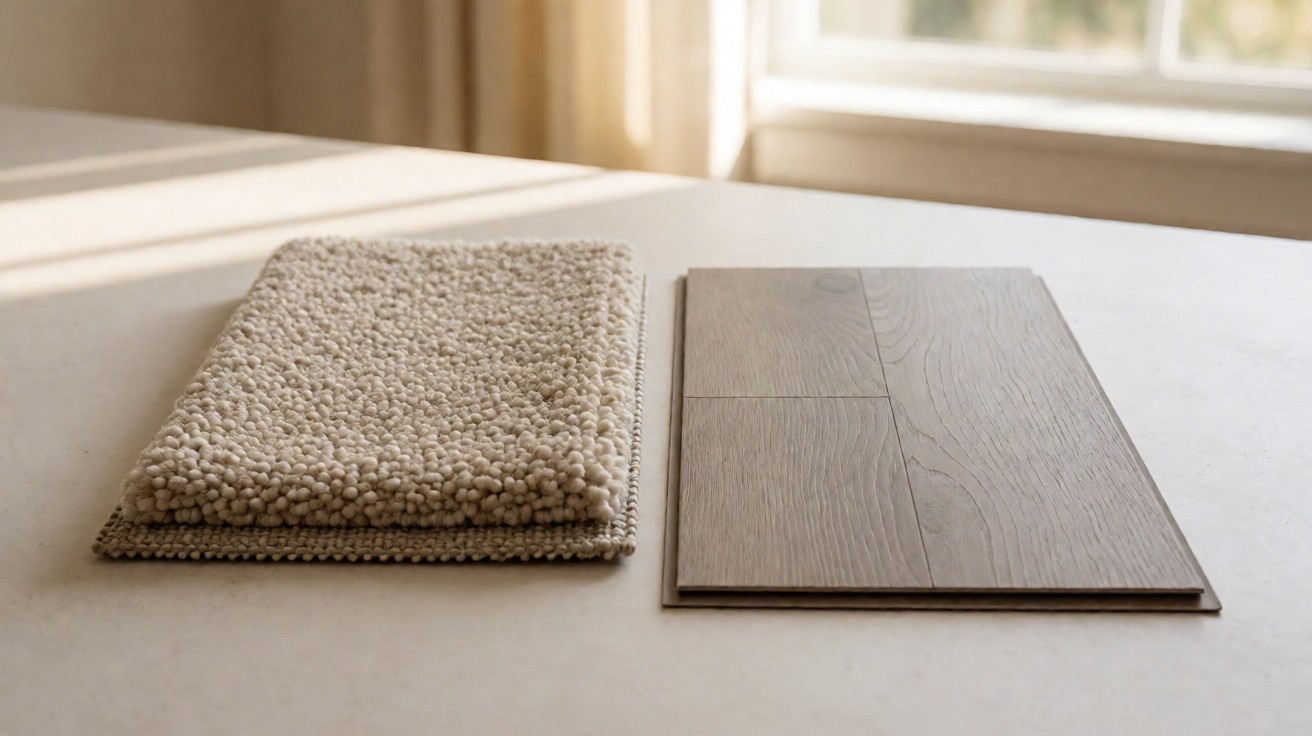

Carpet and luxury vinyl plank sit at opposite ends of the household spectrum, one soaking up every spill that lands on it and one wiping it clean in seconds. One is a textile that absorbs everything that happens in a room and can never give any of it back. The other is a sealed polymer surface that keeps nothing. That single difference propagates into cleaning, allergies, sound, warmth, durability, repair, and resale, and it is why the two are rarely contenders for the same room even though they are compared constantly.
What Each One Is
Carpet is a textile floor covering. Face yarn is tufted or woven into a backing, installed over a separate pad, and stretched or glued into place. The pad is not optional and is a large part of how the floor feels, how quiet it is, and how long it lasts. The carpet guide covers the construction in full.
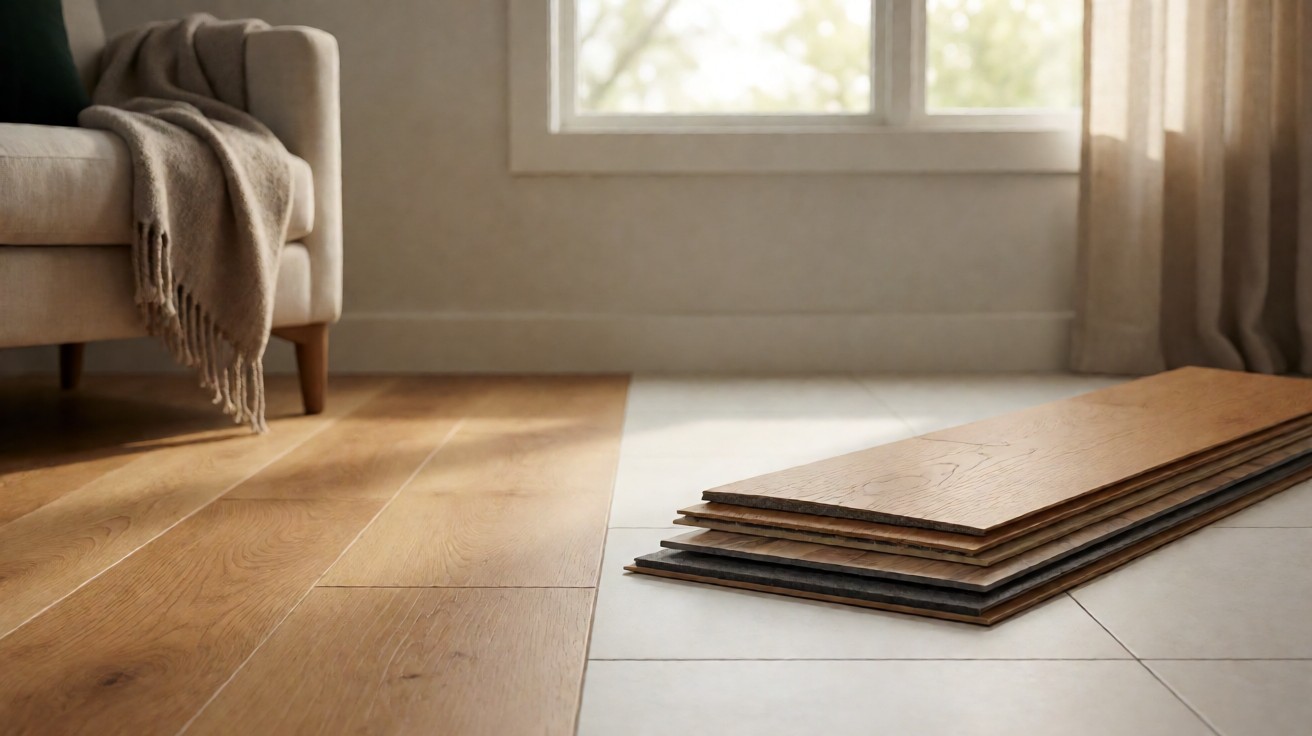
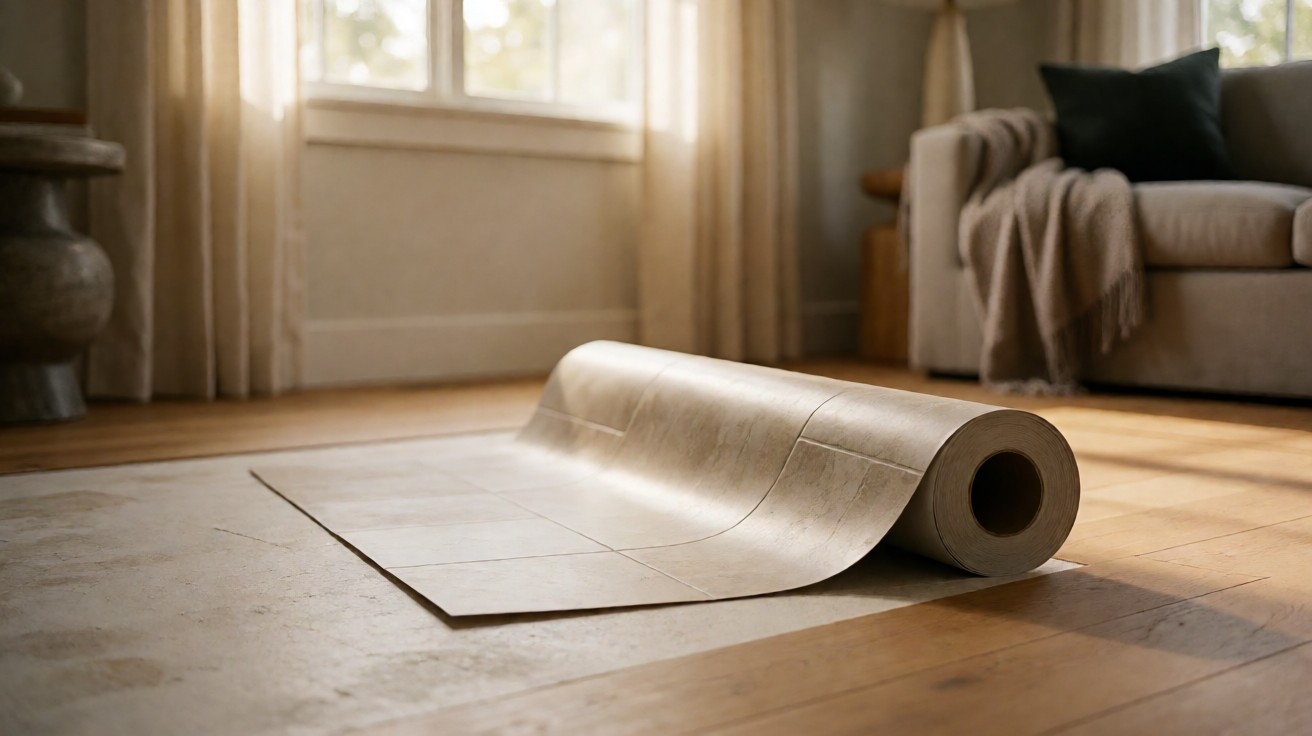
LVP is a polymer plank: a clear wear layer over a printed film carrying a wood or stone image, over a core, installed as a floating click-lock system over an underlayment or glued down. It is described in detail on the luxury vinyl plank page, and the carpet versus hardwood comparison covers the other soft-versus-hard decision.
The Spill Test That Decides It
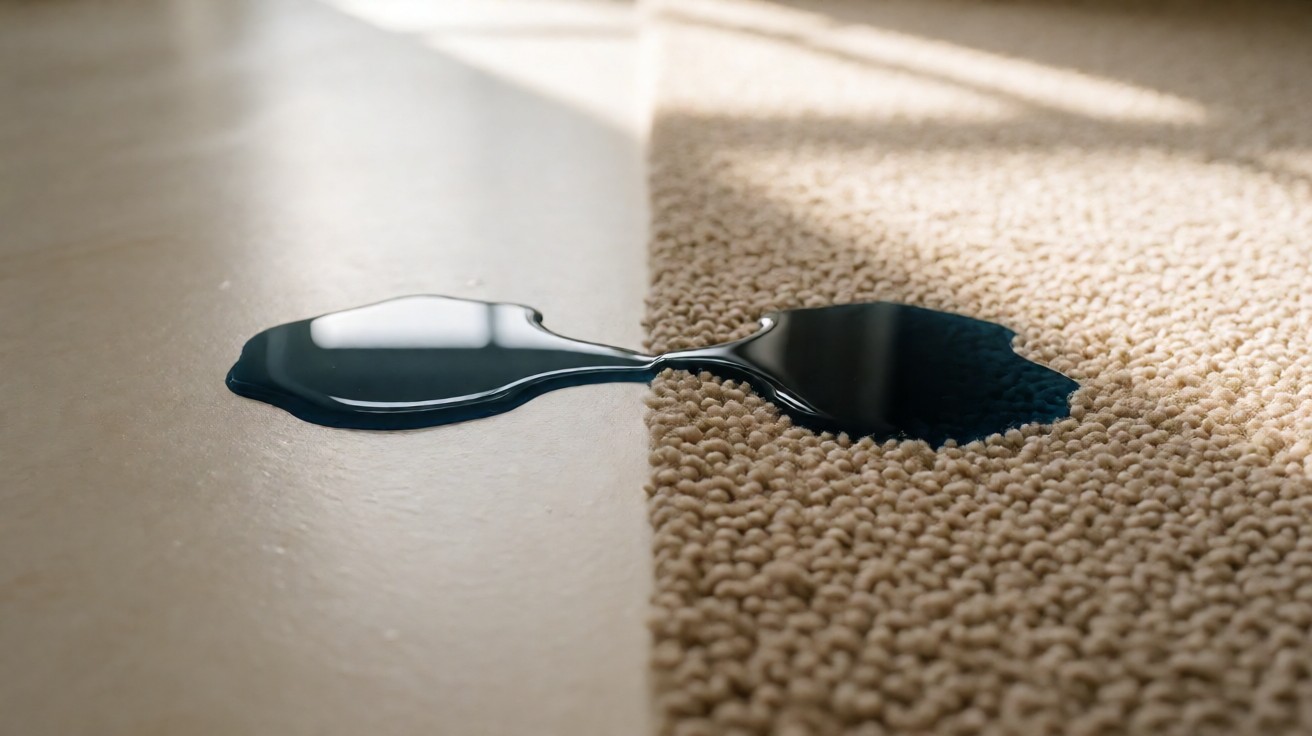
Everything about this comparison can be decided in one test. Put a cup of water on carpet and it soaks in. Put it on LVP and it sits there until it is wiped up. There is no version of carpet that behaves like a sealed surface, and no version of LVP that absorbs; the difference is structural rather than a matter of quality.
Why They Are Compared at All
The two get weighed against each other because they occupy the same shelf in the showroom, sit in a similar price range, and both imitate wood in their own way. Underneath that they answer to different questions. Carpet answers a question about comfort and quiet; LVP answers a question about durability and maintenance. A buyer who has not decided which question matters has not yet made a decision worth defending.
How the Two Feel and Sound
Carpet is warmer in winter, quieter underfoot, and materially more forgiving. LVP is firmer, slightly cooler, and transmits footfall more. Neither is close to the other on this axis and neither is close to carpet on comfort at any price point, because a soft textile pile and a rigid polymer core have almost nothing in common physically.
Sound behaves differently in two directions. Inside the room, carpet mutes everything: a dropped object on carpet is barely an event, where the same object on LVP carries. Between floors, the advantage is smaller and belongs mostly to the underlayment rather than the finish. A quality LVP over a proper resilient pad performs acceptably for impact noise and noticeably better than the same pad over nothing.
| Situation | Better Choice | Reason |
|---|---|---|
| Kitchen or eating area | LVP | Spills wipe up; carpet stains permanently |
| Bathroom, no shower | LVP | Carpet cannot tolerate moisture at all |
| Basement, finished | LVP | Humidity and mould risk in carpet |
| Living room, no children | LVP | Easier cleaning, better resale read |
| Living room, young children | Carpet | Impact absorbed rather than transmitted |
| Bedroom, someone below | Carpet | Quietest common flooring available |
| Home with asthma or allergies | LVP | Nothing embedded to hold dust and allergen |
| Rental, short hold | Carpet | Cheapest to install and cheapest to replace |
Cleaning and Allergens
Carpet needs vacuuming several times a week, and a good vacuum with a hard floor head can also do hard floors, which is the usual argument that carpet is not more work. What carpet needs beyond that is periodic professional extraction, because soil works down to the base of the pile and the pad below it and does not come out with a vacuum.
LVP needs a damp mop and nothing else. It does not hold soil because it has no pile to hold it in, and a vacuum is optional. For a household with asthma, a pet, or anyone who reacts to dust, that difference is frequently the deciding one rather than a footnote, and it is the argument most often missed because carpet is marketed on comfort rather than on what it retains.
Durability and the Ten Year Mark
Neither material survives a busy family room indefinitely. Carpet in a high traffic lane typically looks worn at seven years and is replaced at ten or twelve, and there is no restoration: extraction improves appearance briefly and does nothing to the fibre. LVP in the same room wears its print over roughly fifteen to twenty-five years depending on the wear layer, and once the print is through the floor is a replacement project.
The asymmetry is in repair. A cut in carpet is patched with a piece of scrap, and the patch is visible under a raking beam in good light. A damaged LVP plank is lifted out by taking the surrounding rows apart and replaced with something that matches closely, because the pattern repeat on a single plank is easy to match and the patch is invisible. Local repair is genuinely easier on LVP.
Warmth and What to Do About It
Carpet insulates in the useful sense. It feels warm underfoot in winter, it holds heat in the room rather than conducting it to a slab, and it is the reason a carpeted bedroom in a cold climate feels like a bedroom rather than a cold room. LVP is a moderate conductor and still feels cool to a bare foot early in the morning.
Over a concrete slab in a cold climate, that difference is felt immediately and is one of the strongest practical arguments for carpet in a basement bedroom. Over a heated floor in a warm climate it is irrelevant. A rug solves the same problem for a fraction of the cost if the floor is going to be hard for other reasons, which is the usual resolution.
Where Each One Is the Wrong Choice
Carpet is the wrong choice in a kitchen, a dining room, a bathroom, a laundry, an entryway where the floor will be wet, and any room where someone has a respiratory condition. The first four are about liquids and the last is about what the floor retains. There are budget carpets and better carpets and none of them addresses these.
LVP is the wrong choice in a room where a dropped object should make no sound, in a house where a bedroom sits over someone who needs quiet, and where the priority is a floor that feels soft rather than one that looks finished. It is also the wrong choice for anyone expecting a fifty-year floor: 20 years in a busy room is a realistic service life and it should be planned for.
Cost and Cost Per Year
Carpet material and installation commonly run $3 to $7 per square foot; LVP commonly runs $3 to $9. On the invoice they are close, and on a first comparison that makes them look interchangeable.
Over twenty-five years they are not close. Carpet in a family room is replaced at least twice, and each replacement is the full installed cost again. LVP installed once usually outlasts two carpet cycles, and often three in a lower-traffic room. The flooring types comparison puts both against the other common materials on the same basis.
What Resale Buyers Think
Carpet is universally read as the budget finish and LVP is read as an upgrade from it. For a sale inside ten years, that perception is worth real money, and it is the same effect described in the carpet versus hardwood comparison in a milder form.
Over a longer hold the gap narrows. A well-worn LVP floor reads as a floor that has been lived on and performed, particularly in a kitchen where buyers walk on it anyway. What does not improve is carpet in a traffic lane, which reads as due for replacement rather than as lived in. The perception, like the material, favours LVP the longer a house is held.
What the Underlayment and the Pad Actually Do
Both materials are installed over something under them, and in both cases that layer does more work than most buyers expect. Carpet is installed over a pad, and the pad determines how the floor feels, how quiet it is, and how well the carpet resists crushing in a traffic lane. A cheap pad under a good carpet gives a floor that feels hard and wears fast, and it is the most common reason a carpet floor disappoints after two years.
LVP is installed over an underlayment that is chosen for what is underneath and for the product above. A quality resilient pad under an LVP plank closes most of the gap between it and carpet acoustically, and it adds a measurable amount of comfort underfoot. A generic foam sheet sold as a universal underlayment is the second most common reason a vinyl floor underperforms its specification.
Pets, Children, and the Practical Test
Pet hair is a maintenance question rather than a durability question, and both materials collect it. On carpet it works down into the pile and needs extraction to remove rather than a vacuum pass. On LVP it sits on the surface and comes up with a vacuum or a damp cloth, which is a genuine and frequently decisive advantage in a household with shedding pets.
Claws are a different matter. Both floors resist scratching better than hardwood, and both will eventually be marked near a food bowl or a doorway, so neither solves the problem. The honest answer is that a pet household is a good LVP household and a poor carpet household, for the hair reason as much as the spill reason, and that the floor will need a mat in the same places regardless.
| Dimension | Carpet | Luxury Vinyl Plank |
|---|---|---|
| Surface | Textile pile over a pad | Sealed polymer film |
| Spill behaviour | Absorbs, stains permanently | Sits on top, wipes away |
| Cleaning | Vacuum often, extract periodically | Damp mop |
| Dust and allergen holding | High | Low |
| Warmth underfoot | Warm | Cool |
| Footfall noise in room | Very quiet | Middling |
| Pet hair removal | Works down into the pile | Sits on the surface |
| Local repair | Patch, visible | Lift and swap, near invisible |
| Restoration | None | None |
| Typical service life | 7 to 12 years busy | 15 to 25 years |
| Installed cost per sq ft | $3 to $7 | $3 to $9 |
How to Choose
Choose LVP anywhere there is water, food, pets, an allergy, a basement, or a buyer likely to see the floor. Choose carpet in bedrooms, in playrooms, in a living room with young children, on a floor over someone who needs quiet, and where the budget is the binding constraint and the room will be replaced rather than kept.
The common mistake in each direction is choosing on softness. Carpet chosen for a kitchen stains in the first year and cannot be recovered. LVP chosen for a family room with a sleeping child above it means hearing every dropped toy for a decade. Both are fine materials and both are wrong in the wrong room, and the room was decided before either was considered.