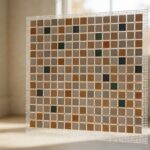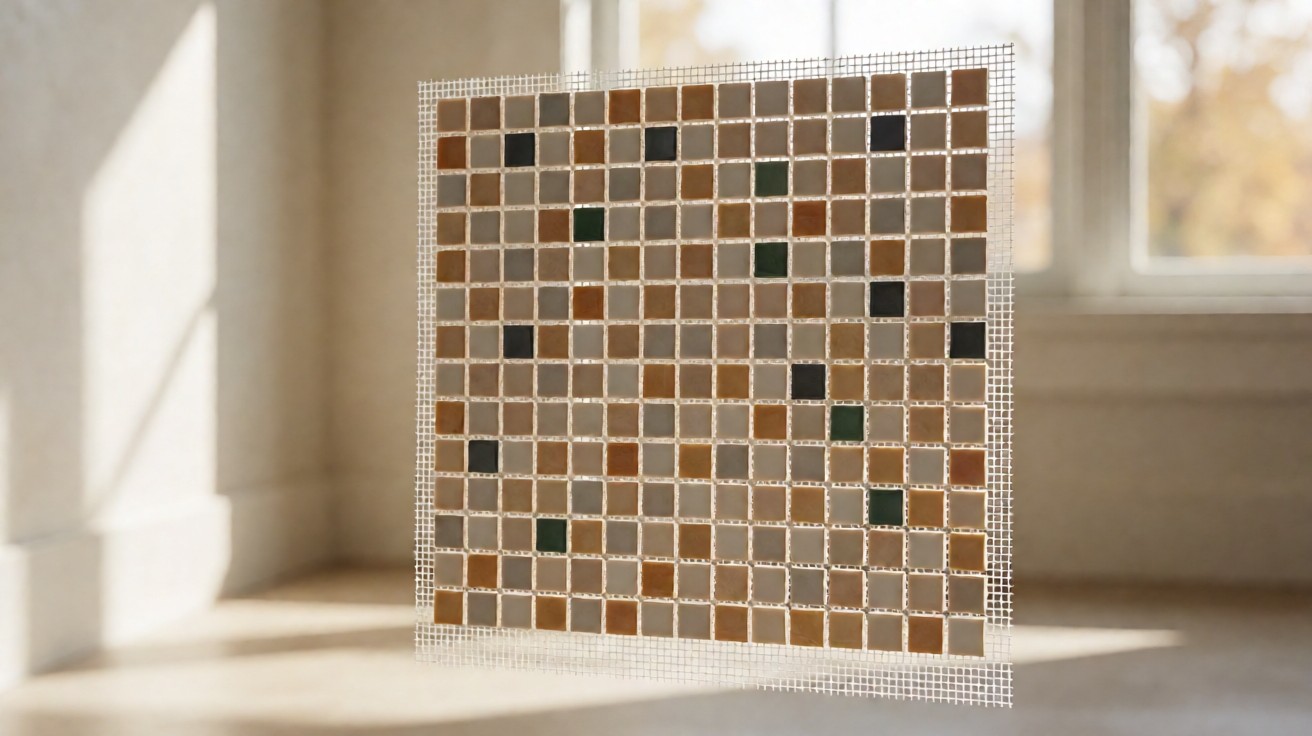

Mosaic tile is not one specific thing. It is small tiles of stone, glass, ceramic, or porcelain pre-assembled onto a mesh sheet for fast installation.
The assembly is what makes mosaic tile a category of its own rather than a smaller version of regular tile. Each piece in a mosaic is typically 1 to 4 inches square, and pieces arrive on a mesh or paper backing so the installer handles a sheet rather than hundreds of individual tiles.
Most residential mosaic installs are sheets, and what differs between products is the material, the shape, the joint width, and the finish.
This guide covers what mosaic tile is and where it works best. For the material side, the relevant guide depends on the material: the tile flooring guide covers ceramic and porcelain, the natural stone page covers marble, granite, slate, travertine, and limestone, and the porcelain tile explained page covers porcelain. The format covered here is the mosaic itself, regardless of material.
Why Mosaic Tile Is a Category of Its Own
The defining feature of mosaic tile is the sheet, and the sheet is what makes mosaic tile practical at scale.
A traditional mosaic, the kind seen in Roman villas and medieval churches, is composed of tiny individual pieces called tesserae, hand-placed one at a time. The labour to install one square metre of true hand-set mosaic is measured in days, which is why original mosaics are rare and expensive.
A modern mosaic tile sheet pre-mounts dozens or hundreds of pieces onto a mesh or paper backing during manufacture, and the installer sets the sheet like a regular tile. The result is a mosaic appearance at a tile labour cost.
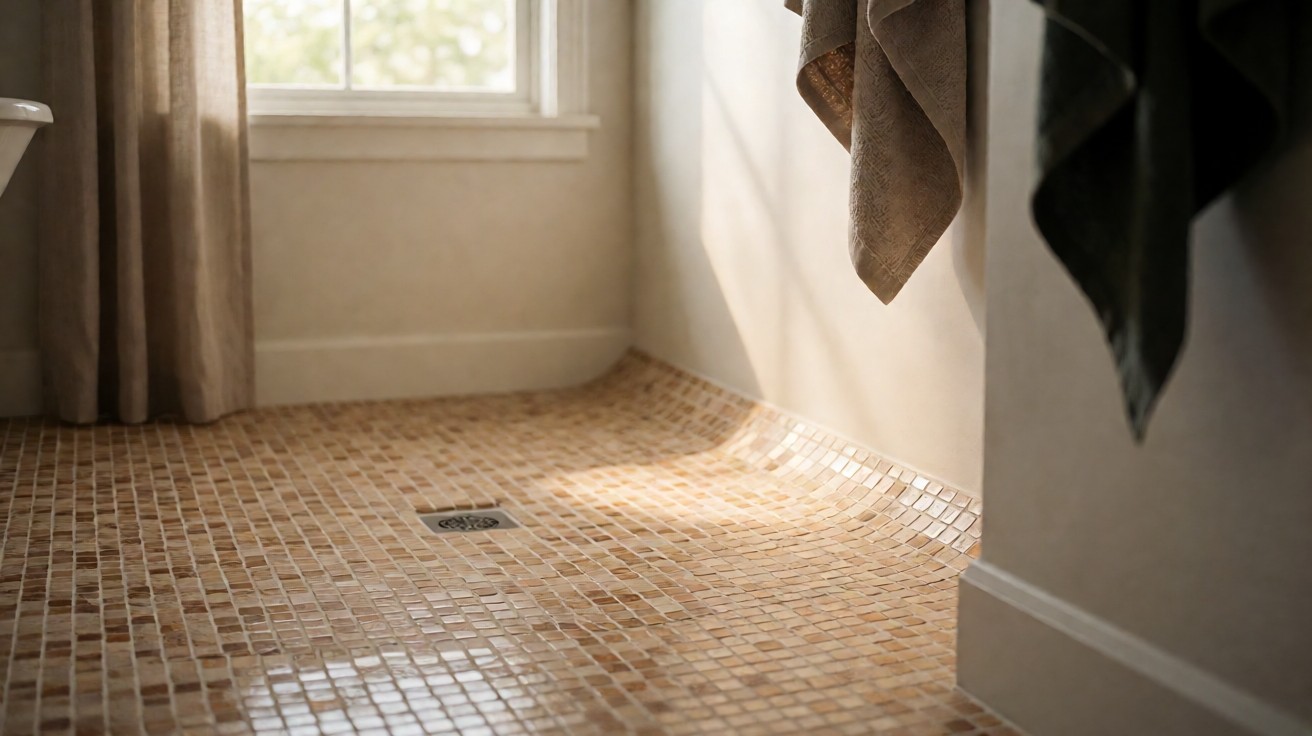
Beyond the labour savings, the sheet also handles curved surfaces and small areas. A regular 12 inch tile does not curve around the slope of a shower drain, but a mosaic sheet, which is small enough to flex, does. That is why most shower floors are mosaic, regardless of the wall tile.
Mosaic Materials Available Today
Mosaics are sold in five common materials, and each one has a different performance story and a different price.
Ceramic mosaic is the cheapest and the most common. It is the same material as a larger ceramic tile, just smaller, and it handles most shower floors and kitchen backsplashes. Porcelain mosaic is similar but denser and less porous, which gives it better performance in a wet bathroom.
Glass mosaic is the most decorative, and the most slippery, and it reads modern in a kitchen backsplash or a bathroom wall. It is rarely used on a floor because of the slipperiness, and even on a shower floor it requires a textured finish to be safe.
Stone mosaic is sold in the same five stones as larger natural-stone tiles: marble, granite, slate, travertine, limestone. It carries the same maintenance requirements as the larger tile, and the same sealing schedule. Metal mosaic is rare and used decoratively, often paired with glass or stone in a feature wall rather than as a practical floor.
Sheet, Mount, and Joint
Three things about the sheet and the joint decide how the mosaic installs and how the finished floor looks.
The mount is the backing that holds the pieces together during install. Mesh backing is the most common. Paper backing is used in some stone mosaics to keep the surface clean during install. Claw backing (small plastic hooks) is a newer system that holds the sheet together without adhesive on the back, which improves bond on installation.
The sheet size is typically 12 by 12 inches in residential mosaic, although smaller 6 by 6 sheets are sold for more intricate patterns. A larger sheet installs faster but does not follow a curve as cleanly, so a shower floor with multiple slopes typically uses the 12 inch sheet on a flat floor and a smaller sheet on the slopes.
The joint is the gap between pieces within a sheet, typically 2 to 3 millimetres, and the grout line is the gap between sheets. The two visible joints are different, and a well-installed mosaic makes them disappear visually because the eye reads the pattern as continuous.
Where Mosaic Tile Shines
Mosaic tile is not the right answer for every room, and it is the only realistic answer for some.
Shower floors are the most common residential application. The mosaic sheet flexes to fit the slope toward the drain, and the small pieces create grout lines that give wet feet something to grip.
A larger tile on a shower floor either requires a flat slope or is cut into smaller pieces that look exactly like a mosaic, with the cost of the cutting and the joints looking amateur.
Bathroom walls, especially the area inside a shower surround, are well-suited to mosaic on the back wall as a feature. Kitchen backsplashes are the second most common application, particularly glass mosaic with a colour blend. Swimming pools and water features use glass mosaic almost exclusively for the look and the slip texture. Outdoor patios use stone mosaic in a frost-rated install.
Main floors are sometimes done in mosaic, but the high labour-to-area ratio makes whole-room mosaic floors expensive. Most residential mosaic is confined to the rooms and walls where the small format earns its keep.
Slip Resistance and Texture
The slipperiness of a mosaic tile is the result of two factors: the material and the finish.
Glass mosaic is the slipperiest, particularly in a polished finish. A glass mosaic shower floor is genuinely dangerous unless the surface has a texture (often a sandblasted or etched finish) added during manufacture.
Ceramic and porcelain mosaics are typically slip-resistant because of the grout joints between pieces; a 2 millimetre joint gives a wet foot something to grip every 50 millimetres or so, even on a polished surface. Stone mosaic depends on the finish: a honed stone is reasonably slip-resistant, a polished stone can be very slippery.
The DCOF rating (Dynamic Coefficient of Friction) on the product datasheet is the right way to compare products, and a wet-area DCOF of 0.42 or higher is the typical minimum recommended by tile-industry bodies. A mosaic that meets this on a shower floor is safe; one that does not is a slip hazard.
Installing Mosaic: What the Sheets Change
The sheet does most of the work, but it does not eliminate installer skill. A poorly set mosaic sheet looks like a bad mosaic tile job, and a well-set sheet disappears into a continuous surface.
The installer lines up the sheets on a flat, plumb substrate, sets them with a notched trowel appropriate to the sheet size, and uses a rubber float to press each sheet flat. The joints between sheets are matched to the joints within the sheet so the eye sees one continuous pattern, not a grid of sheets.
The substrate for mosaic must be flatter than the substrate for larger tile. A 12 inch tile can ride over a small wave in the wall. A mosaic sheet cannot, because the wave would be visible at the joints between pieces within the sheet. A substrate that is flat to within 3 millimetres over a metre is the practical minimum.
The Mosaic Category at a Glance
| Material | Common room | Cost per sq ft (material) | Slip rating needed | Sealing |
|---|---|---|---|---|
| Ceramic mosaic | Shower floor, kitchen backsplash | $5 to $15 | Standard | None |
| Porcelain mosaic | Shower floor, bathroom wall | $10 to $25 | Standard | None |
| Glass mosaic | Kitchen backsplash, pool | $15 to $40 | Wet-rated finish required | None |
| Stone mosaic | Shower floor, feature wall | $20 to $50+ | Honed for shower | Yes, every 1 to 2 years |
| Metal mosaic | Feature wall | $30 to $80 | Not for floors | None |
The table is the price spread, not the right answer for every room. Most residential mosaic installs are ceramic or porcelain on a shower floor, with glass mosaic on a backsplash.
Is mosaic tile more expensive than regular tile?
Mosaic tile typically costs more per square foot than the same material in larger tiles, because of the additional labour to assemble the sheets and the smaller yield per kiln firing.
The labour savings on installation, especially on a shower floor with a slope, generally offsets the higher material cost. A large-format tile installed on a complex shower floor needs to be cut into mosaic-sized pieces, which costs more than installing the sheets would have.
Why is mosaic tile so common on shower floors?
The small format follows the slope of the floor toward the drain, which a larger tile cannot do. The frequent grout joints between small pieces also give wet feet something to grip, which a large polished tile does not. Both reasons are practical, and both still apply on any shower floor regardless of the wall tile.
Does glass mosaic tile need sealing?
The glass itself does not, and glass mosaic is sold as a no-seal product. The cement grout between sheets does, and most installers seal the grout lines on a glass mosaic shower wall or backsplash to prevent staining. Some glass mosaics come pre-sealed on the grout lines from the factory. The product datasheet is the right place to check.
Grout, Joint, and the Visual Continuity
The most common mistake with mosaic tile is treating the joints within a sheet and the joints between sheets as the same thing. They are not, and a badly-aligned install shows the difference.
The joints within a sheet are part of the design: small uniform grout lines, typically 2 to 3 millimetres, that hold the pieces in place. The joints between sheets are part of the installer’s craft: the same width as the within-sheet joints and aligned to them, so the eye reads one continuous pattern rather than a grid of small sheets.
Installer skill is the single biggest variable in a mosaic tile finish. A novice install shows every sheet as a separate tile, which gives a “patchwork” appearance even on a uniform material. A skilled install aligns sheets and pitches the joints to the room geometry, which makes the pattern read continuous. The same product looks different in different rooms depending on the install.
Mosaic Tile Cost in Real Numbers
The material cost is straightforward: mosaic tile is sold by the sheet and the per-sheet price varies by material, with ceramic the cheapest and stone or glass the most expensive. The labour cost is more variable: a mosaic install typically takes longer per square foot than a 12 inch tile install, because the sheets need alignment and the joints need finishing.
A rough budget for a typical residential shower floor in ceramic mosaic is the material at $5 to $15 per square foot and the labour at $10 to $25 per square foot.
A stone mosaic shower floor can run $20 to $50+ per square foot in material with labour on top. Glass mosaic on a kitchen backsplash is the most expensive combination because the labour is finished-detail work, often with cut sheets along edges and feature rows.
| Installation | Material per sq ft | Labour per sq ft | Notes |
|---|---|---|---|
| Ceramic mosaic shower floor | $5 to $15 | $10 to $25 | Standard residential wet area |
| Porcelain mosaic shower floor | $10 to $25 | $10 to $25 | Better wet performance than ceramic |
| Glass mosaic kitchen backsplash | $15 to $40 | $20 to $50 | Edge finishing and feature rows add time |
| Stone mosaic feature wall | $20 to $50 | $20 to $40 | Sealing adds a step beyond glass or ceramic |
| Ceramic mosaic pool interior | $10 to $25 | $25 to $50 | Frost-rated pool-grade materials required |
How This Fits With the Rest of the Choice
This page is the format, mosaic. It does not cover the material itself, the installation, the grout selection, or the comparison to other formats.
For the material, follow the appropriate page: the tile flooring guide, the porcelain tile page, or the natural stone page. For the broader tile material family, the tile flooring guide is the umbrella. For the comparison with large-format tile, the large-format tile page covers that format side by side.