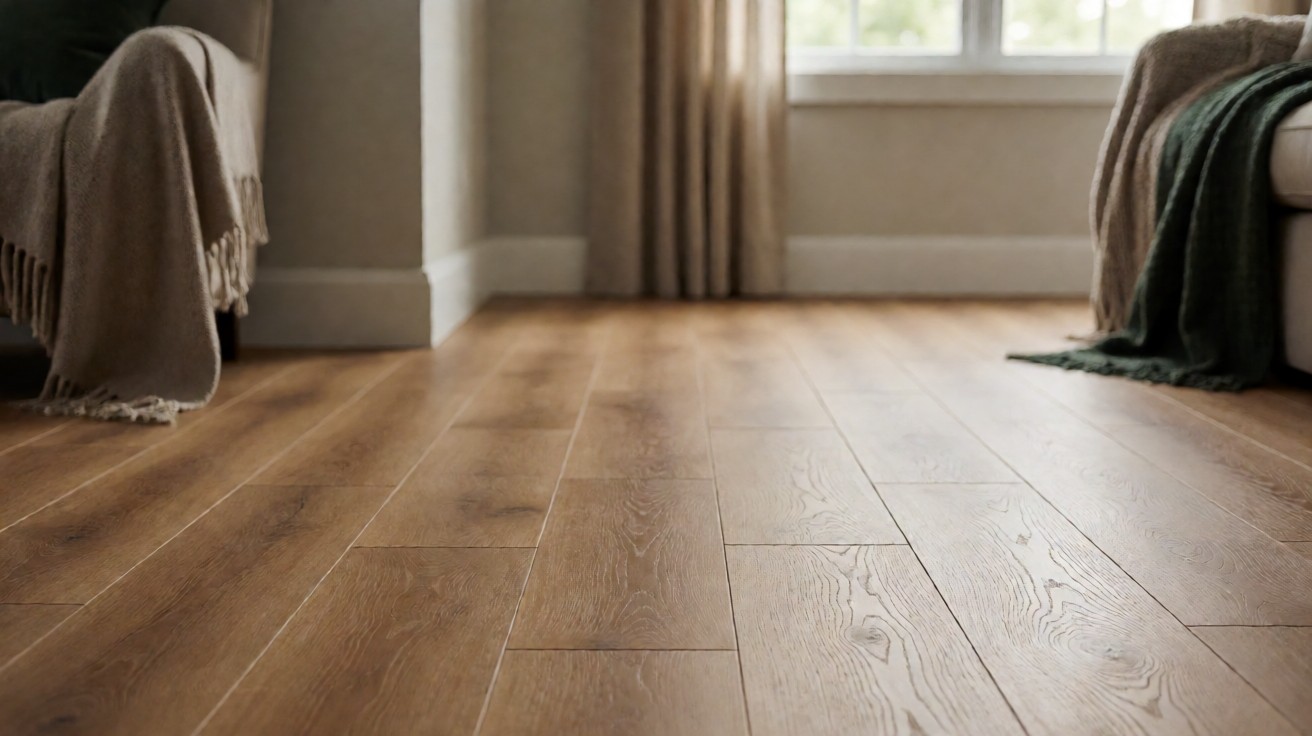

WPC, short for wood plastic composite, is the other rigid-core vinyl, and it is the more comfortable of the two. Where SPC is built on a core of stone powder, WPC is built on a core of real wood flour bound in recycled plastic.
That single swap changes how the floor feels, how quiet it is, and, most importantly, how much it moves with the seasons.
People usually arrive at the SPC versus WPC question by asking which one is more waterproof, and that is the wrong first question. Both cores handle water well. The difference that actually matters in a home is stability: WPC expands and contracts with humidity where SPC does not, and everything else follows from that.
This guide explains what WPC is, what the wood-fibre core changes, and where it fits better than a stone core. It assumes you have chosen vinyl. The vinyl flooring guide covers the material decision, and the LVT guide covers the layer structure and the tile format that WPC shares with every other rigid vinyl.
What WPC Vinyl Is
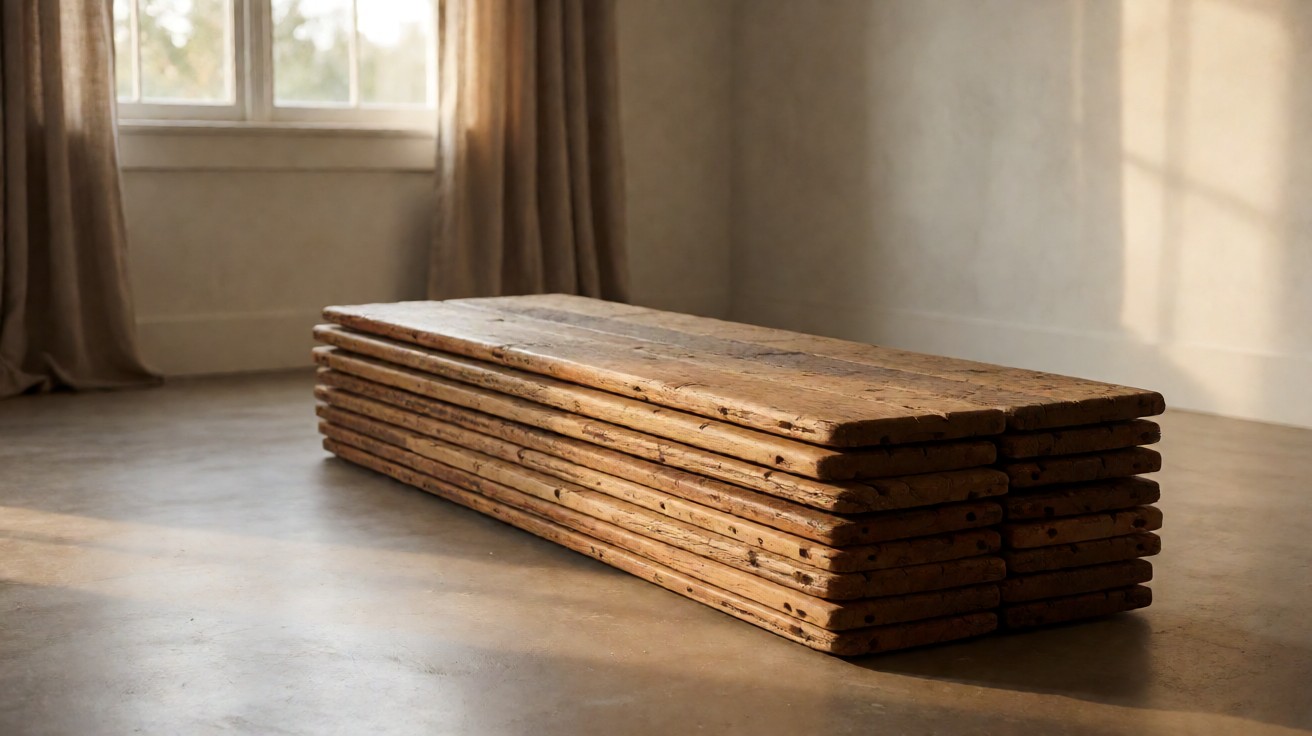
WPC is a rigid-core vinyl plank or tile whose core is a composite of finely milled wood and plastic. The wood is not visible on the surface, but it is genuinely in the core, and that is what distinguishes WPC from the stone-core products it sits next to on the shelf.
The construction is otherwise familiar. Above the core is a printed decorative film carrying the wood or stone pattern, and above that a clear wear layer that takes the daily abrasion. Below is usually a bonded foam or cork underlay that absorbs some of the footfall sound.
The result is a floor that looks like stone-core vinyl, installs the same click-lock way, and feels noticeably warmer and slightly softer underfoot. It is thinner and lighter than SPC, which makes it easier to handle and less demanding on the subfloor.
The Wood-Fibre Core and How It Feels
The wood in the core is what gives WPC its character, and it works in two directions.
On feel, WPC is warmer and a little softer than a stone-core plank. The reason is that wood fibre is a lighter, more compressible material than calcium carbonate, so the plank gives slightly underfoot instead of resisting.
That difference is subtle on a hard surface and obvious in a room where you spend time standing, and it is the reason many people find WPC the more comfortable floor in a bedroom or a living room.
On sound, the same wood fibre helps. A stone plank is dense and transmits footfall; a wood-filled core absorbs a little more of it, and the bonded underlay adds to that. Neither is silent, but WPC is measurably quieter underfoot than its stone-core counterpart.
On looks, this is often overstated. The printed film on top is essentially the same technology in both products, so the visual difference between them is much smaller than the difference in price tags suggests.
Water Resistance Compared to What You Are Comparing It To
If the comparison on your screen is SPC against WPC, both are fine with water and the difference is small. If the comparison is WPC against laminate, WPC wins decisively.
A laminate board is a wood fibre product with a paper or melamine face. It is the material that swells at the joints, delaminates at the edges, and buckles when a spill is left. A WPC plank has a plastic binder running through its wood content, which is exactly what stops that behaviour, and it is why WPC is sold for kitchens and bathrooms.
Where WPC is weaker than SPC is in extreme or prolonged conditions. A stone core genuinely does not take up water at all, while a wood-filled core is water-resistant rather than waterproof, and a very long-standing flood can find the edges of a WPC floor. In ordinary household use, that distinction rarely matters.
So the practical summary is this. WPC handles a wet kitchen or a bathroom floor perfectly well. It is not the choice for a permanently damp slab or a room that floods.
Expansion and Movement: The Honest Limitation
This is the part of WPC that should drive the decision, and it is the part that gets glossed over.
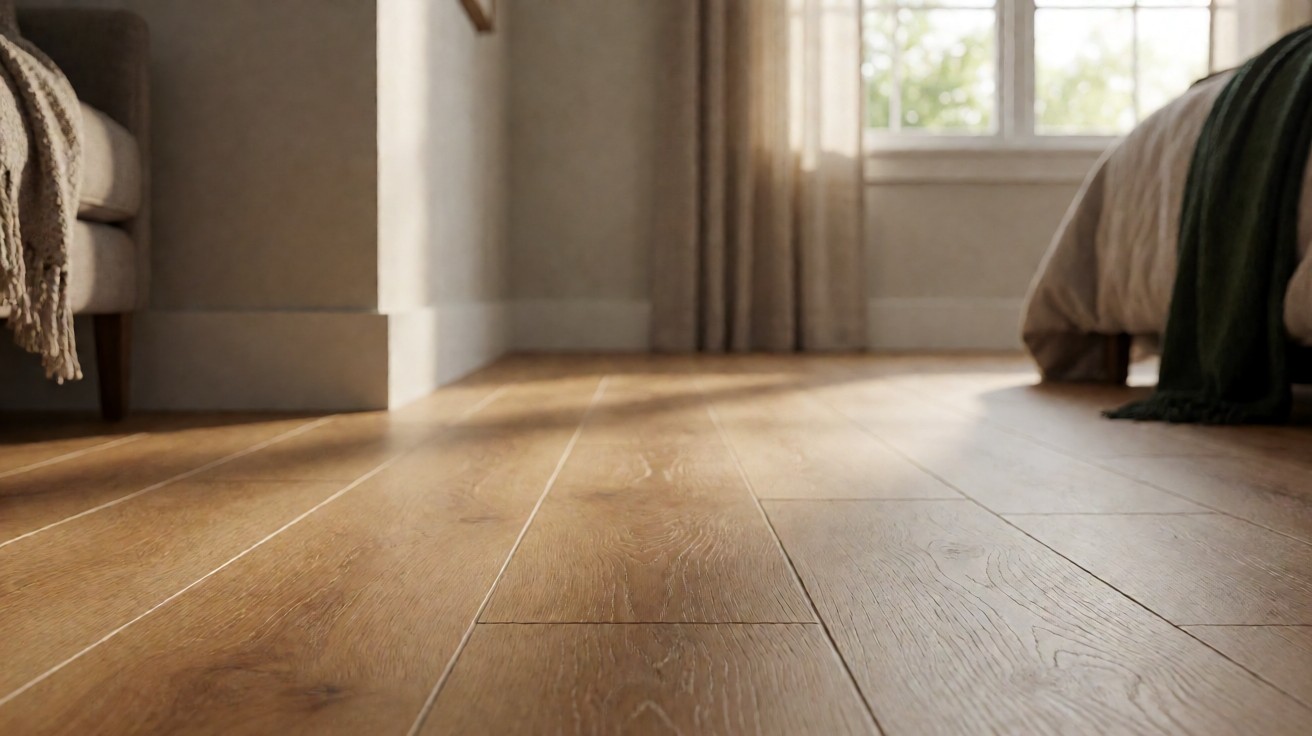
Because the core contains real organic material, it responds to humidity the way a wood product does. A WPC plank is more stable than laminate and much less stable than SPC, and over a full seasonal cycle in a house that heats in winter and cools in summer, it will move more than a stone-core plank will.
What that movement looks like in practice is small gaps at the perimeter, or occasionally a joint that opens slightly, and it is why a WPC floor still needs a genuine expansion allowance at the wall rather than being jammed tight the way an SPC floor can be.
If it is installed with no allowance and the room swings hard, the edges of the floor can begin to lift.
The other half of this is the subfloor. A moving plank on a slab that also moves will move with it, and a stone plank simply will not. That is why stone-core vinyl is the standard recommendation over a concrete slab and wood-core vinyl is not, and it is a real difference in how the two behave over fifteen years.
Where WPC Fits Better Than SPC
WPC wins in a specific set of rooms, and they are rooms you can probably picture.
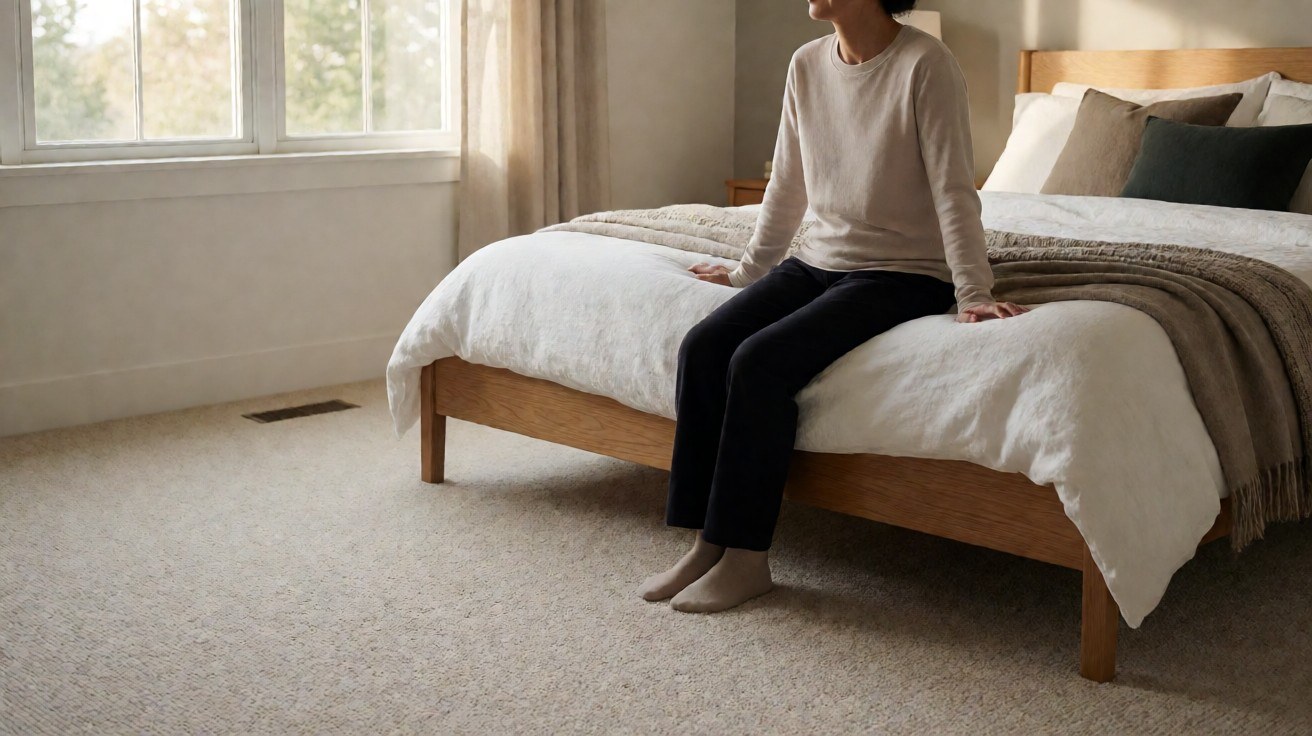
It wins in a bedroom, because softness underfoot and low sound are the point and nobody is spilling anything. It wins in a quiet living room where the floor should feel warm rather than mineral. It wins where the subfloor is imperfect but not terrible, because a slightly more forgiving plank hides small unevenness better than a rigid stone plank bridges it.
It also wins on a cold floor, because wood-filled insulation underfoot is marginally warmer to the touch than a stone core, and in a north-facing room that is a small but real comfort. In a house with thin floorboards over a crawlspace, the softer feel is noticeable.
SPC wins in every one of those situations reversed: the wet room, the slab, the sunroom, and the high-traffic hallway. Neither is the better product. They are answers to different rooms.
What to Check on a WPC Sample
There are three things worth doing in a showroom, and none of them are complicated.
First, lift the plank and look at the edge. A WPC plank has a visibly thicker, slightly warmer-looking core than a thin cushioned vinyl, and the cross-section is usually printed or grooved on the edge.
More importantly, the thickness should be stated on the box, and for a rigid-core plank that number is 4 to 6 millimetres. A product advertised as WPC but sold as a thin sheet is not the same product.
Second, press the surface. Rigid-core planks are hard, and that is expected, but a plank with a properly bonded foam back has a slightly give that a pure mineral core does not. If the back layer is missing or thin, the floor will be louder and harder than the sample suggested.
Third, ask what the expansion allowance is and who is responsible for cutting it. This is the single detail that separates a WPC floor that is still flat in year five from one that has lifted at the skirting, and it is a question most retail staff will answer accurately because it is a specification number rather than an opinion.
The Comparison at a Glance
| Factor | WPC | SPC |
|---|---|---|
| Core | Wood flour and plastic | Stone powder and plastic |
| Feel | Warmer, slightly softer | Firm, closer to thin tile |
| Footfall sound | Quieter | Louder |
| Water | Water-resistant; excellent | Will not absorb at all |
| Seasonal movement | Moves; needs an expansion gap | Does not move |
| Thickness | Thinner and lighter | Thicker and denser |
| Subfloor tolerance | Slightly more forgiving | Demands flatness |
| Best in | Bedroom, quiet room, cold floor | Bathroom, basement, slab, sunroom |
WPC by Room
The comparison above sets the options against each other. This table turns the choice into a situation-level assignment, which is usually faster than reasoning about the specification in the abstract.
| Situation | Choice | Why |
|---|---|---|
| Bedroom | WPC | Warmest and quietest of the rigid cores |
| Study or quiet living room | WPC | Sound matters more than waterproofing |
| North-facing room | WPC | Warmer underfoot than a stone core |
| Kitchen | WPC or SPC | Both handle spills; SPC for maximum stability |
| Bathroom | SPC | Nothing absorbs water at all |
| Basement over a slab | SPC | Will not move with the slab |
| Enclosed sunroom | SPC | Heat tolerant without warping |
| North-facing room with a sunroom feel | SPC | Movement beats comfort when heat swings |
How to Choose WPC for Your Project
Choose WPC if the room is dry, quiet, and lived in rather than walked through. A bedroom, a study, or a living room in a house with real seasonal swing are the cases where the wood core earns its place, because you are getting feel and quiet in exchange for a small amount of movement that a proper expansion allowance handles.
Choose SPC instead if water is the dominant fact in the room, if the floor sits on a slab, or if you want to know that the floor will be exactly where you put it in fifteen years. That is not a bad choice; it is a different one.
Whichever you pick, the underlayment and the expansion allowance matter more than the brand. On a wood-filled core, cutting the perimeter allowance short is the single most common way a WPC floor ends up with lifted edges after two winters.
Is WPC flooring waterproof?
It is water-resistant and, for normal household use, that means yes. The plastic binder in the core stops the plank behaving like a wood-fibre product and taking up water the way laminate does.
It is not the same as a stone core, which absorbs nothing at all, so a WPC floor is not the specification for a permanently damp slab or a room that floods regularly.
Is WPC softer than SPC?
Yes, noticeably so underfoot. The wood fibre in the core is lighter and more compressible than the stone powder in an SPC core, so the plank gives slightly when you step on it and absorbs a little more footfall sound.
That is why WPC is often preferred in a bedroom and SPC in a basement, even though both are the same thickness and the same price bracket.
How This Fits With the Rest of the Choice
This page covers WPC as a core type and explains what the wood-fibre content changes about feel, sound, and movement. It does not decide the installation method, and it does not lay out the full range of cores.
The vinyl flooring guide covers every core and format in the family. If you want the tile format and the layer structure in detail, the LVT guide does that. And if you are choosing between vinyl and something else entirely, the material comparison sets the families side by side.