
The AC rating sounds like a grade of laminate, but it only measures one thing: how much abrasion the decorative surface layer survives before it wears through.
That is worth knowing precisely, because it is the limit of what the number tells you. A high AC rating does not make a laminate floor waterproof, scratch-proof, or dent-proof, and it does not describe the core. It describes one layer, tested one way, and it is a genuinely useful number for exactly one decision.
This guide walks through AC1 to AC6, explains what the test physically does, and covers what the rating does not tell you. If you are still choosing a laminate, the laminate flooring guide covers the material as a whole, and the wear layer and core explainer covers the structure the rating is measuring.
What the AC Rating Actually Measures
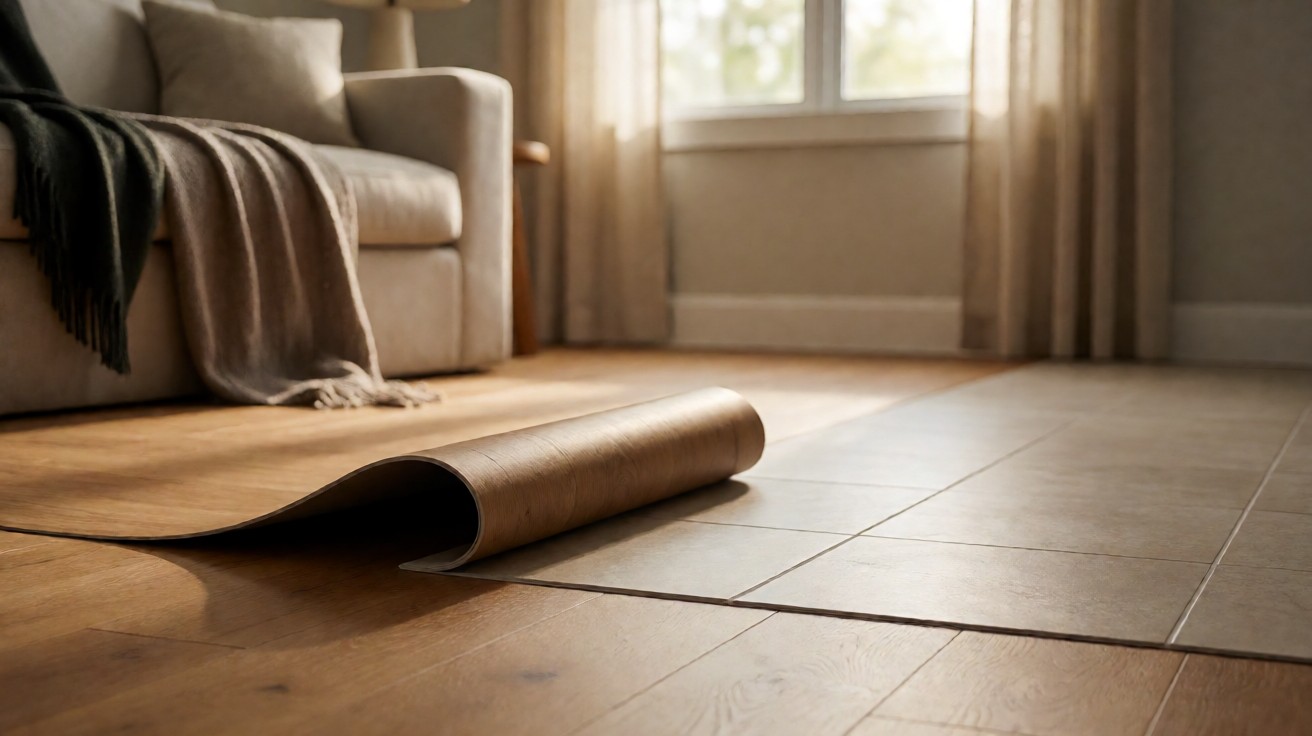
Laminate flooring is made of a decorative paper or melamine layer printed with the wood or tile pattern, bonded under heat and pressure to a fibreboard core. The pattern layer is what a person sees and what a foot lands on, and it is the part that wears out.
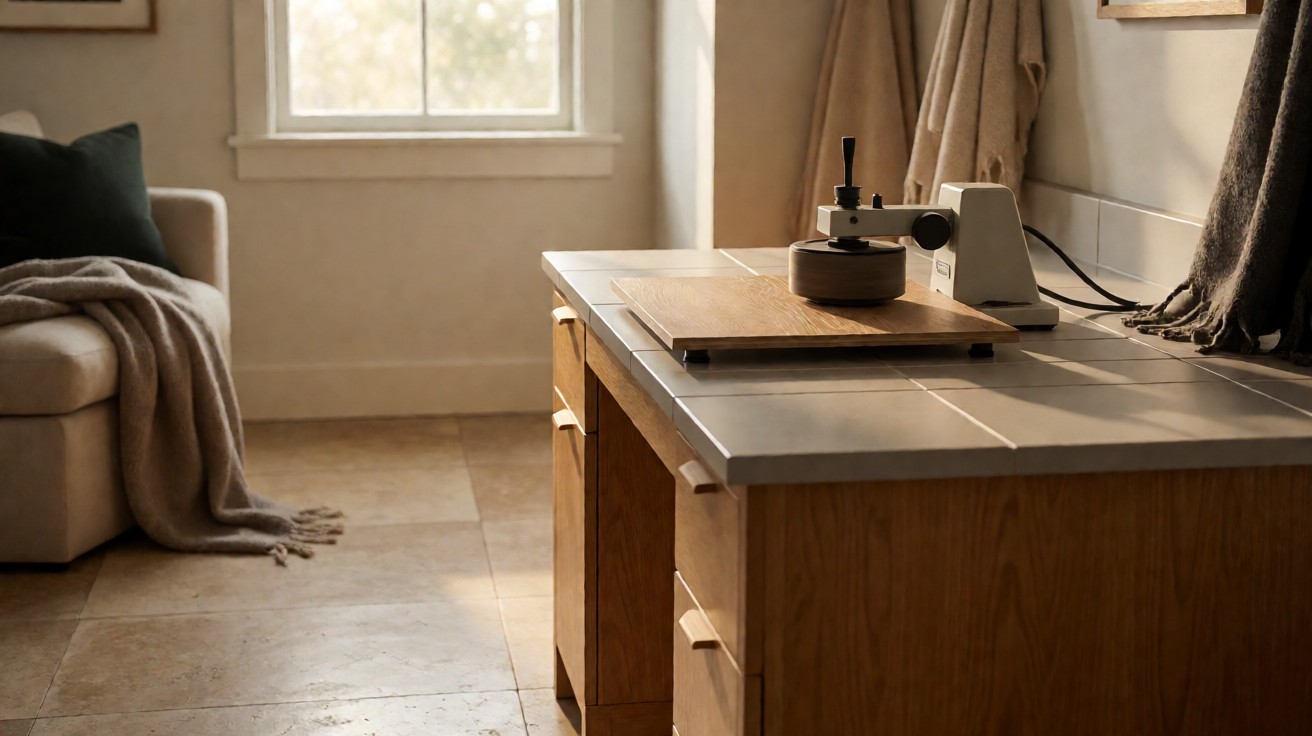
The AC rating measures the abrasion resistance of that layer, and nothing else. A sample of laminate is clamped in a machine and rubbed with a rotating abrasive wheel under a set weight. The machine counts how many revolutions it takes for the printed surface to wear through to the core, and that cycle count is mapped onto a class.
So the rating answers exactly one question: when the traffic wears the surface away, how long until you see the raw fibreboard underneath. That is a real and important number. It is just not a number about water, scratches, dents, or how the floor feels.
AC1 to AC6, Class by Class
The classes run from AC1 at the bottom to AC6 at the top, and the jump between them is large rather than incremental, so the difference in price is usually not in proportion to the difference in use.
AC1 is residential light wear, and it belongs in a low-traffic room such as a bedroom or a formal sitting room that sees occasional footfall. It wears visibly in a busy hallway within a couple of years and is rarely worth buying in a home.
AC2 is residential normal wear. It is a step up from AC1 and is sold widely, but in a family home it is still on the thin side for a hallway or a room with children.
AC3 is residential heavy wear or light commercial, and it is the workhorse of the range. It is the rating most family homes should be buying: it handles a busy family room, pets, and a hall with a decade of normal use ahead of it.
AC4 is commercial light. It is the point where the product is specified for shops and offices, and in a home it buys longevity you may never use.
AC5 is commercial heavy, and AC6 is extreme commercial, the kind of specification for very high-traffic institutional space. These are excellent products in the sense that they will outlast most homes, and they are also paying for a number the household will never reach.
The Taber Test in Plain English
The test is worth understanding because it explains both what the rating is good for and where it misleads.
A specimen is mounted in a machine and a rotating wheel, either a sandpaper-like abrasive or a harder one depending on the class being tested, is pressed against the surface under a fixed load.
The machine turns until the printed layer is visibly worn through to the core, and records the number of revolutions. That count is compared against reference values and assigned an AC class.
Two features of this setup shape everything. The wear is a uniform, circular, continuous abrasion, which is a reasonable stand-in for years of foot traffic but not a simulation of a real room. And the test runs to failure, which means the specimen is destroyed, so the result describes the material rather than a particular board.
The consequence is that AC is a good comparative number for ranking one laminate against another under even wear, and a poor predictor of how any single floor will behave in a specific house with pets, a vacuum cleaner, and one badly placed chair.
What the Rating Does Not Tell You
This is the part that matters most, because buyers routinely read a high AC rating as a general quality grade and then get disappointed.
It says nothing about water. A laminate floor is a wood fibre product with a paper face, and standing water will swell and delaminate it regardless of whether it is AC3 or AC5. A high AC rating does not make a laminate suitable for a bathroom.
It says nothing about scratches. The abrasion test simulates slow, even wear. A scratch from a dragged chair leg, a dropped screwdriver, or a pet claw is a different failure entirely, and the decorative layer that resists years of wear can be marked by a single sharp object.
It also says nothing about the core, and the core is what determines whether the floor feels solid or hollow, whether it holds a heavy furniture leg without denting, and how much it will expand and contract over a season. Two laminates with an identical AC rating can behave completely differently underneath, which is why the wear layer and core construction is worth understanding separately.
AC Versus the European 21 to 23 System
Laminate sold in Europe and much of the rest of the world used a different numbering system before the AC scale, and you will still meet it on older stock, on flooring from European manufacturers, and on some imported product lines.
The old system uses classes 21, 22, and 23, which map roughly onto residential light, residential normal, and residential heavy use. The AC scale that replaced it runs to six classes and adds the commercial grades.
The rough correspondence is that class 21 sits near AC1, class 22 near AC2, and class 23 near AC3. If you are comparing a European-labelled board against an AC-rated one, translating through those three pairs tells you whether you are looking at an equivalent product or whether the newer number is simply a different label for the same performance.
Reading an AC Number on a Retailer Page
Two things to know when you see the class printed on a box or a product page.
First, the number is a class, not a measurement, so a retailer showing AC5 rather than a specific cycle count is behaving normally. What you want to avoid is a product showing no class at all, because that usually means the manufacturer did not test to the standard.
Second, the class is a property of the decorative layer, and different products with the same class will still wear differently in a real room.
Two AC3 floors can last noticeably different lengths of time in the same hallway, because the test measures the material and not the specific board. The class tells you the range; the wear layer thickness, the core, and the price tell you where in the range the product sits.
So treat the class as a filter rather than a verdict. It is excellent at separating the products that cannot survive a family home from the products that can, and it is not capable of telling you which of two AC3 floors is the better one.
Which Rating a Home Actually Needs
For most homes the answer is AC3, and it is worth resisting the pull to buy higher.
An AC3 floor in a family room, a bedroom, and a hallway will comfortably handle normal household traffic for the length of a typical ownership, and it is where the price-to-durability curve is at its best. If you have large dogs, small children, or a hallway that takes a beating, AC3 is still adequate but the next step up is worth considering.
AC4 and above is where you should be honest. It is genuinely more durable and it will outlast most homes, but the additional cost buys durability against a level of traffic a household is unlikely to generate, and on a mid-range floor the money is often better spent on the core and the subfloor than on an AC number the floor will never test.
The better question than which AC rating to buy is whether the floor you are considering is even laminate. If the room is a bathroom or a regularly wet space, no AC rating solves the water problem, and the vinyl flooring guide covers the formats that are actually waterproof there.
AC Rating by Space
This table is the practical answer: which class for which part of a home. This table makes that assignment concrete.
| Situation | Rating or build | Reason |
|---|---|---|
| Bedroom, rarely used room | AC1 to AC2 | Light residential wear is enough |
| Living room or family room | AC3 | The default for a family home |
| Hallway or stairs | AC3 to AC4 | Concentrated traffic warrants more |
| Room with dogs or small children | AC3 to AC4 | Claw and scuff risk above normal wear |
| Rental property | AC3 or AC4 | Turnover traffic and no second chance |
| Home office | AC2 to AC3 | Chair casters roll in a tight area |
| Any wet room or damp slab | Neither | Laminate is not a waterproof product |
The Comparison at a Glance
| Class | Intended use | Realistic home |
|---|---|---|
| AC1 | Residential light wear | Bedroom, rarely used room |
| AC2 | Residential normal wear | Low-traffic room; thin for a hallway |
| AC3 | Residential heavy / light commercial | The default for a family home |
| AC4 | Commercial light | Over-specified for most homes |
| AC5 | Commercial heavy | Institutional; rarely needed |
| AC6 | Extreme commercial | Very high traffic; not a home product |
What AC rating is best for a house?
AC3 for most homes. It is the residential heavy-wear class, it handles a family room, pets, and a busy hallway for a decade or more, and it sits at the best point on the price-to-durability curve.
Go up to AC4 if you have a particularly hard-working hallway or a rental, and be sceptical of anything higher, because you are paying for traffic your household will not produce.
Is a higher AC rating always better?
Higher does mean more abrasion resistance, but it does not mean a better floor overall. It says nothing about water resistance, scratch resistance from a sharp object, dent resistance, or the quality of the core, and the higher classes can carry a price premium that is better spent on the core and a good subfloor.
Buy the rating that matches your traffic and judge the rest of the board on its construction.
How This Fits With the Rest of the Choice
This page covers one specification on laminate. It does not cover the material as a whole, the wear layer and core construction, or the water question.
For the material, the laminate flooring guide is the reference. For the layers the rating is measuring, the wear layer and HDF core explainer goes into the structure. If you are weighing laminate against vinyl or the hard floors, the material comparison sets the families side by side.