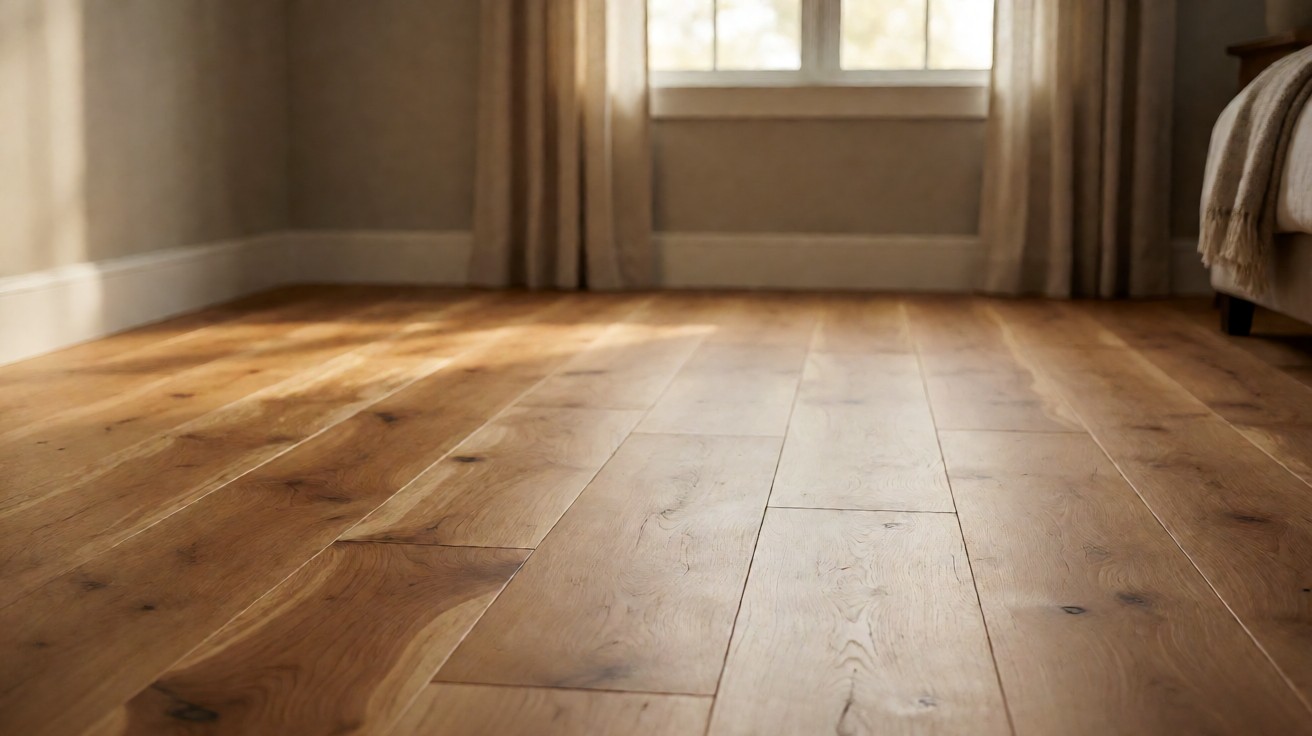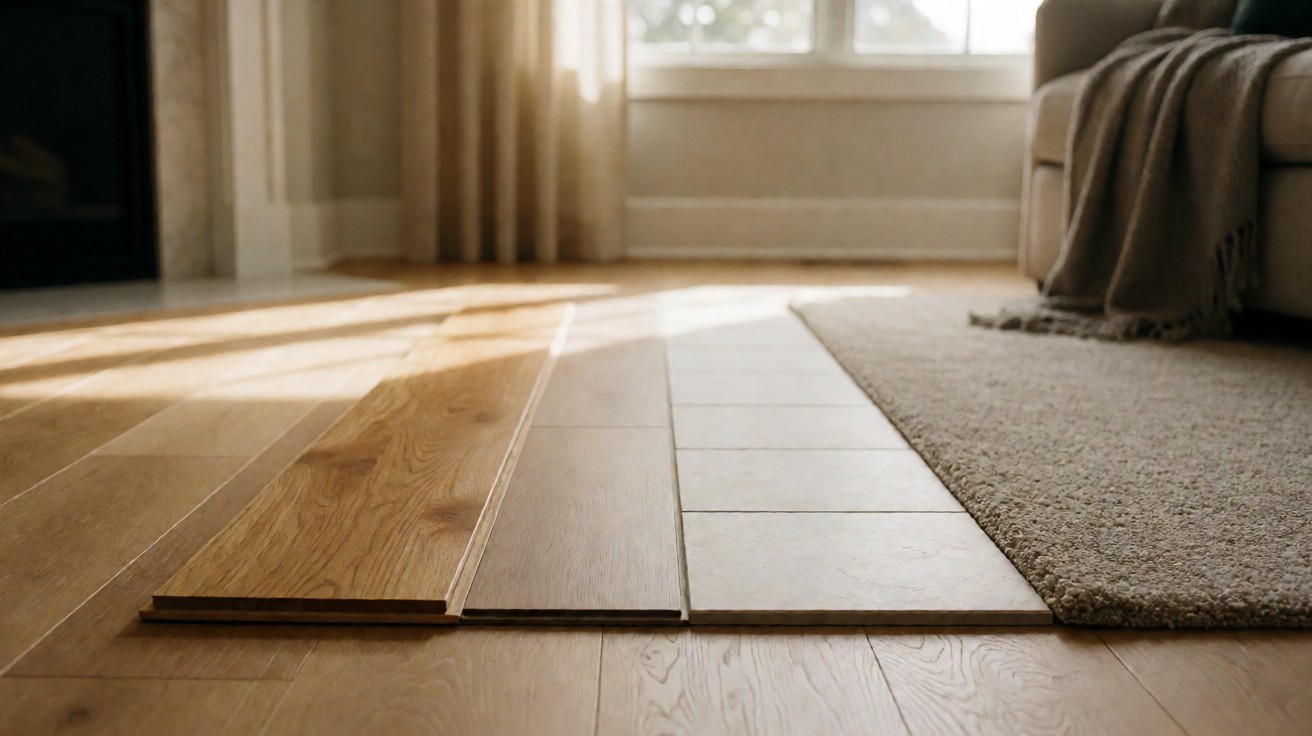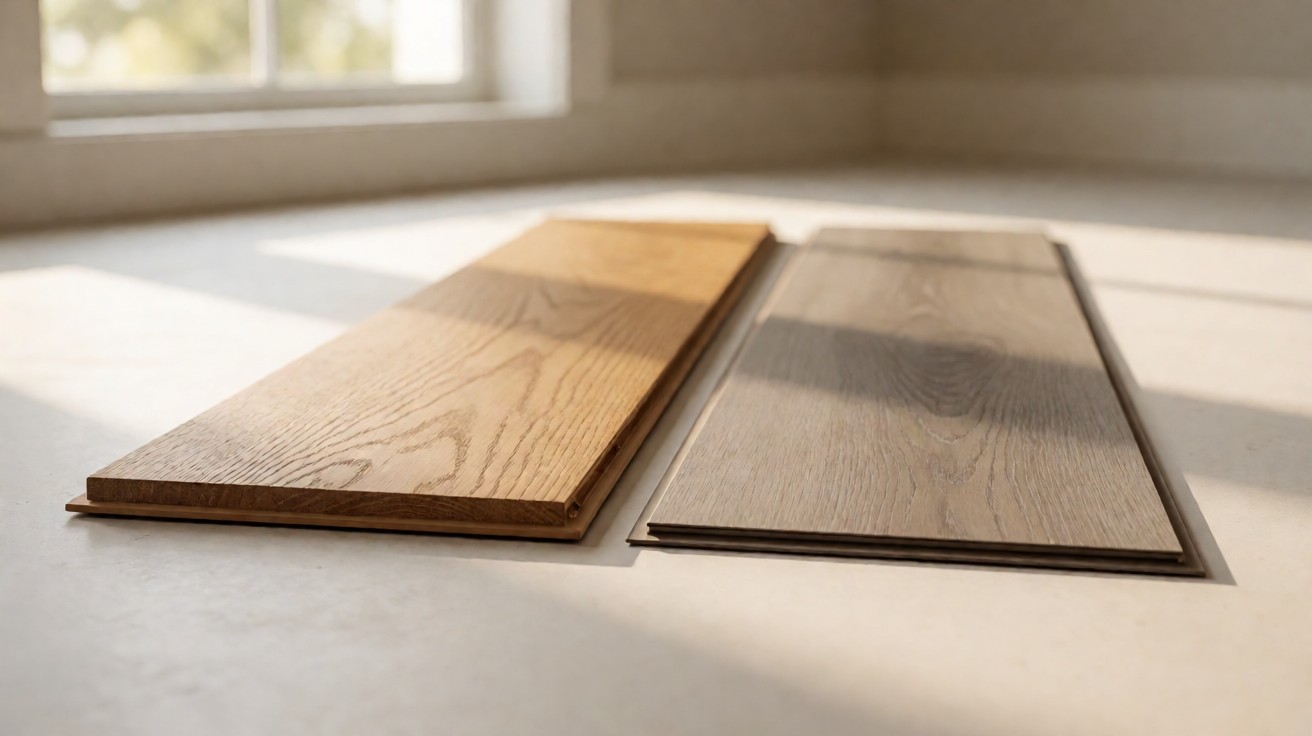

Hardwood and LVP both imitate the same plank with a timber look, and only one of them will still be worth sanding again in twenty years or after that. That is the whole difference in one line, and it is worth holding on to because the two products are sold in the same showroom aisle, look the same from the doorway, and are compared on price by almost everyone who shops them. Below that line sit the ones that actually decide most purchases: whether the floor can take a spill, how it sounds, how it feels underfoot, and what it costs to live with for twenty-five years. The hardwood versus laminate comparison covers the other side of this triangle, where both floors are dry to the touch.
What Each One Is Made Of
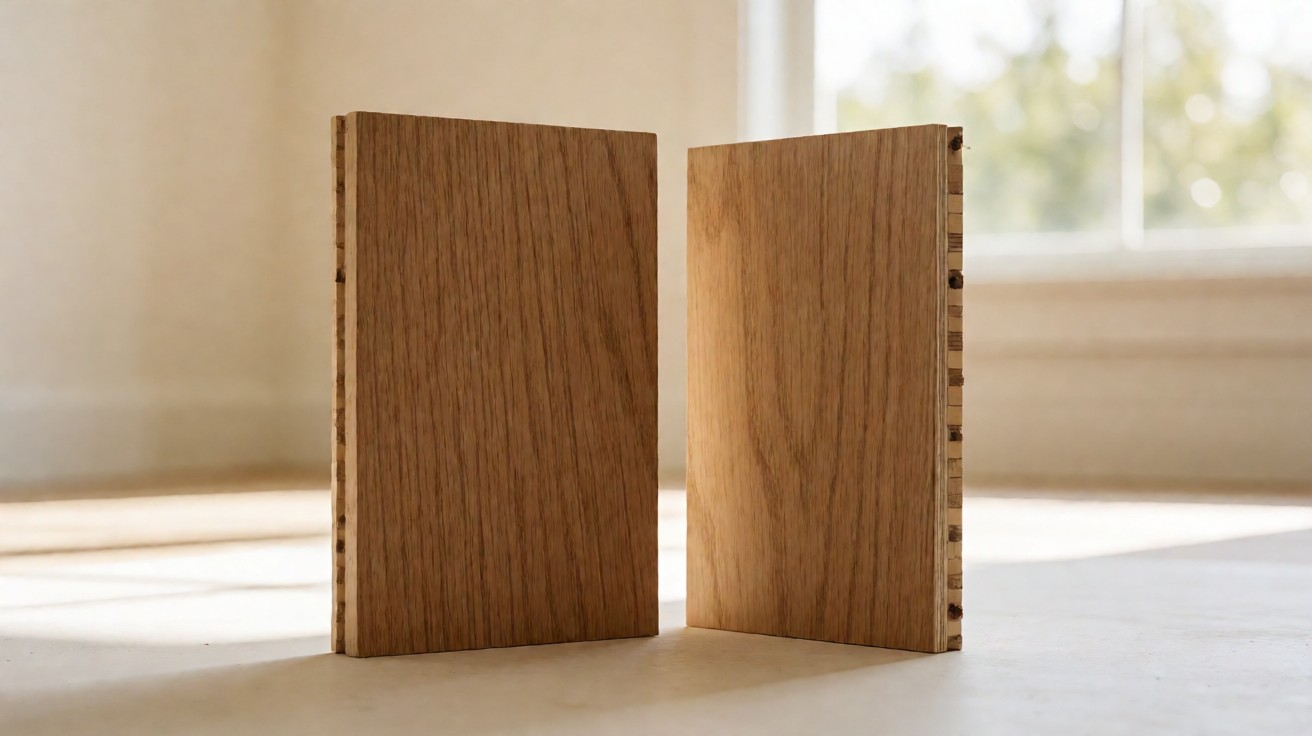
Hardwood is timber. Solid hardwood is one board from top to bottom, milled from the trunk, and it can be sanded six to eight times over the life of a house according to NWFA technical guidance, because a sanding removes between 1/32 and 1/16 inch of actual material and a sound hardwood board still has a quarter inch or more above the tongue. Engineered hardwood is a real hardwood veneer over a plywood or HDF core, which is more dimensionally stable and which is covered in the engineered construction page.
LVP is a polymer. It is a layer stack: a clear wear layer, a printed film that carries the wood image, and a core, which is either stone or wood. The printed film is a reproduction, and nothing in the product is a tree. That single fact produces every behavioural difference below, in the same way that a photograph of a meal differs from a meal.
Water: Where LVP Wins Decisively
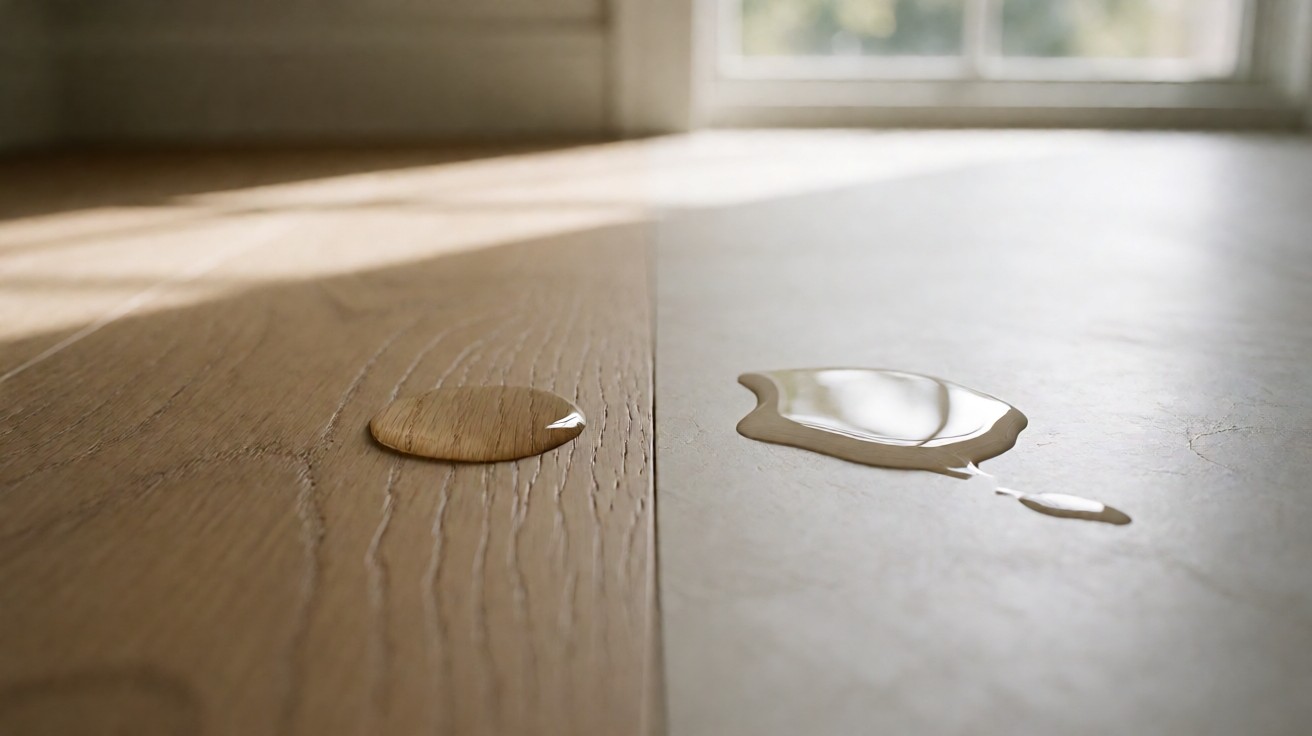
This is the strongest argument for LVP and it is not close. A finished hardwood floor is sealed, and water sits on the seal, which means a spill caught in time causes no damage at all. Water that gets past the seal and into the board causes swelling or cupping that does not come back when the board dries, and that is the failure that ends a hardwood floor’s life early. A kitchen with a dishwasher and a sink is a room where this happens eventually, and it happens to somebody.
LVP has no seam for water to travel into and no fibre for it to swell. A wet mop is not a risk. The honest limit is that no plank floor of either type tolerates a flood, a dishwasher leak left for a day, or a bathroom, and an LVP floor still has to be replaced when the subfloor beneath it is soaked. What LVP changes is the window in which a spill is survivable, and that window is the difference between an inconvenience and a floor replacement.
| Situation | Better Choice | Reason |
|---|---|---|
| Kitchen with sink and dishwasher | LVP | Spills become an inconvenience, not a repair |
| Basement or slab, some damp risk | LVP | No fibre to swell |
| Entryway with wet shoes in winter | LVP | Tracked-in meltwater is harmless |
| Sunroom or enclosed porch | LVP | Stable across temperature swings |
| Formal living or dining room | Hardwood | The look is the point, and it can be refinished |
| House held twenty-five years or more | Hardwood | Sandable repeatedly, so the floor never has to go |
| Bedroom on the second floor | Hardwood | Warmer and quieter than a sheet of polymer |
| Rental or a three-year hold | LVP | Installation cost and durability per dollar |
Feel, Sound, and What You Walk On
Hardwood is warmer to the touch and slightly quieter than LVP, and the reason is the same in both cases: a wood core has a little give and some internal damping, while a stone-filled polymer core is rigid and slightly cold. The difference is noticeable barefoot in winter and largely invisible in shoes in summer. It is a real but modest difference, and it is the axis most often overstated in LVP marketing, which describes the product as softer and more comfortable than it is.
Where LVP does have a genuine acoustic advantage is in the floor below. Under the ASTM E492 and E90 impact sound class framework, a well-installed rigid vinyl plank over an appropriate underlayment performs very close to engineered hardwood and well above a bare plywood subfloor. That is largely a function of the underlayment rather than the plank, which is worth knowing before paying a premium for acoustic claims attached to the core.
Installation and What It Commits You To
LVP is most often a floating click-lock plank laid over a pad or a thin sheet, which means it can frequently go down over an existing floor that is sound and level, and one competent person can cover a good-sized room in a day. It is the reason a kitchen refloor costs a fraction of a hardwood refloor. The trade is that the old floor stays beneath the new one, which returns to haunt anyone who later needs to reach the subfloor or change their mind.
Hardwood cannot be laid over an old floor. The subfloor has to be exposed, checked, levelled and often repaired, and solid hardwood needs a nailer and a level of technique that a first attempt will not get right in a visible room. Engineered hardwood reduces this considerably because it glues or clicks down much like LVP. If the subfloor is going to be opened up regardless, that difference largely disappears and the cost comparison narrows considerably.
Appearance and How Real the Grain Is
The best LVP in the market is a genuinely convincing reproduction of a specific timber, and the difference from a photo of that board to a reproduction of it has closed to almost nothing at the top of the price range. Where the two still differ is underfoot and over time. Real wood grain has depth: it rises slightly, it takes light differently across the board, and a texture can be felt with a fingertip. The best printed film has an embossed texture that approximates this and reads correctly at walking height, and it does not improve with age the way a hardwood floor does.
That last point is the one worth pausing on. Hardwood weathers into a softer, warmer surface as the finish wears, and a well-chosen species looks better at year twenty than it did at year one. A printed LVP surface is at its best the day it goes down and it can only ever diminish, because there is no second layer beneath the print to reveal. Neither is a defect. It is a difference in how the material ages rather than how it wears.
Damage and Repair
A dropped pan on hardwood crushes the fibres, and a crushed fibre is permanent until the floor is sanded, at which point the dent comes out because it is below the surface. On LVP the same impact either marks the wear layer or chips the board. A marked wear layer can be spot-repaired; a chipped board has to be lifted and replaced by taking the surrounding planks apart, which is the same repair job in both materials and is routine in a single plank.
The asymmetry is not in repair, it is in recovery. Hardwood can be restored to new condition any number of times over a fifty-year life. LVP cannot be restored at all once the wear layer is through, and the floor is then a replacement project. Over a long hold, that is the argument that eventually outweighs the spill argument.
What Neither One Tolerates
Two limits are shared and worth stating plainly, because both products are sold as suitable everywhere. The first is standing water under the floor rather than on it: neither plank absorbs water, but a floating floor over a subfloor that holds standing water will eventually find the edge of the installation. The second is an unverified subfloor, and this is where LVP’s reputation for tolerance gets misunderstood. A click-lock plank will not compensate for a hollow spot or a dip, and a rigid stone-filled core has no give at all.
Neither floor belongs in a bathroom or a shower, and a wet room needs a substrate designed for it rather than a plank. What differs is the consequence of getting it wrong. A minor unevenness shows up as a hollow-sounding LVP plank that eventually clicks itself loose, and as a cupped or gapped hardwood board that has to be lifted and re-nailed. The vinyl construction evaluation guide covers the checks to run before either product is delivered.
Cost and the Twenty-Five Year Number
LVP runs roughly $2 to $5 per square foot installed against $6 to $15 for hardwood, so the invoice difference is large and immediate. The honest comparison is per year. A hardwood floor in a family living room lasts the life of the house with one or two refinishes; an LVP floor in the same room lasts 15 to 25 years before the wear layer makes it a replacement. The crossover frequently lands around year fifteen, after which the cheaper floor has been the more expensive one.
Against that sits a real and separate cost. Hardwood requires a flat, dry, verified subfloor and typically a professional install, and it cannot be laid over an old floor without significant work. LVP frequently installs over an existing floor as a floating click-lock system in a day, which is where a large part of its cost advantage comes from. In a renovation where the old floor has to come up anyway, that advantage shrinks.
| Dimension | Hardwood | LVP |
|---|---|---|
| Core material | Timber, solid or veneer | Stone or wood filled PVC |
| Wood grain | Structural, deep | Printed film, embossed |
| Spill caught quickly | No damage | No damage |
| Water past the surface | Swells, permanent | No absorption |
| Warmth underfoot | Warm | Cool |
| Over an existing floor | No | Usually yes |
| Impact sound with a pad | Good | Comparable |
| Full floor restoration | Sand and refinish, repeatable | Not possible |
| Typical service life | Life of the house | 15 to 25 years |
Choosing the Level of Luxury Vinyl Plank
One trap deserves naming because it costs buyers real money. LVP is a category, not a product, and the same brand sells it in a range that runs from a 12 mil thin plank to a 20 mil SPC plank with a three-layer pad already attached. The difference between the bottom and the top of that range is often more than the difference between the bottom of LVP and laminate, which is why comparing LVP to laminate by brand rather than by specification produces the wrong answer.
The specification that matters is the wear layer in mils, the core type, and whether the underlayment is pad-attached or separate. A pad-attached plank is a good buy for a DIY install because it removes a step and a variable. A plank specified without any core description at all is a plank that will not be named on the box as SPC or WPC, and that absence is the specification.
Resale and How Buyers Read the Two
Hardwood is universally described as a premium feature in a listing and LVP is not, in the same way and for the same reasons as in the carpet comparison. The perception is a market fact rather than a material one, and it is strongest in the first decade of ownership. Over a longer hold it fades, because a hardwood floor that has been refinished reads as a hardwood floor in good condition, and a well-worn LVP floor reads as a floor that is due.
For a house likely to be sold inside ten years, hardwood carries a real advantage here that is worth including in the total. For a house that will be held for the life of the buyer, it is a second-order consideration behind the refinishing argument, which is a physical fact rather than a perception.
Choosing Between Them
Choose LVP when the room has water in it, when children or pets make spills and dropped objects likely, when the subfloor is a basement slab, when the house will be sold inside fifteen years, when the budget is real, or when the install needs to be fast over an existing floor. Choose hardwood when the room is a formal or living space where the look carries weight, when the house will be held for decades, when a refinish in fifteen years is part of the plan, or when the floor is warm underfoot in winter.
The mistake in each direction is choosing on price and then living with the consequence. LVP in a formal room of a house that will be held thirty years looks fine for fifteen and then has no second life. Hardwood in a busy kitchen with a young family looks marked in year two, because a sealed wood floor records everything that happens on it. Neither is a bad floor. They are floors for different rooms, and the room is decided before the product is.