
A carpet snag is a single loop or tuft pulled above the pile surface, and it is one of the few flooring problems that worsens the longer you ignore it.
Use the method that fits the damage: trim a small snag flush, push and glue a pulled loop back down, or re-tuft a missing tuft; replace the carpet only when the backing is torn or the snag has run into a seam.
What Causes Carpet Snags And Pulls
Snags start when something catches a loop or tuft and drags it upward. Vacuum cleaner beater bars, pet claws, furniture legs, high heels, and moving heavy objects across the floor are the usual culprits. The damage is mechanical, not chemical, which is why it shows up suddenly rather than wearing in gradually.
Loop-pile carpets snag more often than cut-pile carpets because the yarn is formed into uncut loops that sit proud of the surface. A single caught loop can pull several inches of yarn out of the backing if it is not caught early.
Cut pile has no exposed loops, so a snag usually means a single tuft has been cut or pulled rather than a running line.
Backing quality matters as much as pile type. A carpet with a strong primary and secondary backing resists runs even when a loop is caught. Older carpet with degraded latex backing lets a small pull turn into a long run because the tufts no longer grip tightly.
Cut Pile Vs Loop Pile: Which Snags More
Loop pile, including Berber and level-loop styles, is the most snag-prone construction because the loops are exposed and continuous. Cut pile, including plush and textured styles, rarely runs but can show a pulled tuft as a visible tuft hole. Frieze and shag styles sit in between because the twisted yarns resist catching but are long enough to tangle.
The repair method follows the construction. Loop pile runs need containment first, then either pushing the loop back or cutting it flush. Cut pile needs a tuft replacement rather than a loop push, because there is no loop to push. Matching the method to the pile type is the difference between an invisible repair and a permanent bald spot.
| Pile type | Snag risk | Typical snag | Best repair |
|---|---|---|---|
| Loop pile (Berber, level loop) | High | Running pull of several inches | Push loop down and glue, or cut flush |
| Cut pile (plush, textured) | Low to moderate | Single pulled tuft or cut tuft | Re-tuft with matching strand |
| Frieze / shag | Moderate | Tangled or pulled long fiber | Trim to blend, then vacuum |
| Carpet tile (modular) | Low | Edge curl or seam pull | Replace the tile |
How To Fix A Small Carpet Snag
A small snag is one or two loops or tufts that sit slightly above the surface and have not started to run. The goal is to stop it from catching again without creating a visible depression. Work in good light and use sharp, fine-point scissors so the cut is clean.
Can You Just Push A Snag Back Down?
Yes, and that is the preferred first attempt. Use a flathead screwdriver, a butter knife, or a blunt tool to press the pulled loop back into the carpet until it sits level with the surrounding pile.
If the result looks right, move on to gluing. If the loop is too large to push down or the push leaves a visible lump, cut the snag flush instead.
Pushing works best on loop pile where the yarn is still attached at both ends. On cut pile, a pulled tuft is usually already detached at one end, so pushing rarely holds and re-tufting is the better route.
Should You Cut The Snag Flush?
Cutting is the fallback when pushing fails or when the snag is a single fiber that will not stay down. Snip the raised fiber within 1/16 inch of the base without cutting the surrounding pile. The repair will be nearly invisible on textured and multi-color carpets and slightly more visible on solid plush, but it stops the snag from running.
Never pull a snag to remove it. Pulling tightens the run and can unravel several rows of backing. Always cut or push, never pull.
How To Repair A Carpet Run Or Large Pull
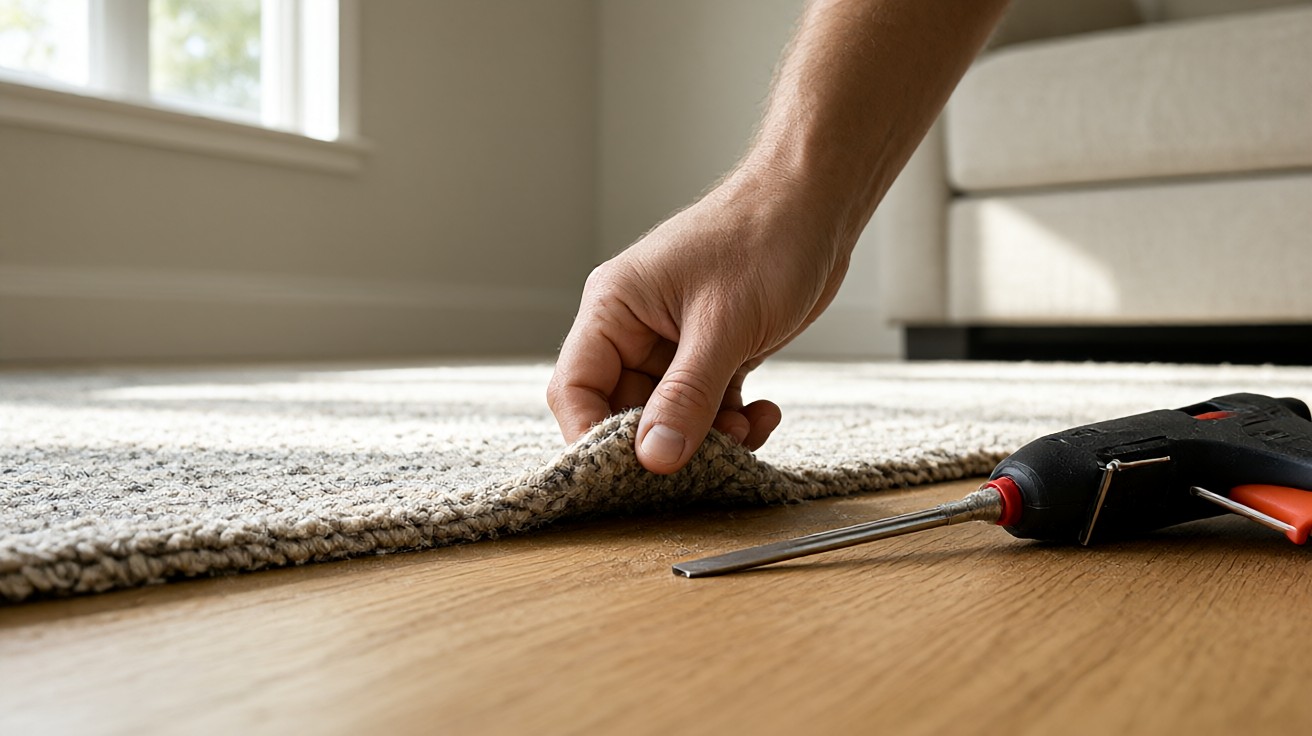
A run is a snag that has pulled multiple loops and left a visible line or channel in the carpet. Pushing and gluing rarely hides a run of 3 inches or more because the missing yarn leaves a gap. The reliable fix is to remove the damaged section and patch it with a piece of matching carpet.
The repair follows the same logic as a carpet seam repair, and the steps in the carpet seam repair guide apply directly to patching a run.
Cut out the damaged strip with a sharp utility knife, leaving clean, straight edges. Cut a replacement piece from a closet, a remnant, or the edge of the same carpet, matching the pile direction exactly.
Dry-fit the patch, then bond it with carpet seam tape and a hot-melt seaming iron at 280 degrees Fahrenheit or with a compatible carpet adhesive. Roll the seam with a seam roller and weight it until the adhesive sets.
Pile direction is the most common failure point. A patch that is rotated 90 degrees will catch light differently and read as a obvious rectangle even when the color matches. Mark the pile direction on the back of both pieces before cutting.
When Trimming Is The Right Call
Trimming is the right call when the snag is small, the backing is intact, and the goal is to stop further damage rather than to restore the original surface. It is also the right call on high-traffic areas where a perfect invisible repair is unlikely and a low, even surface is acceptable.
Trimming is the wrong call when the snag has pulled yarn out of the backing and left a void, when the carpet is under warranty and any cutting voids coverage, or when the damage sits in a focal point such as a stair tread or a living room center. In those cases, patching or professional repair is the better investment.
Re-Tufting A Missing Carpet Tuft
Re-tufting replaces a single pulled or cut tuft with a matching strand. It is the standard repair for cut-pile carpets where one tuft is gone and the backing hole is visible. The method is slow but nearly invisible when the fiber and color match.
Tools needed are a tufting needle or a small crochet hook, a matching yarn strand taken from a remnant or a closet edge, and a latex carpet adhesive or seam sealer.
Thread the strand through the backing hole from the face side, pull it down to the correct pile height, and secure the base with a small dab of adhesive on the backing.
Trim the tuft to blend with the surrounding pile once the adhesive has cured.
Color matching is the hard part. Carpet dyes fade with UV and traffic, so a strand from a hidden area usually matches better than a new remnant. Take the donor strand from the same carpet in a closet or under a baseboard where light has not reached.
Carpet Glue And Seam Sealer: What Works
Not every adhesive belongs on carpet. Use a latex-based carpet adhesive or a dedicated seam sealer for tuft and loop repairs. Hot-melt adhesive works for seam tape and patch bonding. Super glue and construction adhesive are too rigid and can crack the backing or stain the fiber.
Apply adhesive sparingly. A small dab on the backing is enough to hold a pushed loop or a re-tufted strand. Excess glue squeezes up through the pile and creates a hard, visible spot that attracts dirt. Let the adhesive cure fully before vacuuming, usually 24 hours for latex products.
For a pushed loop, place a small amount of hot glue or latex adhesive under the loop after pressing it down, then press the loop into the glue with the screwdriver and hold for 10 to 15 seconds. For a re-tuft, coat the base of the strand lightly and seat it in the backing hole.
Tools And Materials Checklist
Most snag repairs need only household tools. A complete kit for small and medium repairs fits in a drawer and costs less than a single professional service call.
| Item | Used for | Notes |
|---|---|---|
| Fine-point scissors | Trimming snags flush | Sharp and clean cut only |
| Flathead screwdriver or butter knife | Pushing loops down | Blunt, no sharp edges |
| Hot glue gun or latex carpet adhesive | Securing pushed loops and tufts | Low temperature for hot glue |
| Carpet seam sealer | Sealing cut edges on patches | Prevents fraying on patches |
| Utility knife and straightedge | Cutting patch pieces | For runs and large pulls only |
| Seaming iron and seam tape | Bonding patches | Professional-grade for large repairs |
| Tufting needle or crochet hook | Re-tufting missing tufts | For cut-pile repairs |
| Matching yarn strand | Replacement tuft | Take from a hidden area |
Repair Vs Replacement: Cost And Lifespan
Repair is the right financial call when the carpet is less than halfway through its expected life and the damage is localized.
Most nylon and polyester carpets are rated for 10 to 15 years of residential use, and a single snag or run does not shorten that lifespan if it is repaired promptly.
Replacement becomes the better value when the backing is failing across a wide area, when the pile has matted beyond recovery, or when multiple runs appear within a short period.
Cost comparison favors repair for small damage. A DIY snag repair costs a few dollars in adhesive and tools.
A professional patch repair typically runs between 75 and 200 dollars depending on size and access. Full replacement of a room runs into hundreds or thousands of dollars including padding and installation.
The Carpet and Rug Institute publishes care and maintenance guidance that supports repair-first thinking for localized damage.
Warranty And DIY Repair Risks
Carpet warranties, including those backed by CRI 104 and CRI 105 installation standards, often require professional installation and professional repair to keep coverage intact. Cutting, gluing, or patching the carpet yourself can void the warranty even when the repair looks fine. Read the warranty terms before touching a carpet that is still under coverage.
DIY repair also carries a risk of making the damage worse. A cut in the wrong direction, a patch with reversed pile direction, or adhesive that bleeds through the pile can turn a small snag into a permanent visible defect. When the carpet is new, expensive, or under warranty, a professional repair is usually the cheaper long-term choice.
Does A Snag Void My Carpet Warranty?
A snag itself does not usually void a warranty, but an improper repair can. Many manufacturers require that repairs be performed by a certified installer to maintain coverage. Document the damage with photos before attempting any repair on a warranted carpet, and contact the retailer or manufacturer if the carpet is less than two years old.
How To Prevent Future Snags
Prevention is mostly about what crosses the carpet. Use a vacuum with an adjustable height setting and turn off the beater bar on loop-pile carpets, since the rotating brush is a leading cause of pulled loops. Keep pet nails trimmed to under 1/8 inch, lift rather than drag furniture, and use furniture glides or cups under heavy legs.
Place walk-off mats at entries to catch grit that abrades fibers and increases snag risk. For homes with pets, a cut-pile or frieze carpet resists snagging better than a loop pile. Vacuum high-traffic areas at least 2 times per week. Regular professional cleaning every 12 to 18 months, following CRI 204 care guidelines, removes abrasive soil and extends pile life.
When To Call A Professional
Call a professional when the snag has become a run longer than a few inches, when the backing is torn or the carpet has pulled away from the tack strip, or when the damage sits on a stair or in a high-visibility area.
Call a professional also when the carpet is under warranty. A certified installer can patch, re-stretch, and re-seam with tools and materials that are not practical for a homeowner.
Professional repair is also the right call when you cannot find a matching donor piece or when the pile direction and pattern make a DIY patch obvious. The cost of a professional repair is small compared with the cost of a visible mistake in a prominent room.
How Do I Know If The Backing Is Damaged?
Lift the carpet edge near the snag and look at the backing. If the primary backing is torn, if the secondary backing is separating, or if tufts pull free with light pressure, the backing is compromised and a simple snag repair will not hold. That situation calls for a patch or a professional assessment rather than trimming or gluing.
What If My Carpet Is Patterned?
Patterned carpets require precise alignment when patching, because even a small offset in the pattern is visible. Trimming a snag is still safe on a patterned carpet, but any patch or re-tuft should be done by a professional who can match both color and pattern. Keep a remnant from the original installation for future repairs.
For more on carpet construction and care, see the carpet flooring guide, the guide to cleaning carpet, and the guide to removing carpet stains. If a seam has opened along with the snag, the carpet seam repair guide covers that fix.