
Make a warranty claim with the record in hand, not the complaint in memory. A claim is a file, and the file is the evidence you gathered before you called.
Start with the record. The right claim has four parts: the product and dye lot, the purchase date, the room conditions, and the defect record. A claim that names a hardwood floor that cups after a dry winter is a different claim from one that names a laminate floor that fails a week after installation.
A warranty is a contract between you and the manufacturer. The contract covers a stated set of failures, in a stated window, and it excludes a stated set of conditions, and the claim is only as strong as the record that supports it.
What a Warranty Actually Covers
A material warranty covers the product. It covers a failure in the material, such as a wear layer that wears through or a core that delaminates, and it is the manufacturer’s promise about what the product will do.
A workmanship warranty covers the installation. It covers the work the installer did, and it is the installer’s promise, not the manufacturer’s.
The two warranties are separate, and a defect can be covered by one and not the other. A floor that fails because the installer laid it without acclimation is a workmanship problem, not a material problem.
The exclusions are the part that decides most claims. Moisture damage, subfloor movement, and damage from improper cleaning are the common exclusions, and a defect that falls inside an exclusion is a defect the warranty does not cover.
What Does a Material Warranty Cover?
A material warranty covers a failure in the product itself. It covers the wear layer, the core, the finish, and the bond, and it does not cover damage from misuse, a leak, or a subfloor that was not prepared to the manufacturer’s specification.
Read the warranty document before you file. The document states what is covered, what is excluded, and the window in which a claim must be made. If the document is missing, ask the manufacturer for the version that applied on the date of purchase.
Confirm the Warranty Window
The window is the period in which a claim can be made, and it is stated in the warranty document. A claim filed after the window has closed is a claim the manufacturer can decline, whatever the defect.
Confirm the window before you gather the evidence, because the window decides how much time you have to build the file. A window that closes at 30 days and a window that closes at 30 years are two different claims to prepare.
Count the window from the date of purchase, not the date you noticed the defect. A defect that appears ten years into a twenty year warranty is still inside the window, and the purchase date is what proves it.
The window closes without warning.
What Is the Warranty Window?
The window is the stated period the manufacturer will respond to a claim. It begins at the date of purchase, and it is counted forward from that date. If you cannot find the warranty document, the purchase receipt and the product registration are the next best record.
Gather the Evidence Before You Call
Gather the evidence before you contact the manufacturer, because the file is what the claim is built on. The product name and dye lot, the purchase date, the room conditions, and the defect record are the four parts.
The how to document flooring defects guide covers how to build the record, and the manufacturer warranty guide covers what the document promises.
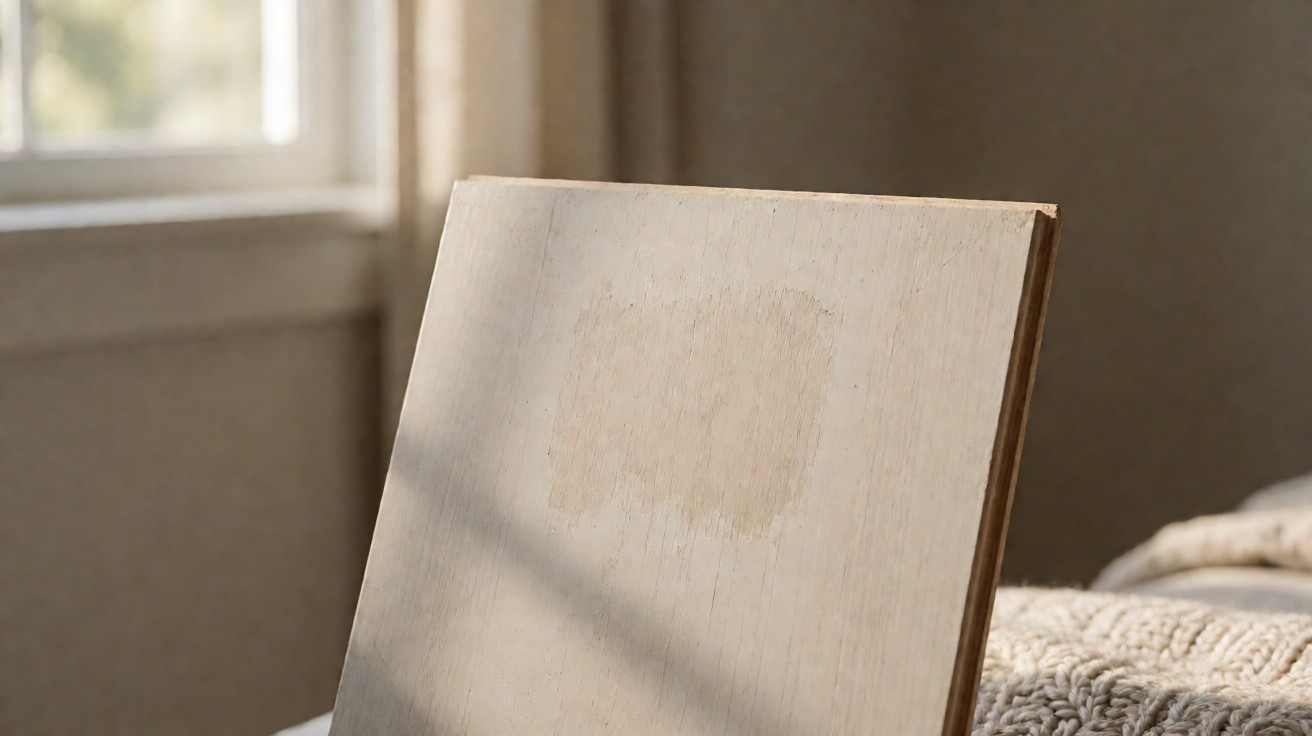
Keep the product itself, not just the record. A manufacturer will ask for a sample of the failed material, and a sample you kept is a sample you can send.
Gather the names of everyone who touched the floor. The installer, the retailer, and the person who cleaned it are all part of the file, because a claim that leaves a party out is a claim that can be delayed by the question of who did what.
Identify the Cause Before You File
Identify the cause before you file, because the cause decides who is responsible. A defect caused by a product failure is a material claim, and a defect caused by a condition is a claim the manufacturer will decline.
Wood flooring moves with moisture. It is manufactured to a moisture content of 6 to 9 percent under the NWFA standard, and a floor that is installed in a room outside 30 to 50 percent relative humidity will move. The movement is a condition, and a condition is excluded.
A laminate floor is expected to be acclimated for 48 to 72 hours under the NALFA installation guidance. A failure that appears before that period is a sign the floor was not acclimated, and that is a workmanship problem, not a material one.
For a floor over concrete, the subfloor moisture is the first thing to check. Under ASTM F2170, an in-situ probe measures the relative humidity in the concrete, and a reading above 80 percent is a subfloor condition that will damage any floor above it.
Cause and responsibility are not the same thing. A cupped floor can be caused by a wet subfloor or by a leak, and the two point to different parties, so the record should distinguish them before the claim is filed.
Contact the Manufacturer
Contact the manufacturer with the file, and name the defect, the cause you have identified, and the remedy you want. A claim that states a defect and a remedy is a claim the manufacturer can act on.
Send the claim in writing, and keep a copy. A claim made by phone is a claim with no record, and a claim in writing is a claim you can follow up.
Ask for a claim number, and write it down. The number is the reference for every later conversation, and a claim without a number is a claim that can be lost.
The number is the claim.
If the manufacturer asks for a sample, send the sample with the record and keep a photograph of it before it goes. A sample that is photographed before it leaves is a sample you can describe later.
Contact the Installer
If the defect is a workmanship problem, the installer is the party to contact, not the manufacturer. The installer prepared the subfloor, acclimated the material, and laid the floor, and the workmanship warranty is theirs.
Give the installer the same record you gave the manufacturer. A record that is complete for one party is complete for the other, and a record that changes between the two is a record that will be challenged.
Ask the installer to inspect the floor in person, and to put their findings in writing. A finding in writing is a finding you can compare to the manufacturer’s, and a finding that is only spoken is a finding you cannot use.
A workmanship warranty is often shorter than a material warranty, and its window is counted from the date of installation. If the installer registered the work, ask for the registration number, because a registration is a record the installer cannot later deny.
Get the Claim in Writing
Get the outcome in writing, whatever it is. A claim that is accepted in writing is a claim you can act on, and a claim that is declined in writing is a claim you can challenge.
The written outcome should state the decision, the reason, and the remedy. An outcome that states a decision without a reason is an outcome you cannot answer, and a reason you can check is the part that matters.
What Should the Claim Letter Say?
The claim letter states the defect, the evidence, and the remedy. It names the product, the purchase date, the room conditions, and the cause you have identified, and it asks for the outcome you want. A letter that names the defect and the remedy is a letter the manufacturer can answer.
| Claim part | What to include |
|---|---|
| Product | Name, series, and dye lot |
| Purchase date | The receipt date |
| Room conditions | Temperature and humidity |
| Defect record | Photos, measurements, timeline |
| Remedy | Repair, replace, or refund |
What Happens If the Claim Is Denied
A denial is not the end of the claim. The denial should state a reason, and the reason is what you answer.
If the denial cites a condition, the record is what answers it. A record that shows the room was within the 30 to 50 percent range and the floor was acclimated for the full period is a record that answers a condition denial.
If the denial cites misuse, ask what the manufacturer considers misuse, because the definition is in the warranty document and you are entitled to see it.
If the denial is wrong, answer it with the evidence again. A second letter that restates the conditions, the acclimation, and the purchase date is a letter that gives the manufacturer a reason to reverse the decision, and a reversal is the outcome you are asking for.
| Defect | Likely cause | Who is responsible |
|---|---|---|
| Cupped planks | Room humidity outside 30 to 50 percent | Homeowner (condition) |
| Gaps in winter | Seasonal humidity swing | Homeowner (condition) |
| Wear layer worn through | Material failure | Manufacturer |
| Core delaminated | Material failure | Manufacturer |
| Failure before acclimation | Not acclimated for 48 to 72 hours | Installer (workmanship) |
When to Escalate
Escalate when the denial is wrong, not when it is inconvenient. A denial that contradicts the evidence is worth a second letter, and a denial that contradicts the warranty document is worth a formal complaint.
A second letter should state the evidence again, cite the warranty clause, and ask for a specific response. A letter that is specific is a letter that gets a specific answer.
If the manufacturer will not respond, the retailer is the next party. A retailer who sold the product has a relationship with the manufacturer, and a retailer who will not help is a retailer you can name in a review.
Keep every letter you send, and every letter you receive. The file grows with the claim, and the file that is complete at the end is the file that was kept from the start.
The Warranty Claim Checklist
Before you file, run this list.
- The warranty window is confirmed and open.
- The product name, series, and dye lot are recorded.
- The purchase date is on file.
- The room conditions are recorded.
- The defect record is complete: photos, measurements, timeline.
- The cause is identified and stated.
- The claim letter names the remedy.
File the claim with the record, and state the remedy. A claim is a file, and the file is the evidence you gathered before you called.