
A rental floor is bought for the turn-over rather than for the tenant in it, and the cheapest option is rarely the one that survives three full tenancies.
The Rental Decision Is Not a Design Decision
A tenant did not choose the floor and will not choose the next one. You are buying for the gap between tenancies, and for the inspection at the end of each one.
That changes the priority order entirely. Appearance ranks below the ability to clean with one mop, the ability to lift a damaged section without taking up the whole room, and the ability to survive being left wet by a tenant who does not know what they are doing. Every recommendation on this page is an argument from that position rather than from how the floor looks new on the day it is delivered.
| Room | What it takes | The specification | Why it ranks there |
|---|---|---|---|
| Bathroom and kitchen | Water, spills, and a wet mop at a turn | Porcelain tile or a rated waterproof floor | Specify these first; they decide the budget |
| Living room and corridor | Grit from outside, furniture, contractors | The thickest wear layer you can justify | Where the grit arrives and where it spreads |
| Entrance and hallway | The same grit plus the worst of the shoes | Wear layer plus a mat that stays down | The highest-traffic strip in the property |
| Bedrooms | The least traffic and the most turn-over | Carpet or carpet tile | Easiest to clean between tenants |
| Anywhere | A spill nobody cleaned up | A non-porous surface | A wipe, not a stain |
The Ten-Year Cost Is the Only Cost
Two numbers are usually left out of that calculation and both of them belong in it. The cost of making good at a turn when the tenant has left damage behind, which is not the same as a routine clean, and the cost of the lost rent while a room is out of service. A specification that minimises the second is usually worth more than the specification that minimises the first, which is why a floor that can be repaired in a day rather than a week is worth paying for.
A rental floor has one number that matters: what it costs per year including the turn-over repair.
Buy a floor for twenty-five per square metre and replace a section twice in fifteen years, and it is not the cheap option. Buy one for forty-five that has never needed a section replaced, and it is. The calculation is not complicated, but it forces the question of what a repair actually costs you: labour, a matching product that may no longer be on sale, and a vacant room while it happens.
Rigid Core Leads for a Reason
Rigid core is the default answer for a rental and it wins on the two things that matter most: repairability and moisture.
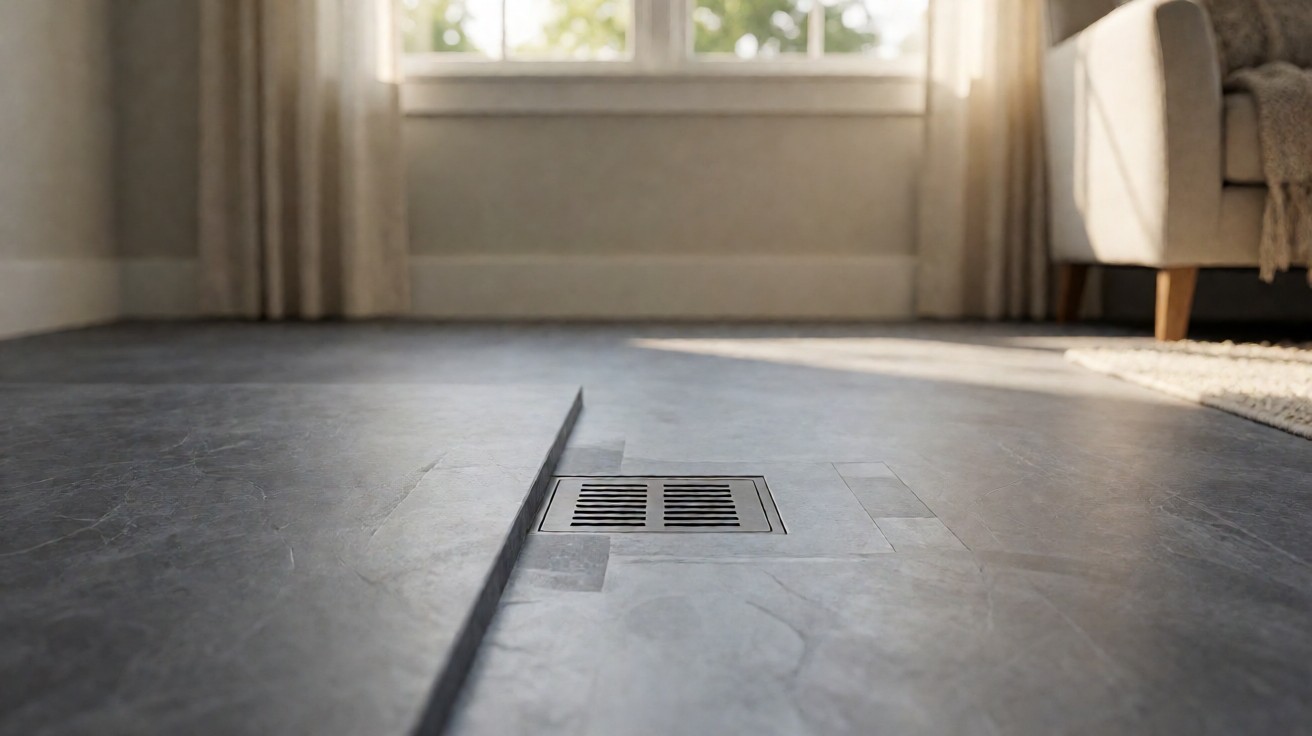
A plank can be lifted and a single plank replaced with a scrap kept in a closet, and the surface does not absorb so a tenant who spills something is a wipe rather than a stain. The rigid core vinyl page covers the core and the vinyl construction guide is where the wear layer figure and the substrate requirements are worth reading, because in a rental the wear layer is the number that decides how long before the first replacement.
Thick Wear Layer, and Why the Product Is Not the Answer
There is also a documentation side to this. The wear layer figure, the product name, and the batch number are what let a replacement plank match the floor that is already down, and a photograph of the box at delivery is what lets you buy the same product three years later when it has been discontinued. Keeping a repair stock in a closet costs a few square metres of floor and saves a room at the end of every tenancy.
In a rental the number on the box that matters most is the wear layer thickness, and it is the one most often compared least.
Rental gets more traffic than the room it is in implies: contractors carrying things, a vacuum with a hard head dragged across it, a furniture leg without a pad, and grit tracked in from outside that never gets a mat to catch it. Those are the conditions a residential wear layer is not specified for. A thicker layer on a product that cannot be recoated still ends in replacement, so which of the two a product is matters as much as the number.
Where Carpet Still Wins in a Rental
It is also the answer where a tenant has pets, which is a common rental situation and one where a stretched carpet is a much smaller claim than a gouged resilient floor. The best flooring for homes with dogs and cats page covers the wear side of that, the carpet flooring guide page covers the fibre and the pad, and the carpet tile versus broadloom page is worth reading if the bedrooms are being specified separately from the rest of the property.
Carpet looks wrong for a rental and it is often still the right answer, because the alternative is a replacement nobody budgeted for.
A carpeted bedroom or corridor is the easiest surface in the house to clean fast between tenancies, it hides wear rather than showing a worn path, and a stretch is a half-day job rather than a re-fit. Carpet tile makes it better still, because a stained tile lifts out and is replaced without touching the rest of the room. It is wrong in a kitchen or a bathroom, and it is usually right in the bedrooms.
What Tenants Actually Do to a Floor
Two of those are worth separating because they are the ones that go wrong silently. Grit is abrasive and it never looks like damage while it is happening, so a floor can lose most of its surface over a year and still look acceptable at the end of the tenancy. Water left at a seam is the other: the damage is under the floor where nobody looks, and it appears as a lifted edge long after the leak has been mopped up.
It is worth being specific, because the damage is concentrated and predictable and the specification should target it.
Grit tracked across the floor from outside is the most common and it is the most abrasive thing a floor sees. Water left by a spill, a washing machine, or a wet mop on a resilient floor goes into seams. Furniture and appliances get dragged rather than lifted. Cigarette burns and hot pans leave marks. And every one of those arrives in the same places: the doorway, in front of the wardrobe, around the sink, and under the fridge.
Damage and Repair, Room by Room
The rooms are not equally at risk and a rental specification that treats them the same wastes money in the wrong places.
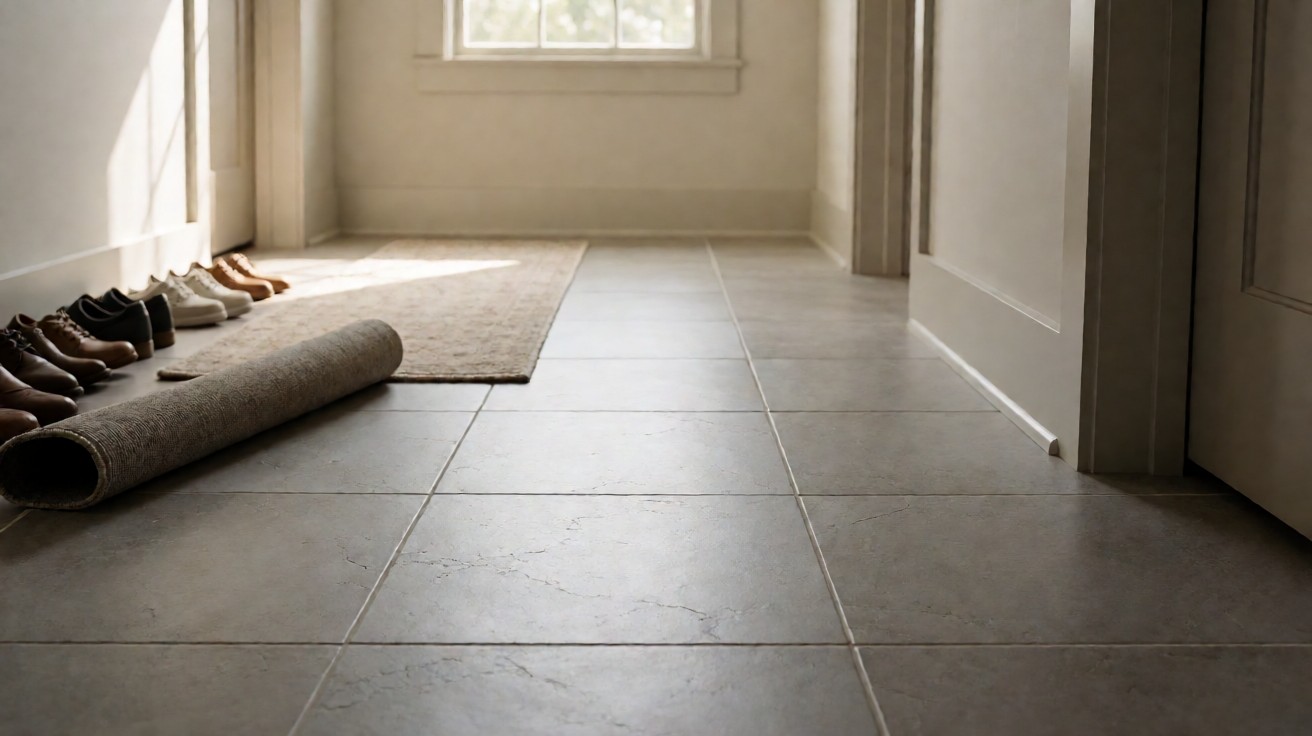
The bathroom and kitchen take water, so they take porcelain tile or a rated waterproof floor and should be specified first. The living room and the corridor take the grit and the furniture, so they take the wear layer. The bedrooms take the least and can take carpet. The best flooring for kitchens page covers the kitchen decision in full, the best flooring for mudrooms page covers the entry area where grit arrives, and the best flooring for hallways page covers the corridor where it spreads.
Legal and Contractual Reality
The practical consequence is that the specification and the paperwork are the same job. A floor that is specified with a documented slip rating, a documented wear layer, and a photographed condition at each turn gives a landlord an argument that is difficult to refuse, and it does not depend on the inspector having an opinion about whether a floor looks tired. The best flooring for high traffic areas page covers the traffic side of the same argument, and the best flooring for kitchens and best flooring for hallways pages cover the two rooms where the risk is highest.
Two things are worth knowing before the floor goes down rather than after.
First, a landlord is usually required to provide a floor that is safe and fit for purpose, and in many places that is a legal standard rather than a preference, so the slip specification is not optional in a rental. Second, what the tenant did at the end of the tenancy is usually recoverable as wear beyond fair wear and tear, and a documented condition report at each turn is what makes that recovery work. The flooring choice makes the argument easier, and a floor that is hard to damage is a floor that produces fewer arguments.
The Empty Unit Is the Test
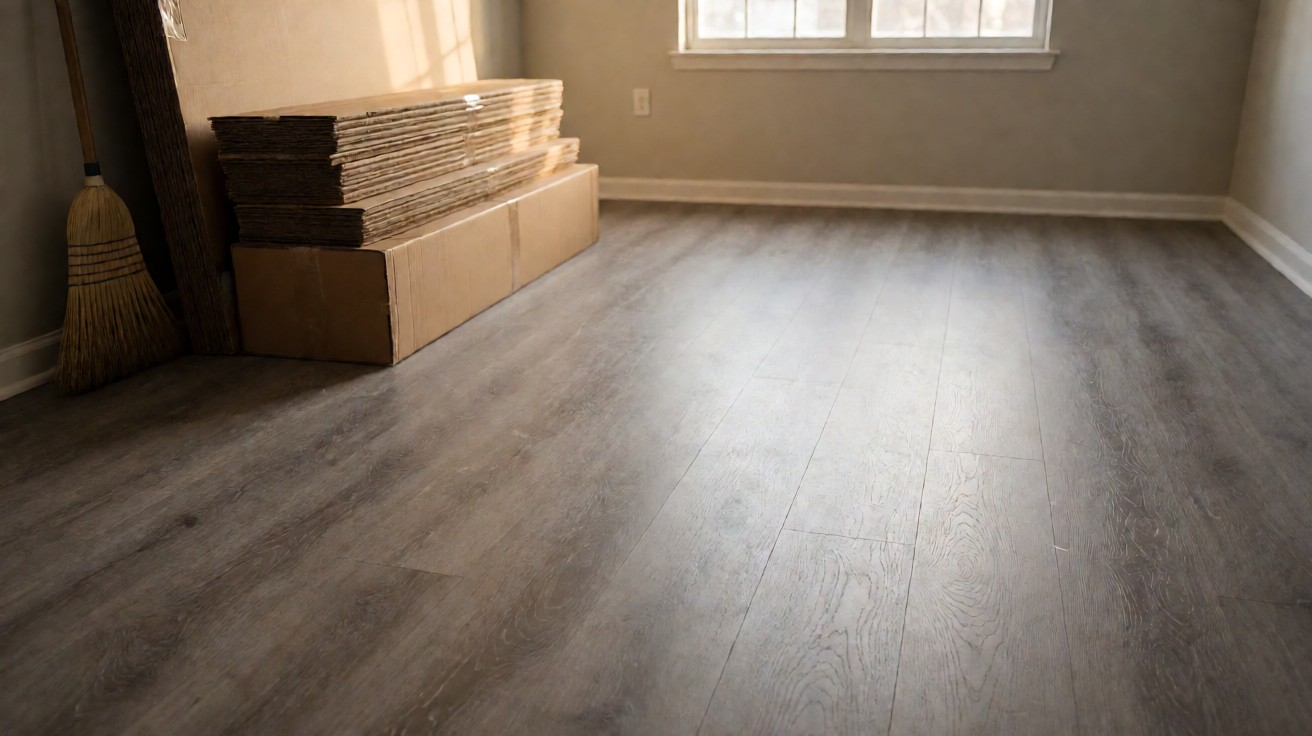
Stand in a vacant unit with a new floor and walk it the way a tenant will, and the weak specification is obvious within a minute. Walk the line from the door to the kitchen, which is the passage line, then stand on the spot in front of the sink and in front of the wardrobe, which are the concentration points, then put a hand on the floor near the entrance where the grit arrives. A floor that survives those three walks and those two standing spots will survive a tenancy, and one that clicks, rocks, or shows a dull line at the door will not.
That test is also the reason this page keeps returning to the wear layer rather than the price. The difference between two floors that look identical in an empty unit shows up in the third year rather than on the day of delivery, and a specification that only makes sense in an empty unit is a specification about appearance rather than about use.
How to Choose, and Where to Look Next
Decide per room rather than per property, then buy a wear layer rather than a colour, and keep a repair stock.
The rigid core vinyl page is the answer for most of the property, the laminate flooring guide floating floor is the one that can be taken up cleanly at a turn, and the solid versus engineered hardwood comparison is the answer only where a tenant will notice the difference. The flooring types compared page has every family in one table, the best flooring for mudrooms and best flooring for kitchens pages cover the two rooms that decide the budget, and the flooring for homes at risk of flooding page covers the case where the water comes from above rather than from a tenant.
| Material | Where it sits on cost | When it needs replacing | The rental note |
|---|---|---|---|
| Rigid core (SPC) | Low to middle | Replace one plank, not the room | The default answer in most rentals |
| Carpet tile | Low to middle | Lift out one tile and drop in a new one | The fastest turn-over in the property |
| Laminated board | Low | Take up and re-lay; pads may need replacing | The one that can come up cleanly at a turn |
| Sheet vinyl | Low to middle | A repair is a patch, not a plank | Harder to repair in place than plank |
| Engineered hardwood | Middle to higher | Sandable, but not cheap to sand | Only where the tenant will notice the difference |