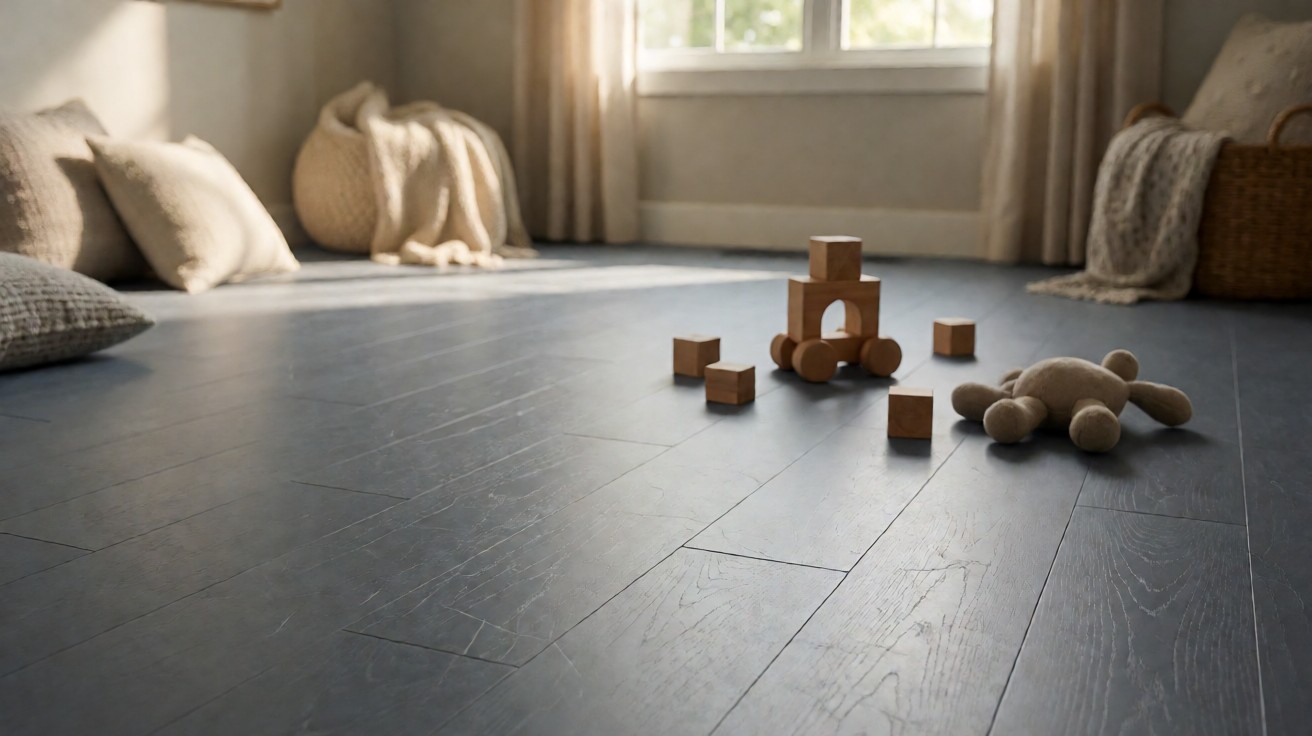

A house with children is not an empty house with more wear on it, it is a different floor problem altogether, and the answers only partly overlap each other.
What a House With Children Does Differently
The wear is the obvious difference and it is not the important one. The important difference is that a child creates more kinds of mess, more kinds of impact, and more kinds of stain, and each one asks for a different property.
A dog spills a bowl once and it is the same bowl every time. A household with young children produces paint, marker, glue, wax crayon, Play-Doh, modelling clay, juice, mud, and a drink knocked over sideways on a hard floor at some point in every week. None of those are abrasive. All of them stain. That is the difference: the wear is ordinary and the staining is the problem.
The Four Failures That Actually Happen
Staining, scratching, impact, and water at the seams, in that order of how often they cause an argument in a family house.
Staining comes first because it is the one nobody planned for and it is the one that is visible. Scratching comes second because grit tracked in from outside is the thing that reaches the wear layer. Impact comes third: a toy thrown rather than dropped, a tin dragged across the floor by a handle. Water at the seams is fourth and is the one that quietly destroys a laminated core. Each of them disqualifies different products and the difference between the four is what the material choice actually turns on.
| What happens | What it asks of the floor | Why it ranks there |
|---|---|---|
| Staining: marker, paint, juice, food | A surface that does not absorb at all | The most common and the most visible failure |
| Scratching: grit, grit under a shoe | A tough wear layer or a restorable finish | Invisible while it happens, obvious after two winters |
| Impact: toys, dropped tins, dragged handles | A forgiving core and pads under legs | Fails in one event rather than gradually |
| Water at a seam after a knock-over | A sealed or welded seam | The quiet one, and it destroys a fibre core |
Cushion, Warmth, and the Floor a Child Is On
There is one room in the house where the answer is not driven by spills at all, and it is the one most floors get wrong.
A baby learns to crawl, pull up and walk on a floor. That is a comfort, a temperature, and an impact question rather than a cleaning one, and the surface that is best underfoot is frequently not the surface that is best ten years later when the same child is doing homework on it. The best flooring for nurseries page covers that room for the first three years, and the best flooring for childrens bedrooms page covers it after that, because the requirement genuinely changes when the occupant does.
Rigid Core and Vinyl, and Why They Lead
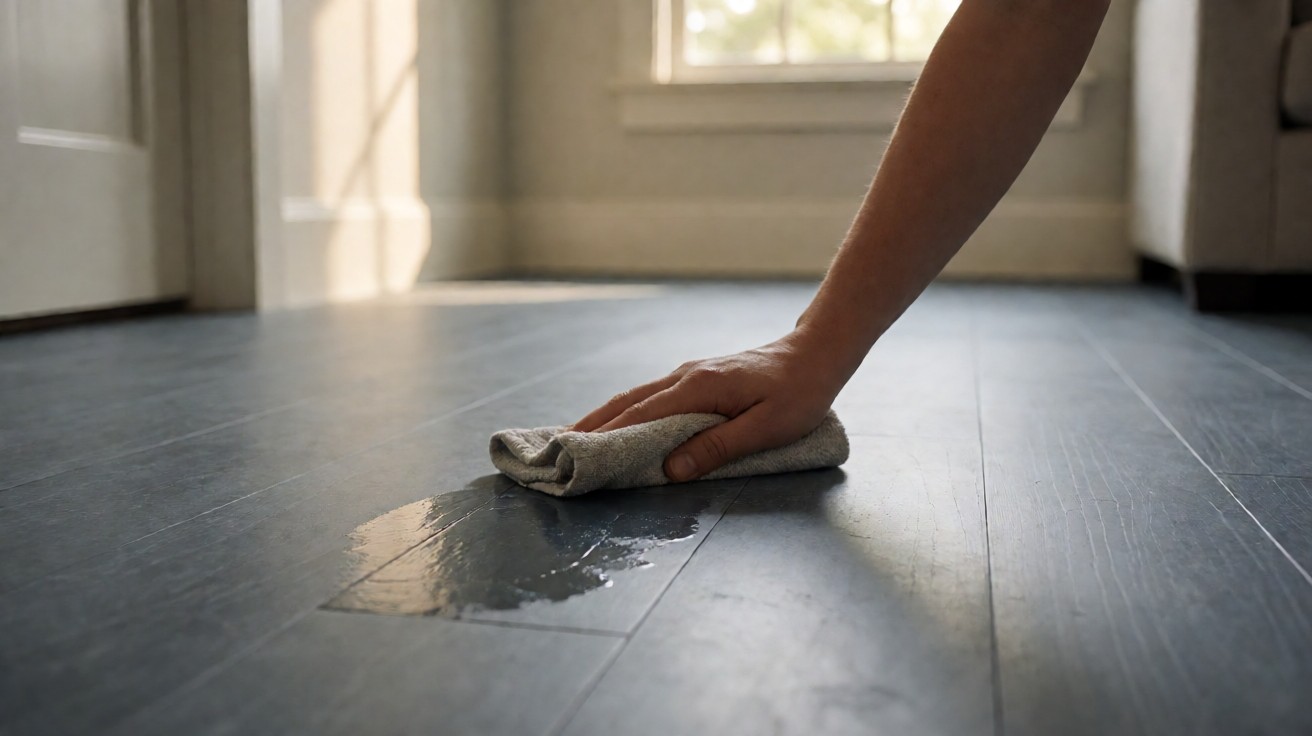
Rigid core and quality vinyl are the most common answer in a house with children and the reasons are specific rather than general.
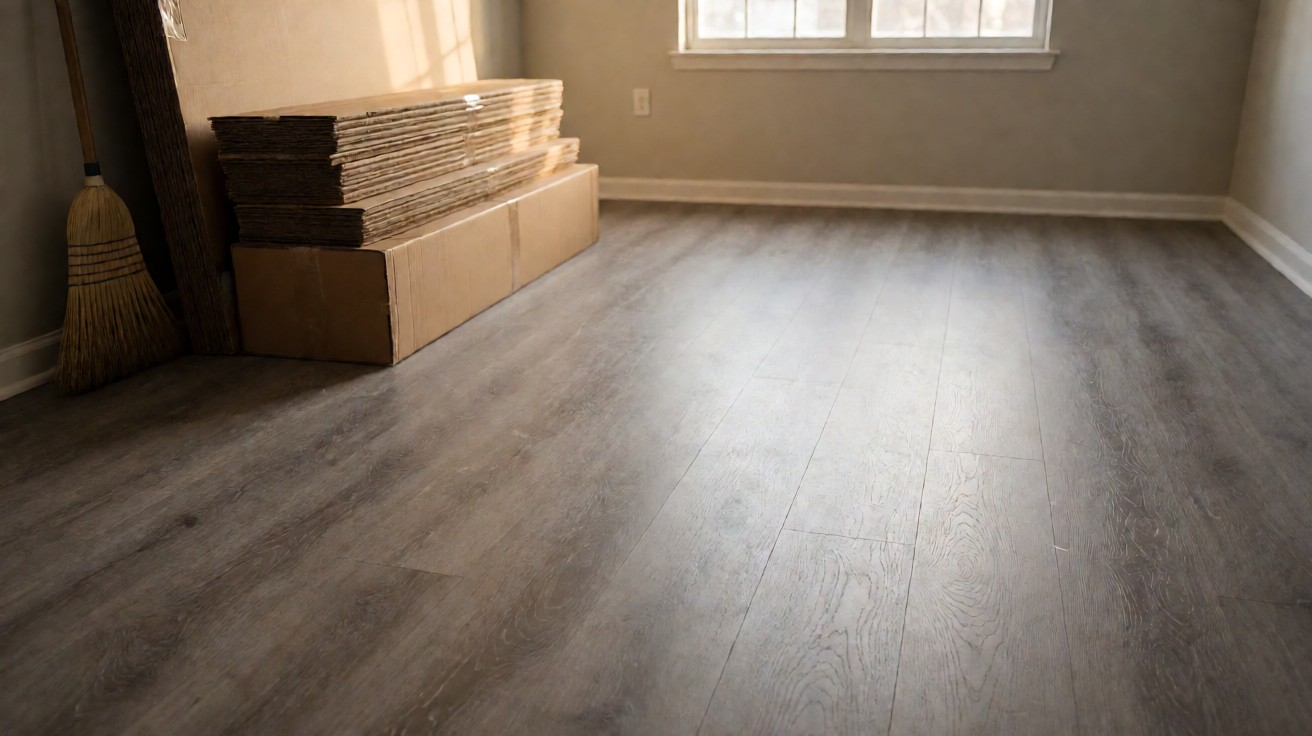
The surface does not absorb, so a spill is a wipe rather than a stain. The wear layer takes grit without splitting the board. And because the plank is the unit, a red-wine casualty is one plank rather than the whole floor. The rigid core vinyl page covers the stone core and the vinyl construction guide is where the wear layer figure is worth reading before buying, because that figure is what decides how the grit and marker behave over ten years.
Carpet Is Not Automatically the Answer
The case for carpet is strongest in a specific combination of conditions: a small room, a young child, a floor that is not used for anything else, and a house where the floor is not being looked at by anybody except the person on it. Take away any one of those and the case weakens quickly, which is why a playroom in an open-plan living space is a much harder sell than a nursery.
The instinct is to choose carpet for a playroom and it is usually the second-best answer for a reason worth stating plainly.
Carpet is warm, quiet, and soft, and those three things matter for the crawling years more than any stain resistance will. It also holds a stain in the pile rather than on the surface, it holds grit, and it is the one floor where a spill that nobody cleaned up becomes a smell rather than a mark. Carpet tile changes the argument because a stained tile lifts out and is replaced.
Wood and Laminate Under the Toy Box
Wood is a defensible answer in a family room and it is a better one than people expect, for a specific reason.
A finish that gets scratched through can be sanded and refinished, and in a family house that is a real repair rather than a replacement. Laminated board is different because the decorative layer is thin and there is nothing to sand back to, and the fibre core underneath is exactly what a knocked-over drink finds. The solid versus engineered hardwood comparison covers the two wood constructions, and the laminate flooring guide covers the wear layer and core in the laminated board.
Rooms Are Not Specified the Same, and That Is the Point
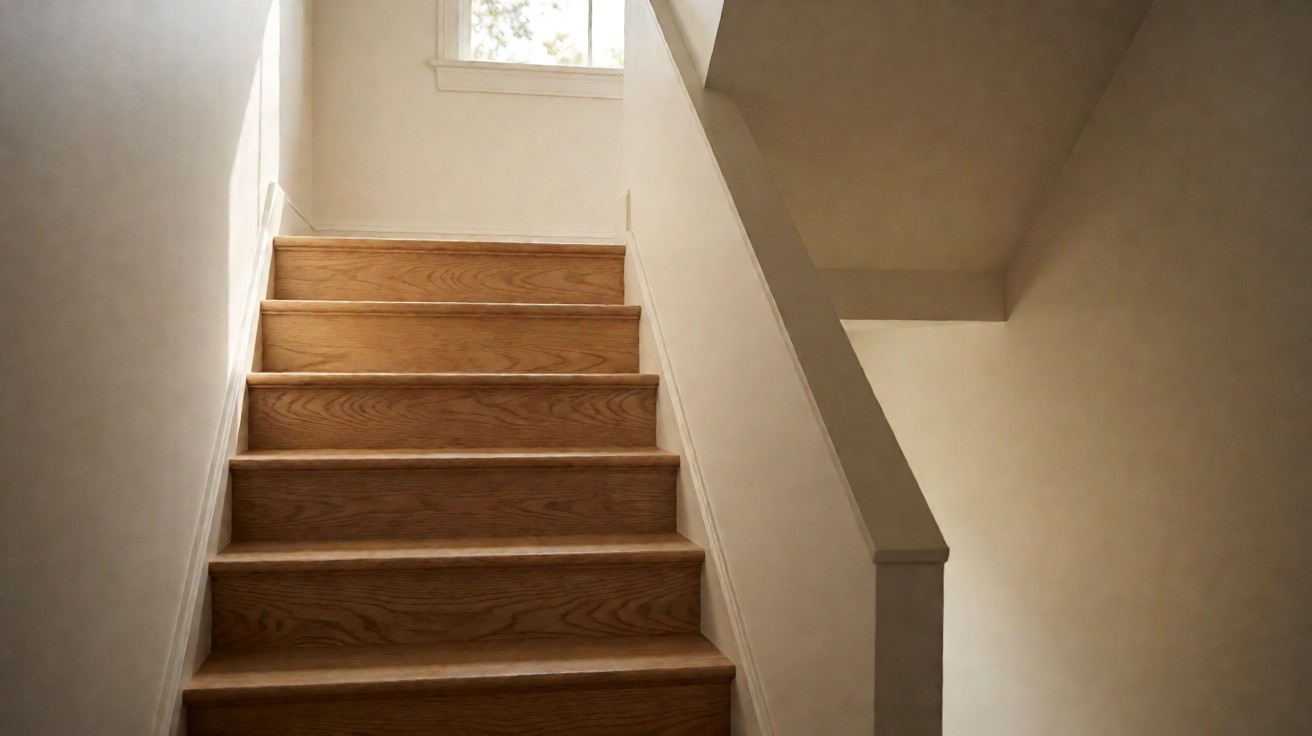
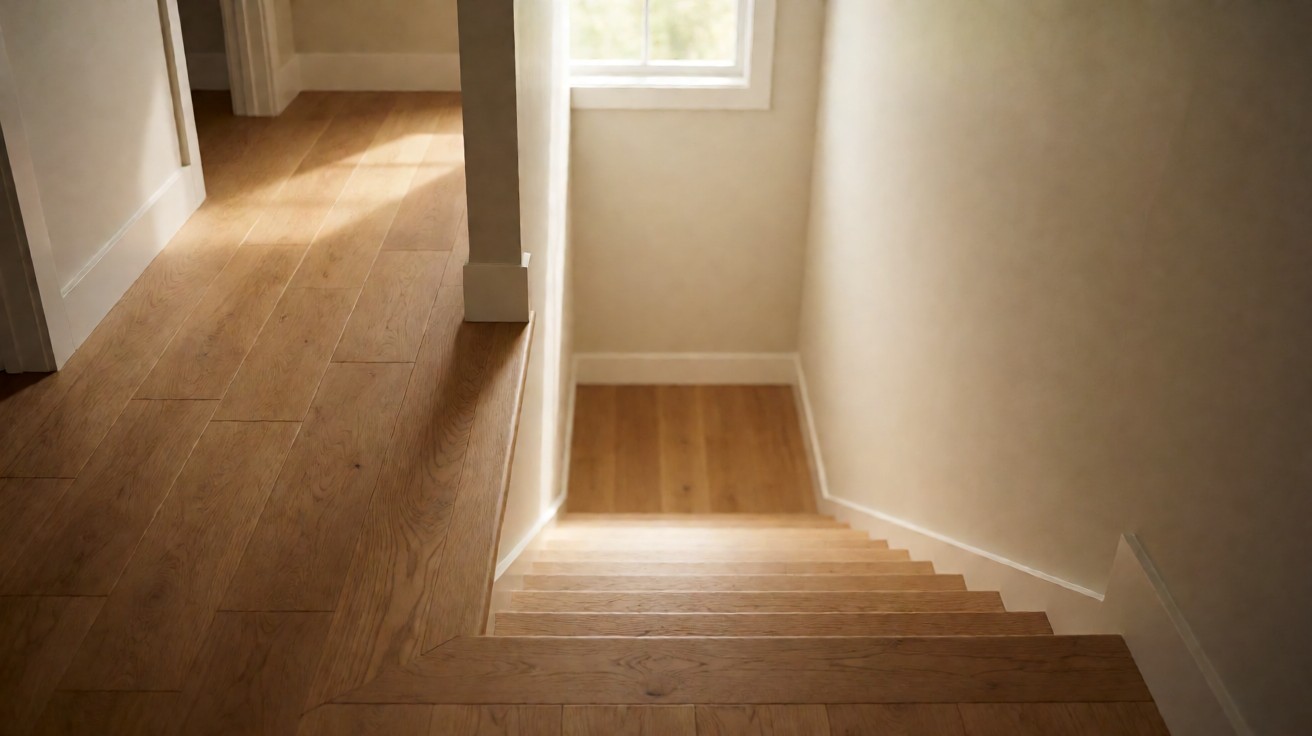
The landing is worth a separate look for the same reason. It is a narrow strip with no soft furnishings on it, it takes the full width of everybody coming down, and it is the one place in a house where a floor is very often specified as an afterthought and then lives with for twenty years.
There is one more room that behaves like a playroom without being one, and it is often the last to be thought about: the landing and the top of the stairs. It is where a child is put down while a coat is fetched, where a bag is dropped, and where it is busiest at exactly the time the rest of the house is busy. A floor that can take being dropped onto without marking is worth more there than in most of the rooms people plan carefully.
The single most common mistake is specifying one floor for the whole house on the assumption that one floor has to serve every room.
It does not, and it should not. The playroom wants cushion and warmth and stain resistance. The kitchen wants water and grit. The entrance wants a surface that grit dies on. The bedrooms want warmth and quiet. The best flooring for kitchens and best flooring for basements pages cover the two rooms that are decided by water and by the slab, and the best flooring for mudrooms page covers the entry where grit arrives, and the best flooring for high traffic areas page covers what heavy traffic asks of a material in general.
| Room | The requirement that dominates | The note |
|---|---|---|
| Playroom, crawling years | Cushion, warmth, impact tolerance | The comfort question dominates over the cleaning one |
| Living room and family room | Stain resistance, wear layer, repair | The room the family actually spends in |
| Kitchen and basement | Water and grit | Decided by water and by the slab, as always |
| Entrance and hallway | A surface grit dies on | Usually a mat plus a durable floor, not one product |
| Bedrooms | Warmth and quiet | Outrank toughness after the crawling years |
The Cost Argument Nobody Makes Explicitly
A floor in a house with children should be bought on the assumption that it will be spilled on and that one section will be replaced before the rest of it is worn out.
That assumption favours a product that can be repaired in a small area over one that cannot, and it favours a wear layer thick enough to survive the years either side of that single incident. It also disfavours a floor that looks dramatically better and will be sat on with juice within a week of being installed, because the visual difference is measured in months and the practical difference in decades.
The honest framing is that the premium answer and the cheap answer often differ by less than people expect, while the difference between a repairable floor and a replaceable one is the whole cost of a room. The best flooring for rental properties page makes the same argument from the landlord side of it, where nobody who lives in the house chooses the floor either.
What to Do About the Floor Already Down
The most common question in this situation is not what to buy but whether what is installed has to be replaced, and the honest answer is usually that it does not have to.
A floor in good condition with a surface that has been properly sealed can often be kept. The things that end that option are a finish that has already been worn through, a joint system that has swollen because water got into it, or a floor that has been painted or tiled over. None of those is a wear problem and all of them are finish problems, and they are worth checking before a floor is pulled up.
What can be done to an existing floor is worth knowing as well: a reseal if the finish is intact but dull, underlayment or a rug to solve a local acoustic or comfort problem, and a rug to take the worst of the traffic in the place it concentrates. The hardwood flooring guide page covers restoring a wood finish, and the carpet flooring guide page covers what a rug over an existing floor changes.
How to Choose, and Where to Look Next
One last practical note. Whatever is specified, keep a small amount of the original product somewhere out of sight for the first two years. It costs a few square metres of storage and it is the difference between replacing one plank and replacing a whole room, and it is only possible in the first two years.
List the things that actually get on the floor in your house, in order of how often they happen, and let that list rather than the room name decide.
Most of the list points at one answer and a few point somewhere else, which is the honest result. The rigid core vinyl page is the answer for the list, the best flooring for nurseries page for the crawling years specifically, and the solid versus engineered hardwood comparison the answer where the look matters more than the traffic. The {FTC} page has every family in one table, and the best flooring for homes with dogs and cats and best flooring for rental properties pages cover the two situations where the floor has to survive an occupant who was never consulted about it.