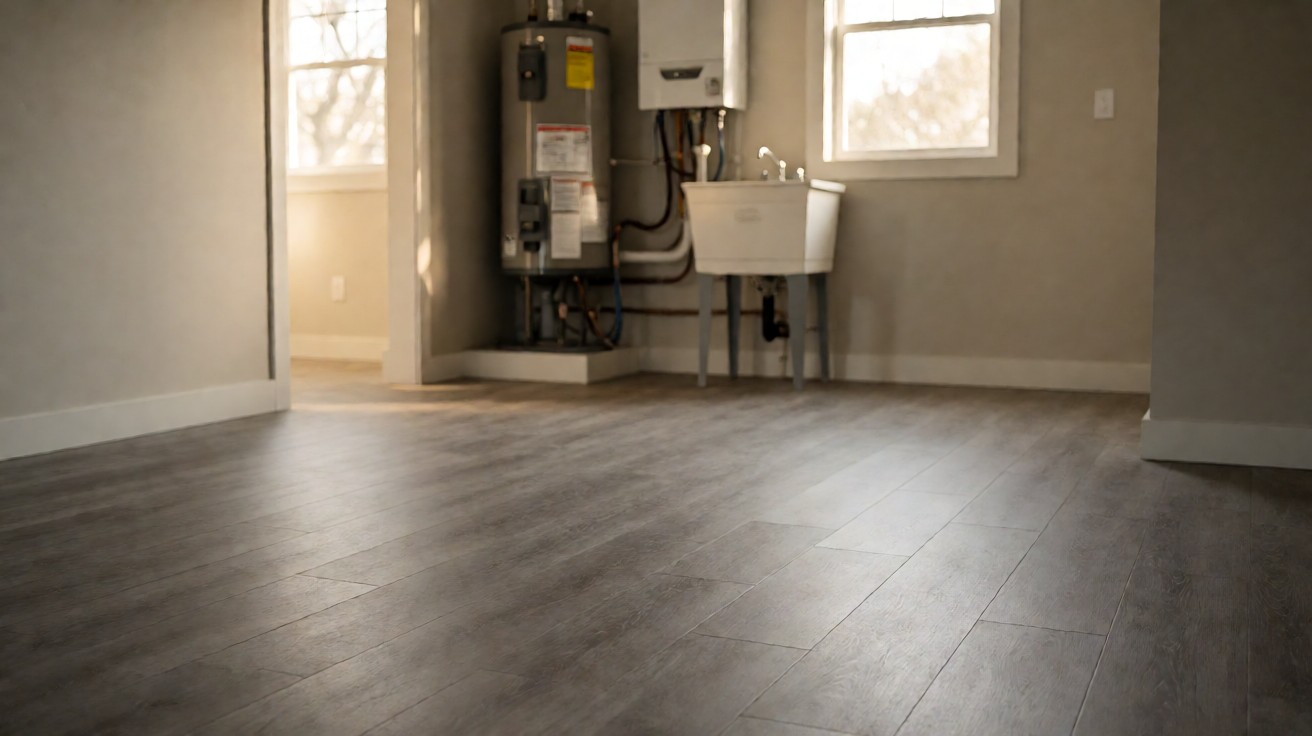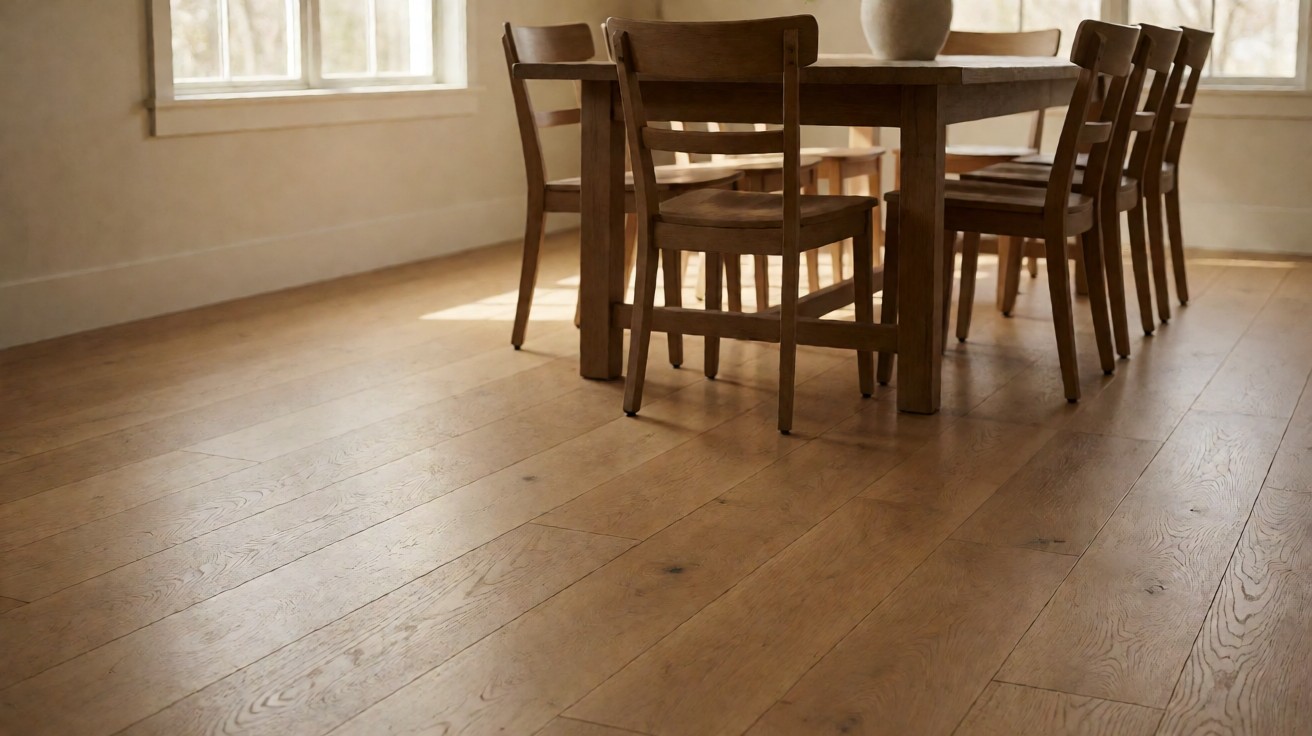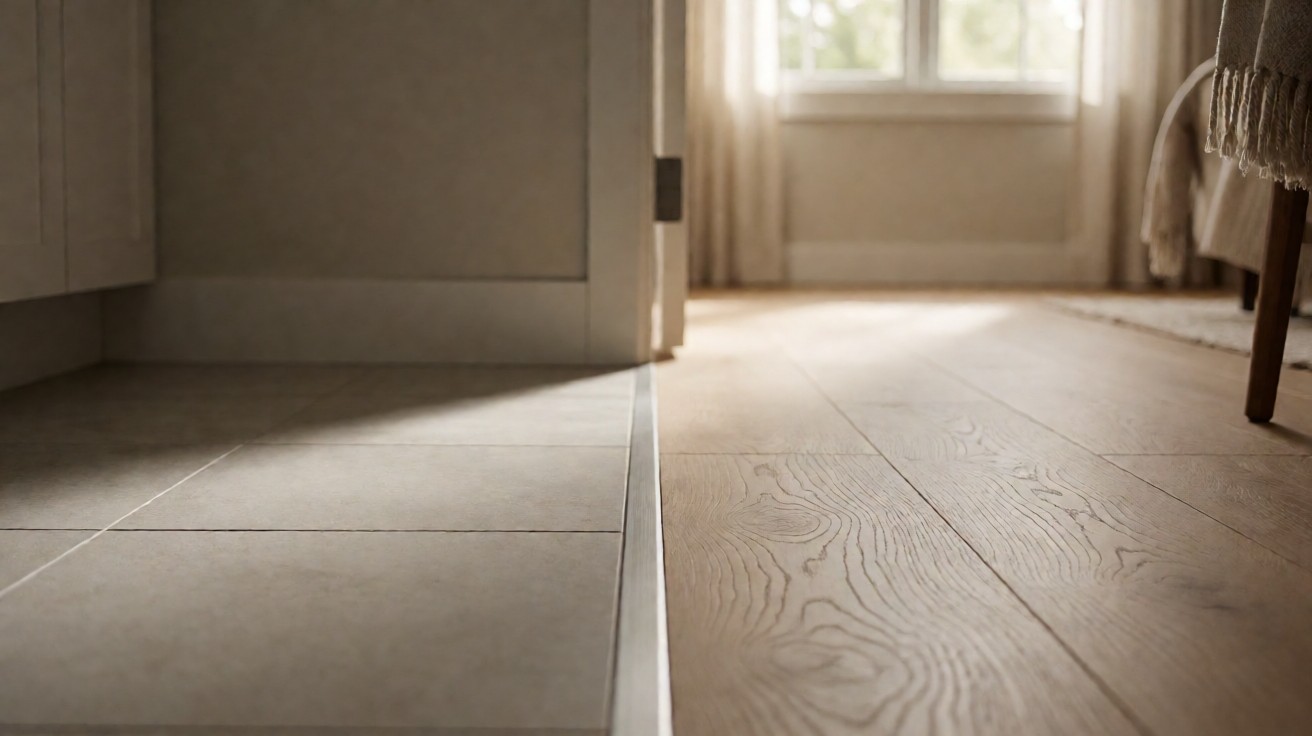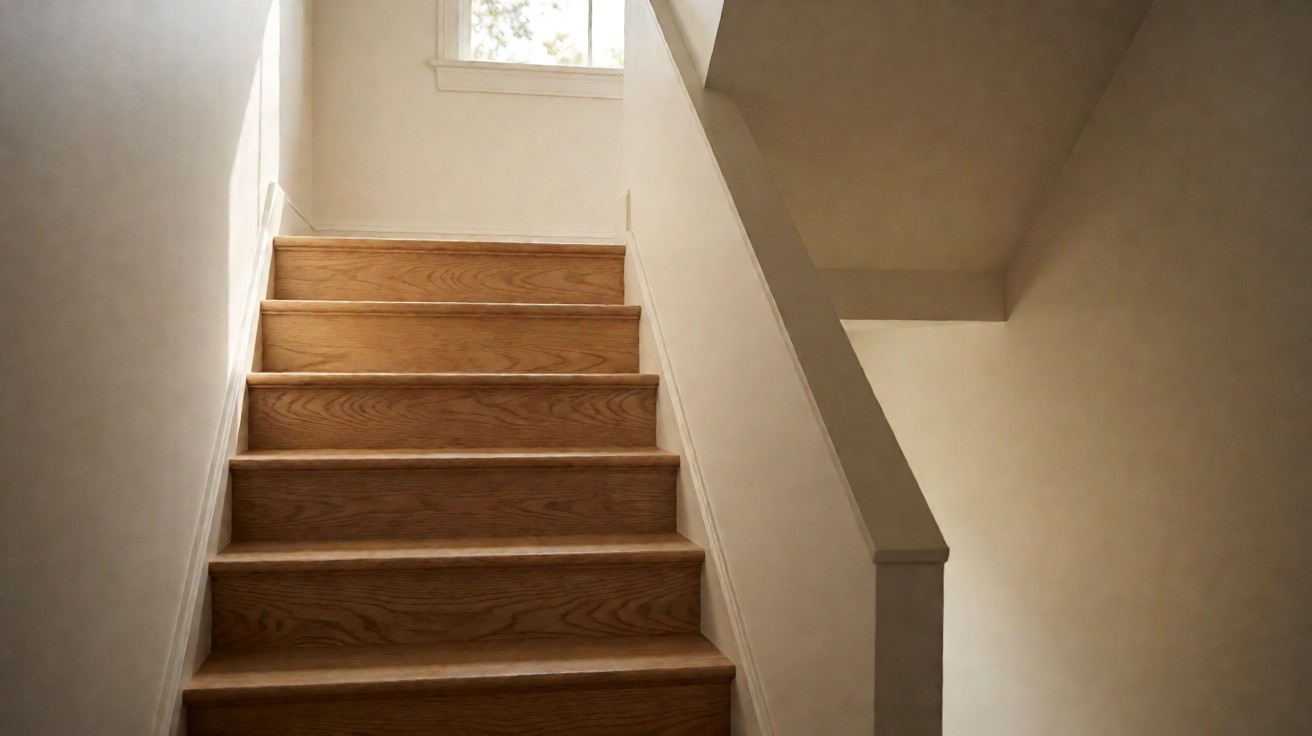

The best flooring for stairs and landings is the one that takes a weighted footfall on every step, twice a day, and stays flat for decades without rocking.
A Stair Is the Most Concentrated Load in a House
Every square foot in a house is walked on occasionally. There is no other horizontal surface in a home that concentrates a full body weight onto a few hundred square centimetres several times an hour, which is why the specification for a stair is not the same specification as the one for a bedroom. A stair tread is walked on every time anyone uses the stairs, which in most homes is dozens of times a day, and it carries the full weight of a person concentrated onto the front third of the tread.
That concentration is the whole reason stairs are the first place a wood floor fails. The tread takes the load, the front edge takes the worst of it because that is where the foot lands and where the nose wears, and the riser below takes almost nothing. A floor that is perfectly adequate in a bedroom will wear through its finish at a stair nose in a fraction of the time.
What Actually Fails on a Staircase
Three failure modes account for nearly every stair floor that has to be replaced, and knowing which one you have tells you which material answers it.
The first is the nose wearing through, which is a finish problem rather than a structural one, and it is the cheapest to fix. The second is the tread rocking or squeaking, which is an installation problem and appears in the first few years. The third is the tread or the stringer moving, which is a movement problem and is the expensive one, because it means the staircase itself rather than the covering.
| The failure you are seeing | What it actually is | How it gets fixed |
|---|---|---|
| The nose wears through, the tread is fine | Finish and nosing | Cheapest to fix, and a wear issue rather than a structural one |
| The tread rocks or squeaks | Installation and underlayment | Shows up in the first years and is not a material problem |
| The tread moves with the season | Frame movement | The expensive one: fix the frame, not the covering |
| A stair that will take a wet coat | Slip-rated matte finish | A tread that is fine dry is a different surface wet |
Solid Wood and Why It Is the Traditional Answer
Solid wood is the traditional stair covering A tread is also the one place in a house where a piece of solid wood is genuinely visible as a piece of wood, from the side and from below, and that is a large part of why it has survived as the answer on a staircase in a way it has not on a floor. and it is still the one that looks right on a staircase, because a tread is a visible horizontal surface in a hallway-sized space that the eye goes to and up, in a way no floor plane does.
The cost is that a solid tread is a thick piece of wood with a visible edge, and it moves with the season the way solid wood always does. Installed properly on a staircase that is stable and dry, it lasts decades and can be resanded when the nose wears. Installed on one that moves, it is the material that moves with it and cracks. The hardwood flooring guide covers the two constructions and why the layered one behaves differently here.
| Family | Where it sits on cost | What that money buys you on a stair |
|---|---|---|
| Solid wood | Highest of the five | Sandable, looks right on a stair, moves with the season |
| Engineered wood | Middle to higher | Far more stable on a frame that moves, sands less often |
| Rigid core or quality vinyl | Lower to middle | Covers a difficult staircase without rebuilding it |
| Laminate | Lower of the five | Cheap and fine until water finds the core at the nose |
| Tile on a stair | Highest of the five | Hardest and slip resistant, and the heaviest to fix later |
Engineered Wood, and the Movement Question
Engineered hardwood is often the better answer on a staircase and the reason is specific rather than general: a staircase is the place where seasonal movement most often turns into a problem, because a tread is a wide piece across a frame that is not the same frame as the floor.
The layered core is far more dimensionally stable than solid, so it does not cup with the season and does not open a gap at the front edge. It also sands fewer times, which matters less on a stair than anywhere else because the nose wears at its own rate regardless. If a staircase in a house has a history of movement, engineered is the correct specification.
Vinyl and Rigid Core on a Staircase
Rigid core and quality vinyl are used on staircases constantly and they are a genuinely good answer where the staircase is the problem child in the house: a squeaky frame, a seasonal mover, a basement stair to an older part of the building.
A vinyl or rigid core tread over an existing staircase fixes the surface and can be installed over a wide range of subfloor conditions without rebuilding the stairs. What it cannot do is make a moving staircase stop moving, and it will flex over an unsupported tread, which is what makes it squeak again. The construction details that decide this are in the rigid core vinyl page and the vinyl construction guide.
Laminate and the Core That Swells
Laminate is the family to be most careful with on a staircase, and the reason is the same as everywhere else and slightly worse here: the core is a wood fibre board, and a fibre board swells when it takes water.
A stair is exposed at the front edge on every tread, which is where water sits when someone comes in from outside and tracks it up. There is no nosing covering the edge on most laminate installations, so that water has a direct route into the core at the single place on the tread most likely to get wet, and it is exactly where the load is concentrated. The laminate flooring guide covers the wear layer and the core, which is what decides whether that goes wrong.
Nosing, and the Detail Everyone Underestimates
The nosing is the front edge of the tread, and in a house that has been there for thirty years it is usually the first thing to wear, because it is the part of the floor a foot lands on and the part that gets kicked.
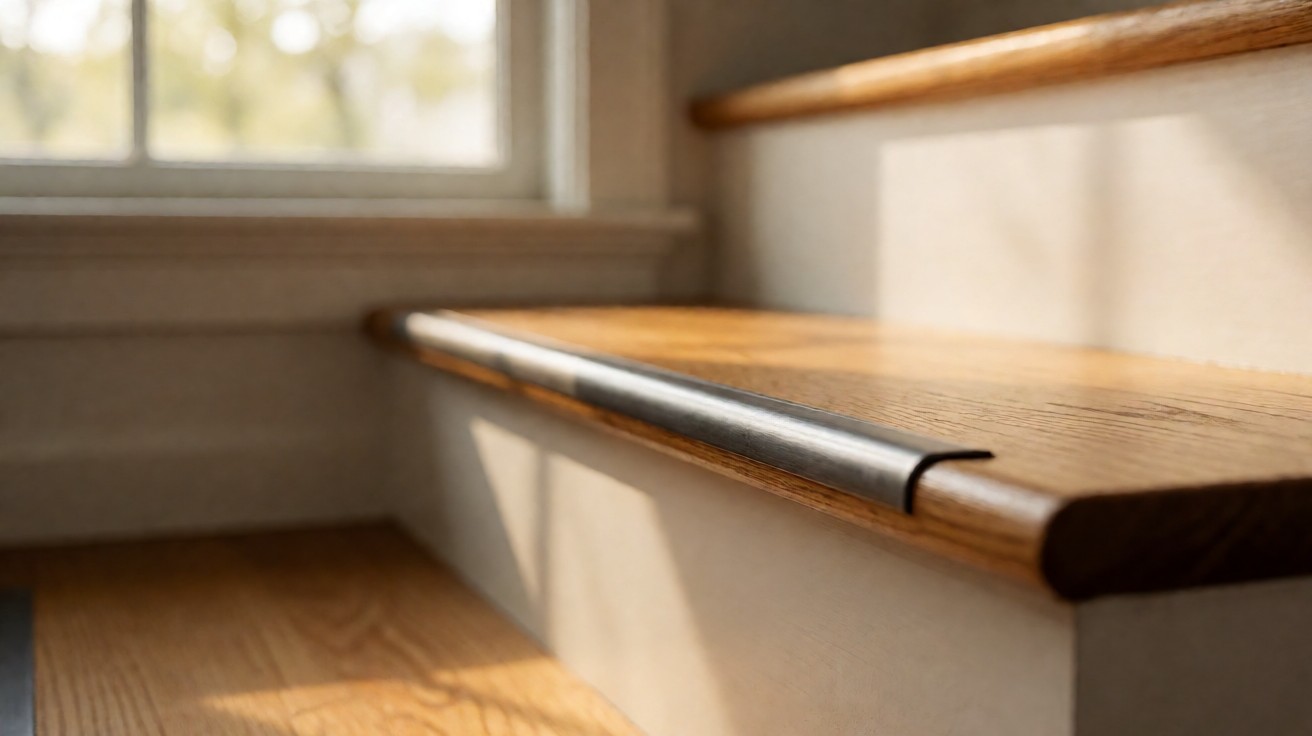
A stair nosing is the strip fitted onto that edge, and its job is to take the impact so the material behind it does not. On a wood stair it can be solid wood, matching. On a tile or a vinyl stair it is nearly always a metal strip, and that is the correct choice because it is the hardest thing in the room. Its second job is to cover the edge of the covering itself, which is what stops water getting into a core.
Landings Are Not Stairs, and the Rule Is Different
A landing is the flat area at the top or the bottom, and it is a normal floor with one extra constraint: everything that comes up or goes down the stairs arrives on it, and it takes the load at the point where people turn.
It is also the place where two materials usually meet, which is a detail worth deciding rather than leaving to whichever material arrives on the truck first, because the transition at a landing is the one a visitor actually sees.
That means the material rules for a landing are much closer to a hallway than to a stair. It is a traffic surface, it takes a suitcase and a laundry basket dragged across it, and it does not take a concentrated footfall on its front edge. A hallway-appropriate material laid on the landing next to a stair-appropriate material on the treads is a completely normal and often correct combination.
Slip, and the Surface That Becomes Dangerous When Wet
A stair tread that is fine when dry can be genuinely dangerous when wet, and that happens in ordinary homes whenever someone comes up the stairs with a wet coat, a wet umbrella, or wet shoes.
The specification that matters here is the slip rating on the finish, not the material name. A matte or a textured finish is worth more than a polished one in every case, and on a stair the whole tread is the walking surface rather than the narrow path a hallway has. The tile flooring guide covers the finish families and what each one does wet, and it is worth reading before a stair tread is chosen rather than after.
Sound, and the House That Lives Below a Stair
A staircase is a noise transmitter. It is also the one part of a house where the finish and the substrate matter as much as each other, which is a slightly unusual position for a flooring choice and worth holding in mind when a supplier quotes a material on its own. It is a hollow-ish structure of a frame with treads on it, and a footfall on it sends sound down and into the room beneath in a way that a footfall on a floor in a room above does not.
A cushioned or floating staircase assembly is the fix, and it is specified at the staircase rather than at the floor covering. Where the covering itself is doing what it can, a resilient underlayment laid under a floating tread assembly takes the sting out of it. In a house where a bedroom sits directly under a staircase, this is the difference between a sleep and no sleep.
Cost and Installation
The materials sit where they sit everywhere, and on a staircase the labour matters more than in any other room because treads are cut individually and a stair is never square.
A new staircase covering on an existing sound frame is a half day to a day. Building the staircase itself is a trade job with its own price, and if the frame moves, that is where the money has to go rather than into a better tread material. Covering an existing squeaky frame with a rigid core tread is a legitimate repair, and it is also a repair that will eventually stop working if the movement is not fixed.
How to Choose, and Where to Look Next
Start by establishing whether the staircase itself is stable, because that question decides whether the choice is a covering decision or a staircase decision, and paying for a better tread material on a moving frame is money that goes straight back out.
Then read the material guide for the two that make the shortlist. The hardwood flooring guide and the rigid core vinyl page are the two that back the most common answers, and the flooring types compared page has all the families in one table. Whatever the material, the two details that decide whether it works are the nosing and the expansion gap at the back of each tread.