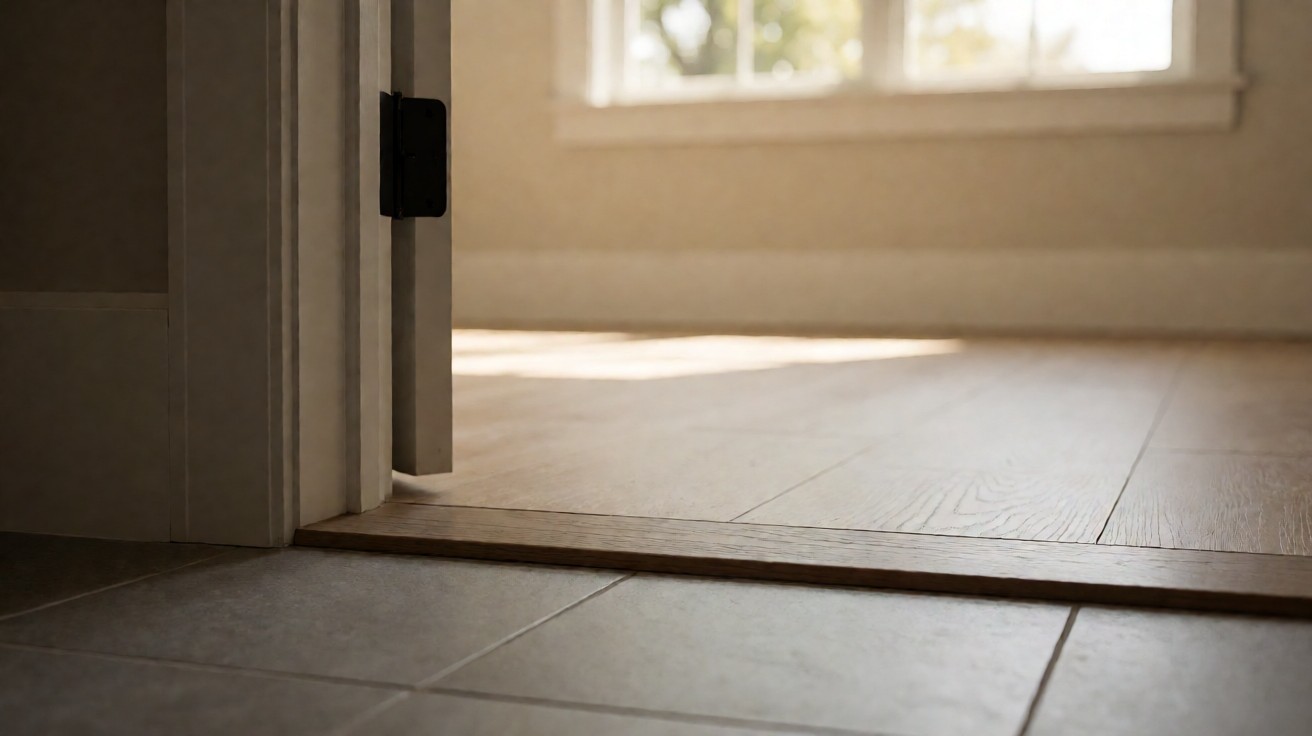

In a house at risk of flooding the floor is the first thing to fail and the last thing anyone plans for, because every plan assumes the water stays outside.
Two Different Floods, and Only One of Them Is Sudden
A house gets wet in two ways, and the difference matters because the flooring that survives the first one will not always survive the second.
The first is surface water: a river or a storm drain backing up through a doorway, or a burst pipe on the floor above. It arrives fast, it is deep, it carries grit, and it has a visible end. The second is groundwater: water moving through a slab or up from below grade, which arrives slowly, never stops entirely, and attacks the floor from underneath where nobody is looking.
| How the water arrives | What it is like | What it does to the floor |
|---|---|---|
| Surface water from outside or above | Deep, fast, visible, has an end | The floor has to survive immersion and then dry |
| Groundwater through or under a slab | Slow, permanent, from below | A cavity with no airflow is where the mould grows |
| Water plus the material it dissolves | Adhesive failure | Tile and glue down vinyl lift off the substrate |
| A cavity with no air in it | Mould, invisible until it is not | Under a floating floor or a lifted sheet, invisible until popped |
Tile: The Most Recoverable, and Not the Only One
One caveat belongs with tile in a flood: a heavy floor that has been under water for weeks is not a floor to walk on while it dries, and a lifted tile floor is a sharp edge hazard in a room where the power is off. That is a temporary condition rather than a permanent one, but it is worth planning for rather than discovering.
Tile is the answer most people arrive at and the reason is straightforward: it does not absorb, it survives immersion, and it can be lifted to dry whatever is under it. That last property is the one that matters in a flood and it is not obvious.
A glue down tile floor in a flooded room can often be taken up, the slab dried, and the tile reused, because the tile itself was never the part that absorbed anything. Porcelain is the better version again for the same reason it is preferred in a bathroom. What fails is the adhesive bed, and that is a fixable cost rather than a total loss. The porcelain tile page covers the two tile families and the tile flooring guide covers the joint work that has to be redone afterwards.
Sheet Vinyl, and the One Property Nothing Else Has
A sheet vinyl floor in a flood also has a weight problem. Waterlogged vinyl and the adhesive beneath it are heavy, and lifting a wet sheet is a two person job with a risk of tearing it. Where the sheet is loose laid it comes up far more easily than where it has been bonded at the edges, which is an argument for loose lay in a house where this scenario is a realistic one rather than a theoretical one. The vinyl construction guide is worth reading for how sheet and bonded constructions differ.
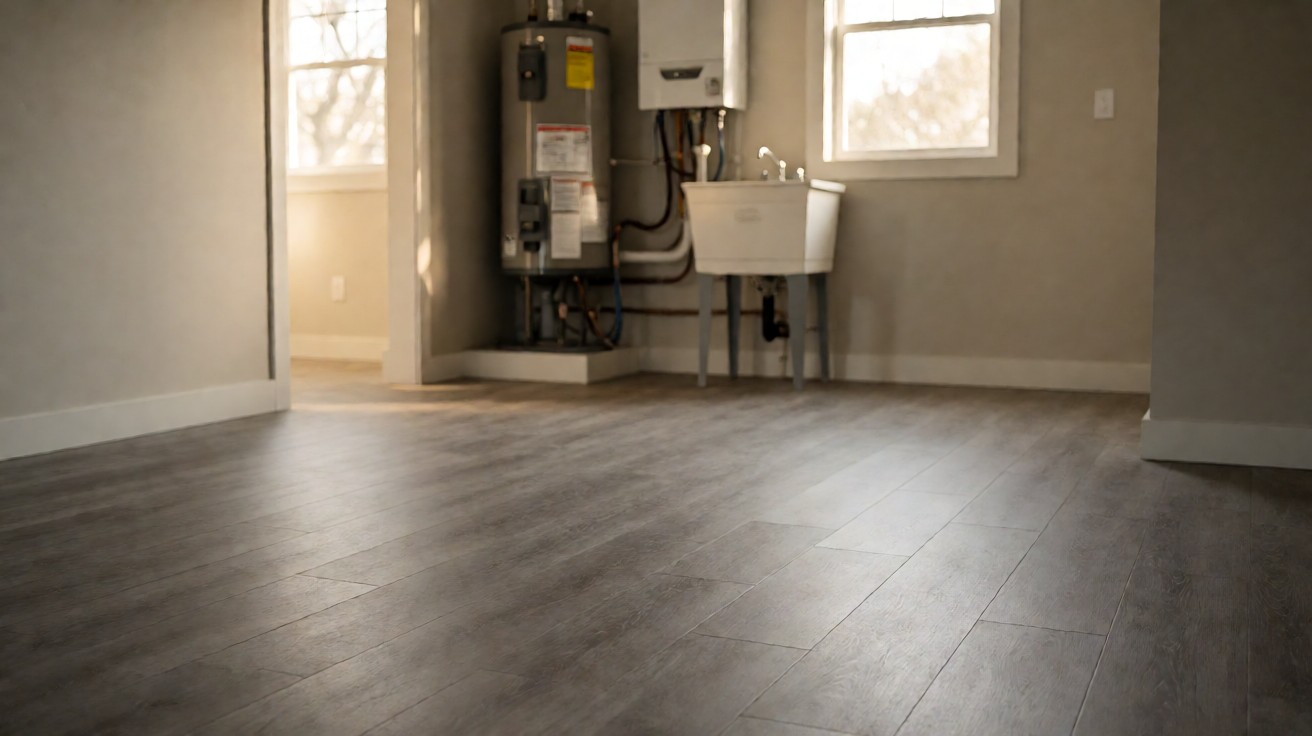
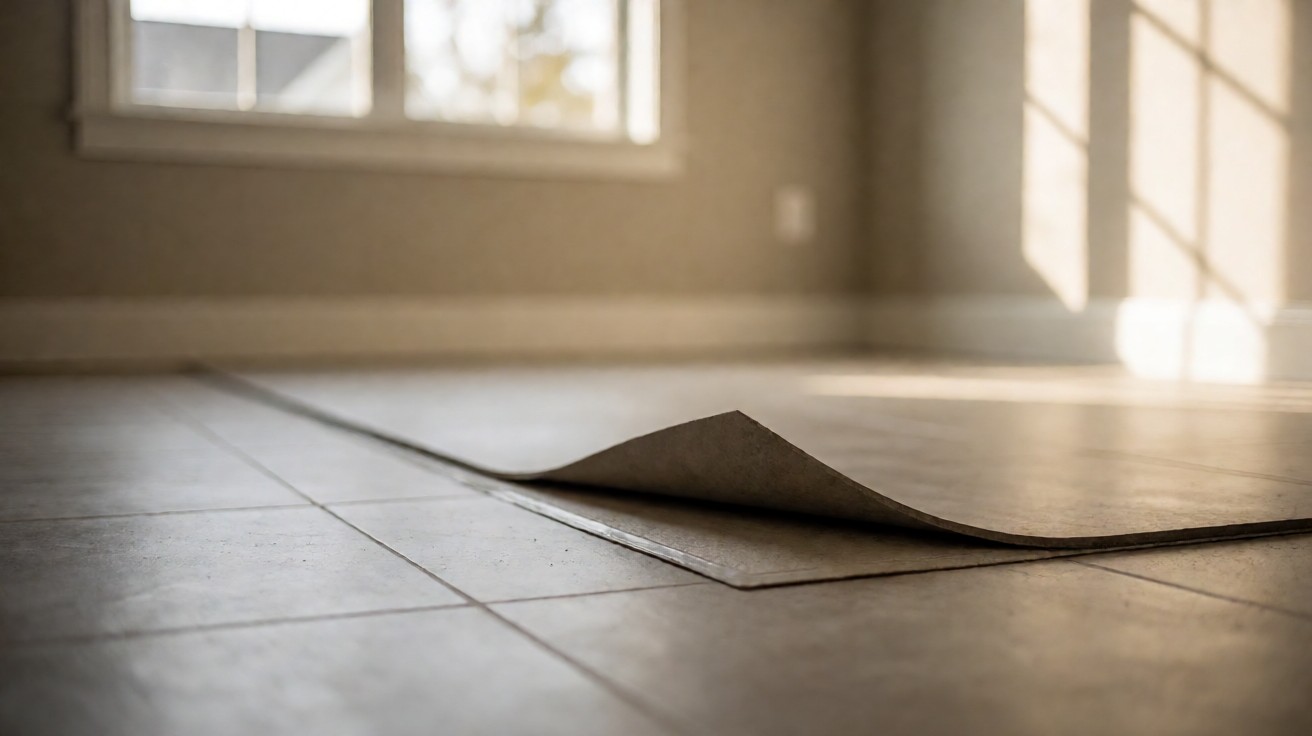
Sheet vinyl is the traditional flood-resilient floor because of a single property: it can be lifted. In a flooded room, a sheet vinyl floor is rolled back, the slab underneath is exposed, dried, and the floor is often reused.
That is the whole argument. It is not about the material being tougher than anything else; it is about the floor being removable while the floor below it is wet. Where the substrate itself is the thing at risk, that property is worth more than any surface characteristic.
Tile and Vinyl Are Not the Same Answer
The two materials are both called resilient and they are specified for different flood mechanisms, which is the point most specifications get wrong.
Tile is bonded to the slab. Vinyl in sheet form is often loose laid or partly bonded. In surface flooding, both survive and both can be lifted, though a loose laid sheet lifts easier than a bonded one. In groundwater, the difference matters more: a floor floating on a cavity above a damp slab traps airless water under itself, which is exactly the condition the best flooring for basements page covers in detail.
What About Wood, and Why It Is Not the Answer
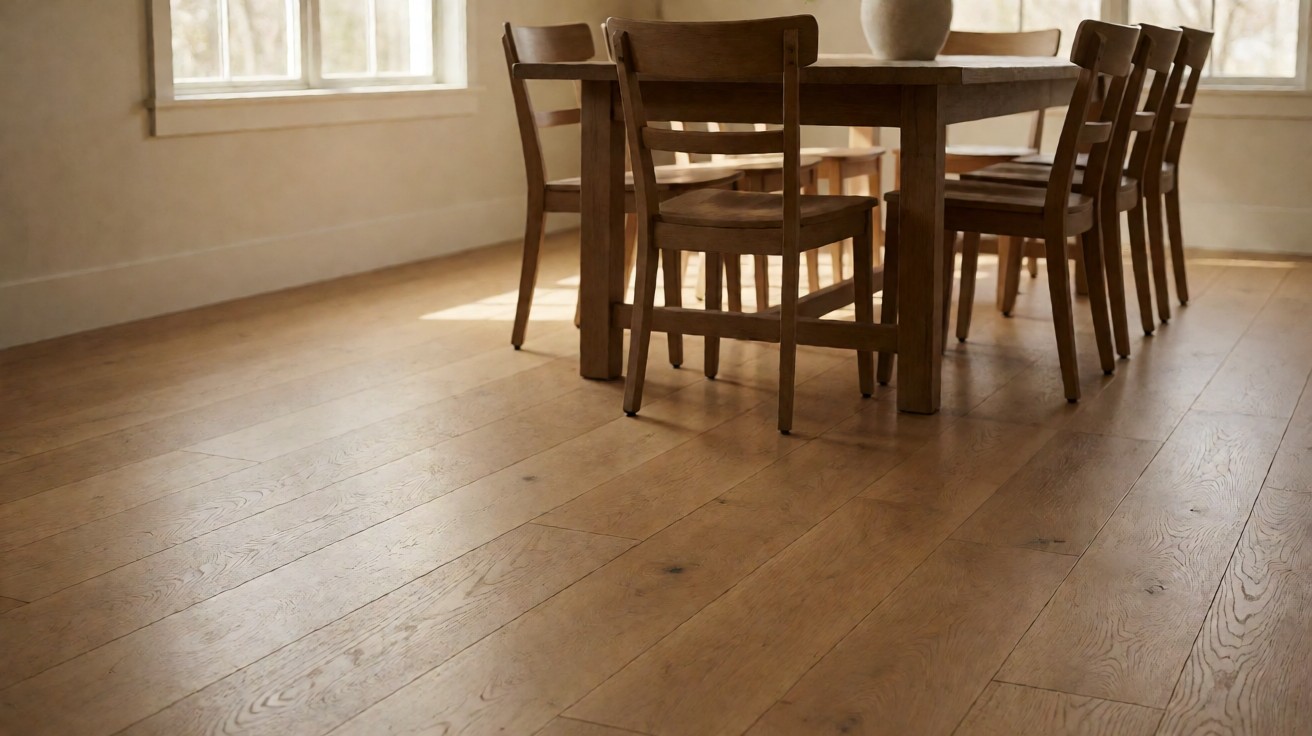
Wood and laminated board are the two materials that fail irreversibly in a flood, and the reason is biological as much as mechanical.
The cells take up water and do not give it back, which means a board that has swollen does not shrink back to its original face. That is true of solid wood and it is more true of a fibre core. In a flood that has been dried properly and given months, a wood floor can sometimes be restored and sometimes cannot, and there is no way to predict which from the outside. The hardwood flooring guide covers the two constructions and the laminate flooring guide covers the core.
Raising the Floor Versus Choosing the Floor
| Floor type | What recovery looks like | What to plan for |
|---|---|---|
| Glue down tile | Usually liftable and reusable | The adhesive bed fails; the tile does not |
| Sheet vinyl, loose laid | Lifts most easily of all | The one material that comes up whole |
| Sheet vinyl, bonded | Lifts but may tear when wet | Weight and edge bonding work against it |
| Floating plank or engineered wood | Lifts, but the core is already damaged | The floor comes out and the subfloor has to be checked |
| Carpet | Has to be cut out and disposed of | The pad and the subfloor underneath both need attention |
There are two strategies and they are often confused. Choosing a flood-tolerant material is a specification. Raising the floor is a design decision, and it is the one that actually keeps water out.
A raised floor on a pedestal or joist system above a slab lifts the entire floor plane above the expected water level. It works, and it is what flood guidance describes for a property in a mapped flood zone. It also has costs: the ceiling height goes down, the stair needs an extra step, and every service penetration has to be sealed. Where a house is not being raised, the floor material is what is left, which is why it gets all of the attention.
Thresholds and the Water Stop
The cheapest flood protection in a house is a raised threshold at a door that water would otherwise come through, and it is routinely omitted because it is a small detail with an accessibility cost attached.
A raised sill keeps surface water out of a room, and it costs a few millimetres to a few centimetres depending on how serious the risk is. The tension is that a higher threshold is a worse trip hazard and a worse barrier for a wheelchair, which is exactly the trade the flooring transitions guide page covers in detail. In a flood zone the threshold wins; in a house that only floods once a decade, the decision is genuinely a judgement.
Drying Is the Actual Work
There is also a mould question that sits underneath all of this, and it is the reason the cavity matters more than the surface. Mould needs moisture and needs air, and a sealed cavity provides the first while denying the second. A floor that has been lifted and a void that has been opened and blown dry is a materially different situation from a floor sitting on wet insulation, and it is the difference between a repair and a demolition.
Whatever floor is chosen, the recovery after a flood is determined by drying, and drying is a ventilation and time problem rather than a flooring problem.
The reason a flooded house takes months is that the water is not only in the floor. It is in the subfloor, the cavity, the wall bases, and the insulation between joists, and all of it has to dry with air moving through it. A floor that has been lifted and a cavity that has been opened and ventilated dry in weeks. A floor left closed over wet insulation can take a year or fail quietly the whole time.
Insurance and the Documentation Question
There is a practical reason to think about this earlier than the aesthetics, and it is that the documentation of the floor affects what happens afterwards.
Floor covering and the substrate are usually separately itemised in contents and buildings policies, and a material that was photographed and specified before installation is far easier to establish afterwards than one that was not. That is not an argument for a particular floor. It is an argument for keeping the specification, the product data, and dated photographs of the subfloor, because all three are worth more after an event than any choice between two acceptable materials.
How to Choose for a House at Risk
Decide first whether the water is surface or groundwater, because the two produce different answers and a house can be exposed to one and not the other.
Then decide whether the floor will be lifted after an event. If it will, sheet vinyl and tile both work and the substrate is what matters. If it will not, a bonded hard floor over a slab with a membrane and a sealed edge is the more recoverable option. Then ask the wet slip question for any room the water would cross, which the best flooring for mudrooms page covers for an entry route.
Cost, and What Is Worth Spending On
In a house at risk of flooding the material is a modest line and the preparation is not, which is the same inversion as a utility room and for the same reason.
Money spent on a raised threshold, on a sealed slab edge, on drainage, and on a floor that can be lifted is worth more than money spent on a more expensive surface. The flooring types compared page has the materials in one table, and the sensible order is substrate and thresholds first, material second.
What Water Actually Does to a Floor
Water does four different things to a flooring material, and they need four different answers.
It swells a core, which is what kills wood and laminated board permanently because the swollen cells do not recover. It dissolves an adhesive, which is what lifts a tile and a glue down vinyl off a slab. It lifts a floating floor by floating it, which is the quiet failure: a floor that rises and finds its own surface uneven. And it grows mould in a cavity with no air in it, which is the failure that happens under a floor nobody can see.
How to Choose, and Where to Look Next
The order that works is: substrate and thresholds, then drainage, then the material, then the documentation. Doing them in that order means each decision is made on what the previous one made possible, and it puts the expensive reversible work before the expensive irreversible work.
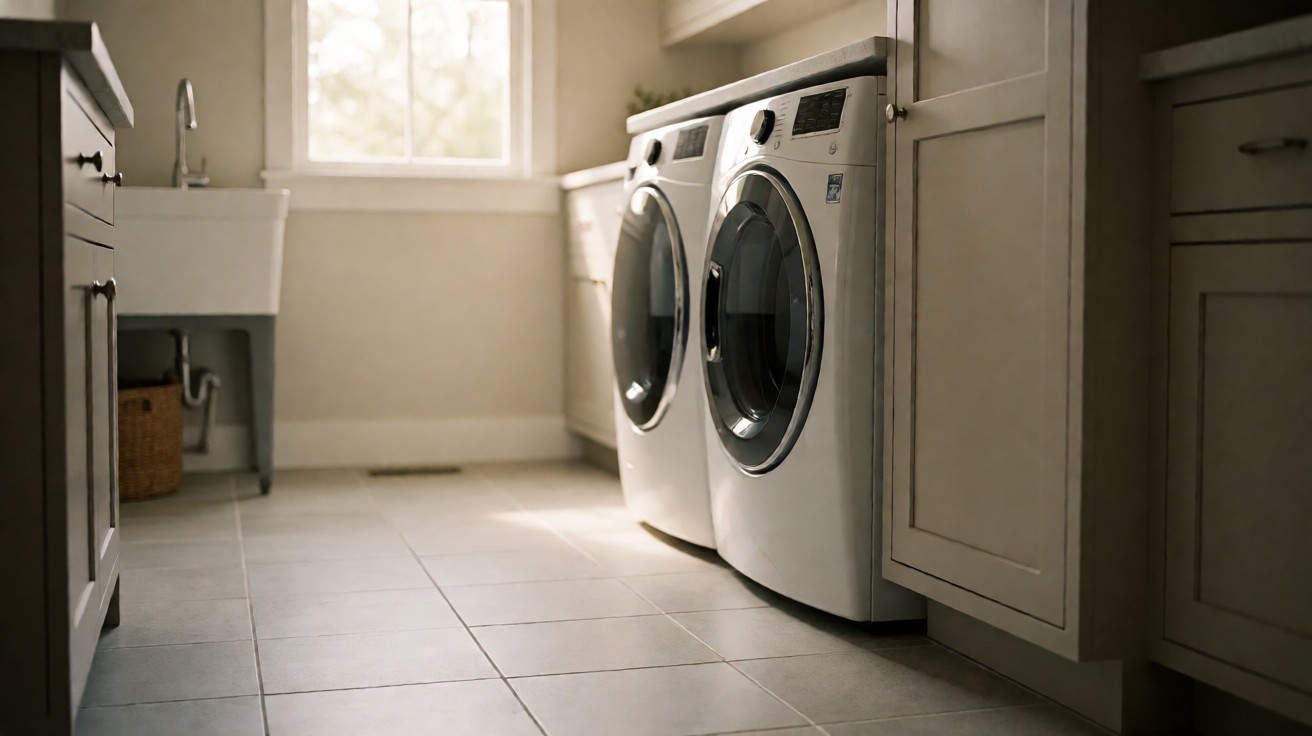
Then read the guide for whatever survived the list. The best flooring for laundry rooms page covers the room where a hose failure is the likely event rather than a flood, and it is a close relative of this one. The best flooring for mudrooms page covers the entry route that water crosses on its way in, and the best flooring for basements page covers the below grade case in full. Whichever floor you end up with, the floor beneath it is what actually has to survive.