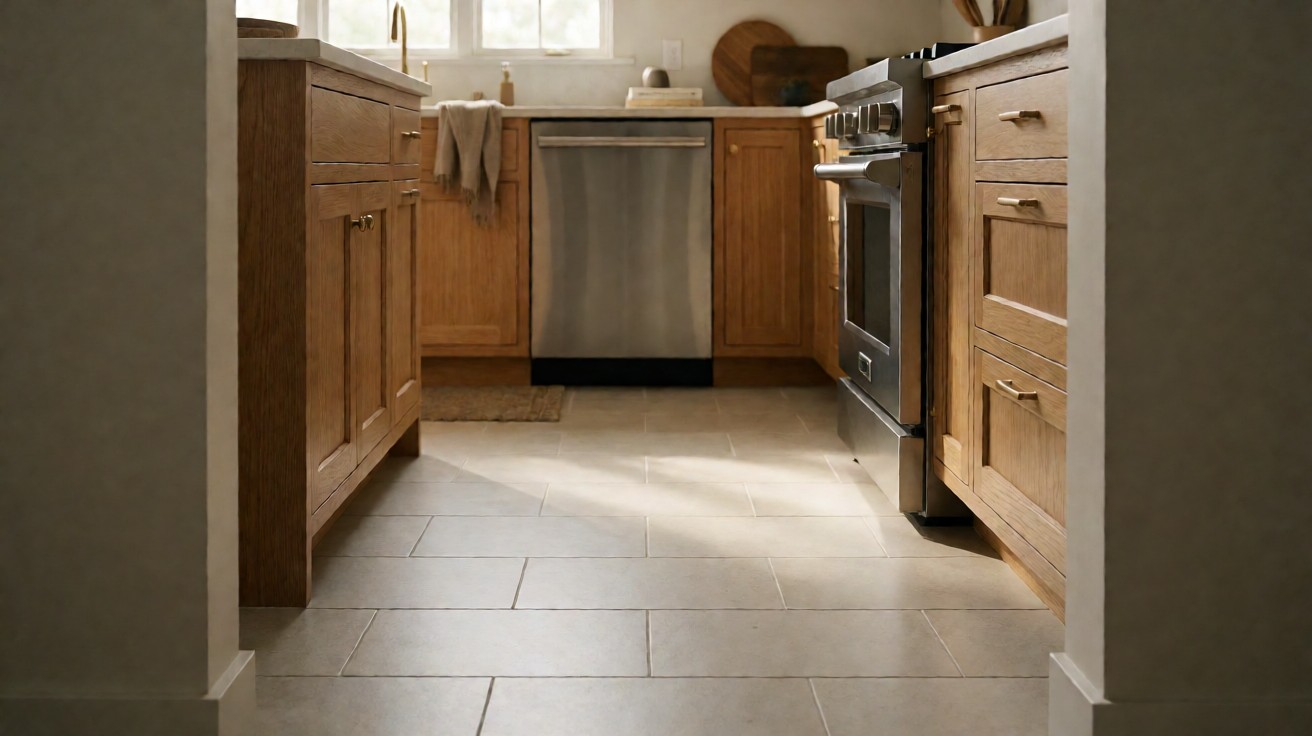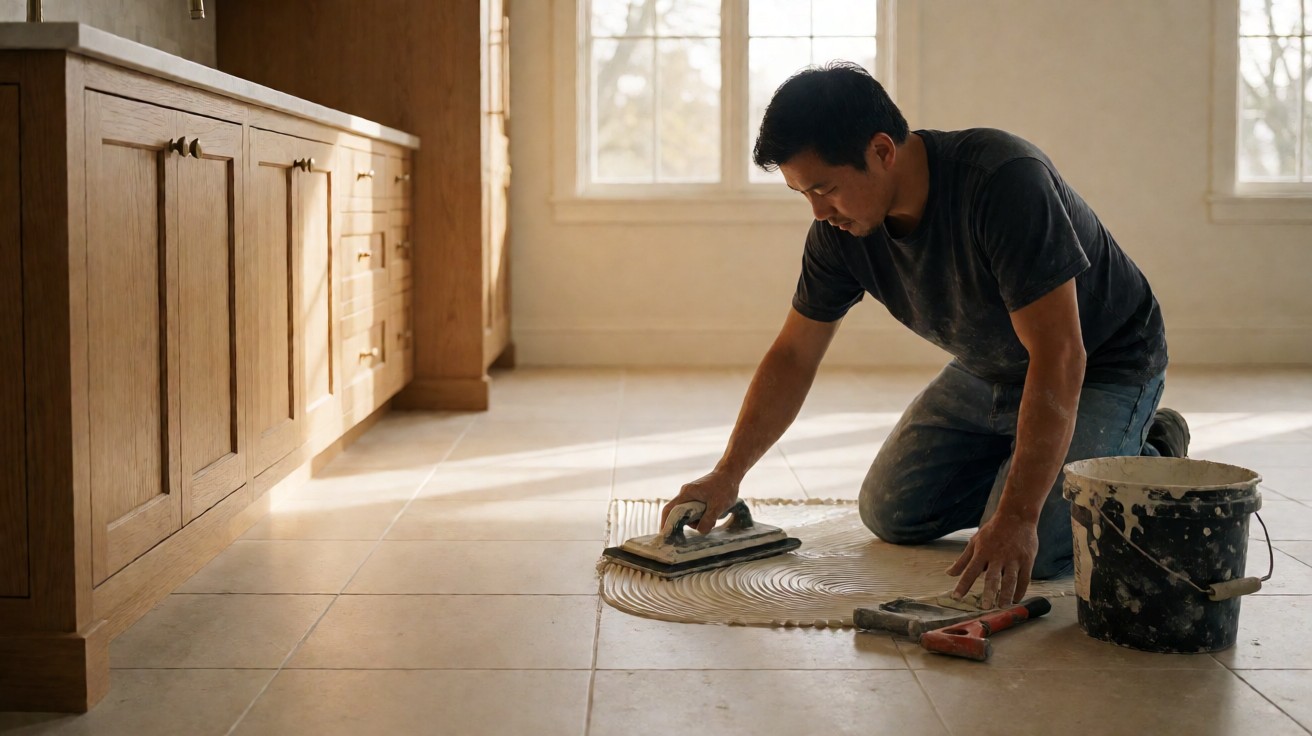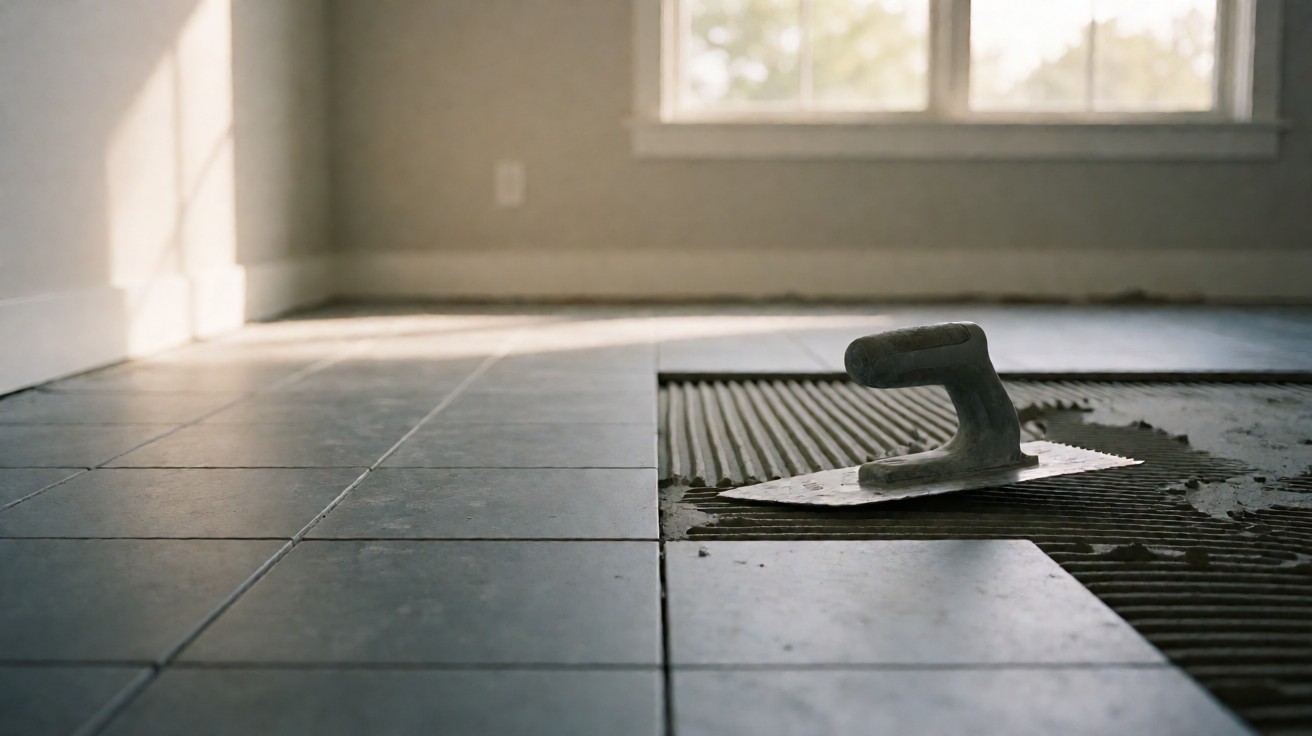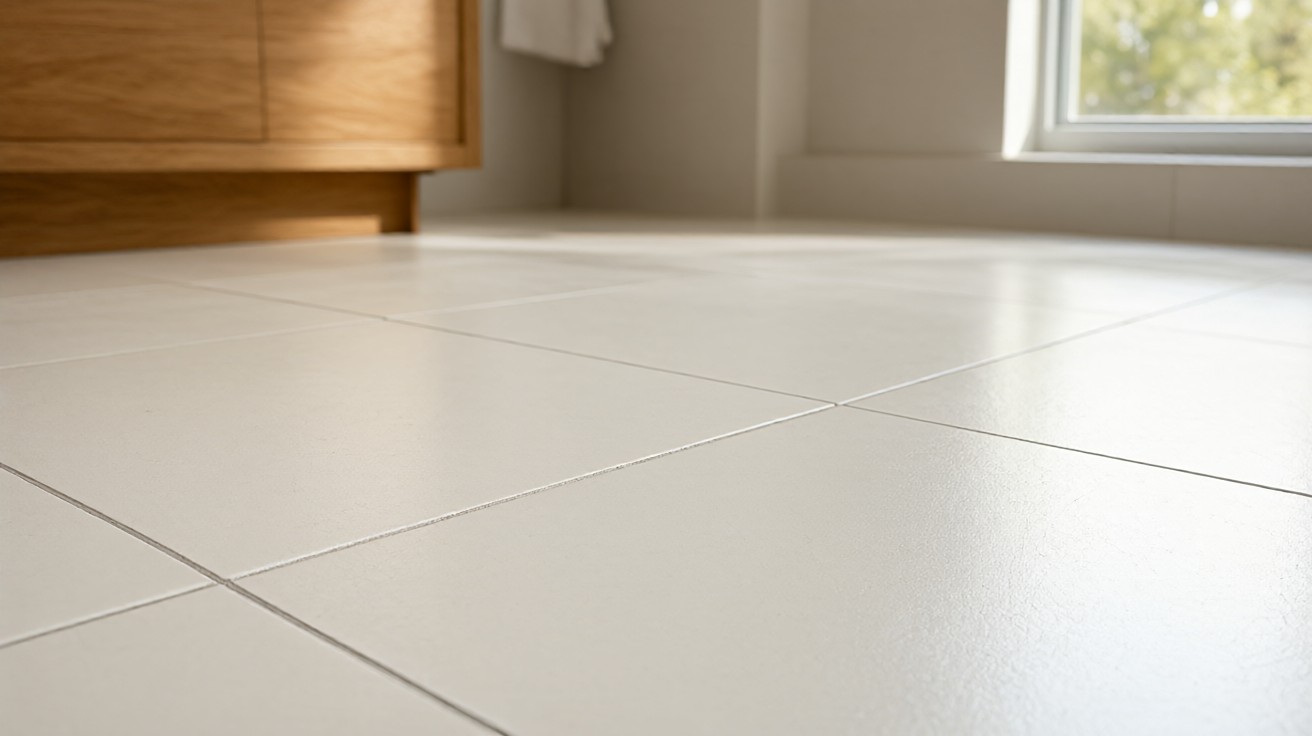

Cement grout is porous, so every tile floor needs a maintenance plan beyond mopping. Dirt and oils darken the joints long before any tile shows wear today.
The fix is simple and cheap: a pH neutral cleaner for weekly work, a thorough rinse, and a penetrating sealer applied on a one to three year cycle. Epoxy grout needs none of this, which is why the grout type in your floor changes the whole routine.
For a deeper look at choosing tile in the first place, see the tile flooring guide and the vinyl flooring guide.
Why Grout Stains and How Sealers Help
Cement based grout is a mix of Portland cement, aggregate, and water. Once cured it contains a network of capillary pores that draw in liquid by capillary action. A spill of coffee or cooking oil can travel several millimetres into the joint within minutes.
Sealers do not make grout waterproof. They slow the rate at which a liquid penetrates, which gives you time to blot the spill before it stains. Penetrating sealers leave the grout breathable; topical sealers form a film that can peel if misapplied.
Glazed ceramic and porcelain tile does not need sealing. The glaze is a glass like surface fired at high temperature and is harder than any coating you could apply. Sealing glazed tile wastes product and can leave a hazy film.
Choosing the Right Cleaner for Grout
The single most common mistake is reaching for bleach or vinegar. Bleach is strongly alkaline and vinegar is strongly acidic, and both attack cement grout and most sealers. TCNA guidance is clear that acids and strong alkalis are for periodic use only, never weekly.
For routine cleaning use a neutral pH cleaner made for tile and grout, or a mild alkaline detergent such as a basic household cleaner diluted in water. Always rinse with fresh clean water and remove the residue.
What pH Range Is Safe for Grout?
A neutral cleaner sits near pH 7. Sanded cement grout is alkaline, so anything below pH 5 or above pH 10 risks etching or degrading the joint. Check the product label for the pH range before buying.
Can Bleach Ever Be Used on Grout?
Bleach can remove mildew stains on a one off basis, but it strips sealer and weakens cement over time. If mildew returns weekly, the substrate behind the tile is likely holding water, which is an installation problem rather than a cleaning problem.
Penetrating Versus Topical Grout Sealers
Two broad classes dominate the market. Penetrating sealers soak into the pores and repel water and oil while leaving the surface looking natural. Topical sealers form a film on top and repel almost everything until foot traffic wears them away.
Penetrating products cost more and last longer. Topical products cost less, give a plastic sheen, and are sensitive to moisture in the grout while curing. Hybrids exist that combine traits from both.
| Sealer type | Appearance | Durability | Best for |
|---|---|---|---|
| Penetrating | Natural, no sheen | 1 to 3 years | Most cement grout floors |
| Topical | Semi gloss film | 6 to 12 months | Low traffic accents |
| Color sealer | Changes grout color | 2 to 5 years | Restoring stained grout |
Always confirm compatibility with the grout and tile manufacturer before applying any sealer. Epoxy grout does not need sealing at all.
How Often Should Grout Be Sealed
There is no universal schedule. The interval depends on the sealer formula, grout type, traffic, cleaning habits, and ventilation. A busy kitchen floor may need attention sooner than a guest bath backsplash.
Manufacturer guidance ranges from one year for topical products to ten years for some penetrating formulas. Laticrete STONETECH Stone Tile and Grout Sealer carries a ten year product warranty on residential use. Re sealing more often than needed does no harm.
A water drop test gives a rough indication. Place a few drops on clean dry grout. If the water beads and sits on the surface, the sealer is still working. If it darkens and soaks in within a minute, the joint needs attention.
Step by Step: Sealing Cement Grout
Preparation matters more than the product. Sealer applied over dirt locks the dirt in place. Clean the grout thoroughly and let it dry fully before starting.
How Long Should Grout Dry Before Sealing?
New cement grout needs at least 72 hours to cure before sealing, and some manufacturers specify seven days. Existing grout should be dry to the touch and free of standing moisture, which usually means 24 hours after a deep clean.
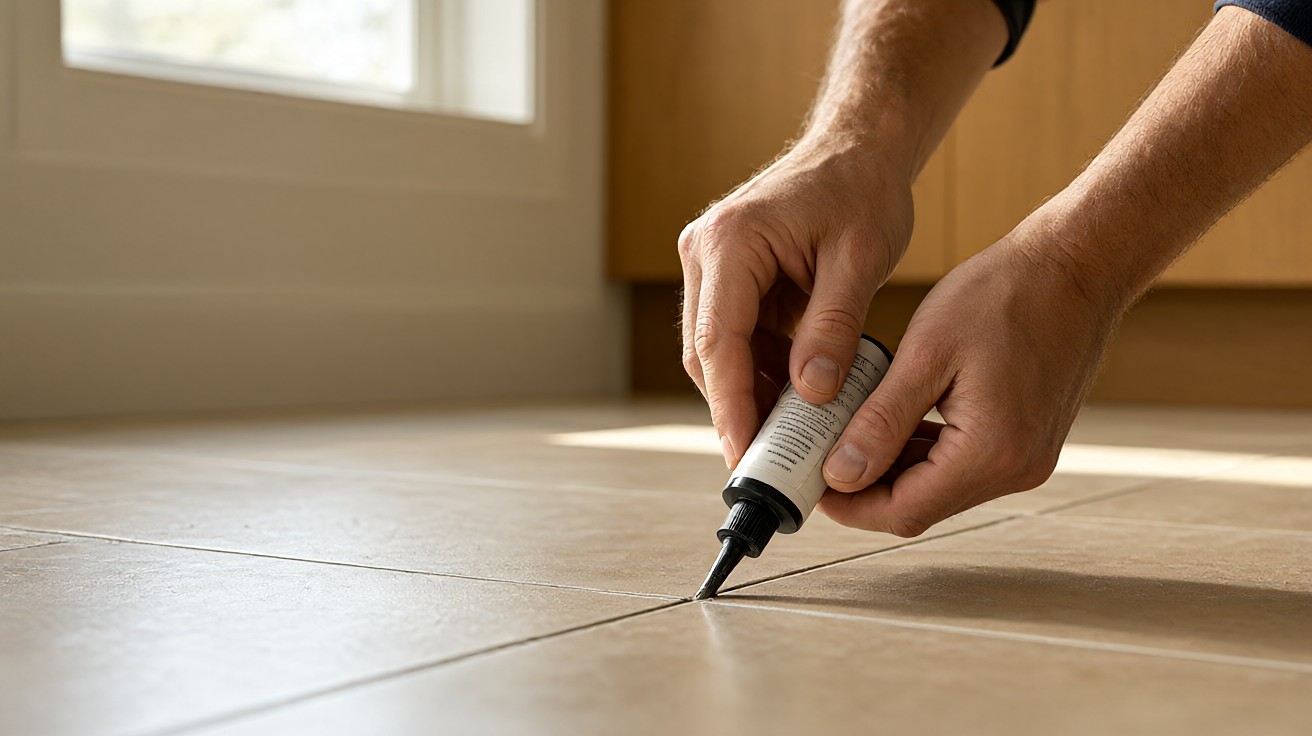
Apply the sealer with a small brush or applicator bottle, keeping it on the joint rather than flooding the tile. Wipe excess off the tile face within ten to fifteen minutes, before it dries and leaves a haze. Allow a full cure of 24 to 72 hours before heavy use.
Two coats are standard for new installations. Apply the second coat while the first is still slightly tacky, or after the manufacturer specified wait time.
Grout Cleaning Routine by Room
Different rooms create different soils. A kitchen floor sees grease and food spills. A bathroom sees soap scum and hard water. A basement sees efflorescence and moisture.
Match the routine to the room. Sweep or vacuum first to remove grit that would scratch the surface. Damp mop with neutral cleaner, agitate the joints with a soft brush, then rinse with fresh water and dry.
| Room | Weekly task | Periodic task | Sealer check |
|---|---|---|---|
| Kitchen | Neutral cleaner mop | Degreaser on joints | Every 12 months |
| Bathroom | Neutral cleaner wipe | Mildew cleaner once | Every 12 to 24 months |
| Basement | Dry vacuum | Efflorescence brush | Every 24 months |
Never use ammonia on grout, since it discolors the joint. Avoid oil based soaps that leave a residue attracting dirt.
Common Grout Problems and Fixes
Discolored grout is usually soil trapped in pores, not a permanent stain. A deep clean with an alkaline cleaner followed by a rinse often restores the color. If the color is uneven, a color sealer can even it out.
Cracking grout signals movement. Grout is rigid and cannot flex, so cracks appear at substrate joints, expansion joints, or where the tile is loose. Re grouting without fixing the cause leads to repeat failure.
Missing grout in a shower corner should be replaced with caulk, not grout. Movement at the wall to floor joint is normal, and caulk flexes where grout would crack.
Efflorescence appears as a white powder on new grout and is harmless salt migration. Brush it off dry and it usually stops within weeks.
How to Clean Heavily Stained Grout
For neglected grout, start with a commercial tile and grout cleaner or a strong solution of all purpose cleaner. Let it stand five minutes, scrub with a stiff nylon brush, then rinse thoroughly.
Hard water deposits and soap scum respond to a cleaner formulated for mineral scale. Rust and iron stains need an oxalic acid based cleaner used sparingly and rinsed well. Always test in an inconspicuous spot first.
After a deep clean, allow the grout to dry fully and apply sealer within 24 hours, before new soil enters the open pores.
Test the sealer on a small area first to confirm no color change or haze on the tile face.
Tools and Materials That Protect Grout
A soft bristle brush or nylon scrub pad is enough for most jobs. Steel wool and metal scrapers scratch tile and gouge grout. A shop vacuum lifts dirty rinse water better than a mop, which is the TCNA recommended method for deep cleaning.
Use two buckets, one for cleaner and one for rinse water. Change the rinse water often. Residue left on the surface dulls the tile and attracts soil faster.
For large areas a grout cleaning machine with a rotating brush saves time. For small jobs a toothbrush sized grout brush gives precise control in narrow joints.
Standards That Govern Grout and Sealers
ANSI A118.6 covers standard cement grouts for tile installation, including water absorption and compressive strength requirements. ASTM C373 measures water absorption of tile, which predicts how much sealer the surface will need.
The TCNA Handbook for Ceramic, Glass, and Stone Tile Installation sets the cleaning and maintenance expectations referenced by most manufacturers. Following it keeps warranties valid.
When to Call a Professional
DIY maintenance covers routine cleaning and sealing. Call a professional when grout is crumbling, when tiles are loose, or when a shower leaks behind the wall. These are installation failures, not cleaning problems.
Professional grout cleaning uses high pressure steam and extraction, which reaches deeper than hand scrubbing. Color sealing and re grouting are also best left to a tile contractor if the area is large or the existing grout is failing.
If mildew returns within days of cleaning, ask the contractor to check the waterproofing membrane behind the tile. No cleaner fixes a wet substrate.
Daily and Weekly Habits That Extend Sealer Life
Wipe spills immediately, especially oil and wine. The longer a liquid sits, the deeper it penetrates before the sealer can repel it.
Use a doormat at entries to reduce grit that grinds into grout. Grit acts like sandpaper and wears both sealer and joint.
Run a bathroom fan during and after showers to reduce humidity that feeds mildew. Ventilation is the cheapest maintenance tool available.
Inspect grout monthly for cracks, missing sections, or color change. Catching problems early prevents water damage behind the tile.
Cost and Time Estimates for Grout Care
A gallon of penetrating sealer covers roughly 500 to 1000 square feet and costs between 30 and 60 dollars. A bottle of neutral cleaner costs under 15 dollars and lasts months.
Sealing a 200 square foot bathroom takes about two hours including cleaning and cure time. Weekly mopping takes five minutes.
Professional deep cleaning runs 0.50 to 1.50 dollars per square foot. Color sealing a whole floor can cost 3 to 6 dollars per square foot.
Putting It Together: A Maintenance Calendar
Consistency beats intensity. A five minute weekly mop prevents the need for a five hour deep clean. Write the routine down and keep the products in one place so the habit sticks.
Seal on a calendar, not on a guess. Mark the date you last sealed and set a reminder for one year out. Re test with the water drop method before resealing to avoid unnecessary work.
Keep records of the grout and sealer products used. Matching color and formula matters when you need to touch up a joint later.
Store leftover sealer in a cool dry place and label it with the date opened.
Shake well before each use.
Keep the applicator clean.
Rinse it after use.
Review the routine each season and adjust for humidity changes. Summer humidity slows cure times and winter dryness can crack fresh grout.