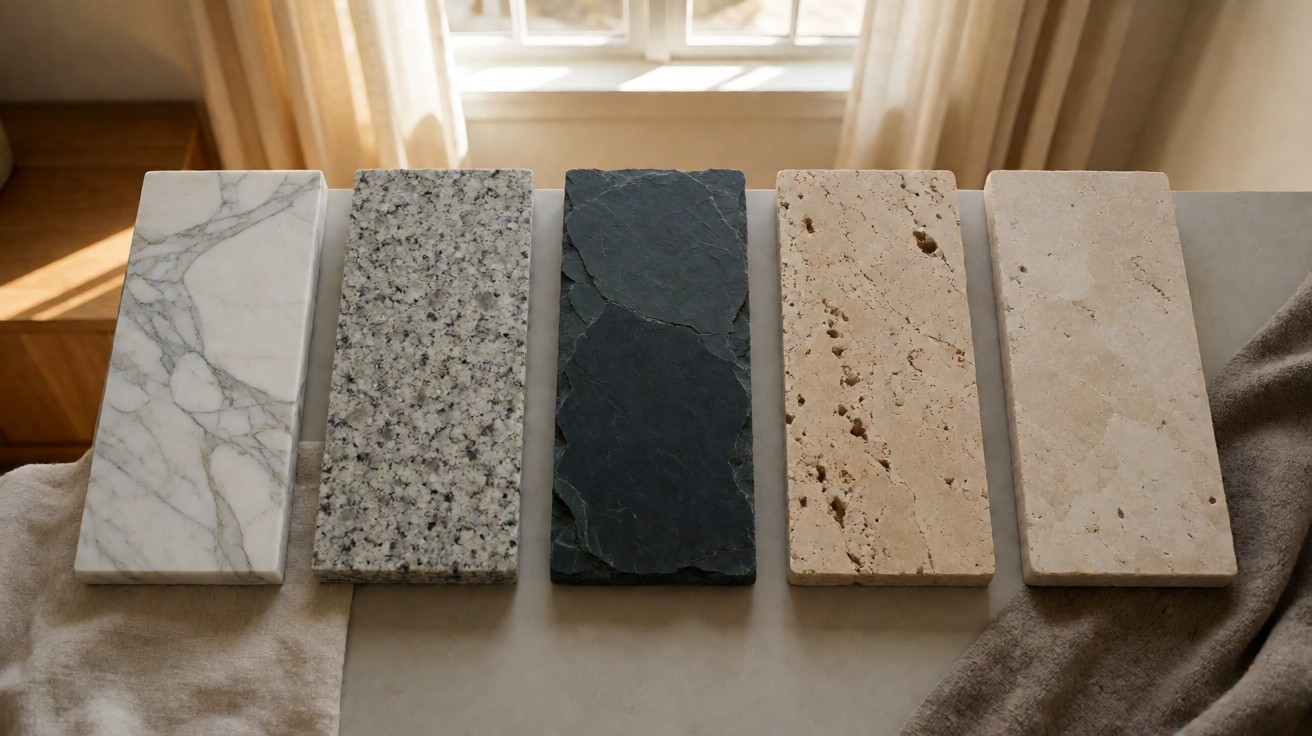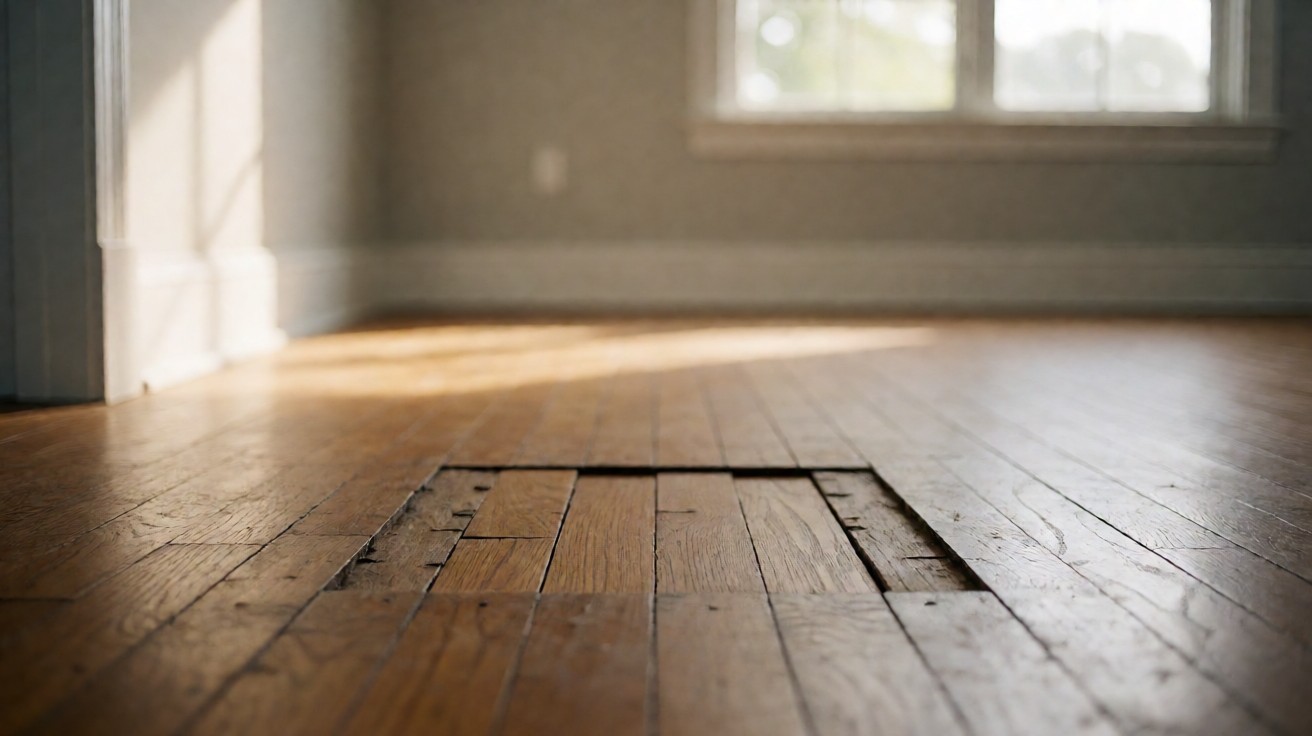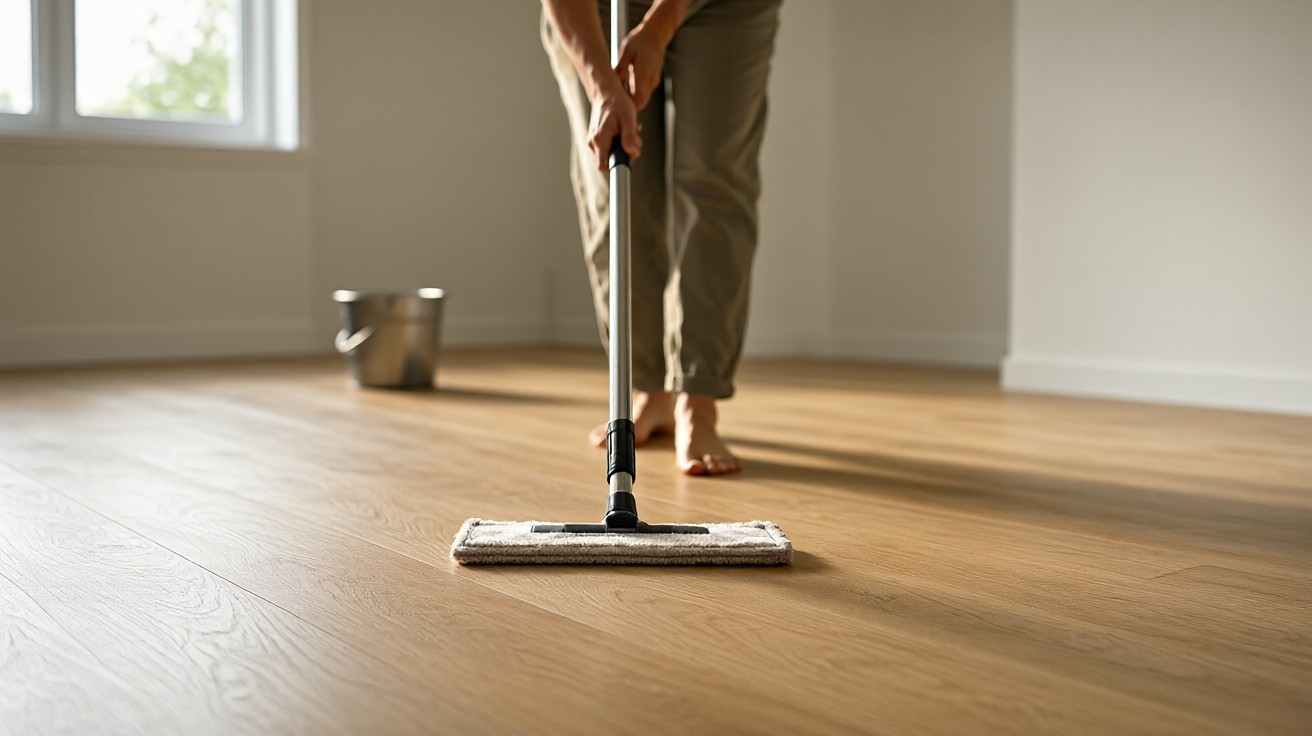
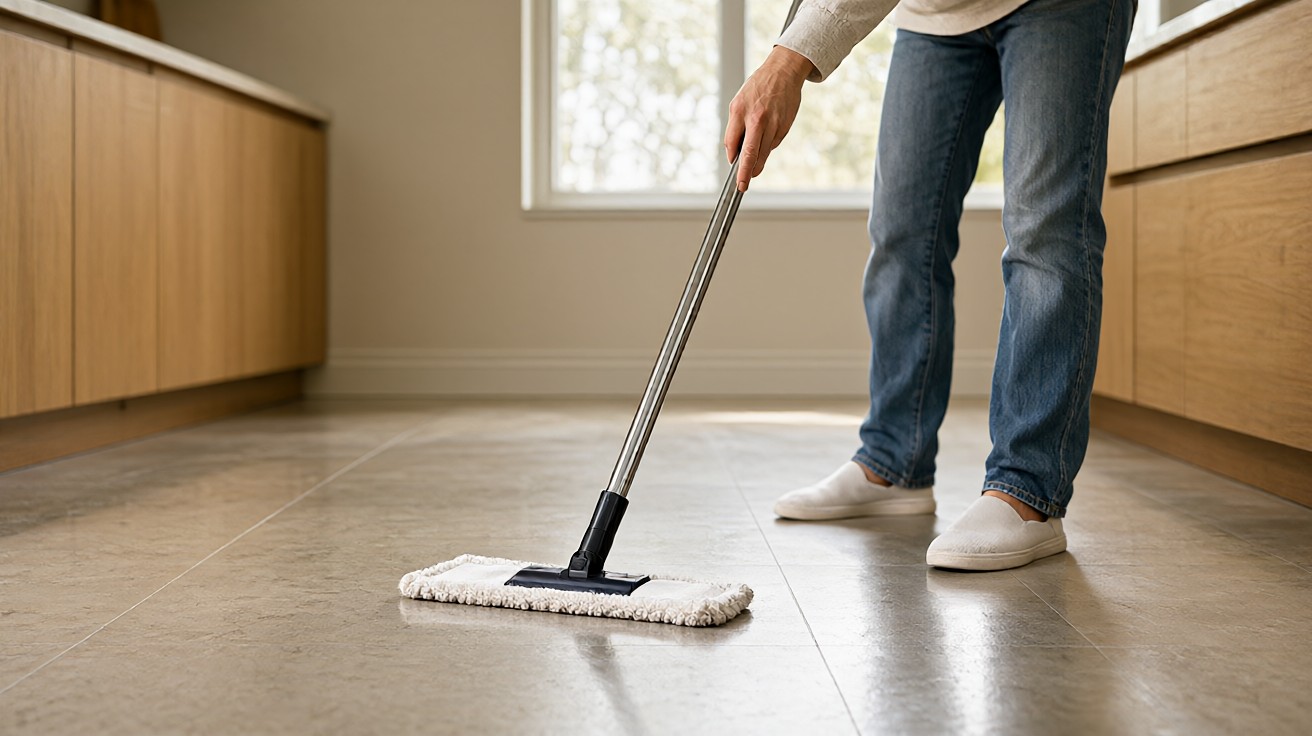

A stone floor does not care how often you mop it, because the wrong cleaner dulls the polish, etches the surface, and leaves a chalky film behind it.
The answer is a soapless neutral cleaner at about pH 7, tested on a hidden area before it touches the whole floor, plus a sealer chosen to match the stone. Marble, limestone, travertine, and onyx are calcareous and react to acid. Granite, quartzite, and slate are siliceous and tolerate much more.
Why Natural Stone Floors Need Their Own Cleaner
Tile cleaner and stone cleaner are not interchangeable. The chemistry that strips grease from porcelain is exactly what dulls a polished marble floor, and the acid that lifts haze off grout will etch the tile face itself.
Stone is a family, not a product. What a slab is made of, and how it was cut and finished, is covered in the natural stone flooring explained guide, and the differences between polished, honed, matte, and textured surfaces decide how the floor responds to a mop.
Two properties decide how a floor behaves under cleaning. The first is the mineral the stone is made of, and the second is how porous that stone is. Get those two right and the rest is technique.
Absorption is the number that predicts trouble. It is the share of water a stone takes up through its surface, and the higher that share, the faster a spill soaks in before you can lift it.
Different stones absorb very differently. The values published in the ASTM stone specifications span a wide range, and the spread tells you how much care each floor needs.
Granite, for example, carries a bulk density of 160 pounds per cubic foot and a compressive strength of 19,000 pounds per square inch under ASTM C170. Marble reaches 7,500 pounds per square inch. Durable is not the same as unreactive.
Calcareous and Siliceous Stone Behave Differently
| Stone | Chemical family | Maximum absorption by weight | Published in |
|---|---|---|---|
| Granite | Siliceous | 0.40 percent | ASTM C97, granite specification ASTM C615 |
| Marble | Calcareous | 0.20 percent | ASTM C97, marble specification ASTM C503 |
| Limestone, high density | Calcareous | 3.00 percent | ASTM C97, limestone specification ASTM C568 |
| Limestone, low density | Calcareous | 12.00 percent | ASTM C97, limestone specification ASTM C568 |
| Quartzite | Siliceous | 1.00 percent | ASTM C97, quartzite specification ASTM C616 |
| Slate | Siliceous | 0.25 percent | Slate specification ASTM C629 |
| Travertine and onyx | Calcareous | Varies by bed, test it | ASTM C97 test on your slab |
The Natural Stone Institute splits natural stone into two chemical families. Calcareous stone is calcium carbonate: limestone, marble, travertine, onyx, and serpentine. Siliceous stone is silica based: granite, sandstone, quartzite, and slate.
Acid dissolves calcium carbonate. That is why an acidic cleaner on marble does not merely dull the surface for a day. It etches the polished finish, and the dull patch it leaves is permanent until the stone is refinished.
Siliceous stone is much more acid resistant, but resistant is not the same as immune. Granite still should not be cleaned with vinegar or lemon juice, because the dulling that follows is as permanent as an etch on marble.
Per-stone chemistry varies even inside a family. The per-stone catalog covers what each material is made of and how it behaves, which is the reference to use before choosing a cleaner for a specific floor.
Is a siliceous floor safe from acid?
Safer, but never safe enough to skip the label and use something else.
If a cleaner is labeled acidic, you have no reason to put it on granite, sandstone, quartzite, or slate either. The rule that protects one stone protects them all.
What does acid actually do to a polished floor?
It reacts with the calcium carbonate in the surface and dissolves a microscopic layer of it. The shine is a flat, even surface. Where acid has eaten into it, the light scatters, and the result reads as a dull spot or a rough patch.
The Daily Routine That Keeps Stone Clean
Most damage to a stone floor is mechanical, not chemical. Grit tracked in from outside is what scratches a polished surface, and the fix is an entrance mat inside and outside the door, with a slip resistant underside so the mat itself does not slide.
Vacuum with a brush head and no beater bar, and move in overlapping passes so the same strip of floor is not beaten twice. If you use a dust mop instead, replace the head when it feels gritty rather than shaking it out indoors.
Entrance mats do more than catch grit. They cut the number of abrasive particles that ever reach the stone, which is why the cheapest routine on a stone floor is a mat.
For a wet mop, spray the cleaner onto the cloth rather than onto the stone, and use a clean microfiber pad for every room. A dirty pad spreads grit and grime back across the floor you just cleaned.
Split the second mop pass into plain water when the cleaner label calls for rinsing, and dry the floor afterward. Leftover cleaner film is the residue that shows up as a haze and dulls the finish over time.
A broad routine for floors of every material is worth keeping in your routine, but stone has one rule the others do not: the cleaner comes before the floor does.
How often should a stone floor be mopped?
As often as the traffic justifies, which in a kitchen is daily and in a low traffic hallway a few times a week. Daily dry dusting in the entry path and a wet mop on a schedule keeps abrasive grit from accumulating anywhere on the floor.
What Never Goes On a Natural Stone Floor
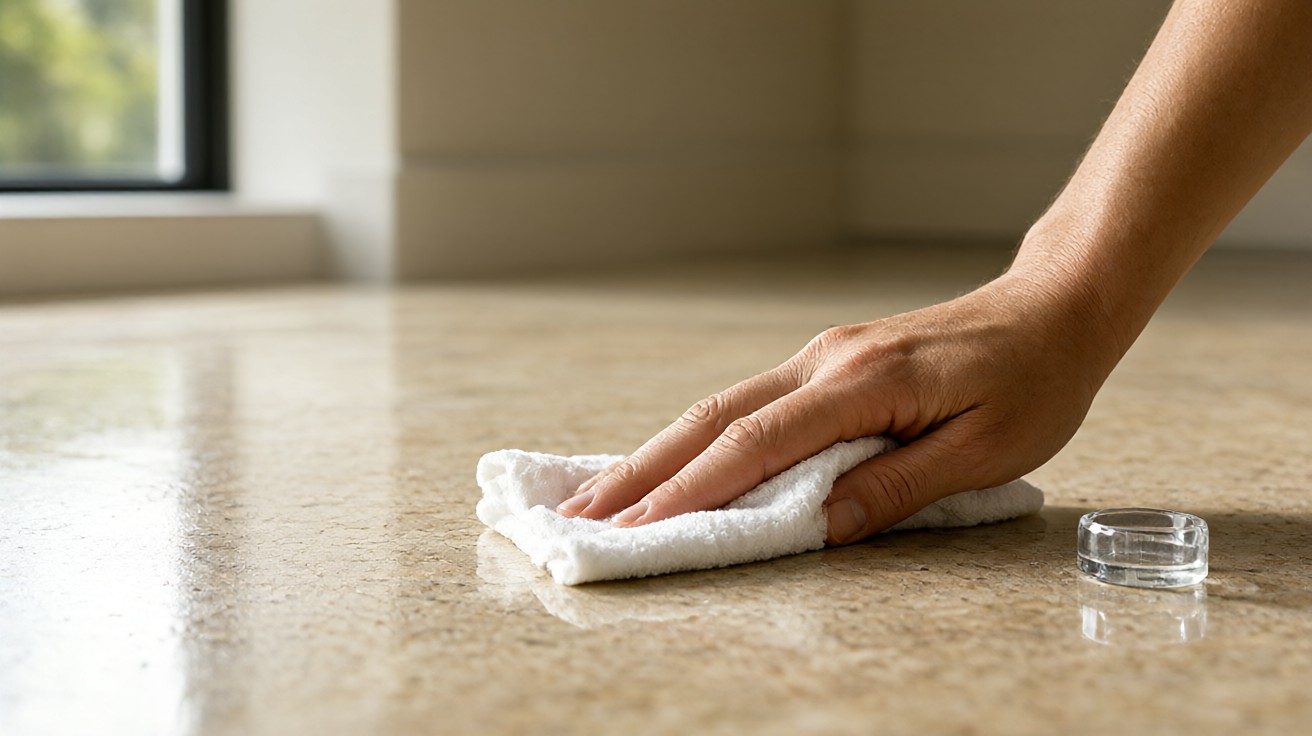
Vinegar and lemon juice are the two most common offenders, because both are acidic and both are sold as kitchen cleaners. The Marble Institute of America lists them alongside any acidic product as products to keep off natural stone.
Avoid abrasive cleaners and scouring powders, which scratch the surface directly. Avoid alkaline heavy duty floor strippers, which dull a polished finish. Avoid bleach on natural stone for the same reason.
Any cleaner, including a neutral one, should be tested on a hidden area first. Test the actual product at the actual dilution, and give it the drying time the label states before you judge the result.
Choosing a Neutral Cleaner
| Product on the shelf | What it does to natural stone | Verdict |
|---|---|---|
| Vinegar or lemon juice | Dissolves calcium carbonate, etches the polish permanently | Never use |
| Abrasive powder or scouring cleaner | Scratches the surface directly | Never use |
| Bleach | Damages sealer, dulls finish, attacks grout | Never use |
| Alkaline heavy duty stripper | Dulls a polished surface, attacks cement grout | Professional use only |
| Soapless neutral cleaner at about pH 7 | Leaves the stone and the finish alone | Routine use |
A soapless neutral cleaner at about pH 7 is the routine choice for natural stone, and pH is the number to look for on the label. A cleaner that does not publish its pH is a cleaner you test before you trust.
Dilute to the label rate and no further. Over dilution is a common mistake, because it leaves a film that has to be removed with more chemical, and the residue dulls the finish that the cleaning was supposed to protect.
Spray, wait for the label dwell time, then wipe with a clean microfiber cloth. If the label calls for rinsing, mop with plain water afterward, and dry the floor before anyone walks on it.
Never pour cleaner directly onto a stone floor. Spraying the cloth keeps the chemistry at a controlled strength and stops the puddle that leaves residue in the joints.
For a floor that takes heavy traffic, the same pH 7 rule applies to the mop bucket you keep by the door. Anything mixed into that water travels across the entire floor every time.
What does pH mean for a stone floor?
It is the measure of how acidic or how alkaline a product is. Neutral sits at about pH 7.
Anything far below that attacks calcium carbonate, and anything far above it can dull a polish and attack cement based grout.
Removing Stains Without Damaging the Stone
Porous stone takes a stain into the surface within minutes, while a properly sealed stone resists it. That difference decides how fast you have to move, and it is why blot the spill first and decide about the cleaner second.
Blot from the outside of the spill toward the center with a clean dry cloth, and change cloths as they pick up the liquid. Rubbing drives the material deeper into the pore structure rather than lifting it out.
Speed matters more than product here. Porous stone takes a stain in within minutes, so the first thirty seconds of blotting do more good than the first thirty seconds of scrubbing.
For oil, a poultice is the standard approach. You apply an absorbent paste to the spot, let it draw the oil out, and remove it once dry. Test the poultice on a hidden area first, because some absorbent powders leave a residue of their own.
If a cleaner leaves a haze rather than a stain, the fix is another pass with the same pH 7 cleaner and a clean cloth, not a stronger product. If the mark does not lift, you may be looking at an etch.
How do I tell a stain from an etch?
A stain sits in or on the surface and can be lifted or poulted.
An etch is a loss of the polished surface itself, so the dull area wipes clean and still looks dull, because there is no surface left to reflect light.
Etching, Honing, and the Difference Between Damage and Finish
A honed floor has a matte surface that is already slightly textured, so it hides small scratches that would show as dull streaks on a polished floor. The trade is that honed stone shows soil more readily, which is why its cleaning routine matters more, not less.
An etched polished floor is a different animal. The dull spot is damage to the polish, not a change in finish, and no amount of mopping brings the reflection back.
Repairing an etch means working the surface mechanically, usually by honing the affected area and then polishing it to match the surrounding gloss. That is why a small etch is worth handling early and a large one belongs to a stone professional.
The comparison of polished, honed, matte, and textured finishes explains how each one catches light, hides wear, and responds to a cleaning routine, which is the difference between treating a floor and maintaining it.
Can an etched marble floor be made whole again?
Usually yes, because the stone underneath the polish is still intact and sound.
How well the repair blends depends on how deep the etch went and on how much gloss the original finish had, so ask for a test area before any floor is refinished.
Sealers and Impregnators
A penetrating sealer, often called an impregnator, soaks into the pores of the stone and leaves the visible surface unchanged. It buys time against stains, and it does not make the floor immune to acid or to grit.
A topical film forming sealer sits on top of the surface instead. It can change the dynamic coefficient of friction of the floor, so if you apply one, measure DCOF on the sealed surface under ANSI A326.3 rather than relying on the figure the stone shipped with.
Sealers wear down with traffic and have to be reapplied, typically on a multi year cycle for a residential floor. Every product states its own coverage rate and its own drying time, so use those numbers rather than a rule of thumb.
Expect to renew the sealer on the paths that get walked most, not on the whole floor at once. A hallway that fails first is the signal, and the recoat is usually a single afternoon of work.
Absorption tells you how much sealer the floor will take and how urgently it needs it. Granite at a maximum 0.40 percent absorption behaves very differently from a low density limestone at 12.00 percent, even though both are sold as stone floors.
Does my stone floor actually need sealing?
Most stone floors do, and the test to check is practical rather than theoretical.
Put a drop of water on the floor in a low traffic spot, leave it for a few minutes, and see whether it darkens the stone and how fast it disappears.
Grout Lines and the Products That Attack Them
Cement based grout is the weak point in most stone installations, and it is chemically fragile. Acid cleaners attack it, which is why acid grout cleaners belong to the tile and porcelain routine rather than the stone routine.
The same guidance that protects stone protects the grout next to it. Acid free ceramic and porcelain cleaners belong to a different floor with different chemistry, and the how to clean ceramic and porcelain tile routine covers those products properly.
Alkaline cleaners run the other risk. Heavy duty stone restoration uses an alkaline cleaner at a high pH of roughly 12, followed by neutralization and rinsing, and alkaline cleaners can dull a polished surface even when the stone itself is unharmed.
Sealing the floor helps the grout as well as the stone, but it does not replace careful product choice. If your grout is already powdering or crumbling, the fix is to remove and replace the grout rather than to clean harder.
Wet Slip Resistance and the DCOF Number
Dynamic coefficient of friction, or DCOF, measures how much force is needed to keep a foot sliding once it is already moving. ANSI A326.3 is the standard test method for measuring it on hard surface flooring materials.
The number only means something when you know the condition it was measured in. A dry figure and a wet figure answer different questions, and the wet one is the one that predicts a slip on a wet kitchen floor.
The benchmark for level interior floors that are expected to be walked on when wet is a wet DCOF of 0.42, measured under ANSI A326.3. Above that value the floor meets the threshold; below it, the wet floor is a slip concern worth addressing.
Natural stone tile falls under ANSI A137.2 and ceramic tile under ANSI A137.1. Neither one tells you which cleaner to use, which is exactly why the pH 7 rule matters: the product choice is yours, and the product choice is where the floor gets damaged.
Cleaning affects the number as much as the sealer does. A film of residue left by an over diluted cleaner acts like a lubricant when the floor is wet, so measure after cleaning, not before.
Does a sealer make my stone floor slippery?
A penetrating sealer leaves the surface alone, so it barely changes the number.
A topical film forming sealer can change it, which is why the measurement belongs on the sealed floor, under ANSI A326.3, with the same wet conditions you actually have.
When to Call a Stone Restoration Professional
| Situation | What you can do yourself | When to bring in a stone professional |
|---|---|---|
| Dust, grit, and everyday soil | Dry dust and a pH 7 damp mop | Not needed |
| A fresh spill | Blot, then a pH 7 clean | Not needed unless it soaked in |
| A dull patch that wipes clean | Test on a hidden area | Etching that a clean will not lift |
| Water no longer beads on the floor | Reapply a penetrating sealer | A floor that will not hold sealer evenly |
| Uneven sheen between rooms | Nothing reliable | Honing and gloss matching |
There are three signals that a floor has moved past routine cleaning. An etch that covers more than a coin, a dulling that no pH 7 clean will lift, and uneven sheen between rooms all point the same direction.
Deep etching, re-honing, and gloss matching need diamond tooling and controlled water use. A technician can also assess the stone before you spend money, which is worthwhile when you are dealing with an unfamiliar marble or a thin travertine.
Your own work is still valuable in the meantime. A well maintained stone floor that gets routine pH 7 cleaning and a sound sealing schedule is far easier to restore than one that has been stripped with the wrong chemistry for years.
How do I know a job is beyond a routine clean?
If the mark wipes away and the surface still looks dull, you are looking at etching rather than dirt.
If the mark persists through a second careful pass with a neutral cleaner, it is deeper than surface cleaning reaches and it is time for a stone professional.
A Simple Care Calendar for Stone Floors
Daily, dry dust the entry path and any area where grit is tracked in, and wipe spills as they happen. Weekly, damp mop with a pH 7 neutral cleaner and a clean microfiber pad, then dry the floor.
Do not wait for a schedule to start. Blotting a spill the moment it happens is the single highest value habit on a stone floor.
Monthly, check a hidden spot with water to see how the stone is absorbing, and look at the grout lines for powdering or discoloration. Annually, review the sealer, because the wear pattern in the busiest path is what tells you when the floor needs another coat.
Over a few years, the cycle repeats, and the floor stays in the same condition it was in when it was sealed. Compare that with a floor cleaned with whatever was under the sink, and the difference is what a maintenance routine is actually worth.
For more on this topic, see Best Flooring Cleaners by Material