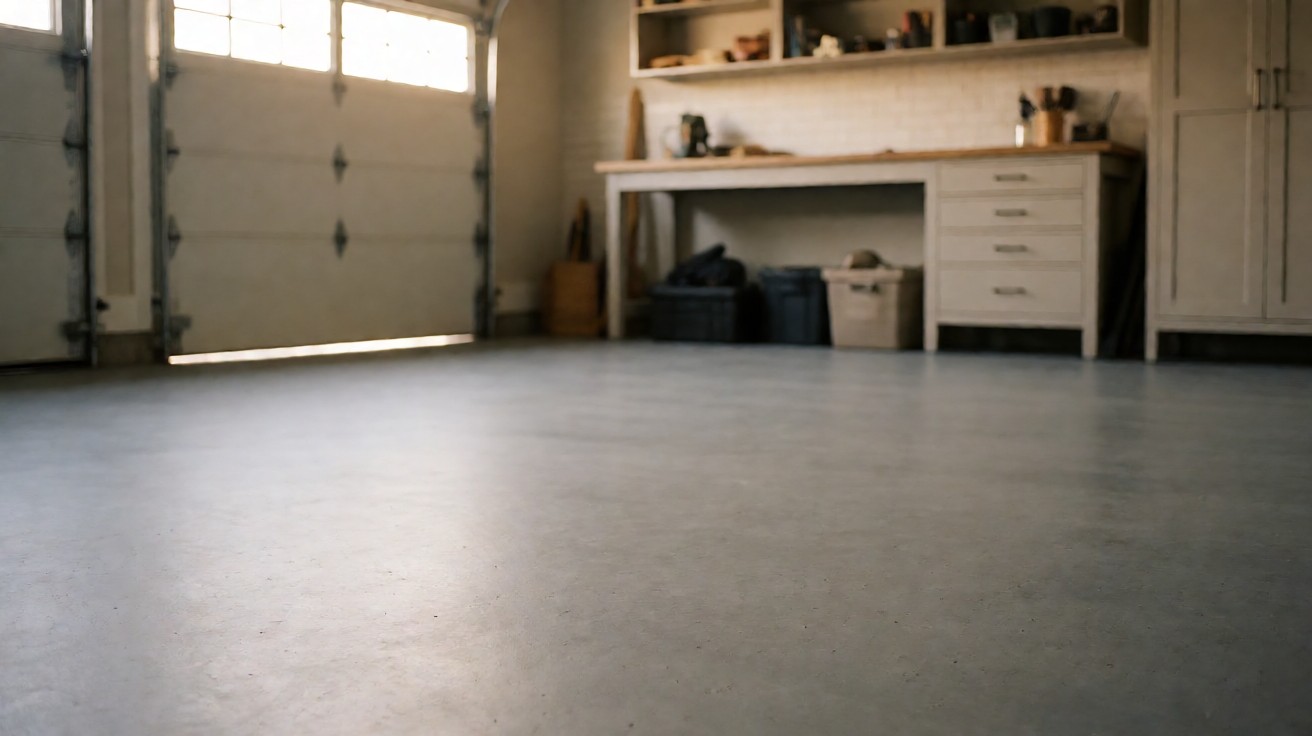

The best garage floor has to take a car in and out in all weather, a hot workbench, and road salt off a winter tyre without needing replacing each decade.
A Garage Floor Is a Commercial Floor at Home Prices
A garage is the only room in most houses where a car stands on the floor, and that single fact changes every part of the decision. A car puts roughly a tonne of load on four patches of floor, repeated every time someone comes home, forever, and it brings in whatever is on the outside of the tyres.
That is why this room is treated differently from a finished room. The floor is not there to be looked at, it is there to take load, salt, water, oil, and heat from a workbench and to do it for decades. Everything else follows from how much abuse it can take and how little you have to do to make it last.
What Actually Destroys a Garage Floor
Three things do most of the damage, and all three arrive from outside the garage rather than from inside it. The fourth is heat, and it is the one that only shows up in a climate with real seasons: a car parked for hours warms the air and cools the slab underneath, and that cycling is what loosens a coating over a decade.
Road salt is the first, and it is the one people underestimate because the damage is gradual: salt gets tracked in, dissolves in the moisture on the slab, and attacks both the concrete and any steel sitting in it. Water is the second, and a bare slab with no drainage will hold a puddle that finds every crack. Tyre marks and oil are the third, and they are the most visible rather than the most damaging.
The Three Real Options
Three systems answer this room properly, and they are not three different colours of the same thing. They are three different approaches to the same slab.
A coated or sealed concrete system leaves the slab and adds a layer on top. A full resin floor replaces the surface with a poured material bonded to the slab. And a tile or plank system lays a hard floor over it. Each one handles salt, load, and heat differently, and the choice is less about money than about whether the slab underneath is worth saving.
| The condition of the slab | The system that answers it | Why it survives that slab |
|---|---|---|
| A sound slab you intend to keep | Full resin system | Bonds to the slab and takes the salt load properly |
| A sound slab, short term plan | Sealer or epoxy paint | Slows absorption and makes the slab cleanable |
| A slab going with the house anyway | Tile or a coating | The cheapest way to take the load for a few years |
| A damp slab, in any case | Prep first, or nothing | Coating on a damp slab peels off in sheets |
Sealers and Paints, and What They Are For
A sealer or an epoxy paint is the cheapest system and the most misunderstood one. It does not repair a slab, it does not fill a crack, and it does not stop a salt attack on the concrete underneath. What it does is slow the surface absorption and make the slab easier to clean.
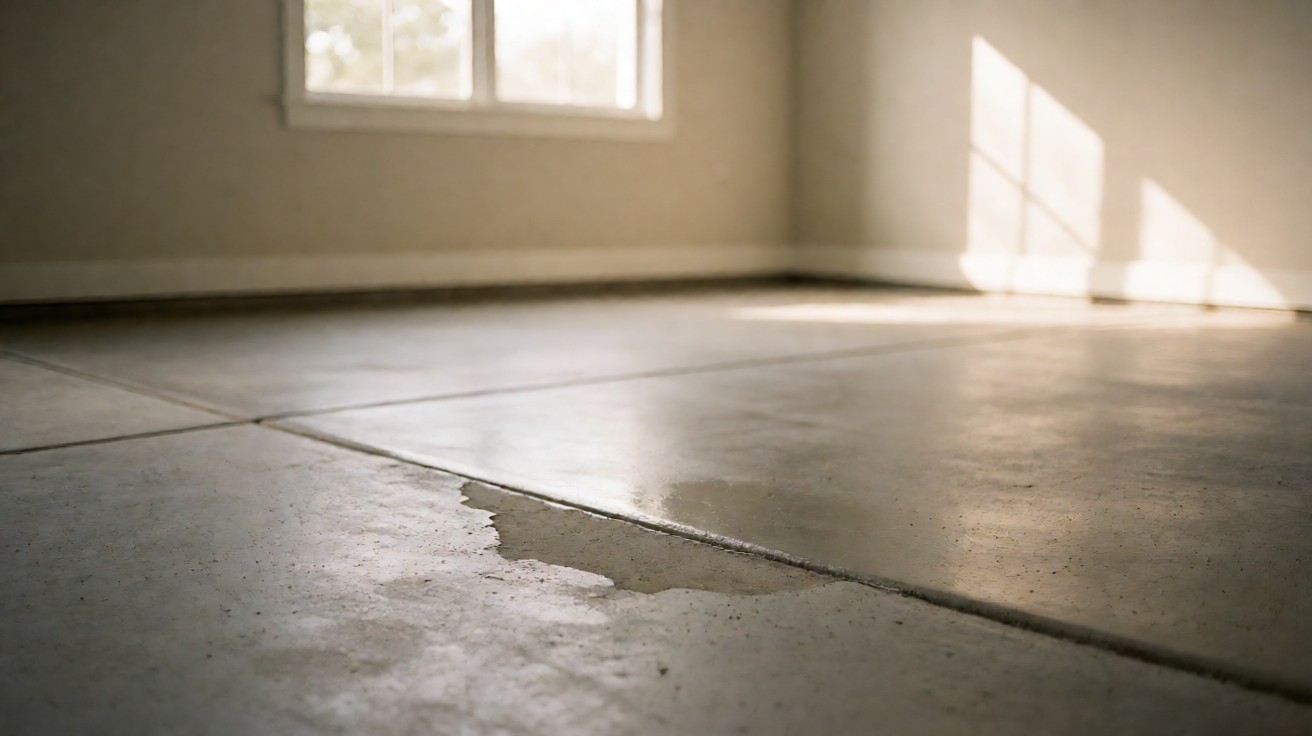
That is genuinely useful on a sound slab, and it is not useful on a slab that is already spalling or cracking. The failure mode people see is a coated floor that peels up in sheets after a winter, which is what happens when a coating goes onto a damp slab: the bond fails with the moisture coming up through it. A moisture test before coating is not optional advice, it is the difference between a floor that lasts and a floor that peels.
Epoxy and Polyaspartic, the Full System
A full resin floor is the most expensive and the most durable option, and it is the one that survives salt properly. The resin bonds to the slab and cures into a hard surface with the concrete rather than sitting on it as a film.
It is also the only one that repairs a slightly damaged slab as it goes, because the resin finds and fills the surface defects that a coating simply covers. That single property is most of why it costs what it costs.
The two families differ in how fast you get back to using the room. A conventional epoxy takes a full cure over days before it will take a car. A polyaspartic is a faster cure and gets back to use sooner, and it costs more per square foot for that reason. Both need the slab prepared properly, and both need a moisture test first for the same reason a coating does.
Tile, the Cheapest Durable Option
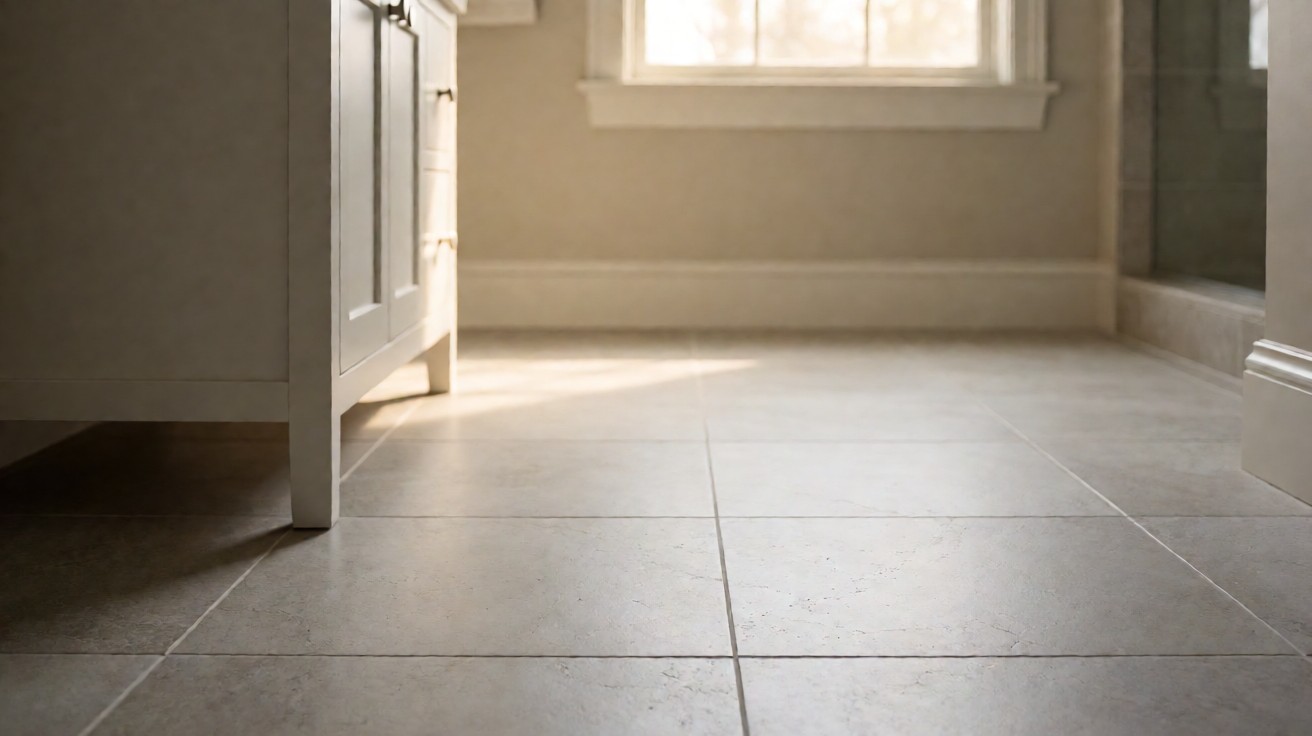
Tile is the option most garages already have, and it is genuinely good for the load. It is also the one that gets chosen for the wrong reason in a converted garage, because a floor that looks tiled reads as finished and people stop thinking of it as a working surface. It does not care about salt, it takes a car, and it is the cheapest of the three per square foot.
The failure is the grout, not the tile. Twelve lines of grout between twelve inch tiles is twelve lines that salt and water get into, and in a garage the grout is what goes first. It is still a correct answer on a budget, and it is correct on a slab that is going to be replaced eventually. It is not correct if the plan is to keep the slab for twenty years.
Plank and Vinyl in a Garage
Rigid core and luxury vinyl plank get used in garages constantly, and they are the wrong answer in a specific way that is worth knowing before buying them.
A floating plank floor is installed over the slab with an air gap underneath, which is exactly where the water that comes in off a car sits with nowhere to dry. That is what produces the mould and the lifting edges, and it is why a plank floor in a garage is a floor with a lifespan measured in a few winters unless the slab is dry and ventilated. The rigid core vinyl page covers the construction that makes this problem.
The Slab Is the Actual Project
Whatever system goes on top, the slab underneath decides how long it lasts, and the prep is where the money and the failures are. It has to be clean and degreased. It has to be ground or shot-blasted so the coating has something to bond to, not a smooth surface to peel off.
Cracks get filled and spalled edges get ground back flat, because a coating or a resin laid over a defect bridges it rather than fixing it, and it bridges it until the defect opens again. A slab that drains to a drain and slopes away from the door is worth more than any finish, and where a slab does not slope, that is a problem to solve with the floor or accept.
Temperature, Salt, and the Car’s Own Effects
A parked car warms the air above the floor and cools the slab underneath it, and that cycling over a year does work on a coating. This is another reason a full resin system outperforms a film coating in a climate with real seasons.
The salt point is worth restating because it is the most expensive mistake available here: a garage floor that fails because of road salt usually failed at the slab, and the fix is never a different colour of coating. If the slab underneath is going to keep taking salt and moisture, the system above it is buying a few years, not decades.
Drainage, the Door, and the First Inch Inside
Most garage floor problems are decided before any product is chosen, by where the water goes. A slab that slopes to a drain and a door seal that keeps the rain outside will outperform a better coating on a slab that holds a puddle against the door every time it rains.
The door itself is part of the floor decision. A garage that is trackless and open takes rain, road salt, and grit straight onto the slab, and the threshold where that comes in is where the erosion starts. A door with a seal, and a mat inside it, changes what the floor has to survive for the whole of its life.
Cost, and Where the Money Should Go
The three systems are far apart in price, and the gap between them is much smaller than the gap between them in lifespan, which is the only comparison that matters in a garage.
They are also far apart in how much work has to happen before anything is laid, and in a garage the preparation is most of the days. That is worth knowing before comparing two quotes, because a lower material price often means less preparation and a shorter life.
A coating is cheap and is the right call on a sound slab that is not being kept long term. A full resin system is the most expensive and the one that keeps the slab. Tile sits in the middle and takes the load well while letting the grout go. Spending more on preparation and less on the finish is the standard advice because preparation is the part that is still there in fifteen years.
| System | Where it sits on cost | What that money buys you here |
|---|---|---|
| Full resin system | Highest of the three | Bonds to the slab and survives the salt and the load |
| Tile | Middle of the three | Takes the car, and the grout is what goes first |
| Sealer or epoxy paint | Lowest of the three | Cheap and useful, on a sound slab, for a few years |
| Preparation, with any system | Worth more than the finish | Grinding and crack repair is what is still there in fifteen years |
How to Choose, and Where to Look Next
Decide first whether the slab is worth saving, because that decides which of the three systems you are choosing. A slab that is sound and staying is worth a full system. A slab that is already cracking and will be replaced with the house is worth a coating.
Then read the material guide before anything is quoted. The polished concrete page is where the slab work is covered, the terrazzo flooring page is the closest comparison to a poured resin floor and worth reading for the finish families, and the porcelain tile page covers the tile option that most garages already have. And do the moisture test before any of it, because it is the one step that decides whether the rest of the money was well spent.