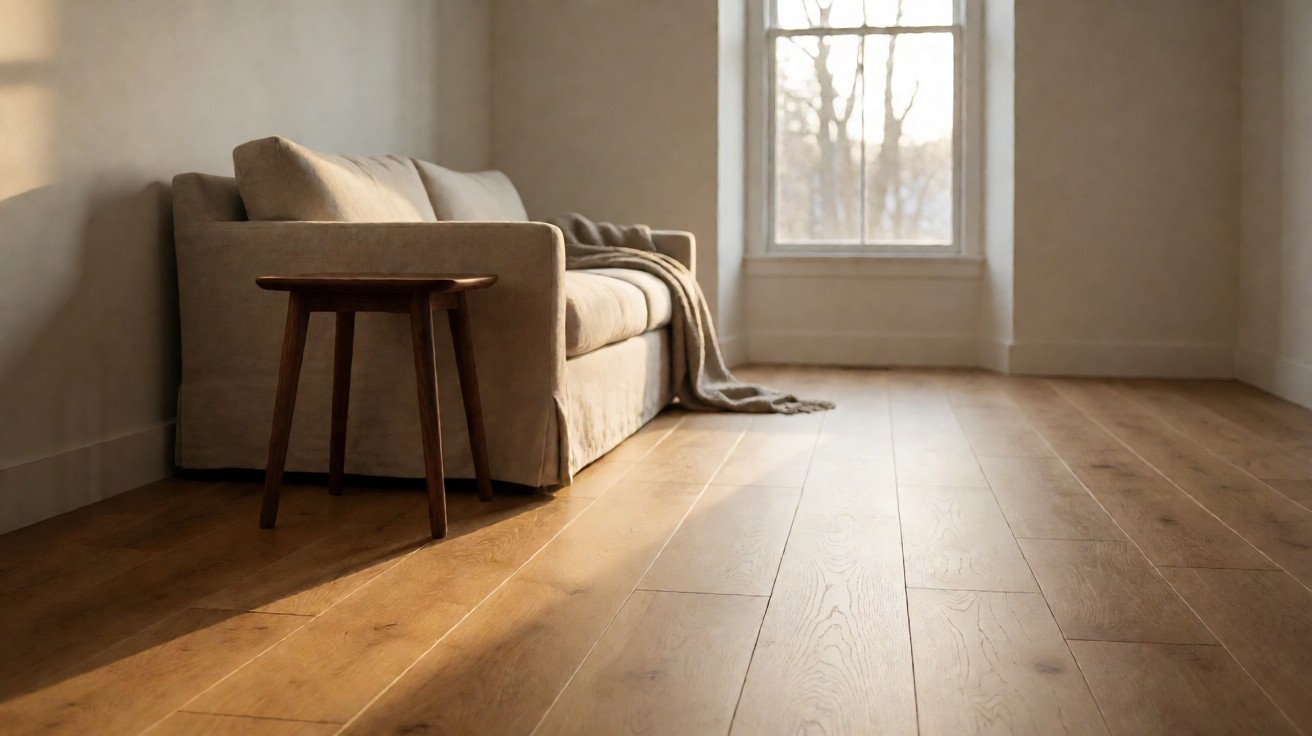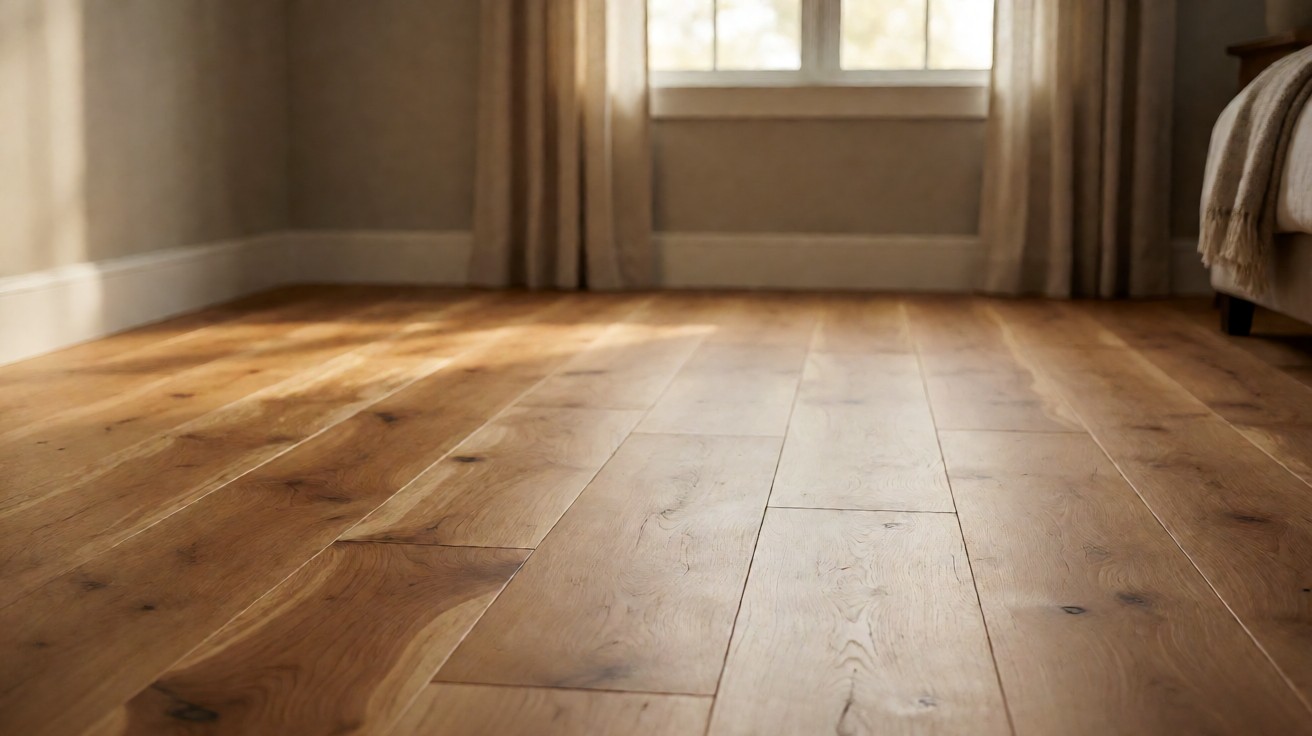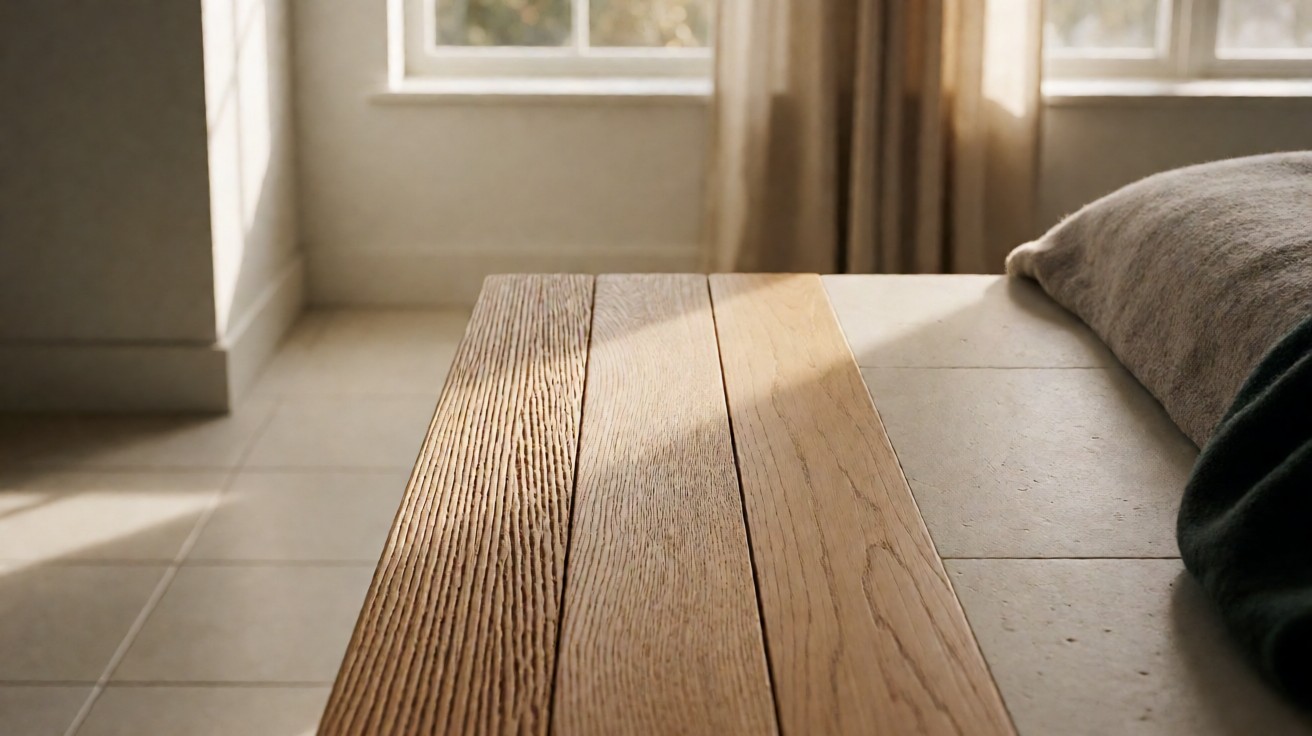

Hand-scraped, wire-brushed, and smooth hardwood look like three finish options, and shoppers compare them the way they compare colours or sheens. They are not the same kind of choice. Colour and sheen are applied as a coating on top of the board. Texture is milled into the wood itself, before any finish goes on.
That difference decides the trade-off. Texture is the one finish dimension you cannot change later, it changes how the floor catches light, how it feels underfoot, and how it collects dust. A board you dislike for its sheen can often be refinished. A board you dislike for its texture is the board you have.
This guide sorts out what each texture physically is, how it behaves in real rooms, and where a rustic surface is a mistake rather than a feature. It assumes you have already settled the material question; if you have not, start with the broader hardwood guide instead.
Hand-Scraped vs. Wire-Brushed vs. Smooth: The Short Answer
Choose hand-scraped for a farmhouse, rustic, or genuinely lived-in look, and accept that it will not be uniform. Choose wire-brushed when you want visible grain character but still want the floor to read as consistent and maintained. Choose smooth when the room is formal, minimal, or built around clean lines.
Most buyers underestimate how much work the rustic options create. A hand-scraped floor is not merely decorative; every groove is somewhere dust settles and every edge is a place a cloth catches. That is a fair trade for the look, but it should be a decision, not an accident.
One rule covers most cases: if you would be uncomfortable with a floor that shows wear, buy smooth or wire-brushed. A textured floor magnifies exactly the evidence of living that a low-maintenance buyer is trying to avoid.
What Each Texture Physically Is
A smooth surface is sanded progressively finer until the grain is level and the board is flat. Little of the original grain relief remains, so the surface reflects light evenly and shows every scratch with equal clarity. It is the baseline that the other two depart from.
Wire-brushed, sometimes called brushed or time-worn, is made by running a wire brush across the soft earlywood to erode it while the harder latewood stays proud. The result is a fine, directional grain texture that is shallower than hand-scraping but more pronounced than sanding alone.
Hand-scraped, usually sold as rustic or reclaimed, is produced with a tool such as a gouge, chainsaw, or rasp that cuts irregular grooves into the face of the board. Depth and spacing vary from board to board by design, and the factory then tones the surface so the cuts read as intentional shadow rather than damage.
How Texture Reads Under Light
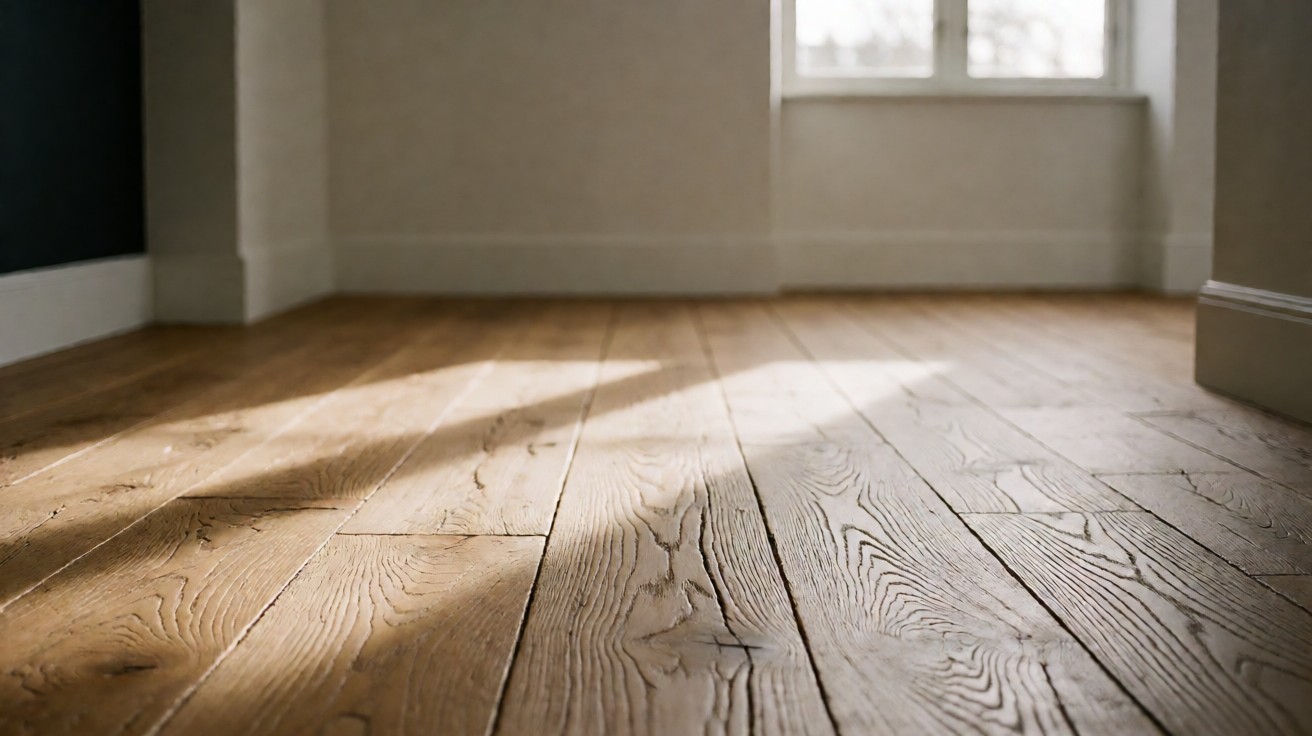
This is where texture earns or loses its price. Surface relief interacts with the direction light arrives from, and it does so far more strongly than colour ever does. A textured board lit from a low window at one end of the day will look markedly different from the same board under flat overhead lighting in the evening.
Always judge a textured floor in raking light, the kind that comes in low and sideways, not in the even overhead light of a showroom. Grooves that look subtle under downlights can read as heavy shadow lines when sunlight rakes across them at four in the afternoon.
How Texture Feels and How It Wears
Underfoot, hand-scraped boards feel irregular in a way you notice with bare feet. That unevenness is part of the appeal and it is not subtle. Wire-brushed feels smoother by comparison, with a fine directional grain you notice more under fingertips than underfoot.
Wear behaves differently too. On a smooth floor, a scratch reads as a line on a flat field and stands out. On a textured floor, a scratch has to compete with existing relief to be seen, so light everyday wear is far less obvious. That is the practical argument for rustic textures in a family room.
The trade-off runs the other way on appearance: because hand-scraped boards vary, the floor reads as a collection of individual planks rather than a single field. If your design intent is a calm, uniform plane, that variation works against you.
Character Versus Consistency
This is the real axis of the decision, and it is not really about the three names. It is about whether you want the floor to emphasise the wood or emphasise the surface.
Hand-scraped maximises the surface. The board becomes the event, irregularity is the point, and the floor pulls attention in every room it is in. Wire-brushed sits in the middle: enough grain to keep the wood from looking sterile, not enough to dominate. Smooth maximises the field: the surface disappears and the room reads as one continuous plane.
The table below is the practical summary.
| Factor | Hand-scraped | Wire-brushed | Smooth |
|---|---|---|---|
| Surface relief | Deep, irregular grooves | Fine, directional grain | Level, minimal |
| Consistency | Varies board to board by design | Consistent within a batch | Highly uniform |
| Hides light wear | Best | Good | Poorest |
| Shows dust and crumbs | Most | Some | Least |
| Underfoot feel | Noticeably uneven | Slightly textured | Flat, firm |
| Best in | Farmhouse, rustic, casual | Transitional, lived-in | Formal, modern minimal |
| Can be changed later | No, milled in | Partly, by sanding | Yes, by sanding |
The finish coating changes how pronounced a texture stays, which is worth knowing before you commit to the deepest option.
| Finish applied over | Effect on a textured surface | Effect on a smooth surface |
|---|---|---|
| Thin factory coat | Fills fine grain slightly, softens wire-brush | Even sheen, highlights every scratch |
| Thick site-applied film | Deepens grooves, keeps rustic look bold | Warmer tone, richer colour |
| Matte finish | Hides relief, mutes texture | Hides scuffs best |
| Gloss finish | Accentuates every groove in raking light | Shows every footprint |
That last row is the practical warning. A glossy finish over a deep hand-scraped surface exaggerates every shadow line, so the two choices work against each other more than most catalogues suggest.
Where a Rustic Texture Is the Wrong Call
Three situations argue against hand-scraping regardless of how much you like the photographs. First, a formal or minimal room where every object is deliberate. The variation reads as clutter once the furniture is quiet.
Second, any room where someone in the household has a dust or particle sensitivity. Deep grooves hold dust at a level a smooth floor simply does not, and no vacuum captures all of it. Third, a room with very light furniture and a pale rug, where a textured floor and hard flat surfaces catch and reveal grit.
Wire-brushed is usually the compromise that survives all three situations, because it adds character at a relief depth that ordinary cleaning handles.
Dust, Crumbs, and Cleaning Deep Grooves
Dust settles in relief, and relief is what you are paying for. A smooth board wipes clean in one pass; a deep hand-scraped board needs a vacuum with a brush or crevice head, and crumbs lodge in grooves where a flat mop slides over them.
This is not a reason to avoid the texture, but it should change how you think about it. The routine is the same as any hardwood floor, vacuum and damp mop, with the difference that you should not expect the floor to look identical the day after a crumb falls.
Area rugs matter more on a textured floor. A large rug protects the busiest path and reduces how much of the board you are cleaning, which is the one measure that reliably offsets the extra upkeep.
Matching Texture to Plank Width and Layout
Texture and plank dimension amplify each other, and the combination is worth choosing deliberately. Narrow planks in a herringbone or chevron pattern multiply the number of edges in the floor, and a rustic texture on that many edges becomes busy rather than characterful.
Wide planks with a hand-scraped surface generally read best, because the long board gives the deep texture room to be seen as a sweep of grain rather than a busy field. Smooth surfaces tolerate narrow planks and tight patterns better than textured ones, since they contribute no additional visual noise.
If your design idea is a specific pattern, check the texture against the pattern before you commit. A heavily textured surface in a chevron layout competes with itself.
How to Inspect Texture Before Buying
Run your hand along the length of the board, not across it. You should feel the texture change between the softer earlywood and the harder latewood, and you should be able to feel the direction of it. A board that feels completely flat under a fingertip is smooth regardless of the label.
Check consistency across several boards, not one. Hand-scraped should vary, but if the variation is so wide that one board looks like a different species, the grade is loose and the floor will read as mismatched rather than rustic.
Ask the retailer which grade the texture is, and whether it will be matched from batch to batch. Textured flooring is frequently sold in small runs, and matching a later purchase to an existing floor is much harder than it is with a smooth product.
Can you add a hand-scraped texture to an existing smooth floor?
Partly, and this is why the choice matters. Sanding a smooth floor aggressively can approximate a wire-brushed look, and a distressing tool can create shallow hand-scraped effects. Neither reaches a factory hand-scraped board, because that relief is cut before the finish is applied and then sealed into it. Once a floor is finished, you are working on the coating, not the wood.
Does a textured floor make a small room look smaller?
It can, because the added shadow lines break up the surface and give the eye more to parse. In a small or narrow room, a smooth floor in a consistent tone keeps the surface reading as one plane and generally makes the space feel calmer. In a large open room with high ceilings, the opposite is often true and texture suits the scale.
Matching a Future Order to an Existing Floor
If you might extend the floor later, ask now how the product is batched. Smooth and lightly textured floors are usually easier to match because tone variation is minimal. Heavily hand-scraped boards are typically produced in smaller runs and matched by hand, which means a later order can differ in groove depth even when the species and stain are identical.
Keep a spare few boards from the original purchase, stored flat in a conditioned room rather than a garage or basement. Wood that has acclimated differently will not match a floor that has been walked on for years.
How This Connects to the Rest of Your Hardwood Choice
Texture is one of four finish decisions, and it is the one you cannot revise later. Colour, sheen, and the choice of factory versus site finish all can be adjusted or refinished. Texture is fixed at manufacture, so it deserves the most careful comparison.
The complete hardwood guide covers species, grades, and plank dimensions, including how board construction interacts with the texture options here. If you are still weighing the natural grain patterns that texture amplifies, the grade and grain pattern guide explains what the wood looks like before anyone cuts into it.
Finish application is the other half of the picture, and it interacts with texture more than most shoppers expect. A site finish soaks deeper into a cut groove than a thin factory coat, which changes how pronounced the texture stays over time. The prefinished versus site-finished comparison covers that interaction in full.