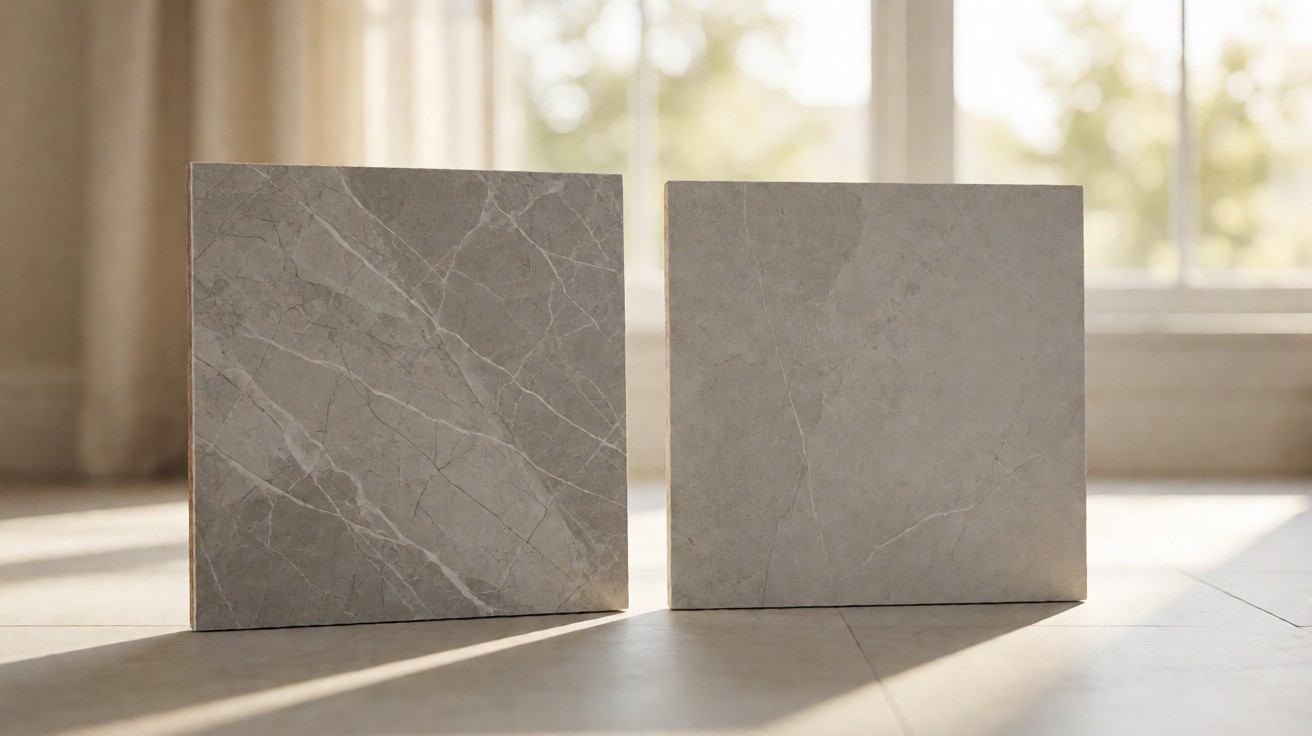

Vinyl and tile both imitate stone and both shrug off a spilled drink, and they disagree about nearly every other factor a buyer ends up weighing before buying. Tile is fired ceramic or porcelain: it is the hardest common flooring, it lasts as long as the house, and it is the least forgiving surface to live on. Vinyl is a printed polymer: it is warm, quiet, comfortable, easy to install over what is already there, and it eventually has to be replaced. The tile guide and the LVT page each cover their material in full.
What Each One Is Made Of
Tile is fired. Clay or a blend of clays is pressed or extruded, dried, and fired to a temperature above 1200 degrees Celsius, and the result is a ceramic body that is chemically inert, dimensionally stable, and essentially indestructible in a residential setting. Porcelain is fired higher and is denser and less porous than ceramic. The porcelain page covers the specification in detail.
Vinyl is extruded or calendered polymer. A wear layer, a printed film carrying the stone image, and a core, bonded together in a factory. Nothing in it was fired and nothing in it is ceramic. A good product at the top of the market is a remarkable reproduction of marble or slate; a budget product is visibly a photograph of one.
Where Each One Is Genuinely Better
Tile wins on durability and on being the correct answer in a wet room. Ceramic and porcelain tile is the standard substrate and finish for a bathroom and shower, and nothing in the vinyl category is an approved shower floor. Outside a shower, porcelain tile in an entryway or a mudroom will outlast any vinyl product by decades.
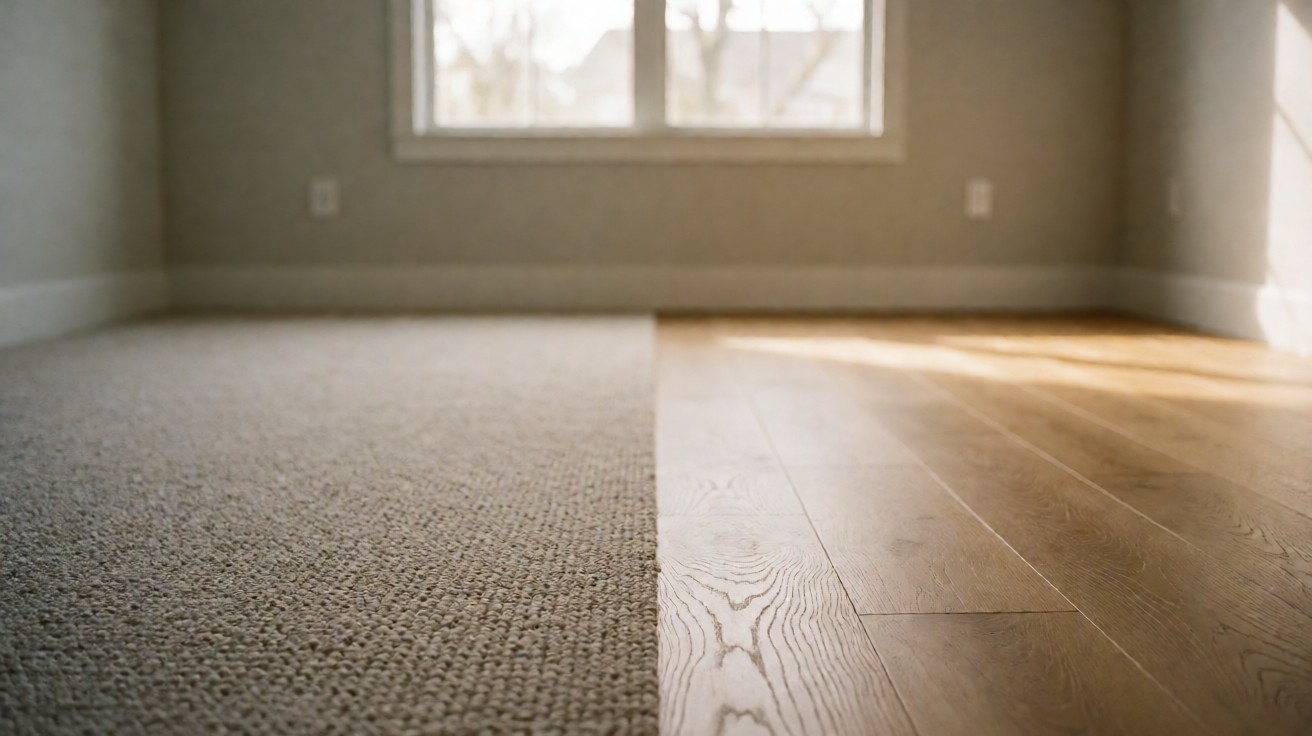
Vinyl wins on everything about living on the floor. It is warmer, quieter underfoot, forgiving of a dropped pan, comfortable barefoot in winter, and it can usually be installed over an existing floor rather than requiring demolition. In a rental, a house being sold, or a room with a dining table in it, vinyl is frequently the better practical choice.
How a Surface Mark Reads on Each
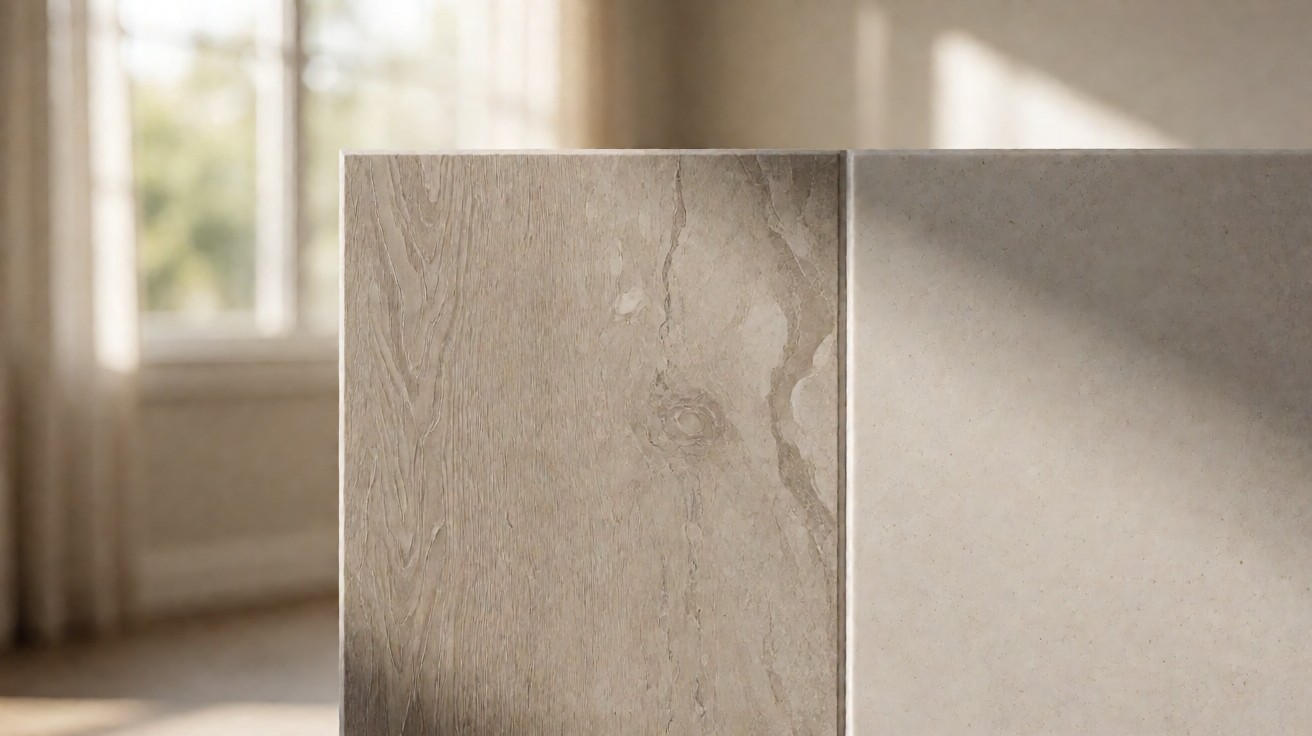
The everyday difference shows up in a chair leg rather than a dropped pan. Ceramic and porcelain is a through-body material: a scratch that is deep enough to see stays exactly that deep, because the colour is in the body and the surface is the body. It cannot be polished out without risking the glaze, and a deep scratch on a matte surface reads clearly under raking light.
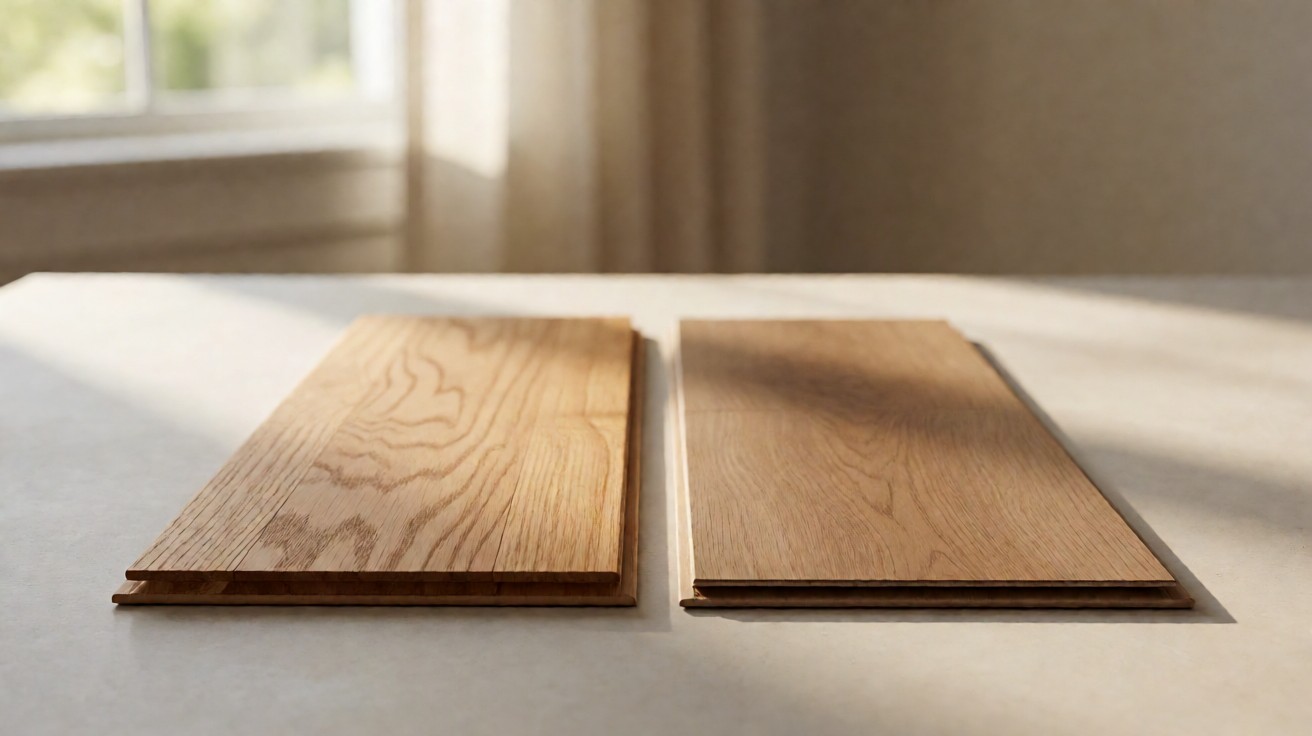
Vinyl is different in a way that is occasionally an advantage. The wear layer is a separate clear film over the printed pattern, so a light mark can often be buffed or spot treated without touching the pattern underneath, and a scuff that would be permanent on porcelain is frequently temporary on vinyl. That is the real reason vinyl survives a dining table and tile does not, and it is a larger factor in most kitchens than the difference in scratch resistance rating would suggest.
The limit is that buffing only works on marks that have not reached the printed layer. Once a scratch cuts through the wear layer into the print, it is permanent on both materials, and the vinyl repair is a filler while the tile repair is a replacement. Which floor looks better at year ten depends on how the marks were acquired, not on which material is harder.
Water, Frost, and Heat
Both are excellent with water on the surface. Tile does not absorb anything and porcelain does not absorb anything at all. Vinyl does not absorb anything either, for the same reason: it has no porosity to absorb into. In practice a spill on either is a wiping job rather than a repair.
The differences are at the edges of the range. Tile is the only one of the two that goes outdoors unshaded, survives a freeze, and tolerates a wet room with backer board and a waterproofing membrane. Vinyl must stay indoors and above grade, and it will be damaged permanently by a standing water event that tile would have shrugged off entirely. Vinyl is also more sensitive to heat, since a polymer softens at a temperature that ceramic simply ignores.
Installation and the Substrate
Tile is unforgiving. It requires a flat, rigid, clean substrate, and for most residential applications a cement backer board or a poured floor. Grout is a real material that has to be worked and cleaned, and every tile has to be level because lippage on a hard floor is felt immediately by bare feet. This is genuinely skilled work and it is not a first project.
Vinyl is forgiving by comparison. A click-lock plank or tile floats over an underlayment, and a glue-down sheet or tile is a medium-skill job on a properly prepared floor. The common residential install takes a day and does not require demolition if the old floor is sound and level. A sheet of vinyl can be flash-coated to a clean floor that is not ideal, which is a genuine convenience as well as a shortcut.
Repair and Replacing One Piece
A broken tile is not a casual repair. The piece has to be broken out, the substrate cleaned, a new tile set in fresh thinset, grouted, and matched to the existing batch. Because tile is fired in a batch, a replacement from a later production run may not match the colour exactly, and in a visible field that difference shows.
A damaged vinyl plank or tile is simpler. In a floating floor, lift the surrounding rows, swap the piece, and put them back. In a glued-down sheet the whole sheet comes up, which is a real drawback. A peel-and-stick product goes down without adhesive at all and comes up cleanly. The best flooring for kitchens page covers where each material behaves in a room with water in it.
Comfort, Sound, and Cold Feet
This is the largest single practical difference and it is not subtle. Tile is hard, cold, and loud. A dropped object on a porcelain floor is an event, footsteps carry, and a bare foot on tile in January is genuinely uncomfortable. Vinyl is warmer underfoot, quieter underfoot, and has a small amount of give.
Under the ASTM E492 impact sound class framework, a properly installed resilient underlayment under vinyl performs substantially better than tile over the same assembly, and tile over a bare slab is at the bottom of the scale. For a floor above a bedroom, or for a house with a sleeping child, that difference is not a preference.
| Situation | Better Choice | Reason |
|---|---|---|
| Bathroom floor, no shower | Tile | Approved for wet rooms, handles spills continuously |
| Shower or wet room | Tile | Nothing in vinyl is approved |
| Entryway or mudroom | Tile | Tracked grit will not scratch a porcelain body |
| Kitchen, active household | Vinyl | Warm, quiet, wipes up instantly |
| Basement playroom or bedroom | Vinyl | Warmer and quieter over a slab |
| Rental or house being sold | Vinyl | Installs fast, often over the old floor |
| Sunroom or enclosed porch | Tile | Softened by heat, damaged by frost |
| House held 30 years or more | Tile | Outlasts any vinyl product by decades |
Cleaning and Daily Maintenance
Tile is close to a no-maintenance floor. A dry sweep or vacuum and a damp mop is enough, and it tolerates any cleaning product. Grout is the exception: cement grout is porous and should be sealed, and epoxy grout does not need to be.
Vinyl is easy but not quite as easy. A damp mop is fine and a wet mop is fine on a quality product, and no abrasive or solvent-based cleaner should be used. The practical difference is that tile does not show wear from cleaning and vinyl does not either, provided the right product is used. Where vinyl loses is at the joints and the perimeter, which collect dirt and can take longer to clean.
Grout, Transitions, and the Look
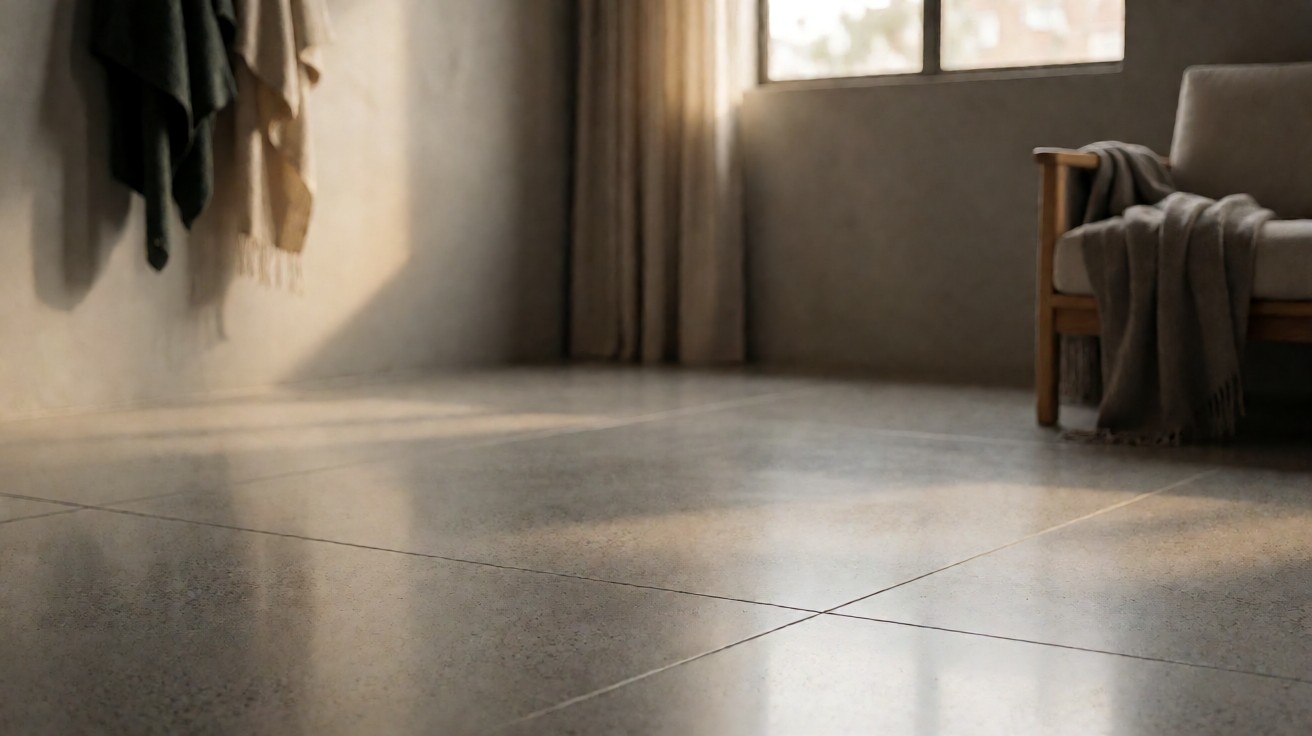
Tile is grouted. The joint is part of the appearance, it defines the grid, and the grout colour is a design decision that affects how the whole floor reads. A large-format tile with a matching grout has fewer lines and a more continuous look; a small mosaic has a very different texture.
Most modern luxury vinyl is groutless, with a chamfered edge and a printed colour that simulates a joint instead. Good quality vinyl now reproduces this convincingly, and removing grout lines is one of the reasons vinyl kitchens stopped looking like vinyl. It is also a genuine advantage: there is nothing to crack, crumble or stain, and there are no grout lines to clean. The visual result is very slightly flatter than real tile, where light catches in the joint.
Slip Resistance and Where It Is Measured
Tile slip resistance is a measured property, quoted as a coefficient of friction or a dynamic friction coefficient under the relevant test method. A matte or textured surface gives a higher number than a polished one, which is why bathroom and entryway tile is specified with a particular finish rather than whatever looks good. The tile finish comparison covers that range.
Vinyl has a slip rating too, but it depends heavily on the surface texture, and polished luxury vinyl with a smooth wear layer can be among the more slippery common flooring surfaces when wet. This is a genuine argument for tile in a bathroom and worth stating plainly rather than assuming the soft-feeling product is also the safer one.
Cost and Value Over Time
Tile installed commonly runs $6 to $20 per square foot including labour, and labour is the larger half. Vinyl installed commonly runs $3 to $9, with the material-only price sometimes less than a third of that.
The arithmetic reverses over a long hold. Quality porcelain or ceramic tile lasts the life of the building and does not have to be replaced. Vinyl in a busy room lasts 10 to 20 years before the printed layer makes it a replacement project. The crossover often lands around year twelve, so a family holding a house for thirty years is frequently better served by the more expensive material installed once.
What Resale and Renovation Value Look Like
A tiled floor is treated as a permanent part of the building and a vinyl floor as a finish that was added. That is worth a sentence of thought when a house is likely to be sold, because a buyer sees tile and reads the house as maintained, and sees vinyl and reads it as a surface that may need replacing at some unknown point.
It is a perception rather than a material fact, and it weakens over time in the same way it does everywhere else in this category. A vinyl floor that has performed well for fifteen years in a kitchen has answered the question its material raises. Buyers increasingly buy on the visible condition of the floor in the rooms they care about, which is an argument for tile in the rooms that photograph and for vinyl nowhere at all.
| Dimension | Luxury Vinyl | Ceramic and Porcelain Tile |
|---|---|---|
| Material | Extruded polymer | Fired clay body |
| Water absorption | None | Porcelain near zero |
| Approved for a shower | No | Yes |
| Outdoors unshaded | No | Yes |
| Warmth underfoot | Warm | Cold |
| Footfall noise in room | Quiet | Loud |
| Grout lines | None, printed chamfer | Real, and a design element |
| Repair one piece | Lift and swap | Break out and re-grout |
| Substrate | Tolerant if flat | Cement board required |
| Installed cost per sq ft | $3 to $9 | $6 to $20 |
| Service life, busy room | 10 to 25 years | Life of the building |
How to Choose
Choose tile in a bathroom, an entryway, a mudroom, a sunroom, or anywhere the floor will take grit, water continuously, or no consideration for a hundred years. Choose vinyl in a kitchen, a basement, a living room, a bedroom, a rental, or any room where comfort and quiet matter more than a fifty-year horizon.
The most common regret in each direction is the same. Tile in a family kitchen, which is beautiful for a decade and then makes every dropped spoon an event and every bare winter morning unpleasant. Vinyl in an entryway, which wears through in the traffic lane at exactly the point where grit and moisture are highest. The floor is chosen for a room, and the room decides.