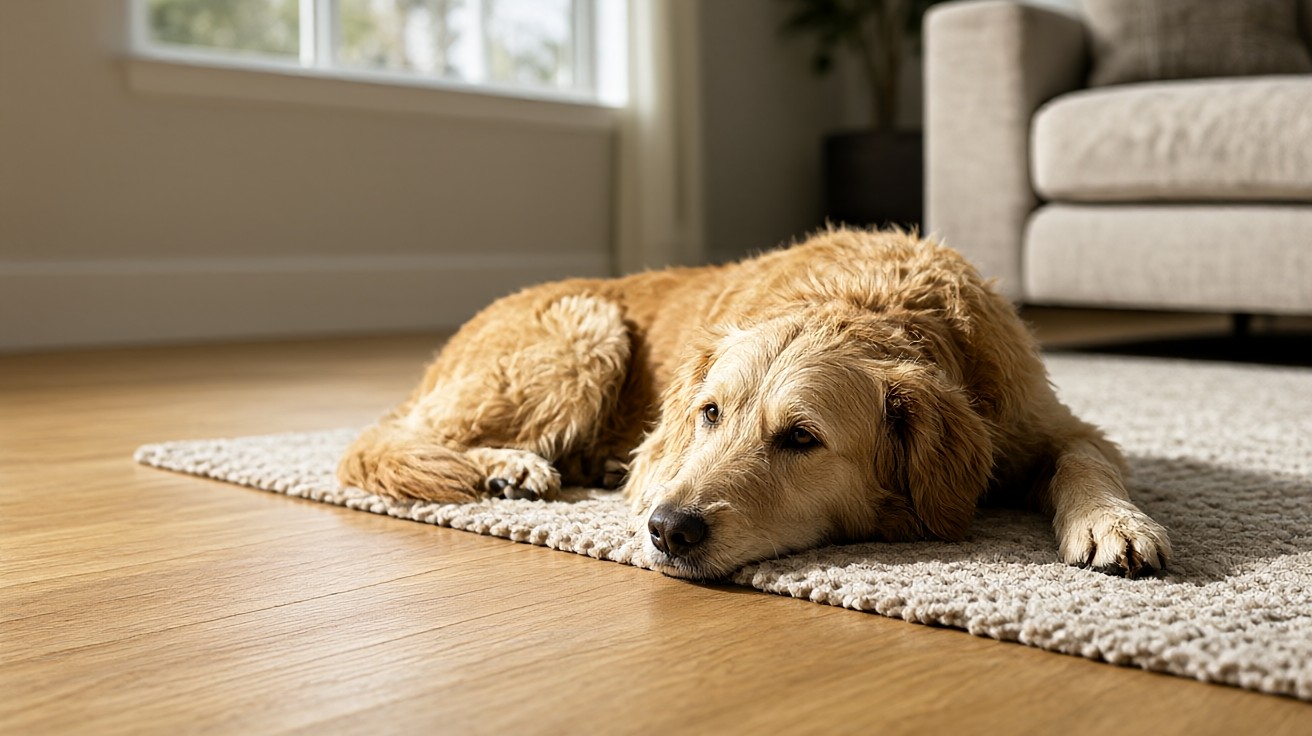

Pet claws, accidents, and tracked-in grit shorten floor life, but the right material, finish, and daily habit keep damage to a minimum in most homes.
The single most effective protection is not a product. It is a routine: trim nails weekly, wipe paws at the door, and clean spills within minutes. Everything else in this guide supports that routine.
Which Flooring Materials Resist Pet Damage Best?
No floor is pet-proof, but some resist damage far better than others. Hardness, water resistance, and repairability are the three traits that matter most.
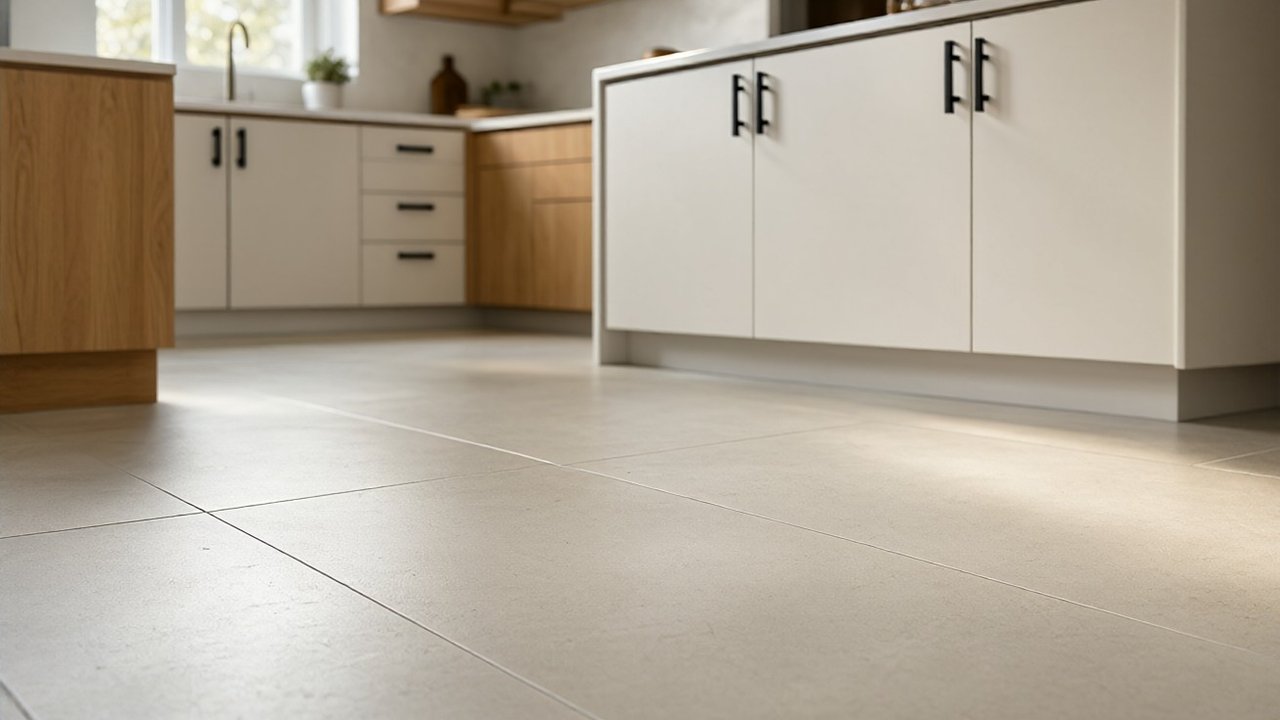
Porcelain tile scores highest on hardness and water resistance. Luxury vinyl plank scores highest on comfort and water resistance. Engineered hardwood can be refinished once or twice. Solid hardwood is the most repairable but the most vulnerable to scratches. If your dog is large and active, choose tile or vinyl instead.
If budget is tight, laminate offers good scratch resistance at lower cost. If comfort matters most, engineered hardwood with a thick wear layer is the better long-term choice. Match the material to the household, not the showroom.
| Material | Scratch resistance | Water resistance | Repairability | Best for |
|---|---|---|---|---|
| Porcelain tile | Excellent | Excellent | Low | Mudrooms, kitchens |
| Luxury vinyl plank | Good | Excellent | Low | Whole house, basements |
| Engineered hardwood | Moderate | Moderate | Moderate | Living areas |
| Solid hardwood | Low to moderate | Low | High | Formal rooms |
| Laminate | Good | Moderate | Low | Bedrooms, offices |
How Does Nail Trimming Protect Floors?
Long nails act like small chisels. A 60-pound dog with untrimmed nails can leave visible grooves in soft hardwood within one month.
Trim nails every one to two weeks, or when you hear clicking on hard surfaces. Keep a grinder handy for dogs that resist clippers. Cats need trimming too; front claws do the most damage to carpet and upholstery.
What Finish Holds Up Against Pet Claws?
Finish matters more than species. A hard finish on soft wood outperforms a soft finish on hard wood in daily use.
Aluminum oxide finishes resist scratches better than traditional polyurethane. Factory-finished boards carry harder coatings than site-applied ones. Matte and low-sheen finishes hide micro-scratches that glossy surfaces reveal.
How Should You Clean Pet Accidents on Flooring?
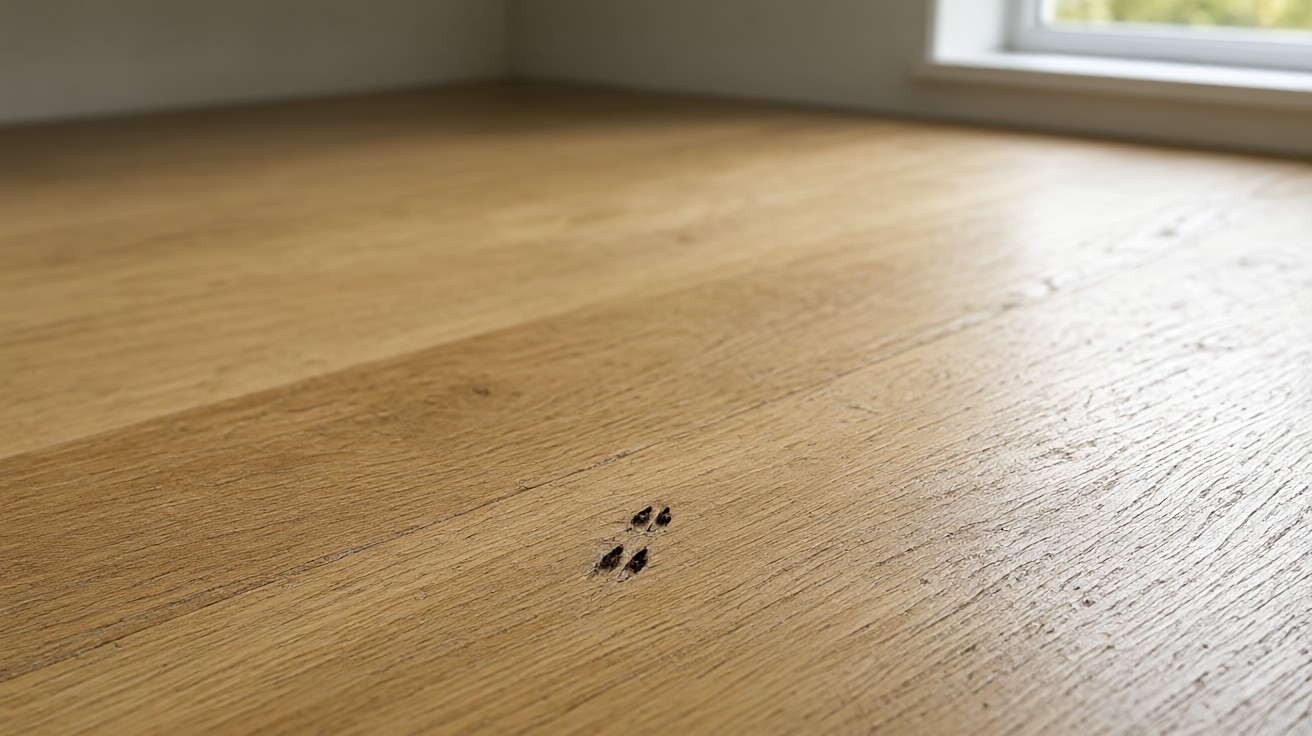
Speed is the entire game. Urine left for one hour can etch finish and stain wood grain; left for one day it can reach the subfloor.
Keep a blacklight flashlight to find old stains you cannot see. Treat those spots with enzyme cleaner and allow 24 hours of dwell time. Repeat if odor persists.
Blot, do not rub. Use an enzyme cleaner labeled for pet urine, not a general disinfectant. Avoid steam mops on hardwood and laminate; moisture drives into seams and causes cupping.
| Accident type | First step | Cleaner | Avoid |
|---|---|---|---|
| Fresh urine | Blot with towel | Enzyme cleaner | Ammonia, steam |
| Old urine stain | Blot, then enzyme soak | Enzyme cleaner | Bleach, vinegar |
| Mud and dirt | Let dry, then vacuum | Damp mop | Wet mopping hardwood |
| Vomit | Scrape solids, blot | Enzyme cleaner | Hot water |
What Rugs and Mats Protect High-Traffic Zones?
Area rugs and runners do the heavy lifting in entryways, hallways, and under feeding stations. They catch grit before it reaches the floor.
Choose washable rugs with non-slip pads. Avoid rubber-backed pads on hardwood; they can trap moisture and discolor finish. Rotate rugs every few months so wear spreads evenly.
How Do You Protect Floors From Water Bowls and Feeding Areas?
Feeding stations are the second most common source of water damage after entryways. Splashed water sits in seams and warps edges.
Place a waterproof mat under bowls. Use heavy, wide bowls that resist tipping. Wipe the area after every meal. Consider an elevated stand to reduce splashing.
What About Litter Boxes and Cat Areas?
Litter tracking damages finishes through abrasion. Fine clay granules act like sandpaper underfoot.
Place a textured mat in front of the box. Sweep or vacuum daily. Keep the box on a hard, sealed surface such as tile or vinyl, never on unfinished wood.
How Do You Handle Pet Hair and Dander on Floors?
Hair is mostly a cleaning issue, but it hides grit that scratches. Vacuum with a hard-floor setting weekly, or more often in shedding season.
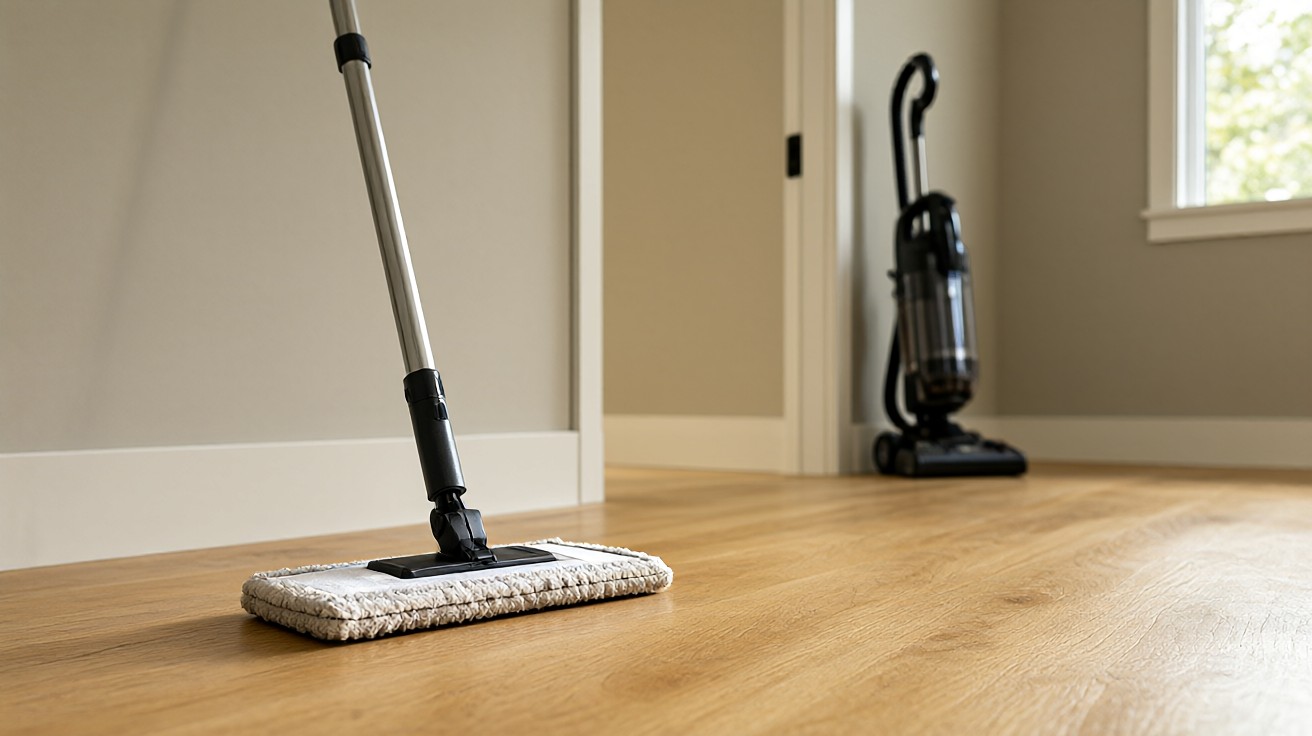
Microfiber mops lift hair without scratching. Avoid beater bars on hard floors; they can dent soft wood and scatter grit.
What Preventive Upgrades Cost the Least?
Small upgrades beat big repairs. Felt pads under furniture legs, a boot tray at the door, and a nail grinder pay for themselves in one avoided refinish.
Add door sweeps to exterior doors to block drafts that carry dust. Install a shoe rack at the entrance so family members remove shoes automatically. These small environmental cues reduce the effort required to keep floors clean.
Door mats at every entrance, both inside and out, cut tracked grit by a large margin. Trim thresholds at doorways catch debris before it spreads.
When Should You Refinish or Replace Damaged Flooring?
Refinish when scratches are shallow and confined to the finish layer. Replace boards when damage reaches the wood or when cupping and warping appear.
Engineered floors can be refinished once or twice depending on wear layer thickness. Solid hardwood can be refinished multiple times. Vinyl and laminate cannot be refinished; damaged planks must be replaced.
Summary: A Pet-Friendly Flooring Plan
Choose hard, water-resistant materials for wet and high-traffic zones. Keep nails short, clean accidents fast, and use rugs in entryways. Small habits cost little and add years to any floor.
How Does Janka Hardness Guide Pet-Friendly Choices?
The Janka hardness test measures the force needed to embed a steel ball into wood. Higher numbers mean better scratch resistance. Hickory rates around 1820, oak around 1290, and pine around 690 on the Janka scale.
If your dog is large and active, choose a species above 1200 Janka. If the dog is small, oak or maple at 1450 Janka is usually enough. Soft woods like pine dent under claws even with a hard finish.
Engineered hardwood carries the same top species as solid wood. The difference is the wear layer thickness. A 3mm wear layer allows one refinish; a 6mm layer allows two.
What Role Does Wear Layer Thickness Play?
Wear layer thickness is the top veneer that can be sanded. Thicker layers survive more refinishes and deeper scratches.
For homes with pets, specify at least 3mm of wear layer. Below 2mm, a single deep scratch can expose the core. Above 4mm, you gain flexibility for future refinishing.
When you compare products, ask for the wear layer in millimeters, not marketing terms like premium or heavy duty. ASTM F3261 covers resilient flooring performance and helps verify claims.
Which Cleaning Products Are Safe for Pet Households?
pH-neutral cleaners protect finish chemistry. Acidic or alkaline cleaners degrade polyurethane and aluminum oxide coatings over time.
Use a cleaner labeled for your specific floor type. Avoid oil soaps on urethane finishes; they leave residue that attracts grit. Avoid vinegar on stone and tile; it etches grout and natural stone.
Enzyme cleaners are the only reliable choice for pet urine. They break down uric acid crystals that standard detergents leave behind. Follow label dwell times of 10 to 15 minutes for best results.
How Do You Reduce Tracking and Grit Damage?
Grit is the silent killer of floor finishes. Quartz particles at Mohs hardness 7 scratch finishes rated below that.
Place coarse mats outside and fine mats inside every entrance. Clean mats weekly. Sweep or vacuum before mopping so grit is not dragged across the surface.
If your dog runs the same path daily, that lane wears faster. Rotate furniture and rugs to shift traffic patterns and extend finish life.
What About Moisture and Humidity Control?
Wood floors expand and contract with humidity. Pets add moisture through breath, water bowls, and accidents.
Maintain indoor relative humidity between 30 and 50 percent. Use a humidifier in winter and a dehumidifier in summer. This reduces gapping and cupping that trap dirt and pet hair.
ANSI and NWFA guidelines recommend acclimating wood flooring for 3 to 5 days before installation. Follow manufacturer moisture limits, often 12 percent for wood subfloors.
How Do You Protect Stairs and Landings?
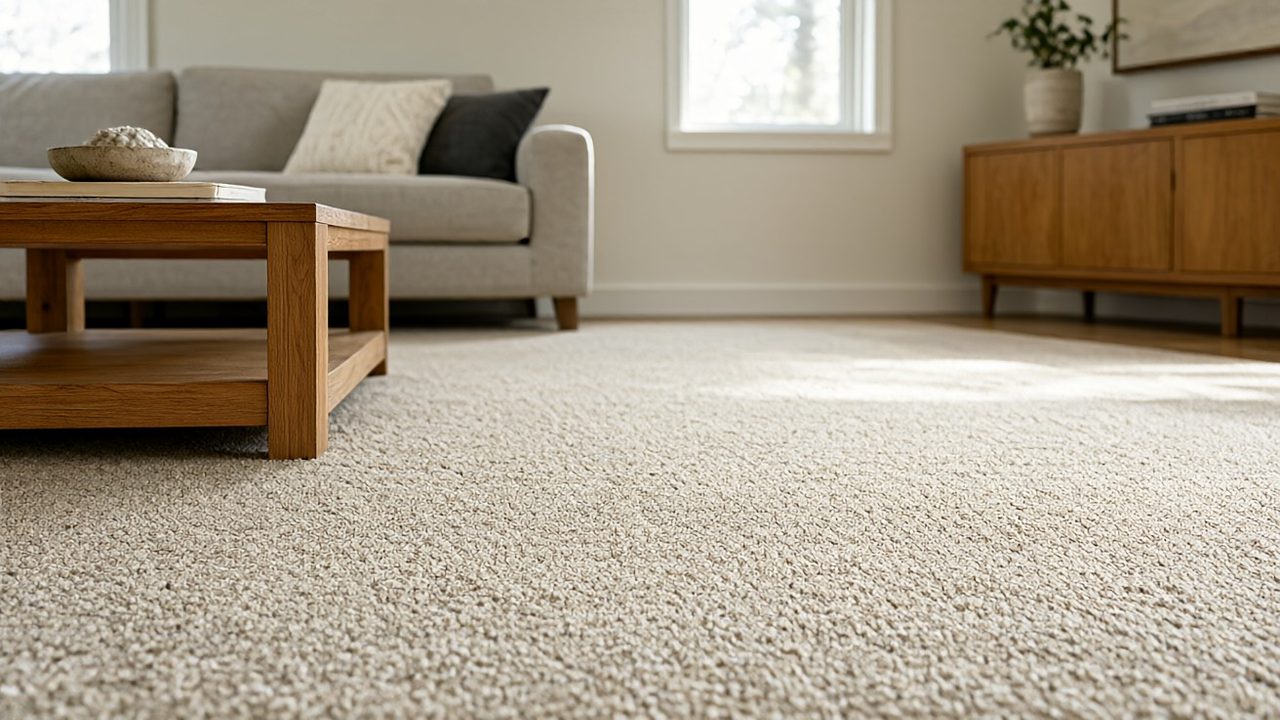
Stairs concentrate pet traffic. Each step takes the full force of a running dog. Carpet runners or non-slip treads reduce impact and slipping.
Secure treads with adhesive or staples rated for the substrate. Avoid loose runners that slide. Check fasteners every 6 months for wear.
If stairs are hardwood, consider a harder species like hickory or oak. Soft pine stairs show claw marks within weeks.
What Is the Cost of Pet Damage Over Time?
Refinishing hardwood costs between 3 and 8 dollars per square foot. Replacing damaged planks costs more. Prevention costs pennies by comparison.
A nail trimmer costs 15 dollars. A boot tray costs 20 dollars. Felt pads cost 10 dollars. These three items prevent most avoidable damage.
If you budget for one refinish every 10 years instead of every 5, you save roughly half the lifetime maintenance cost. That is the real return on daily habits.
How Do You Choose Pet-Friendly Flooring for Each Room?
Match the material to the room, not the whole house. Tile in mudrooms, vinyl in kitchens, and hardwood in bedrooms is a common and effective mix.
Basements need moisture-resistant materials like vinyl or tile. Bedrooms benefit from the warmth of hardwood or carpet. Kitchens need water resistance and easy cleaning.
For a broader decision framework, see our guide on how to choose flooring for your home. For mudroom specifics, see best flooring for mudrooms.
How Do You Build a Daily Pet-Floor Routine?
A routine beats any product. If you wipe paws at the door and trim nails on schedule, most floors last twice as long.
Track your maintenance in a simple log. Note nail trim dates, deep clean dates, and any spills. Patterns emerge over months and help you adjust the routine before damage accumulates.
Start with a mat at every entrance. Add a towel by the door for wet days. Keep a spray bottle of enzyme cleaner under the sink. These three items handle 90 percent of pet-related floor incidents.
If you have multiple pets, increase cleaning frequency. Two dogs shed twice the hair and track twice the grit. Adjust vacuuming from weekly to twice weekly when needed.
Set reminders on your phone for nail trims and mat washing. Habits fail when they rely on memory. Automation keeps the routine consistent year round.
What Do Pet Warranties Actually Cover?
Most flooring warranties exclude pet damage. Read the fine print before assuming coverage. Some manufacturers offer pet-specific warranties on scratch and stain resistance.
A warranty that covers pets usually requires proof of proper maintenance. Keep receipts for cleaners and nail trimmers. Document installation and humidity control.
If a claim is denied, the cost falls on you. Prevention remains cheaper than any warranty dispute. Budget for maintenance rather than relying on coverage.