
The right floor mat protects surfaces from grit, moisture, and furniture wear. Match backing to flooring type, size mats to traffic, and clean them weekly.
A few dollars of woven fibre at the door stops grit from reaching the finish, and a pad under a rug stops a beautiful rug from scratching the wood beneath it. A rubber backing that bleeds plasticiser into vinyl, a felt pad that traps moisture against hardwood, or a mat that slides under a rolling chair can scar a floor in a season. Matching backing to surface and cleaning on a schedule prevents most of that damage.
What a floor mat actually does
A mat works in three ways. It traps debris at entry points. It absorbs moisture before it spreads across a finished surface. It distributes point loads so furniture and heels do not dent soft materials.
Each job calls for a different construction. A scraper mat at the door needs stiff bristles. A kitchen mat needs cushioning and a non-slip backing. A chair mat needs a hard, smooth top that wheels roll across without resistance.
Which mat traps the most grit?
Coir and polypropylene scraper mats remove up to 80 percent of tracked-in soil when sized at 120 cm wide and 180 cm long, according to NWFA maintenance guidance. Anything smaller lets grit bypass the edges.
Matching mat backing to flooring type
Backing is the part that touches the floor, and it is where most damage begins. The table below pairs common backings with the floors they suit.
| Backing material | Suits | Avoid on | Why |
|---|---|---|---|
| Felt or natural fibre | Hardwood, engineered wood | Wet areas | Breathes and does not stain the finish |
| Natural rubber (non-staining) | Tile, stone, sealed concrete | Vinyl, laminate | Grips well but can mark resilient floors |
| Polyurethane or latex-free | Vinyl, laminate, LVT | Unfinished wood | Chemically stable against plasticisers |
| PVC with cleats | Carpet over concrete | Hardwood | Cleats bite into carpet, not wood |
Always check the flooring manufacturer’s care guide before laying a mat. Many void warranties if a non-approved backing is used, and the cost of a replacement plank exceeds the price of a certified pad. If the warranty lists approved pads, use only those.
Can rubber-backed mats damage vinyl floors?
Yes. Plasticiser migration from PVC or rubber backings can stain vinyl and laminate within 6 to 12 weeks. RFCI recommends non-staining, latex-free backings for resilient floors, tested to ASTM F1303.
Entryway and exterior door mats
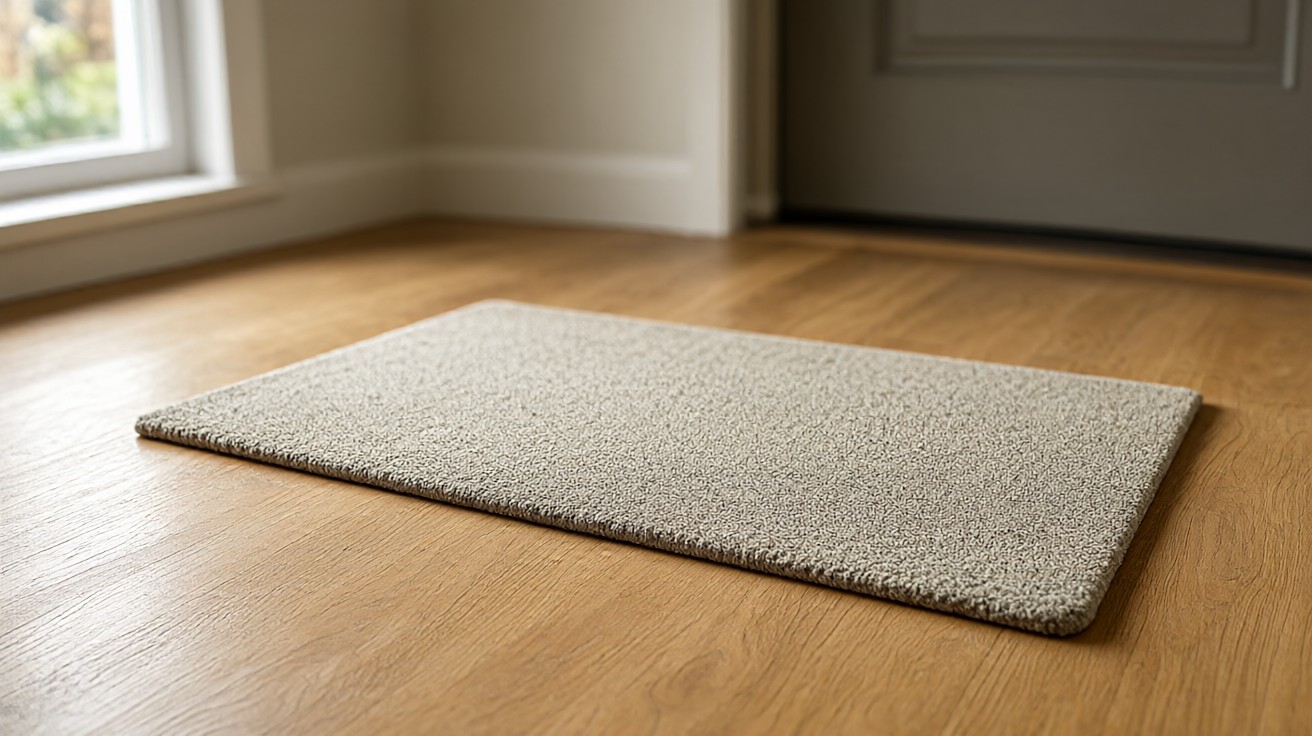
Place a scraper mat outside the door and an absorbent mat just inside. The outside mat removes mud and gravel; the inside mat catches the dust and water that remain. Together they cut the amount of grit that reaches the floor by more than half.
Choose a mat at least 80 percent of the door width so both feet land on it. Anything smaller is stepped around and does no work. For high-traffic doors, select a mat with a raised pattern that scrapes soles without holding water.
Kitchen and standing-area mats
Kitchen floors take water, oil, and dropped utensils. A cushioned anti-fatigue mat in front of the sink and stove reduces fatigue and protects the finish from repeated foot traffic. Look for a closed-cell surface that wipes clean and a bevelled edge that does not trip.
For islands and long counters, use a runner rather than several small mats. Seams between small mats trap crumbs and become trip hazards. A single runner is easier to lift and clean underneath.
How often should kitchen mats be cleaned?
Lift and wipe the underside every 7 days and wash the mat every 30 days. If oil or standing water is present, clean immediately, because a 24-hour soak can soften finishes and loosen grout sealer.
Chair mats for hard floors and carpet
Rolling chairs concentrate weight on small casters and wear a track into almost any surface. A chair mat spreads that load and gives the casters a smooth rolling surface. On hard floors, choose a flat, smooth mat with a gripper underside rather than cleats.
On carpet, the mat needs cleats or studs that anchor it to the pile without sliding. Match cleat length to carpet thickness: 3 mm cleats for low pile under 6 mm, 5 to 6 mm cleats for plush pile over 12 mm. A mat that is too thin for the carpet will flex and crack at the edges.
Rug pads under area rugs
An area rug without a pad slides, creases, and wears unevenly. A pad adds grip, cushioning, and airflow between rug and floor. The right pad depends on both surfaces.
For hardwood and engineered wood, use a felt pad or a felt-and-natural-rubber combination. Avoid pure rubber or PVC on wood finishes, which can react with the finish and leave a permanent imprint. For tile and stone, a natural rubber pad gives the best grip and does not stain grout.
How to size and place mats
Size matters as much as material. The table below lists practical starting points for common locations.
| Location | Suggested size | Notes |
|---|---|---|
| Front door interior | 90 by 150 cm | Large enough for two steps |
| Kitchen sink | 60 by 90 cm | Cushioned, closed-cell top |
| Desk chair | 120 by 150 cm | Extends past the chair’s full reach |
| Area rug pad | 2.5 cm smaller than rug | Keeps pad hidden and edges flat |
Place mats where traffic turns or stops, not only at doorways. Hallway runners protect the centre of a corridor, and small mats in front of pet bowls catch splashes before they reach the floor.
Cleaning and maintenance
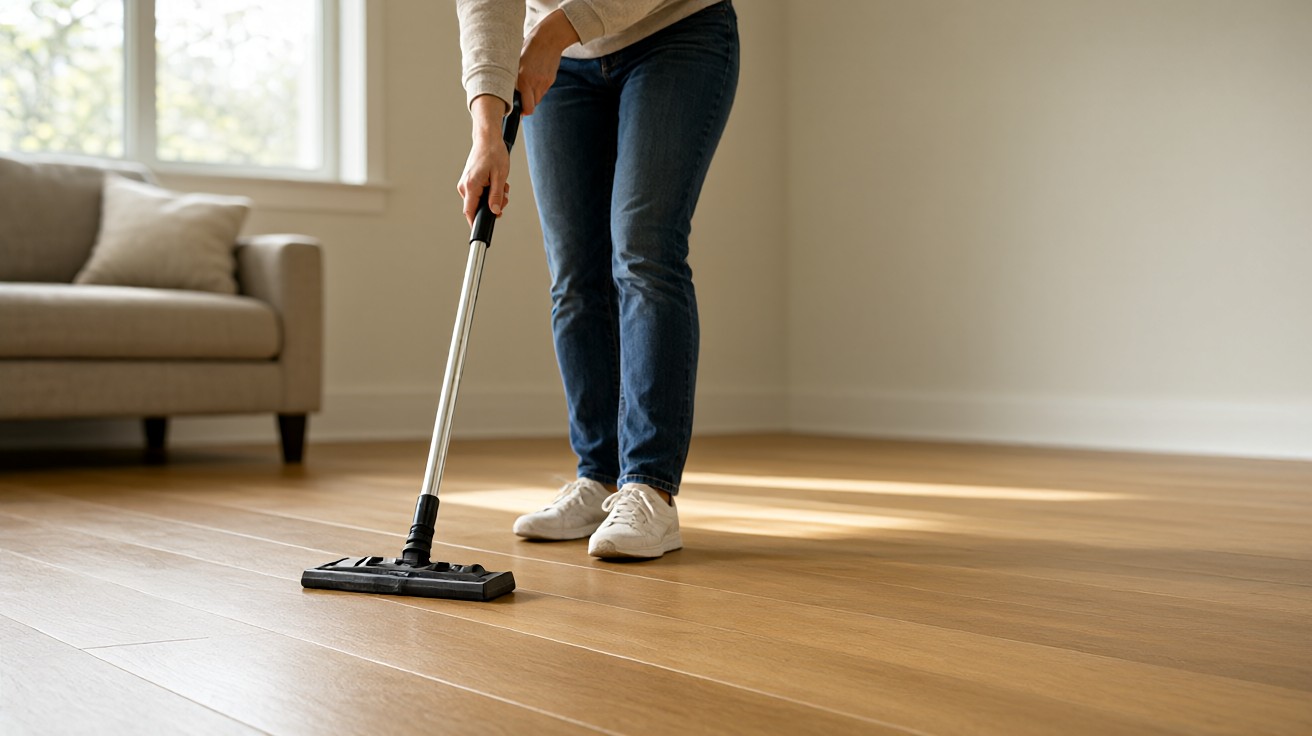
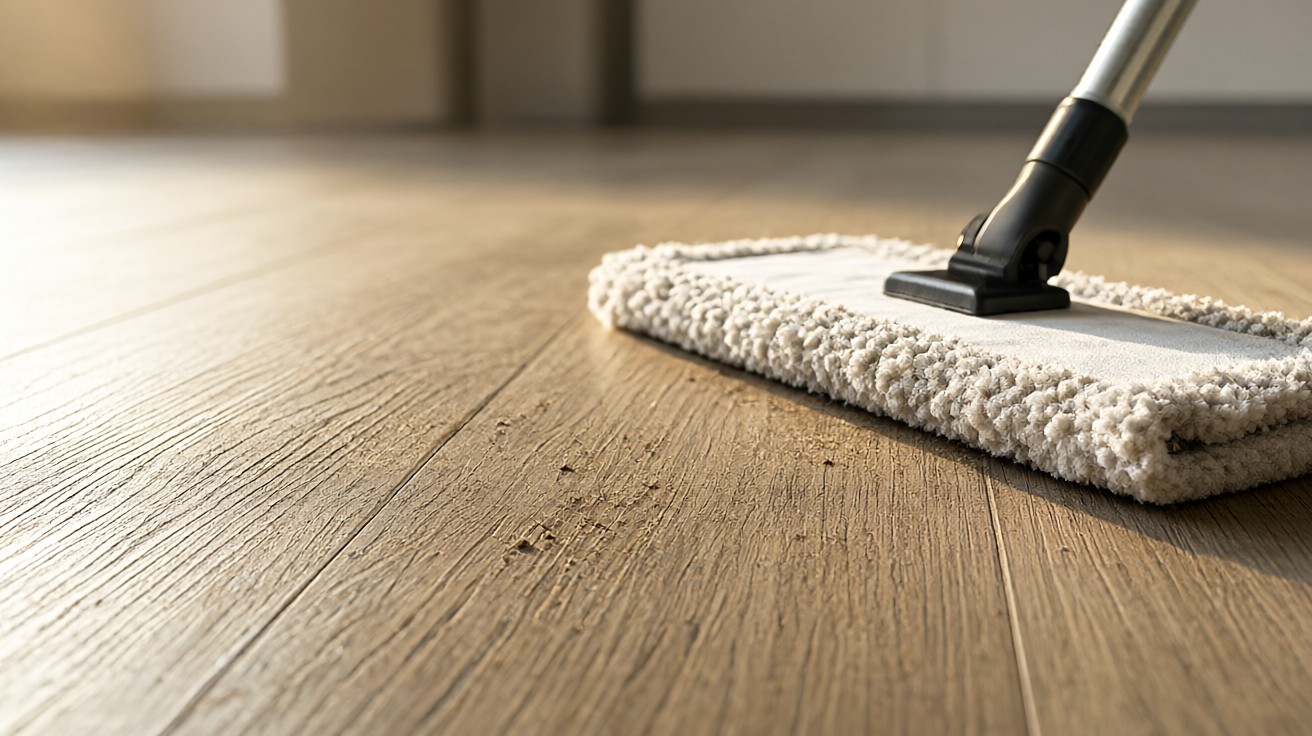
A dirty mat stops protecting and starts abrading. Shake or vacuum mats weekly and wash or hose them monthly. Let mats dry fully before returning them to the floor, because trapped moisture causes cupping in wood and staining in vinyl.
Inspect the backing every few months. If it has hardened, cracked, or left marks on the floor, replace it. Pads are consumables, not permanent fixtures, and replacing one is far cheaper than refinishing a floor.
When to skip a mat
Some situations call for no mat at all. In a bathroom with a non-slip tile and a floor drain, a fabric mat only holds water against the grout. In a laundry room, a rubber mat can trap heat and moisture behind an appliance.
Where a mat is not wanted, use felt furniture glides under legs and keep the floor swept. A clean, dry floor with no mat is safer than a damp mat left in place.
Common mistakes to avoid
Three mistakes account for most mat-related floor damage. First, leaving a rubber-backed mat on vinyl for months, which can leave a yellow stain. Second, using a mat that is too small, so dirt bypasses it. Third, never cleaning the underside, which grinds grit into the finish.
Avoid all three by matching backing to floor, sizing generously, and lifting the mat to clean both sides on a regular schedule. Consistency matters more than brand or price.
Material-by-material mat advice
Hardwood floors need breathable pads. If the finish is polyurethane, use felt or felt-rubber pads and avoid PVC. If the finish is oil or wax, choose a pad labelled safe for oiled wood and test in a corner for 48 hours.
Laminate floors are sensitive to moisture at the seams. Use a latex-free pad with a moisture barrier, and if a spill occurs, lift the mat within 30 minutes to dry the seam. If the mat has a rubber backing, expect discoloration within 8 to 12 weeks.
Vinyl and LVT need non-staining pads tested to ASTM F1303. If the mat is not labelled non-staining, do not use it. If the floor has a textured surface, choose a pad with a smooth underside to avoid imprinting.
Tile and stone tolerate rubber pads well. If the grout is unsealed, seal it first, because a rubber pad can darken unsealed grout. If the tile is polished marble, avoid abrasive scraper mats that can dull the surface.
Carpet needs a pad with cleats sized to the pile. If the carpet is under 6 mm, use 3 mm cleats. If the carpet is over 12 mm, use 5 to 6 mm cleats. If the mat slides, replace it rather than adding tape, which damages fibres.
Concrete floors are forgiving but cold. Use a rubber or foam pad for insulation, and if moisture is present, choose a breathable pad and seal the concrete first. If the concrete is polished, avoid abrasive mats that can scratch the surface.
Budget and lifespan
A quality scraper mat costs 25 to 60 dollars and lasts 3 to 5 years in a residential entry. A felt rug pad costs 0.50 to 1.50 dollars per square foot and should be replaced every 3 to 5 years. A chair mat costs 40 to 120 dollars and lasts 5 to 10 years if cleaned regularly.
If the budget is tight, prioritise the entry and the kitchen, because those two locations see the most traffic and moisture. If the budget allows, add pads under every area rug, because the cost of a pad is far less than refinishing hardwood.
Quick buying checklist
Before buying, confirm five things: the backing is approved for your floor, the size covers the traffic path, the surface is easy to clean, the edges lie flat, and the mat can be lifted for cleaning underneath. If any answer is no, keep looking.
For more on routine care, see”/how-to-clean-carpet/”>how to clean carpet and best flooring cleaners by material. A good mat reduces how often those deeper cleans are needed. Standards bodies such as TCNA, NWFA, and RFCI publish care guidance that most manufacturers reference. If a mat carries a certification label, verify it against the flooring warranty before installation. If no certification is listed, request written approval from the manufacturer. If approval is not available, choose a mat with a felt or latex-free backing, because those have the lowest risk of staining or chemical reaction. If the floor is under warranty, keep the receipt and the mat label, because claims often require proof of approved accessories. If the mat is used in a commercial setting, check the slip resistance rating and fire code compliance as well. If the mat is outdoors, choose UV-stable materials that resist fading and cracking. If pets are present, choose a mat that can be washed at 60 degrees Celsius without shrinking. If the mat is placed on stairs, use a low-profile design with a secure backing to prevent tripping. If the mat is used in a hallway, choose a runner with a non-slip backing and trim it to leave 5 cm of floor visible on each side. If the mat is used in an entryway, choose a scraper with a moisture barrier and a raised pattern. If the mat is used in a kitchen, choose a closed-cell foam with a bevelled edge. If the mat is used under furniture, choose a felt pad that matches the furniture footprint. If the mat is used on stairs, choose a low-profile design with a secure backing.
For deeper cleaning guidance, see how to clean carpet and best flooring cleaners by material. A good mat reduces how often those deeper cleans are needed.