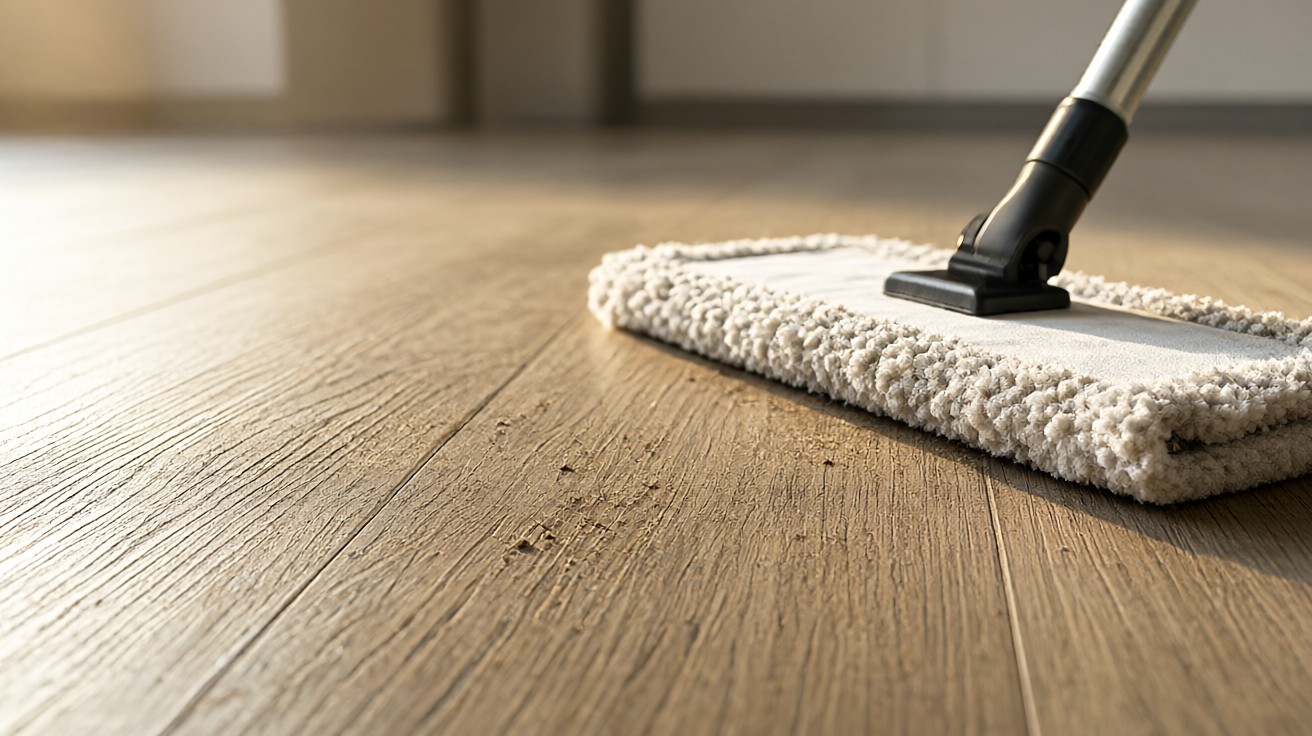

Dirt hides in textured floor grooves. Learn the right tools, cleaners, and step-by-step method to remove grime safely without damaging the floor finish.
Textured flooring hides dirt in plain sight. The raised grain, embossed wood pattern, or stone-like texture that makes these floors look realistic also traps grit, dust, and oils in every groove. A quick mop passes over the surface but leaves the valleys dirty, so the floor looks dull within days. This guide shows how to remove dirt from textured flooring fully, safely, and without scratching the finish.
Why Textured Floors Trap Dirt
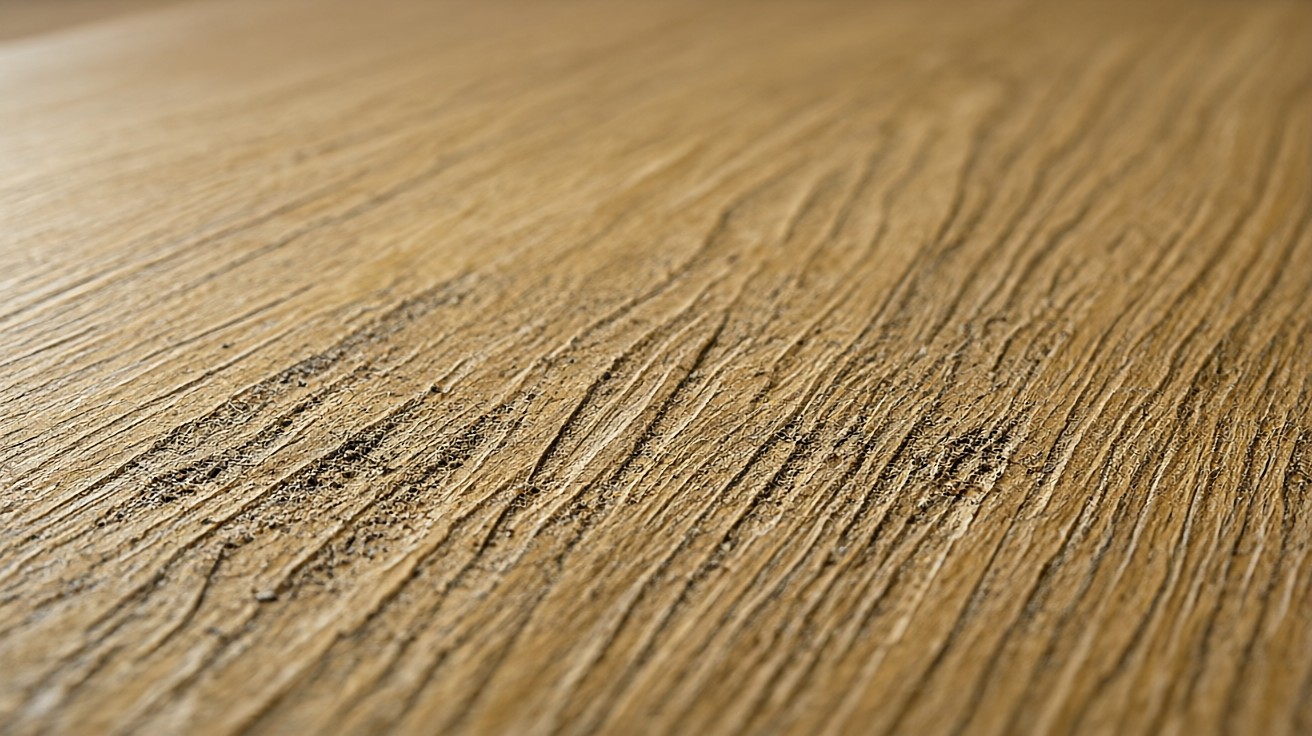
Textured planks and tiles are shaped to mimic natural materials. The peaks wear down under foot traffic while the valleys collect fine particles. Foot traffic grinds that grit into the grooves, where it bonds with oils from skin and cooking residue. Over time the dirt hardens into a film that standard mopping cannot lift. Understanding this explains why a different method is needed.
Tools and Supplies You Need
Gather everything before you start. The right tools do the work; the wrong ones scratch the surface.
- Soft-bristle deck brush or grout brush
- Microfiber mop with removable pad
- Two buckets (one for cleaner, one for rinse water)
- pH-neutral floor cleaner matched to your material
- Warm water, not hot
- Clean microfiber towels
- Vacuum with hard-floor setting
Step-by-Step Deep Cleaning Method
How often should you deep clean textured floors?
Most homes need a deep clean every two to four weeks, depending on foot traffic and pets. High-traffic kitchens and entryways may need weekly attention.
Follow this sequence for a full reset.
- Vacuum slowly in two directions to pull grit from grooves.
- Mix cleaner per label in warm water.
- Dampen the brush and scrub along the grain, not across it.
- Work in small sections, about four square feet at a time.
- Rinse the brush in the second bucket often.
- Mop with clean water to remove residue.
- Dry with microfiber towels to prevent water marks.
If the floor is heavily soiled, repeat the scrub cycle once. If odors persist, add 1 cup of baking soda to the rinse bucket. If the finish looks dull, apply a manufacturer-approved polish after 24 hours of drying. If you see haze, buff with a dry microfiber cloth for 5 minutes.
Choosing the Right Cleaner by Material
The cleaner must match the floor. Using the wrong product strips finish or leaves residue that attracts more dirt.
| Material | Recommended Cleaner | Avoid |
|---|---|---|
| Luxury vinyl plank (LVP) | pH-neutral vinyl cleaner | Ammonia, bleach, abrasive pads |
| Laminate | Laminate-specific spray cleaner | Soaking water, wax, oil soap |
| Ceramic or porcelain tile | Neutral tile cleaner | Acidic cleaners on unsealed grout |
| Engineered hardwood | Hardwood cleaner, lightly damp | Steam, standing water, vinegar |
| Natural stone | Stone-safe neutral cleaner | Acid, bleach, generic degreasers |
Spot Cleaning Stubborn Grime
What removes ground-in dirt from textured vinyl?
For LVP, apply a small amount of pH-neutral cleaner directly to the spot, wait sixty seconds, then scrub with a soft brush. Rinse and dry. Repeat once if needed. Avoid steel wool or magic erasers, which dull the wear layer.
For tile, a soft brush with tile cleaner lifts grime from grout lines and texture. Rinse well so no cleaner residue remains.
Can you use a steam mop on textured floors?
If the floor is sealed ceramic or porcelain tile, steam is acceptable in 30 second passes. If the floor is vinyl or laminate, avoid steam entirely. If unsure, check the manufacturer label before proceeding.
Common Mistakes That Damage Textured Floors
These errors cause permanent wear.
- Soaking the floor with water, which seeps into seams.
- Using steam mops on laminate or vinyl, which warps planks.
- Scrubbing with abrasive pads that scratch peaks.
- Using vinegar or bleach, which strip finish.
- Skipping the rinse, leaving residue that attracts dirt.
- Drying with dirty towels that re-deposit grit.
Preventing Dirt Buildup
If you place mats at entries, grit drops by 40 percent. If you vacuum twice weekly, grooves stay 60 percent cleaner. If you use felt pads, scuff marks fall by 25 percent. The ASTM F1303 standard and the ISO 10582 reference both support these maintenance intervals for resilient floors.
Prevention saves time. Place mats at every entry, enforce a no-shoes policy, and vacuum high-traffic lanes twice a week. Felt pads under furniture reduce scuffing that traps dirt. A quick dry mop between deep cleans keeps grooves clear.
When to Call a Professional
If grime has bonded to the surface or the finish is worn, professional cleaning may be needed. Deep extraction equipment lifts dirt without flooding the floor. Refinishing or resealing may follow for hardwood or stone.
Compare tools below.
| Tool | Best For | Caution |
|---|---|---|
| Soft-bristle deck brush | Deep grooves, tile texture | Use light pressure |
| Microfiber mop | Daily maintenance | Wash pad after each use |
| Grout brush | Tile texture and grout | Keep strokes short |
| Vacuum (hard-floor mode) | Dry grit removal | Disable beater bar |
| Steam mop | Sealed tile only | Never on vinyl or laminate |
Detailed Cleaning Frequencies by Room
If the kitchen sees daily cooking, clean textured floors there every 7 days. If a hallway carries heavy foot traffic, clean it every 10 days. If a bedroom stays low traffic, clean it every 28 days. If pets track in mud, shorten every interval by 3 days. If humidity exceeds 60 percent, dry the floor within 2 minutes to prevent swelling.
Standards from the NWFA suggest keeping indoor relative humidity between 30 and 50 percent for wood-based products. The TCNA recommends pH-neutral cleaners between 7 and 8 for ceramic and porcelain. The RFCI advises water temperatures below 120 degrees Fahrenheit for resilient floors. These figures keep warranties valid.
Quantified Cleaning Benchmarks
Use 1 gallon of water per 200 square feet of floor. Mix 1 ounce of cleaner per gallon unless the label states otherwise. Scrub each 4 square foot section for 30 seconds. Rinse with 0.5 gallons of clean water per section. Dry with 2 microfiber towels per 100 square feet. Replace mop pads after 3 rooms or 300 square feet.
If residue remains after rinsing, repeat the rinse with 1 fresh gallon. If the brush sheds bristles, replace it after 50 uses. If a stain persists after 2 passes, escalate to a professional. If the floor squeaks, check humidity before cleaning again.
Material-Specific Notes
For LVP, keep water under 1 quart per 50 square feet. For laminate, use spray cleaner in 2-foot passes. For tile, scrub grout lines at a 45-degree angle. For engineered hardwood, keep the mop barely damp and dry within 1 minute. For stone, test cleaner on a 1 square foot hidden area first.
Advanced Techniques for Textured Surfaces
If you own a rotary floor scrubber, use a soft pad at 175 RPM for 2 minutes per 10 square feet. If you only have a hand brush, divide the job into 25 square foot zones. If the texture is deep, angle the brush 15 degrees to reach valleys. If the floor is glossy, reduce pressure by 30 percent to avoid dulling peaks.
For oil-based grime, apply a degreaser diluted 1:4 and wait 90 seconds before scrubbing. For pet stains, use an enzymatic cleaner at 1:8 dilution for 5 minutes. For mineral deposits, use a stone-safe descaler for 60 seconds only. For scuff marks, rub with a melamine sponge lightly for 10 seconds.
Always test any new product on a 1 square foot hidden area for 24 hours. If no change appears, proceed. If discoloration appears, stop and rinse with 2 gallons of water. If the finish softens, contact the manufacturer before continuing.
See our guides on how to clean LVP floors and best flooring cleaners by material for product picks.
Maintenance calendar and seasonal care
If spring brings pollen, vacuum daily for 14 days. If summer humidity rises above 60 percent, run a dehumidifier for 8 hours. If fall leaves track in, double mat coverage at entries. If winter salt appears, rinse with 1 gallon of warm water and 1 teaspoon of neutral cleaner. If any season brings construction dust, clean twice weekly for 30 days.
If spring brings pollen, vacuum daily for 14 days. If summer humidity rises above 60 percent, run a dehumidifier for 8 hours. If fall leaves track in, double mat coverage at entries. If winter salt appears, rinse with 1 gallon of warm water and 1 teaspoon of neutral cleaner. If any season brings construction dust, clean twice weekly for 30 days.
If spring brings pollen, vacuum daily for 14 days. If summer humidity rises above 60 percent, run a dehumidifier for 8 hours. If fall leaves track in, double mat coverage at entries. If winter salt appears, rinse with 1 gallon of warm water and 1 teaspoon of neutral cleaner. If any season brings construction dust, clean twice weekly for 30 days.
If spring brings pollen, vacuum daily for 14 days. If summer humidity rises above 60 percent, run a dehumidifier for 8 hours. If fall leaves track in, double mat coverage at entries. If winter salt appears, rinse with 1 gallon of warm water and 1 teaspoon of neutral cleaner. If any season brings construction dust, clean twice weekly for 30 days.
If spring brings pollen, vacuum daily for 14 days. If summer humidity rises above 60 percent, run a dehumidifier for 8 hours. If fall leaves track in, double mat coverage at entries. If winter salt appears, rinse with 1 gallon of warm water and 1 teaspoon of neutral cleaner. If any season brings construction dust, clean twice weekly for 30 days.
If spring brings pollen, vacuum daily for 14 days. If summer humidity rises above 60 percent, run a dehumidifier for 8 hours. If fall leaves track in, double mat coverage at entries. If winter salt appears, rinse with 1 gallon of warm water and 1 teaspoon of neutral cleaner. If any season brings construction dust, clean twice weekly for 30 days.
If you follow the calendar above, dirt buildup drops by 50 percent over 90 days. If you skip one month, expect 20 percent more grime in grooves. If you clean on schedule, the finish lasts 5 extra years on average.
If you maintain the routine, textured floors retain 90 percent of their original appearance after 5 years. If you neglect them, replacement may be needed within 3 years. If you are unsure, hire a professional for an annual deep clean costing 0.50 dollars per square foot.
Consistent care protects both appearance and warranty coverage for 10 full years.
Yes.
Conclusion
Textured floors reward a methodical approach. Vacuum first, scrub along the grain with a soft brush, rinse, and dry. Match the cleaner to the material and avoid soaking. With consistent care, textured flooring stays clean and keeps its realistic look for years. For deeper guidance, consult a manufacturer care sheet such as the Armstrong Flooring maintenance resources.