
You asked a flooring quote for cork in the bedroom, and the number came back higher than engineered wood, with nothing on the estimate explaining why.
The answer is to split the cork line into three parts: the material, the finish, and the locking system. Cork lands between 6 and 14 dollars per square foot installed, and the board you walk on is usually under half of that total.
What Cork Flooring Cost Is Actually Made Of
Cork is the bark of the cork oak, Quercus suber, stripped by hand from a tree that keeps growing through it. The same tree is harvested again every 9 to 12 years, for decades, without being felled.
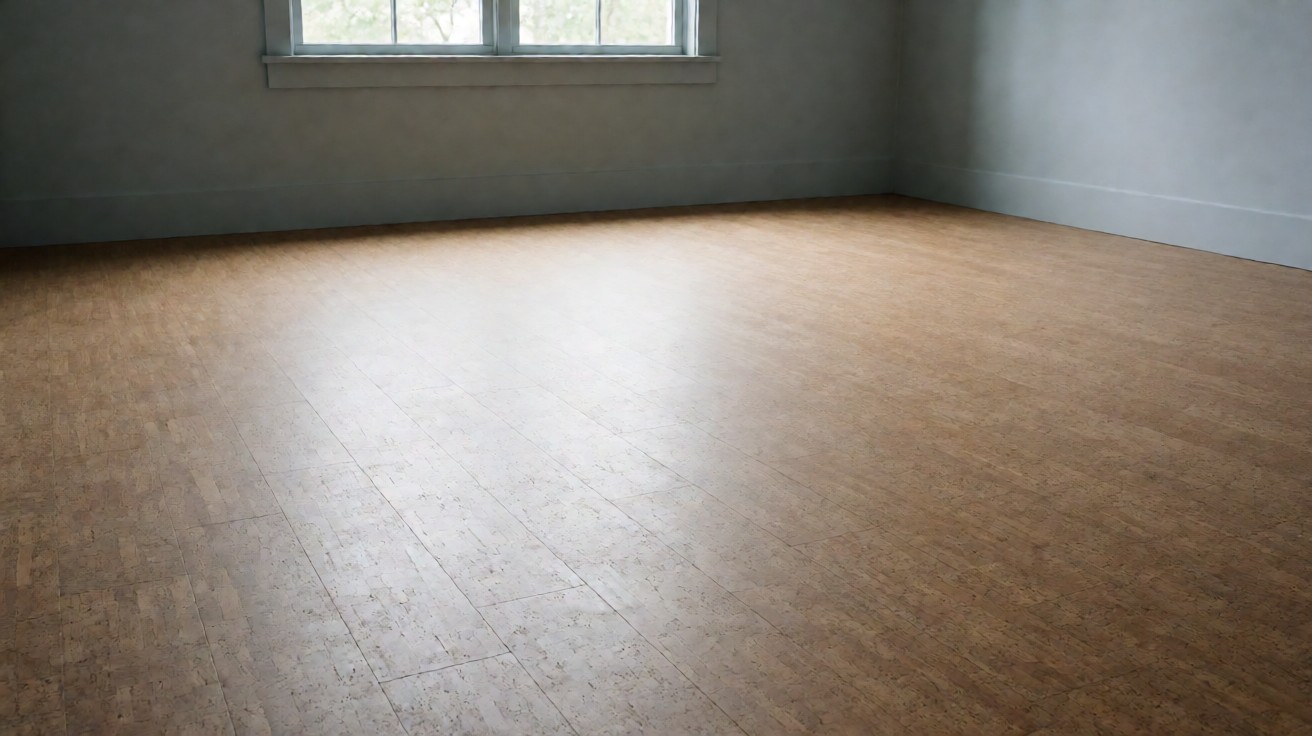
That structure behaves unlike wood. The pressed granules compress underfoot and spring back, so cork dents instead of splintering, and it closes around a dropped nail without chipping the face.
Air sits between the granules, and that trapped air is why cork steps quieter than porcelain and feels warmer underfoot than laminate. It matters most in a bedroom, a home office, and a room over a joisted floor.
A complete cork quote splits into eight lines, and only one of them is the board. Labour, underlayment, moulding, thresholds, removal, and disposal together routinely cost more than the material.
If the quote gives you a single per square foot number with no breakdown, that number is a sales figure rather than a specification. Ask for the itemised sheet before you compare it with anybody else’s.
The cork flooring explained guide covers the granule structure, and how density shifts with the harvest grade you are actually buying.
Material Price By Construction, Thickness, And Grade
Material alone runs 3 to 12 dollars per square foot, and the spread is set by how much cork is in the board rather than by the pattern printed on it.
| Construction | Typical thickness | Material per sq ft | The trade-off |
|---|---|---|---|
| Solid cork tile or plank | 6mm to 10mm | 7.00 to 12.00 | Sandable and refinishable, highest material cost |
| Engineered cork plank | 11mm to 14mm | 4.00 to 7.50 | Floating and quiet, core cannot be sanded |
| Cork on resilient backing | 5mm to 7mm | 3.00 to 5.00 | Glue-down only, thinnest option sold |
| Economy cork tile | 4mm | 2.50 to 4.00 | Half-thick tiles, face sands through in a busy room |
Grade shows up as a number on the box rather than as a colour, and it describes granule density. A higher grade compresses less underfoot and holds a furniture leg without crushing, which is the difference between a cork floor and a cork-look floor.
A rectangular room laid in one direction takes 10 percent waste. A room with a hallway, a bay window, or a change of axis takes 15 percent, and cork is no more forgiving than any other plank.
On a box covering 11.2 square feet, a 300 square foot bedroom at 10 percent waste needs 330 square feet, which is 29.5 boxes. You buy 30.
Thick cork is not padding. Going from 4mm to 6mm of solid cork adds roughly 2 dollars per square foot and roughly doubles the number of times the face can be sanded and refinished.
Where a Cork Quote Hides The Money
Cork is sold more often than it is installed, so the sample board you handle at a showroom carries a price the installer never uses.
| Line item | Typical range | Why it slips off the estimate |
|---|---|---|
| Underlayment | 0.35 to 1.10 per sq ft | Folded into the flooring line |
| Labour, click-lock | 2.75 to 4.50 per sq ft | Quoted as a flat day rate |
| Moulding | 2.00 to 5.00 per linear ft | Added after the old floor is gone |
| Thresholds and transitions | 8 to 24 dollars each | Not shown on a sample board |
| Removal | 1.00 to 2.50 per sq ft | Assumed the owner will do it |
| Disposal | 0.50 to 1.00 per sq ft | Landfill fee billed at pickup |
| Adhesive, if glue-down | 0.75 to 1.60 per sq ft | Bundled into the labour number |
| Waste at 10 to 15 percent | 3 to 8 percent of material | Measured at exact room area |
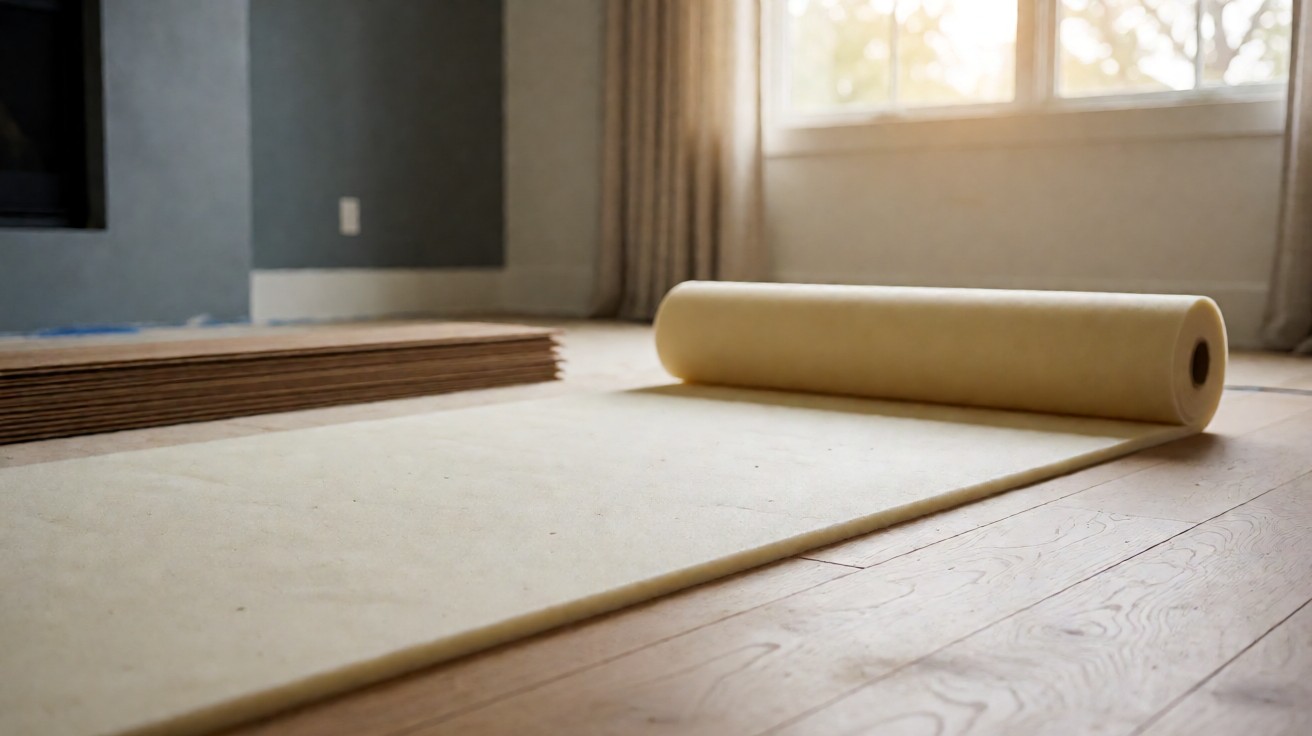
Underlayment is the first omission, and in a cork floor it is not optional padding. Cork is soft, so it takes every dip in the subfloor into itself and prints the concrete grid across the face.
Second is moulding. Baseboard and shoe mould run 2 to 5 dollars per linear foot, and a job that replaces 24 linear feet without listing it is quoting a floor with no finished edge.
Third is the adhesive, on any cork sold as glue-down. Cork is dimensionally lively and needs a flexible adhesive rated for the movement, not a standard tile mortar that cracks and takes the tile with it.
Fifth is the wax or finishing coat, if the material arrives unfinished. Hand-waxing a 300 square foot floor runs 1.50 to 3.00 dollars per square foot and is the line most often discovered on the final invoice.

Solid Cork Versus Engineered Cork
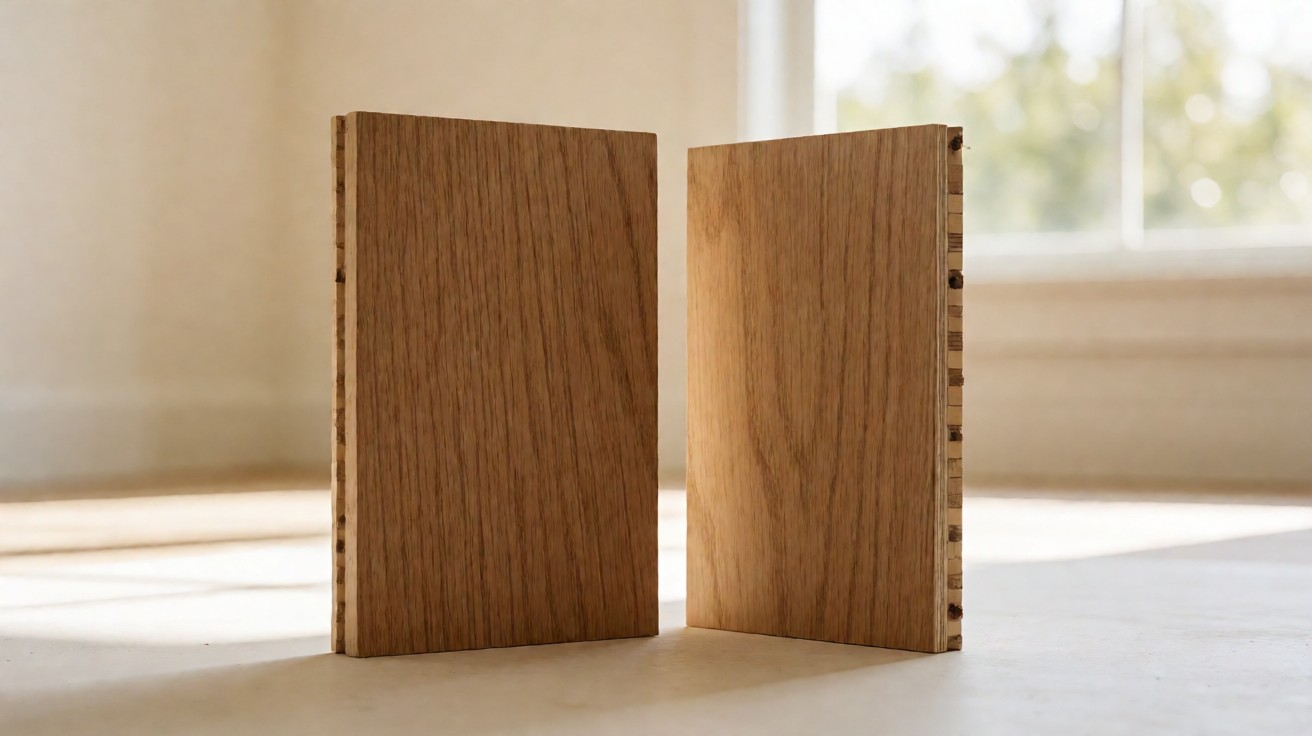
Solid cork is cork through the full 6 to 10mm of its thickness. Engineered cork is a thinner cork face bonded to a high density fibreboard or plywood core, usually 11 to 14mm total.
Thickness is the number on the box. Construction is the number that matters.
Construction decides what you can do to the floor later. Solid cork can be sanded and refinished two or three times across its life. An engineered plank cannot, because the moment the top layer goes, you are into the core.
Everything else favours engineered in a residential room. It floats, so it tolerates seasonal movement in the joists, and it is quieter underfoot because the floating assembly decouples the cork from the slab.
Choose solid cork only when the floor gets sanded, refinished, and sanded again across the life of the house, and when you accept a material bill that runs roughly double.
Engineered cork suits a bedroom, a home office, and a rental. Solid suits a cottage or a house that changes hands and expects the floor to be restored rather than replaced.
The cork against hardwood comparison sets the two families side by side, including what each one costs to live with past year fifteen.
Wax, Urethane, Or Aluminium Oxide
The finish is where a cork quote hides its biggest single upgrade, because the same core can arrive in three very different price bands.
Wax and soap is the traditional finish and the cheapest. It gives a low sheen, it is repairable with a damp cloth, and it needs a fresh coat roughly every 6 to 12 months under normal traffic.
Cheap to buy, expensive to maintain on your own evenings.
Water-based urethane sits in the middle. Two to four coats cured between each pass add 1.50 to 3.50 dollars per square foot to the installed price, and they buy a recoat interval of roughly 3 to 7 years.
Aluminium oxide is the hard finish. It adds 3 to 5 dollars per square foot, cannot be spot repaired, and sands back and recoats on a 10 to 15 year cycle, which is what makes it a commercial specification.
Unless the floor is in a rental or a high traffic hallway, aluminium oxide is money spent on a wear life the room will not use. Waxed or water-based urethane is the residential specification.
A waxed floor is reversible and a lacquered one is not. If you sand a solid cork floor in year twelve, the finish you chose decides whether that job is a day of work or a full replacement.
Cork Over Radiant Heating: The Specification That Changes The Price
Radiant heat is the single line item that can move a cork quote by 2 to 4 dollars per square foot, because it decides which product the rest of the floor has to be.
Not every cork is rated for a hydronic system. Many floating cork planks ship with a thermal resistance figure on the spec sheet, and a plank above 0.15 square metre hours per watt per square metre stalls the heat output underneath it.
The Industry Wood Flooring Association puts the surface temperature ceiling at 85 degrees for a warm floor over any wood-based product. Above that the finish darkens, the joints open, and the board cups.
If the room is over radiant heat, the quote should name the product’s rated operating surface temperature and the maximum system water temperature, not simply say the floor is suitable.
It should also say whether the adhesive, if any, is rated for a warm floor. A standard acrylic that never cured properly goes soft under a warm surface and the tile moves.
A warm floor you cannot heat is a floor you did not pay for.
The flooring compatible with radiant heating guide ranks the families against that thermal resistance limit, and cork sits near the bottom of the workable list.
Unless the manufacturer publishes a warm floor rating for the exact plank, specify a different material. A floor that never reaches design temperature is a return you cannot make.
Duress Dots And Why Cheap Cork Fails At The Joints
A cork plank is a compressed granule board with a locking profile milled into its edge, and the profile is where the product lives or dies.
The locking system is usually a plastic duress pin pressed into the tongue, about 10mm across, that the profile flexes over during assembly. It carries the load and it takes the abuse from a mallet.
Cork is soft, so the profile deflects more than a laminate tongue. A system rated to a stated impact height works; a system sold without one is a guess, and cork is the worst substrate to test a guess on.
Failed joints show up as a fringe of lifted edges, then as planks rocking underfoot, then as a gap that catches a heel. By the time you see daylight at the joint, the failure started at the duress pin.
Expansion is the other half. Cork moves more than engineered wood across temperature and humidity swings, so a floating cork floor needs 3/8 inch, about 10mm, of clearance at every wall, doorway, and peninsula.
If the room is over a slab, test the moisture before anything else. ASTM F2170 in-situ relative humidity probes above 75 percent mean a poly vapour barrier goes down first. Above 85 percent and the drainage is wrong, not the floor.
The calcium chloride test under ASTM F1869 has the same consequence from the other direction: more than 3 pounds of moisture per 1000 square feet in 24 hours means the slab is wet enough to lift cork edges.
Where the underlayment is a sheet product, water vapour permeance under ASTM E96 is what tells you whether it is a barrier at all. A 6 mil polyethylene sheet rates at about 0.01 perms, and an underlayment with no published perm figure is not one.
Why Cork Is Quieter And Warmer, And Where That Is Worth Paying For
Quiet and warm are the two properties cork actually has, and both are measurable, so both can be priced rather than believed.
Under the ASTM E492 impact sound test, cork assemblies routinely post an IIC above 50, where 50 is the average for residential floors and anything under 45 reads as objectionable across a joisted assembly.
That number matters in a bedroom and a home office, where a hard floor carries footfall and dropped objects straight up into the room. It matters much less in a kitchen or a hallway.
Warmth is thermal conductivity and a real comfort factor at 68 to 70 degrees indoor temperature. Cork feels warmer to the knee than laminate or porcelain without any radiant system involved.
Insulation value is usually published as a thermal resistance of roughly 0.15 square metre hours per square metre kelvin for a mid-grade plank, which is respectable but not a reason to skip a floor pad in an unheated room.
The premium for cork over engineered wood is 2 to 4 dollars per square foot. In a top-floor bedroom with a thin slab, that premium buys a floor you can sleep on. In a ground-floor family room, it buys comfort you would barely notice.
Cork And Sustainability, Stated Honestly
Cork is renewable and it is not a perfect answer, and the difference matters when you are paying 20 to 40 percent over engineered wood for the story.
The renewable part is real. The tree is not cut, it is stripped, and it regrows its bark, so a harvested cork oak is a standing asset rather than a depleted one. A tree can be harvested every 9 to 12 years for 150 years or more.
The renewable story is real. The supply chain is long.
What cork is not is locally sourced, carbon neutral, or endlessly available. Portugal produces the overwhelming majority of the world supply, so a cork floor in Toronto has a long supply line before it reaches the showroom.
Panels and adhesives are where the label gets soft. Under EN 717-1 the emission classes run E1 at 0.124 milligrams per cubic metre, E0 at 0.050, and ENF at 0.025, and a seller who cannot name the class has given you nothing.
A formaldehyde-free tile is not a low-emission tile, and the difference matters in a bedroom where the floor is the largest surface in the room. Ask for the class on the spec sheet rather than the word on the carton.
Long term durability counts as sustainability too, and it favours the mid tier. A 25-year floor replaces two 10-year floors, so the cheaper board is the one that gets replaced and landfilled twice.
The flooring lifecycle cost comparison runs the same calculation across families, and it is the honest way to compare cork against a cheaper plank.
Where Cork Is The Wrong Floor
Cork is a soft, absorbent, matte material, and those three words rule out whole categories of room.
Bathrooms, laundry rooms, and any room with a drain are out. Standing water reaches the edge joint, the granule core swells, and a floating cork plank does not recover its thickness the way porcelain or porcelain tile does.
Wet rooms and cork do not get along.
Entryways and mudrooms are out for the same reason, with dust and grit doing the work of a sanding block on a face that is already soft.
A kitchen is arguable rather than forbidden. If the floor is solid cork with an oil or wax finish, a spill wiped promptly is survivable. If it is a waxed floating plank, standing water at the dishwasher is a replacement.
Where cork is genuinely the right call: a top-floor bedroom over thin joists, a home office where you sit for hours, a nursery, and a room over a slab you cannot heat.
If you have not yet compared the families side by side, the types of flooring breakdown puts cork next to the materials it beats and the ones it does not.
DIY Versus A Professional Install
Floating cork click-lock is installable by a competent homeowner, and it is a weekend rather than a trade. It is also less forgiving than laminate because the profile is softer.
The kit is a pull bar, a rubber mallet, a spacer set for the 3/8 inch gap, a knee pad, and a square. There is no glue and no cure time unless the product is glue-down.
The saving is the whole labour line, 2.75 to 4.50 dollars per square foot, which on a 300 square foot room is between 825 and 1350 dollars.
What you take on is the flatness check, the moisture test, the expansion discipline at every wall, and the threshold work. Cork records a bad subfloor permanently because it is soft enough to conform to it.
If the room is square, the subfloor is flat within 3/16 inch, about 5mm, over 10 feet, and you can hold the expansion gap on every side, do it yourself.
Unless one of those is untrue, or the floor is over radiant heat, or it is solid cork glue-down, hire it. Those three are where a first-timer’s error costs more than the labour saved.
Comparing Two Cork Quotes Line by Line
A quote is not a number. It is a list of quantities, and comparing two takes ten minutes once you know which columns carry weight.
Record five things for each quote: construction and thickness in mm, cork face thickness, finish type, warm floor rating if the room has heat, and whether underlayment, moulding, removal, and thresholds sit inside the total.
The material against installed price breakdown matters here, because the flooring line and the labour line are priced on completely different bases by different people.
Take a 300 square foot bedroom, 10 percent waste, 330 square feet, 30 boxes at 11.2 square feet each, the same engineered plank in both quotes.
Quote A lists material at 68.00 a box, underlayment at 0.35 per square foot, and click-lock labour at 3.20 per square foot. It lists nothing else at all.
That is 2,040.00 of material, 105.00 of underlayment, and 960.00 of labour, or 3,105.00 dollars, which is 10.35 per square foot installed.
Quote B prices the same plank, uses underlayment at 0.85 per square foot and labour at 3.95, and adds removal at 1.25 and disposal at 0.60 per square foot, 24 linear feet of moulding at 3.80, and one threshold at 78.00.
| Line item | Quote A | Quote B |
|---|---|---|
| Material, 30 boxes | 2,040.00 | 2,040.00 |
| Underlayment | 105.00 | 255.00 |
| Labour | 960.00 | 1,185.00 |
| Removal | Not included | 375.00 |
| Disposal | Not included | 180.00 |
| Moulding, 24 linear ft | Not included | 91.20 |
| Threshold | Not included | 78.00 |
| Total | 3,105.00 | 4,204.20 |
| Per square foot installed | 10.35 | 14.01 |
The gap is 1,099.20 dollars across 300 square feet, or 3.66 per square foot. Of that, 726.20 is the three lines Quote A omitted and 225.00 is the labour difference.
You are not choosing between a cheap floor and an expensive one. You are choosing between a floor with no finished edges and a floor somebody stands behind at the doorway.
If two quotes differ by more than 1.50 dollars per square foot on material alone at the same construction and face thickness, one is not selling the plank the other is selling.
Ask whether the manufacturer warranty transfers to the next buyer. A warranty naming only the original owner is worth nothing at resale, and cork is a floor people buy expecting to hand on.
Where Cork Money Is Not Worth Spending
The expensive end of cork is well marketed and mostly unnecessary in a residential room, so it is worth naming what to refuse.
Aluminium oxide on a bedroom floor is a commercial finish on a residential wear pattern. It adds 3 to 5 dollars per square foot to buy a recoat cycle the room will never reach.
Chasing a book-matched grain down a long run buys a visual continuity nobody sees from standing height, and it costs you the offcuts that would have covered the closet and the alcove.
Premium wax and polish sold for cork is mostly maintenance product marketing. A factory urethane finish cannot be polished back to life, and paying for a restore kit on it is paying twice.
Price the finish against the traffic, not against the show floor.
Skip the custom thresholds and the metal transition strips. A hardwood or PVC saddle at 8 to 24 dollars does the same job and can be replaced in ten minutes rather than re-machined.
Spend the money instead on the underlayment, on the moisture test over a slab, and on the mid-tier plank with a proper cork face rather than the 1mm skim on the economy board.
The one place the premium genuinely pays is a top-floor room over thin joists, where the IIC figure is the reason you chose cork and where the quiet is what you are buying.