
A cold climate attacks a floor in three separate ways at once, and the entry area where snow and salt arrive is the only part of it you can really design for.
Three Attacks, Not One
A cold climate does three separate things to a floor, and a material that survives one of them is not automatically right for the other two.
The first is grit and salt brought in on a boot and dropped on the tile, which is abrasive in a way that ordinary dust is not. The second is meltwater: snow tracked in becomes water and then sits on a floor for an hour or more while nobody is home. The third is temperature: a floor expands in a heated room and contracts in a cold one, all winter, every year, and a wood product moves far more than a rigid one.
Salt Is the Part People Underrate
Snow grit is also physically different from ordinary dirt because it is angular rather than rounded. Rounded particles roll; angular particles bite. That is why a floor that is fine under dust can dull quickly under tracked grit, and why the same entry that looks clean at the end of a week can have lost most of the polish by February without anyone noticing when it happened.
Road salt is not dirt. It is hygroscopic, which means it pulls moisture out of the air, and it is sticky, which means it holds grit to the floor.
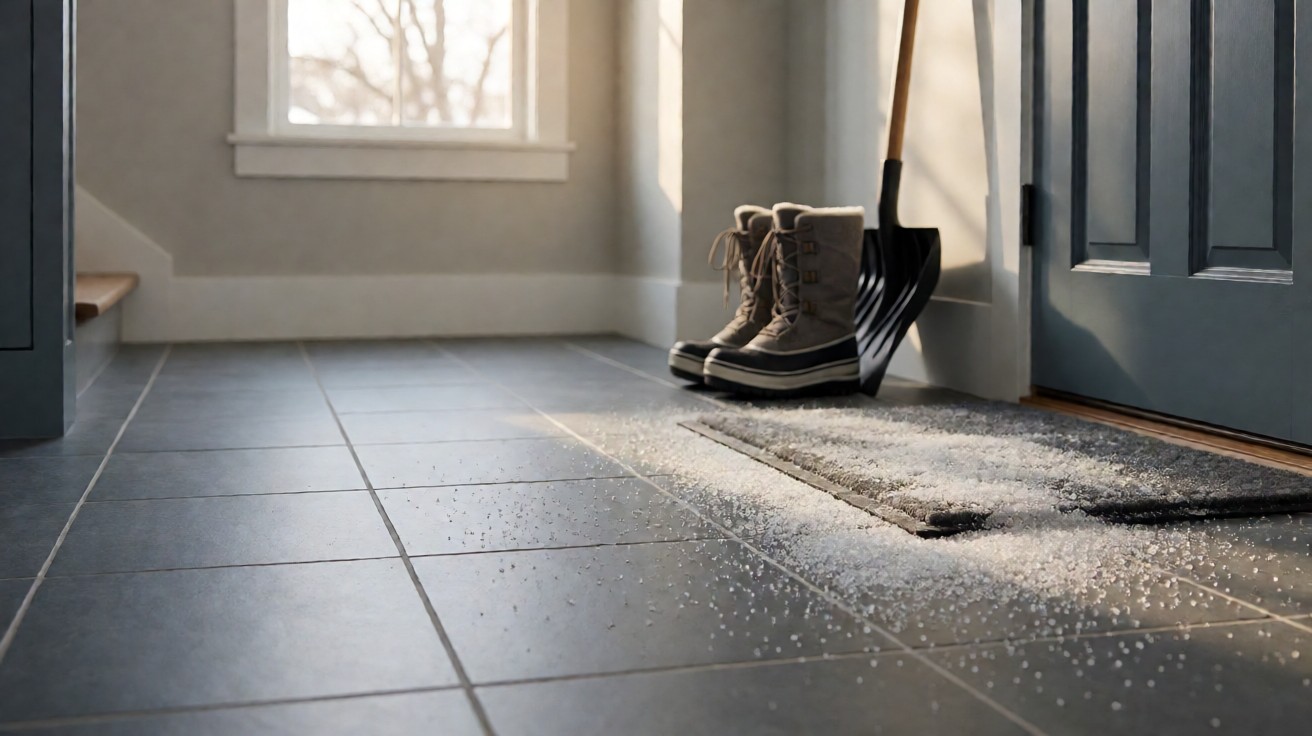
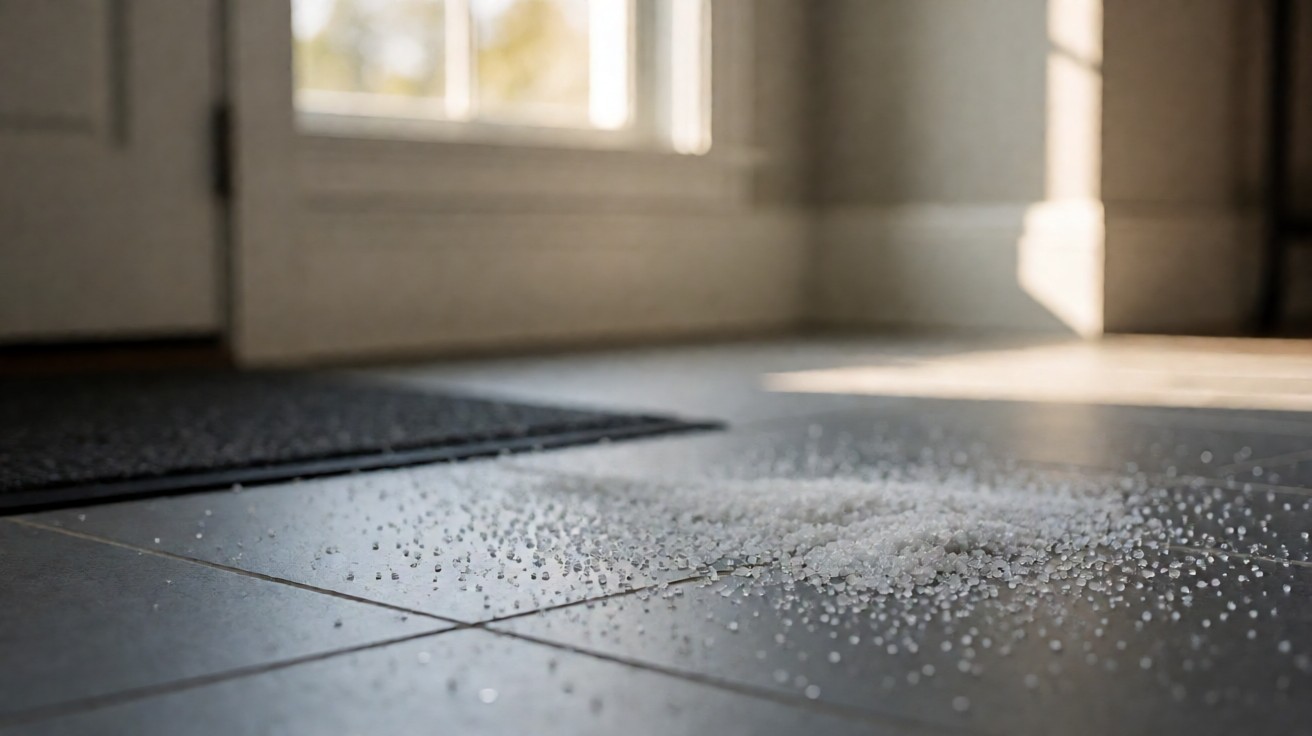
That combination is why a tile floor at an entry in a cold climate goes dull and then goes rough: the salt holds abrasive quartz from the road onto the surface and keeps it there through every mopping. The grit that is left behind after a sweep is invisible and keeps working. This is the argument for a matte or textured surface rather than a polished one at that specific spot, and it is a wear problem rather than a staining one.
| What the winter does | What it asks of the floor | Why it matters |
|---|---|---|
| Grit and road salt at the entry | A matte or textured surface that grit dies on | A polished glaze dulls and then goes rough |
| Meltwater sitting on the floor | A surface that does not absorb, and sealed seams | The slow failure, hours after the boot came off |
| Winter contraction and expansion | A material that moves less: rigid core, tile | Wood contracts most, and shows it at the joints |
| Frost heave or a cold slab | A membrane and a rated floor over it | The basement decides whether the winter works |
| Indoor heat drying the air | Floor specified for movement allowance | A heated interior is drier than most people assume |
Meltwater and the Slow Fail
The time factor is what makes this different from a kitchen. A spill on a kitchen floor is wiped within a minute or wiped by the time anybody notices. Meltwater on a cold entry floor dries slowly, because the floor is cold, and the same water therefore does more work per minute than it would in a heated room.
Snow tracked in becomes water, and water on a floor in an unheated porch or a cold entry is a much longer exposure than water in a kitchen.
The failure sequence is the same one that shows up in any cold room: water sits, goes into the seams or the edges, and the material beneath it takes up moisture. A laminated core swells and never recovers. An engineered board cups at the joint and stays cupped. The visible sign is a lifted edge or a gap, and by the time either appears the damage underneath is done rather than visible.
Expansion and Contraction Through Winter
There is a useful diagnostic here. In a house that has a problem every winter and not in summer, the cause is almost always moisture reaching a material that absorbs it rather than movement in a floor that does not. In a house that has the problem every summer and not in winter, it is the reverse. Knowing which of the two is happening in your house narrows the cause before anything is pulled up.
A heated room above a cold slab moves the floor more than the same floor does in a mild climate, and wood is where it shows first.
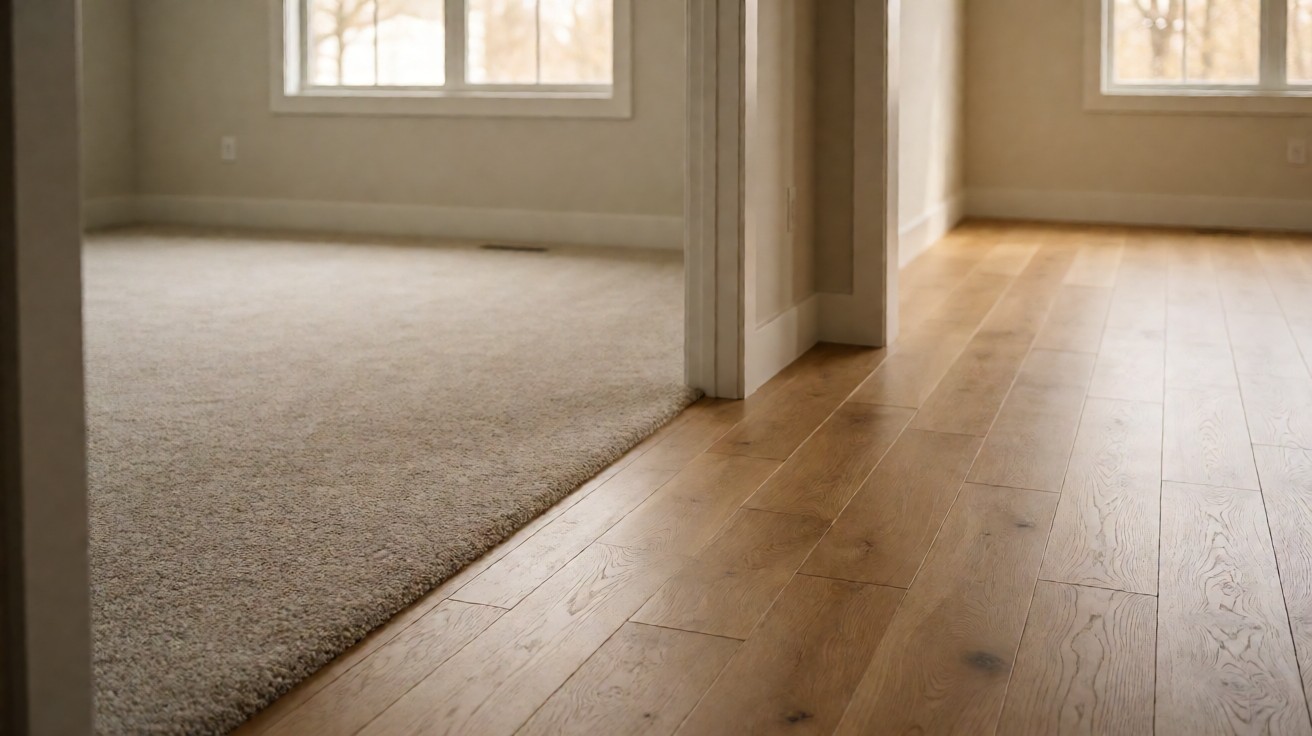
Wood takes up moisture as the air humidifies and gives it back as the air dries, and a heated interior in winter is dry, so a wood floor in a cold climate is doing the opposite of what it does in a humid one: it contracts. Repeated annual contraction at the joints is what opens the small gaps you see along a skirting board in February. The best flooring for humid climates page covers the opposite case, and the best flooring for sunrooms page covers the room where the swing is largest.
What Actually Wins in the Entry
The entry is a separate floor from the rest of the house in every way that matters, and it should be specified separately.
It takes grit, water, and the lowest temperature in the building. Tile and a rated resilient product are the two answers, and the resilient side has the advantage of being the one that tolerates a floor that has been wet by a boot rather than by a mop. The rigid core vinyl page covers the core and the porcelain tile page covers the tile families. The best flooring for mudrooms page covers the same grit problem in a mudroom in a milder climate, which is why the two pages make the same argument about where the grit dies.
Rigid Core and Vinyl for the Rest of the House
Beyond the entry, the rest of a cold-climate house is a milder problem than people expect, and the usual answer is adequate.
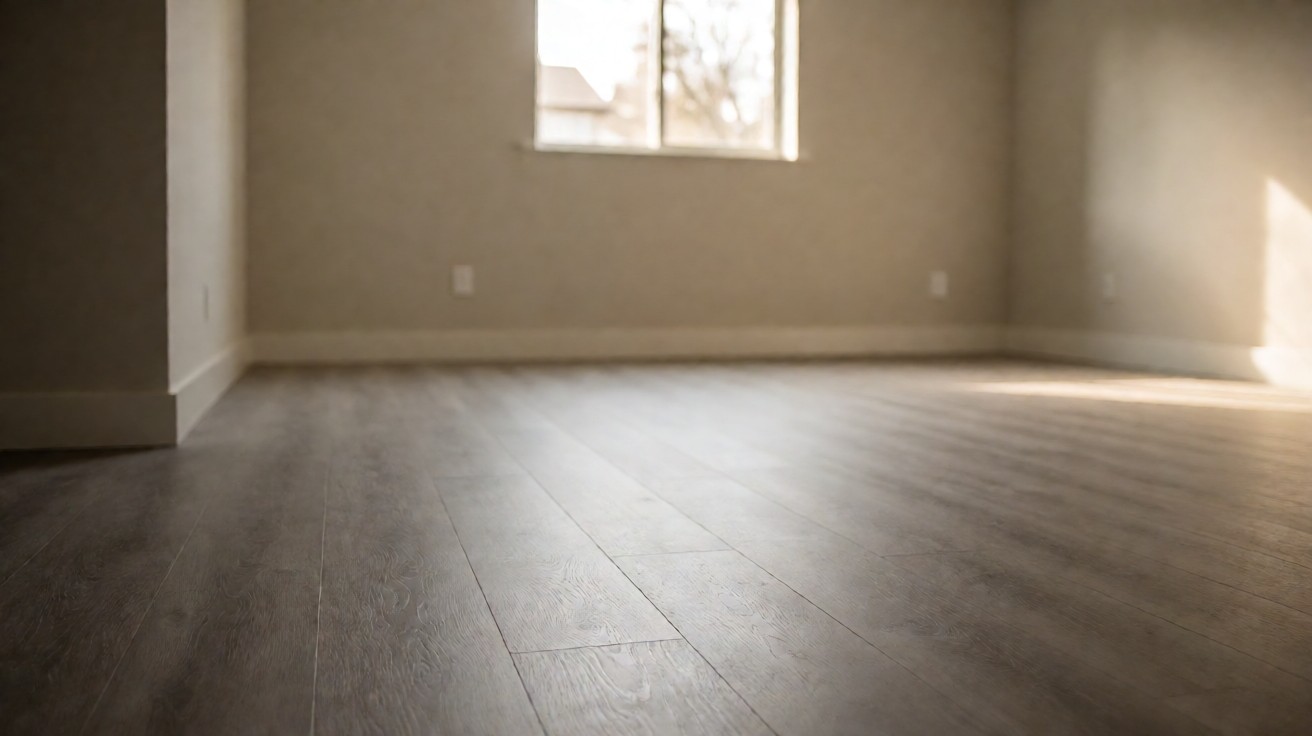
A thick wear layer on a rigid core plank takes grit and contraction without splitting, and the surface does not absorb so a boot that has tracked in water is a wipe. The vinyl construction guide covers the wear layer figure and the substrate requirements, and the radiant heating compatibility page covers the case where the floor has to carry heating, which is common in exactly this kind of house.
Wood, and the Honest Winter Case
Wood is a good answer in a cold-climate living space and it is the worst answer at the door, and the distinction is worth making explicitly.
The warmth underfoot in a heated room is real and it is the reason wood is chosen there, and the finish can be restored when grit wears through it. At the entry, where grit and meltwater land, it is the wrong choice: the grit cuts the finish and the meltwater finds the seams. The solid versus engineered hardwood comparison covers the two constructions and the hardwood flooring guide covers what the finished floor then does in a wet spot.
Basements, Slabs, and the Coldest Room
In most cold-climate houses the basement or the slab is the coldest room rather than the warmest, and it is the room that decides whether the winter floor works.
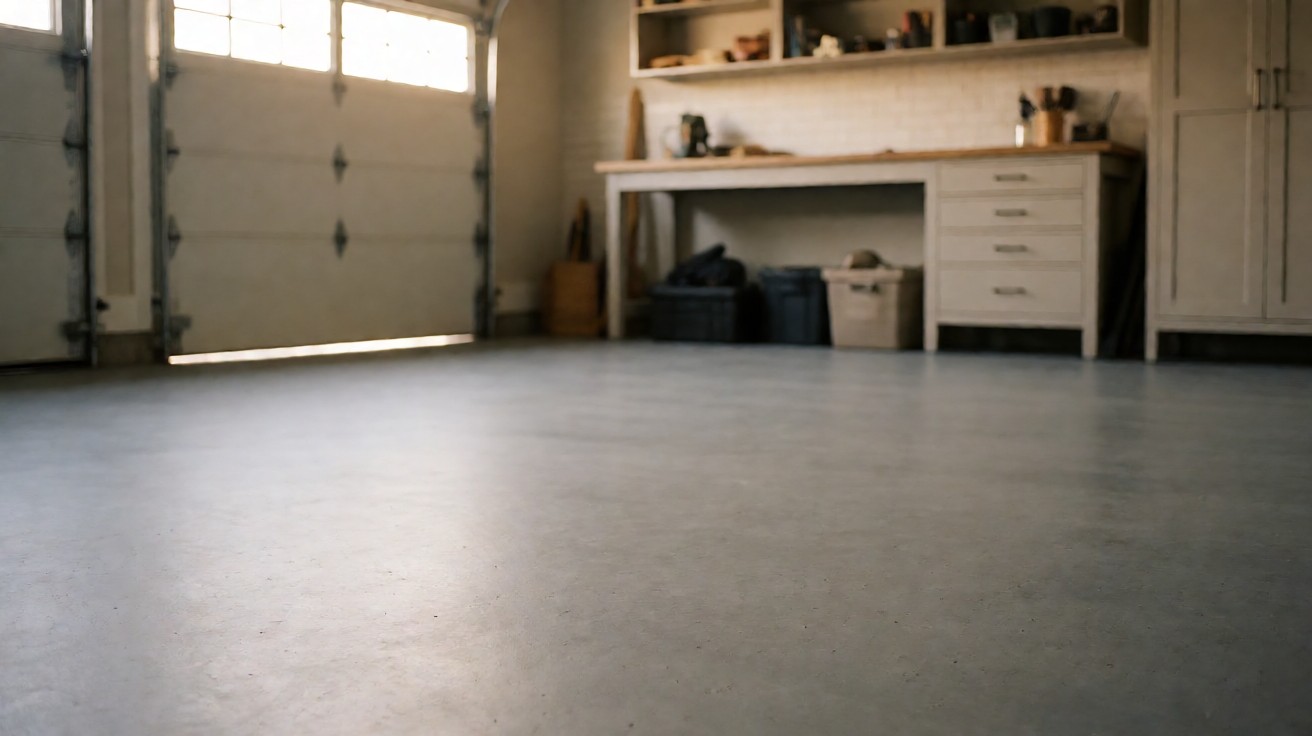
A slab in contact with frozen ground is cold from below and is the worst possible combination with a floor that has to stay dimensionally stable. Tile and a rated resilient floor over a membrane are the usual answers, and a slab that is heated from below changes the answer again because the top of the slab becomes warm. The best flooring for basements page covers that room and the best flooring over concrete slabs page covers the substrate itself.
| Material | The cold-climate advantage | The cold-climate limitation |
|---|---|---|
| Porcelain tile | Lowest maintenance, hardest surface | Cold underfoot, and the heaviest to bring in |
| Ceramic tile | Same family, more variation | Glaze can chip at the edge |
| Rigid core (SPC) | Warm underfoot, quick to install | Needs a flat dry base and a specified wear layer |
| Sheet vinyl | The most forgiving at a wet entry | Harder to repair in place than a plank |
| Engineered hardwood | Warmest in a heated room | Wrong at the door; grit and meltwater find it |
| Laminated board | Cheapest, fastest | The core swells once meltwater reaches a seam |
The Mat Is Not an Accessory in This Climate
It is also worth saying where the mat stops helping, because it is earlier than people expect. A mat catches what is carried in on a sole; it does nothing about what is carried in on the sole of a second pair of boots put down on the floor a metre further in, which is the normal arrangement in a family house. The floor itself is still the specification that decides whether the winter works.
In a cold climate the entry mat does more work than it does anywhere else, and the reason is that the grit and the meltwater arrive together rather than separately.
A scraper mat at the door that actually stays down catches the coarse stuff, which is the part that cuts, and a washable mat inside it catches the grit that passes. What it does not catch is meltwater, and water carried in on a boot is the thing that reaches the floor seams. In practice the mat handles the grit and the floor material handles the water, which is why specifying the floor is still the decision that matters.
There is also a temperature argument. A mat that is loose enough to bunch is a trip hazard on the one strip of floor that people arrive on carrying something, and a mat with a rubber backing that grabs a tile floor in a cold room is worth more than a heavier mat that slides. The best flooring for mudrooms page covers the same entry problem in a milder climate and the best flooring for sunrooms page covers the other end of the temperature range.
How to Choose, and Where to Look Next
One last practical note. A cold-climate house is often a house with a bigger seasonal swing than anywhere else in it, which means the floor gets the worst of both problems rather than one of them. Reading the best flooring for humid climates page together with this one is worth the time, because a house that contracts in February and swells in July is constrained by both ends of the same range.
Specify the entry separately from the rooms, and treat the rest of the house as a normal specification with one extra consideration for temperature swing.
The porcelain tile page and the rigid core vinyl page are the two entry answers, the solid versus engineered hardwood comparison is the answer for the heated rooms where warmth matters, and the flooring types compared page has every family in one table. The best flooring for humid climates page covers the opposite climate problem and is worth reading together with this one, because a house that is cold in winter and humid in summer has both. A coastal house has the same winter problem plus salt in the air, which is a different failure and is covered separately.