
Footstep noise is not a property of the finish floor on top, it is a property of the whole assembly, which is why a sample in a shop tells you nothing.
Two Different Noises, Treated Very Differently
Airborne sound travels through the air and is stopped by mass in walls and floors. Impact sound is a footstep, and it travels straight through the structure.
A footstep does not need to travel through air to reach the room below. It hits the finish floor, passes into the subfloor, and arrives at the ceiling of the room underneath as structure-borne vibration. This is why a heavy concrete floor is loud downstairs despite being the hardest and heaviest thing you can put in a house, and it is why the number that matters for a footstep is a different measurement from the one that matters for a television.
| The noise | What causes it | What actually reduces it |
|---|---|---|
| Impact sound: a footstep, upstairs | A floating floor with a specified acoustic layer | The layer compresses instead of transmitting |
| Airborne sound: voices, television | Mass and decoupling in the structure | A floor finish barely affects it at all |
| Loudest hard floor | Tile, and thin hard wood on structure | Nothing about the tile can absorb the strike |
| Quietest hard finish | Sheet vinyl, felt-backed vinyl, rubber | Absorbs in the thickness rather than in a pad |
| The biggest single win | A decoupled ceiling below | Breaks the path before the floor finish is reached |
Why the Shop Sample Tells You Nothing
It is worth being clear that this is not a criticism of flooring manufacturers. The measurement standard exists precisely because the plank on its own does not determine the result, and the industry has been measuring whole assemblies for decades. The problem is a shop, where the only thing that can be demonstrated is the plank, and a demonstration of the plank is actively misleading about the question being asked.
Hold a plank and drop it on a hard table and it sounds like the plank. Put it on the same floor and it makes almost no sound, and both results are irrelevant.
What you hear on a table is the finish layer ringing on its own. What you hear in a room is the finish layer plus whatever is under it. A plank floated on a thick fibre pad, glued to a thick plywood subfloor on battens, and glued straight to concrete sound like three different products, and they are the same plank. This is the single most useful thing to understand before spending anything on a floor for a room below somebody else’s bedroom.
The Floating Floor Is the Core Idea
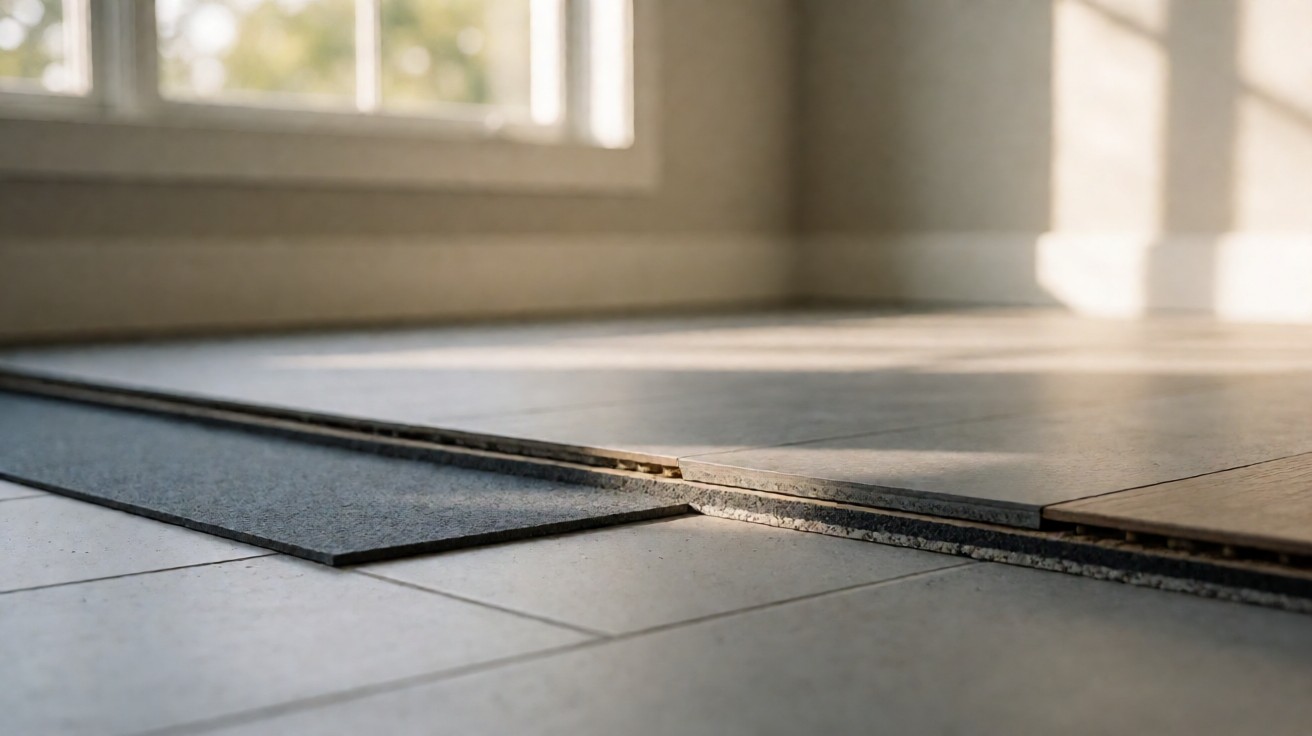
A floating floor is separated from the structure below it by a resilient layer, and that separation is what breaks the path for impact sound.
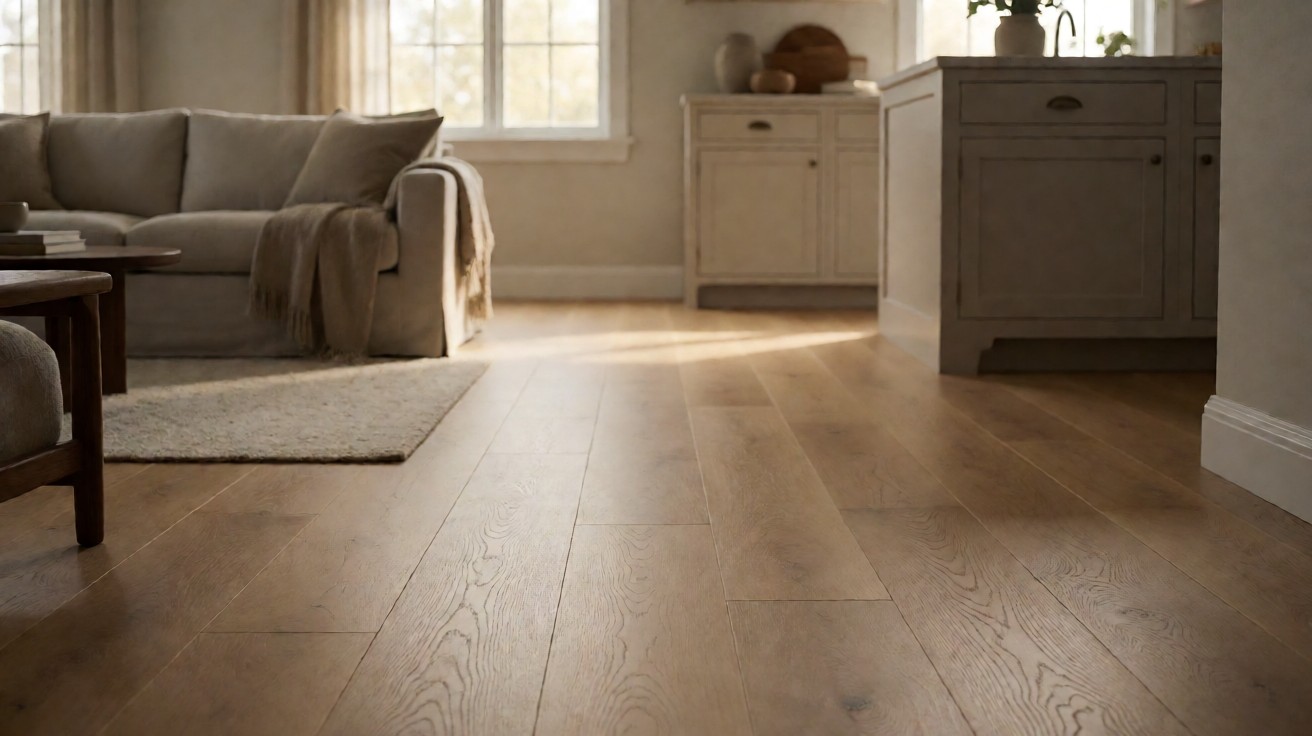
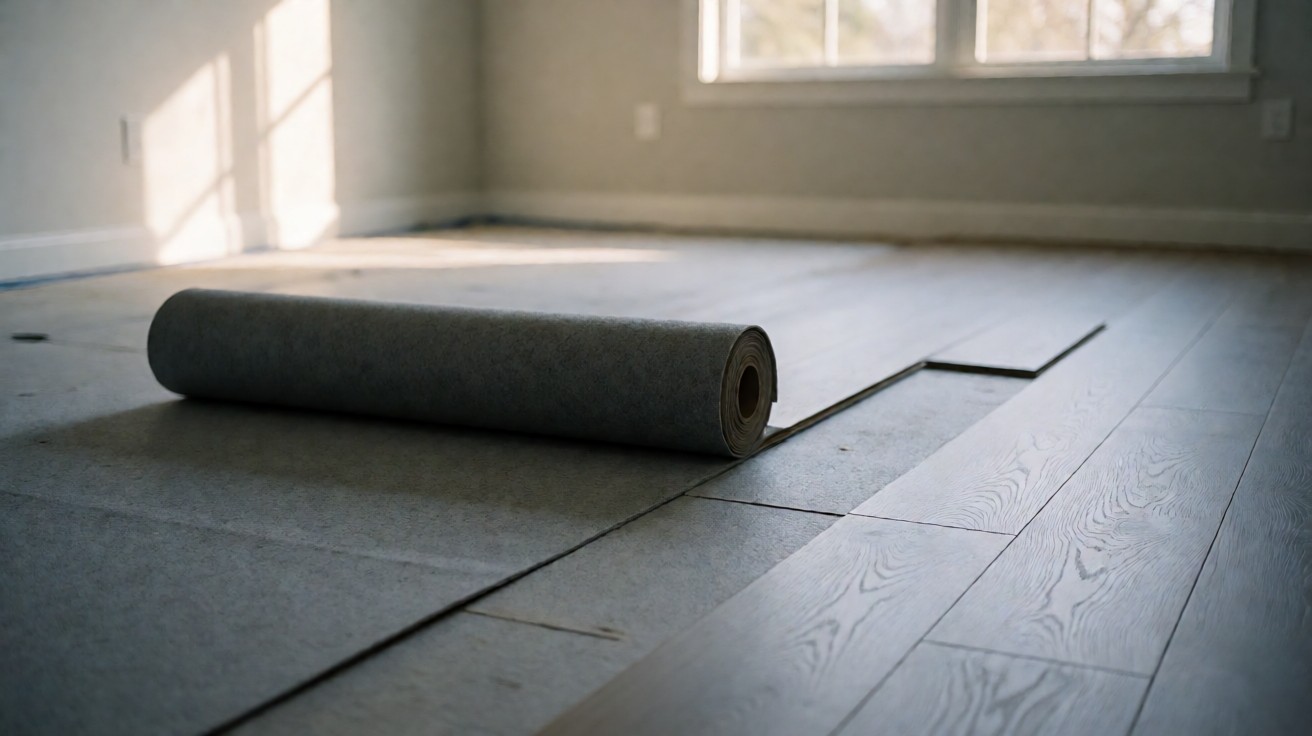
The finish board floats on a pad or a membrane that compresses under a footstep and does not fully return the energy into the slab or the joist. The sound is absorbed in the compression instead of travelling. It is the same principle as a shock absorber, and it is the most effective single measure available to a homeowner who is not rebuilding the structure, which is why almost every quiet flooring answer is a floating floor of some kind.
What the Underlay Is Doing
There is also a comfort argument in the same sheet. A floating floor that is quiet underfoot is a floor that people describe as softer, and in a bedroom that matters as much as in a playroom. It is worth knowing that a dense acoustic sheet is often firmer rather than softer underfoot, and where comfort is the priority a thicker fibre pad and an acoustic layer are two different products answering two different questions.
The underlay is not padding for comfort, although it is that too. It is the acoustic component, and it has to be chosen for the job rather than for the price.
An acoustic underlay for impact sound is a dense viscoelastic or rubberised sheet, specified with an impact sound rating, and it is not interchangeable with the thin foam sold as underlay for laminate. The laminate flooring guide covers what sits under a floating board generally, and the specification to look for is on the sheet rather than on the box the floor came in. Thickness alone tells you very little about acoustic performance.
Resilient Floors Are Quiet for a Different Reason
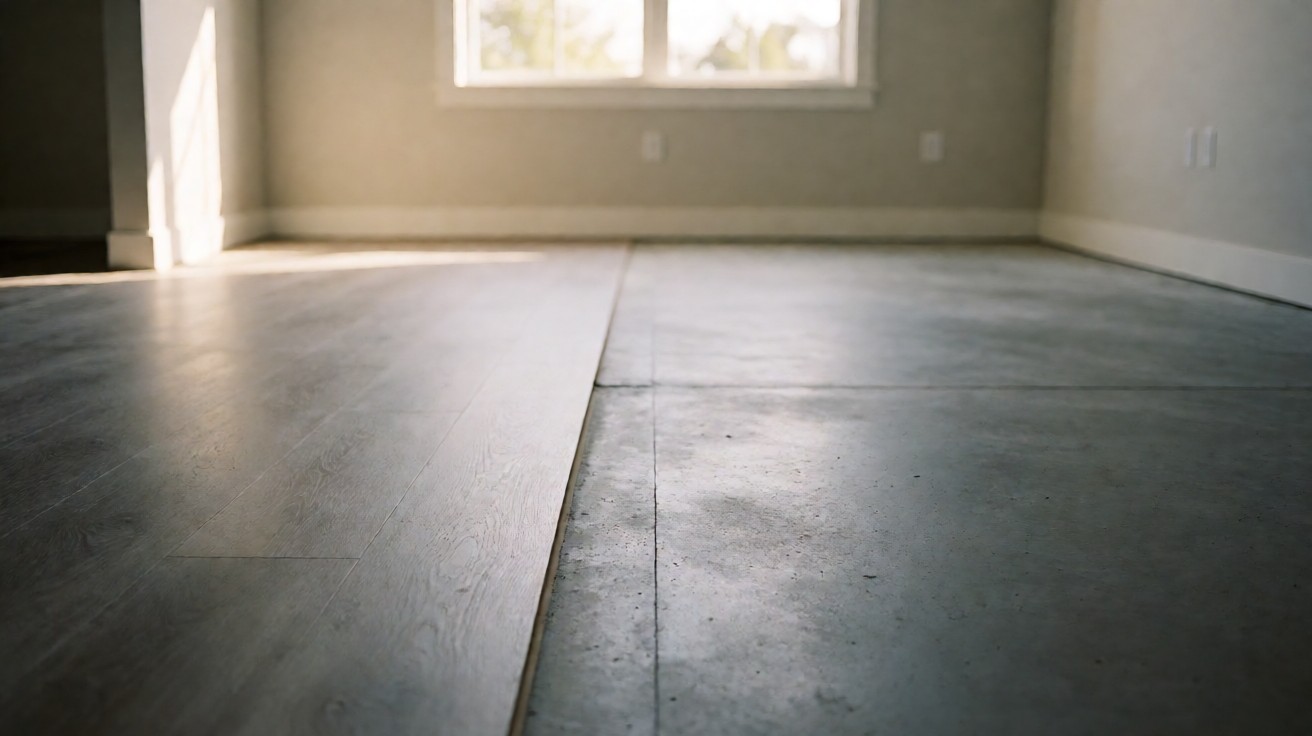
There is a limit to how much a product on top can achieve. Where the floor below is a slab and the ceiling of that room is the slab itself, there is nothing between the two surfaces except the finish, and no finish product is going to make a footstep disappear. That is a case for a floating assembly, a suspended ceiling, or accepting the noise, and it is worth recognising early rather than after the floor has been chosen.
Sheet vinyl, felt-backed vinyl, and rubber are quieter than most hard floors without any acoustic underlay at all, and the reason is their mass and their flexibility.
They absorb a footstep rather than transmitting it, because the whole thickness of the material moves rather than only its surface. That is why sheet vinyl is the traditional answer to a noisy upstairs bedroom and why rubber flooring keeps appearing in acoustic specifications. The trade-off is that a resilient floor over a concrete slab still needs an underlay, because the slab carries the vibration onward. The rigid core vinyl page covers the rigid-core family and the vinyl construction guide covers the wear layer and core specifications.
Where Hard Floors Become the Worst Option
Ceramic and porcelain tile are the hardest and one of the loudest, and the reason is that a tile has no way to absorb anything.
A dropped object bounces, a heel strikes, and a chair scraped across tile is heard through the floor rather than next to it. That is not a defect; it is what tile is. Where tile is the right answer on the floor above, the answer for the floor below is usually a resilient layer or a floating ceiling rather than anything chosen at the tile counter. The tile flooring guide page covers the finish options and the porcelain tile page itself covers the two tile families.
The Structural Ceiling, and When It Is the Only Answer
If the floor below is a suspended ceiling that does not touch the structure, that is a far bigger acoustic win than any flooring product you can buy.
A ceiling that is mechanically decoupled from the joists and drops on its own frame breaks the structural path before the sound ever reaches a floor finish, and it can be installed in a renovation without touching the structure. Where that is available, a modest floor over a decoupled ceiling will beat a premium floor laid directly on the structure. The multi-story guide covers the multi-level case, and the best flooring for basements page covers the case where the level below is a slab rather than a framed floor.
Stairs, and the One Place Noise Is Unavoidable
Where carpet on a stair is not wanted, the practical answer is a tread surface with a resilient backing and a resilient riser, and the improvement over a bare timber stair is substantial even though it is not complete. It is also worth noting that the noise people complain about on a stair is usually coming from the tread and the stair body rather than from the tread surface alone, so a product-only solution reaches a limit fairly quickly.
A staircase is the hardest floor in the house to quiet, and the reason is structural rather than material.
A stair spans between floors with a continuous path to the structure, and there is nowhere to put a floating layer that does not change the geometry of the stair. Carpet on a stair is the traditional answer because it is the only common floor that absorbs at the tread rather than transmitting from it, and even then the string and the risers carry sound. The best flooring for stairs page covers that room and the flooring transitions guide page covers the junction where the stair meets the landing.
Measuring It Before and After
The measurement is standardised, which is useful, because it means two products can be compared on the same number rather than on a showroom impression.
An impact sound class rating is measured with the whole assembly in place, which is the point and also the difficulty: it is a property of a floor built a certain way, not of a plank on its own. A number quoted without the assembly it was measured in is close to meaningless, and the assembly on a product page is usually a laboratory condition rather than a house. Where a number genuinely matters, ask what was above and below the assembly when it was measured.
For a renovation, the simpler test is before and after in the same room with the same surface above it. A tape measure and a phone recording from the same spot on the same floor will show the difference between a bare floor and a floating one, and that comparison is worth more than any number on a datasheet. The multi-story guide page covers the multi-level case where the measurement is a whole-building decision.
How to Choose, and Where to Look Next
One last practical note. Any floor specified for quiet is worth specifying for the room above rather than the room below, because the person who chose it lives upstairs and will be the one who notices it works. That reverses the usual framing, in which the room being treated is the room below and the occupant who is inconvenienced is somebody else.
Decide which noise you are trying to stop and in which direction, then decide whether you can change the assembly or only the product.
The floating floor is the answer for a footstep going down, a resilient floor is the answer for the room above it, and a decoupled ceiling is the answer when both are available. The laminate flooring guide and the rigid core vinyl page are the two most common answers, the hardwood flooring guide and the solid versus engineered hardwood comparison cover the wood options where the look matters more, and the flooring types compared page has every family in one table. The best flooring for nurseries and best flooring for childrens bedrooms pages cover the two rooms where quiet outranks almost everything else.
| What to look for | How it is specified | The note |
|---|---|---|
| Impact sound class (IIC or change in IIC) | Measured with the whole assembly in place | The number to compare between products |
| A qualified acoustic underlay | Rated by the manufacturer | Not interchangeable with thin laminate foam |
| Resilient floor sheet | Thin build-up, absorbs in the material | The traditional answer to a noisy upstairs room |
| Floating floor over battens or cradles | Mechanically decoupled from the structure | The most effective product-only measure |
| Decoupled ceiling below | Structurally separated from the joists | A renovation-scale answer, and a large gain |