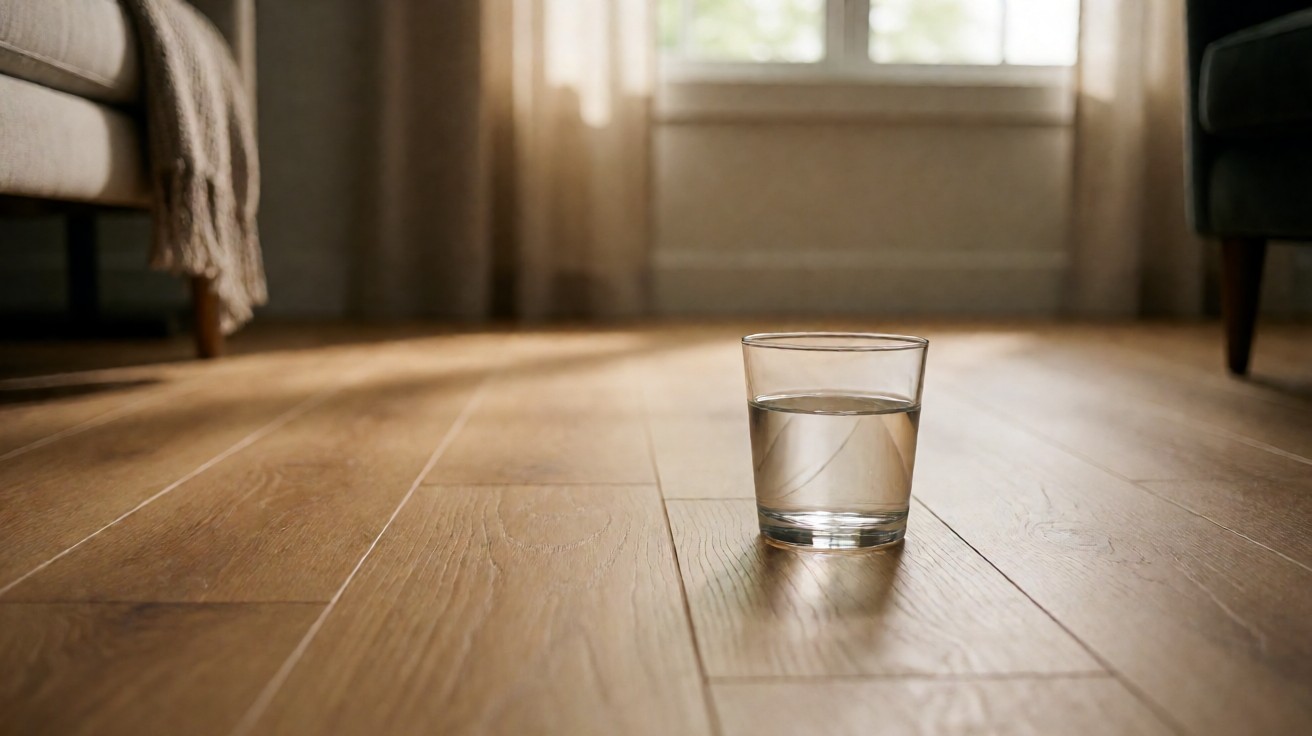
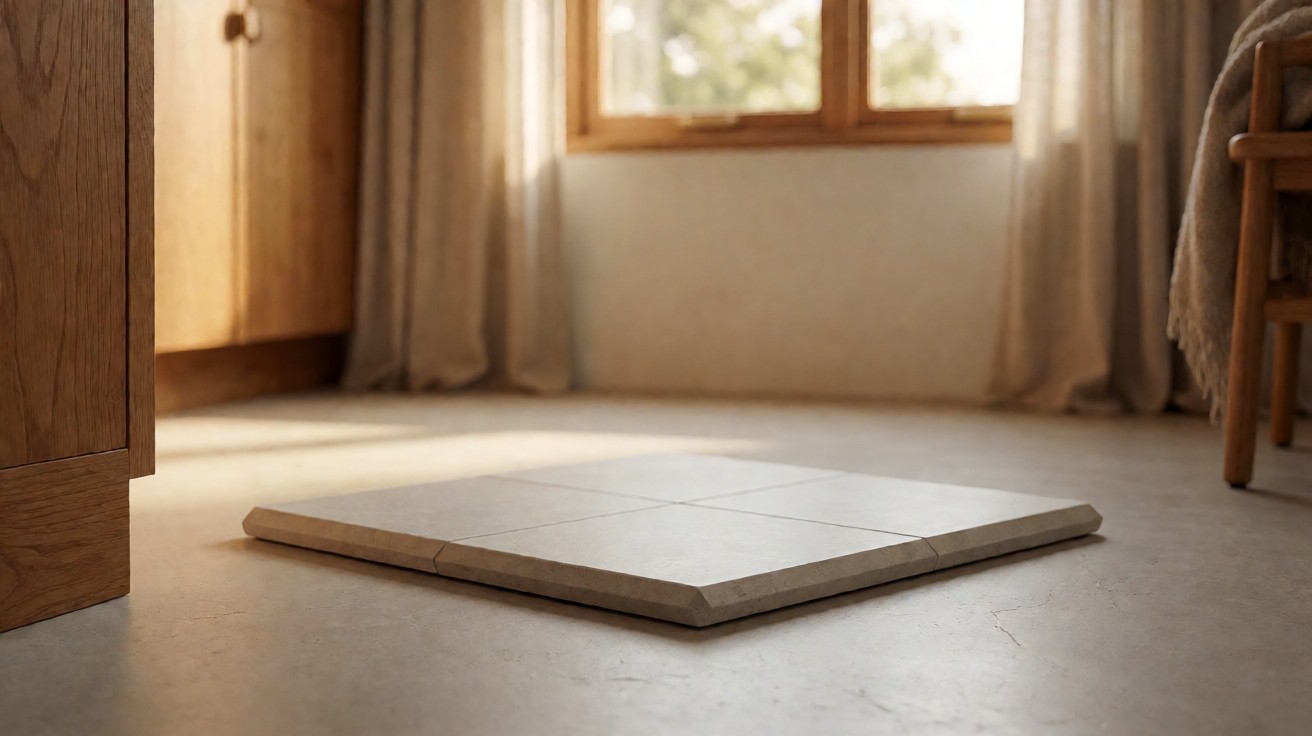
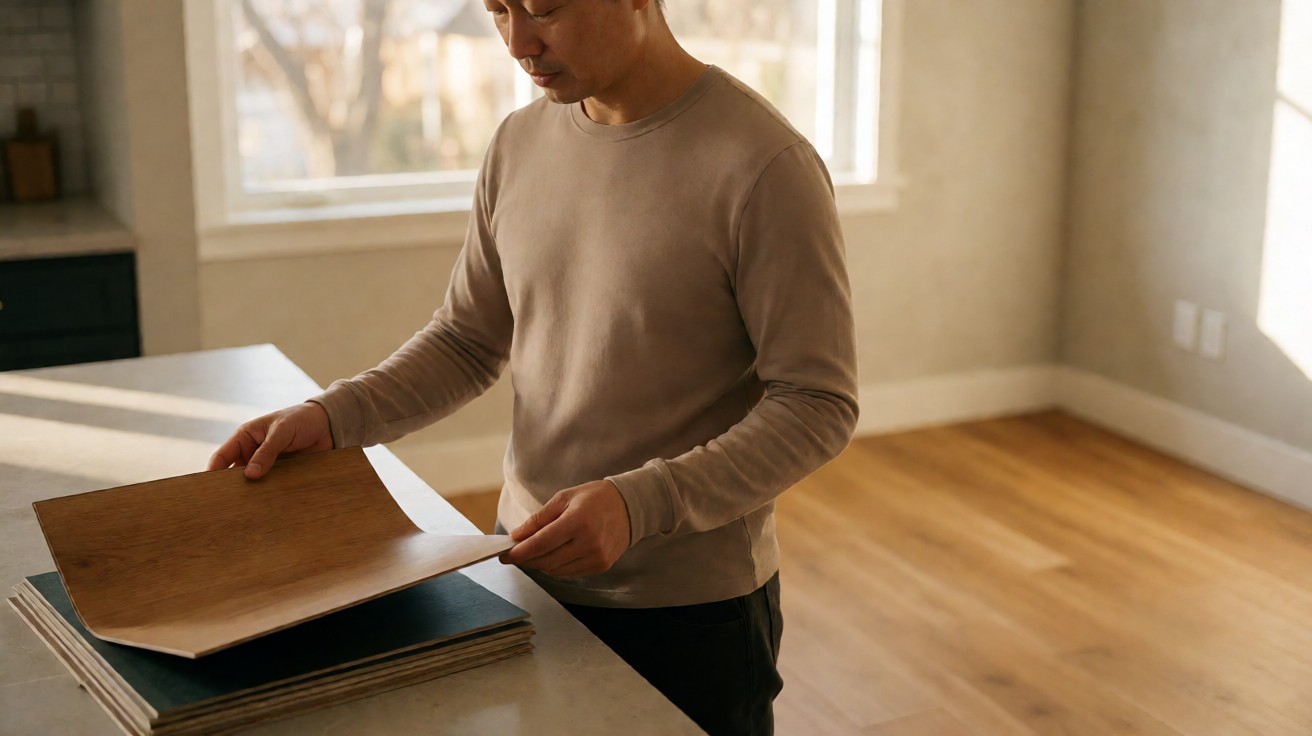
Loose-lay vinyl is the only vinyl format that you can take back up. Nothing is glued and nothing is nailed. The floor rests on its own weight and the friction of the surface beneath it, and when you decide you want your floor back, you lift it up intact and carry it to the next room.
That reversibility is the whole reason loose-lay exists, and it is genuinely useful in a rental, in a room you might change your mind about, or in a house where you want to install the floor yourself over a weekend.
The cost is permanence, and the cost is also flatness: because nothing is bonded to anything, nothing fills a gap, so a loose-lay floor can only go down over a subfloor that is already level.
This guide explains how a loose-lay floor actually stays down, what the two versions of it are, what it buys you, and what it costs. It assumes you have chosen vinyl as the material. The vinyl flooring guide covers that decision, and the sheet vinyl guide covers the continuous roll format in more detail.
What Loose-Lay Vinyl Is
Loose-lay is an installation method rather than a material. The plank or sheet is the same vinyl as any other; what differs is that no adhesive and no nails are used.
Instead, the floor is laid onto a clean, level subfloor and held there by two things: the weight of the material itself, and friction between the bottom of the plank and the floor beneath it.
That sounds fragile, and on an uneven base it is, but on a properly prepared floor it is completely stable, which is why heavy furniture sitting on a loose-lay floor actually helps hold it down rather than working against it.
Some loose-lay products also carry a backing designed to grip the subfloor, a slightly tacky layer that behaves like a very weak adhesive. It is enough to resist walking the floor out of place and not enough to make the floor permanent. This is the mechanism, and understanding it is most of what there is to know about the format.
How a Loose-Lay Floor Actually Stays Down
There is a common worry that a floor with no glue under it will creep, shift, or walk across the room. That is a fair question and the answer depends on three things.
The first is flatness. A flat floor means the whole plank is in contact with the base, and that contact is what generates the friction holding it down. A plank bridging a hollow or sitting on a hump has no contact under the peak, so it can rock, and a floor that rocks underfoot is a floor that walks.
The second is rigidity of the subfloor. A loose-lay floor cannot be laid over anything springy or soft, because a resilient base absorbs the weight and lets the plank move. Poured concrete, plywood, and well-secured cement board are all suitable. A floor that flexes under a walking adult is not.
The third is the room itself. Loose-lay is a living-room and low-traffic format. In a high-traffic hallway it will work, but it is being asked to do a job that a glued or click-lock floor does better, and over years the friction will wear down.
None of that makes loose-lay fragile. It makes it conditional, and the conditions are simple enough to check before you buy.
Gravity-Lock Sheet vs. Loose-Lay Tile
Loose-lay comes in two distinct forms and they are not interchangeable.
Loose-lay tile and plank are rigid-core products sold as squares or boards that simply rest on the floor. They have no edge connection to each other, so each piece is individually removable and can be replaced one at a time, but the floor as a whole moves as a set rather than being locked together.
Gravity-lock sheet is a thick, flexible sheet, usually around 2 millimetres, whose weight and rigidity hold it flat on its own without adhesive. Because it is one continuous piece rather than separate boards, it behaves more like a floor in its own right and has no seams for a board to lift at. It is the version that genuinely feels like the traditional floating floor.
The practical difference is that gravity-lock sheet is chosen for a room you want to feel finished, and loose-lay tile is chosen for a floor you expect to move or reuse. If you intend to lift the floor in pieces, use tile. If you intend to lift the whole thing once, use sheet.
What Loose-Lay Buys You: Reuse and Speed
The two real advantages are reversibility and installation speed, and they are significant.
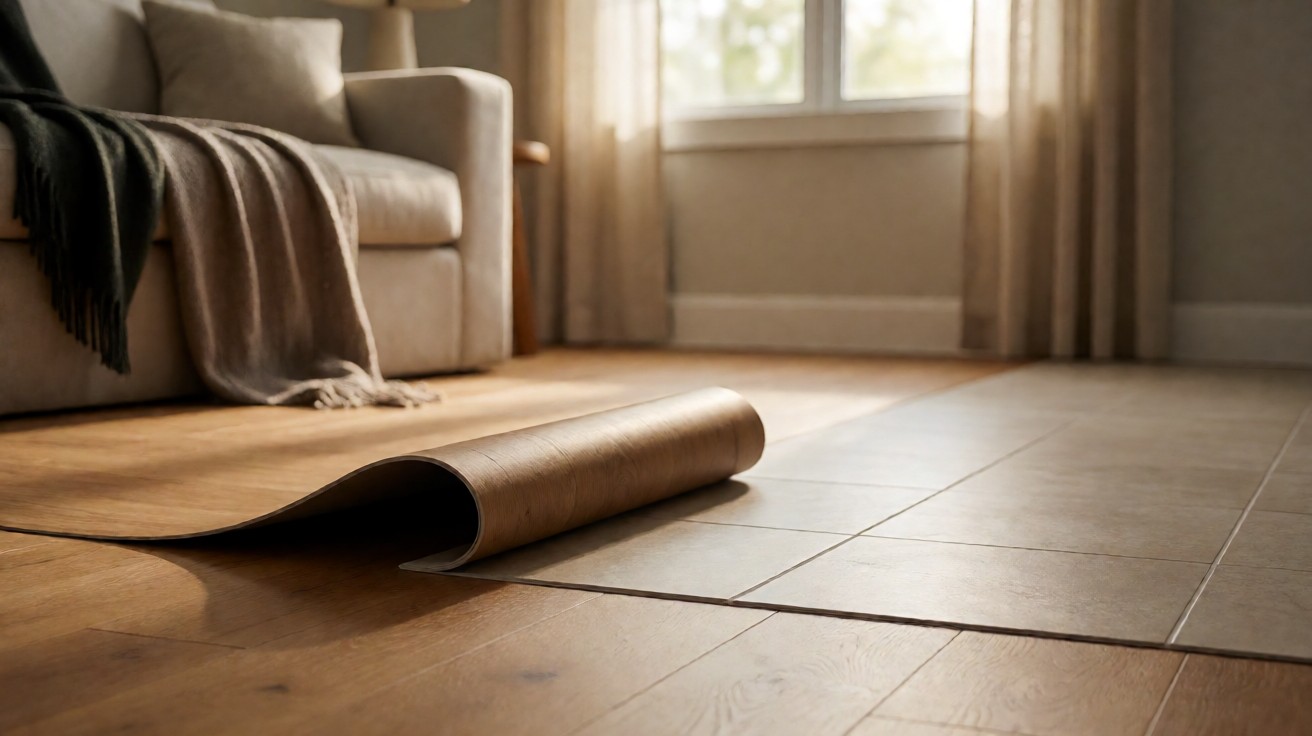
On reversibility, the floor comes up intact. That matters in a rental, where replacing the floor on the way out is a real cost, and it matters in a home where a floor is being moved from a study to a bedroom in two years. A glued floor has to be scraped up; a loose-lay floor can be rolled and carried.
On speed, loose-lay is the fastest install in the family. There is no adhesive to spread and no waiting for it to grab, and there is no click-lock seam to align. You lay it, you walk on it, it is finished. A moderate room is an afternoon rather than a day and a half.
It is also the most approachable install, which is why it suits a first-time DIY floor. If you have never laid flooring before, loose-lay is the version with the least room for error, because there is no wet adhesive and no precision seam.
What Loose-Lay Costs You: Flatness and Permanence
Everything loose-lay gives you, it takes back somewhere else, and the two costs are worth stating plainly.
The first is subfloor flatness. Nothing fills a gap on a loose-lay floor. A glued sheet can be pressed into a shallow imperfection; a loose-lay plank bridges it and then rocks.
So a loose-lay install demands a better prepared base than a glued one, which is slightly counter-intuitive, because you would expect the format with no adhesive to be the easier one over a difficult floor. It is not. It is the easiest one over a good floor.
The second is permanence. The friction that holds the floor is real but finite. It will creep in a very humid space, it will move more in a room that sees a lot of traffic, and a heavy point load like a castor chair in one spot can eventually telegraph into the surface.
A glued floor simply does not have this problem, because it is one piece with the base.
So loose-lay is the right choice when you know you may want the floor back, and the wrong one when you want the floor to be the last thing you think about for fifteen years.
Preparing a Subfloor for Loose-Lay
The preparation is short and it is the part that decides whether the format works.
The floor has to be clean, dry, and level. Fill the gaps and screw down any loose board, then check the flatness across the room with a straightedge.
Where you find a dip larger than a few millimetres, fill it rather than trying to lay over it, because a loose-lay plank has nothing to bridge that dip with. Finally, make sure the base does not flex: walk it, and any spot that moves under your weight needs boarding out before the floor goes down.
The Comparison at a Glance
| Factor | Loose-lay | Glue-down | Click-lock rigid |
|---|---|---|---|
| Held down by | Weight and friction | Adhesive | Locked edges, floating |
| Removable intact | Yes | No, must be scraped | Yes |
| Install speed | Fastest | Slowest, adhesive and drying | Fast |
| Subfloor flatness needed | High; nothing fills a gap | Lower; adhesive fills small dips | High |
| Works over a springy floor | No | Yes | No |
| Creep risk | Possible over time | None | Minimal |
| Best in | Rental, temporary room, DIY | Permanent install over a poor base | DIY, room you may relaid |
Format by Situation
The comparison above sets the options against each other. This table turns the choice into a situation-level assignment, which is usually faster than reasoning about the specification in the abstract.
| Situation | Choice | Why |
|---|---|---|
| Rental, flat may move | Loose-lay | Lifts intact at the end of the tenancy |
| Room you may redecorate in a few years | Loose-lay | Floor can be taken up and reused |
| First-time DIY install | Loose-lay | No adhesive, no click seam, least room for error |
| Floor must stay for fifteen years | Glue-down | Adhesive is permanent and fills small dips |
| Subfloor is uneven | Glue-down | Adhesive fills what a loose-lay floor would bridge |
| Subfloor is springy | Glue-down | Only a bonded floor survives a soft base |
| High-traffic hallway | Click-lock rigid | Friction wears down in traffic |
| Flat concrete slab, moderate traffic | Loose-lay or click-lock | Both work if the base is level |
How to Choose a Loose-Lay Floor
Choose loose-lay if you are renting, if the floor may move rooms in a few years, or if you want to lay it yourself in a flat room without adhesive. Those are the three cases where reversibility pays for the trade.
Do not choose loose-lay over an uneven or springy subfloor. Check the floor first: walk it, and if it bounces anywhere an adult is walking, it needs boarding out or levelling before a loose-lay floor goes down.
And if the floor is going somewhere for a decade and you do not expect to move it, glue it down. The extra day is worth the certainty, and you will never think about the floor again.
Can loose-lay vinyl be reused?
Yes, and that is the format’s main advantage. Because nothing is bonded, the floor lifts up intact and can be taken to another room, provided the subfloor it came off was clean and flat enough to lay it on the second time.
It is the reason loose-lay is the specification for a rental where the floor may need to come back up at the end of the tenancy.
Does loose-lay vinyl need adhesive?
No, that is the definition of the format. The floor rests on its own weight and friction, or on a light tacky backing that grips without bonding. The trade is that a glued floor is more permanent and more forgiving over an uneven base, because the adhesive fills small gaps. A loose-lay floor needs the base to already be level.
How This Fits With the Rest of the Choice
This page covers loose-lay as an installation format and explains what reversibility costs. It does not cover the sheet vinyl construction, the rigid-core products, or the step-by-step of laying a floor.
The vinyl flooring guide lays out every format and core in the family. If you want the continuous roll in more detail, the sheet vinyl guide covers it. And if you are still choosing between the installation methods rather than already committed to vinyl, the material comparison sets the families side by side.