
Pale oak or deep walnut? Both samples look right in the store, yet only one will forgive the crumbs, scuffs and pet hair your busy hallway collects daily.
Light flooring hides daily dust and scratches because the debris and the wood underneath share a pale value. Dark flooring camouflages old gaps and stains but flags every crumb. For most busy homes a mid-tone is the default; choose dark only when the room is large, bright and formal.
The Short Answer: Light or Dark for Your Home
The light vs dark flooring decision is really two decisions wearing one label. The first is how much ongoing mess you want to see. The second is how many existing flaws you want to hide.
Light wins the first; dark wins the second; mid-tone splits the difference. Start with the room, not the sample. A small, dim, north-facing hallway and a large, sun-filled formal living room want opposite values, even in the same house.
The flooring design guide sets up the whole-room choice. This decision narrows it to value. Use the table below as a first pass, then read the mechanism sections so you know why each row lands where it does.
The rows are practical defaults, not rules. Your traffic and your light can override any of them.
| Your situation | Best value | Why it lands there |
|---|---|---|
| Busy house, kids, shedding pets | Light to mid-tone | Pale dust and fine scratches blend in; the daily sweep is optional, not mandatory |
| Small, dim, north-facing room | Light | High reflectance bounces scarce daylight back; the room reads larger |
| Large, bright, formal room | Dark | Low reflectance grounds the space; enough sun keeps it rich, not black |
| Old floor with gaps and stains | Dark or mid-dark | Dark stain shadows existing gaps and discoloration; a pale finish exposes them |
| Selling within a few years | Mid-tone, neutral | Opinion, not data: the middle photographs well and appeals to the widest buyer pool |
| Want drama, will clean often | Dark, satin sheen | Satin scatters light so dust and scratches read lower than on gloss |
Notice that dust visibility and scratch visibility point one way, while gap and stain camouflage points the other. That split is the whole decision. Keep it in mind every time a pros-and-cons list tells you one color simply hides dirt.
Light Reflectance and Perceived Room Scale
Light reflectance value, or LRV, is the percentage of visible light a surface bounces back. The scale runs from 0 percent for an absolute black that absorbs everything to 100 percent for a pure white that reflects everything. Every floor color sits between those poles.
Commercial flooring design guidance sorts floors into three bands. Light flooring often lands above 60 percent. Dark flooring typically falls below 20 percent. Mid-tones sit between 20 percent and 60 percent.
These bands come from healthcare and retail interiors, where reflectance is specified for lighting and wayfinding. Treat them as design bands, not a residential pass-or-fail rule.
| Band | LRV range | Typical floors | Effect on the room |
|---|---|---|---|
| Light | Above 60 percent | Pale oak, natural maple, white-washed finish | Bounces daylight; small rooms read larger and airier |
| Mid-tone | 20 percent to 60 percent | Natural white oak, honey maple, mid-brown stain | Balances brightness and warmth; asks the fewest concessions |
| Dark | Below 20 percent | Dark walnut, ebony stain, charcoal tile | Absorbs light; large rooms feel grounded, small rooms can close in |
For tile, ASTM C609 is the test method that measures light reflectance value and small color differences between pieces. It sets no pass-or-fail threshold. It gives a number on the 0 to 100 percent scale, with the observer and illuminant stated, because some building codes ask for materials rated by LRV.
Its interlaboratory precision target is a standard deviation no greater than 0.15 units for color-difference readings. That is a measurement-quality figure, not a style grade.
Sheen is a multiplier on value, not a separate axis. A gloss finish reflects light in a mirror-like beam, so the same color reads brighter and can measure higher. A matte finish scatters light, so it reads softer and slightly lower.
Two floors of identical stain can behave differently just because one is gloss and one is satin. The room-scale effect follows from the bounce: a high-reflectance floor returns daylight to the walls and ceiling, so the whole space stays lit and reads larger.
A low-reflectance floor absorbs that light. A big room feels grounded and intimate; a small one can feel closed in. Reflected light from a pale floor can even trim the artificial lighting a room needs.
Do dark floors make a room look smaller?
Not by themselves. In a large, bright room a dark floor grounds the space without shrinking it, because there is enough light to keep the surfaces readable. In a small, dim room the same floor absorbs the little light available and the walls go shadowed.
The value interacts with the light; it does not act alone. Color also shifts with the light source. Two samples that match under showroom LEDs can diverge under your own daylight, which is why the tile test method evaluates under incandescent, fluorescent and daylight illuminants.
That mismatch, called metamerism, is why a showroom choice can surprise you at home. It is also why you should judge samples in the room, under the room’s own light, not under the store’s.
Why Dark Floors Show Dust, Scratches and Pet Hair
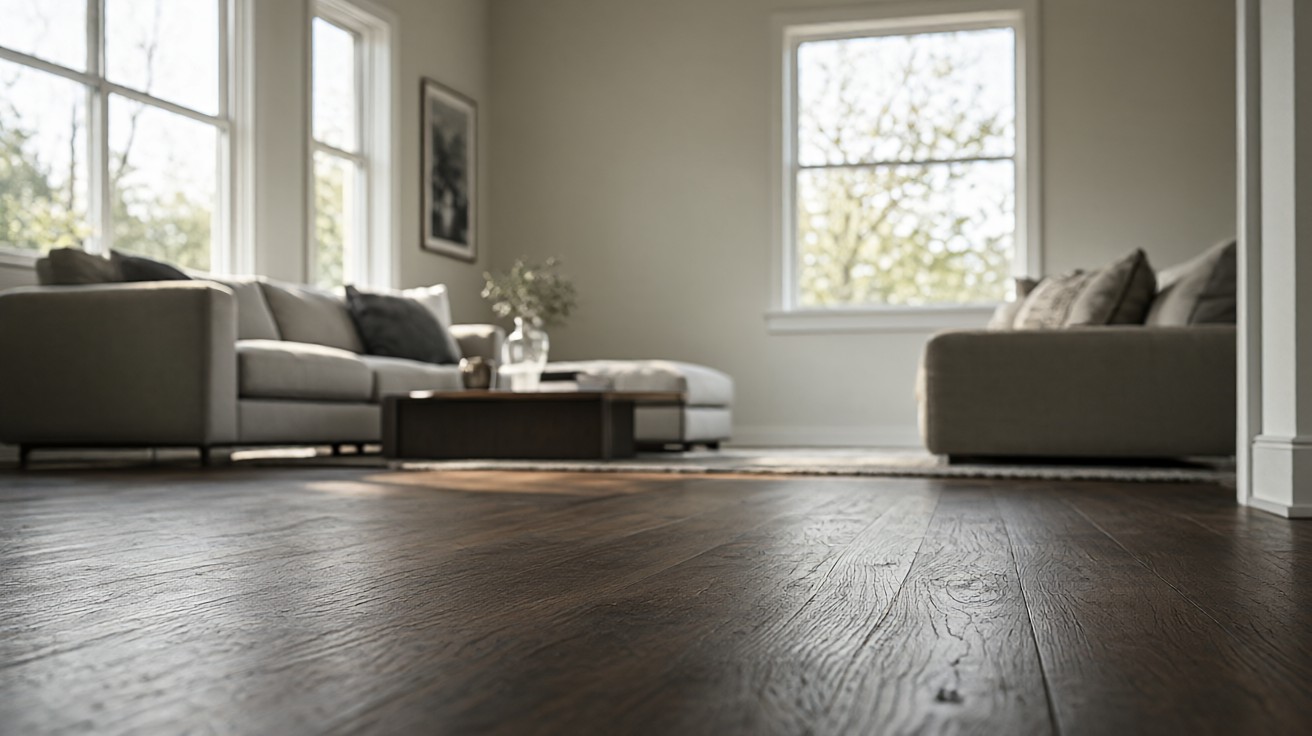
Most wood species are pale underneath the stain. When a scratch cuts through a dark finish, it exposes light wood, and that light line against a dark field is high contrast. The eye catches it instantly. The scratch is not deeper on a dark floor; it is simply louder.
Household dust is mostly pale fiber and skin flake. On a dark floor it sits in high contrast and shows within hours in a busy house. Footprints, dry crumbs and pale spills follow the same rule. On a light floor that same debris nearly disappears, because debris and field share a value.
Pet hair visibility works by contrast too. Light hair from a golden retriever or a cream cat flags on dark walnut; dark hair from a black lab flags on pale oak. If pets run the house, match the floor value to the pet, or accept the daily sweep.
The best flooring for homes with pets goes deeper on hair, claws and accidents.
Do dark floors show more dust?
Yes, for ongoing pale debris. That is the honest half of the dark-floor complaint. But it is only half. Dark floors camouflage existing dark stains, old gaps and surface imperfections, which is a different claim entirely. Conflating the two is why the pros-and-cons lists contradict each other.
Sheen sharpens or softens all of this. A satin or matte finish scatters light, so dust and fine scratches read lower; a gloss finish beams light back and flags every particle. Dark plus gloss is the least forgiving combination in a busy house.
Dark plus satin is the most practical way to own a dark floor. If you want the drama without the daily spotlight on every crumb, specify satin or matte, never gloss.
Why Light Floors Hide Wear but Show Dark Debris
Light flooring hides ongoing wear. Pale dust, fine scratches and light scuffs blend into a pale field, so the floor looks clean between sweeps. But it flips on dark debris. A tracked-in mud crumb, a dark pet hair, a coffee drip or a black scuff mark sits in high contrast on pale oak.
This is where the lists talk past each other. Hiding dirt and hiding imperfections are not the same claim. Light floors hide ongoing dirt and new scratches. Dark floors camouflage existing gaps, old stains and surface flaws. A dark stain does not hide a fresh scratch; it hides the gap already there.
On a floor that is 80 to 100 years old, boards have shrunk and gaps have opened between them. A dark stain shadows those gaps and the old discoloration, so the floor reads uniform. A pale finish leaves every gap and every stain visible.
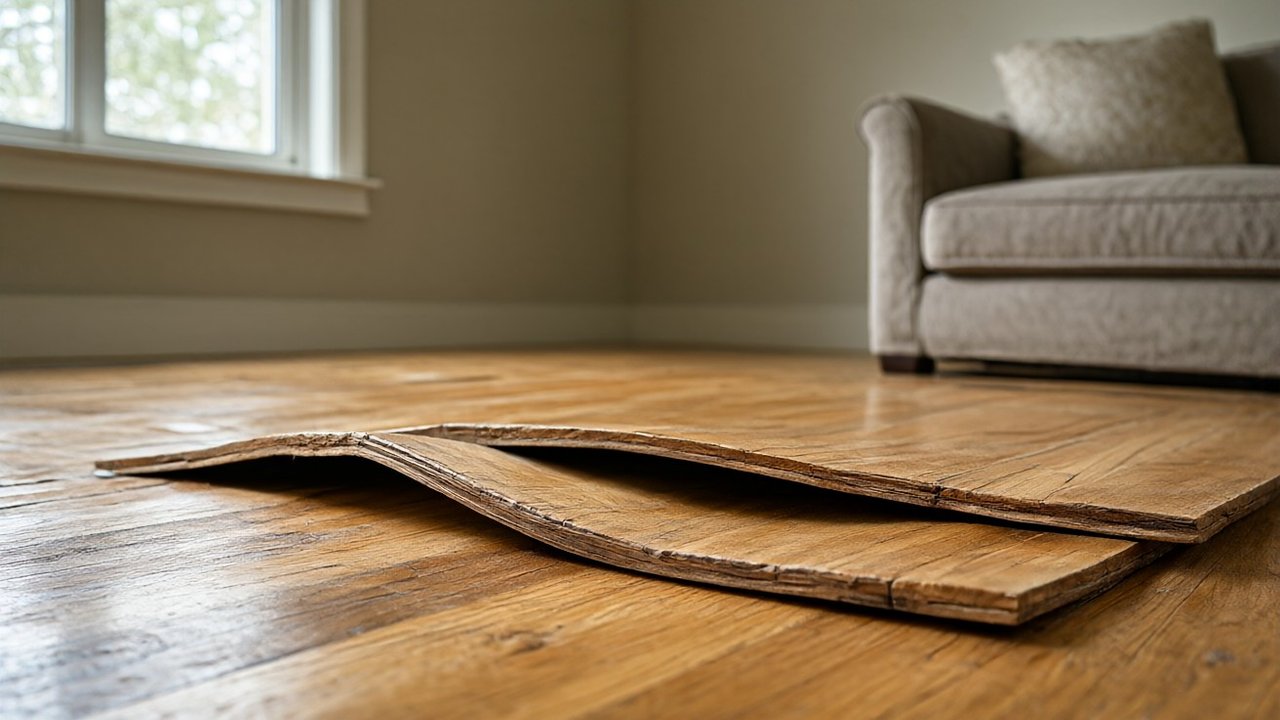
For an old, gap-prone floor, dark is camouflage, not a style choice. Gaps are a moisture story before they are a color story, and wood moves with the season.
The NWFA guidance is to hold indoor relative humidity between 30 percent and 50 percent and temperature between 60 degrees and 80 degrees Fahrenheit year-round. Keep that range and the gaps stay predictable. Let a room dry out each winter and even a dark floor will show new lines.
Which hides scratches better, light or dark floors?
Light hides new scratches better, because a scratch exposes pale wood that matches a pale field. Dark hides existing gaps and stains better, because the dark value shadows them. If your floor is new and your house is busy, light wins on scratches.
If your floor is old and flawed, dark wins on camouflage. When a scratch does cut through the finish on a light floor, it is usually a shallow pale line you can blend rather than a glaring wound.
For a scratch that goes deeper, repair scratched hardwood floors sorts the fix by depth, from a touch-up marker to a board swap.
Daylight Orientation: North vs South Rooms
In a north-facing room the light is cool and indirect all day, so a low-reflectance floor has little to bounce back. Dark walnut there can read flat and closed in. A pale or mid floor keeps the room lit without help from the lamps, which is why north rooms usually want the higher value.
A south-facing room gets strong direct sun, so a dark floor has enough light to stay rich rather than black, and a very pale floor can glare at midday. If the room is large and south-lit, dark is a comfortable choice.
If it is small and south-lit, a mid-tone avoids the glare without losing the warmth. East and west rooms swing: bright and warm for part of the day, dim for the rest, so the floor has to work under two very different lights.
A mid-tone rides that swing better than either extreme. That is one more reason the middle is the default for rooms with mixed exposure.
Does a north-facing room rule out dark floors?
It does not rule them out, but it raises the cost. If you want dark in a north room, keep the walls and ceiling pale, add layered lighting and accept that the floor will read darker than the sample.
As long as the room is large enough to stay readable, dark can work. In a small north room it usually fights you. One retailer’s fading claim runs the other way, that dark floors fade less in sun. Treat it as contested opinion, not a material fact.
UV fading tracks the stain, the finish and the species, not the value alone. A dark stain can amber or bleach in direct south sun just as a pale one can. Judge fading by the finish system, not by the color.
Upkeep Reality: Cleaning and Recoat Cadence by Value
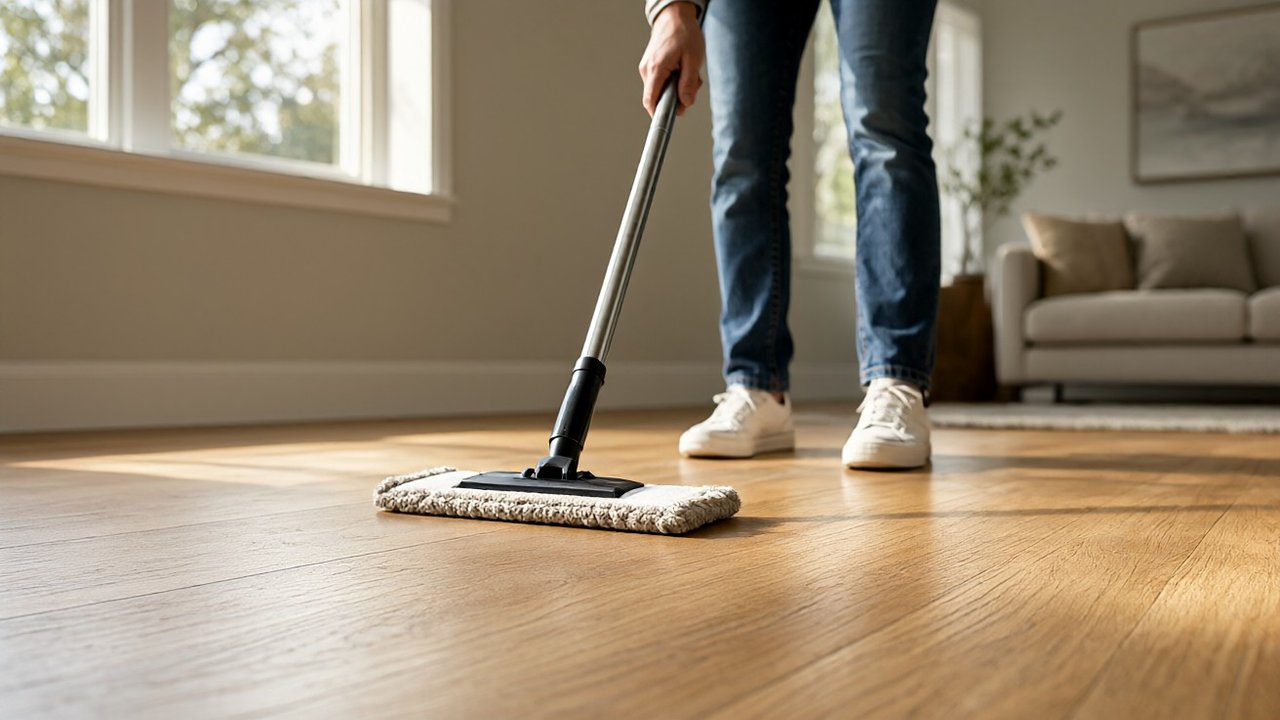
Maintenance and cleaning cost is where the two values diverge weekly. A dark floor shows pale dust and footprints within hours in a busy house, so it asks for a dry mop or a robot vacuum most days. A light floor forgives a missed day; the dust is still there, but the eye does not catch it.
The finish care is identical regardless of value. Both need the same pH-neutral cleaner, the same felt pads under furniture and the same entry mats to catch grit. Color changes how often you clean, not how you clean.
For the weekly and seasonal steps, cleaning hardwood floors lays out the routine that keeps either value looking right.
Plan on a screen-and-recoat about every 3 to 4 years on a site-finished wood floor in normal traffic. That is a light abrasion and a fresh topcoat, not a full sand-to-raw. It restores the sheen that hides fine scratches, and it costs far less than a full refinish.
The cadence is driven by traffic, not by color, but color changes when you notice the dulling. A dark gloss floor shows wear sooner, so you may schedule the recoat earlier. A light satin floor hides the same wear longer, so the interval can stretch.
Watch the sheen, not the calendar. Small habits cut the upkeep on either value: shoes off at the door, mats inside and out, and a robot vacuum on a daily schedule keep grit off the finish. Grit is what scratches; color only decides whether you see the scratch.
Resale and Style Longevity
Are light or dark floors better for resale?
Resale appeal is opinion, not data, and retailer guidance genuinely splits. One camp reads light as the safer bet: it photographs brighter, makes small rooms feel larger and appeals to the widest pool of buyers.
Another reads very dark stains as the current preference, with very light natural right behind, and calls reds polarizing enough to avoid before a sale. Both camps are reading taste, and taste moves with region and year.
A Tudor or a dark-trimmed traditional room often wears dark well, and buyers shopping those homes expect it. A contemporary shell can take either extreme. There is no national number that settles this, so treat any resale ranking as a snapshot of one market at one moment.
Style longevity favors the middle. Very dark and very light are both trend positions right now, and trends swing. A mid-tone natural oak has read current for decades and photographs well under any listing light.
If you are selling within a few years, the neutral middle is the lower-risk bet. Not because it is proven to add value, but because it offends the fewest buyers. The honest verdict is that value is a minor lever next to condition, layout and price.
A well-kept mid-tone floor in a bright room outsells a trendy dark floor in a dim one. Pick the value you will maintain, because a maintained floor of any value shows better than a neglected one.
Mid-Tones: The Compromise
Are mid-tones the safest compromise?
Mid-tone flooring sits in the middle of the reflectance scale, and it inherits half of each extreme’s advantage. It is pale enough to hide most ongoing dust and fine scratches, yet warm enough to shadow small gaps and minor stains.
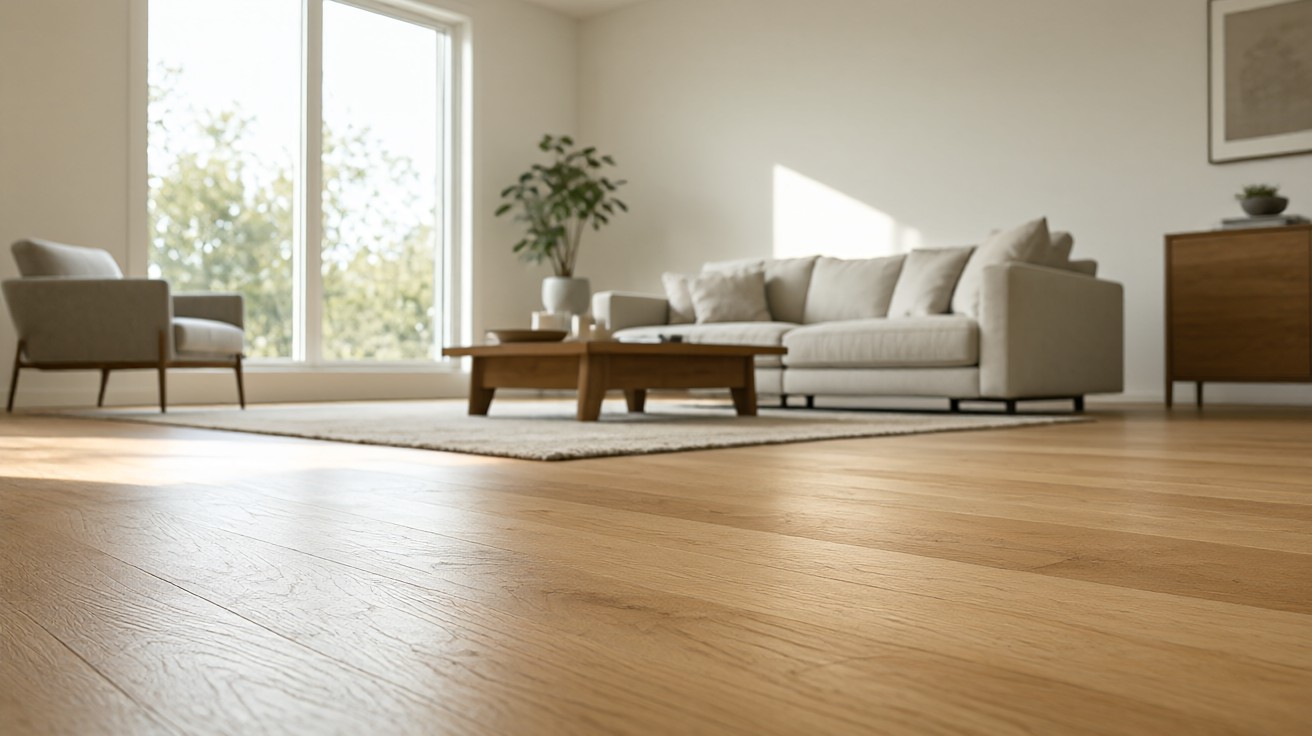
It does neither job as completely as a true extreme, but it does both well enough for most houses. A natural white oak, a honey maple or a mid-brown stain lands here. These are the values that read current across the most architectural styles and the most listing photos.
They also age gracefully. A little ambering or a few new scratches read as character on a mid-tone rather than as damage. In a north room a mid-tone keeps more light than a dark one; in a south room it glares less than a pale one.
In a mixed east or west room it rides the swing. It is the value that asks the fewest concessions from the room, which is why it is the default when you have no strong reason to go extreme.
For most busy US homes, this is the answer. Choose a true light or a true dark only when you have a specific reason: a small dim room that needs maximum bounce, a large formal room that wants drama, or an old gap-prone floor that needs camouflage.
Without one of those reasons, the middle wins.
How to Decide and What to Sample
Decide the value first, then the undertone. Value is the light-to-dark axis this decision turns on. Undertone is the red-orange-gray axis underneath it, a separate choice with its own rules. Get the value wrong and no undertone fixes it.
The species sets the starting color and how it ages. Pale maple, honey oak and deep walnut are not interchangeable values, and the same species can range widely board to board. Species color range and grade are their own subject; natural color variation in hardwood sorts them by species and cut.
Take samples home. Stand them in the actual room, at standing height, against the actual wall color. Look at them in morning light, at noon and under your evening lamps. A sample that looks right flat on a showroom table can read two values darker vertical in your own north light.
For example, a honey oak that reads warm in the store can turn gray against a north-facing wall, while the same board looks golden in a south room. If you can, borrow three samples across the value range and live with them for a day before you commit.
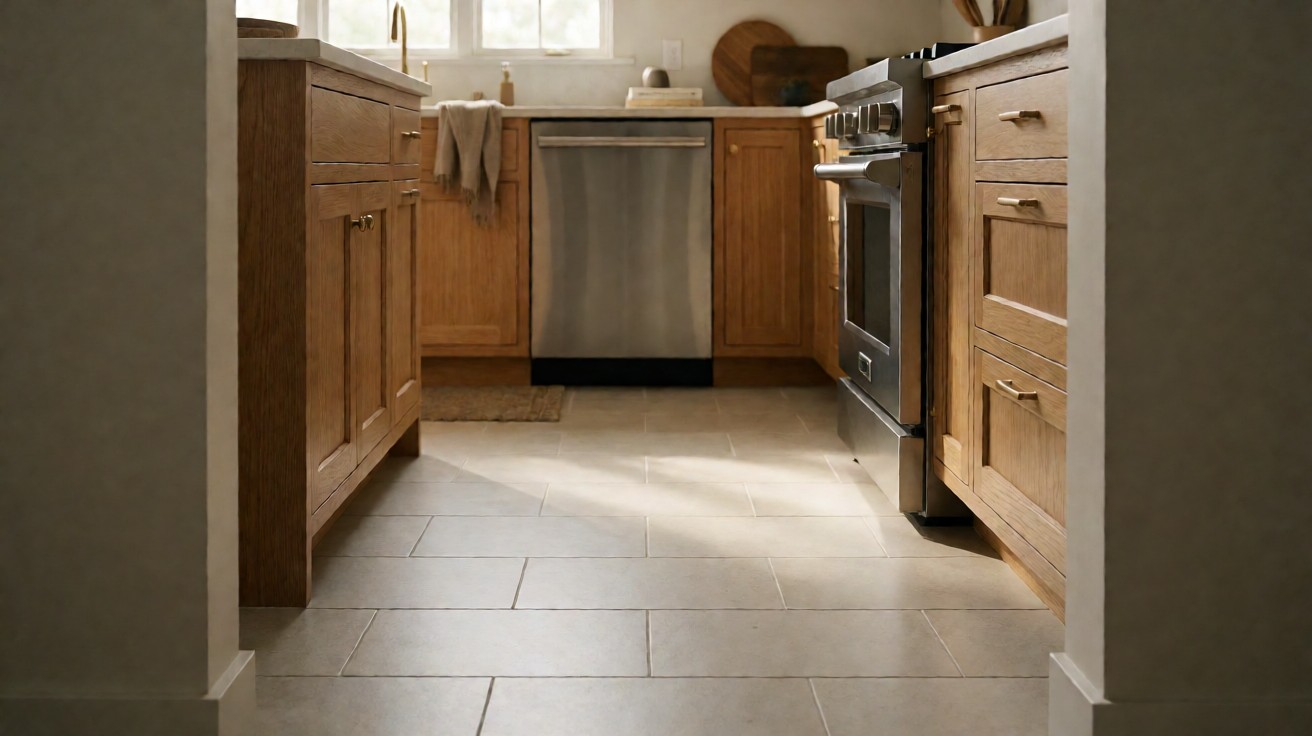
If the floor is tile, check the shade-variation class before you buy. ANSI A137.1, the ceramic tile standard developed by TCNA, grades appearance from V1 uniform through V2 slight and V3 moderate to V4 substantial random variation.
A higher V rating means more variation, not better or worse quality. The same standard defines porcelain by water absorption of 0.5 percent or less. At V3 or V4, one sample tile will not match the installed floor, so dry-lay several boxes and blend them before setting.
At V1, the sample is a reliable preview. Unless you have seen the full range, assume the installed floor will vary more than the single piece you held in the store. The room decides, not the rack.
Where to Go Next
The value decision is the one you live with daily. Light forgives the mess you make. Dark forgives the flaws the floor already has. Mid-tone forgives a bit of both. Pick the value that matches your room’s light, your household’s traffic and the floor’s existing condition.
Then choose the species and undertone inside that value. From here, the design hub sets up the whole room and the species guide sorts color range. The pet, cleaning and scratch-repair guides handle the upkeep you just chose, so you are not starting over.
If you remember one thing, remember the split. Ongoing dirt and new scratches favor light. Existing gaps and stains favor dark. The middle is the default for everyone else. That single distinction resolves most of the contradictory advice you have read, and it is the one the lists keep missing.