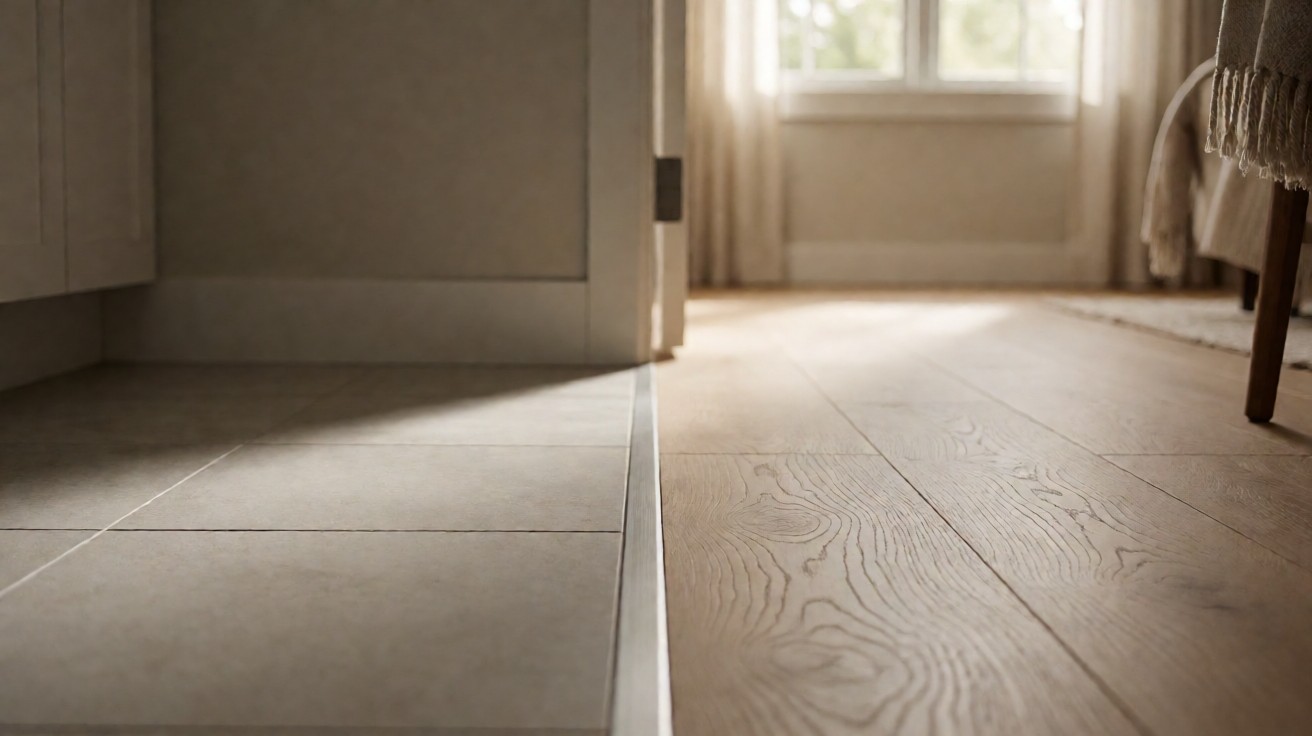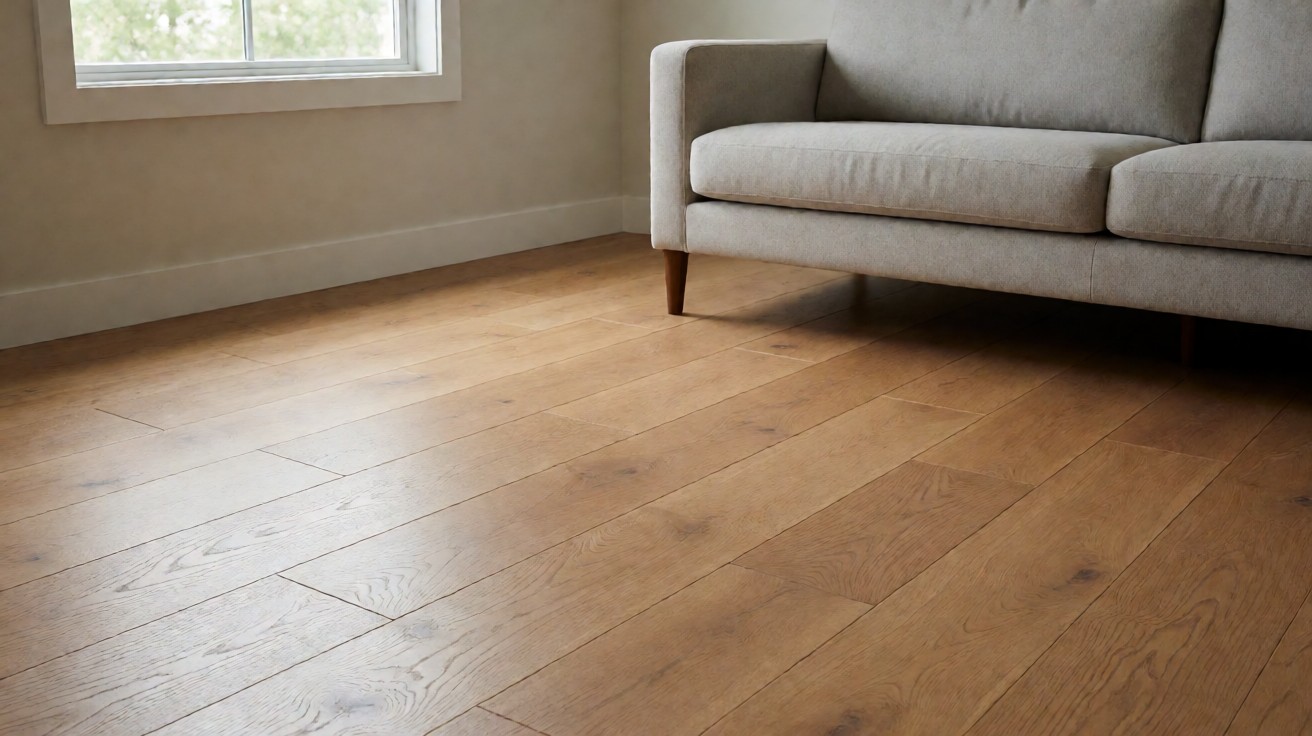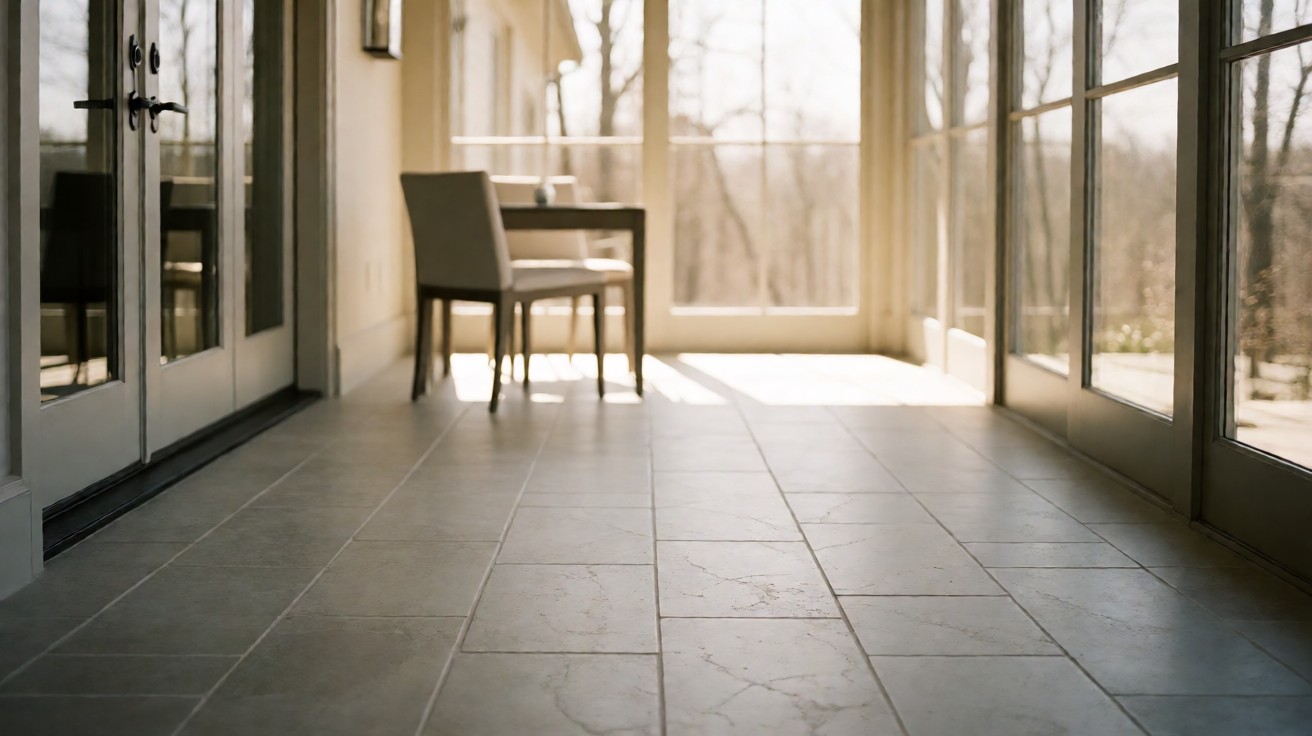

A sunroom floor should be chosen for the worst week of the year rather than the best, because that is when the heat and the damp both arrive together.
A Sunroom Is the Hottest and the Coldest Room in the House
A sunroom is a room with glass on two or three sides and a floor that has to survive what that glass does. In the afternoon it can be twenty degrees warmer than the rest of the house. At night in a clear sky it radiates heat straight out. In winter the base is cold and in summer the surface reaches a temperature that softens some materials.
That is a wider range than any other room in a house sees, and it is why the sunroom floor cannot be chosen the way an interior floor is chosen. There is no stable temperature here, and a material that has been chosen for a normal room is being asked to do something no other room asks.
Why the Worst Week Matters More Than the Best
The temptation in this room is to choose on a sunny afternoon when the space looks best, and that is the wrong week to decide anything. A sunroom chosen in June is chosen at the temperature maximum and with the humidity at its lowest for the year.
The week that decides it is the one where the outdoor temperature drops below freezing and the room has been shut up for days. That is when condensation forms on the inside of the cold glass, when the base of the floor is at the slab temperature, and when the material is cold enough for the first time that year and wet at the same time. Choosing in that week is choosing for the condition the floor will actually see.
| The sunroom’s actual condition | The family that answers it | Why it survives there |
|---|---|---|
| A room used year round, a permanent build | Porcelain or natural stone | Tolerates cold and damp at the same time |
| A room used in summer mainly | Tile, with a matte finish | The finish matters more than the material in the heat |
| A slab that is damp or below grade | Rigid core, after a membrane | The stone core survives once the slab is under control |
| Glass on three sides, west facing | Avoid laminate and wood | The surface temperature range is outside their limit |
| Anything at all, without sealing first | Shade and air sealing | Decides how hard the floor has to work all year |
Condensation and Where It Lands
The failure in this room is condensation, and it lands on the cold surfaces. The cold surfaces in a sunroom are the floor near the glass, the base of a wall, and the underside of the sill.
A cold floor that is also damp is the exact condition that lifts a tile adhesive bed, opens a click joint, or swells a fibre core, because the water sits at the interface rather than on top of the surface. A material that absorbs nothing and tolerates a wet interface survives it. A material with a paper or fibre core does not, and that is the single most useful distinction in this room.
Porcelain Tile, the Most Forgiven Answer
Porcelain is the most forgiven material in this room and it is the one most people end up with, because it takes heat, takes cold, takes damp, and does not mind any of them.
The size matters more here than it does in a bathroom, because a large format tile has fewer joints and fewer places for condensation to work into. It is also the only common material that genuinely tolerates a floor which goes below freezing and wet at the same time. The porcelain tile page covers the denser tile family against the cheaper one, and the tile flooring guide covers the sizes and the joint work that decides it.
Natural Stone and the Thermal Case
Natural stone is the correct answer where the room is used year round and the brief is a permanent one, because stone has thermal mass and it moderates the swing in a way that a thin tile cannot.
It is also the most demanding material in the room to keep flat, because stone moves with moisture and with heat, and a stone floor laid on a slab that moves will show it. Sealing is not optional here in the way it is in a hallway; it is the thing that slows the movement. The natural stone flooring page covers the material families and what each one does with temperature.
Wood, and the Two Failure Modes
Wood in a sunroom fails in one of two ways and which one happens depends on the roof and the glass rather than on the wood.
The first is heat. A surface that reaches a high temperature in summer softens a finish, dries a board, and opens a gap at the edge of the floor, and it does this repeatedly over several summers. The second is damp at the interface, which lifts an adhesive bed and sounds hollow when tapped. Neither is about the species. Both are about the room.
Laminate and the Temperature Limit
Laminated board is the family with the narrowest margin in this room, because its core is a fibre board and its surface is a thin decorative layer with a wear coat over it. It tolerates damp about as well as a sheet of chipboard, and it is sensitive to heat in a way that a tile is not.
Where it is specified, the specification that matters is the temperature range the manufacturer states, not the look. A room that reaches a high surface temperature on the west side of the house in summer is outside that range for a lot of laminated product. The laminate flooring guide covers the wear layer and the core, which is where that limit actually comes from.
Rigid Core, and Where It Works Here
Rigid core works in a sunroom in the milder version of the problem, where the swing is temperature rather than temperature plus damp. The stone core does not take up water, and a floating installation over a flat slab is exactly what it is designed for.
What it does not do is fix condensation at the glass, and it is only as stable as the slab under it. Where a slab in this room is genuinely damp, the membrane and the preparation come before the floor, and the same test that applies to a basement applies here. The rigid core vinyl page covers the construction, and the best flooring for basements page covers that test in full.
Movement and the Expansion Gap
This room moves more than any other in a house, and the floor has to be allowed to move with it. That is what the expansion gap at the perimeter is for, and in a sunroom it has to be a real gap rather than a token one.
The gap is filled with a compressible strip and covered by the skirting, and the skirting has to be able to move with it rather than pinning the floor. A skirting screwed tight to the floor in a sunroom is a skirting that will split the floor in the first hot summer. It is the least expensive detail in this room and the one most often left out.
Slip and the Glass Door
It is worth being precise about where the water comes from, because the two sources need different answers. Condensation sits against the cold glass and is a film of water that a mop deals with. Rain tracked in from outside is a load of grit and water together, and it is the abrasive one that dulls a finish rather than the water that lifts it.
Both are handled the same way in practice, which is a mat at the door that catches it before it reaches the floor and a finish chosen so that what gets through does not show. Neither is a substitute for the finish specification; they just reduce how often it matters.
A sunroom floor is often wet from condensation or from rain carried in on a mat, and it usually has a door to the outside in it. Those two facts make the slip rating a specification rather than an accessory.
A matte or a textured finish is the right specification, and a polished finish is the wrong one in a room where the glass gets condensation on the inside. The whole floor is the walking surface here rather than a path through a room, which is what makes the finish decision more consequential than it is anywhere else. The tile flooring guide covers the finish families and what each one does wet.
Underfloor Heating and the Swing
The temperature swing in this room is the strongest argument for heating it under the floor, and where it is installed it changes the material list rather than just improving it.
Tile and stone are the best conductors and the best answers. Rigid core works within the limits the manufacturer sets. Wood and laminate have their own caps that are lower than people assume, and a sunroom floor that has been specified for summer is often outside them in winter. The whole question is worth answering before the material is chosen rather than after the heating is designed.
Cost, and Where the Money Belongs
In this room the cost line that surprises people is not the material. It is the glazing and the air sealing, because a sunroom that is properly sealed and shaded behaves like a normal room for nine months of the year and one that is not behaves badly all twelve.
Spending on internal shading and on air sealing is what makes an expensive tile floor a sensible choice, and spending the same on a better tile in an unshrouded glass room does not. The floor is the last decision in this room and it should be, because the two decisions above it determine how hard it has to work.
| Where the money goes | What it buys | Why it matters more than the floor |
|---|---|---|
| Internal shading and air sealing | Decides how hard the floor works | A sealed room behaves normally for nine months of the year |
| Material | The smaller half of the real cost | Usually the last decision and the least influential one |
| Preparation and membranes | Higher on a slab | The part that decides whether any floor lasts here |
How to Choose, and Where to Look Next
Choose the worst week, not the best one. Walk the room in the cold, look at where the condensation sits, and find the coldest surface in it. That surface is the specification, and the material that tolerates it with water present is the answer.
Then read the guide for the material that survived. The porcelain tile page and the natural stone flooring page are the two that back the permanent answers, the flooring types compared page has all of them in one table, and the polished concrete page covers the one material that looks the most contemporary in a sunroom and has the most demanding preparation. The best flooring for basements page is worth reading too, because a sunroom over a slab has the same moisture question as a basement with better light.