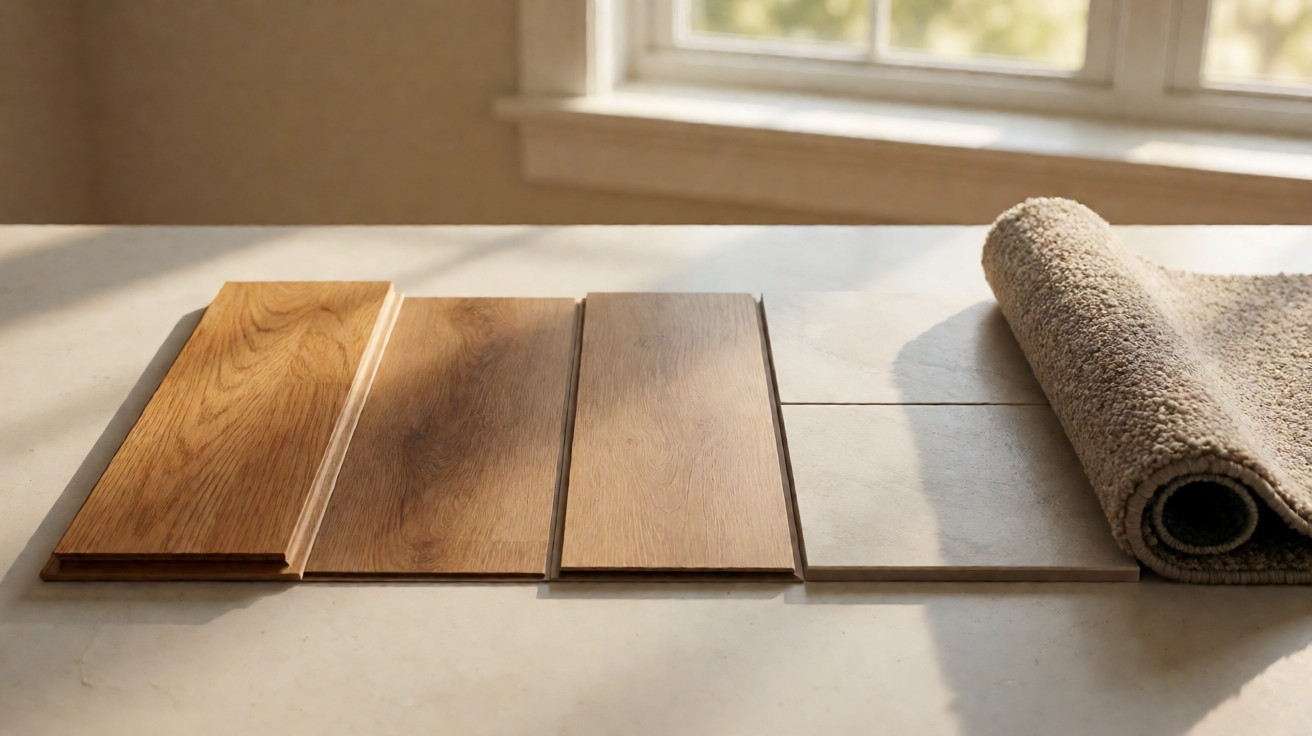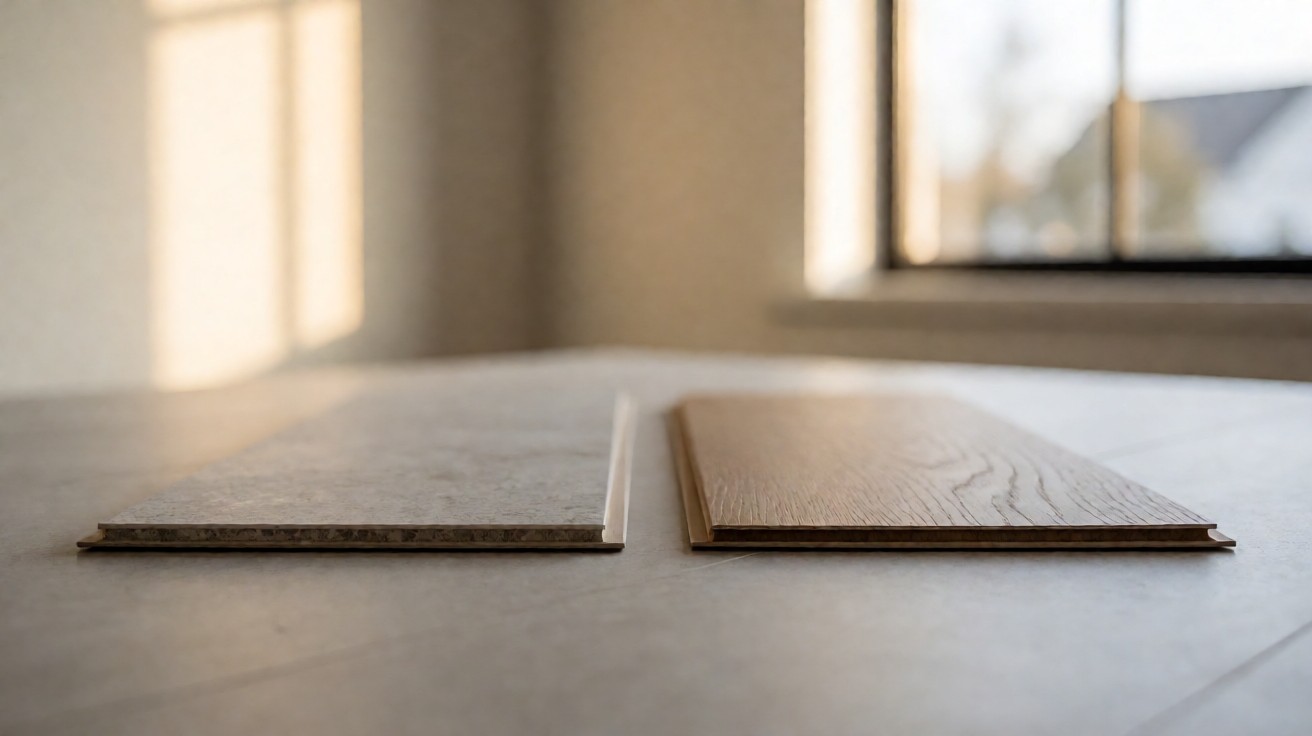

Sheet vinyl and luxury vinyl are both vinyl, but they are built two different ways, and that construction choice sets your cost, repair plan, and service life.
One comes out of a roll and gets laid flat across the room. The other comes out of a box as rigid planks and tiles that you click together or lay loose.
This page works through the format decision: what each construction does, how the prices stack up, and where the cheaper option becomes the pricier one over time.
Every number in this comparison traces to a named source. Cost ranges come from The Spruce and from Lowe’s buying guide. Construction specs come from Tarkett product sheets. Wear layer guidance comes from Spartan Surfaces, which cites ASTM F1700 and ASTM F1913.
Which Vinyl Format Is Right for Your Project?
What This Comparison Actually Decides
This is not a question of which material is better. Both formats are vinyl. The question is which format fits your room, your traffic, and your repair tolerance.
Sheet vinyl is a continuous roll that a professional lays and bonds flat across the subfloor. Luxury vinyl is a layered plank or tile that you handle as individual pieces.
The format you pick determines three things. It sets what the floor costs today. It decides how the floor repairs in year five. It decides whether the floor lasts ten years or twenty-five. The sections below work through each of those, and the last one turns them into decision rules.
If you are still deciding whether vinyl is the right material at all, start with our full vinyl flooring guide before reading on. It covers how vinyl works and when it beats the other flooring families.
What Is Sheet Vinyl Actually?
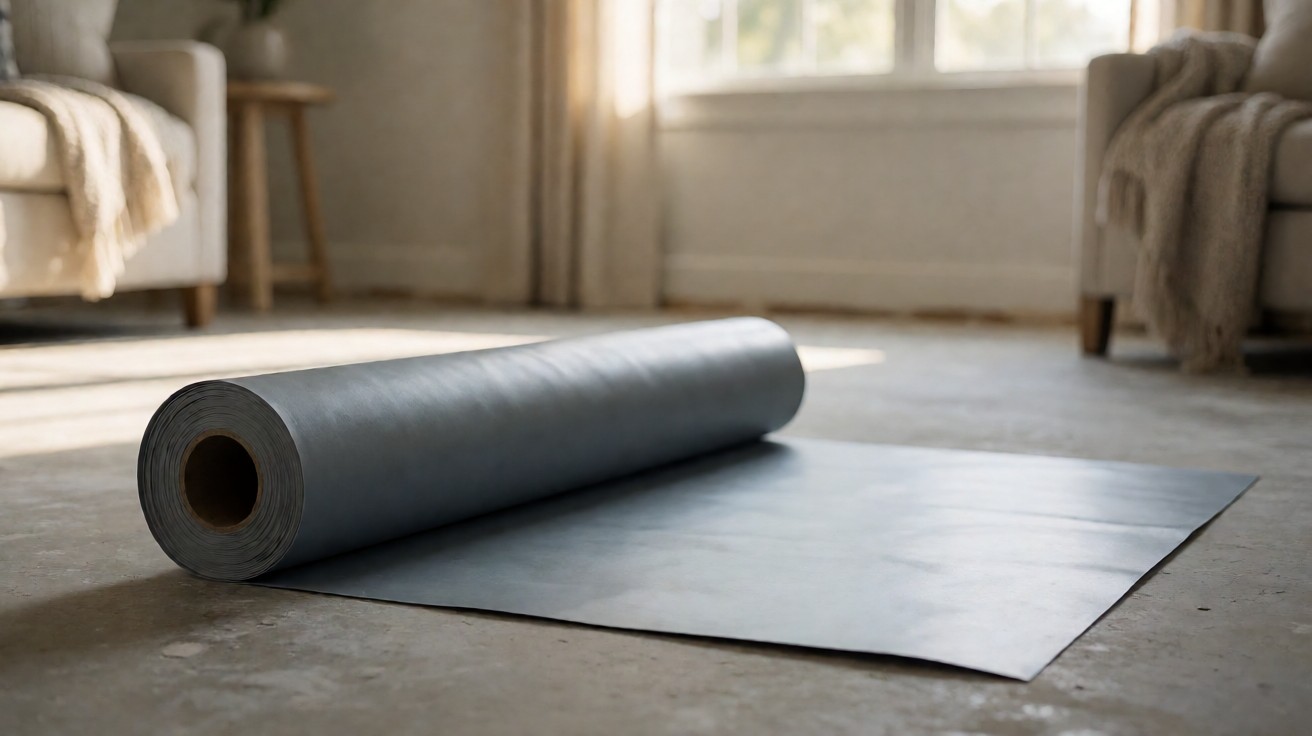
Sheet vinyl is continuous vinyl rolled to width. The basic construction is the same idea every time: a flexible vinyl body bonded to a backing and finished with a protective topcoat.
Two subtypes carry most of the market, and they age differently.
Homogeneous vs. Heterogeneous Sheet
A homogeneous sheet has color through the full body. Per Tarkett’s Aria spec sheet, the product is a 2.0 millimeter sheet of uniform vinyl with a UV cured polyurethane finish, tested to ASTM F1913.
There is no separate wear layer to wear through. Scratches stay on the surface, and the color underneath is the same color you see on top.
A heterogeneous sheet builds layers instead. A printed film sits over the vinyl body and a clear wear coat covers the film.
Tarkett’s Easy Living spec sheet, a residential product, lists a 2.54 millimeter overall thickness with a 14 mil wear layer. Per The Spruce, standard sheet vinyl typically carries a 10 to 15 mil wear layer, which is thinner than most luxury products.
For backings, roll handling, and how the format works in practice, our sheet vinyl guide is the deeper read.
How Wide Are Sheet Vinyl Rolls?
Per The Spruce, sheet vinyl is manufactured around 6 to 16 feet wide, and the rolls home centers sell are usually 8 or 12 feet wide.
Lowe’s lists its sheet in 12 foot rolls, cut to length. That width is the whole water story: a 12 foot roll can cross a narrow bathroom without a single seam.
What Is Luxury Vinyl Actually?
Luxury vinyl is a stack. Per The Spruce, the format uses six to eight layers: a clear topcoat, a clear wear layer, a printed design layer, a cushion layer, and a stiff backing.
The stack sells as planks, or as square tiles, and it is what suppliers mean when they say luxury vinyl tile.
The Layers Under the Wear Coat
The wear layer is the number that matters. Per Spartan Surfaces, residential LVT comes with wear layers of 6, 8, or 12 mil.
Tarkett’s iD Latitude spec sheet lists a 20 mil wear layer on a 3.0 millimeter product, classified to ASTM F1700, Class III, Type B.
Per Spartan Surfaces, the same standard sets 20 mil as the commercial minimum. That gap between a 6 mil residential plank and a 20 mil commercial one is most of the durability story.
Total thickness for the format runs 2 to 5 millimeters per Spartan Surfaces, which is why luxury pieces feel semi rigid underfoot while sheet stays flexible.
For the full layer anatomy, grout lines, and how the tile format works, our LVT guide covers it in detail.
Plank or Tile?
Both shapes carry the same layered construction. Planks read as wood and hide their seams along the length. Tiles read as stone or a clean grid and are easier to mix into patterns.
If your pick lands on a rigid core, stone polymer or wood polymer, that is a separate decision we break out in our SPC versus WPC comparison.
How Much Do Sheet and Luxury Vinyl Cost Per Square Foot?
What Moves the Price on Each Format?
Per The Spruce, standard vinyl runs 50 cents to 2 dollars a square foot for material, and professional installation adds another 1 to 2 dollars a square foot.
The same outlets sell luxury vinyl at 2 to 4 dollars a square foot, with designer styles from specialty stores at 7 dollars and up.
Per Lowe’s buying guide, sheet starts under a dollar and tops out near 2 dollars, while LVT runs 6 dollars and up when you buy quality.
The installed numbers spread wider. Per The Spruce, expect 3 to 7 dollars a square foot installed for sheet, and 3 to 16 dollars for luxury vinyl.
Commercial bids separate further. Per Spectra Contract Flooring, sheet material runs 1 to 2 dollars a square foot with high install difficulty, while LVT material runs 5 to 10 dollars with low install difficulty.
| Cost item | Sheet vinyl | Luxury vinyl (LVT/LVP) | Main limitation |
|---|---|---|---|
| Material cost, residential | 50c to $2.00 per sq ft | $2.00 to $7.00 per sq ft | Luxury range widens fast at the top end |
| Material cost, commercial | $1 to $2 per sq ft | $5 to $10 per sq ft | Sheet bids carry higher install difficulty |
| Installed cost | $3 to $7 per sq ft | $3 to $16 per sq ft | DIY narrows the luxury gap on labor |
| Typical service life | 10 to 15 years | Up to 25 years | Cheap sheet can cost more over one replacement cycle |
How Does the Wear Layer Change Durability?
How Thick Should the Wear Layer Be?
A mil is one thousandth of an inch, and wear layer thickness is the first spec to read on any luxury product.
Per Spartan Surfaces, residential LVT wear layers run 6 to 12 mil, heavy products go to 20 mil, and ASTM F1700 sets 20 mil, or 0.5 millimeter, as the commercial minimum.
Homogeneous sheet has no separate wear layer at all. A product like Tarkett’s Aria spec is 2.0 millimeters of uniform color through the body.
The practical difference shows up in how each format ages. A layered plank wears a finite cap. Once the wear coat thins, the print underneath shows.
A homogeneous sheet has no cap. Its surface scratches, but the body underneath is the same color, so wear reads as a matte scuff instead of a patch of bare pattern.
What Happens When the Floor Wears Out?
Per Lowe’s buying guide, LVT is generally more durable and less vulnerable to scratches and wear than standard sheet vinyl.
Per The Spruce, the thin wear layer on standard vinyl makes it prone to gouging and tearing, which is the single reason a high traffic hallway points away from sheet.
If the room sees carts, strollers, and heavy furniture moves every day, the thicker wear layer is where the money goes.
Which Format Is Easier to Repair?
Can You Patch Sheet Vinyl?
You can, and the patch will show.
Per Spectra Contract Flooring, when part of a sheet floor is damaged, the entire section must be replaced, which costs more time and labor than swapping a tile.
Per Lowe’s buying guide, replacing an individual vinyl tile is straightforward, but it is difficult to make a sheet repair look good.
You match the new piece to the old, cut it in place, bond the seam, and the joint still reads as a line under some lights.
Luxury vinyl inverts that logic. One damaged plank or tile lifts out, and a spare replaces it, often in minutes.
That single fact flips the cost curve. The sheet floor is cheaper to buy, but every repair is a visible compromise.
The plank floor costs more up front, but damage becomes a maintenance item instead of an event.
How Do the Two Formats Install Differently?
Glue-Down Rolls or Floating Planks?
Sheet installs as one piece. Per Tarkett’s Easy Living spec, the residential roll can be installed releasable, permanently, or floating without glue, and permanent bond uses a spread adhesive.
Per Spectra Contract Flooring, in commercial and medical work the seams are heat welded to stop moisture and bacteria getting under the joint.
Planks and tiles install three ways: clicked together and floating, loose laid under their own weight, or glued down.
The install difference that matters to you is skill. Per Lowe’s, sheet usually requires a professional, while tile and plank are do it yourself installs.
Per The Spruce, the individual pieces snap together and float over an underlayment, so a moderate handyman can place a whole room.
The glue down versus click lock choice on its own is a different decision, and we treat it separately.
Which Format Handles Water Better?
Where Do Seams Actually Leak?
Both formats are water resistant at the piece level. Per The Spruce, water usually does not penetrate the surface of either material, and both are slightly vulnerable at the seams.
The difference is how many seams you end up with. Per Lowe’s, a sheet floor has fewer seams, which minimizes the risk of moisture damage, and sheet is described as waterproof and antimicrobial out of the box.
In a small room the math goes to sheet. A 12 foot roll can cross a bathroom with no seams at all, which is why kitchens, bathrooms, and laundry rooms have favored the roll for decades.
In a large open plan room, luxury vinyl carries far more seams, but each plank is water tight by itself, so the risk lives in the joints rather than in the piece.
Which Rooms Favor Which Format?
Bathroom, Kitchen, or Whole Home?
Bathroom and laundry favor sheet when the room is under about 12 feet across, because one roll can cover it with few or no seams.
Kitchen works either way, and the choice turns on look, because sheet reads as a clean commercial finish while luxury vinyl can do a wood or stone look.
Whole home and open plan favor luxury vinyl, because you want the seam pattern under your control and the repair path on your side.
High traffic commercial rooms point at luxury vinyl per Spectra, where the wear layer is sized to the load and the install stays easy.
Rental and flip work points at sheet, because the low material cost and fast pro install keep the line items small.
For where vinyl sits next to hardwood, tile, and laminate, our flooring types compared guide maps the whole landscape.
How Do the Warranties Compare?
What Does a Warranty Actually Cover?
Warranties track the service life gap. Tarkett’s Easy Living residential sheet carries a 15 year limited warranty, plus a separate 2 year no questions asked coverage on the water barrier, per its spec sheet.
Per The Spruce, standard vinyl is rated for 10 to 15 years of service, while luxury vinyl can last up to 25 years.
Read the fine print before you buy. Warranty terms void for the wrong install method, the wrong adhesive, and moisture damage at seams, and the sheet and plank lines use different fine print.
Ask the supplier for the warranty card, not the marketing number, and confirm which install method keeps the coverage alive.
Sheet Vinyl and Luxury Vinyl: Specs at a Glance
How to Read the Table
The table compresses the specs that drive the decision: thickness, wear layer, install method, seam count, repair path, and life. Watch the wear layer column and the repair column first, because those two cells do most of the long term cost work.
| Attribute | Sheet vinyl | Luxury vinyl (LVT/LVP) | What it means |
|---|---|---|---|
| Format | Continuous roll, 6 to 12 ft wide | Multi-ply planks or square tiles | Sheet is one piece, luxury is many |
| Overall thickness | 2.54 mm residential, 2.0 mm homogeneous commercial | 2 to 5 mm | Luxury feels stiffer underfoot |
| Wear layer | 10 to 15 mil standard, none on homogeneous | 6 to 20 mil residential, 20 mil commercial minimum | Homogeneous sheet has no separate layer |
| Installation | Glue-down roll, releasable, permanent, or floating glueless | Click, loose lay, or glue down | Sheet leans on pro skill more |
| Seams | Few, one per roll width | One per plank or tile joint | Fewer seams wins in wet rooms |
| Repair | Cut and patch the section | Replace one piece | Sheet patches stay visible |
| Service life | 10 to 15 years | Up to 25 years | Check warranty terms per install method |
Should You Choose Sheet or Luxury Vinyl?
Pick Sheet Vinyl When
- The room is small and narrow, under about 12 feet across, and a single roll can cover it with few or no seams.
- Budget is the first constraint, because sheet material runs 50 cents to 2 dollars a square foot per The Spruce.
- The space is wet, like a bathroom or laundry room, and you want the fewest possible joints.
- You want a clean commercial look and you do not need a wood or stone graphic.
- The project is a rental or a quick flip, where low material cost and fast pro install matter most.
Pick Luxury Vinyl When
- The room is large, open plan, or high traffic, and you want a thicker wear layer you can point to on paper.
- You want a wood or stone look, because the printed layer and embossed surface carry that realism.
- You are a do it yourself installer, because clicked planks and tiles are an at home install per Lowe’s.
- You plan to keep the floor for two decades, because the repair path and the longer life compound over time.
- Carts, strollers, and pet traffic live in the room, where a thicker wear layer outlasts a standard sheet.
The format you pick is a maintenance curve, not a sticker price. Sheet vinyl buys you the lowest entry cost and the fewest seams. Luxury vinyl buys you the longer life and the repair you can actually live with. Pick the one whose curve matches how you will use the room.