
LVP and laminate are both manufactured wood look floors, and the real difference is a core you cannot see until one of them finally fails on your floor. Both are waterproof-ish, both scratch better than real wood, both imitate a grain they do not have, and both are sold at a price that makes hardwood feel extravagant. The comparison usually gets argued on thickness and on which one is more scratch resistant, which are the two variables least likely to decide your satisfaction. What actually decides it is the core, and the core decides something that only shows up in year twelve: whether a damaged board can be lifted and replaced, or whether the whole floor has to come up.
The Core Is the Whole Answer
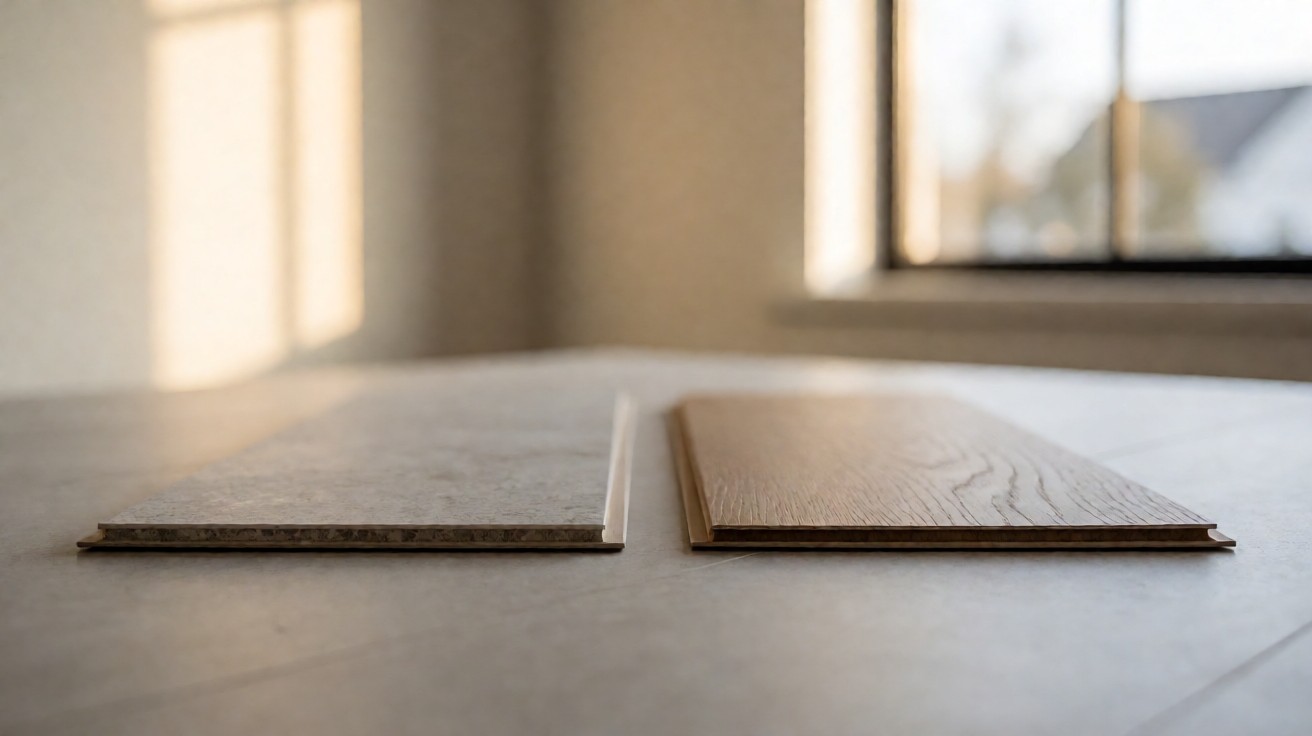
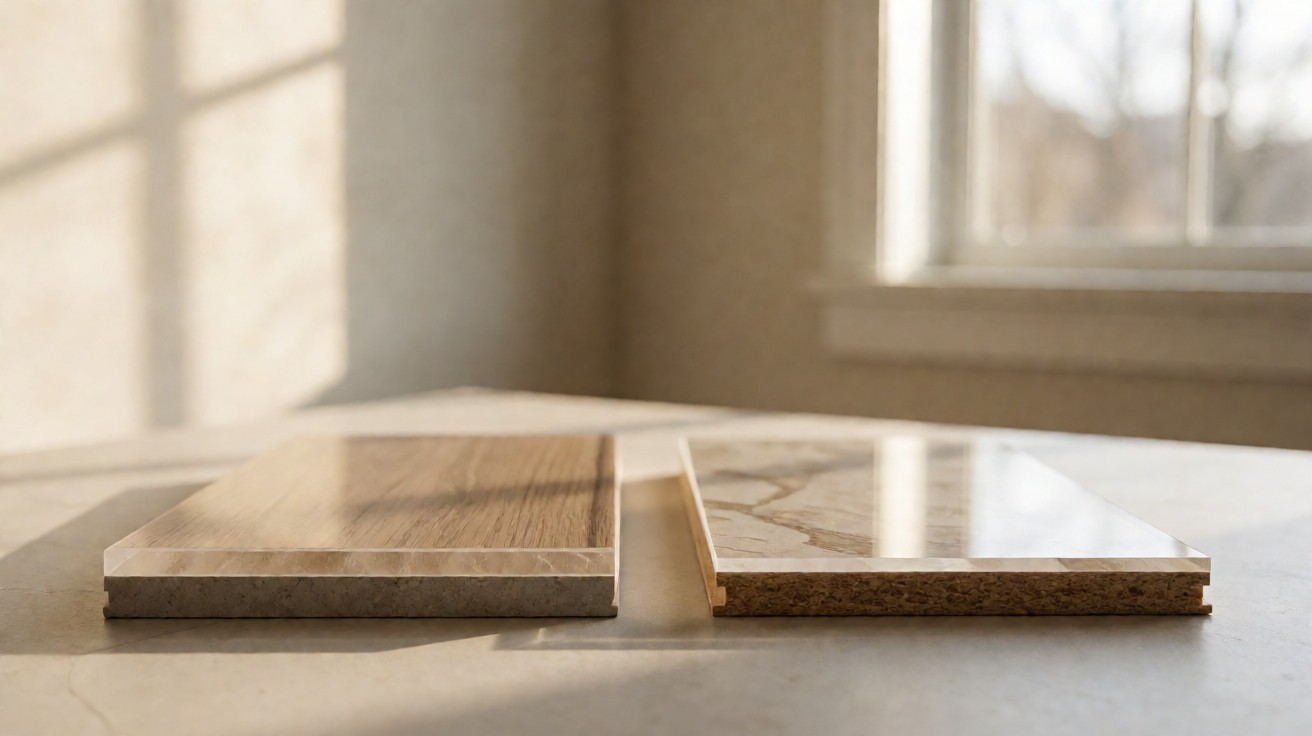
LVP is a polymer floor. Its core is mineral or wood filled PVC, and it is dense, rigid, and dimensionally very stable. Laminate is a fibreboard floor: a high density particle board or MDF core, a printed paper or vinyl decorative layer, and a clear overlay. The fibreboard is lighter, has more give, and is the reason a laminate plank is easy to handle and easy to cut with a handsaw.
This distinction appears in the marketing as enhanced vinyl plank versus luxury vinyl tile, and it is worth noting that both are LVP. A shopper comparing a thick, stone-heavy plank against a thin, light one is comparing SPC against a WPC-grade plank, not vinyl against laminate. The SPC versus WPC comparison covers that choice inside the LVP family, and the LVP page covers the format itself.
Moisture, Heat, and Dimensional Behaviour
Both are waterproof in the sense that they will not absorb standing water on their surface, and neither needs sealing. Neither is a moisture barrier for the slab, so a vapour barrier under concrete is still required in a basement in the same way it is for any floating floor. The real difference is heat. A mineral-filled LVP core is thermally very stable and is the standard recommendation over a slab, in a sunroom, or above a heat source. A fibreboard laminate core expands more with heat and is more prone to long-term gapping along the perimeter of a room.
That is a room decision, not a product decision. In a temperature-stable interior, laminate behaves perfectly well. Over a slab, in a south-facing room, or anywhere the temperature swings hard between day and night, LVP is the correct answer and laminate carries a real risk that shows up as gaps at the wall rather than as a dramatic failure.
| Situation | Better Choice | Reason |
|---|---|---|
| Basement or concrete slab | LVP | Mineral core does not take on moisture |
| Sunroom or south-facing room | LVP | Thermally stable core |
| Above a heated floor | LVP | Heat drives expansion in fibreboard |
| Home with pets and claws | Either | Both outmark real wood; pick on wear layer |
| Basement bedroom, budget | Laminate | Works fine if the slab is dry and verified |
| Rental, short hold | Laminate | Cheaper to install and to replace |
| A room with heavy dropped-object traffic | LVP | Dense core resists rather than flexes |
| Hand-cut work, tight room, lots of angles | Laminate | Cuts easily with a handsaw |
Wear Layer and Scratch Resistance
The wear layer is the honest comparison and it is measured in mils. Both products quote it, both products inflate it in marketing, and the number on the box is the only number that counts. A 20 mil wear layer is the residential baseline for both. Twenty mil is rated for light residential traffic, twenty-eight mil for a busy family household, and thirty-six mil or above for what the industry calls heavy commercial use.
Where the two differ is thickness relative to the product. An LVP plank carries a thick wear layer over a rigid core and is often specified at 20 mil in a mid-price product without that being a problem, because the plank underneath does not crack. A laminate plank specified at 20 mil is closer to the surface and has less material behind it. Neither number is decisive on its own; a 20 mil LVP over a good core beats a 20 mil laminate over a thin one.
Repair and What Happens When a Board Fails
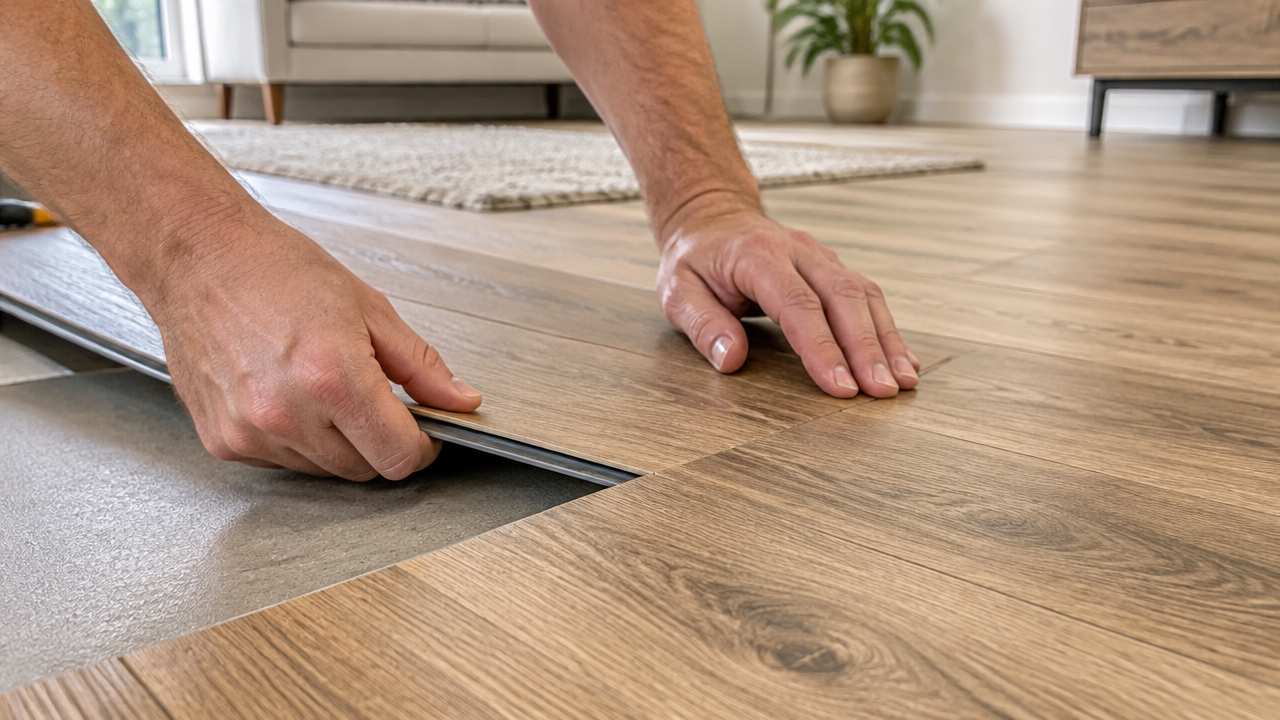
This is the second place the core matters and the one most buyers never think about until they own the floor. Both products install as floating click-lock planks, and both replace a damaged board the same way: lift the surrounding rows, swap the board, put them back. Neither repairs in place with a filler. That part is identical.
The difference is what happens around the damaged board. A rigid mineral-core LVP plank holds its shape when it is lifted, and the locking system around it stays square, so the repair is routine. A fibreboard laminate plank swells noticeably if it has ever taken on moisture, and even a dry board can have a slightly domed edge that makes the click system fight you on the way back in. It is a smaller, real annoyance rather than a different category of repair.
The larger point is durability of the surrounding floor. A heavy LVP plank keeps a tight, stable seam for fifteen years. A laminate floor that has cycled through a season of heating season and humidity can develop a small amount of play in the locking system, which shows up as a hollow or clicking board some distance from the original damage. Both floors are repairable; one stays flat more predictably.
Comfort, Sound, and the Underlayment
This is the one axis where laminate genuinely wins, and it is worth not underselling it. The fibreboard core has internal damping that a mineral-filled polymer core does not, so a laminate floor is measurably quieter underfoot than an SPC plank. Over a properly specified underlayment, laminate can also perform well on impact sound transmission, sometimes better than hardwood over the same assembly. For a floor above a bedroom, laminate is a reasonable answer that many buyers never consider because they assume it is the cheaper option.
LVP has one compensating advantage: it accepts a denser or thicker underlayment, and a good resilient underlay under an SPC plank closes much of the gap. The practical rule is that the underlayment does most of the acoustic work in both products, so buying a thicker plank for its sound is spending on the wrong variable.
Installation and the Skill It Takes
Laminate is the more forgiving of the two to install. It cuts with a handsaw or a laminate cutter, it is light enough to carry in one trip, and the click system is genuinely easy to learn. The common failure is not the click; it is cutting a plank to the wrong length for the final row and discovering the wall is not straight, which is why the first and last rows get ripped in two and fitted rather than cut once.
LVP is heavier and, in the SPC construction, noticeably harder to cut, which is why a power saw is close to mandatory rather than optional. It is still a floating floor over an underlayment, and no adhesive or nail is involved, so the skill gap between the two products is small. The bigger difference is handling: a 500-square-foot room of SPC plank is a two-person job and a poor back if you are doing it alone, while the same room in laminate is comfortably one person.
Price, and Why the Gap Narrows
Mid-range laminate typically runs $1.50 to $3.50 per square foot installed, and mid-range LVP runs $2.50 to $6. The gap is widest at the bottom of the market, where laminate is genuinely cheap and LVP at the same price point is often a thin, poorly specified plank that is not worth buying. It narrows quickly at the top: a 20 mil SPC plank with a good core and a high-quality underlayment lands close to a premium laminate with a 30 mil surface, and at that point the comparison is not close.
The practical advice is to stop comparing at the bottom. Buy the best LVP and the mid-range laminate rather than the cheapest of each. The cheap LVP loses on wear layer and core and the cheap laminate loses on overlay durability, and neither failure is visible in the showroom.
| Dimension | LVP | Laminate |
|---|---|---|
| Core material | Mineral or wood filled PVC | Fibreboard or MDF |
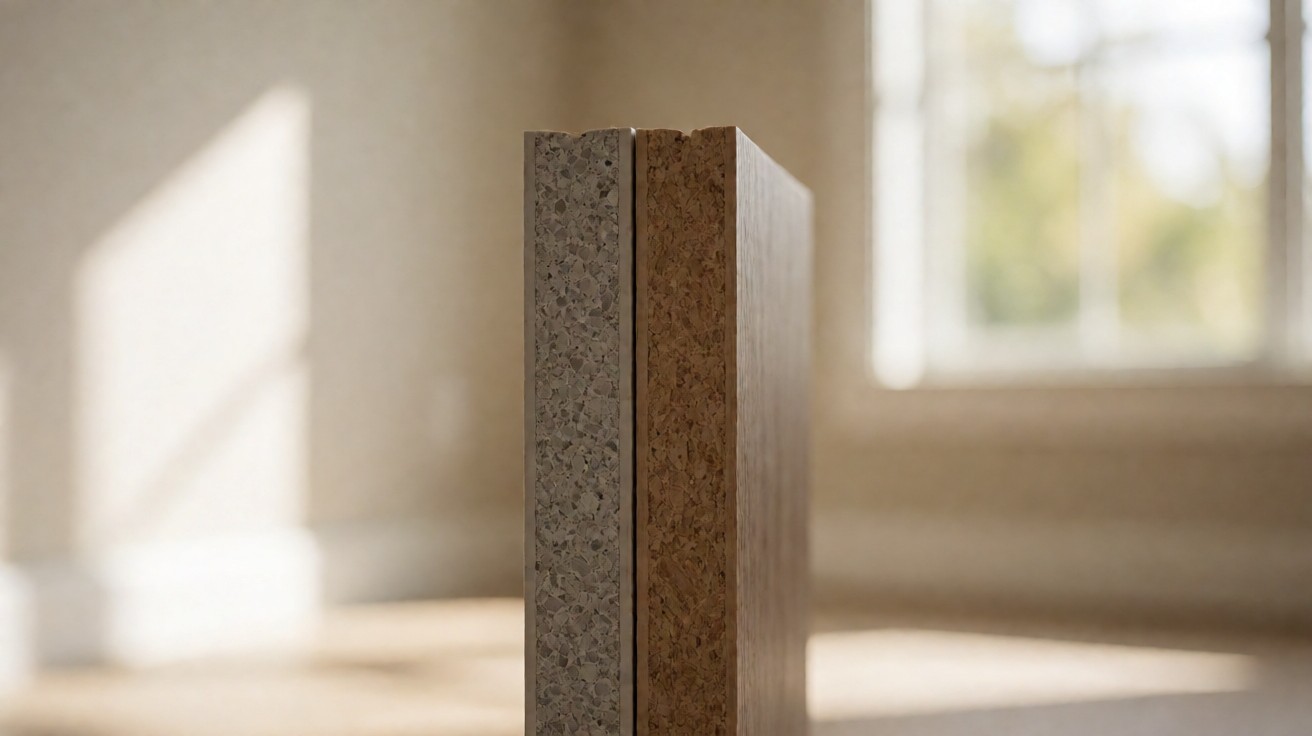
| Colour of the core | Grey or fine speckled | Brown, coarse flake |
| Weight | Heavy | Light |
| Moisture tolerance | High | Good, not high |
| Heat and sun exposure | Very stable | Can expand and gap |
| Footfall noise | Louder | Quieter |
| Cutting by hand | Difficult | Easy |
| Single plank replacement | Easy, stays square | Doable, may fight the click |
| Typical service life | 15 to 25 years | 10 to 20 years |
| Installed cost per sq ft | $2.50 to $6 | $1.50 to $3.50 |
How to Tell Them Apart in Five Seconds
Pick one of each up in the store and turn it over. LVP is noticeably heavier for its size, and the cut edge is grey, off-white or finely speckled, because the core is mineral. Laminate is lighter and the cut edge is brown with a visible coarse flake structure, because the core is pressed wood fibre. Neither test requires reading a label, and both are more reliable than the label because the label describes the product line rather than the plank in your hand.
The second test is the edge itself under a thumbnail. A rigid polymer core has a dense, fine, uniform texture and does not visibly indent under pressure. A fibreboard core compresses slightly and shows the board structure. Once a buyer can do this, most of the confusion in this category resolves itself, because the sales language stops being the only evidence available.
Where a Third Option Fits
Two surfaces in between are worth naming so the comparison is not forced into a false choice. Enhanced vinyl plank uses a wood or wood-like core with a thicker wear layer and often an aluminium oxide finish, and it trades dimensional stability for surface durability: it scratches less than either SPC or a thin laminate and it is more comfortable than SPC, at the cost of the thermal stability that makes SPC right over a slab. In a climate-controlled interior where surface durability matters more than a slab, it is a legitimate third answer rather than a compromise.
The other is a quality laminate with a thick wear layer and a locking system rated for the room it is in. Not all laminate is built alike, and the difference between a 7 mil budget board and a 30 mil commercial-rated board is far larger than the difference between laminate and LVP at the same price. The flooring types comparison places all of these against the other major materials.
What Both Get Called Wrong
Waterproof is the phrase that does the most damage in this category, and it means different things in different parts of it. A surface that will not absorb water is not the same as a product that can be submerged, and neither product in this comparison can be submerged. Both are described as waterproof in good faith in the sense that a wet mop or a spilled cup is harmless. Neither is a flooring system for a room where the floor is the wetted surface.
The second phrase to distrust is scratch resistant, which is nearly contentless without a number or a rating. What matters is the mil figure and, for laminate, the AC durability rating, which runs from AC1 for a guest room to AC6 for a commercial space. Twenty-eight mil and AC5 is the sensible specification for a busy family household in either material, and a product quoted without either number has not told you anything.
Choosing Between Them
Choose LVP when the floor goes over a slab or in a basement, when the room has sun or a heat source, when there will be dropped objects, when the house is held a long time, or when you want a floor that does not have to be replaced in twenty years. Choose laminate when the room is indoors and temperature-stable, when quiet underfoot matters more than thermal stability, when the budget is the binding constraint, or when the installation is a first attempt.
Because both are affordable and both look good, most of the wrong choices here come from a buyer who never opened the box and never saw the cut edge. Turn one of each over in the store. If one is visibly heavier and grey in the core, it is LVP. If it is lighter and brown, it is laminate. Everything else in this comparison follows from that, and it takes five seconds to check.