
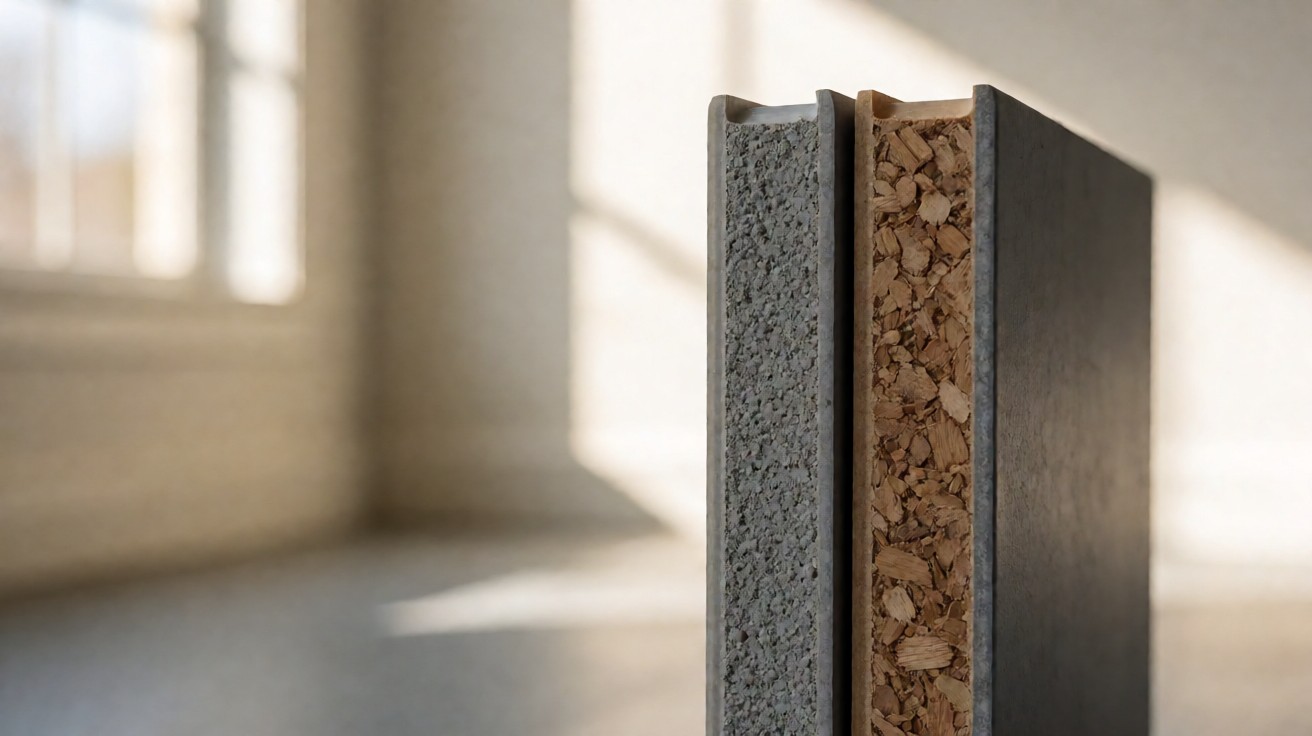
SPC and WPC are both rigid vinyl planks, and the difference between a stone core and a wood core decides almost everything about how the floor performs. Both are waterproof, both install over almost any flat subfloor, and both look like they are cut from a plank of oak. The core is what one is made of and the other is not, and it propagates straight into density, dent resistance, temperature response, sound, and how the floor fails after five years. This page is the head-to-head; the material pages cover what each one is, and the LVP page covers the format both of them belong to.
What Each Core Is Actually Made Of
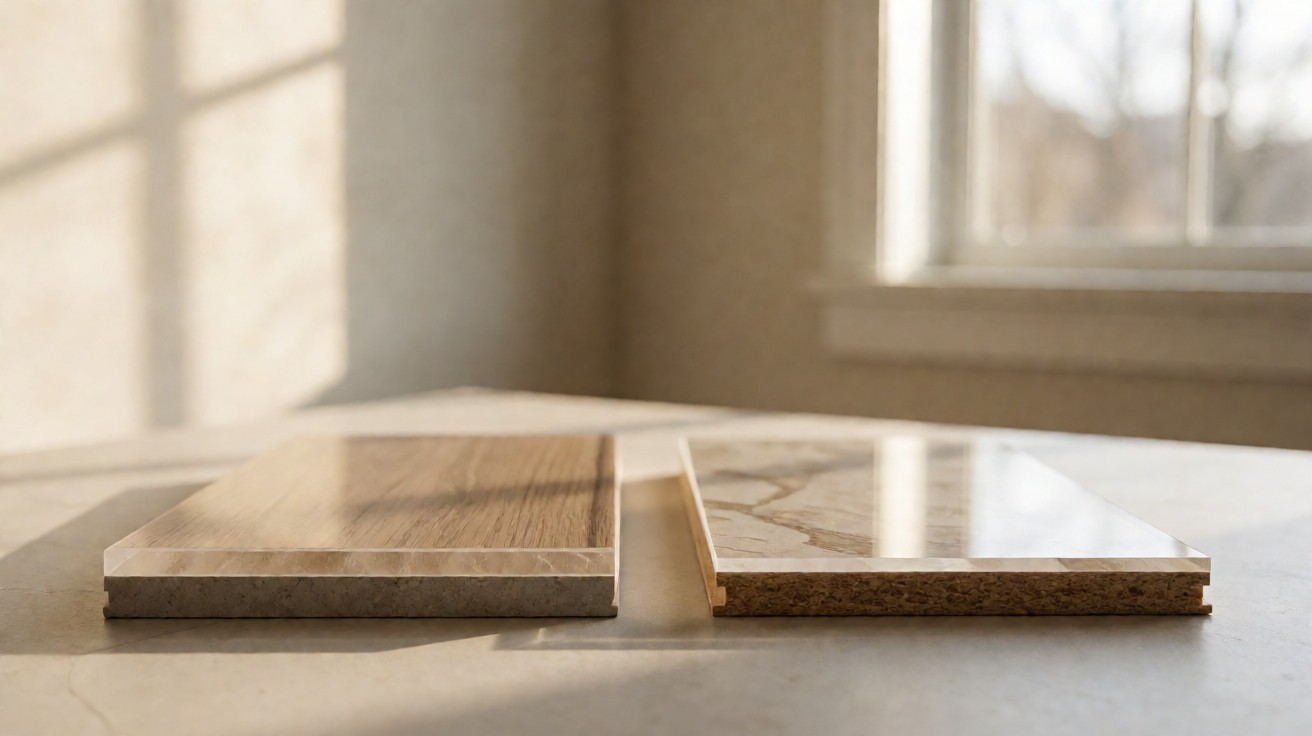
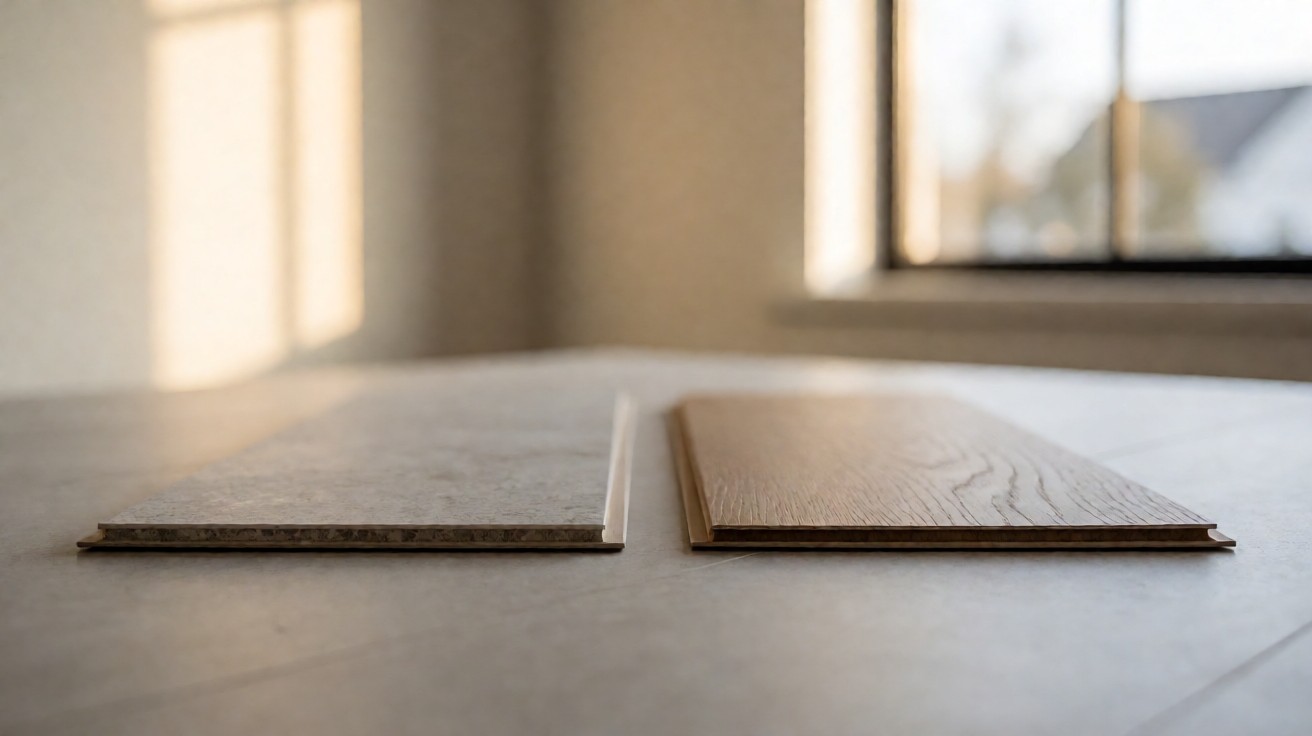
SPC is stone polymer composite. The core is limestone powder, or a related calcium-based mineral, combined with a thermoplastic such as PVC and extruded under heat and pressure into a single dense layer. The mineral content in a good SPC product typically runs between 50 and 70 percent by weight, which is why the plank feels heavy for its size and why a dropped tool leaves a mark rather than a dent.
WPC is wood plastic composite. The core is wood flour, that is finely milled wood particles, combined with the same class of thermoplastic and extruded in the same way. The wood content is typically 30 to 50 percent. It is a lighter plank with more give in it, and it absorbs more of an impact instead of resisting it, which is the difference in one sentence. The SPC page and the WPC page both cover their own construction in depth.
Water, Heat, and Dimensional Stability
Both products are waterproof in the sense that they will not absorb standing water, and neither needs sealing. Neither is a vapour or moisture barrier for the slab, so a vapour barrier under concrete is still required in the same way it is under any floating floor in a basement. Where they diverge is in heat. The mineral core in SPC is thermally much more stable, which is why SPC is the standard recommendation in a sunroom, a south-facing room, or over a slab that heats unevenly. WPC is more susceptible to thermal expansion and long-term dimensional drift, and the failure that produces is a gapping problem along the first or last row of the floor.
This is the single strongest technical reason to choose SPC, and it is a room decision rather than a product decision. If the room faces south, has a large window that will throw sun across the floor for part of the day, or sits over a slab with a heat source, SPC is the correct answer and WPC carries a real risk. In a room with no solar exposure and stable temperature, the difference is academic.
| Property | SPC | WPC |
|---|---|---|
| Core material | Limestone powder plus PVC | Wood flour plus PVC |
| Typical mineral or wood content | 50 to 70 percent mineral | 30 to 50 percent wood |
| Weight and density | Heavy, rigid | Lighter, slightly flexible |
| Impact response | Resists, may mark | Absorbs, may dent |
| Heat and sun exposure | Very stable | Can expand and gap |
| Underfoot feel | Firm, closer to tile | Slightly softer, warmer |
| Acoustics | Louder underfoot | Quieter than SPC |
What Each Is Called on the Box
Marketing names are unreliable across this category and are worth a minute of attention, because several product lines are sold under a construction label while being a different product. Stone polymer composite and stone plastic composite both mean SPC. Wood plastic composite and wood polymer composite both mean WPC. The terms that do not tell you the core are the ones to watch: rigid core, enhanced vinyl plank, luxury vinyl tile, and the generic rigid vinyl. All four can be either construction depending on the manufacturer, and the datasheet is the only place the answer lives.
Ask for the datasheet and read the core line. It should say something like limestone plus PVC, or wood flour plus PVC, and it should give a percentage. A datasheet that says only luxury vinyl plank and gives no core and no percentage is not a datasheet, and it means the specification has been left to the shelf label.
Comfort, Sound, and What the Floor Feels Like
The WPC core is not just marketing softness; it measurably changes the feel. A wood-filled core absorbs more footstep impact than a mineral-filled core, which means WPC is quieter underfoot and slightly more forgiving to walk on for long periods. That is a real advantage in an apartment above someone, in a bedroom, or in any room where a hard, cold floor is genuinely tiring. SPC sits closer to porcelain tile in feel, which is its honest weakness and also its honest strength: it is the most dimensionally solid of the three luxury vinyl constructions.
The acoustic difference is modest and should not be oversold. Both are far quieter than ceramic or porcelain tile, and both are louder than carpet. A cushioned WPC underlayment narrows the gap with SPC noticeably; the same underlayment under an SPC plank does almost as much, because the underlayment does the work rather than the core.
Installation and the Subfloor
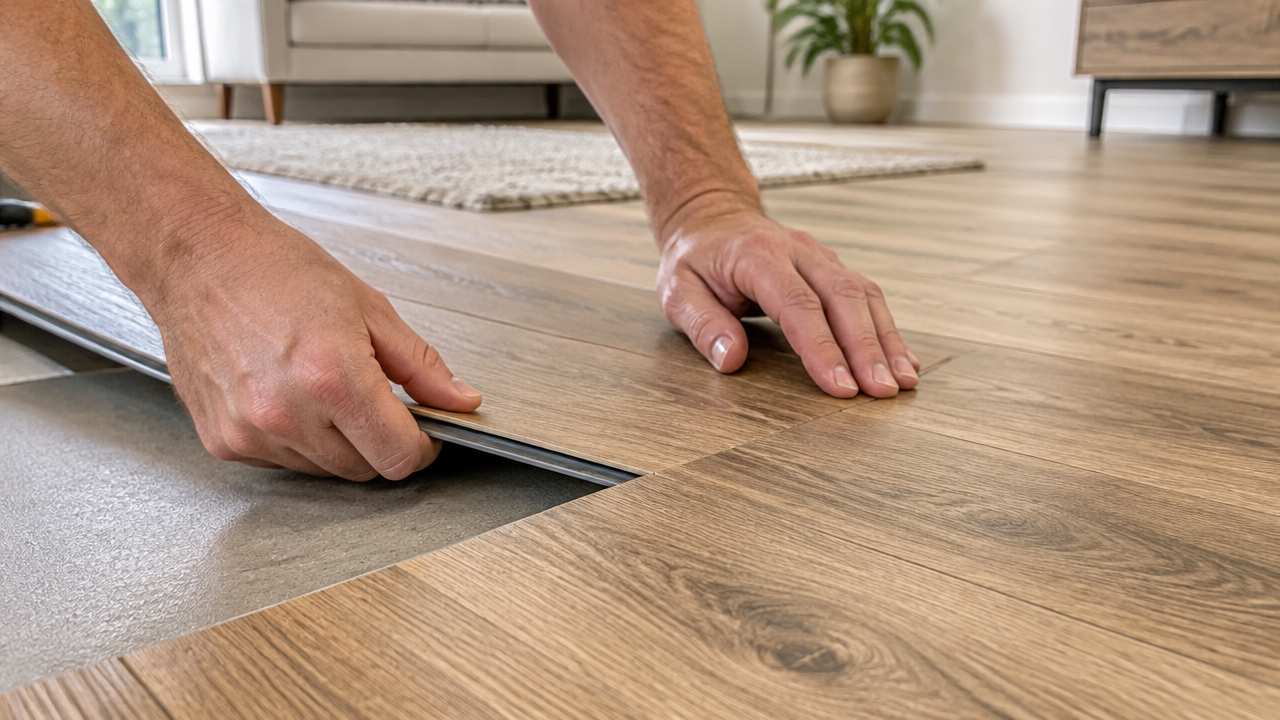
Both install as floating click-lock over an underlayment, and both are unforgiving about the same thing, which is a flat subfloor. A rigid plank with a lock system will not compensate for a hollow spot, and a stone-filled core has no give at all, so the subfloor has to be flatter than most people expect. The vinyl construction evaluation guide covers what to check before either product goes down.
The structural difference shows up in long spans. An SPC plank is heavier and stiffer, which means it tolerates a slightly less than perfect subfloor without the plank itself cupping, but it also means it is harder to handle and a two-person job over a large area. WPC is lighter and easier for one person, and its slight flexibility is a small advantage on a marginally uneven floor. Neither changes the rule that the subfloor gets verified before purchase.
What Each Does Not Survive
Two failure modes are worth stating plainly because both products are sold as indestructible. The first is standing water under the floor rather than on it. Neither plank absorbs water, but water under a floating floor has nowhere to go, and a subfloor that holds standing water will eventually find the edge of the floor. The second is sunlight, which is a specific problem for WPC and largely a non-problem for SPC, as described above.
A third failure is not a product failure at all. Neither construction tolerates a badly uneven subfloor, and both will eventually telegraph a hollow spot by clicking under foot or, worse, by creaking. Neither plank can be repaired in place the way a damaged board can be replaced in a nail-down floor; a damaged SPC or WPC plank is replaced by lifting the surrounding boards, which is more work than the plank cost.
Wear Layer and What Each Is Sold On
The core is the headline difference, but the wear layer is the part that decides how the floor looks after a decade. Both products are sold with a wear layer, typically measured in mils, and the number is the one to compare. A 20 mil wear layer is the residential baseline for both constructions. Above that, SPC tends to carry thicker wear layers for a given price because the core is already dense, while WPC manufacturers more often compete on price and core technology rather than on the wear layer.
That is not a rule, it is a tendency. Read the mil figure on the specific product rather than assuming it from the construction. A thin-wear-layer SPC and a thick-wear-layer WPC both exist, and neither construction rescues a product specified with an under-thickness wear layer for heavy traffic.
Which One to Choose
| Situation | Better Choice | Reason |
|---|---|---|
| South-facing room or sunroom | SPC | Mineral core does not thermally expand |
| Basement or slab | SPC | Dimensional stability on a cold damp slab |
| Above a heated floor | SPC | Heat exposure drives expansion in WPC |
| Pets, children, dropped tools | SPC | Denser core resists rather than absorbs impact |
| Bedroom in a quiet house | WPC | Wood core absorbs footfall noise |
| Long corridor, no sun | WPC | No thermal risk, lower price |
| Budget-first, low traffic | WPC | Comfort gain at a lower cost |
| Stairway or high-abuse area | SPC | Nothing dents or flexes underfoot |
SPC is the right answer when the room has sun exposure, a basement slab, a heat source, heavy traffic, pets, or a household that drops things on the floor. It is also the right answer for anyone who plans to keep the floor long enough that dimensional stability becomes the deciding factor. WPC is the right answer when comfort underfoot and noise matter more than long-term dimensional certainty, when the room has no solar gain, and when the budget has to stretch further.
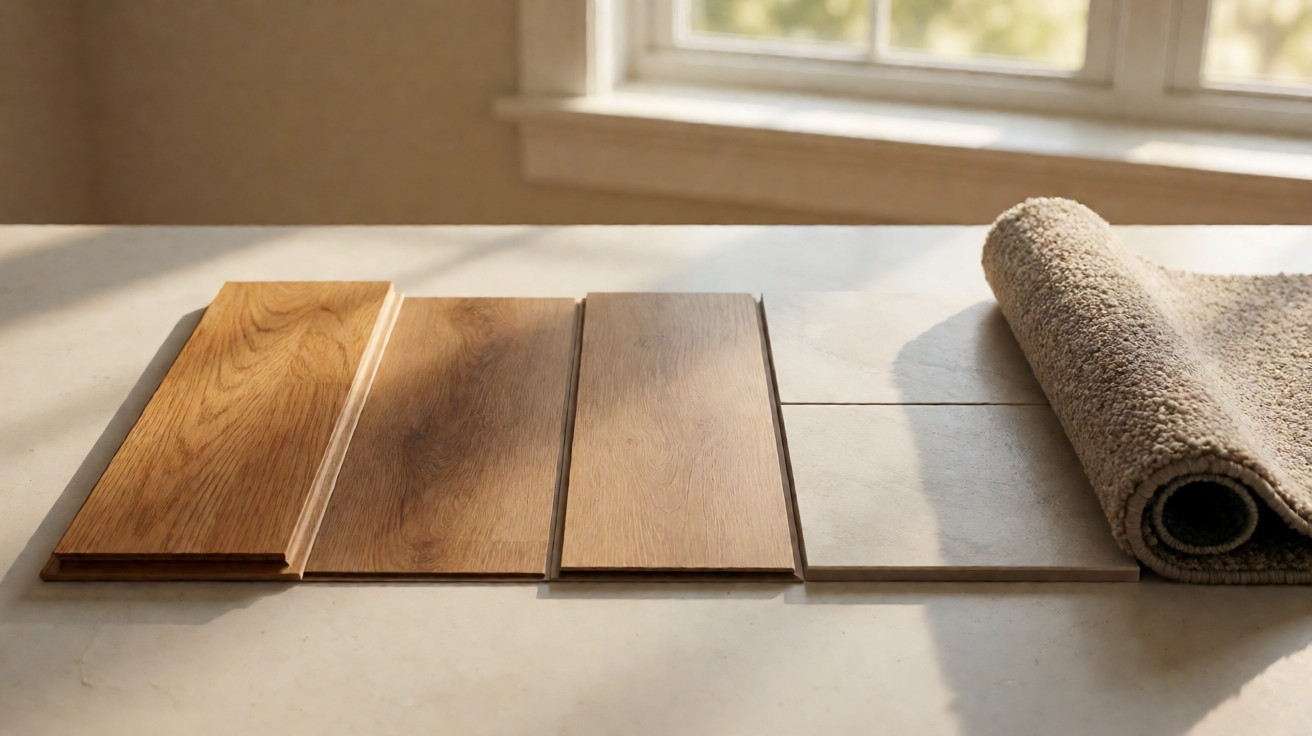
There is a third option worth naming: an enhanced vinyl plank, or EVP, uses a wood or wood-like core with a much thicker wear layer and an aluminium oxide finish, and it sits between the two on comfort and above both on scratch resistance. It is a legitimate third choice and it is not a compromise; it trades dimensional stability for surface durability. Where a buyer is choosing on durability alone rather than on feel, EVP deserves to be compared against SPC rather than overlooked. The flooring types comparison places both of these against the other major materials.
The Short Version
SPC for anywhere the room gets sun, heat, water, traffic, or dropped objects. WPC for a climate-controlled room where comfort underfoot and noise outrank long-term dimensional certainty, and where the budget matters. Neither is the wrong answer; they are answers to different rooms, and the room is the variable, not the product.
Cost and the Real Price Difference
SPC is typically 10 to 25 percent more expensive than a comparable WPC at the same wear-layer thickness and finish tier, and at the top of the market the gap widens further because the better SPC products carry higher wear layers. Installation cost is effectively identical because the labour is the same click-lock work. Over a long hold in a challenging room, that price difference is the cheapest insurance available in the vinyl category.
The counterargument is real. In a low-traffic, temperature-stable room with a working pad and a careful household, a well-specified WPC floor will look the same as an SPC floor at a lower price, and the money saved is better spent elsewhere in the project. The specification that answers the question honestly is the room’s heat and sun exposure, not a general preference for one core.