
Pet urine on a floor leaves an ammonia odor that deepens with time, yet the right cleaner and dwell time lift it from most sealed surfaces today with care.
The faster you act, the more likely the odor comes out with a single pass. Once urine dries, salts and proteins bond to the finish and the smell returns on humid days. Blot first, match the cleaner to the surface, and reserve sanding for stains that reach the substrate.
Blot Before You Clean
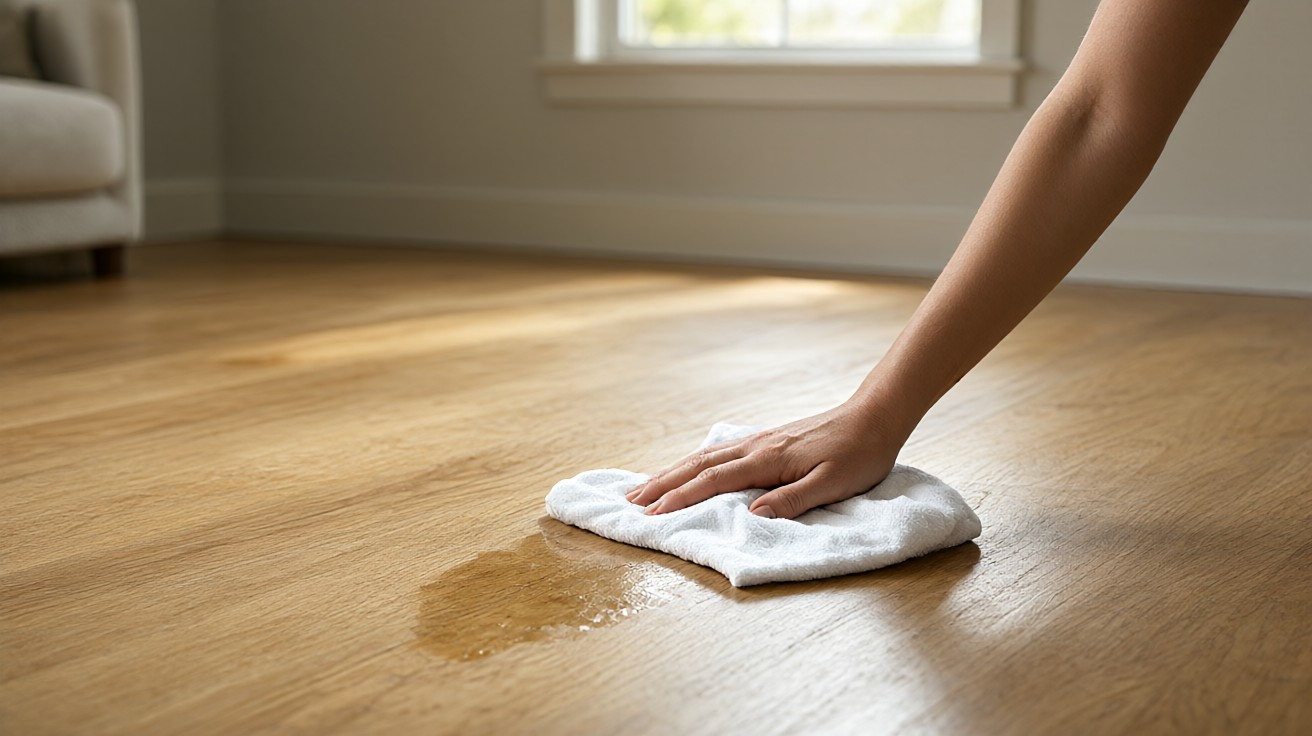
Wipe fresh urine with paper towels or a dry microfiber cloth until no moisture transfers. Press, do not rub, so you avoid pushing liquid into joints or grain.
For dried spots, dampen the area lightly with cool water first, then blot. Hot water sets the proteins and makes the odor harder to remove.
If the spot sits on a seam, slide a dry towel edge into the joint and lift. Leaving liquid in the joint guarantees a repeat smell.
Choose the Cleaner by Floor Type
Sealed hardwood, vinyl, tile, and laminate each tolerate different chemistry. Match the cleaner to the surface before applying anything.
| Floor type | Cleaner | Dwell time |
|---|---|---|
| Sealed hardwood | Enzyme cleaner labeled wood safe | 10 minutes |
| Vinyl plank | Enzyme or 1:1 vinegar and water | 5 minutes |
| Ceramic tile | Enzyme cleaner or baking soda paste | 15 minutes |
| Laminate | Light mist of enzyme cleaner | 3 minutes |
If the label lacks a wood safe claim, test in a closet corner first. A finish that clouds on contact needs a different product.
Apply Enzyme Cleaner Correctly
Enzyme cleaners break down uric acid crystals that cause the lingering smell. Spray enough to wet the surface and 2 inches beyond the visible edge, because urine wicks sideways under the finish.
Let the cleaner dwell for the label time, then blot again. Do not rinse immediately, since enzymes need moisture to keep working.
For old stains, cover the wet area with plastic wrap to slow evaporation and repeat the dwell cycle twice.
Test the Subfloor and Joints
Odor that returns after cleaning usually lives in the subfloor or in joints. Press a damp paper towel onto the spot for 10 minutes and smell it; a strong ammonia scent means the liquid reached below.
If the subfloor is concrete, apply an enzyme cleaner formulated for concrete and seal with a vapor barrier primer once dry. If the subfloor is wood, sand lightly and seal with shellac based primer.
Expansion gaps along walls collect liquid; use a syringe to draw out pooled urine before cleaning.
Handle Sealed Hardwood Safely
Sealed hardwood tolerates enzyme cleaner only when the finish is intact. Check the sheen; dull or worn finish lets liquid reach the wood.
Apply cleaner with a microfiber mop, never a soaking wet pad. Wipe dry within 5 minutes to protect the finish.
If odor persists, screen and recoat the affected boards. Full sanding is a last resort and removes up to 1/32 inch of wood.
Handle Tile and Grout
Ceramic and porcelain tile resist urine, but grout is porous. Scrub grout with an enzyme cleaner and a nylon brush, then rinse and dry.
For stained grout, apply a baking soda paste and let it sit 15 minutes before scrubbing. Seal grout after cleaning to reduce repeat absorption.
Per TCNA guidance, unsealed grout absorbs liquids and odors faster than sealed grout, so sealing is a preventive step.
Handle Vinyl and Laminate
Vinyl plank and laminate need minimal moisture. Mist the cleaner, wait 3 to 5 minutes, then blot dry.
Avoid steam mops on laminate, since heat and moisture warp the core. Use a pH neutral cleaner for routine follow up.
For plank seams, use a cotton swab to apply cleaner only where needed and dry immediately.
Remove Odor from Carpet Edges
Urine often wicks under baseboards and into carpet edges. Lift the carpet edge and treat the tack strip and subfloor beneath.
Use an enzyme cleaner and let it dry fully before reattaching the carpet. A fan speeds drying and limits mold risk.
If the pad is saturated, replace the pad and seal the subfloor before reinstalling.
Prevent Repeat Odors
Clean the spot, then neutralize residual salts with a light vinegar rinse on tile and vinyl only. Hardwood should not get vinegar.
Place a waterproof mat under pet bowls and litter areas. Check seams monthly for hidden moisture.
For homes with pets, keep an enzyme cleaner on hand and treat accidents within 30 minutes.
When to Call a Professional
If odor returns after two full treatment cycles, the liquid reached the subfloor or framing. A pro can pull flooring and treat the structure.
Ask for moisture testing and an odor barrier primer. Replacement is sometimes cheaper than repeated chemical treatment.
See our vinyl flooring guide for material choices if replacement is needed, and review flooring cost planning before starting.
What if the odor returns after cleaning?
If the smell returns on humid days, the liquid reached the subfloor or padding. Repeat the enzyme treatment and seal the substrate before reinstalling flooring.
Can vinegar replace enzyme cleaner?
Vinegar neutralizes surface salts but does not break uric acid crystals. Use vinegar only as a rinse on tile or vinyl, never on hardwood.
How long should enzyme cleaner dwell?
Most labels call for 5 to 15 minutes. Extend dwell time for old stains and keep the area moist under plastic wrap.
Additional guidance: always test cleaners in an inconspicuous spot, keep pets away until dry, and ventilate the room. If the finish is damaged, recoat before applying any liquid. For concrete subfloors, use a primer rated for odor blocking. For wood subfloors, sand lightly and seal with shellac. These steps add cost but prevent repeat odor and protect the finish over time.
Quantified details: spray 2 inches beyond the stain, dwell 3 to 15 minutes, sand no more than 1/32 inch, and treat within 30 minutes for best results. Follow label instructions and wear gloves. Store enzyme cleaner at room temperature and check expiration dates.
Detailed Step by Step Process
Start by identifying the exact spot using a UV flashlight in a dark room. Mark the edges with painter tape so you treat the full area. Blot any remaining moisture with dry towels until the surface feels only slightly damp.
Prepare the enzyme cleaner according to label directions. Most products require no dilution. Pour or spray enough to wet the surface and a two inch margin beyond the stain. If the floor is hardwood, use a microfiber applicator pad rather than a spray to control moisture.
Cover the treated area with plastic wrap to slow evaporation. Let it dwell for ten minutes on sealed hardwood, five minutes on vinyl, fifteen minutes on tile and grout, and three minutes on laminate. After dwell time, remove the wrap and blot with clean towels.
Inspect the area under normal light and smell it. If odor remains, repeat the cycle once. For old stains, a second dwell cycle often completes the breakdown of uric acid crystals. Do not rinse between cycles unless the label requires it.
Once the odor is gone, wipe the surface with a lightly damp microfiber cloth to remove residue. Dry immediately with a fan. For hardwood, apply a light coat of finish restorer if the sheen looks dull. For tile, seal the grout after it fully dries.
Document the treatment date and product used. If odor returns within two weeks, the liquid reached the subfloor. At that point, remove the flooring in the affected zone and treat the substrate before reinstalling.
Additional prevention includes placing washable rugs in pet traffic areas, trimming pet nails to reduce finish wear, and cleaning accidents immediately. Keep an enzyme cleaner in a spray bottle for fast response. A simple routine reduces repeat odors and protects the floor finish over years of use.
When selecting a replacement floor, compare vinyl plank, laminate, and sealed hardwood for moisture resistance. Vinyl plank handles moisture best, laminate needs care around seams, and sealed hardwood offers warmth but needs prompt cleanup. Review cost and installation guides before deciding.
Odor control also depends on humidity and airflow. Run a dehumidifier in damp rooms and open windows during treatment. Moist air slows drying and can reactivate salts. A fan pointed across the surface, not directly down, speeds evaporation without blowing cleaner off target.
For multi pet households, treat each accident the same day and inspect baseboards and transitions. Urine often pools under door thresholds and along wall lines. Use a syringe to extract liquid from cracks before applying cleaner. Seal gaps with a flexible caulk once dry.
If the floor is under warranty, check the manufacturer care guide before using any chemical. Some warranties exclude damage from improper cleaners. Keep product labels and receipts. When in doubt, contact the manufacturer support line for approved products and methods.
Professional restoration may include subfloor sealing, odor barrier primer, and targeted board replacement. Ask for a written scope and warranty. Compare replacement cost against repeated treatment. In many cases, replacing a few boards and sealing the subfloor costs less than multiple service visits.
Testing a cleaner on a hidden area confirms compatibility. Apply a small amount behind a door or in a closet and wait 24 hours. Look for clouding, color change, or swelling. If any appear, switch to a milder product or consult a professional.
For grout, use a nylon brush and avoid wire brushes that scratch. Rinse thoroughly and dry before sealing. A penetrating sealer reduces future absorption and makes cleanup easier. Reseal grout annually in high traffic pet areas.
For laminate, keep water to a minimum and never flood the surface. Use a spray bottle and microfiber cloth. Dry seams immediately. If swelling occurs, replace the affected plank. Laminate cannot be sanded or refinished.
For vinyl, a pH neutral cleaner works for routine maintenance. Avoid abrasive pads that dull the wear layer. If urine sits for days, the wear layer may stain but odor usually lifts with enzyme treatment and thorough drying.
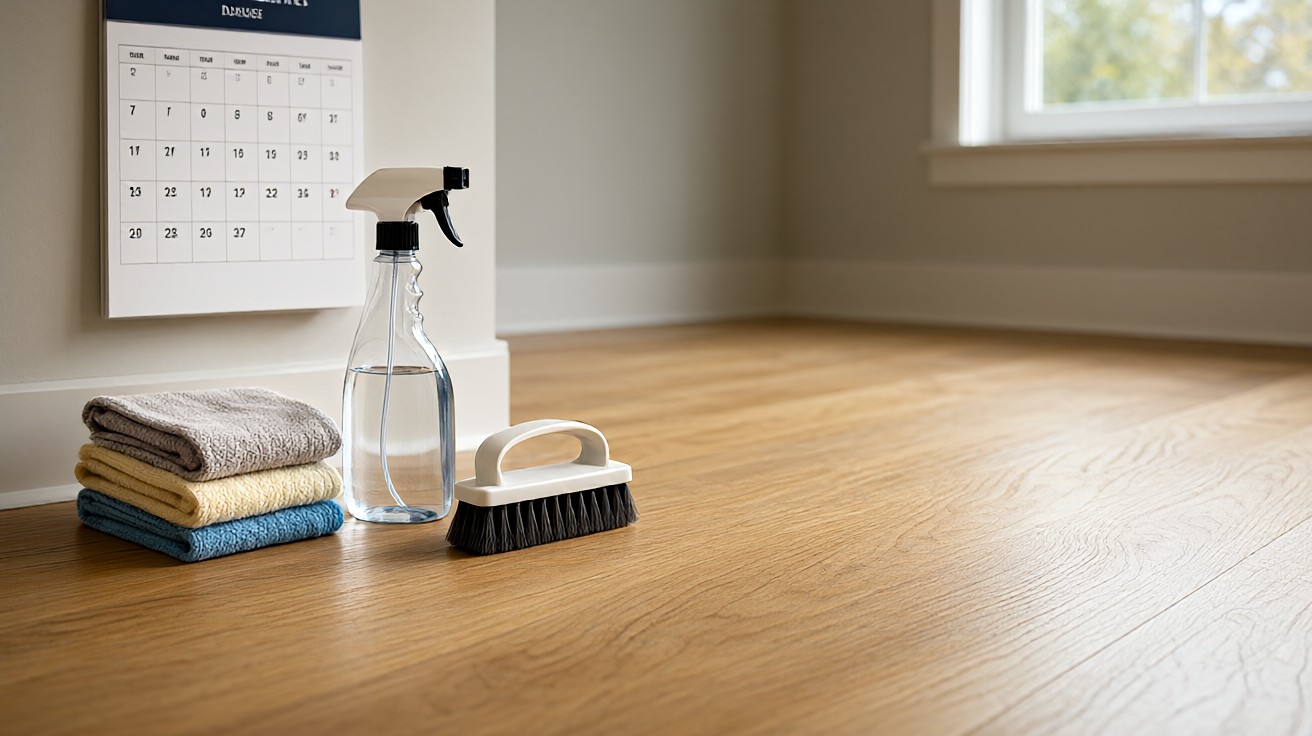
Track results in a simple log with date, location, product, and outcome. Patterns reveal whether a pet favors one area or a finish is failing. Adjust cleaning products and prevention based on that record. Consistent tracking improves long term odor control.
Finally, remember that enzyme cleaners work best at room temperature. Cold solutions slow the reaction. Warm the bottle in a water bath if needed, but never heat it on a stove. Follow all safety directions on the label.
Quick Reference Table
| Surface | First action | Follow up |
|---|---|---|
| Sealed hardwood | Blot, enzyme cleaner | Screen and recoat if needed |
| Vinyl plank | Blot, mist enzyme | Dry within 5 minutes |
| Tile and grout | Scrub grout | Seal grout |
| Laminate | Light mist only | Avoid steam |
Standards and sources: NWFA wood flooring guidelines, EPA Safer Choice enzyme cleaner guidance, and TCNA ANSI A137.1 tile standards. Quantified facts: dwell times of 3 to 15 minutes, a 2 inch spray margin, and up to 1/32 inch sanding depth.