
High-traffic areas such as entryways, hallways, kitchens, and living rooms take more abuse than other rooms, so a generic cleaning routine is never enough.
This guide lays out a maintenance plan you can run on any flooring type. It covers cleaning frequency by zone, protective measures that actually work, material-specific care for hardwood, LVP, laminate, tile, and carpet, realistic refinishing intervals, the signs that separate normal wear from real damage, and clear thresholds for repair versus replacement.
Every specification below is drawn from named industry sources: the National Wood Flooring Association (NWFA), the Carpet and Rug Institute (CRI), and published manufacturer care guides.
Why High-Traffic Areas Fail First
Traffic is not just foot count. It is the combination of abrasive grit, point loads from heels and furniture legs, and moisture tracked in from outside. The NWFA notes that dust and grit act like sandpaper underfoot, which is why routine removal matters more than any single deep clean.
The practical takeaway is simple: the floor does not wear out uniformly. It wears at doorways, in front of sinks, and along the path between rooms. Maintenance should be zoned, not whole-room. If you clean the whole room on one schedule you will over-clean the bedrooms and under-clean the entry.
Set a Cleaning Frequency by Zone
Zone your home by traffic level, then match the cadence to the zone rather than to a calendar. If a zone gets more than four people passing through daily, treat it as severe.
| Zone | Examples | Sweep or vacuum | Damp mop or deep clean |
|---|---|---|---|
| Severe | Entry, mudroom, kitchen sink run | Daily | Weekly |
| Heavy | Hallway, kitchen, living room path | 3 to 4 times weekly | Every 1 to 2 weeks |
| Moderate | Living room, dining room | 1 to 2 times weekly | Monthly |
| Light | Bedrooms, home office | Weekly | Every 6 to 8 weeks |
The CRI recommends vacuuming frequently in high-traffic areas using a Seal of Approval certified vacuum, with routine spot cleaning the same day spills occur. For hard surfaces, the NWFA recommends regular dust removal several times per week and prompt cleanup of spills.
What counts as a real spill response?
Blot, do not rub. Use a pH-neutral cleaner approved for the material. Avoid steam mops on wood and laminate, and avoid excess water on any hard surface. If a spill sits longer than a few minutes on hardwood, dry it and inspect the seam for swelling.
Protective Measures That Actually Work
Protection beats cleaning. Four measures cover almost every high-traffic failure mode. If you do only one, make it the entry mat system.
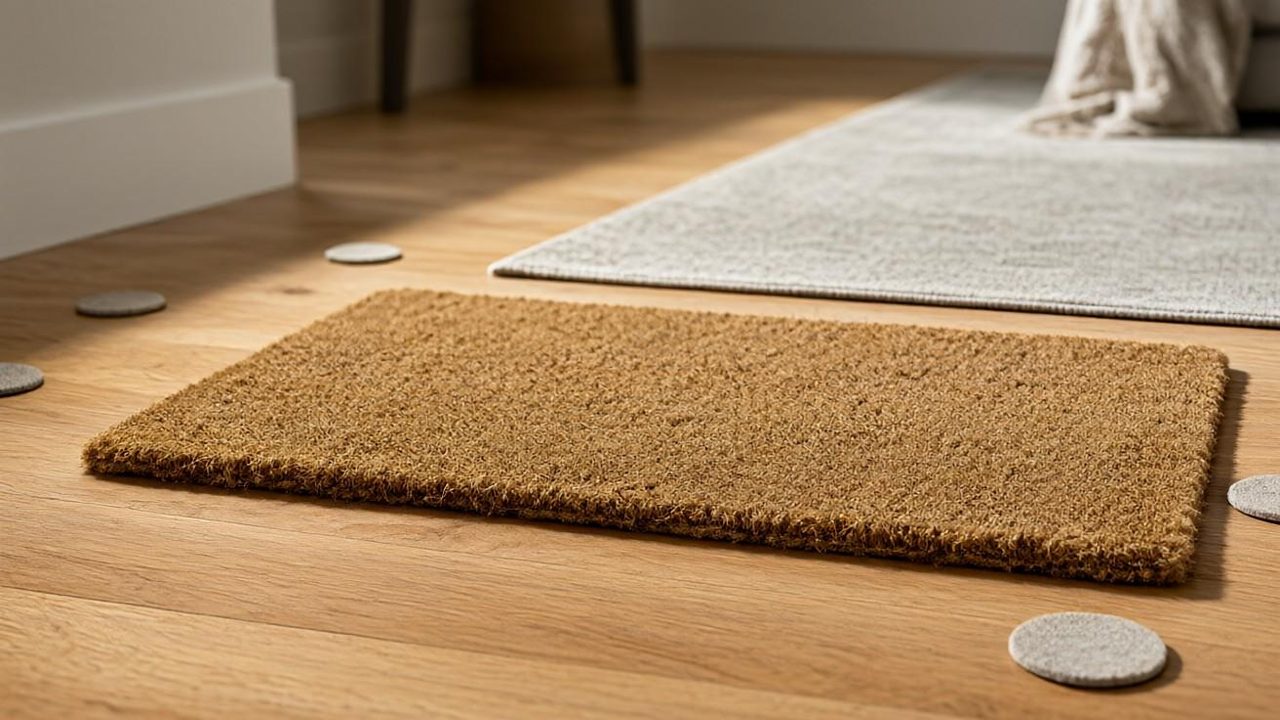
- Entry mats: a scraper mat outside and an absorbent mat inside. Shake and vacuum them weekly so they do not become grit reservoirs.
- Area rugs and runners: place them in the path of traffic, not just for looks. Use a non-slip pad that is safe for the floor finish.
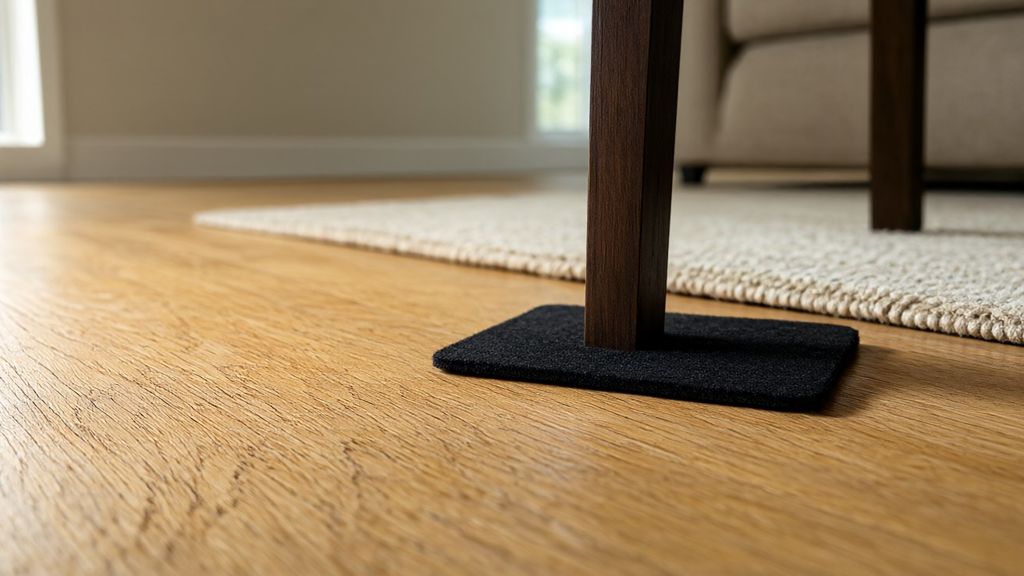
- Felt pads: felt glides under every chair, table, and sofa leg. Replace them when compressed or dirty. See our guide on how to protect floors from furniture scratches.
- Shoes off policy: the single cheapest intervention. A shoe rack at the door removes most tracked grit.
For a deeper comparison of mat types, see our guide on best mats for protecting flooring.
Which protective measure matters most by material?
On hardwood, grit removal and felt pads matter most because the finish is the wear layer. On LVP and laminate, moisture control at entries matters most. On tile, the grout lines need the protection, not the tile itself. If you have pets, add nail trimming to the list.
Material-Specific Care
Hardwood (solid and engineered)
Dust mop or vacuum with a hard-floor attachment several times per week. Damp mop monthly with a cleaner approved by the finish manufacturer. Avoid water pooling. The NWFA recommends refinishing every 3 to 5 years for high-traffic areas, or a screen-and-recoat before the finish wears through. If the floor has a site-finished oil finish, follow that finish maker’s schedule instead.
Luxury vinyl plank (LVP)
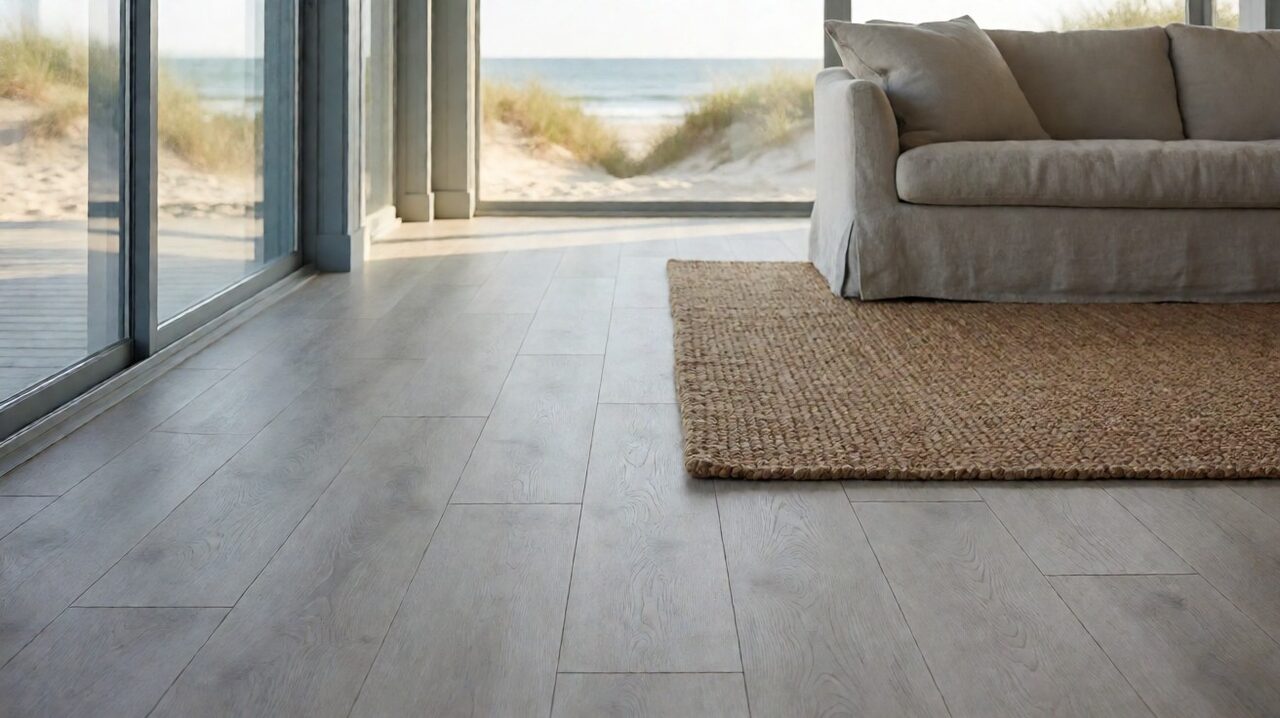
Sweep or vacuum, then damp mop with a neutral pH cleaner. Avoid abrasive pads and solvent cleaners. LVP does not need refinishing; replace individual damaged planks instead. Keep entry moisture under control to protect seams. If a plank lifts, check the subfloor moisture before replacing.
Laminate
Dry clean first, then a lightly damp mop. Never flood the surface; laminate cores swell when water reaches the joints. Use only laminate-approved cleaners. If you see edge swelling, the plank is already compromised and should be replaced.
Tile (ceramic and porcelain)
Sweep or vacuum, then mop with a neutral cleaner. The tile itself is durable; the grout is the weak point. Seal grout per the manufacturer interval and re-seal when water stops beading. If grout is stained but sound, clean it before re-sealing.
Carpet
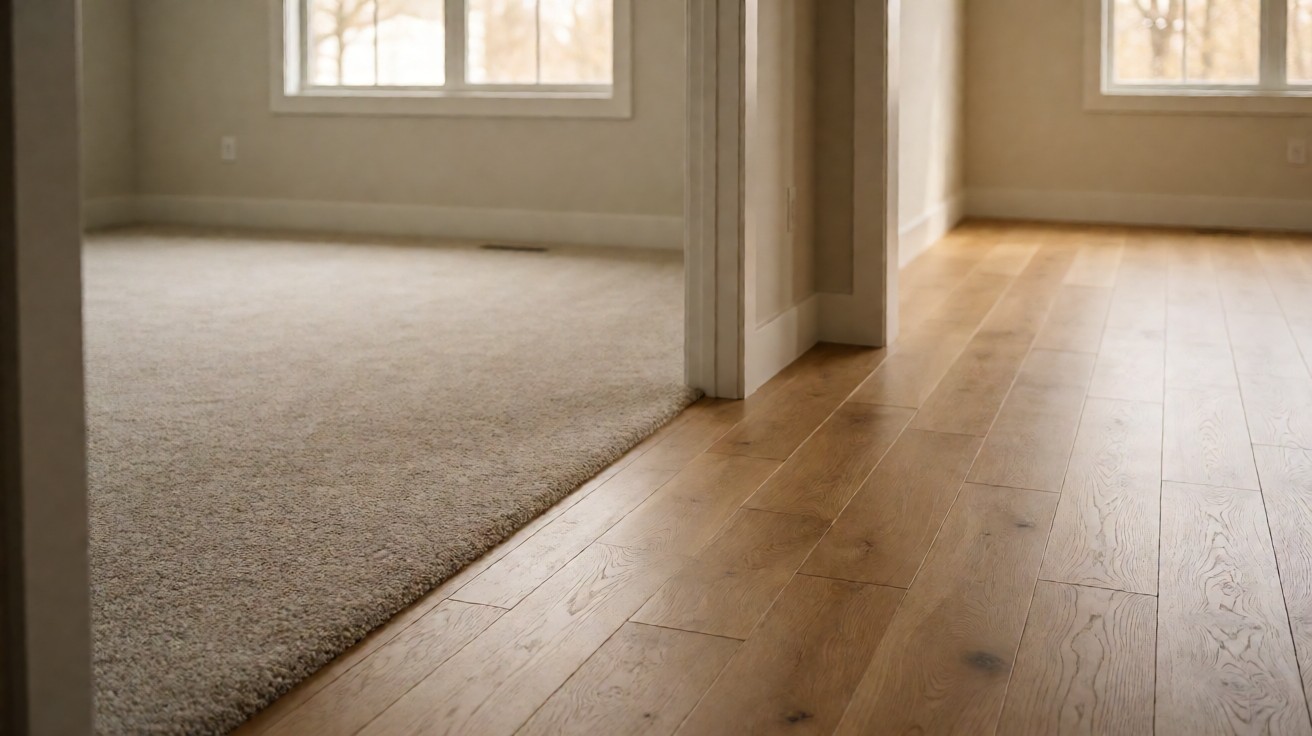
Vacuum high-traffic lanes daily if possible, at minimum several times weekly, using a CRI Seal of Approval vacuum. Spot clean immediately. Schedule professional hot water extraction every 12 to 18 months, sooner in severe zones. The CRI notes that carpeted entries and lobbies should be vacuumed and maintained daily or more often. If pile flattens and does not recover, that lane needs replacement.
Refinishing and Refresh Intervals
Use these intervals as planning anchors, then adjust to actual wear. If your household includes large dogs or rolling office chairs, shorten every interval by about a third.
| Material | Refresh action | Typical interval, high traffic |
|---|---|---|
| Hardwood | Screen and recoat | Every 3 to 5 years |
| Hardwood | Full sand and refinish | Every 10 to 15 years |
| LVP | Replace damaged planks | As needed |
| Laminate | Replace damaged planks | As needed |
| Tile | Re-seal grout | Every 1 to 3 years |
| Carpet | Professional extraction | Every 12 to 18 months |
A screen-and-recoat is far cheaper than a full refinish and preserves the wood thickness. Do it before the finish wears through to bare wood. If the floor has already worn to bare wood in lanes, a recoat will not hide the damage and a full refinish is required.
How do you know the finish is failing?
Water no longer beads on the surface, the floor looks dull in traffic lanes even after cleaning, or you see grey, worn patches where the finish has gone. If any of these appear, schedule a recoat within the season.
Signs of Wear Versus Real Damage
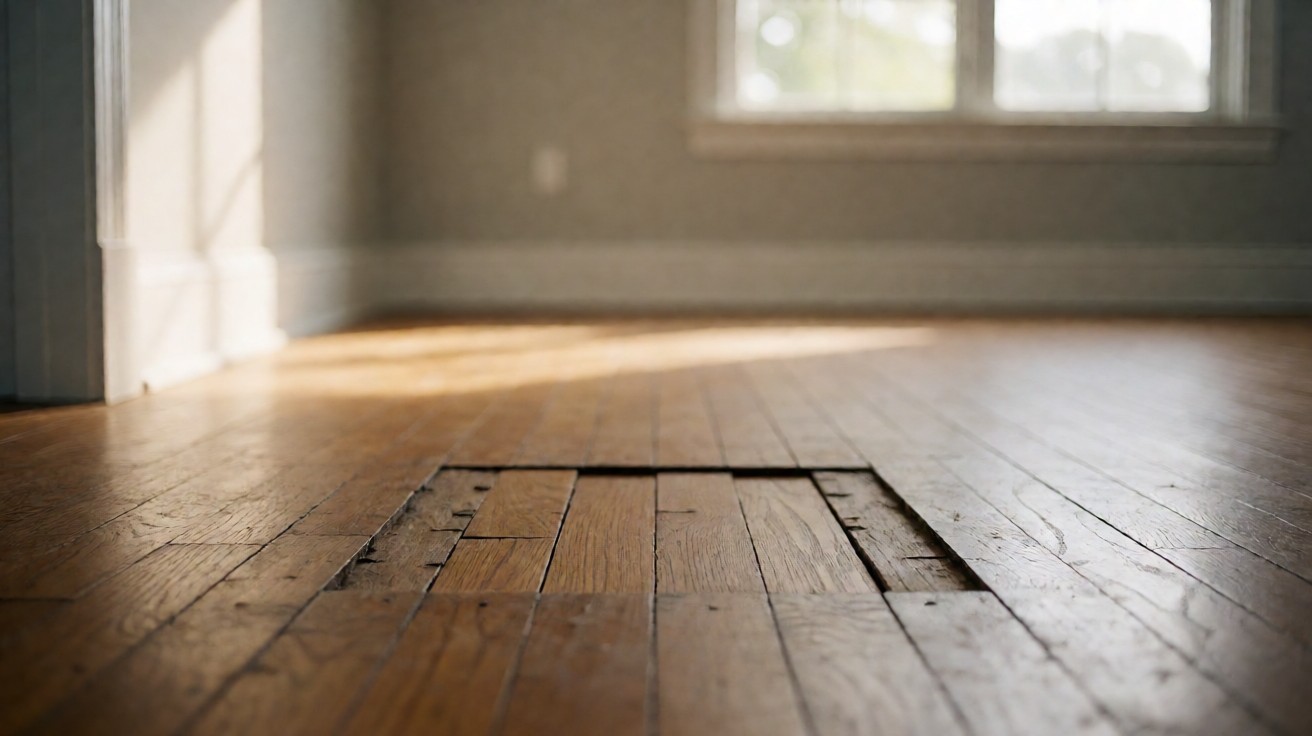
Normal wear: minor dulling in lanes, light surface scratches, slight color change from sunlight. These are cosmetic and handled by recoating. Real damage: deep scratches through the finish into the wood, dents, cupping or crowning from moisture, loose or hollow-sounding planks, cracked tiles, or carpet matting that does not recover. These signal a repair, not just a clean.
If you are unsure, place a straightedge across the floor. Cupping shows as raised edges; crowning shows as a raised center. Both indicate a moisture problem that cleaning cannot fix.
When to Repair Versus Replace
Repair when the damage is localized and the structure is sound: a few scratched hardwood planks, a lifted LVP plank, a cracked tile, or a stained carpet section that can be patched. Replace when damage is widespread, the subfloor is compromised, moisture has caused cupping across a large area, or the material has reached the end of its service life.
If you are choosing new material for a high-traffic space, our guide on best flooring for high-traffic areas compares options by wear layer, hardness, and maintenance load. For the broader routine, see flooring cleaning and maintenance.
Entryways need the mat system and daily grit removal. Hallways need runners and weekly vacuuming. Kitchens need spill response at the sink run and felt pads under stools. Living rooms need area rugs at seating zones and felt pads under all furniture. Each room fails differently, so tailor the plan rather than copying one routine everywhere.
Seasonal Deep-Clean Checklist
Twice a year, do a deeper reset. Pull furniture and clean underneath. Inspect felt pads and replace worn ones. Vacuum rug pads. Check grout and re-seal if water no longer beads. Schedule carpet extraction if it has been over a year. On hardwood, look for finish wear in lanes and book a screen-and-recoat if needed. This single weekend of work extends the life of every surface in the house.
If you rent, document the condition with photos before and after so you have proof of care at move-out. If you own, keep a simple log of cleaning and refinishing dates so you can spot patterns and adjust.
Tools and Products to Keep on Hand
Keep a microfiber dust mop, a pH-neutral cleaner approved for your material, felt pad replacements, a non-slip rug pad, and a wet-dry vacuum for spills. Having these ready removes friction, and removing friction is what keeps a routine alive.
Store cleaners by room so you do not grab the wrong bottle. Label them clearly. If a product is not approved for your floor, do not use it even in a pinch.
Common Mistakes That Shorten Floor Life
Using the wrong cleaner is the top offender. Vinegar and steam on hardwood strip finish. Abrasive pads on LVP scratch the wear layer. Bleach on grout erodes it. Always match the cleaner to the material.
Skipping felt pads is second. A single unprotected chair leg can gouge a finish in weeks. Third is ignoring small damage until it spreads. A lifted plank or cracked tile lets moisture in and multiplies the repair cost.
Finally, over-wetting during mopping warps wood and laminate. Wring the mop until it is barely damp. If water pools, you used too much.
How to Build a Weekly Routine That Sticks
Pick one day for the deep pass and small daily habits for the rest. Monday: shake mats and vacuum lanes. Wednesday: spot check and wipe spills. Friday: damp mop severe zones. Monthly: move rugs, vacuum underneath, and inspect felt pads.
Write the routine on a checklist near the door. If it is visible, it gets done. If it is in a drawer, it does not. Track for three months, then adjust based on what you actually skip.
Involve the household. Assign mat shaking to one person and spill response to another. Shared ownership keeps the floor in better shape than one overworked cleaner.
Budget and Time Estimates
A mat system costs under a hundred dollars and saves years of wear. Felt pads cost a few dollars per pack. A quality vacuum lasts a decade. Professional carpet extraction runs a few hundred dollars per visit. Refinishing hardwood is the big ticket, which is why a timely screen-and-recoat is the best money you will spend.
Time-wise, daily habits take five minutes. Weekly mopping takes twenty. Seasonal deep cleans take a weekend. Spread across a year, maintenance is far cheaper than replacement.
Start small. Master the entry mat and daily grit removal first. Add the rest over a month. Consistency matters more than perfection, and a simple plan you actually follow beats an elaborate one you abandon.
Putting the Plan Together
Start with zones and mats this week. Add the cleaning cadence next. Schedule refinishing and extraction on a calendar. Reassess every six months and adjust intervals based on what you actually see. A small, consistent routine prevents the expensive repairs that come from neglect.