Buckling means the floor has nowhere to go. The cause is usually moisture, a missing expansion gap, or a floor pinned to the subfloor. Diagnose before repair.
A buckled floor is a symptom, not a diagnosis. Find the cause before repairing, because the fix depends on it.
What buckling looks like
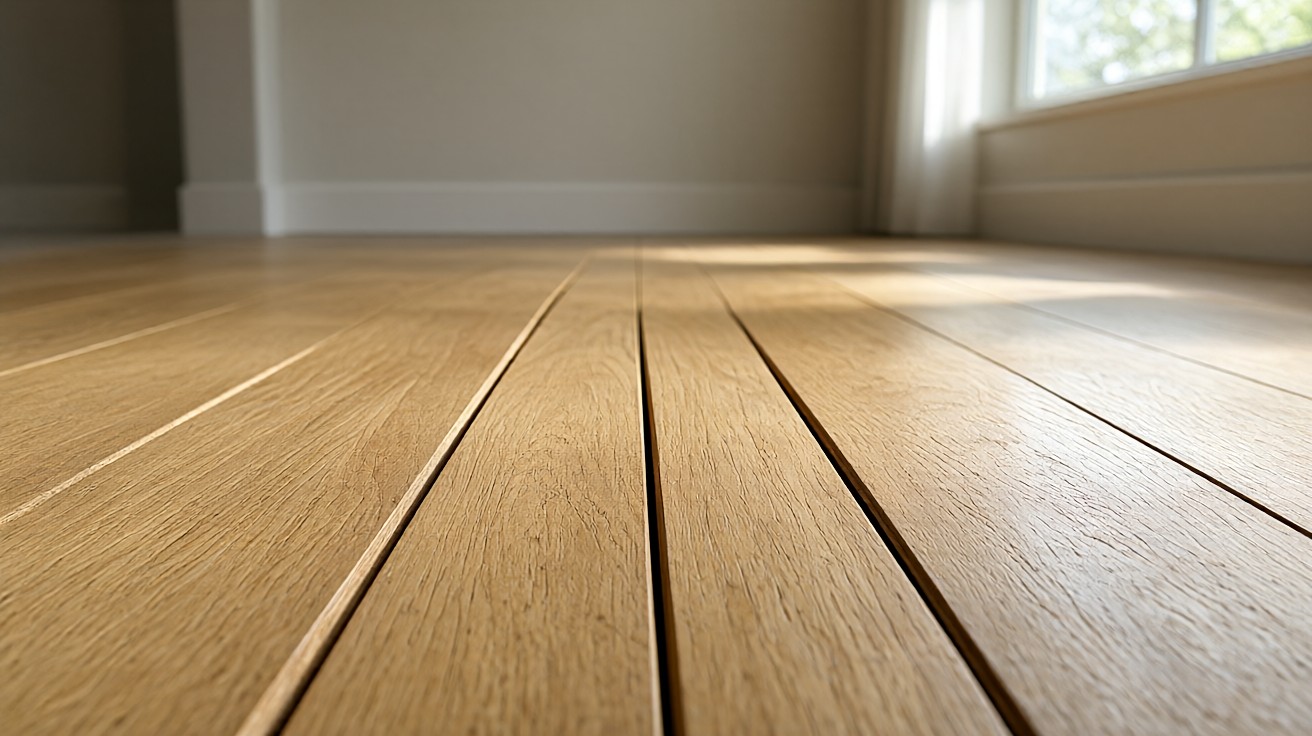
Buckling appears as a peak or tent in the floor surface. The planks lift off the subfloor and push against each other. In severe cases, the floor can lift several centimetres and create a trip hazard. Lifting at the edges or corners is an early sign.
Buckling differs from cupping, where the edges of a plank are higher than the centre. Cupping is a moisture gradient issue; buckling is a lateral pressure issue. The two can occur together.
Cause 1: moisture
Moisture is the leading cause of buckling. Water from a leak, flood, or high humidity swells the flooring. A floating floor has nowhere to expand, so it peaks. Even a small amount of moisture can cause buckling in a tightly installed floor.
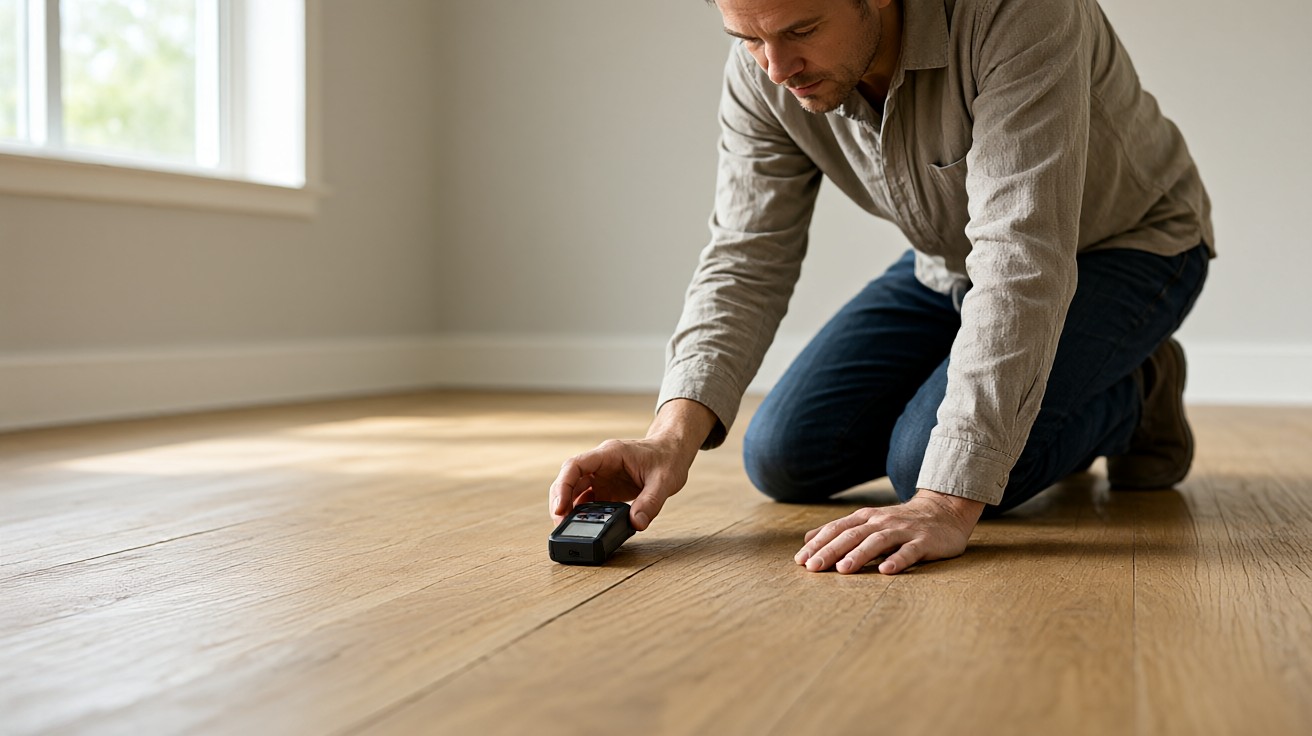
Check for plumbing leaks, appliance leaks, and condensation. Test the moisture content of the floor and subfloor with a meter. Wood flooring should be within 2 to 4 percent of the subfloor moisture content.
NWFA, RFCI, TCNA, and ANSI all specify moisture limits for their products. Installing above these limits voids the warranty and causes failure.
Cause 2: missing or inadequate expansion gap
A floating floor needs 8 to 12 mm of expansion gap at every wall and fixed object. If the gap is missing or filled, the floor has no room to move and buckles under humidity changes.
Check the perimeter for baseboard or quarter-round covering the gap. Remove a piece and measure the gap. If it is less than 8 mm, or filled with adhesive or debris, that is the likely cause.
A 10 mm gap is typical for LVP. Some products need 12 mm. Check the manufacturer’s guide.
Cause 3: pinning a floating floor
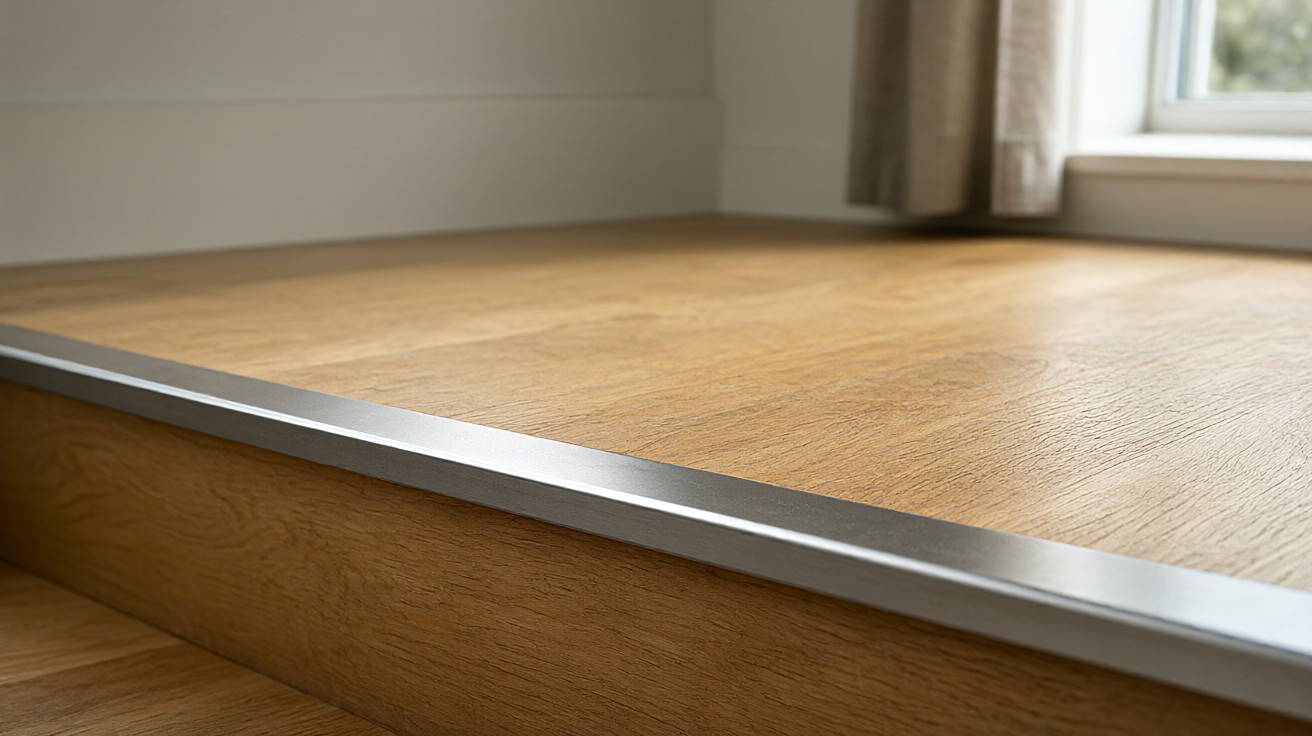
A floating floor must be free to move. If it is pinned by a transition strip, a heavy cabinet, or fasteners through the flooring, it cannot expand and will buckle. The pin acts as a fixed point, and the floor buckles away from it.
Check for transition strips fastened through the flooring rather than the subfloor. Check for heavy furniture or cabinets without expansion clearance. Check for screws or nails through the flooring layer.
The fix is to remove the pin and let the floor move. Re-anchor the transition strip to the subfloor only.
Diagnosis table
| Symptom | Likely cause | First check |
|---|---|---|
| Peak in center of room | Missing expansion gap | Perimeter gap width |
| Buckling near a doorway | Pinned floating floor | Transition strip fastening |
| Buckling after a leak | Moisture swelling | Moisture meter reading |
| Buckling in humid season | Inadequate gap for humidity | Gap size vs spec |
| Buckling near heavy furniture | Pin from furniture weight | Furniture clearance |
Diagnosis procedure
Follow this sequence to find the cause:
- Inspect the buckled area and note its location and pattern.
- Check moisture with a meter on the floor and subfloor.
- Check the expansion gap at the perimeter.
- Check for pinned points: transition strips, furniture, fasteners.
- Check the installation method and product specifications.
- Match the symptom to a cause.
Most buckling cases have a single primary cause. Address that cause before repairing the floor.
Repair by cause
The repair depends on the cause and the extent of damage.
Moisture damage: Stop the moisture source first. Remove the buckled planks and let the subfloor dry. Replace damaged planks with matching material. Allow 7 to 14 days for drying before re-installing.
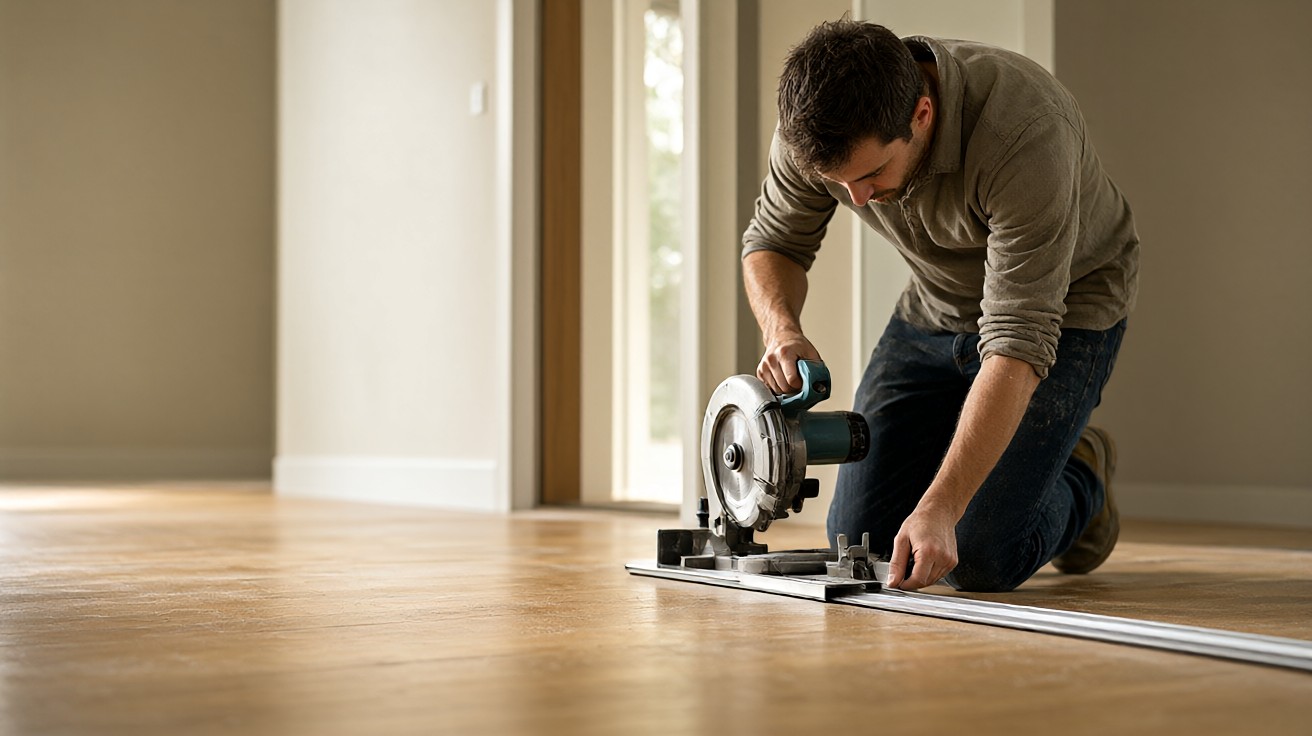
Missing expansion gap: Remove the baseboard, cut 8 to 12 mm of flooring from the edge, and reinstall the baseboard. This relieves the pressure and lets the floor flatten.
Pinned floor: Remove the pin. Re-anchor transition strips to the subfloor. Add expansion clearance around heavy furniture.
Minor buckling: If the floor is only slightly peaked and the cause is fixed, the floor may flatten over 2 to 4 weeks as humidity normalizes. Monitor and do not walk on the peak.
| Repair type | Cost range (USD) | Time |
|---|---|---|
| Minor peak, gap correction | 100 to 300 | 1 to 2 hours |
| Plank replacement (localized) | 200 to 800 | 2 to 4 hours |
| Full section replacement | 500 to 2000 | 1 to 2 days |
| Professional assessment | 75 to 150 | 1 hour |
Repair versus replacement
Repair when the buckling is localized and the planks are undamaged. Replace when the planks are cracked, delaminated, or swollen beyond recovery. A buckled floor that has been wet for more than 48 hours usually needs replacement.
Replacement cost is 3 to 12 USD per square foot installed. Repair cost is typically 200 to 800 USD for a localized area. Professional assessment costs 75 to 150 USD.
Prevention
Prevent buckling by controlling moisture, providing adequate expansion gaps, and avoiding pins. Maintain indoor humidity between 35 and 55 percent. Test moisture before installation. Follow the manufacturer’s expansion gap specification.
Inspect the floor annually for early signs of lifting. A small peak caught early is easy to fix; a large buckle requires replacement.
When to call a professional
Call a professional when the cause is unclear, when moisture is active, when the damage is widespread, or when the subfloor is damaged. A professional can assess whether the floor can be saved or needs replacement.
Moisture sources in detail
Moisture reaches flooring from several sources. Slab moisture is common in basements and on-grade slabs. Plumbing leaks can saturate a subfloor before becoming visible. Condensation forms on cold floors in humid climates. High indoor humidity swells wood and laminate. Spills that are not cleaned promptly penetrate seams.
Each source requires a different fix. A plumbing leak needs repair before the floor can be fixed. Slab moisture needs a vapour barrier or dehumidification. Condensation needs ventilation or insulation. High humidity needs a dehumidifier.
Expansion gap details
The expansion gap must be continuous around the entire perimeter. Gaps at doorways, pipes, and fixed objects all count. A single missing section can cause buckling even if the rest of the perimeter is correct.
Baseboard and quarter-round cover the gap but must not pin the floor. The cover should sit on the subfloor, not on the flooring. If the cover is nailed through the flooring, it pins the floor and defeats the purpose.
Prevention and monitoring
Prevent buckling by controlling moisture, providing adequate gaps, and avoiding pins. Maintain indoor humidity between 35 and 55 percent. Test moisture before installation. Inspect the floor quarterly for early signs of lifting.
A small peak caught early is easy to fix. A large buckle requires plank replacement and subfloor repair. Annual inspection costs nothing and saves thousands.
Tools and materials
Diagnosis requires a moisture meter, straight edge, tape measure, and flashlight. Repair requires a saw, adhesive, replacement planks, and fasteners. A moisture meter costs 30 to 80 USD and is the most important tool.
Advanced diagnosis may require a thermal camera or calcium chloride test kit. These are available for rent at most tool rental shops.
When replacement is needed
Replacement is needed when the planks are cracked, delaminated, or swollen beyond recovery. A buckled floor that has been wet for more than 48 hours usually needs replacement. Replacement cost is 3 to 12 USD per square foot installed.
Localized damage can be repaired by replacing individual planks. Full replacement is needed when the damage is widespread or the subfloor is compromised.
Case study: kitchen floor buckling
A homeowner notices a peak in the kitchen floor near the dishwasher. The moisture meter reads 18 percent in the subfloor. The dishwasher had a slow leak for months. The repair involved fixing the leak, drying the subfloor for 14 days, and replacing 6 planks. Total cost: 450 USD.
If the leak had been caught earlier, the repair would have been 150 USD. Early detection saves money and prevents structural damage. A 15 minute monthly check is enough.
Insurance and warranty
Flooring damage from sudden leaks may be covered by homeowner’s insurance. Damage from poor installation or lack of maintenance is usually not covered. Check the policy and document the damage with photos and moisture readings.
Flooring warranties require proper installation and maintenance. A floor that buckles due to a missing expansion gap is not covered. Keep installation records and follow the manufacturer’s guidelines.
Tools for diagnosis and repair
Diagnosis requires a moisture meter, straight edge, tape measure, and flashlight. Repair requires a saw, adhesive, replacement planks, pry bar, and fasteners. A moisture meter costs 30 to 80 USD. Replacement planks cost 2 to 8 USD per square foot.
Advanced diagnosis may require a thermal camera or calcium chloride test kit. These are available for rent. Renting is cheaper than buying for one-time use.
Common mistakes
Repairing the buckle without fixing the cause leads to recurrence. Replacing planks over a wet subfloor causes new buckling. Ignoring the expansion gap causes the floor to buckle again. Pinning the floor during repair defeats the purpose.
Each mistake is avoidable with diagnosis and patience. Fix the cause first, then repair the symptom. A 30 minute diagnosis prevents a costly re-repair.
Long-term monitoring
After repair, monitor the floor for 90 days. Check for new peaks, gaps, or discoloration. Re-test moisture monthly during the first season. If the problem recurs, the cause was not fully addressed.
Keep a log of observations with dates and photos. A log helps identify patterns and supports warranty claims. Good records save time on future repairs.
When to test moisture
Test moisture before installing new flooring, after a leak or flood, when cupping or buckling appears, and when indoor humidity changes seasonally. A moisture meter costs 30 to 80 USD and is one of the best investments a homeowner can make.
Test both the flooring and the subfloor. A floor that reads dry on top may be wet underneath. Test multiple locations, including near exterior walls and plumbing. A single reading is not enough.
Seasonal considerations
Humidity changes with the seasons. In winter, heating dries the air and floors shrink, causing gaps. In summer, humidity rises and floors swell, causing buckling. Maintaining indoor humidity between 35 and 55 percent year-round prevents both.
A humidifier in winter and a dehumidifier in summer stabilize the environment. This is especially important for solid hardwood, which is more sensitive to humidity changes than engineered products. Engineered wood is more stable in humid conditions. Solid wood moves more with humidity changes over time and all seasons.
Summary
Buckling means the floor has nowhere to go. Check moisture, expansion gaps, and pins in that order. Fix the cause, then repair or replace the damaged planks. For related problems, see flooring problems: causes, diagnosis, and repair and flooring transitions between rooms and levels.