LVP floors reward a boring routine more than any specialty product, and the biggest mistake owners make is reaching for a steam mop on LVP today.
The short version is this: sweep or dry mop daily, damp mop weekly with a pH-neutral cleaner, and never use steam, wax, or oil-based soaps. Everything below explains why each step matters, what to buy, and how to fix the mistakes that already happened.
Care guidance here aligns with industry references including TCNA (Tile Council of North America), ANSI standards for resilient flooring, and ASTM test methods for vinyl wear layers, along with NWFA and CRI maintenance guidance.
Daily Cleaning Routine For LVP Floors
Dust and grit are the real enemy of a luxury vinyl plank floor. A single grain of sand dragged under a shoe acts like sandpaper on the wear layer, and that damage is permanent. The daily job is removal, not washing.
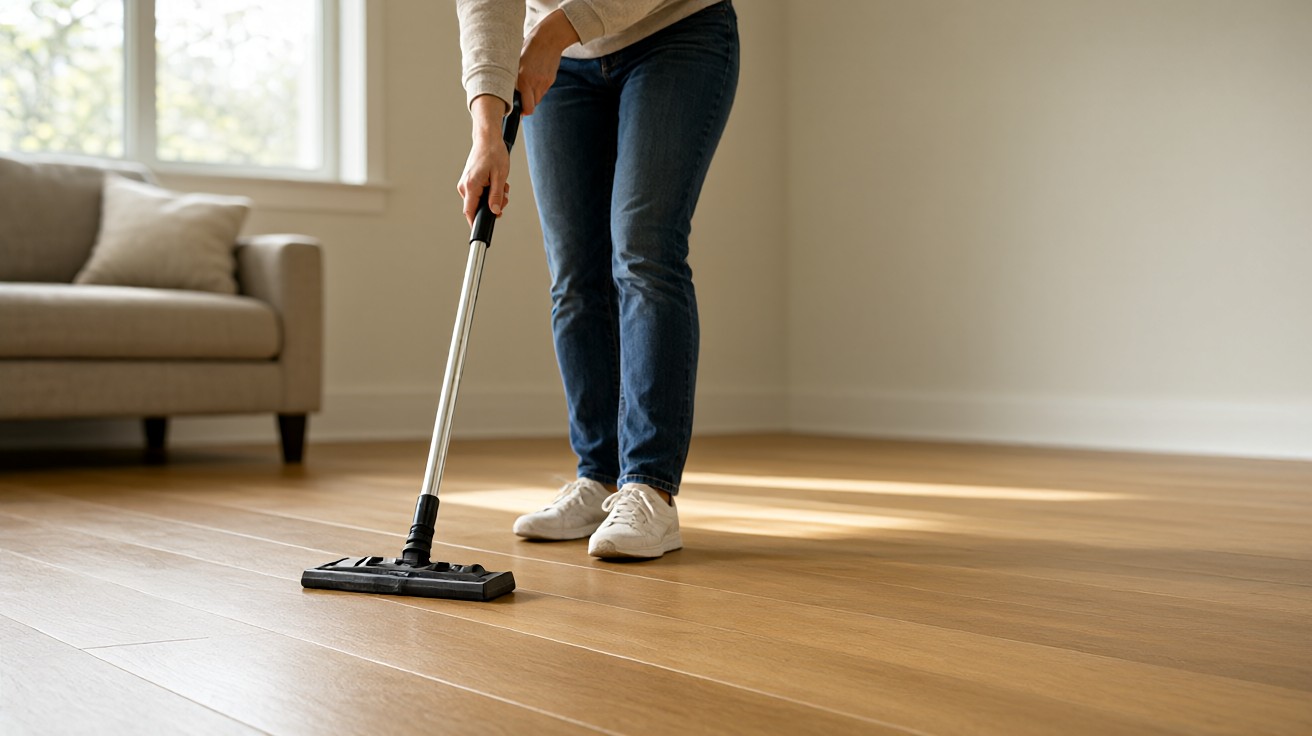
Sweep with a soft-bristle broom or run a vacuum on the hard-floor setting with the beater bar off. A microfiber dust mop works well and picks up hair and fine dust that a broom misses. Empty the dust mop pad after each room so you are not redistributing grit. A soft broom removes about 90 percent of daily grit in under 3 minutes on a 200 sq ft room.
Should You Vacuum LVP Every Day?
Vacuuming daily is fine if the machine has a hard-floor mode and the brush roll is disabled. Rotating brushes scratch the surface film over time, even on gentle settings. If your vacuum has no hard-floor mode, sweep instead and vacuum weekly with the brush roll locked off.
How Often Should You Dust Mop?
Dust mop high-traffic areas daily and the rest of the house every two to three days. Hallways and kitchens collect grit fastest because shoes track it in. Bedrooms and guest rooms can go longer without visible buildup.
Weekly Deep Clean For LVP Floors
Once a week, or after a spill-heavy weekend, damp mop the whole floor. The goal is to lift the film that dry cleaning leaves behind without soaking the seams. LVP is waterproof on top but the locking joints are not, and standing water can seep through over time.
Use a flat microfiber mop head, wrung out until it is only slightly damp. Work in sections and rinse the pad when it stops gliding. Change the water when it looks cloudy, which usually happens halfway through a large room. A typical dilution is 1 to 2 oz per gallon (30 to 60 ml per 3.8 L), water temperature under 150 F (65 C), cleaner pH near 7, and mop dwell time under 2 minutes. A microfiber pad holds about 6 times its weight in water, so wring to under 10 percent saturation.
What Is A pH-Neutral Cleaner?
A pH-neutral cleaner sits near 7 on the pH scale and does not attack the wear layer or the adhesive under the plank. Most dedicated vinyl floor cleaners are pH-neutral. Dish soap in small amounts is also close to neutral, which is why a drop in warm water is a common fallback.
How Much Cleaner Should You Use?
Follow the label dilution, usually one to two ounces per gallon of water. More soap is not better; excess cleaner leaves a dull film that attracts dirt and makes the floor look cloudy within days. If the floor looks hazy after mopping, you used too much.
Stain Removal On LVP Floors
Most stains on LVP sit on the surface rather than soaking in, which makes them easier to remove than on hardwood or carpet. The trick is matching the cleaner to the stain without reaching for an abrasive. Always test in a closet or under a rug first.
For food and drink stains, blot with a damp cloth and a drop of dish soap, then rinse with clean water. For scuffs, rub with a dry microfiber cloth or a melamine sponge used lightly. For ink or marker, a cotton ball with rubbing alcohol lifted most of it, followed by a rinse.
How To Remove Scuff Marks From LVP
Scuffs are usually rubber or plastic transferred from shoes or furniture feet. A dry microfiber cloth removes most of them with firm pressure. For stubborn marks, a melamine sponge dampened with water works, but press lightly because it is mildly abrasive.
How To Remove Grease And Oil Stains
Grease needs a degreaser, not more water. A pH-neutral vinyl cleaner with a degreasing agent, or a small amount of dish soap in warm water, breaks the oil so it lifts. Wipe, rinse, and dry the area so no residue remains.
What To Do About Dye Transfer
Rugs with rubber or latex backings can bleed dye into the wear layer, especially on light-colored planks. Lift the rug, clean with a pH-neutral cleaner, and if the stain persists use a small amount of rubbing alcohol on a cotton ball. Replace the rug with a non-staining pad.
Products To Avoid On LVP Floors
The wrong product causes more damage than a year of foot traffic. The wear layer is tough but chemically sensitive, and some common cleaners strip the finish or leave a permanent haze. The table below sorts the common mistakes by what they do.
| Product Or Method | Why It Harms LVP | Use Instead |
|---|---|---|
| Steam mop | Heat and moisture force water into seams and can warp planks | Damp microfiber mop with pH-neutral cleaner |
| Wax or polish | Builds a film that yellows and traps dirt | Manufacturer-recommended vinyl restorer |
| Ammonia or bleach | Strips the wear layer and dulls the finish | pH-neutral cleaner |
| Oil soap | Leaves a greasy residue that attracts dust | Vinyl-specific cleaner |
| Abrasive pads | Scratch the surface film permanently | Microfiber cloth or melamine sponge used lightly |
Steam mops deserve special mention because they are sold as safe for hard floors. The heat softens the vinyl and the pressurized steam pushes moisture into the locking joints. Most manufacturers void the warranty if steam cleaning is used, even once.
Maintenance Schedule For LVP Floors
A schedule beats memory. Write it on the inside of a cabinet door and follow it. The table below is a starting point for a busy household; adjust for pets, kids, and entryway traffic.
| Frequency | Task | Notes |
|---|---|---|
| Daily | Sweep or dust mop | Focus on entries, kitchen, and hallways |
| Weekly | Damp mop with pH-neutral cleaner | Wring the mop until barely damp |
| Monthly | Move and clean under furniture | Check felt pads and replace worn ones |
| Quarterly | Inspect seams and edges | Look for lifting, gapping, or moisture |
| Annually | Deep clean and re-evaluate pads | Refresh felt pads and entry mats |
Entry mats do more work than any cleaner. Replace felt pads every 6 months, wash entry mats every 4 weeks, and inspect seams every 3 months. Most residential warranties run 20 to 30 years and require 35 to 65 percent relative humidity. A coarse outdoor mat plus a soft indoor mat traps roughly 80 percent of the grit that would otherwise reach the floor. Wash the mats monthly so they keep working.
Common Mistakes When Cleaning LVP Floors
Most damage comes from habits, not accidents. The list below covers the errors that show up again and again in warranty claims and installer callbacks. Fixing them costs nothing and extends the life of the floor by years.
Using Too Much Water
A soaking wet mop leaves water sitting in the joints for hours. Even waterproof planks can cup or lift when the subfloor absorbs moisture through the seams. Wring until the mop is barely damp and dry any puddles immediately.
Skipping The Dry Step
Leaving the floor wet invites streaks and water spots, especially with hard water. A quick pass with a dry microfiber cloth after mopping removes residue and speeds drying. It takes two minutes and makes the floor look noticeably better.
Dragging Furniture Instead Of Lifting
Dragging a chair or table across LVP cuts the wear layer in a straight line that cannot be repaired. Lift and carry, or slide on furniture sliders rated for hard floors. Check felt pads monthly because grit embeds in them and turns them into sandpaper.
Ignoring Spills At The Seams
A spill left at a seam can wick under the plank and cause discoloration or odor. Blot spills immediately and dry the seam with a towel. For sticky spills, follow with a damp cloth and dry again.
Warranty-Safe Care For LVP Floors
Warranties on luxury vinyl are long, often 20 to 30 years for residential use, but they are conditional. The conditions are almost always about cleaning and maintenance, not manufacturing. Reading the care guide that came with the box before the first mop saves a claim later.
Keep your receipt and the installation record. If a claim is filed, the manufacturer will ask for proof of purchase and proof of proper installation. A photo of the installed floor and the product label helps.
What Voids An LVP Warranty?
Common voids include steam cleaning, use of non-approved cleaners, improper installation over an uneven subfloor, and failure to maintain humidity between 35 and 65 percent. Some brands also void coverage if the floor is installed over radiant heat above a set temperature.
How To Document Your Maintenance
Keep a simple log of deep cleans and any repairs. A note on your phone with dates is enough. If a claim arises, it shows the floor was cared for per the manufacturer guide, which strengthens the case.
LVP Cleaning In Kitchens And Bathrooms
Kitchens and bathrooms see the hardest use and the most moisture. The routine does not change, but the frequency does. Mop kitchen floors twice a week and bathroom floors once a week, or after any visible spill.
Place a mat in front of the sink and the stove. Cooking oil mist settles on the floor and creates a slippery film that a standard mop will not remove. A degreasing cleaner used monthly keeps it under control.
How To Clean Around Toilets And Tubs
Moisture pools at the base of toilets and tubs. Wipe these edges dry after every shower and check the caulk line monthly for gaps. Water that sits at the edge for days can find its way under the plank and cause swelling.
What About Pet Accidents?
Pet urine is acidic and can stain the wear layer if left. Blot immediately, clean with a pH-neutral cleaner, and dry thoroughly. For odor, an enzymatic cleaner labeled safe for vinyl works; avoid products with ammonia, which smells like urine to a pet and invites repeat marking.
When To Call A Professional For LVP
Most cleaning is a do-it-yourself job, but some situations need a pro. Deep scratches that reach the core, lifted planks, or widespread haze that will not come off with a stripper are signs to call an installer or a flooring cleaner with vinyl experience.
A professional can sometimes remove a single damaged plank and replace it without redoing the whole room. That repair is cheaper than replacing the floor and keeps the warranty intact if done by an authorized installer.
How To Find A Qualified Cleaner
Ask the flooring retailer for a referral, or look for a cleaner certified by the Institute of Inspection, Cleaning and Restoration Certification. Ask specifically about vinyl experience and whether they use pH-neutral products. A cleaner who only knows carpet and tile may use the wrong chemistry.
Choosing Cleaning Tools And Products For LVP
The right tools make the routine faster and safer. A flat microfiber mop, a soft broom, and a vacuum with a hard-floor mode cover almost everything. Avoid spin mops that leave the pad too wet and avoid string mops that hold dirty water.
Buy cleaners labeled for luxury vinyl or pH-neutral hard surfaces. If the label does not state pH, contact the manufacturer. When in doubt, a few drops of dish soap in a gallon of warm water is a safe fallback that leaves little residue.
Which Mop Head Works Best?
A flat microfiber pad with a removable, washable head gives the best control over moisture. It glides smoothly and picks up fine dust. Wash pads without fabric softener, which coats the fibers and reduces absorbency.
Are Spin Mops Safe For LVP?
Spin mops can be safe if you wring them thoroughly, but many leave the pad wetter than ideal. If you use one, spin it until the pad is only slightly damp and never let water pool on the floor. A flat mop is simpler and more consistent.
Troubleshooting Haze, Streaks, And Discoloration
Even with a good routine, floors can develop haze or streaks. The cause is almost always residue, hard water, or the wrong cleaner. The fix is to remove the residue and reset the routine rather than adding more product.
Start by mopping with clean water only to lift leftover soap. If the haze remains, use a vinyl-safe stripper recommended by the manufacturer. Rinse twice and dry with a microfiber cloth.
Why Does My LVP Look Cloudy After Mopping?
Cloudiness usually comes from too much cleaner or hard water minerals. Reduce the dose and switch to distilled water if your tap water is hard. A final rinse with clean water and a dry pass removes most haze.
How To Fix Streaks On LVP
Streaks often appear when the mop pad is dirty or the floor dries unevenly. Change the pad mid-room and work in smaller sections. Drying with a clean cloth after mopping prevents streak lines.
Summary: A Routine That Keeps LVP Looking New
Clean LVP with a simple, repeatable routine: remove grit daily, damp mop weekly with a pH-neutral cleaner, and treat stains promptly. Avoid steam, wax, oil soaps, and abrasives. Follow the manufacturer care guide to keep the warranty valid.
If you are still choosing a floor, luxury vinyl tile and LVP construction explained covers wear layers and cores, and the vinyl flooring guide compares types. For installation planning, see underlayment for vinyl flooring and how to evaluate vinyl flooring construction and quality. Wear layer and core details are in vinyl wear layers, cores, and backing explained.