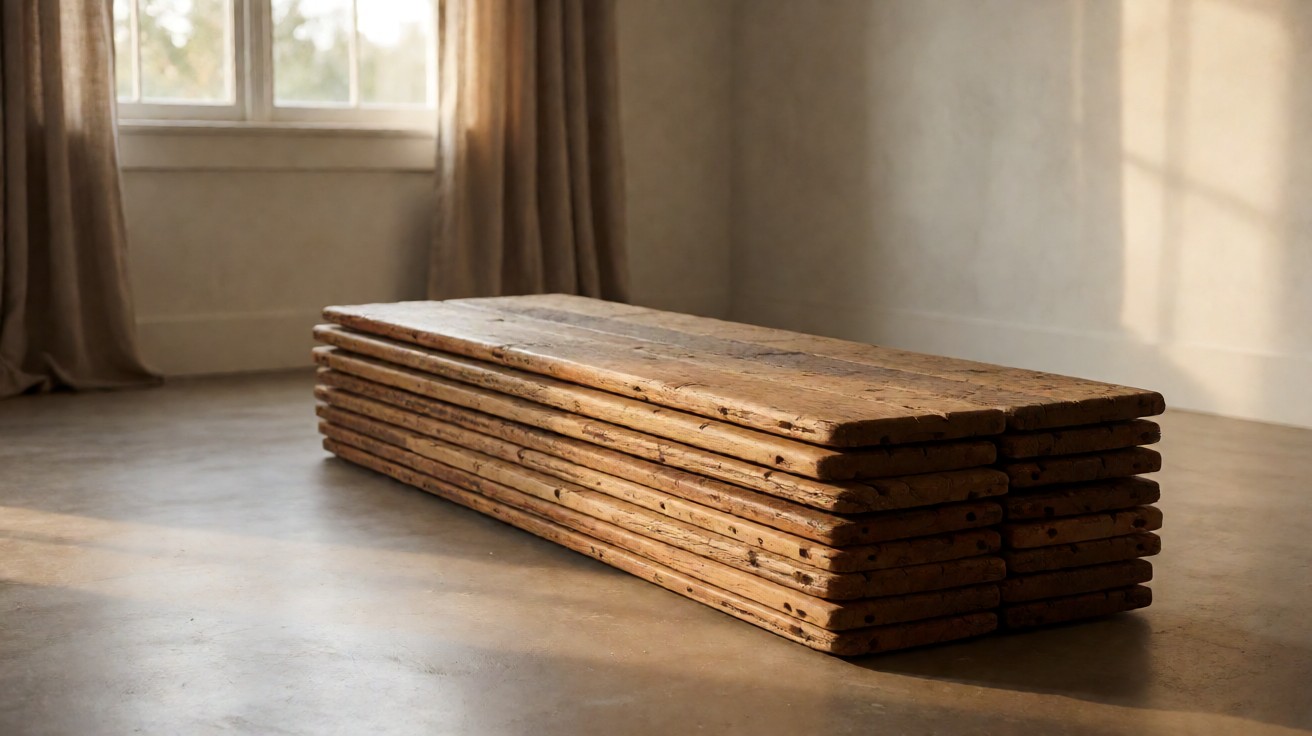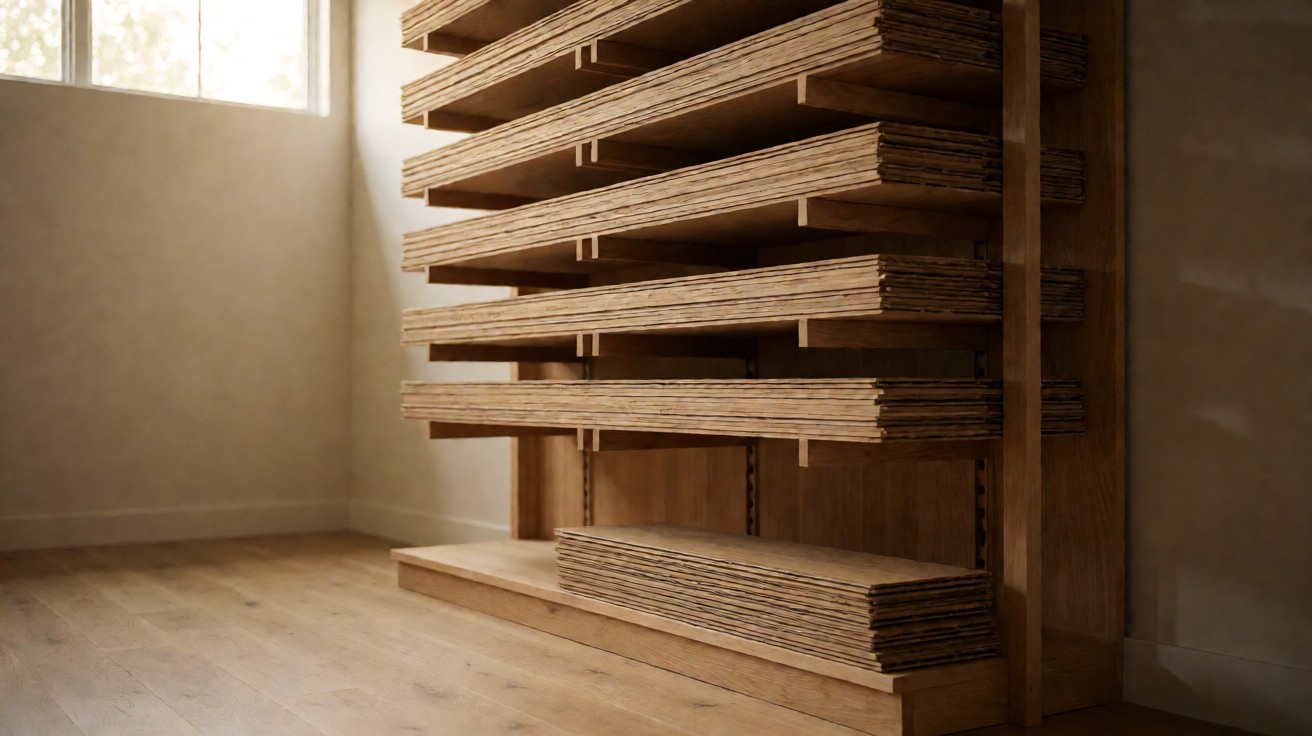

You found the floor you want, and the seller says they have it, and you cannot tell whether that means four pallets in a warehouse or four cartons in a corner.
The answer is that availability is three separate questions, and they get answered in different places. Is the line still made, how much of it physically exists, and can you get the same batch again in five years. Only the third one decides whether your floor stays repairable.
How To Check Product Availability And Replacement Stock
Availability looks like a yes or no, and it is not. A product can be in production and have no stock, or be discontinued and have plenty, and the difference decides what you are buying.
It also changes how you place the order. If the line is current, ordering an extra 10 percent is cheap insurance and you will probably use it. If the line is discontinued, the extra is not insurance. It is the entire remaining supply.
Why Does Availability Differ From Stock?
Because a manufacturer can keep making a line and still have nothing to sell, and can stop making a line and still have pallets in a warehouse for years.
The first case is what happens when a factory runs a limited production window. The line exists, the specification is current, and the shelf is empty until the next run. The second is what happens when a product is retired. The specification is fixed forever, and what is left is all there will ever be.
Those are opposite risk profiles, and they need opposite ordering decisions.
What Availability Actually Means Before You Order
Before you commit, separate three facts that sellers usually blend into one sentence.
The first is whether the line is in current production. That is a manufacturer question, not a seller question, and it is answered by the brand rather than by the shop.
The second is how much physical stock exists. That is a warehouse question, and only the seller with the goods can answer it honestly.
The third is whether the stock that exists is the same batch. That is the one that matters most, and it is the one nobody volunteers. A floor installed from two batches is a floor with a visible seam, and on a natural material that seam never blends.
| Question | Who Answers It | What A Real Answer Looks Like |
|---|---|---|
| Is the line still in production | The manufacturer | A date, a run number, or a current catalogue entry |
| How much stock exists | The seller holding it | A pallet count or a carton count, not “we have some” |
| Is it one batch or several | The seller who opened the goods | Batch numbers photographed before the order |
| How long does it take to restock | The manufacturer | A production window or a backorder date |
| Is it sold in your region | The regional distributor | Whether the line ships to your state at all |
Read the second and third rows together. A seller who can give you a carton count but cannot give you a batch number is describing stock they have not inspected.
How To Check Whether A Line Is Still In Production
This is the check that takes the least effort and saves the most, because everything else depends on it.
Start with the manufacturer. A current line appears in the catalogue with a specification sheet and a technical data page, and it has a production code. A discontinued line usually still appears, because manufacturers keep pages up for warranty purposes, but the specification sheet stops updating.
Then check the trade channels. A line that is still made is stocked by several dealers in your region, and a line that is not is stocked by exactly one, usually at a discount.
Then check the manufacturer’s own discontinued list. Several large producers publish one, and it is the fastest confirmation available. A line on that list is finished, whatever the seller says.
If the line is current, ask when the next production run is. A run that is scheduled is a line you can order against with confidence, and a run that is not scheduled is a line that may be close to retirement.
Ask specifically whether the product is being replaced by a successor. Manufacturers retire lines in pairs, and the replacement is often very similar in appearance. Buying the outgoing line at a discount is a real saving only if the stock is deep.
How Long Does A Discontinued Line Stay Available?
As long as the physical stock lasts, and for a popular line that can be years. For a niche colour it can be months.
The honest answer is that nobody knows, which is why the next section matters more than this one.
Where To Find Discontinued Flooring Stock
Four places, and only one of them is a normal search result.
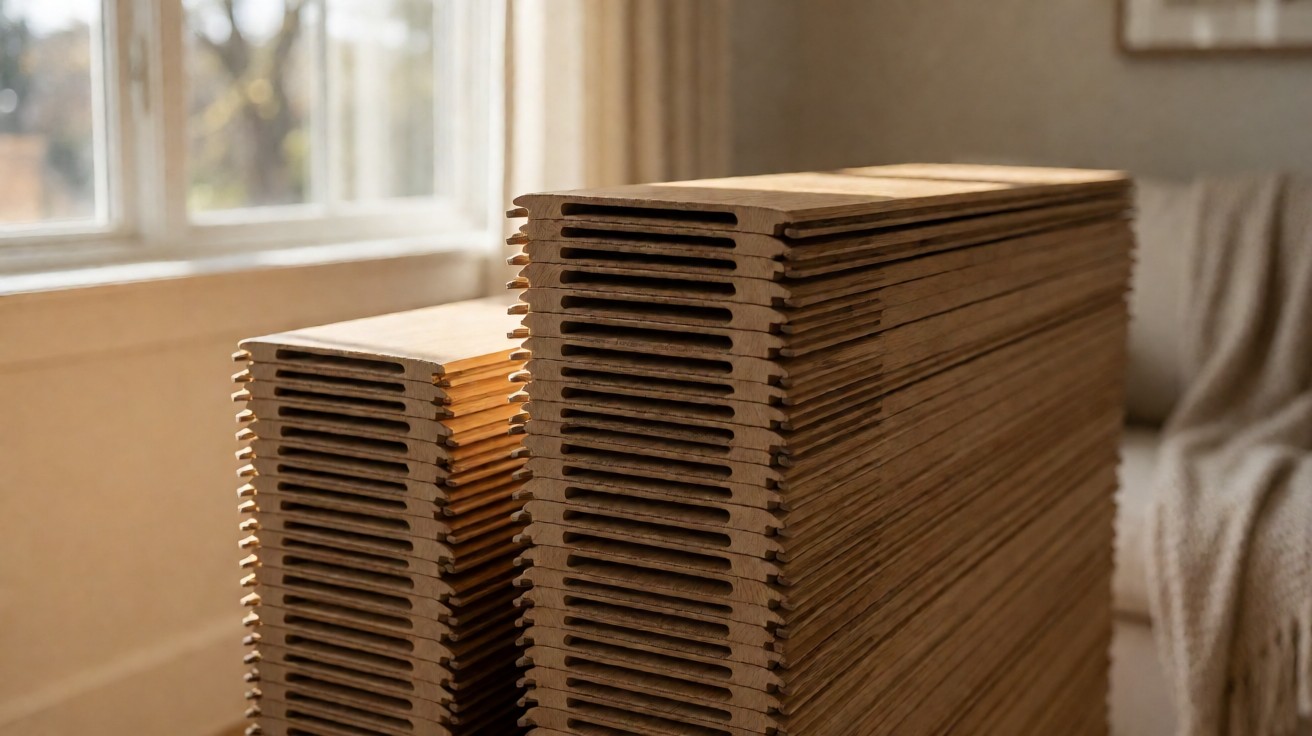
Discontinued stock is real product at a real discount, and it lives in places that are not the first result on a search.
The most reliable source is a national distributor holding old lots. These are businesses that buy overstock and cancelled orders, and their whole model depends on knowing which lots they hold.
The second source is a regional dealer clearing a display room or a warehouse. A dealer who is closing a line will move it quickly, and the price is genuinely low because the space has a cost.
The third source is a manufacturer outlet. Several brands run them, and they carry both current overstock and retired product, sometimes with the original packaging intact.
The fourth source is a salvage or reuse yard. For tile and stone this is a legitimate channel, because natural stone is quarried in lots and a reuse yard may hold the exact quarry run you need.
What these sources have in common is that the stock is fixed and not coming back. Buying from them is a one-way decision.
Before you buy, ask what the stock is measured in. A seller with 20 cartons from one lot can complete most rooms. A seller with 3 cartons from one lot and 40 from another cannot, and the mix is what makes the offer look better than it is.
How To Match A Batch When You Only Have A Sample
Matching is the practical problem, and it gets harder the longer the gap between the original floor and the replacement.
The batch number is the only reliable identifier. It is printed on the carton and often on the plank itself, and it ties the goods to a single production run. Everything else, colour names, product codes and catalogue descriptions, can be shared by several runs.
For wood, the NWFA Technical Guidelines are the reference for how a board is described and graded, and the grade is a batch property. Two runs of the same grade can still differ visibly in tone, because the raw material varies.
For laminate, the NALFA certification covers performance classes, and the class is a property of the product rather than the batch. That makes laminate more consistent run to run, which is one reason it is easier to repair.
For tile, ANSI A137.1 sets the performance requirements for ceramic, porcelain and glass tile, and the TCNA Handbook covers the installation methods. Tile carries lot variation in shade and size, and the lot number is printed on the box.
If you are matching from a sample rather than a carton, the first question is whether the sample came from the same lot as the original floor. If it did, the match is as good as it gets. If it did not, the match is approximate and you should plan for a transition.
A colour match under daylight and under warm interior light are different things, and a match that holds in one may fail in the other. Check both before you order, and check them in the room the floor is going into.
Does A Batch Number Still Match After Five Years?
Sometimes, and the honest answer is that the test is the batch number on the carton, not the colour name on the website.
A line that was made for years will have several batches, and a batch that is five years old is not the same product as the current run even if the name is unchanged.
That is why you keep the carton. It is the only document that ties your floor to a specific run.
How To Judge Whether A Seller Really Holds The Stock
Sellers use language that sounds like stock and is not, and the phrasing is worth decoding.
“We can get it” means ordered on your behalf, not held. “Usually in stock” means frequently but not reliably. “Limited stock” means the seller knows the count is small and would rather not say the number.
A seller who holds the goods answers a direct question with a number. How many cartons, from how many lots, and can you see the batch numbers before you pay.
If the seller will not photograph the stock, ask why. A seller with nothing to hide photographs the pallet and the label without being asked.
There is a second check that is stronger than any of this. Ask for the seller’s own order records for the line. A dealer who has sold it repeatedly has a history, and a history is the difference between a line that is merely available and a line that is supported.
Where the seller sits in the chain matters too. A retailer holding one pallet of a discontinued line is a one-off, and a distributor holding a warehouse of it is a supplier. The first can sell you 300 square feet. The second can sell you 3,000 and tell you whether more exists.
That distinction decides whether a repair in year six is possible, which is the whole point of this article.
How Much Replacement Flooring Should You Order
Not a flat percentage. A unit count.
The number to buy is not a flat percentage, and the reason is that the floor you are protecting is not uniform.
A common rule is 10 percent extra on a straight installation, and 15 percent on a diagonal or a complex layout. On 250 square feet that is 25 and 37 square feet, which sounds close, and the difference is three cartons.
The real rule is about replacement units, not area. Buy enough to replace the worst case, which is a single damaged plank or tile, and to do that across the life of the floor.
A plank floor is repaired plank by plank, and a box of 20 square feet covers several planks, so the box count is what matters. A tile floor is repaired tile by tile, and a single tile is a small purchase, but a matching tile five years later is the hard part.
On a discontinued line, buy the entire remaining surplus you can afford and store it. There is no second chance, and the price today is the price for the rest of the floor’s life.
On a current line, the same logic applies at a smaller scale. A 10 percent surplus is cheap, and the cost of carrying it is the storage, which is the next section.
| Situation | Order Extra | What That Covers |
|---|---|---|
| Current line, straight layout | 10 percent, about 25 square feet on 250 | One or two damaged planks |
| Current line, diagonal or complex | 15 percent, about 37 square feet on 250 | Cut waste and one replacement |
| Discontinued line, any layout | All surplus you can store | The whole remaining supply |
| Natural stone or tile, matched lot | Two tiles or one full box | A single replacement in five years |
| Carpet from a dye lot | One full roll width, about 10 percent | A seam-free repair |
The carpet row is the one people miss. Carpet is dyed in lots, and a repair from a different lot is visible even when the colour is identical on paper. If the lot is still available, buy the surplus while you can.
How To Store Leftover Stock So It Stays Matchable
Cool, dry, and unopened.
Storage is what makes the surplus useful rather than decorative, and it is the part most people get wrong.
The rule is a cool, dry, indoor space with the cartons unopened. A garage in a cold climate is the worst place to put flooring, because the temperature swing and the humidity swing are both outside the range the product was designed for.
A plank floor stored in a hot attic will arrive at installation already out of the range the manufacturer allows, and the same floor stored properly will install and behave as specified.
Keep the cartons closed until you need them, and keep the batch number visible. If you store by colour name instead of batch number, you will be sorting by eye when you finally need a plank.
Photograph the batch labels and keep the photographs with the receipt. A batch number you have to hunt for in year six is a batch number you may not find.
Where the storage has to be somewhere imperfect, a spare room beats a garage, and a garage beats a shed. The floor you are protecting is worth more than the space the cartons occupy.
What Happens When The Line Runs Out Mid-Project
This is the failure mode that no one plans for, and it is more common than it should be.
It happens when an order is placed against stock that exists, and then part of that stock is sold to someone else before the order is picked up. The seller is not lying at the moment of the sale. The stock simply moves.
It also happens when a room is measured wrong and the order is short, and the restock is a different run.
The protection is to confirm the stock is physically reserved. A seller who will put a hold on the cartons and note the batch numbers has given you something real. A seller who says the stock will be there is describing a hope.
Ask for a written confirmation of the hold, with the carton count and the batch numbers on it. If the seller will not write it, the stock is not reserved.
The flooring installer guide covers who documents what during the work.
On a room larger than about 250 square feet, split the order so the first delivery completes a visible section. That way a shortfall arrives while the floor is still repairable rather than after it is finished.
What Should You Do When No Replacement Exists?
Repair within the same material where you can, and accept a visible patch where you cannot.
For a plank floor that means replacing the damaged plank and its neighbour, which is a clean repair that reads as a repair rather than a defect. For a tile floor it means replacing the tile and refreshing the grout.
If the line is genuinely gone, the honest options are a transition strip into a different material, a decorative rug over the damaged area, or a full replacement of the affected section. None of these are good, and all of them are cheaper than replacing the whole floor.
How To Check Availability Before You Commit
Three checks, in this order, before money moves.
First, confirm the line is current, using the manufacturer rather than the seller. If it is not current, treat the entire remaining stock as the supply for the life of your floor.
Second, confirm the physical stock with a number and a batch. A carton count without a batch number is not a confirmation.
Third, confirm the hold in writing. Stock that is not reserved is stock that can be sold to someone else.
Then order the surplus deliberately, using the table above, and store it properly. Those are the four steps that turn availability from a risk into a plan.
What To Do When No Match Exists
When a line is gone and nothing matches, the question changes from where to find it to what the replacement should be.
A different colour that is close but not identical can work if it is used as a deliberate transition rather than a patch. A border, a threshold, or a change of material at a doorway all make a difference read as intentional.
A lighter tone is easier to blend than a darker one, because a darker patch against a lighter floor draws the eye immediately.
When the area is large, a full replacement of that section is often cleaner than a patch, and it is worth costing before you decide. the flooring cost per square foot guide covers how to price a partial replacement.
The deciding factor is usually the size of the damaged area. Under a threshold, repair is right. Over it, replacement is cleaner and often cheaper than chasing a match that no longer exists.
Whatever you do, keep the documentation. The batch numbers, the receipt and the photographs of the original installation are what a future buyer will need, and they are the only record that your floor was a specific product from a specific run.
The flooring buying guide covers how to record a purchase properly, and the manufacturer warranty guide covers who handles a claim and who pays.